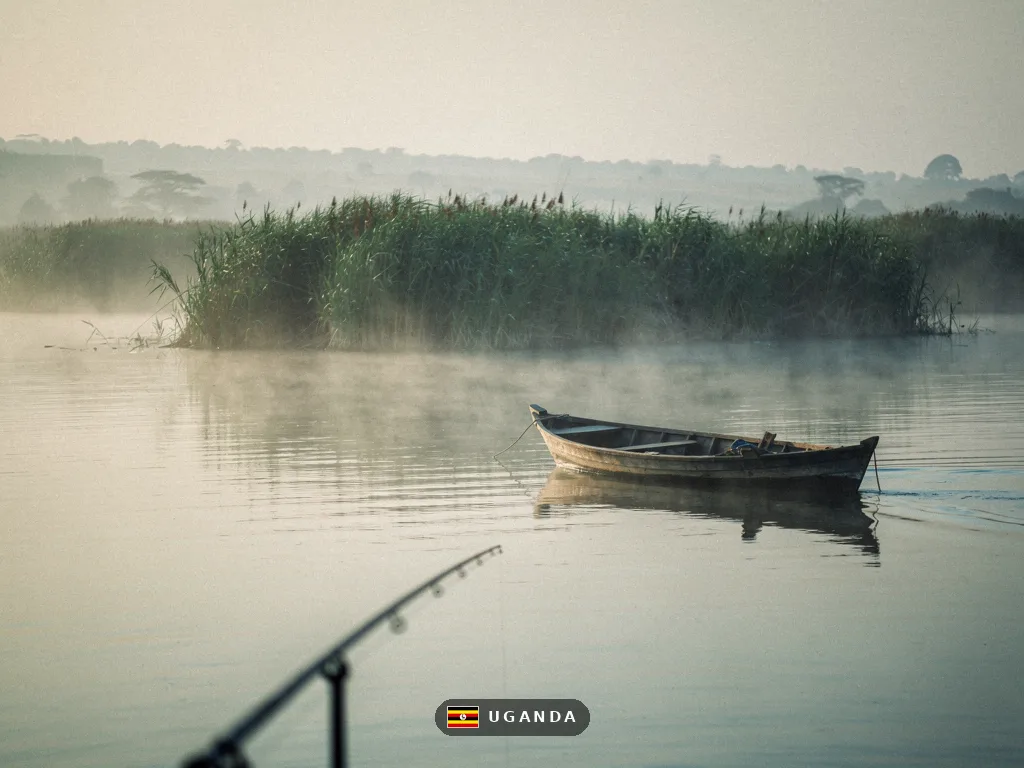
Imagine battling a Nile Perch that exceeds 100 kg (220 lb) while the thunder of Murchison Falls echoes around you. Or drifting across the vast waters of Lake Victoria at sunrise, watching for the explosive strike of a Tiger fish. Fishing in Uganda offers some of Africa’s most thrilling freshwater angling experiences. This comprehensive guide covers everything you need to plan your trip: whether you need a fishing license or sport fishing permit, the best fishing spots, guided tours and charters, current costs, regulations, and essential travel practicalities.
Uganda is a premier freshwater fishing destination in East Africa. While it lacks a coastline for traditional deep-sea fishing, its massive lakes and the upper reaches of the Nile River deliver world-class sport fishing. The legendary Nile Perch (*Lates niloticus*), powerful Tiger fish, hard-fighting Tilapia, and giant Catfish attract anglers from all over the world. This article is written specifically for international visitors from Europe, North America, Asia, and beyond, with clear information on permits, prices in local currency (UGX), EUR, and USD, visa requirements, and cultural considerations.
01Do You Need a Fishing License in Uganda?
Yes — in most cases, you need a permit to fish legally in Uganda. The requirements depend on where you plan to fish. The country updated its legal framework with the Fisheries and Aquaculture Act 2023, which strengthened enforcement and increased penalties for using illegal gear such as undersized nets, explosives, or poisons.
For protected areas managed by the Uganda Wildlife Authority (UWA) — including Murchison Falls National Park, Lake Mburo National Park, and parts of Queen Elizabeth National Park — you must purchase a specific Sport Fishing Permit. This is in addition to the standard national park entrance fees.
On Lake Victoria, the largest lake in Africa, a recreational fishing license is technically required under the Directorate of Fisheries Resources (part of the Ministry of Agriculture, Animal Industry and Fisheries — MAAIF). However, in practice, the vast majority of international tourists fish through licensed charter operators. These operators hold commercial licenses that cover their clients. If you book a reputable guided trip, you usually do not need to apply for a separate license yourself.
You can apply for licenses through the official Fisheries E-Licensing Portal (fisheries.agriculture.go.ug) or obtain park-specific Sport Fishing Permits at UWA offices in Kampala or directly at the park gates.
Important Note: Regulations can change. Always verify the latest requirements directly with the Uganda Wildlife Authority or the Directorate of Fisheries Resources before your trip. The information in this guide is based on tariffs valid through June 2026.
02Sport Fishing Permits and Costs in Uganda
Understanding the costs is essential for planning your Uganda fishing adventure. Prices differ significantly between non-residents (international visitors), East African Community (EAC) citizens, and residents.
Sport Fishing Permit Fees (Non-Residents)
| Location | 1 Day Permit | 4 Days Permit | Approx. in EUR | Approx. in UGX |
|-----------------------------------|-----------------------|-----------------------|----------------|-------------------|
| Murchison Falls National Park | $50 USD | $150 USD | €46 / €138 | 185,000 / 555,000 |
| Lake Mburo / Queen Elizabeth NP | $15 USD | $25 USD | €14 / €23 | 55,000 / 92,000 |
Source: UWA Conservation Tariff July 2024 – June 2026.
In addition to the sport fishing permit, you must pay daily park entrance fees. For non-residents these currently run approximately $40–45 USD (€37–42) per 24 hours per person.
Boat hire and guide services represent the largest part of your budget. A basic fishing boat with an experienced captain on Lake Victoria or the Nile typically costs between $150 and $350 USD (€138–322) per day. Luxury vessels or fully equipped expeditions can reach $500 USD (€460) or more per day.
A typical 7-day all-inclusive fishing safari (accommodation, meals, transfers, boat, guide, and permits) ranges from $1,400 to $4,500 USD (€1,290–4,140) per person, depending on the level of luxury and group size. This is roughly equivalent to the cost of a mid-range safari in East Africa, offering outstanding value for the quality of fishing available.
Tip: Booking through a licensed operator often simplifies the permit process, as many companies arrange the necessary paperwork for you.
03Fishing Rules and Regulations in Uganda
The Fisheries and Aquaculture Act 2023 modernized Uganda’s fishing laws. Key rules that apply to sport anglers include:
Violations can result in heavy fines, confiscation of equipment, or even imprisonment under the new 2023 Act. International anglers are strongly advised to fish exclusively with licensed operators who understand and follow these regulations.
04Best Fishing Spots in Uganda – Where to Catch Trophy Fish
The heart of any fishing trip is the experience on the water. Uganda’s top spots deliver breathtaking scenery, abundant fish, and memories that last a lifetime.
1. Murchison Falls National Park (Nile River)
This is widely regarded as the world’s premier destination for giant Nile Perch. The dramatic stretch of the Nile below the falls — known locally as the “Devil’s Cauldron” — produces fish over 100 kg (220 lb). Picture yourself in a sturdy boat as the river surges through narrow gorges, with hippos and crocodiles visible along the banks and elephants and giraffes coming to drink.
Methods: Live bait (tilapia or small catfish) or heavy casting with large spoons and crankbaits. The fight of a big Nile Perch here is legendary — powerful runs that can strip 100 metres of line in seconds.
2. Lake Victoria and the Ssese Islands
Africa’s largest lake offers consistent action for Nile Perch, especially around the Ssese Islands near Entebbe. Trolling with Rapala-style lures or downriggers is highly effective. You can also enjoy lighter tackle fishing for Tilapia using fly rods or ultralight spinning gear. The sunrises over this enormous inland sea are unforgettable, with hundreds of islands dotting the horizon.
3. Lake Mburo National Park
A smaller, peaceful savanna lake surrounded by acacia woodlands and rolling hills. Excellent for Tilapia and Catfish on light spinning or float fishing. The park’s abundant wildlife (zebra, impala, buffalo) makes every fishing day feel like a genuine safari. Ideal for anglers who want to combine angling with game viewing.
4. The Nile at Jinja (Source of the Nile)
Where the White Nile exits Lake Victoria, fast-flowing waters create perfect habitat for Barbel, Tilapia, and smaller Nile Perch. This is a great location for fly fishing and kayak angling. The mix of fast water and deep pools offers varied fishing throughout the day.
5. Lake Albert
An often-overlooked gem on the border with the Democratic Republic of Congo. Excellent numbers of Nile Perch and especially the hard-fighting Tiger fish (*Hydrocynus vittatus*), known for its razor-sharp teeth and spectacular jumps. The remote setting and dramatic escarpment scenery make this a true adventure destination.
Each of these locations offers a completely different experience — from the thunderous power of Murchison Falls to the tranquil beauty of Lake Mburo. Many anglers combine two or three spots in a single two-week trip.
🎣 Fishing tours in Uganda — Book guided fishing tours with local experts.
05Tours & Guided Experiences in Uganda
Most international visitors choose organized tours or charters for both convenience and safety. Reputable operators handle permits, provide quality equipment, and ensure you fish in the best areas while respecting local regulations.
Popular operators include Wild Frontiers Uganda, Kwezi Outdoors, and various safari companies that combine fishing with wildlife safaris. A typical day charter on Lake Victoria or the Nile includes:
Multi-day expeditions to Murchison Falls often include luxury tented camps or lodge accommodation, game drives, boat safaris to the base of the falls, and world-class fishing.
Prices for a full-day guided charter start at around $250 USD (€230) for two anglers (including boat, guide, and fuel) and rise to $450–650 USD (€414–598) for premium experiences with top-tier equipment and catering.
Longer 7- to 9-day fishing-focused safaris range from $2,200 to $5,000 USD (€2,025–4,600) per person, sharing.
These packages represent excellent value when compared with similar high-quality freshwater fishing experiences in other parts of the world.
🚤 Charter fishing in Uganda — Find and book charter boats with experienced captains.
06What to Expect: Popular Fish Species in Uganda
The diversity of species makes fishing in Uganda rewarding for both trophy hunters and light-tackle enthusiasts.
07Equipment Recommendations
While most charters provide heavy rods, multipliers, and basic lures, serious anglers should consider bringing their own gear. Recommended setup for Nile Perch:
For Lake Mburo or Tilapia fishing, bring 6–8 wt fly outfits or light spinning gear.
🛒 Fishing equipment for Uganda — Find the right gear for your trip.
08Practical Travel Information for Fishing in Uganda
Best Time to Visit
The best fishing seasons coincide with the drier months: June to August and December to February. During these periods, water levels are lower and clearer, and winds are generally lighter. The long rainy season (March–May) and shorter rains (October–November) can make some roads difficult and turn rivers murky. Lake Victoria can become dangerously rough during storms, particularly from September to November.
Anglers from the Northern Hemisphere will find December–February aligns with winter, while those from the Southern Hemisphere can visit during their summer break.
Getting There and Visa Requirements
Entebbe International Airport (EBB) is the main entry point. Direct flights are available from major European hubs (Amsterdam, London, Frankfurt), Dubai, Istanbul, and various African cities.
Visa requirements (as of 2026):
Getting Around
While public transport exists, most serious anglers hire a private driver/guide or join an organized package that includes all transfers. A 4×4 vehicle is essential for reaching Murchison Falls or Lake Albert during the rainy season. Domestic flights via Uganda Airlines or charter companies can save time when moving between fishing destinations.
📱 Stay connected in Uganda — Get an eSIM for affordable mobile data while traveling.
🚗 Rent a car in Uganda — Compare prices from 500+ rental companies worldwide.
Language and Cultural Tips
English is the official language and is widely spoken, especially in tourism and by fishing guides. Learning a few Luganda phrases (the most widely spoken local language) is appreciated.
Respect for local fishing communities is important. Many villagers depend on Lake Victoria for their livelihood, so always follow your guide’s advice regarding interaction with local fishers.
Safety Considerations
Crocodiles and hippos are real dangers, especially around Murchison Falls. Never wade or swim, and always fish with an experienced guide. Malaria is present — take proper prophylaxis and use insect repellent. Drink only bottled or treated water.
Health and Vaccinations
Consult your doctor about required vaccinations (Yellow Fever is mandatory for entry from many countries). Hepatitis A, Typhoid, and Tetanus boosters are recommended. Bring any personal medications as availability can be limited outside Kampala.
09Frequently Asked Questions about Fishing in Uganda
Do I need a fishing license to fish in Uganda?
Yes. You need a Sport Fishing Permit for national parks such as Murchison Falls or Lake Mburo. On Lake Victoria, charters usually include the necessary licensing through their commercial permit. Independent anglers should obtain a recreational license via the official Fisheries E-Licensing Portal.
What is the biggest Nile Perch ever caught in Uganda?
Fish over 110 kg (242 lb) have been recorded in the Murchison Falls area. The Nile Perch here are among the largest freshwater fish available to sport anglers anywhere in the world.
Can I keep the fish I catch?
Most responsible operators and national park regulations promote catch-and-release, especially for large Nile Perch and Tiger fish. Smaller Tilapia may sometimes be kept for dinner if caught outside protected zones. Always confirm the current rules with your operator.
Is deep sea fishing possible in Uganda?
No. Uganda is a landlocked country. All fishing is freshwater. However, the size and power of the Nile Perch often gives anglers the same thrill as big-game saltwater fishing.
What is the best month for Nile Perch fishing in Murchison Falls?
The dry seasons (June–August and December–February) are generally considered best because water clarity improves and fish are more active. January and July are particularly popular.
How expensive is a fishing trip to Uganda?
A quality 7-day fishing safari typically costs between $2,000 and $4,500 USD (€1,840–4,140) per person including permits, accommodation, meals, and guided fishing. This represents good value compared to similar experiences in South America or remote parts of Asia.
Is it safe to fish in Uganda?
Yes, when fishing with reputable licensed operators. The main risks are wildlife-related (hippos and crocodiles) rather than security. Stick to established operators, follow safety briefings, and avoid independent travel in remote areas after dark.
10Conclusion
Fishing in Uganda offers a unique combination of world-class angling, spectacular African scenery, and rich wildlife encounters. Whether you dream of landing a 100-kilogram Nile Perch at the base of Murchison Falls, battling Tiger fish on Lake Albert, or enjoying a relaxed day chasing Tilapia on Lake Mburo, this East African nation delivers memorable experiences for anglers of all levels.
By securing the correct sport fishing permit, choosing a reputable operator, and visiting during the optimal dry season, you can enjoy a safe, sustainable, and extraordinarily rewarding fishing adventure. The combination of thrilling fights, breathtaking landscapes, and warm Ugandan hospitality makes this destination truly special.
Start planning your trip today — the giants of the Nile are waiting.
11Sources & Further Links
Disclaimer: This guide was written in 2026 and reflects information available at the time of writing. Fishing regulations, permit prices, and safety conditions may change. Always check the latest official information from the Uganda Wildlife Authority (ugandawildlife.org) and the Directorate of Fisheries Resources (fisheries.go.ug) before planning your trip. This article is for informational purposes only and does not replace professional travel or angling advice.
Don't miss any fishing tips!
Get the best fishing destination recommendations weekly in your inbox.
No spam. Unsubscribe anytime.
Data incorrect?
Help us keep this article up to date — report outdated or incorrect information
More articles