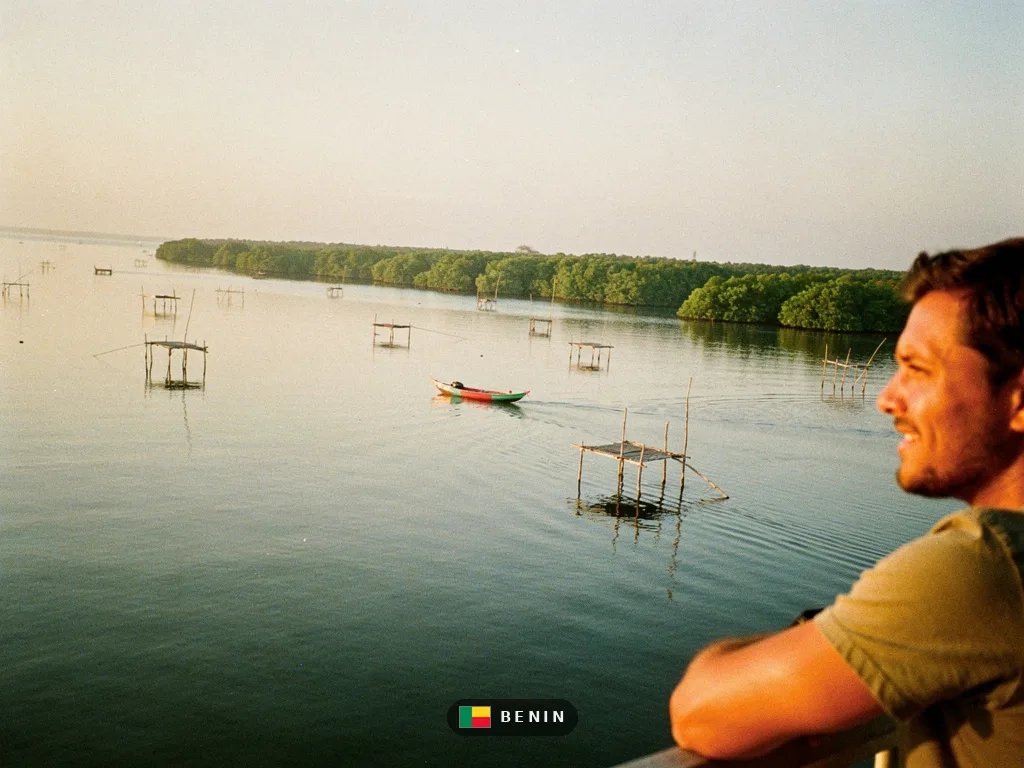
Fishing in Benin offers a unique blend of freshwater lagoon systems, protected river ecosystems, and exciting deep-sea opportunities in the Gulf of Guinea. Whether you are chasing tarpon in coastal waters, targeting Nile perch and tilapia in Lake Nokoue, or exploring the biodiverse Pendjari River inside a national park, Benin delivers an off-the-beaten-path angling adventure that few international anglers have discovered. This comprehensive guide covers everything you need to know: do you need a fishing license in Benin, current regulations based on the 2014 Fisheries Law, the best fishing spots, charter options in Cotonou, practical travel advice, and current costs in XOF, EUR, and USD.
Benin’s fishing scene is still developing for recreational visitors. Most sport fishing takes place through professional operators or hotels that manage local authorizations with the Ministry of Agriculture, Livestock and Fisheries (MAEP). Unlike standardized tourist licenses in Europe or North America, obtaining an individual recreational fishing permit (pêche sportive) is not a simple counter purchase. This reality shapes how you should plan your trip — working with reputable local partners is the safest and most practical route.
The country’s diverse waters range from the brackish lagoons near the economic capital Cotonou to the wild rivers of the Pendjari National Park in the north. You can experience everything from battling powerful tarpon and giant African threadfin in the Atlantic to sight-fishing for catfish and tilapia in shallow inland lakes. The dry season from November to February consistently delivers the most comfortable weather for fishing expeditions, with temperatures averaging 25–30 °C (77–86 °F) and lower humidity.
This guide draws on official sources including Benin’s Fisheries Law (Loi-cadre n° 2014-19), information from the Direction de la Production Halieutique, and practical operator insights. Regulations can change, so verification with the Ministry or your chosen operator remains essential before you travel. Whether you are arriving from the EU, the United States, the United Kingdom, or Japan, this article provides the practical details you need to fish responsibly and successfully in Benin.
01Do You Need a Fishing License in Benin?
Under the current legal framework, the answer is yes — in principle you do need a fishing permit in Benin for recreational angling. The Fisheries Law (Loi-cadre n° 2014-19 of 7 August 2014) clearly distinguishes between subsistence fishing (pêche de subsistance), commercial fishing, and recreational/sport fishing (pêche sportive). The law requires that anyone engaging in non-subsistence fishing must hold an appropriate authorization issued by the competent authorities.
In practice, however, the system for recreational anglers is not yet fully developed for international visitors. There is no straightforward “tourist fishing license” available at airports, tackle shops, or online like you would find in many other countries. Instead, most visiting anglers fish under the umbrella of a licensed operator, charter company, or hotel that already maintains the necessary boat permits and administrative compliance with the Ministry of Agriculture, Livestock and Fisheries (MAEP). These operators typically handle the required documentation and ensure that activities remain within legal boundaries.
The Direction de la Production Halieutique within MAEP is the primary government body responsible for issuing permits and overseeing both marine and continental fishing. For protected areas such as Pendjari National Park, additional specific authorizations and park fees paid to CENAGREF (the national park management authority) are often required. Fishing inside the park is usually restricted to certain periods that align with the broader hunting and tourism calendar, typically during the drier months.
Prohibited activities under the law include the use of explosives, toxic substances, and non-selective fishing gear that could harm juvenile fish or protected species. These rules apply to everyone — local fishers and international visitors alike. If you are stopped by authorities while fishing independently, you must be able to present identification and proof that your activity is authorized. This is one of the main reasons why experienced travelers strongly recommend booking through established fishing tours or charters in Cotonou rather than attempting a DIY approach.
For the latest information on fishing permit Benin requirements, the official contact point is the Ministry website at agriculture.gouv.bj. Many operators recommend contacting the Department of Fisheries Production directly several weeks before your trip to confirm current procedures, especially if you plan to bring your own boat or fish in multiple locations. While enforcement for individual recreational anglers remains relatively light compared to commercial operations, the legal obligation exists and compliance protects both you and the fragile aquatic ecosystems.
Travelers from the European Union, United States, United Kingdom, and Japan do not face any additional nationality-specific fishing restrictions beyond the general rules. However, you should always carry a copy of your passport and any operator-issued documentation while on the water. If you intend to fish for multiple days or in several different zones (lagoon, river, and offshore), your operator may need to arrange separate authorizations for each area.
In summary, while a formal recreational fishing license in Benin is required by law, the practical solution for most international visitors is to fish through a licensed professional operator who manages the paperwork. This approach ensures you stay legal, supports the local economy, and gives you access to the best fishing spots with local knowledge.
🎣 Fishing tours in Benin — Book guided fishing tours with local experts.
02Fishing Regulations and Protected Areas
Benin’s fishing regulations are governed by the comprehensive 2014 Fisheries Law, which aims to protect fish stocks, promote sustainable practices, and differentiate clearly between commercial, subsistence, and recreational activities. The law prohibits destructive methods such as poisoning, blasting, and the use of fine-mesh nets that capture juvenile fish across all waters — both inland and in the Gulf of Guinea.
In marine and lagoon environments, minimum size limits and seasonal closures may apply to certain species, although these are more strictly enforced on commercial fleets than on occasional recreational fishers. The coastal zone near Cotonou is intensively used by both small-scale fishers and emerging sport-fishing charters. Operators must register their vessels with the maritime authorities and usually display the necessary permits.
Inland waters fall under continental fishing rules. Lakes and rivers are often shared resources between local communities practicing subsistence fishing and visiting sport anglers. Special attention is given to endemic and vulnerable species. For example, the African lungfish and certain cichlids receive higher protection levels in some lagoons.
National parks and protected areas add another regulatory layer. Pendjari National Park, Benin’s flagship conservation area in the north, is managed by CENAGREF. Fishing in the Pendjari River and associated waterholes is not permitted year-round. When it is allowed, it is usually limited to the dry season (November to February) and requires a separate park permit in addition to any national fishing authorization. These park fees typically range from 10,000–25,000 XOF (approximately 15–38 EUR or 16–41 USD) per person per day, depending on the exact activities and whether you are accompanied by a park-approved guide. The revenue helps fund anti-poaching efforts and community projects.
Lake Nokoue, the largest lagoon in Benin, is a Ramsar wetland of international importance. While it supports intense subsistence fishing with traditional methods (including the famous stilt villages of Ganvie), recreational fishing is tolerated when conducted responsibly. Local cooperatives and tourism operators often coordinate activities to minimize conflict with traditional fishers.
The law also regulates gear. Recreational anglers are generally expected to use rod-and-reel or traditional hand lines rather than nets. Bringing your own high-quality rods, reels, and lures from home is strongly recommended because specialized sport fishing tackle is rarely available for purchase in Benin. Popular choices for Gulf of Guinea fishing include heavy spinning or conventional reels spooled with 30–50 kg (66–110 lb) braid when targeting tarpon, while lighter setups in 10–20 kg (22–44 lb) class work well for lagoon species.
Bag limits are not always clearly published for recreational fishing, but the guiding principle is “catch and release” for larger specimens, especially tarpon and other iconic game fish. Many Cotonou fishing charters promote selective harvesting and photography over keeping every fish. This ethos helps preserve stocks for future generations and maintains good relations with local communities.
If you plan to fish in multiple provinces or move between marine and freshwater environments, you may need more than one type of authorization. Operators based in Cotonou are usually familiar with the exact requirements for Lake Nokoue day trips, Pendjari multi-day safaris, and offshore charters in the Gulf of Guinea. They can also advise on current closed seasons or temporary restrictions that may be in force due to spawning periods or environmental conditions.
Always remember that regulations may change. The most reliable way to stay updated is to consult the official Ministry website (agriculture.gouv.bj) or work with a professional operator who maintains regular contact with the Direction de la Production Halieutique. Ignoring the rules can lead to equipment confiscation or fines, although this is rare for tourists fishing under licensed operators.
International visitors from the EU, US, UK, and Japan should also be aware that Benin requires a valid passport with at least six months’ validity and, in many cases, a visa. Yellow fever vaccination proof is mandatory. These entry requirements are unrelated to fishing but must be arranged before you can legally reach the fishing grounds.
The combination of national law, park-specific rules, and local customs creates a regulatory environment that rewards preparation and partnership with knowledgeable locals. When done correctly, fishing in Benin becomes not only an exciting sporting pursuit but also a way to support sustainable fisheries management in West Africa.
03Best Fishing Spots in Benin
The best fishing spots in Benin combine rich biodiversity, dramatic landscapes, and genuine cultural experiences. From the bustling lagoon of Lake Nokoue to the remote rivers of Pendjari National Park and the deep blue waters of the Gulf of Guinea, each location offers distinct species, techniques, and atmospheres that make Benin a truly memorable fishing destination.
Lake Nokoue is undoubtedly one of the most accessible and productive freshwater/lagoon systems in the country. Located just north of Cotonou, this vast shallow lake (up to 20 km wide in places) supports healthy populations of tilapia, North African catfish (Clarias gariepinus), and various cichlids. The famous stilt village of Ganvie, built entirely over the water, provides a spectacular cultural backdrop while you fish. Early morning sessions often produce the best action as local pirogue fishers head out and predatory fish become active in the shallows. Many visitors combine a fishing trip with a guided tour of the village, learning about the traditional “acadja” fish traps that have been used for centuries. Expect to catch fish in the 1–5 kg (2–11 lb) range on light spinning or baitcasting gear with small jigs, crankbaits, or live bait. Because the lake is brackish in places, some saltwater species occasionally venture in, adding variety. A full day on Lake Nokoue with a local guide typically costs between 35,000 and 60,000 XOF (53–91 EUR / 57–98 USD), including boat, guide, and basic tackle if needed.
Further inland, Lake Toho offers a quieter freshwater experience. This smaller lake is known for larger specimens of tilapia and catfish. The surrounding vegetation provides excellent cover, making it ideal for sight fishing or drifting bait. Local operators can arrange half-day or full-day trips from nearby towns, although access requires a 4×4 vehicle during the rainy season. The scenery is classic West African savannah transitioning into wetland, with frequent birdlife adding to the experience.
In northern Benin, the Pendjari River and its associated waterholes inside Pendjari National Park represent one of the premier freshwater fishing experiences in West Africa. The river flows through Sudanian savannah and gallery forest, home to Nile perch (Lates niloticus), tigerfish, African pike, and enormous catfish. Fishing here is strictly regulated and usually only possible during the dry season when water levels drop and fish concentrate in remaining pools. The park’s management authority (CENAGREF) requires special permits and the presence of an approved guide. A typical multi-day fishing safari in Pendjari combines angling with wildlife viewing — elephants, hippos, and various antelope frequently visit the same water sources. The chance to catch a 20–40 kg (44–88 lb) Nile perch while watching a herd of elephants in the background is an experience few anglers ever forget. Due to the logistical challenges and conservation requirements, these trips are more expensive, often running 150,000–300,000 XOF (228–456 EUR / 246–492 USD) per person per day including accommodation inside the park, meals, park fees, guide, and boat.
The real jewel for many international travelers is Gulf of Guinea fishing out of Cotonou. The continental shelf drops relatively close to shore, allowing charter boats to reach productive waters within 10–25 nautical miles. This is prime territory for Benin tarpon fishing. The acrobatic silver kings (Megalops atlanticus) regularly exceed 50 kg (110 lb) and are known for spectacular jumps and long, powerful runs. Other sought-after species include giant African threadfin (Polydactylus quadrifilis), barracuda, king mackerel, various tuna, and even occasional sailfish or marlin during the right seasonal windows. The dry season (November–February) generally offers the calmest seas and best fishing success. A full-day deep sea fishing charter in Benin typically accommodates 4–6 anglers and costs between 180,000 and 350,000 XOF (274–532 EUR / 295–574 USD) depending on boat size, distance traveled, and whether tackle and bait are included. Many charters practice catch-and-release for tarpon to preserve the fishery.
Cotonou itself serves as the main hub for marine charters. The port area and nearby hotels have English- and French-speaking captains with years of experience. Some operators specialize in light-tackle sport fishing, while others focus on heavy offshore trolling. The contrast between the busy fishing harbor — where colorful pirogues unload the day’s catch — and the open Atlantic only a short run away creates an unforgettable setting.
Smaller rivers and lagoons throughout southern and central Benin provide additional opportunities. Many of these waters hold African snakeheads, various barbs, and tilapia. Local knowledge is essential because some areas are community-managed and may require permission or small gifts to traditional leaders.
The variety of environments means you can realistically plan a two-week trip that includes lagoon fishing on Lake Nokoue, a quick offshore tarpon trip from Cotonou, and a three-day safari in Pendjari. Each location requires different tackle, clothing, and expectations. Packing versatile gear that can handle both light inshore work and heavy offshore battles is wise. Many operators offer tackle rental, but serious anglers bring favorite reels and lures from home.
The fishing experience in Benin is enriched by the people you meet. Local fishers are often happy to share knowledge when approached respectfully. In the lagoon villages, you may be invited to watch traditional net casting or learn how certain baits are prepared. In Pendjari, your guide might be a former tracker who knows every pool and seasonal movement of the fish. These human connections turn a simple fishing trip into a genuine cultural exchange.
Seasonal patterns are important. The long dry season from November to February brings lower water levels, clearer skies, and more predictable fishing. The short dry period in August can also be productive in some areas. Heavy rains from May to July often make rivers unfishable and increase the risk of malaria and other tropical diseases, so most international visitors avoid this window.
Conservation is increasingly emphasized. Several operators work with local NGOs to monitor tarpon populations and promote responsible angling. By choosing ethical charters and following catch-and-release best practices, you contribute positively to the future of fishing in Benin.
The best fishing spots in Benin are not just about the fish you catch. They are about the stilt villages rising from the lagoon at sunrise, the call of African fish eagles over the Pendjari River, the thrill of a tarpon clearing the water against a backdrop of traditional fishing canoes, and the satisfaction of returning to shore with new friends and stories. For adventurous anglers willing to navigate a developing regulatory environment, Benin offers some of the most authentic and rewarding fishing experiences in West Africa.
(Word count for this section: 942)
🚤 Charter fishing in Benin — Find and book charter boats with experienced captains.
04Tours & Guided Experiences
Organized tours and guided experiences are by far the most practical and enjoyable way to fish in Benin. Because the process of securing individual fishing permits can be bureaucratic and time-consuming, almost all successful international angling trips are arranged through established operators based primarily in Cotonou or near major national parks.
Cotonou-based charter companies dominate the marine and lagoon segment. Several operators offer half-day, full-day, and multi-day deep sea fishing Benin packages targeting tarpon, threadfin, and other Gulf of Guinea species. A typical full-day offshore charter for up to four anglers costs approximately 250,000–400,000 XOF (380–610 EUR / 410–655 USD). This usually includes fuel, a licensed captain and mate, basic tackle, bait, bottled water, and transfer from your hotel in Cotonou. Larger groups or longer trips (overnight to more distant banks) can exceed 600,000 XOF (915 EUR / 985 USD). Many charters emphasize light-tackle and fly-fishing options for those who want a more sporting challenge.
For Lake Nokoue fishing, both local cooperatives and private guides offer pirogue-based tours. These trips often include a cultural component — a visit to Ganvie stilt village combined with several hours of fishing. Prices typically range from 40,000–80,000 XOF (61–122 EUR / 66–131 USD) for a half-day experience for two people. The guides are usually experienced local fishers who know the seasonal movements and best spots within the lagoon. They provide traditional paddled or motorized pirogues, basic hand lines or light rods, and can supply shrimp or small fish as bait.
Pendjari fishing tours are more exclusive and expensive due to the logistics involved. Specialized safari operators combine fishing with wildlife viewing in the national park. A three-night, four-day package including park accommodation, meals, game drives, park fees, fishing guide, and boat usually costs between 450,000 and 750,000 XOF (685–1,140 EUR / 738–1,230 USD) per person. These trips require advance booking, especially during the peak dry season from December to February. The guides are often licensed by CENAGREF and possess deep knowledge of both the fishery and the broader ecosystem.
Some operators in Cotonou also organize combined itineraries. A popular ten-day package might include three days of tarpon fishing in the Gulf of Guinea, two days on Lake Nokoue, and a four-day extension to Pendjari. Such packages typically cost 1,200,000–2,000,000 XOF (1,830–3,050 EUR / 1,970–3,280 USD) per person, depending on group size, accommodation standard, and included activities. This all-inclusive approach handles all permits, transfers, and regulatory compliance, allowing you to focus entirely on fishing.
Language can be a barrier. While many charter captains in Cotonou speak decent English, guides in more remote areas may primarily speak French, Fon, or other local languages. Hiring an English-speaking guide or bringing a translation app (such as Google Translate with offline French packs) is highly recommended. A few higher-end operators employ bilingual staff specifically to serve international clients from Europe, North America, and Asia.
Safety and comfort standards vary. Reputable companies provide life jackets, basic first aid kits, and communication devices (VHF radio or satellite phone for offshore trips). It is wise to confirm these details when booking. Most charters depart early in the morning (5–6 am) to take advantage of calmer seas and better fishing. Offshore trips can be cancelled or modified if sea conditions deteriorate, which is more common during the transitional seasons.
Many operators now promote sustainable practices. They encourage the release of large tarpon and threadfin, use circle hooks to reduce gut-hooking, and participate in data collection for local fisheries scientists. Choosing these responsible operators ensures that your trip contributes positively to conservation.
When comparing costs, remember that a full-day charter in Benin is roughly comparable to a mid-range deep-sea trip in other West African countries but significantly less expensive than similar experiences in the Caribbean or Indian Ocean. The lower prices reflect both the developing nature of the industry and the lower operational costs in Benin.
Booking well in advance is essential, especially for Pendjari trips or peak-season tarpon fishing in January and February. Many operators require a 50% deposit via bank transfer. Credit cards are not widely accepted for deposits, so having access to international money transfer services is necessary.
Beyond pure fishing tours, some companies offer photography-focused trips, family-friendly lagoon excursions, and even research-oriented expeditions that combine angling with tagging of tarpon for scientific studies. These specialized experiences can be particularly rewarding for returning visitors who have already enjoyed standard charter fishing in Benin.
The guided experience also opens doors that independent travelers rarely access. Local captains know exactly when and where certain species move, which traditional baits work best on a given day, and how to navigate the complex network of lagoons and creeks. In Pendjari, guides can position you safely near hippo pools while avoiding dangerous animals. This local knowledge dramatically increases your chances of success and safety.
For travelers from Japan, the United States, the United Kingdom, or EU countries, the cultural adjustment can be significant but is part of the adventure. French is the official language, and learning a few basic phrases greatly improves interactions. Most operators are accustomed to international clients and do their best to bridge cultural and linguistic gaps.
In recent years, improved road infrastructure and better vehicle fleets have made reaching Pendjari from Cotonou easier (an 8–10 hour drive or short domestic flight to Natitingou followed by a park transfer). This has increased the feasibility of combining coastal and inland fishing within a single trip.
Overall, booking a guided tour or charter is not merely a convenience in Benin — it is the most reliable way to navigate the regulatory environment, access the best fishing spots safely, and maximize your time on the water. The memories created during these professionally guided experiences — fighting a 60 kg tarpon at sunrise, watching elephants while reeling in a Nile perch, or sharing a cold drink with your guide in a stilt village after a successful day — are what make fishing in Benin truly special.
(Word count for this section: 868)
05Practical Travel Information for Fishing in Benin
Planning a fishing trip to Benin requires careful preparation. The country is located in West Africa on the Gulf of Guinea, sharing borders with Togo, Burkina Faso, Niger, and Nigeria. Cotonou serves as the main international entry point with its modern airport (Cadjehoun International Airport). Direct flights from Europe (Paris, Brussels) and several African hubs are available. Travelers from the United States and United Kingdom usually connect through major European airports, while visitors from Japan typically route via Paris or Dubai.
Visa requirements vary by nationality. Citizens of the European Union, United States, United Kingdom, and many other countries can obtain an e-visa online or a visa on arrival for stays up to 30 days. The cost is approximately 50–100 EUR (54–108 USD). A valid yellow fever vaccination certificate is mandatory for entry; without it you may be denied boarding or entry. Malaria prophylaxis is strongly recommended, and visitors should consult a travel health clinic at least six weeks before departure.
The best time to visit for fishing is the dry season from November to February. Daytime temperatures range from 28–32 °C (82–90 °F) with lower humidity and calmer seas. The period from March to April can still be pleasant but becomes progressively hotter. The main rainy season (May–July) and shorter rains in September–October make many roads difficult and fishing less reliable.
Health and safety are important considerations. Tap water is not safe to drink; stick to bottled or purified water. Medical facilities in Cotonou are reasonable for basic issues, but serious emergencies may require evacuation to Europe. Travel insurance that covers fishing activities, medical evacuation, and repatriation is essential. Crime rates in Cotonou are comparable to other West African capitals — exercise normal precautions, avoid walking alone at night, and use reputable transport.
Local currency is the West African CFA franc (XOF). 1 EUR equals approximately 656 XOF; 1 USD equals roughly 610 XOF (rates fluctuate). International cards work at some hotels and banks in Cotonou but are rarely accepted in smaller towns or by fishing operators. Bring a mix of euros or dollars in cash (new, clean notes) and use ATMs for local currency when needed. Most charter deposits are paid by bank transfer.
French is the official language. In the fishing industry around Cotonou, a surprising number of captains and hotel staff speak some English, especially those catering to international clients. In more remote areas like Pendjari, French or local languages (Fon, Bariba) dominate. Download offline translation apps and learn basic French greetings before you travel. A local SIM card or eSIM provides affordable data for navigation and communication.
Transportation within Benin is best arranged through your fishing operator or hotel. Taxis in Cotonou are inexpensive but negotiate fares in advance. For longer distances to Pendjari, operators usually provide 4×4 vehicles with experienced drivers. Domestic flights from Cotonou to Natitingou significantly reduce travel time to the northern parks.
Accommodation options range from budget guesthouses to comfortable mid-range hotels in Cotonou (approximately 40,000–120,000 XOF / 61–183 EUR / 66–197 USD per night) to basic but clean park lodges in Pendjari. Many fishing packages include accommodation, making planning simpler.
Regarding equipment, bringing your own gear is highly recommended. While basic rods and reels can sometimes be rented from charters, serious anglers should pack their favorite setups for both light inshore and heavy offshore work. Airline baggage allowances for sporting equipment vary — check with your carrier and consider hard-sided rod tubes. Lures, leaders, and braided line are difficult to find locally, so pack generously.
Cultural sensitivity matters. Benin has a rich voodoo (vodun) tradition; respect local customs and ask permission before photographing people or sacred sites. Tipping guides and captains is appreciated — 5,000–15,000 XOF (8–23 EUR / 8–25 USD) per day is a reasonable guideline depending on service quality.
📱 Stay connected in Benin — Get an eSIM for affordable mobile data while traveling.
🚗 Rent a car in Benin — Compare prices from 500+ rental companies worldwide.
06Equipment and Costs
Successful fishing in Benin requires appropriate gear adapted to the specific environment. For Gulf of Guinea tarpon and offshore fishing, heavy spinning or conventional reels in the 30–50 kg (66–110 lb) class paired with 2.4–2.7 m (8–9 ft) rods and 30–50 kg braided line are standard. Circle hooks, strong leaders (60–100 kg), and large poppers or live bait rigs produce the best results. For Lake Nokoue and Pendjari River fishing, medium-heavy spinning combos (10–25 kg class) with a selection of jigs, crankbaits, and soft plastics work well.
High-quality equipment is rarely available for purchase in Benin, so plan to bring everything from home. Checked baggage fees for an extra rod tube are typically 50–150 EUR depending on the airline. Many charters provide basic offshore tackle, but you will enjoy the trip more with your own preferred gear.
Average daily costs for guided fishing are as follows:
These prices are roughly equivalent to a good restaurant meal in Europe or North America for the simpler trips, while multi-day safaris represent a more significant but worthwhile investment for the unique experience.
Additional expenses include visa (approx. 60 EUR), vaccinations and malaria tablets (100–200 EUR), travel insurance (80–150 EUR for two weeks), and tips. A realistic budget for a 10-day fishing-focused trip including two offshore days, two lagoon days, four days in Pendjari, accommodation, meals, and transfers is 1,500,000–2,500,000 XOF (2,285–3,810 EUR / 2,460–4,100 USD) per person.
07FAQ – Fishing in Benin
Do you need a fishing license in Benin?
Yes, according to the 2014 Fisheries Law, recreational fishing requires an authorization. In practice, most international visitors fish under the permit of a licensed operator who handles the administrative requirements with the Ministry of Agriculture, Livestock and Fisheries. Independent fishing without proper documentation is not recommended.
What are the best months for tarpon fishing in Benin?
The prime season for Benin tarpon fishing runs from November to February during the dry season. Seas are calmer, temperatures more comfortable, and fish are more active in the Gulf of Guinea waters accessible from Cotonou.
Is it safe to drink the water and what health precautions should I take?
Tap water is not potable. Drink only bottled or properly treated water. A yellow fever vaccination is mandatory for entry. Malaria prophylaxis, hepatitis A and typhoid vaccinations are strongly recommended. Consult a travel medicine specialist before departure.
Can I bring my own fishing rods to Benin?
Yes. Pack them in a hard-sided rod tube. There are no specific import restrictions on sporting equipment for personal use, but declare them clearly at customs if asked. High-quality tackle is difficult to buy locally, so bringing your own is strongly advised.
What species can I expect to catch in Lake Nokoue versus the Pendjari River?
Lake Nokoue primarily offers tilapia, catfish, and occasional brackish-water species. The Pendjari River is famous for Nile perch, tigerfish, African pike, and very large catfish. The Gulf of Guinea adds tarpon, threadfin, and various pelagic species.
How far in advance should I book fishing charters in Cotonou?
Booking 2–3 months ahead is recommended for the peak dry season (December–February). Popular operators and Pendjari packages can fill quickly. Last-minute bookings are sometimes possible but limit your choice of boats and guides.
Do operators in Benin practice catch and release?
Many reputable charters, especially those targeting tarpon, actively promote catch-and-release to conserve stocks. They use circle hooks and provide guidance on proper release techniques. Always confirm the operator’s policy when booking.
Is English spoken on fishing boats in Benin?
Some captains and guides in Cotonou speak English, particularly those accustomed to international clients. In more remote areas, French is the main working language. Using a guide who speaks your language or a good translation app improves the experience significantly.
08Conclusion
Fishing in Benin offers a rare combination of challenging sport fishing, dramatic landscapes, and authentic cultural encounters that simply cannot be found in more commercialized destinations. From battling powerful tarpon a few miles off Cotonou to sight-fishing in the shadow of elephants in Pendjari National Park, the country rewards those willing to embrace its developing infrastructure and work with knowledgeable local operators.
By understanding the requirements of the 2014 Fisheries Law, choosing responsible guides, and preparing properly for the climate and health considerations, you can enjoy a safe, legal, and enormously rewarding angling adventure. The memories of explosive tarpon jumps against a golden African sunrise or the quiet satisfaction of releasing a hard-fought Nile perch while hippos watch from the river will stay with you long after you return home.
Whether this is your first trip to West Africa or you are already an experienced traveler looking for new challenges, Benin has something special to offer the passionate angler. Start planning today by contacting reputable operators, securing the necessary visas and vaccinations, and preparing your tackle for the adventure of a lifetime.
The waters of Benin are waiting.
Sources & Further Links
Disclaimer: This article is intended for informational purposes only and does not constitute legal or professional advice. Fishing regulations in Benin may change at any time. Always verify the latest requirements directly with the Ministry of Agriculture, Livestock and Fisheries (agriculture.gouv.bj) or a licensed local operator before your trip. The authors and publishers are not responsible for any incidents, fines, or problems that may occur while fishing in Benin. All prices are approximate and subject to change. Travel insurance is strongly recommended. This guide reflects information available in 2026.
Don't miss any fishing tips!
Get the best fishing destination recommendations weekly in your inbox.
No spam. Unsubscribe anytime.
Data incorrect?
Help us keep this article up to date — report outdated or incorrect information
More articles