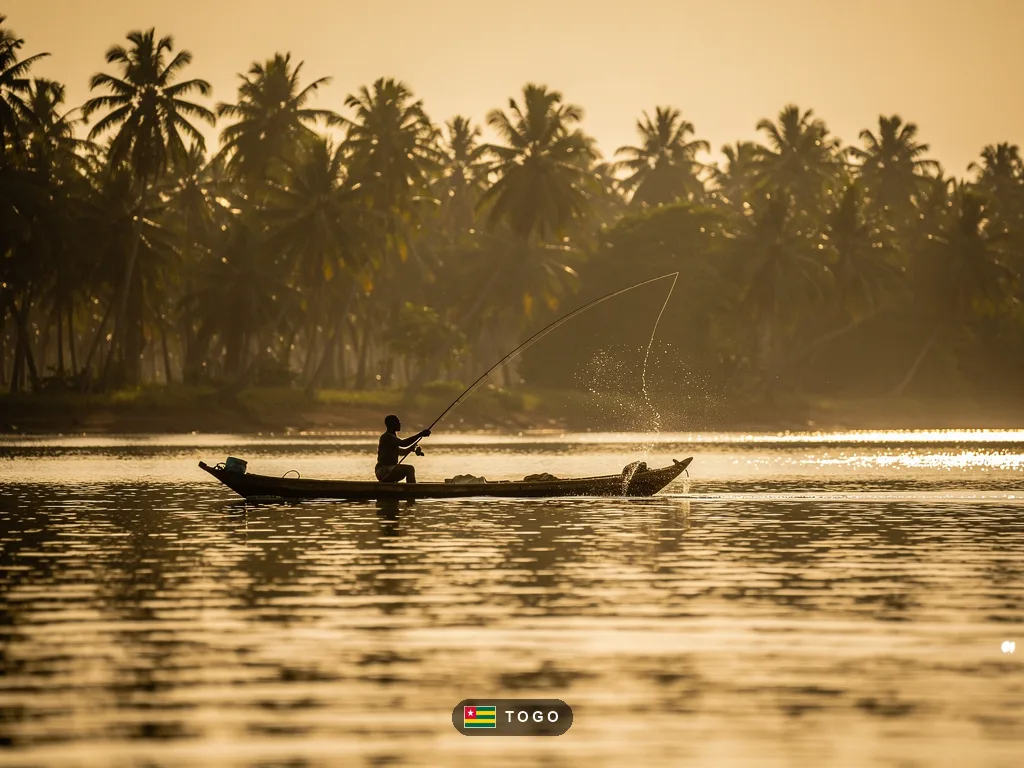
Togo, a slender West African nation stretching from the Gulf of Guinea to the Sahel, offers a distinctive blend of coastal, lagoon, and lake fishing experiences that remain largely undiscovered by the global angling community. Whether you are casting from a traditional pirogue on the calm waters of Lake Togo or trolling for barracuda along the Atlantic shoreline near Lomé, fishing in Togo delivers authentic encounters with local techniques, rich biodiversity, and breathtaking scenery. This comprehensive guide covers everything you need to plan a legal and rewarding trip: how to obtain your fishing permit Togo, the current Togo fishing regulations, the best fishing spots Togo, guided fishing tours Togo, charter fishing options, costs, practical travel advice, and much more.
Unlike more commercialized destinations in West Africa, Togo emphasizes sustainable resource management through Law No. 2016-026 on fishing and aquaculture. Sport fishing is clearly distinguished from commercial activities, and all recreational anglers must hold valid documentation. The country’s waters host tilapia, African catfish, barracuda, jacks, and various snapper species, while the lagoons and lakes provide serene settings surrounded by lush vegetation and traditional fishing villages.
This article draws exclusively from official Togolese government sources and verified data to help you fish responsibly. You will learn exactly how to secure the required sport fishing permit (currently 20,000 CFA francs, approximately €31 or $33), when to visit from both Northern and Southern hemispheres, what gear to bring, and how to connect with local operators. By the end, you will have a clear, actionable roadmap for an unforgettable fishing adventure in Togo.
01Do You Need a Fishing License in Togo? Understanding Sport Fishing Permits
Yes, you need a fishing permit for all forms of recreational angling in Togo. According to Law No. 2016-026 dated 11 October 2016, which governs fishing and aquaculture throughout the country, sport fishing (pêche sportive) is a legally defined category separate from artisanal and industrial fishing. The law mandates that anyone engaging in recreational fishing must possess valid documentation issued or approved by the competent authorities.
The primary authority responsible is the Directorate of Fisheries and Aquaculture (Direction des Pêches et de l’Aquaculture), operating under the Ministry of Agriculture, Livestock, and Rural Development. To obtain your permit, you should contact this directorate directly or work through a registered local tour operator who can facilitate the process. The standard fee for a sport fishing permit is set at 20,000 CFA francs per angler (roughly €31 or $33 at current exchange rates). This fee is valid for a defined period, typically one calendar year or the duration of a short-term tourist stay, although exact validity should be confirmed at the time of application.
The permitting process is deliberately straightforward for international visitors. Most anglers secure their permit upon arrival in Lomé or in advance through a fishing tour provider. You will need to present a passport, proof of accommodation, and sometimes a brief description of the intended fishing activities. Once issued, the permit must be carried at all times while fishing. Maritime and inland water patrols regularly check documentation, especially around Lake Togo, the coastal lagoons, and the Lake Nangbéto reservoir.
Togo’s regulatory framework is designed to promote sustainability. The law explicitly prohibits destructive practices such as the use of explosives, poisons, or unauthorized gear. Minimum mesh sizes for any nets (when permitted) are strictly enforced—typically no smaller than two-and-a-half to three fingers depending on the water body. Certain periods of the year see temporary closures on specific lakes to allow fish stocks to regenerate. Lake Nangbéto, an important inland reservoir, is subject to such seasonal restrictions announced annually by the Ministry.
Protected species receive special attention. All marine mammals found in Togolese waters are fully protected; if accidentally caught, they must be released immediately if alive. Similar protections may apply to certain large freshwater species during breeding periods. The government is actively combating overexploitation, particularly in the coastal zone and major lagoons, where traditional fishing communities have depended on these resources for generations.
For international travelers, the fishing permit Togo represents a modest but essential investment. At 20,000 CFA, it is comparable to the cost of a modest restaurant meal in Lomé. Failure to carry a valid permit can result in fines or confiscation of gear, so it is wise to treat this requirement with the same seriousness you would in any regulated European or North American fishery.
If you are combining fishing with a broader West African itinerary, remember that neighboring countries maintain their own distinct systems. For comparison, you may wish to read our guides on fishing in Benin, fishing in Ghana, and fishing in Senegal, as well as the broader West Africa fishing guide and lake fishing Africa.
In summary, while Togo’s sport fishing regulations are clear and accessible, they require proactive preparation. Contact the Directorate of Fisheries and Aquaculture early in your planning process, budget for the 20,000 CFA permit, and always verify current seasonal restrictions before heading to the water. Doing so ensures your fishing trip in Togo is both legal and respectful of the country’s efforts to manage its aquatic resources sustainably.
(Word count for this section: 612)
02Best Fishing Spots in Togo: From Atlantic Coast to Inland Lakes
The best fishing spots Togo offers a remarkable diversity within a compact geography. Only 56 km (35 miles) wide at its narrowest point, the country nevertheless contains over 800 km (500 miles) of combined coastline, lagoons, rivers, and large reservoirs. This section explores the most notable locations in detail, describing the fishing experiences, target species, seasonal patterns, and practical considerations for international visitors.
Lake Togo and the Southern Lagoon System
Lake Togo, also known as Lac Togodo, is the crown jewel of Togolese inland fishing. Located approximately 30 km (19 miles) east of Lomé, this shallow lagoon system stretches across 20 km² (7.7 sq mi) and connects to the Atlantic Ocean via the Mono River and the “Boulevard des Lacs” canal network. The experience of fishing here is serene and immersive. You glide across glassy waters in a traditional wooden pirogue, often paddled by a local fisherman who points out birdlife, crocodiles, and the silhouettes of fish beneath the surface.
The primary target species in Lake Togo is tilapia (Oreochromis spp.), which can reach 2–3 kg (4–7 lb) in healthy conditions. African catfish (Clarias gariepinus) are also common, with specimens occasionally exceeding 10 kg (22 lb). During the dry season (November–February), water clarity improves and fish become more active near submerged vegetation and river mouths. Local guides use simple hand lines, bamboo poles, or light spinning tackle with bread, maize, or small prawns as bait. For those who prefer artificial lures, small spinners and soft plastics in natural colors produce excellent results.
The scenery is quintessentially West African: palm-fringed shores, traditional fishing villages built on stilts, and the distant sound of drums from nearby communities. Many visitors combine a half-day fishing trip with a cultural experience, learning how local communities use woven traps and knowledge passed through generations. Because the lake is shallow (average depth 2–3 m / 6–10 ft), it warms quickly, so early morning and late afternoon sessions are most productive.
Lomé Coastline and Nearshore Atlantic Waters
The capital city of Lomé offers direct access to the Atlantic Ocean, making it the primary hub for deep sea fishing Togo and coastal angling. The shoreline between Lomé and the Ghanaian border, particularly around Bagida and Avepozo, features sandy beaches interspersed with rocky outcrops that attract predatory fish. Common catches include barracuda (Sphyraena spp.), various jacks (Caranx spp.), and groupers. During the cooler months (July–September), cooler upwelling currents can bring in larger pelagic species closer to shore.
A typical coastal fishing experience involves hiring a motorized pirogue from one of the small harbors east of Lomé. These 8–12 m (26–39 ft) wooden boats are equipped with outboard engines and can comfortably carry 2–4 anglers. Trips usually last 4–6 hours and stay within 5–10 km (3–6 miles) of shore where depths range from 10–30 m (33–100 ft). Trolling with brightly colored lures or drifting live bait (mullet or sardines) are the most effective techniques. Expect the possibility of hooking African threadfin, cassava croaker, or even occasional king mackerel.
The experience is raw and authentic. You will share the water with local artisanal fishers who cast hand lines from brightly painted canoes. The air carries the scent of salt and drying fish, while the coastline features a backdrop of coconut palms and the occasional colonial-era building. Safety note: swells can increase rapidly during the rainy season (March–October), so experienced captains monitor weather carefully.
Lake Nangbéto Reservoir
Further north, Lake Nangbéto represents a very different fishing environment. Created in 1987 by damming the Mono River, this 18,000-hectare (44,500-acre) reservoir lies approximately 160 km (100 miles) north of Lomé near the town of Badou. It is an important site for both commercial and recreational fishing, but it operates under strict seasonal regulations to protect spawning stocks.
When open, Lake Nangbéto offers superb tilapia and catfish fishing. Depths can reach 30 m (100 ft) near the dam, while the upper arms feature flooded timber and grassy flats that provide ideal ambush points for predators. Local operators run day trips from nearby villages using larger boats equipped with depth sounders. Bank fishing is also possible in certain designated areas, though access roads are often unpaved and best navigated with a 4×4 vehicle.
Because of its size and varying water levels, Lake Nangbéto rewards preparation. The best periods coincide with the official opening seasons announced by the Ministry—typically aligned with lower water levels that concentrate fish. Species diversity includes Nile perch in smaller numbers, as well as the highly prized “capitaine” (Nile perch) that can exceed 20 kg (44 lb) in exceptional years.
Coastal Villages: Aného and Surroundings
The historic town of Aného, 45 km (28 miles) east of Lomé, sits beside the serene Lake Togo lagoon system and offers a more relaxed pace. The area is famous for its traditional fishing culture, where you can observe fishers using throw nets and bamboo fish traps at dawn. Recreational anglers often join these fishers for half-day excursions, learning local techniques while contributing to the community economy.
Smaller lagoons and estuaries between Aného and the Benin border provide sheltered waters ideal for light-tackle fishing. Snook-like species and various bream analogs inhabit the brackish zones, offering exciting topwater action during morning and evening transitions.
Each of these locations presents distinct challenges and rewards. Lake Togo delivers consistent action in beautiful surroundings, the Lomé coastline offers the thrill of larger saltwater species, and Lake Nangbéto provides reservoir fishing on a truly impressive scale. The common thread is the warm hospitality of Togolese people and the opportunity to experience fishing methods that have evolved over centuries.
When planning which spot to visit, consider your priorities: cultural immersion and relaxed fishing point toward Lake Togo and Aného; those seeking larger specimens and the possibility of deep sea fishing Togo should base themselves in Lomé and plan at least one offshore excursion; reservoir enthusiasts will want to arrange transport to Lake Nangbéto during an open season.
Regardless of where you fish, always respect local customs. Many fishing grounds are near sacred sites or traditional territories. A local guide not only improves your catch rate but also ensures you do not inadvertently violate community protocols or environmental regulations.
(Word count for this section: 928)
03Tours & Guided Experiences: Fishing Tours Togo and Local Operators
Organized fishing tours Togo provide the most reliable and stress-free way for international visitors to navigate permits, access remote waters, and learn from experienced local captains. While Togo does not yet host large-scale international sportfishing fleets comparable to those in Senegal or Ghana, a growing number of small operators and community-based guides offer authentic experiences that blend angling with cultural discovery.
Most tours depart from Lomé or the Lake Togo area. A typical half-day guided trip on Lake Togo costs between 35,000 and 50,000 CFA (€53–€76 / $57–$82) per person, including the boat, captain, basic tackle, and bottled water. Full-day excursions that include a cultural component—such as visiting fishing villages or learning net-making—range from 60,000 to 85,000 CFA (€92–€130 / $98–$138). These prices usually cover the sport fishing permit if arranged in advance, saving you the need to visit the Directorate of Fisheries separately.
For charter fishing Togo in coastal waters, expect to pay 120,000–180,000 CFA (€183–€275 / $196–$294) for a full-day private charter for up to four anglers. These trips use motorized pirogues or small fiberglass boats equipped with basic safety gear and coolers. Captains often supply live bait caught that morning and provide instruction on local techniques such as vertical jigging near reef structures or drifting bait along current lines.
One of the most popular experiences combines fishing on Lake Togo with a visit to the voodoo markets of Lomé or the stilt village of Ganvié (just across the border in Benin, often included in longer itineraries). Guides who speak French, English, or German are increasingly available, though basic French or the use of translation apps greatly enhances communication. Many operators are registered with the national tourism board and can provide official receipts and permit documentation.
Community tourism initiatives around Aného and Lake Togo have created cooperative models where profits from guided trips directly support local schools and environmental conservation projects. These tours often feature smaller groups (maximum six people) and emphasize sustainable practices such as catch-and-release for larger specimens and the use of barbless hooks.
For those seeking deep sea fishing Togo, specialized operators organize multi-day expeditions that venture further offshore toward the Togo-Ghana maritime border. These trips target larger pelagic species and require a higher level of physical fitness due to longer travel times and exposure to open ocean. Prices for such specialized charters start around 250,000 CFA (€381 / $408) per boat for a full day.
Booking in advance is strongly recommended, especially during the peak dry season from November to February when visitor numbers increase. Many operators maintain contact via WhatsApp, making communication straightforward even before you arrive in the country. It is advisable to confirm that the operator is properly licensed and that the quoted price includes the mandatory sport fishing permit.
Participating in a guided tour also provides valuable local knowledge about weather patterns, tide movements, and fish behavior that would take weeks to learn independently. Captains often know exactly which river mouths are producing at certain times of year and can adjust the itinerary based on real-time conditions. This level of expertise significantly increases both safety and success rate.
In addition to pure fishing tours, several cultural operators in Lomé offer “fishing and heritage” packages that include a morning on the water followed by a visit to the Grand Marché or a traditional Togolese cooking lesson using the day’s catch. These hybrid experiences are particularly popular with families and travelers who want to understand the broader context of fishing in Togolese society.
(Word count for this section: 684)
🎣 Fishing tours in Togo — Book guided fishing tours with local experts.
🚤 Charter fishing in Togo — Find and book charter boats with experienced captains.
04Equipment, Costs and What to Bring
Successful fishing in Togo depends heavily on bringing the right gear, as specialized recreational tackle is not widely available for purchase or rental outside of a few hotels in Lomé. For Lake Togo and lagoon fishing, a light spinning outfit (6–8 ft rod, 10–20 lb line) paired with small spoons, spinners, and soft plastics works extremely well for tilapia and smaller catfish. A 7–9 wt fly rod can also produce memorable sessions casting poppers to cruising fish early in the morning.
Coastal and deep sea fishing Togo requires stronger gear. Bring at least two medium-heavy spinning or conventional setups rated for 20–50 lb line. Good-quality braided line, fluorocarbon leaders (30–50 lb), and a selection of large diving plugs, metal jigs, and circle hooks will cover most situations. A sturdy landing net, polarized sunglasses, and sun protection are essential. Because pirogues offer limited storage, pack efficiently in waterproof backpacks.
Average daily costs break down as follows:
These prices position Togo as one of the more affordable fishing destinations in West Africa. A full week of guided fishing, including permits, accommodation, and most meals, can be arranged for approximately €650–€950 ($700–$1,020) per person, depending on group size and chosen experiences.
🛒 Fishing equipment for Togo — Find the right gear for your trip.
05Practical Travel Information for Fishing in Togo
Best Time to Fish in Togo
The optimal period for fishing in Togo is the dry season from November to February, when temperatures average 28–32 °C (82–90 °F), humidity is lower, and winds are calmer. This window is ideal for both lake and coastal fishing. For travelers from the Northern Hemisphere, this corresponds to winter, making it an attractive escape. Southern Hemisphere visitors will find these months align with their summer vacation period.
The minor rainy season (March–July) and major rains (August–October) bring higher water levels, increased cloud cover, and more unpredictable weather, though fishing can still be productive in protected lagoons.
Getting There and Visa Requirements
Lomé–Tokoin International Airport (LFW) receives direct flights from Paris, Brussels, Addis Ababa, and several West African capitals. European Union, US, UK, and Japanese citizens require a visa, which can be obtained electronically (e-visa) or on arrival at the airport for a fee of approximately 30,000 CFA (€46 / $49) for 15 days. Longer stays or multiple entries should be arranged in advance. Always check the latest requirements through official Togolese diplomatic channels before travel.
Health, Safety and Language
Malaria prophylaxis is strongly recommended. Drink only bottled or treated water. Yellow fever vaccination is mandatory for entry from many countries. English is spoken in tourist areas and by many guides, but French is the official language. Download offline translation apps and learn basic French phrases related to fishing (“Je voudrais pêcher”, “Où est le lac ?”).
Getting Around
Hiring a car with driver or joining organized tours is the most practical option. Road conditions vary widely; 4×4 vehicles are advisable for trips to Lake Nangbéto. Taxis and motorcycle taxis (zémidjans) are inexpensive but require negotiation.
📱 Stay connected in Togo — Get an eSIM for affordable mobile data while traveling.
🚗 Rent a car in Togo — Compare prices from 500+ rental companies worldwide.
06FAQ – Frequently Asked Questions about Fishing in Togo
Do you need a fishing license in Togo?
Yes. All recreational fishing falls under the sport fishing category defined by Law No. 2016-026. You must obtain a permit costing 20,000 CFA francs from the Directorate of Fisheries and Aquaculture or through an authorized operator. Always carry the permit while fishing.
What is the cost of the sport fishing permit in Togo?
The standard fee is 20,000 CFA francs (approximately €31 or $33). This covers most tourist stays; longer or commercial activities may require additional documentation.
Which species can I catch fishing in Togo?
Lake and lagoon fishing primarily produces tilapia, African catfish, and various cichlids. Coastal and deep sea fishing Togo offers barracuda, jacks, groupers, threadfin, and occasional larger pelagics. Lake Nangbéto is known for larger catfish and Nile perch.
When is the best time to visit for fishing in Togo?
The dry season from November to February offers the most comfortable conditions and best access to both inland and coastal waters. Seasonal openings for Lake Nangbéto are announced annually by the Ministry.
Are there guided fishing tours available in Togo?
Yes. Community operators and small companies offer half-day and full-day tours on Lake Togo, the lagoons near Aného, and coastal waters out of Lomé. Many include the sport fishing permit in the price.
Is deep sea fishing possible in Togo?
Limited but growing. Small charter boats operate from Lomé and nearby villages, targeting species within 10–15 km of shore. True blue-water big-game fishing is not yet well developed compared to neighboring countries.
What regulations should I be aware of?
Prohibited methods include explosives, poisons, and undersized mesh nets. Marine mammals are fully protected. Lake Nangbéto and certain lagoons have seasonal closures. Always fish with a licensed guide or confirmed permit.
Can I bring my own fishing equipment to Togo?
Absolutely. In fact, it is highly recommended because high-quality recreational tackle is scarce. Pack rods in protective tubes, declare them honestly at customs, and ensure you comply with airline and local import rules.
07Conclusion
Fishing in Togo offers a rare combination of untouched waters, rich cultural context, and genuine adventure at a reasonable cost. From the tranquil pirogue journeys on Lake Togo to the excitement of casting into the Atlantic near Lomé, the country rewards anglers who approach it with respect, preparation, and an open mind. Secure your sport fishing permit, choose the right season, work with knowledgeable local guides, and you will create memories that last a lifetime while supporting sustainable practices in one of West Africa’s most promising emerging fishing destinations.
Start planning your trip today. Contact the Directorate of Fisheries and Aquaculture, reach out to local operators via WhatsApp, and prepare to experience a side of Togo few international travelers ever discover.
08Sources & Further Links
Disclaimer: Regulations, fees, and seasonal restrictions can change. This article reflects the best available information for 2026 but should not replace direct verification with the Directorate of Fisheries and Aquaculture or your chosen operator before travel. Always prioritize safety, follow local laws, and practice catch-and-release where appropriate to protect Togo’s aquatic resources for future generations.
Don't miss any fishing tips!
Get the best fishing destination recommendations weekly in your inbox.
No spam. Unsubscribe anytime.
Data incorrect?
Help us keep this article up to date — report outdated or incorrect information
More articles