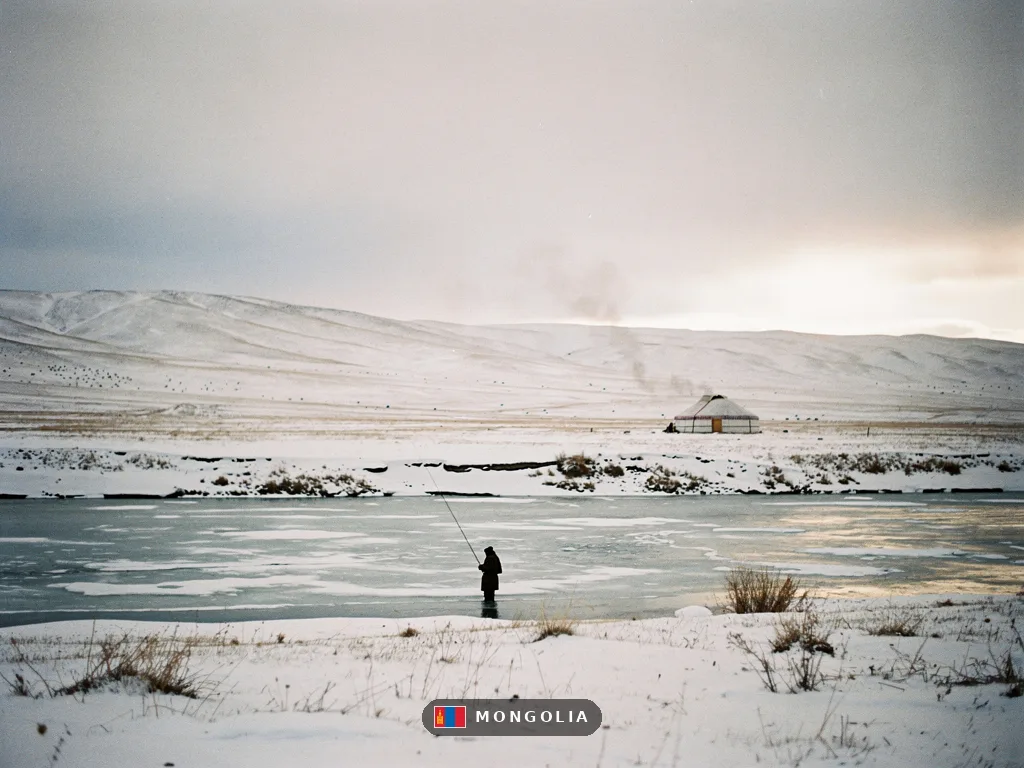
Imagine standing in a crystal-clear river in the heart of the Mongolian steppe, casting a mouse pattern into a deep pool as the world's largest salmonid — a massive Taimen — explodes on the surface like a prehistoric river wolf. This is fly fishing in Mongolia, one of the most remote and rewarding freshwater fishing destinations on Earth.
Fishing in Mongolia is not a casual weekend activity. It is an expedition into pristine wilderness where you will encounter few other anglers, breathtaking landscapes, and the chance to battle fish that can exceed 1 meter (40 inches) and 30 kg (66 lbs). While the country offers world-class opportunities for Taimen, Lenok trout, Grayling, and Northern Pike, the experience is heavily regulated to protect these fragile ecosystems.
In this comprehensive guide, we cover everything you need to plan your trip: whether you need a fishing license in Mongolia, how to obtain Taimen permits, the best fishing spots, guided float trips and tours with current 2026 prices, travel practicalities for visitors from the US, EU, UK, Japan and beyond, gear recommendations, and regulations that every international angler must follow.
01Do You Need a Fishing License in Mongolia?
Yes. A fishing license (or permit) is mandatory for all anglers in Mongolia, including foreigners, whether you fish from shore, a boat, or during a float trip. There is no free fishing, even in remote areas.
Mongolia issues two main categories of permits for international visitors:
For most international travelers, the practical and safest way to fish is to book through a licensed Mongolian tour operator. These companies secure the necessary Taimen Permit, regional travel permits (especially important in border zones near Russia and China), and handle all paperwork. Independent applications are possible via the online system at ezagas.mn, but the process can be complicated for non-Mongolian speakers and often leads to delays or rejection without local support.
Tip: Always verify the latest permit requirements directly with your chosen outfitter or the Ministry of Environment and Tourism, as regulations can change annually.
Shore fishing does not exempt you from the permit requirement. Whether you are spinning on the banks of Ugii Lake or fly fishing the Delgermörön River, you must carry valid documentation. Fines for fishing without a permit start at 300,000 MNT (approx. $85 USD / 80 EUR) and can include confiscation of all fishing gear and, in serious cases, deportation.
The closed season runs from April 1 to June 15 each year to protect spawning fish. Fishing during this period can result in significantly higher penalties.
02Fishing Regulations and Rules You Must Know
Mongolia takes conservation extremely seriously. The government works with international NGOs to maintain healthy populations of Taimen, which are considered a national treasure.
Key regulations for 2026 include:
Export of any wild-caught fish or Taimen parts is strictly illegal. Photographs and measurements are encouraged instead — many outfitters provide professional catch-and-release photography services.
The Ministry of Environment and Tourism (mnet.gov.mn) and the online permit portal ezagas.mn are the primary official authorities. Always check the latest announcements, as seasonal adjustments (such as the 2.5-month fishing ban) are regularly published.
03Best Fishing Spots in Mongolia — Where to Catch Trophy Taimen
The true magic of fishing in Mongolia lies in its remote rivers and lakes. Here are the top destinations that make anglers dream of this Central Asian wilderness:
1. Eg-Uur Watershed (Khövsgöl Province)
This is the most famous Taimen fishery in the world. The crystal-clear waters flowing from the mountains of northern Mongolia regularly produce fish over 1 meter. The scenery alternates between rolling steppe, forested hills, and dramatic cliffs. Dry fly fishing with mouse patterns is exceptionally productive here during the early season. Many world-record class Taimen have come from these waters.
2. Delgermörön River (Northern Mongolia)
A wild, canyon-like river with powerful currents and deep pools. The headwaters area known as "The Temple" offers some of the most spectacular sight-fishing for Taimen on the planet. Expect rugged beauty and the chance to catch multiple fish over 80 cm (31 inches) in a single day. Float trips here often combine excellent Lenok and Grayling fishing between Taimen beats.
3. Onon River (Eastern Mongolia — Land of Genghis Khan)
Flowing through the birthplace of the great Mongol emperor, the Onon offers a mixed bag of Taimen, Amur Pike, and Amur Trout. The landscape is classic Mongolian — vast open valleys framed by distant mountains. This area is slightly more accessible than the far north but still feels wonderfully remote.
4. Lake Khövsgöl (The Blue Pearl of Mongolia)
The deepest lake in Central Asia and a UNESCO biosphere reserve. While not primarily a Taimen destination, it offers superb fishing for Lenok, Grayling, and Burbot. In winter, ice fishing becomes popular. The surrounding alpine scenery and pristine water make this one of Mongolia’s most beautiful locations. Shore fishing and boat trips are both possible with the proper permit.
5. Ugii Lake (Central Mongolia)
More accessible from Ulaanbaatar, Ugii Lake is excellent for Northern Pike reaching up to 1.2 meters (47 inches) and large Perch. It serves as a good “warm-up” destination or alternative for anglers wanting a less expensive, logistically simpler trip. The surrounding wetlands provide fantastic birdwatching between casts.
Each of these locations offers a completely different experience — from high-mountain float trips to lakeside ger camps. The remoteness is part of the appeal: some rivers see fewer than 100 anglers per season.
Tip: Book early. The best camps and rivers fill up 12–18 months in advance for peak September–October weeks.
04Fish Species and Techniques — What You Will Catch
The star of the show is the Taimen — often called the “River Wolf.” These aggressive predators can reach 1.5+ meters (60 inches) and over 50 kg (110 lbs), although fish of 70–100 cm (28–40 inches) are more common. They strike surface flies with explosive aggression, especially mouse and frog patterns.
Other species include:
Techniques: The most thrilling method for Taimen is skating large mouse imitations across the surface at dusk and dawn. Streamers fished deep in pools work well during the day. A typical day involves hiking between prime runs, reading water like classic trout fishing but with much heavier gear.
Bring 8–10 weight rods for Taimen and 4–6 weight outfits for trout and Grayling. Quality reels with strong drags are essential — a 90 cm Taimen can take you into your backing in seconds.
05Tours & Guided Experiences — Float Trips and Camps
Almost all high-quality fishing in Mongolia is done through organized multi-day float trips. These expeditions typically last 7–14 days and involve drifting downriver in inflatable rafts or wooden drift boats while camping in traditional gers (yurts) or modern tents along the riverbank.
Top operators include:
What’s included in most packages:
You usually need to bring only your personal clothing, waders, and favorite fly rods. Most outfitters provide backup tackle but recommend bringing your own quality gear for such a bucket-list trip.
These trips are not cheap — roughly the cost of a mid-range safari in Africa — but the combination of untouched nature, incredible fishing, and cultural immersion in nomadic Mongolian life makes them unforgettable.
🎣 Fishing tours in Mongolia — Book guided fishing tours with local experts.
🚤 Charter fishing in Mongolia — Find and book charter boats with experienced captains.
06Costs Breakdown — What to Expect in 2026
Fishing Permits
Guided Float Trips (per person, all-inclusive)
Additional Costs
Compared to similar wilderness trips in Alaska or Kamchatka, Mongolia remains relatively affordable while offering unmatched remoteness and Taimen fishing.
07Practical Travel Info for International Visitors
Best Time to Visit
From the Northern Hemisphere perspective, the prime windows are June (post-spawn aggressive feeding) and especially September to mid-October (fish feeding heavily before winter). For travelers from Australia, New Zealand, or South America, these months correspond to late winter/early spring — a great escape from the Southern Hemisphere off-season.
Visa Requirements
Citizens of the United States, European Union, United Kingdom, Canada, Japan, South Korea, and many other countries can enter Mongolia visa-free for up to 30 days. Always check the latest rules on the Mongolian embassy website for your nationality, as extensions or longer stays may require a visa.
Getting There and Around
Most trips begin in Ulaanbaatar. You will take a domestic flight (1–2 hours) or a long 4x4 drive (8–20 hours) to reach the river or camp. Domestic flights are included in most packages. English is not widely spoken outside of tourist areas and outfitters — using translation apps like Google Translate with offline Mongolian packs is highly recommended. Your outfitter will provide English-speaking guides.
Health and Safety
Mongolia is generally safe, but the remoteness means you must be self-sufficient. Bring a good travel insurance policy that covers medical evacuation. Water is usually purified by outfitters, but always use bottled water in cities. Temperatures can swing from freezing nights to 25°C (77°F) daytime even in summer. Pack layers.
Language Tip: Learn a few basic Mongolian phrases such as “Bayarlalaa” (thank you) and “Sain bainuu” (hello). Your guides will greatly appreciate the effort.
📱 Stay connected in Mongolia — Get an eSIM for affordable mobile data while traveling.
Equipment and Packing
🛒 Fishing equipment for Mongolia — Find the right gear for your trip.
08Frequently Asked Questions
Do I need a fishing license in Mongolia?
Yes. All fishing requires an official permit. Independent anglers can apply online via ezagas.mn, but most visitors obtain permits through licensed outfitters.
How much does a Taimen fishing trip to Mongolia cost?
All-inclusive 10-day float trips typically range from $6,500 to $8,500 USD (6,100–8,000 EUR) per person. Permits alone add $400–$500 USD when not included.
What is the best time for Taimen fishing in Mongolia?
June and September–October are the prime months. September and early October often provide the most aggressive surface takes as fish bulk up for winter.
Can I fish independently in Mongolia?
Technically possible in some areas with proper permits, but strongly discouraged due to remoteness, language barriers, complex military border permits, and strict enforcement. Guided trips are the standard and safest option.
Is it catch and release only?
All Taimen caught by international anglers must be released. Single barbless hooks are required.
What gear do I need for Taimen?
An 8–10 weight fly rod, strong reel, and large mouse or streamer patterns. Outfitters can provide backup gear but you should bring your favorites.
Do US, EU, and UK citizens need a visa for Mongolia?
Most can visit visa-free for up to 30 days. Confirm the latest requirements before travel.
Are there fishing opportunities besides Taimen?
Yes. Excellent fly fishing for Lenok trout, Grayling, and pike is available on many rivers and lakes, often included in the same trips.
09Conclusion
Fishing in Mongolia remains one of the ultimate bucket-list adventures for serious fly anglers. The combination of massive Taimen, untouched rivers, nomadic culture, and vast wilderness creates an experience unlike anywhere else on Earth. While the journey requires planning and investment, the memories of a 90 cm Taimen cartwheeling across a Mongolian river at sunset will stay with you forever.
Start planning early — the best rivers and camps book up quickly. Contact reputable outfitters, secure your permits through them, and prepare for an expedition that will redefine your understanding of wild fishing.
Whether you are a seasoned fly fisher from Europe, a passionate angler from North America, or a traveler from Asia looking for a unique adventure, Mongolia offers something truly special.
Tight lines and safe travels on the rivers of the Mongol steppe!
10Sources & Further Links
Disclaimer: Regulations, permit prices, and seasonal dates may change. Always verify the latest information with official authorities such as the Ministry of Environment and Tourism of Mongolia and your chosen licensed outfitter before traveling. This guide was prepared for 2026 and is intended for informational purposes only. Fishing World Guide is not responsible for any changes in laws, permit availability, or conditions on the ground. Safe and responsible fishing is your responsibility.
Don't miss any fishing tips!
Get the best fishing destination recommendations weekly in your inbox.
No spam. Unsubscribe anytime.
Data incorrect?
Help us keep this article up to date — report outdated or incorrect information
More articles