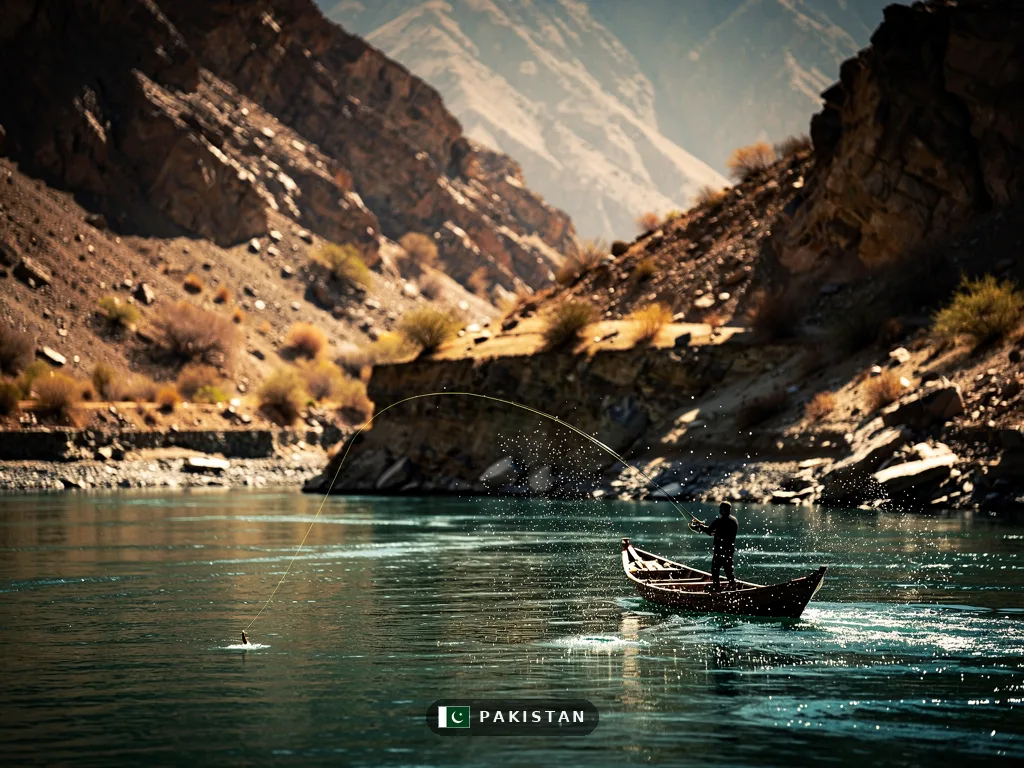
Pakistan offers one of Asia’s most diverse and least-visited fishing destinations. From the snow-fed rivers of the northern Himalayan foothills to the deep blue waters of the Arabian Sea off Karachi, the country delivers exceptional opportunities for trout fishing, mahseer fishing, deep sea fishing, and more. Whether you dream of battling a hard-fighting Golden Mahseer in a mountain reservoir or hooking sailfish and black marlin on a Karachi charter, Pakistan can deliver unforgettable angling experiences. However, the regulatory landscape is highly decentralized, which makes understanding fishing permits and local rules essential before you travel.
This comprehensive guide answers the most important question first — do you need a fishing license in Pakistan? — and then explores everything else you need to know: provincial permit systems, closed seasons, size limits, the very best fishing spots, guided tours and charters (with realistic 2026 costs), equipment needs, travel practicalities, and how to fish responsibly. By the end you will have a clear, actionable plan for a successful and compliant fishing trip to Pakistan.
Pakistan’s waters are home to more than 500 fish species, including prized sport fish such as Brown Trout, Rainbow Trout, Golden Mahseer, Giant Trevally, Yellowfin Tuna, and various billfish. The contrast between the cool, clear streams of Gilgit-Baltistan and the warm, productive currents of the Arabian Sea creates a unique double-destination appeal rarely found elsewhere. Yet because fishing regulations are managed at the provincial level rather than nationally, careful preparation with local operators is the smartest way to avoid problems and maximize your time on the water.
01Do You Need a Fishing License in Pakistan?
The short answer is: it depends on where and what you fish. Pakistan has no single national recreational fishing license that covers the entire country. Instead, authority is devolved to the provinces and, in some cases, to specific water bodies managed by the federal Marine Fisheries Department or local district administrations.
In many coastal marine waters — particularly for shore-based or small-boat fishing near Karachi — recreational anglers are generally not required to hold a formal license provided they use rod-and-line only and respect protected species and size limits. However, as soon as you move into inland waters such as government-controlled lakes, dams, or designated river stretches, you will almost always need a daily or seasonal permit issued by the relevant provincial Fisheries Department.
For example, in Khyber Pakhtunkhwa (KPK) and Gilgit-Baltistan, trout streams and high-altitude lakes are strictly managed. Anglers targeting Brown or Rainbow Trout in the Kunhar River or streams around Naran Valley must obtain a permit from the KPK Fisheries Department or the Gilgit-Baltistan Wildlife and Fisheries Department. These permits are usually issued on a daily or weekly basis and often include a bag limit (typically 2–4 fish per day depending on the water). Fees are modest by international standards — typically PKR 500–2,000 (about €1.60–€6.40 or $1.80–$7.20) per day — but they must be purchased in advance from the correct local office.
In Sindh province, which includes Karachi and the Indus Delta, the Sindh Fisheries Ordinance governs marine and estuarine fishing. For most offshore charter trips targeting tuna or marlin, the boat operator usually holds the necessary vessel license, and individual recreational anglers do not need a separate personal permit. That said, any fishing inside mangrove creeks or certain reservoir areas may still require a local day permit.
Always remember that regulations can change and some waters are periodically closed for conservation. The safest and most practical approach is to book your trip through a reputable local operator. They will secure the correct fishing permit Pakistan for your chosen location, brief you on current closed seasons, and ensure you stay on the right side of the law. Attempting to self-organize without local knowledge in remote northern valleys or sensitive border areas can lead to complications with local authorities or military checkpoints.
Tip: Carry a photocopy of your passport and the permit document with you at all times while fishing. In many northern districts, security personnel may ask to see identification even if you are simply walking along a riverbank.
The decentralized nature of Pakistan’s fishing regulations is not a barrier — it is simply the reality of a large and geographically varied country. Once you understand which provincial department controls your target water, obtaining the required paperwork becomes straightforward with the help of a guide.
(Word count for this section: 528)
02Fishing Regulations and Responsible Angling in Pakistan
Pakistan’s fishing rules exist primarily to protect breeding stocks and the country’s unique biodiversity. The most important regulations fall into four categories: closed seasons, permitted fishing methods, protected species, and size and bag limits.
Closed Seasons. Almost every province enforces seasonal closures. In northern trout waters (KPK and Gilgit-Baltistan), the closed season for trout typically runs from mid-autumn through early spring — roughly October to April — to protect spawning fish. Exact dates can vary by river system; the Kunhar River around Naran, for instance, is often closed from 1 October to 31 March. In marine waters off Sindh, there are often bans on certain netting activities during the peak spawning periods of shrimp and sardines that indirectly affect sport fishing. Always confirm the current closed season with the relevant provincial department or your operator before booking travel.
Permitted Methods. Only rod-and-line angling is considered legal for recreational fishers. The use of explosives, poisons, electrical fishing devices, or fine-mesh nets is strictly prohibited nationwide and carries heavy fines or even imprisonment. In practice this means fly fishing, spinning, and conventional tackle are all acceptable as long as you stay within bag and size limits. Catch-and-release is strongly encouraged, especially for Golden Mahseer and larger trout.
Protected Species. The Indus River Dolphin is fully protected under national law and must never be targeted or harassed. Several shark species found in Pakistani coastal waters are also protected or subject to strict international trade controls. If you accidentally hook a protected species, release it immediately with minimal harm. Heavy penalties apply for violations.
Size and Bag Limits. Minimum size limits are common. For trout in northern streams the legal minimum is often 25–30 cm (10–12 inches) depending on the river. Mahseer below 50 cm (20 inches) must usually be returned. Marine charters frequently operate a “one billfish per boat per day” policy even when multiple anglers are aboard. These rules are enforced to allow fish to reach breeding size and maintain healthy populations.
Because enforcement resources are limited, the real guardians of these regulations are the local communities and professional guides. By hiring a licensed operator you not only stay legal but also support the people who have a direct stake in the long-term health of the fishery.
Responsible angling also means practical steps on the water: use barbless hooks where possible, minimize time out of water for photographs, and never leave monofilament line behind. In the fragile high-altitude ecosystems of the north, even small amounts of discarded tackle can harm wildlife.
Understanding and respecting these rules is not bureaucratic red tape — it is the foundation that allows future generations of anglers to enjoy the same pristine rivers and productive seas that exist today.
(Word count for this section: 512)
03Best Fishing Spots in Pakistan
The best fishing spots in Pakistan fall into three distinct zones: the northern mountain rivers and lakes, the inland reservoirs, and the Arabian Sea coastline. Each region offers completely different experiences, target species, and fishing techniques.
Northern Pakistan – World-Class Trout Fishing
The mountainous regions of Khyber Pakhtunkhwa and Gilgit-Baltistan are home to some of the most scenic trout fishing in Asia. Clear, cold streams fed by glaciers create ideal habitat for both native Brown Trout and introduced Rainbow Trout.
The Kunhar River flowing through the Naran Valley is perhaps the most famous. Here you can wade in fast-flowing pocket water using dry flies or small spinners. Fish in the 0.5–2 kg (1–4.5 lb) range are common, with occasional trophies up to 4 kg (9 lb). The surrounding landscape of snow-capped peaks and pine forests makes every cast feel like a postcard. Local operators typically arrange transport from Islamabad (approximately 6–7 hours by road) and provide simple but comfortable guesthouse accommodation in Naran or the nearby village of Battakundi.
Further north, the streams and lakes around Skardu and Astore in Gilgit-Baltistan offer even more solitude. The Shigar River and its tributaries are known for excellent wild Brown Trout. Many visiting anglers describe the experience as “fly fishing in the Karakoram” — an unforgettable combination of dramatic scenery and challenging angling. Access often involves jeep tracks and short hikes, adding an adventurous element that appeals to experienced travelers.
Phander Lake in the Ghizer district is a different but equally rewarding venue. This beautiful blue-water lake holds good numbers of Rainbow Trout and is suitable for both bank fishing and float-tubing. The surrounding meadows and mountains create a peaceful atmosphere ideal for multi-day fishing expeditions.
Inland Reservoirs – Golden Mahseer and Carp
Large dams and reservoirs provide another dimension to Pakistani freshwater fishing. Mangla Dam in Azad Kashmir and Khanpur Dam in Khyber Pakhtunkhwa are two of the most important venues. Both hold healthy populations of Golden Mahseer, a powerful fighting fish that can reach 20 kg (44 lb) or more, although fish in the 5–10 kg (11–22 lb) bracket are more common.
Fishing for mahseer usually involves heavy spinning or bait-casting tackle with large spoons, plugs, or dough baits. The fight is legendary — these fish are known for powerful runs and spectacular jumps. Many anglers practice catch-and-release to help conserve this culturally significant species that has declined in parts of its range across South Asia.
Khanpur Dam is also popular for carp fishing, offering a more relaxed experience for families or those wanting a less physically demanding day. Boat fishing is usually arranged through local operators who supply basic tackle.
Karachi and the Arabian Sea – Deep Sea Fishing and Coastal Sport Fishing
The coastal waters off Karachi form the heart of Pakistan’s marine sport fishing scene. The continental shelf drops relatively quickly, giving anglers access to both inshore reefs and true blue-water fishing within a reasonable distance of port.
Popular launch points include Mubarak Village (about 45 minutes from central Karachi) and the harbors around the city itself. From these points, charters head to Churna Island and surrounding waters known for excellent bottom fishing and trolling. Target species include:
A typical deep sea fishing trip involves leaving harbor at dawn, trolling lures or live bait for billfish, and then moving to productive ledges for bottom fishing. The Arabian Sea’s nutrient-rich upwellings support a food chain that can deliver explosive action when conditions align.
For those preferring lighter tackle, the mangrove creeks and estuaries around the Indus Delta offer excellent sight-fishing for Barramundi-like species and Mud Crabs, although these areas require specialized local knowledge and permits.
Each of these regions delivers its own magic. Northern trout fishing is about solitude, pristine water, and the challenge of fooling wary fish in fast currents. Reservoir fishing is about raw power and the thrill of a big mahseer peeling line from your reel against a backdrop of dramatic mountains. And the Karachi coast is pure offshore adrenaline — big boats, big lures, and the possibility of a true trophy marlin.
The variety is remarkable. You can realistically plan a two-week trip that combines ten days of high-altitude trout fishing in the Karakoram with four days of blue-water sport fishing off Karachi, experiencing two completely different worlds within the same country.
Because many of these locations are remote or require specific local permissions, almost all visiting international anglers fish with professional operators. These guides know the current regulations, the most productive spots on any given day, and the safest routes through sometimes complex terrain or security-sensitive areas.
(Word count for this section: 942)
🎣 Fishing tours in Pakistan — Book guided fishing tours with local experts.
04Tours & Guided Experiences
Given the decentralized nature of permits and the logistical complexity of traveling in Pakistan, joining a guided tour or charter is by far the most practical and enjoyable way to fish. Professional operators handle permits, transportation, equipment, meals, and safety — allowing you to focus entirely on the fishing.
In the northern regions, several specialist outfitters offer multi-day trout fishing packages in the Naran Valley, Swat Valley, and Gilgit-Baltistan. A typical 7-day trout fishing expedition including accommodation, meals, local transport, and daily permits costs between PKR 180,000 and PKR 350,000 (roughly €580–€1,120 or $630–$1,220) per person based on double occupancy. These packages usually include an English-speaking guide, a driver, and a cook. Some luxury operators provide tented camps with hot showers and chef-prepared meals in stunning mountain locations; others offer simpler but comfortable guesthouses.
For mahseer fishing at Mangla or Khanpur Dam, day trips can be arranged for PKR 25,000–45,000 (€80–€145 or $87–$158) per boat, usually accommodating 2–4 anglers. This price typically includes boat, guide, basic tackle, and lunch.
On the coast, Karachi-based operators run some of the most professional blue-water charters in the northern Arabian Sea. A full-day deep sea fishing charter for up to 6 anglers generally costs PKR 180,000–300,000 (€580–€960 or $630–$1,045), depending on the size of the vessel and distance traveled. This works out to roughly €100–€160 ($110–$175) per person when the boat is fully booked — competitive with many destinations in Southeast Asia.
Multi-day offshore expeditions to more distant fishing grounds (including overnight trips to Churna Island or further) are also available at higher rates. These usually include cabin accommodation on the vessel, all meals, and professional crew. Expect to pay PKR 450,000–750,000 (€1,440–€2,400 or $1,570–$2,620) for a 3-day/2-night trip for up to 6 anglers.
Several established operators are frequently mentioned by traveling anglers. In the north, companies specializing in adventure tourism that also run fishing programs can organize everything from airport pickup in Islamabad to permits from the KPK or Gilgit-Baltistan Fisheries Departments. In Karachi, long-established charter companies maintain well-equipped boats ranging from 28 ft center-consoles to larger 45 ft sportfishers with outriggers and fighting chairs.
When choosing an operator, look for those who explicitly mention that they handle all necessary permits and are registered with the relevant provincial tourism or fisheries authorities. Good operators will also brief you thoroughly on safety, local customs, and conservation practices before you even arrive.
Many tours can be customized. You can combine trout fishing with a visit to the Karakoram Highway, add cultural sightseeing in Skardu, or extend a Karachi charter with a city tour. Some operators also offer specialized fly-fishing packages using high-quality European or American tackle, while others focus on conventional heavy-tackle offshore fishing.
Language is rarely a barrier on organized tours. Most guides who work with international clients speak good English. Even so, downloading a translation app and learning a few basic Urdu phrases is always appreciated and helps build rapport with local crew and villagers.
Safety is taken seriously. In the northern areas, operators are well aware of which valleys are open to tourists and maintain close relationships with local authorities. In marine operations, boats are equipped with life jackets, VHF radios, and follow maritime safety protocols.
The guided experience in Pakistan is not just about catching fish — it is about gaining access to places that would be almost impossible to reach independently, understanding the local culture that surrounds the fishery, and fishing with people who have generations of knowledge about their waters.
(Word count for this section: 878)
🚤 Charter fishing in Pakistan — Find and book charter boats with experienced captains.
05Equipment and What to Bring
Equipment requirements differ dramatically between the high-altitude trout streams and the offshore waters of the Arabian Sea.
For northern trout fishing, a 4–6 weight fly rod (9 ft) paired with a quality reel and floating line is ideal. Bring a selection of dry flies (Elk Hair Caddis, Adams, Royal Wulff), nymphs, and small streamers. Spinning anglers should pack 5–12 lb test line and small spinners or spoons. Waders are useful but not always essential; many anglers simply wear quick-dry trousers and felt-soled wading boots. A good rain jacket is essential — mountain weather can change rapidly.
For mahseer at the large reservoirs, bring sturdy spinning or bait-casting outfits rated for 15–30 lb line. Heavy-duty reels with good drag systems are necessary. Popular lures include large spoons, deep-diving plugs, and soft plastics.
Offshore in Karachi, charter boats usually supply heavy trolling rods, reels, and lures. However, serious anglers often prefer to bring their own high-quality offshore reels (size 50–80 class) spooled with 80–130 lb braid if targeting large marlin or tuna. A good selection of casting lures for Giant Trevally and poppers for surface action will also see use. Polarized sunglasses, sunscreen, and a buff or neck gaiter are vital in the strong tropical sun.
No matter where you fish, bring basic terminal tackle (hooks, swivels, leaders) in quantity — these are not always easy to replace locally. A small tackle repair kit, multi-tool, and headlamp are also useful.
If you are flying in from Europe, North America, or East Asia, consider the weight limits on internal flights to northern airports such as Gilgit or Skardu. Many travelers ship a separate tackle box via courier or use operators who can rent basic gear.
Clothing should be practical and modest out of respect for local culture. Lightweight long-sleeve shirts, convertible trousers, and a wide-brimmed hat work well in both mountain and coastal environments. In the north, pack layers — temperatures can drop dramatically after sunset even in summer.
(Word count for this section: 478)
🛒 Fishing equipment for Pakistan — Find the right gear for your trip.
06Practical Travel Information
Visa Requirements. Most international visitors need a visa to enter Pakistan. Citizens of the EU, UK, USA, Canada, Australia, and Japan can apply for an Electronic Travel Authorization (ETA) or a visa on arrival in certain cases, but the process changes regularly. Many travelers now use the Pakistan Online Visa System. Processing usually takes 2–4 weeks. Always check the official Pakistan Visa Portal or your local Pakistani embassy for the latest rules. A tourist visa is generally sufficient for recreational fishing trips.
Best Time to Visit. Timing depends on your target region. For northern trout fishing, the optimal window is May through September when valleys are accessible and rivers are clear. June to August offers the most stable weather but also coincides with peak domestic tourism. For deep sea fishing off Karachi, the best period is October through April when seas are calmer and billfish are more active. The hottest months (May–August) can be uncomfortable in Karachi with temperatures regularly exceeding 35 °C (95 °F).
Getting There and Around. Most international anglers fly into Islamabad (ISB) for northern trips or Karachi (KHI) for marine fishing. Both airports have good connections from major hubs in the Middle East, Europe, and Southeast Asia. Internal flights to Gilgit or Skardu are spectacular but subject to weather cancellations — having flexible dates is wise. Road travel in the north is scenic but slow; expect 6–10 hours from Islamabad to prime fishing valleys.
Health and Safety. Drink only bottled or properly treated water. Standard vaccinations (hepatitis A, typhoid, tetanus) are recommended. Malaria prophylaxis may be advised for southern coastal areas. In the north, altitude can exceed 2,500 m (8,200 ft) — be aware of symptoms of altitude sickness. Follow your operator’s security advice, especially regarding movement after dark or near sensitive border regions.
Language and Communication. Urdu is the national language, but English is widely understood in tourism-related businesses. Downloading Google Translate with offline Urdu packs is helpful. Local guides on organized tours usually speak fluent English.
Costs Overview. Pakistan remains one of the more affordable international fishing destinations. A two-week trip combining northern trout fishing and Karachi offshore charters can be completed for €2,800–€4,500 ($3,050–$4,900) per person including flights from Europe, accommodation, meals, permits, and guided fishing. This is significantly less than comparable trips to similar fisheries in neighboring countries or further afield.
Currency and Payments. The Pakistani Rupee (PKR) is the local currency. As of early 2026, 1 EUR ≈ PKR 310 and 1 USD ≈ PKR 278. ATMs are available in major cities but scarce in remote valleys. Bring sufficient cash (euros or dollars) for smaller expenses and tips. Credit cards are accepted only in larger hotels and some charter offices in Karachi.
Cultural Considerations. Pakistan is a conservative country. Dress modestly, especially when visiting villages in the north. Alcohol is not widely available. Showing respect for local customs and Islamic traditions will be warmly reciprocated by your hosts and guides.
(Word count for this section: 612)
📱 Stay connected in Pakistan — Get an eSIM for affordable mobile data while traveling.
07FAQ – Fishing in Pakistan
Do you need a fishing license in Pakistan?
There is no single national recreational fishing license. Coastal marine fishing from charter boats usually does not require an individual permit because the operator holds the vessel license. However, most inland waters, lakes, dams, and designated trout rivers require a daily or seasonal permit from the relevant provincial Fisheries Department. Always use a local operator who will arrange the correct paperwork for your chosen fishing location.
What are the best months for trout fishing in Pakistan?
The prime season for trout fishing in the northern valleys is May to September. June, July, and August generally offer the most reliable weather and highest water clarity, although these are also the busiest months. Some rivers open as early as April and remain fishable into October depending on snowmelt and rainfall patterns.
Is deep sea fishing in Karachi worth the trip?
Yes. The Arabian Sea off Karachi offers genuine blue-water sport fishing for sailfish, marlin, tuna, and giant trevally. While not as famous as destinations in the Indian Ocean, the combination of productive waters, reasonable charter prices, and the chance to catch multiple species in a single day makes it an excellent option for serious offshore anglers.
Can I practice catch and release in Pakistan?
Absolutely — and it is strongly encouraged, especially for Golden Mahseer and larger trout. Many professional operators promote catch-and-release only policies on sensitive waters. Using barbless hooks and minimizing handling time helps ensure high survival rates.
What is the cost of a typical fishing charter in Karachi?
A full-day deep sea charter for up to six anglers typically costs between PKR 180,000 and PKR 300,000 (€580–€960 / $630–$1,045). This usually includes fuel, tackle, crew, and basic refreshments. Multi-day trips are priced proportionally higher.
Are there any dangerous or protected species I should know about?
Yes. The Indus River Dolphin is strictly protected and must never be targeted. Several shark species are also protected. If you accidentally hook one of these animals, release it immediately with as little harm as possible. Local guides will advise you on other species that have minimum size limits or seasonal protections.
Is it safe to travel to fishing areas in northern Pakistan?
When traveling with a reputable operator, the main tourist fishing valleys in KPK and Gilgit-Baltistan are generally safe. However, some border regions remain off-limits. Always follow your operator’s advice regarding permitted areas and current security situations. The Pakistani tourism industry has worked hard to improve safety and infrastructure for visitors.
What tackle should I bring from home?
For trout fishing bring a 4–6 weight fly outfit and a good selection of dry flies and nymphs. For offshore fishing, high-quality big-game reels and heavy braided line are worth bringing if you have specific preferences. Most charters supply adequate tackle but serious anglers usually prefer their own offshore gear.
(Word count for FAQ section: 728)
08Conclusion
Pakistan offers a rare combination of world-class trout fishing in stunning mountain landscapes, powerful mahseer in large reservoirs, and exciting offshore sport fishing in the Arabian Sea. While the decentralized permit system requires some advance planning, working with experienced local operators removes almost all logistical headaches and ensures you fish legally and safely.
The country’s fishing remains remarkably affordable compared with other premium Asian destinations, yet the quality of the experience and the hospitality you will encounter are exceptional. Whether you are a dedicated fly angler seeking untouched Himalayan streams or a blue-water enthusiast chasing marlin, Pakistan deserves serious consideration for your next international fishing adventure.
Start planning early, secure the right permits through your chosen operator, and prepare to experience one of Asia’s best-kept angling secrets.
09Sources & Further Links
Disclaimer: This guide is for informational purposes only and reflects the best available information at the time of writing in 2026. Fishing regulations, permit requirements, fees, and safety considerations in Pakistan can change frequently. Always verify the latest rules directly with the relevant provincial Fisheries Department, the Marine Fisheries Department, or your chosen professional tour operator before you travel. The authors and FishingWorldGuide.com accept no liability for any errors, omissions, or incidents that may occur while fishing in Pakistan.
Don't miss any fishing tips!
Get the best fishing destination recommendations weekly in your inbox.
No spam. Unsubscribe anytime.
Data incorrect?
Help us keep this article up to date — report outdated or incorrect information
More articles