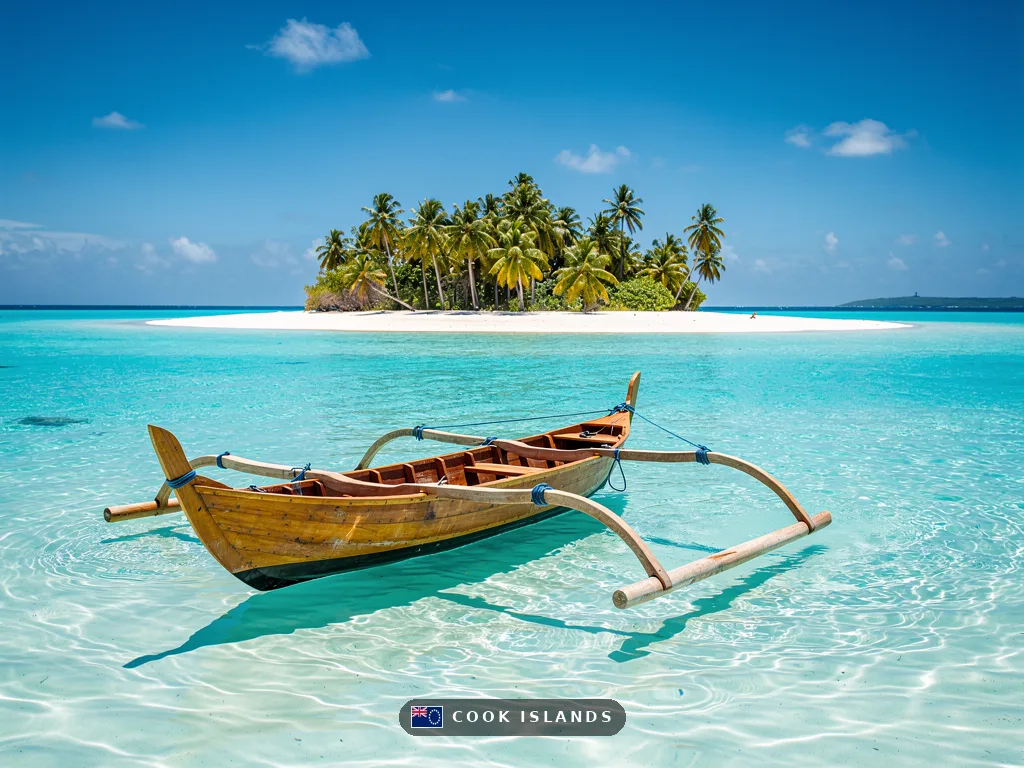
Imagine standing knee-deep in the crystal-clear, turquoise waters of the Aitutaki lagoon, the sun warming your shoulders as a ghost-like bonefish glides across the white sand flat just meters from your fly rod tip. Or picture yourself 30 km offshore from Rarotonga, watching a massive blue marlin explode on a trolled lure against a backdrop of volcanic peaks and endless Pacific horizon. This is fishing in the Cook Islands — a remote South Pacific paradise that combines some of the world's finest bonefishing with world-class game fishing in an environment still largely untouched by mass tourism.
Whether you are an experienced saltwater fly angler chasing bonefish and giant trevally (GT), a deep-sea enthusiast dreaming of marlin, tuna and wahoo, or a traveler simply looking to combine a tropical holiday with memorable fishing, the Cook Islands deliver an unforgettable experience. This comprehensive guide covers everything you need to know: fishing licenses and permits, the unique Ra'ui marine protection system, the best fishing spots, species you can target, guided tours and charters with current prices (in NZD, EUR and USD), practical travel information, and much more.
The Cook Islands consist of 15 islands scattered over 2.2 million square kilometers (850,000 square miles) of the South Pacific, yet only about 17,000 people call them home. This isolation translates into healthy fish stocks and genuinely authentic angling opportunities. The two main hubs for visitors are Rarotonga (the international gateway with vibrant culture and easy access) and Aitutaki (famous for its stunning lagoon and legendary bonefishing).
📍 Planning your trip? The information in this guide is based on the latest available regulations from the Ministry of Marine Resources (MMR) and local operators. Always double-check current conditions upon arrival, as marine rules can change.
01Do You Need a Fishing License in the Cook Islands?
One of the most common questions international anglers ask is: do you need a fishing license in the Cook Islands?
The answer depends on where and how you plan to fish.
For most of the Cook Islands, including the main island of Rarotonga, no general fishing license is required for recreational shore fishing, reef fishing, or offshore boat fishing. This makes the destination particularly appealing for spontaneous travelers who want to cast a line without bureaucratic hurdles.
However, there is one major exception: the famous Aitutaki Lagoon. Because of its unique ecosystem and world-renowned bonefishing flats, a specific fishing permit (license) is mandatory for anyone fishing within the lagoon. This includes both locals and international visitors.
How to Get Your Aitutaki Lagoon Fishing Permit
You can purchase your permit from two convenient locations:
Current permit prices (approximate, in New Zealand Dollars):
These prices are remarkably affordable — roughly the cost of a nice dinner out in Rarotonga. Permits are generally valid only for the holder and must be carried while fishing. Local authorities conduct occasional checks, especially in high-traffic bonefishing areas.
For all other islands (including Atiu, Mangaia, and the remote northern atolls), it is wise to check with the local island council or your chosen tour operator before fishing. Some islands maintain traditional bylaws that may restrict certain techniques or areas.
Important note: Even when no license is required, you must always respect the traditional Ra'ui protected areas (explained in detail below). Ignoring a Ra'ui is considered a serious cultural offense and can result in significant fines.
02The Ra'ui System: Traditional Conservation You Must Respect
The most important regulation for any angler visiting the Cook Islands is understanding and respecting the Ra'ui.
A Ra'ui is a traditional marine protected area (MPA) established by local chiefs and communities to allow fish stocks and reefs to recover. It can be temporary (lasting months or years) or permanent. When a Ra'ui is in place, all fishing and harvesting of marine resources is strictly prohibited.
You will recognize Ra'ui zones by prominent large blue signs placed along the shoreline or reef edges clearly stating “Ra'ui – No Fishing.” Never fish in these areas, even if you see fish. The system is community-enforced and forms the backbone of sustainable fisheries management across the islands.
The Ra'ui concept has proven remarkably effective. According to data from the Secretariat of the Pacific Community (SPC), areas under Ra'ui often show significantly higher fish abundance and larger average fish sizes compared to unprotected zones.
In addition to Ra'ui, the Cook Islands practice strong catch-and-release ethics, especially for lagoon and reef species. This is not only for conservation but also for your own safety — many reef fish in the South Pacific can carry ciguatera toxin, which causes serious (sometimes long-term) food poisoning.
Bonefish in Aitutaki and Manuae are subject to additional protections, including strict limits on the number that may be kept for personal consumption and a complete ban on exporting bonefish.
03Best Fishing Spots in the Cook Islands
The Cook Islands offer three distinctly different fishing experiences depending on which island you choose.
Aitutaki – World-Class Bonefishing in a Turquoise Paradise
Aitutaki is the crown jewel for light-tackle and fly anglers. Its 40-square-kilometer (15-square-mile) lagoon is one of the most beautiful in the world, with shallow sand flats, coral bommies, and crystal-clear water that allows sight fishing in conditions that can only be described as breathtaking.
The primary target is the bonefish (*Albula glossodonta*), known locally as *kiokio*. These fish average 3–6 kg (7–13 lbs) with specimens over 8 kg (18 lbs) possible. The combination of hard white sand bottoms and bright sunlight makes for perfect sight-fishing conditions. Many visiting anglers describe landing their first bonefish on a fly in Aitutaki as a lifetime highlight.
Beyond bonefish, the lagoon and surrounding reef edges hold giant trevally (GT), bluefin trevally, golden trevally, and various snapper species. The deeper channels and outer reef drop-offs offer excellent opportunities for coral trout and larger trevally on spinning or baitcasting gear.
The experience of poling across the flats at dawn, surrounded by jagged coral pinnacles and palm-fringed motus (small islands), is almost spiritual. The water is often so clear you can watch your fly land and the bonefish's reaction from 20 meters away.
Rarotonga – Accessible Deep-Sea Game Fishing
Rarotonga, the capital island, offers some of the easiest access to high-quality offshore fishing in the entire Pacific. The island's volcanic drop-off comes remarkably close to shore — in many places just 1–3 km (0.6–2 miles) offshore — and Fish Aggregating Devices (FADs) have been strategically placed to concentrate pelagic species.
This proximity means you can be in productive game-fishing waters within 15–30 minutes of leaving the harbor, compared to several hours in many other destinations.
Main game fishing targets include:
The fishing here is so consistent that local operators often guarantee action or offer discounts on unsuccessful trips.
Atiu and the Outer Islands – Authentic and Remote Experiences
For anglers seeking a more traditional and less commercial experience, Atiu offers guided reef fishing and the chance to visit the completely uninhabited island of Takutea. Here you can experience fishing the way it has been done for centuries — using hand lines, traditional knowledge of tides and moon phases, and local bait.
The outer islands also provide opportunities for untouched bonefishing and giant trevally fishing in lagoons that see very few visiting anglers each year. However, access is more complicated and usually requires arranging transport and guides well in advance.
04Species, Techniques and Seasonal Patterns
Deep-Sea Game Fishing
The Cook Islands lie in a productive zone where warm tropical currents meet nutrient-rich upwellings. This creates excellent conditions for large pelagic species.
Peak seasons:
Techniques center on trolling with large lures, cedar plugs, or rigged baits (flying fish is a local favorite). Many operators also practice chunking or kite fishing when targeting tuna.
Lagoon and Flats Fishing (Bonefishing)
Bonefishing in Aitutaki is primarily a sight-fishing game using fly fishing or ultralight spinning tackle. The preferred fly patterns are crab and shrimp imitations in sizes 4–8. A 9-weight rod with a quality reel possessing a strong drag is recommended due to the powerful runs these fish can make across the coral flats.
Giant trevally are often targeted on heavier spinning or conventional tackle using poppers, stickbaits, or large bucktail jigs. The explosive strikes of GTs in the Aitutaki lagoon are legendary.
Reef and Bottom Fishing
Drop-off and bottom fishing for snapper, emperor, and coral trout is extremely popular with both locals and visitors. This can be done from small boats or even from shore in certain locations using simple hand lines or light spinning gear.
Tip: Always ask your guide or the local tourism office for the current status of Ra'ui areas before heading out. Conditions can change with the lunar calendar and community decisions.
05Tours & Guided Experiences
Guided fishing is by far the best way to maximize your success and ensure you respect local customs and regulations. Local guides possess intimate knowledge of the flats, tides, and fish behavior that would take years for a visitor to acquire.
Popular options include:
Local operators emphasize sustainable practices and are usually happy to practice catch-and-release, especially for larger specimens or species prone to ciguatera.
Typical prices (2026 estimates):
These prices usually include tackle, bait, water, and — in many cases — a light lunch. Always confirm exactly what is included when booking.
🎣 Fishing tours in Cook Islands — Book guided fishing tours with local experts.
🚤 Charter fishing in Cook Islands — Find and book charter boats with experienced captains.
06Equipment: What to Bring and What Is Provided
For deep-sea charters, virtually all equipment is supplied by the operator. This includes heavy trolling rods, reels, lures, and safety gear. All you need to bring is polarized sunglasses, sunscreen, a hat, and perhaps your favorite lucky shirt.
For bonefishing in Aitutaki, however, serious anglers usually prefer to bring their own specialized gear:
If you do not wish to travel with gear, quality rental equipment is often available through the better guides, though availability can be limited during peak season (November–March).
07Practical Travel Information for International Visitors
Getting There
The Cook Islands are served by direct international flights from Auckland (New Zealand), Sydney (Australia), Los Angeles (USA), and seasonal flights from other Pacific hubs. Rarotonga International Airport (RAR) is the main entry point. From there, Air Rarotonga operates frequent flights to Aitutaki (about 50 minutes) and other islands.
Visa Requirements
Most visitors from the EU, US, UK, Canada, Australia, New Zealand, and Japan do not need a visa for stays of up to 31 days. You must have a valid passport (minimum 6 months validity), proof of onward travel, and sufficient funds. Always check the latest requirements with your nearest Cook Islands diplomatic representative or official tourism website before traveling.
Best Time to Visit from Different Hemispheres
The Cook Islands enjoy a tropical climate with two main seasons:
The water temperature remains between 24–29 °C (75–84 °F) year-round, making it a viable fishing destination at any time.
Language and Communication
English is widely spoken and is an official language alongside Cook Islands Māori. Most fishing guides and charter captains speak excellent English. However, learning a few basic Māori phrases such as “Kia orana” (hello) and “Meitaki” (thank you) is always appreciated and helps build rapport with local operators.
Currency and Costs
The New Zealand Dollar (NZD) is the official currency. Major credit cards are widely accepted in Rarotonga and Aitutaki, but bring some cash for smaller islands and gratuities. Current approximate exchange rates (as of early 2026):
A typical fishing-focused week for two people (flights not included) might cost between NZ$4,500–8,000 (€2,475–4,400 / US$2,700–4,800) depending on accommodation standards and number of fishing days.
Accommodation
Options range from luxury beach resorts and overwater bungalows in Aitutaki to family-run guesthouses and boutique villas in Rarotonga. Many fishing packages include or can be combined with specific accommodation.
Health and Safety
No specific vaccinations are required beyond routine travel shots. Tap water is generally safe in Rarotonga but bottled water is recommended on outer islands. The main health risk is strong tropical sun — use high-factor sunscreen and stay hydrated. Medical facilities are good in Rarotonga but limited elsewhere.
08Costs Overview: Budgeting Your Fishing Trip
Here is a helpful comparison of typical expenses:
| Item | Price in NZD | Approx. EUR | Approx. USD |
|-------------------------------|-------------------|-----------------|-----------------|
| Aitutaki 1-day fishing permit | 10 | 5.50 | 6 |
| Half-day bonefishing guide | 450 (for 2) | 248 | 270 |
| Full-day deep-sea charter | 1,500 (up to 4) | 825 | 900 |
| Mid-range hotel/night | 180–350 | 100–193 | 108–210 |
| Meal in local restaurant | 25–45 | 14–25 | 15–27 |
These prices position the Cook Islands as a premium but excellent-value fishing destination compared to other Pacific locations.
📱 Stay connected in Cook Islands — Get an eSIM for affordable mobile data while traveling.
09Frequently Asked Questions
Do I need a fishing license for deep sea fishing in Rarotonga?
No. A general recreational fishing license is not required for offshore or shore fishing around Rarotonga. Only the Aitutaki lagoon requires a specific permit.
What is the best season for marlin fishing in the Cook Islands?
The peak marlin season runs from November through March/April. Many anglers also enjoy excellent wahoo fishing from June to October.
Can I keep the fish I catch?
Catch-and-release is strongly encouraged, especially for bonefish, trevally, and larger game fish. Some reef fish carry ciguatera risk, so many visitors choose to release everything except perhaps a small fish for dinner when with a local guide who knows which species are safe.
Is fly fishing possible in the Cook Islands?
Absolutely. Aitutaki is considered one of the best bonefishing destinations in the Pacific for fly anglers. Most serious bonefish guides are experienced with fly fishing.
How do I know where the Ra'ui areas are?
Ra'ui zones are clearly marked with large blue signs on the beach or reef. Your guide will also know exactly where you can and cannot fish. Never assume an area is open.
Are children allowed on fishing charters?
Most operators welcome children on appropriate trips. Bonefishing in the lagoon is particularly family-friendly, while some deep-sea charters have minimum age requirements for safety reasons.
What should I pack specifically for fishing?
Prioritize polarized sunglasses, reef-safe sunscreen, quality rain jacket, comfortable quick-dry clothing, and — for bonefish anglers — your personal fly rod and flies if you have favorites.
10Conclusion: Your South Pacific Fishing Adventure Awaits
The Cook Islands offer a rare combination: genuinely world-class fishing for bonefish, giant trevally, marlin, tuna and wahoo, set against some of the most stunning scenery on Earth, supported by a culture that deeply values sustainable resource management.
Whether you spend your days stalking bonefish across glowing sand flats in Aitutaki, battling a blue marlin in the deep blue waters off Rarotonga, or simply enjoying a relaxed afternoon reef fishing with local friends, a fishing trip to the Cook Islands will create memories that last a lifetime.
The combination of no (or very affordable) licensing requirements in most areas, knowledgeable local guides, healthy fish stocks protected by the Ra'ui system, and genuine hospitality makes this one of the Pacific's most rewarding — yet still relatively undiscovered — fishing destinations.
Start planning your trip today. Book your charters and guides well in advance for the peak season, respect the traditional Ra'ui, practice good catch-and-release ethics, and prepare to fall in love with these beautiful islands and their remarkable fishing opportunities.
The fish are waiting. The turquoise waters are calling. Kia orana — may your lines stay tight in the Cook Islands.
11Sources & Further Links
Disclaimer: This guide was written in 2026 and reflects the best available information at the time of writing. Fishing regulations, Ra'ui boundaries, permit prices, charter rates and seasonal patterns can change. Always verify the latest rules with the Ministry of Marine Resources (mmr.gov.ck), local island councils, your chosen fishing operator, or the Cook Islands Tourism Authority upon arrival. This article is for informational purposes only and does not replace official advice. Respect local customs, practice sustainable fishing, and prioritize safety at all times.
Don't miss any fishing tips!
Get the best fishing destination recommendations weekly in your inbox.
No spam. Unsubscribe anytime.
Data incorrect?
Help us keep this article up to date — report outdated or incorrect information
More articles