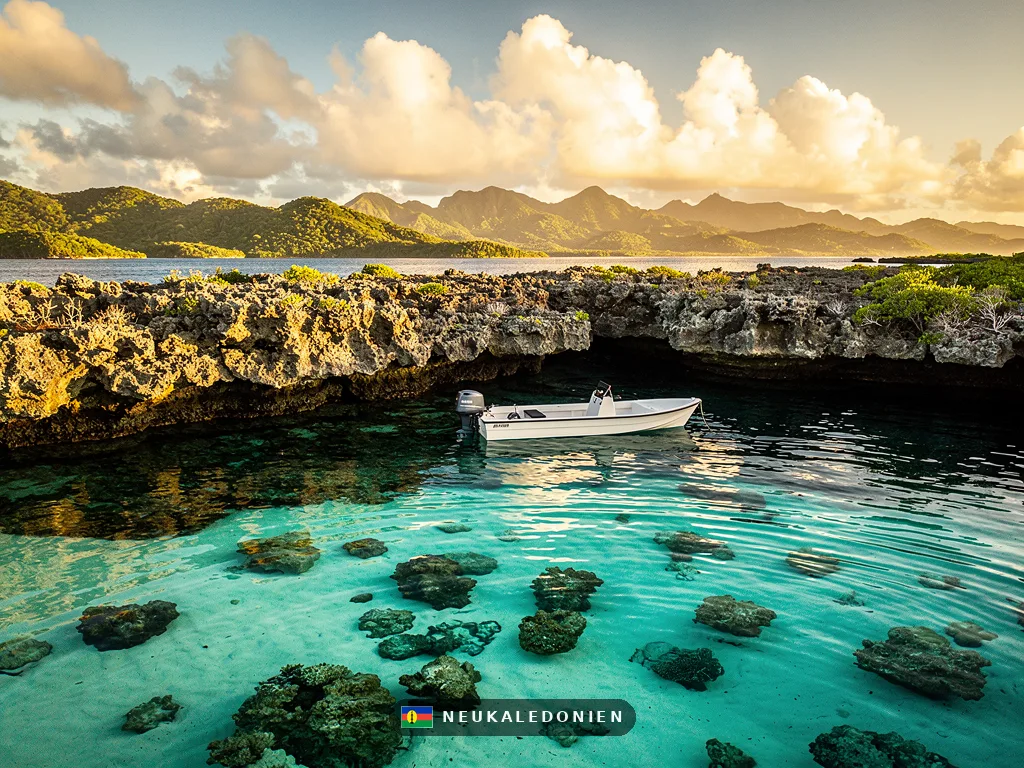
New Caledonia is a fisherman's paradise in the South Pacific, where the world's largest lagoon meets the deep blue Coral Sea. If you are dreaming of casting to bonefish on pristine tropical flats, battling powerful Giant Trevally (GT) on poppers, or trolling for marlin in untouched offshore waters, fishing in New Caledonia delivers an unforgettable experience.
Best of all, you do not need a fishing license for recreational angling. This French overseas territory combines French flair, Kanak culture, and some of the richest marine biodiversity on the planet. Whether you are an experienced fly angler, a deep-sea enthusiast, or a family looking for a relaxed lagoon trip, New Caledonia offers world-class fishing with relatively simple regulations focused on sustainability rather than bureaucracy.
In this comprehensive guide you will find everything you need to plan your trip: current rules and catch limits, the best fishing spots and what species you can expect, recommended charters and guided tours with realistic costs, practical travel advice for visitors from Europe, North America, Asia and Australia, and essential tips to make your journey smooth and responsible.
01Fishing License and Permits in New Caledonia
The most common question international anglers ask is: do you need a fishing license in New Caledonia? The answer is simple and welcome news — no, you do not need an individual fishing license for recreational or sport fishing.
Only commercial and professional fishermen are required to hold official permits. As a visiting angler on holiday, you are free to enjoy both shore fishing and boat-based angling without any personal permit. Your chosen charter operator or guide will take care of any vessel documentation or area-specific compliance, allowing you to focus entirely on the fishing experience.
This policy reflects the strong cultural importance of fishing in Kanak communities and the territory’s desire to encourage responsible tourism. However, this freedom comes with the responsibility to respect strict environmental rules, which are covered in detail in the next section.
Tip: Always confirm with your operator before departure that they are properly registered and that the chosen fishing area is open to recreational fishing. This small step prevents any misunderstandings upon arrival.
Because no license is required, there are no associated permit fees for individuals. This makes New Caledonia more accessible than many Pacific destinations where daily or weekly licenses can add significantly to the cost of your trip.
02Fishing Rules, Regulations and Conservation
While an individual fishing license New Caledonia is not needed, the territory enforces some of the strictest marine conservation rules in the Pacific to protect its UNESCO World Heritage-listed lagoon.
The general daily catch limit is 40 kg of marine products (fish, crustaceans, shellfish and mollusks) per person or per boat, depending on the specific provincial rules in force at the time. Pelagic species such as marlin, tuna, wahoo and mahi-mahi are generally exempt from this weight limit, but you should always verify current exceptions with your guide on the day of the trip.
Protected Areas and Marine Reserves
New Caledonia has dozens of marine protected areas. Fishing is strictly prohibited inside reserves such as the Yves Merlet Reserve and many smaller no-take zones within the vast lagoon. These areas are clearly marked on marine charts and often indicated by buoys. Heavy fines — sometimes reaching several thousand Euros (or the equivalent in CFP francs, the local currency) — apply to violations. Your guide’s local knowledge is invaluable here.
Prohibited Practices
Sustainable Practices
Catch and release is strongly encouraged, especially for bonefish, Giant Trevally, and large billfish. Many professional operators in New Caledonia now practice 100% catch-and-release on their fly fishing and sport fishing charters. This approach helps maintain healthy fish stocks and ensures future generations of anglers can enjoy the same world-class experiences.
Regulations can change, particularly regarding temporary closures after cyclones or during periods of coral bleaching recovery. The best way to stay updated is to consult your chosen operator and the official provincial authorities upon arrival.
03Best Fishing Spots and Experiences in New Caledonia
The heart of any fishing trip is the experience on the water. New Caledonia offers an astonishing variety of fishing environments that will make you dream long after you return home.
Northern Lagoon – Poum and Poingam (World-Class Bonefish Flats)
The shallow, crystal-clear flats of the Northern Lagoon around Poum and Poingam are widely regarded as one of the finest bonefish destinations in the South Pacific. Imagine standing on the bow of a flats skiff at dawn, polarised sunglasses on, watching 3–6 kg (6–13 lb) bonefish ghosting across white sand in gin-clear water. The fish here are notoriously wary, making every accurate cast with a shrimp or crab pattern feel like a trophy moment. Local guides know the tides and moon phases intimately, giving you the best chance of a grand slam (bonefish, permit and trevally in one day).
The scenery is breathtaking: turquoise water bordered by mangroves, limestone islands and the distant mountains of Grande Terre. Many visitors describe these days as the most peaceful and rewarding fly fishing experiences of their lives.
Coral Sea and Offshore Reefs – Giant Trevally and Big Game
Beyond the barrier reef lies the vast Coral Sea. This is “monster” territory. Giant Trevally weighing 30–50 kg (66–110 lb) are possible on poppers and large jigs around remote seamounts and atolls. Dogtooth tuna, wahoo, and massive yellowfin tuna also patrol these waters. The sheer power of a 40 kg GT smashing a surface popper in crystal water is an experience few anglers ever forget.
For blue-water enthusiasts, black marlin, blue marlin, and sailfish are available, with the peak season aligning with the warmer months. The remoteness of these fishing grounds means you will often have entire reefs to yourselves — a rare luxury in today’s crowded world.
Nouméa Barrier Reefs and Day Trips
If you are based in the capital Nouméa, excellent reef and deep-sea fishing is only a short boat ride away. Snapper, grouper, mahi-mahi, and smaller GT are common targets. These day trips are ideal for families or anglers who want to combine fishing with sightseeing. Many operators offer half-day options that still deliver plenty of action.
Poindimié on the East Coast
The less-visited east coast around Poindimié offers productive barrier reef fishing with significantly fewer boats. The fishing for GT and dogtooth tuna can be outstanding, and the coastline is dramatic with pine-covered hills plunging into the sea — a completely different atmosphere from the western side.
Loyalty Islands (Lifou, Maré and Ouvéa)
These remote atolls provide a more traditional experience. Local Kanak fishermen still practice time-honoured methods, and visitors can sometimes join village trips. The lagoon here is even larger and the water clarity exceptional. Reef fishing, jigging and light-tackle sport fishing produce a wide variety of species.
No matter where you fish in New Caledonia, the combination of dramatic scenery, warm tropical water (24–29 °C / 75–84 °F), and healthy fish populations creates moments that stay with you forever.
Tip: Book your fishing days according to the tidal cycle. The best bonefish fishing usually occurs during the middle of the incoming or outgoing tide when fish move confidently onto the flats.
04Tours and Guided Experiences
Because the lagoon is so vast and many of the best spots are hidden, booking a guided tour is highly recommended. Professional operators know the ever-changing tides, weather patterns, and protected zones, dramatically increasing your success rate and ensuring you fish legally and sustainably.
Popular experiences include:
Prices typically range from 25,000–45,000 CFP (approximately €210–380 / $230–410 USD) per person for a full day with guide and equipment, depending on the boat, number of anglers, and distance travelled. Specialist fly fishing packages with highly experienced guides command a premium, sometimes reaching 55,000–70,000 CFP (€460–590 / $500–640 USD) per day.
Half-day options are available around Nouméa for 15,000–25,000 CFP (€125–210 / $135–230 USD). These represent excellent value and are roughly the cost of a good restaurant meal per person in Europe or North America.
🎣 Fishing tours in New Caledonia — Book guided fishing tours with local experts.
05Deep Sea Fishing Charters and Big Game Options
For anglers who love the thrill of fighting large pelagic species, deep sea fishing in New Caledonia is world class. The Coral Sea offers a genuine chance at blue, black and striped marlin, sailfish, wahoo, and enormous yellowfin tuna.
Charter boats operating from Nouméa, Koumac and Lifou are typically 10–15 metres (33–49 ft) long and equipped with quality tackle, fighting chairs, and experienced captains who have often fished these waters for decades. A full day of big-game trolling usually costs between 120,000–220,000 CFP for the boat (up to 4–6 anglers), which works out at roughly €1,000–1,850 / $1,080–2,000 USD — comparable to similar experiences in Fiji or northern Australia.
Shorter half-day reef-fishing charters are significantly more affordable at 60,000–90,000 CFP per boat (€500–760 / $540–820 USD).
Many captains now emphasise sustainable practices, using circle hooks and practising careful catch-and-release for billfish. Some operators even offer tag-and-release programs that contribute to scientific understanding of Pacific fish stocks.
🚤 Charter fishing in New Caledonia — Find and book charter boats with experienced captains.
06Fly Fishing in New Caledonia
Fly fishing in New Caledonia has gained international recognition in recent years, particularly for bonefish on the northern flats. The combination of white sand bottoms, consistent winds, and large, wary bonefish makes this a bucket-list destination for serious fly anglers.
Specialist operators such as those featured on flyodyssey.co.uk offer tailored packages that include accommodation in comfortable eco-lodges, private guides, and top-quality Sage or Orvis tackle if you prefer not to travel with your own rods. A typical 6-day, 5-night package including guided fishing, accommodation, meals and transfers starts around €4,500–6,500 ($4,900–7,100 USD) per person.
The best months for bonefish are usually April to November when the weather is drier and winds more predictable. However, the true experts will tell you that the experience of watching a bonefish track your fly across a flat at sunrise is worth any weather challenge.
You can combine fly fishing with light spinning or popping for GT during the same trip, creating a perfect mixed-species adventure.
07When to Visit – Best Time for Fishing in New Caledonia
Fishing is possible year-round in New Caledonia thanks to its tropical climate. However, the optimal periods differ according to your target species and where you are travelling from.
For visitors from the Northern Hemisphere (Europe, North America, Japan):
The best time is generally April to November (autumn, winter and spring in Europe). This period avoids the hottest, wettest months and offers more settled weather for both flats and offshore fishing. Bonefish flats fishing is particularly good from June to October.
For visitors from Australia and New Zealand (Southern Hemisphere):
The warmer summer months of December to March can be excellent for pelagic species, although this coincides with the cyclone season (November–April). Many experienced Aussie anglers prefer the shoulder seasons of March–April and October–November to avoid both extreme heat and the risk of tropical storms.
Water temperatures range from 24 °C (75 °F) in July–August to 29 °C (84 °F) in January–February. The trade winds are generally stronger during the cooler months, which can affect flats fishing but often improves offshore conditions.
Language considerations: French is the official language. While many charter captains and guides speak good English, especially those catering to international visitors, learning a few basic French fishing phrases or using translation apps such as Google Translate can be very helpful when dealing with local authorities or village communities.
08Practical Travel Information
Getting There
Most international visitors fly into La Tontouta International Airport (NOU) near Nouméa. Direct flights are available from Paris, Tokyo, Sydney, Auckland, and several Pacific island nations. Aircalin (the national carrier) operates the majority of long-haul routes. Flight time from Sydney is approximately 2.5 hours, from Tokyo around 8.5 hours, and from Paris about 22 hours including a stopover.
Visa Requirements
Getting Around
While public buses exist, hiring a car gives you the greatest flexibility, especially if you plan to combine fishing with sightseeing. Roads are generally good on Grande Terre, although some tracks to remote launch sites require a 4×4. International driving licences are accepted.
🚗 Rent a car in New Caledonia — Compare prices from 500+ rental companies worldwide.
Accommodation
Options range from luxury resorts in Nouméa and the Isle of Pines to comfortable eco-lodges and gîtes near the best fishing areas in the north. Many fishing packages include accommodation, which simplifies planning and often provides better value.
Health and Safety
New Caledonia is generally very safe. Tap water is drinkable in most areas. Standard travel insurance is strongly recommended, particularly coverage for emergency medical evacuation given the remote nature of many fishing locations. Malaria is not present, but dengue fever outbreaks can occur, so use insect repellent.
Currency and Costs
The local currency is the CFP franc (XPF). At the time of writing, 1 EUR ≈ 119 XPF and 1 USD ≈ 110 XPF. Most larger businesses in Nouméa accept credit cards, but smaller operators and remote areas are often cash-only.
A realistic daily budget for a serious fishing trip (excluding international flights) is €250–450 ($270–490 USD) per person, covering accommodation, guided fishing, meals and transfers. This is comparable to mid-range fishing holidays in the Caribbean or Southeast Asia.
📱 Stay connected in New Caledonia — Get an eSIM for affordable mobile data while traveling.
09Equipment and What to Bring
Most charter operators supply high-quality rods, reels, lures and bait. However, serious fly anglers should consider bringing their own outfit. Recommended gear includes:
If you prefer to purchase equipment before departure, look for reliable brands known for durability in tropical conditions.
🛒 Fishing equipment for New Caledonia — Find the right gear for your trip.
10Costs Overview
| Item | Price in CFP | Price in EUR | Price in USD | Notes |
|-------------------------------|--------------------|-------------------|--------------------|-------|
| Full day flats fishing (1 angler) | 35,000–55,000 | €290–460 | $315–500 | Includes guide & tackle |
| Full day deep-sea charter (boat, up to 4 anglers) | 150,000–250,000 | €1,260–2,100 | $1,360–2,270 | Shared cost per person lower |
| Half-day reef fishing | 18,000–28,000 | €150–235 | $165–255 | Good entry-level option |
| 6-night fly fishing package | 550,000–850,000 | €4,600–7,140 | $5,000–7,700 | Per person, all-inclusive |
| Marine park day permit (if required by operator) | 500–2,000 | €4–17 | $4.50–18 | Rare for recreational anglers |
These prices are indicative and can vary with fuel costs, season and operator reputation. Booking directly with local businesses often provides better value than large international tour operators.
11Conclusion
Fishing in New Caledonia offers a rare combination of world-class angling, stunning natural beauty, and genuine cultural immersion. With no individual fishing license required, clear sustainable regulations, and a wide variety of experiences from tranquil bonefish flats to heart-pounding battles with Giant Trevally and marlin, this South Pacific gem deserves a place on every serious angler’s bucket list.
Whether you spend your days stalking bonefish across mirror-calm flats, jigging for monster GT on remote reefs, or trolling the deep blue Coral Sea, the memories you create here will last a lifetime. The fishing is world-class, the people are welcoming, and the marine environment is still remarkably pristine.
Start planning your trip today. Check the latest conditions with the operators listed on official tourism sites, book your charter or guided tour early (especially for the peak dry season), and prepare for one of the most rewarding fishing adventures on Earth.
The turquoise waters and silver flashes of fish are waiting.
12FAQ – Frequently Asked Questions
Do you need a fishing license in New Caledonia?
No. Recreational anglers do not need an individual fishing license. Only commercial fishermen require permits.
What is the daily catch limit in New Caledonia?
The general limit is 40 kg of marine products per person or boat per day. Pelagic species are often exempt, but always confirm with your guide.
What is the best time of year for fishing in New Caledonia?
April to November is preferred by most international visitors for more settled weather, although fishing is possible year-round. Bonefish fishing is often best from June to October.
Is fly fishing good in New Caledonia?
Excellent. The northern lagoons around Poum and Poingam are considered among the best bonefish flats in the South Pacific.
Can I go fishing from the shore without a guide?
Yes, but you must respect all marine reserves and protected areas. Hiring a local guide greatly increases your chances of success and ensures you stay within the law.
Are there many protected areas where fishing is forbidden?
Yes. New Caledonia has an extensive network of marine reserves. Your guide will know exactly where you can and cannot fish.
Is it easy to combine fishing with a family holiday?
Absolutely. Many operators offer family-friendly lagoon trips with snorkelling, beach visits and light fishing that are suitable for all ages.
What currency do I need and are cards accepted?
The CFP franc is used. Credit cards are widely accepted in Nouméa and at larger hotels, but carry cash for smaller operators and remote areas.
13Sources & Further Links
Disclaimer: This article is intended as general information only and does not replace official advice. Fishing regulations in New Caledonia may change at any time. Always verify the latest rules with provincial authorities or your licensed charter operator upon arrival. The authors and FishingWorldGuide.com accept no liability for any errors, omissions, or incidents that may occur during your travels or while fishing in 2026 or beyond. Respect the environment, follow local guidelines, and enjoy your time on the water responsibly.
Don't miss any fishing tips!
Get the best fishing destination recommendations weekly in your inbox.
No spam. Unsubscribe anytime.
Data incorrect?
Help us keep this article up to date — report outdated or incorrect information
More articles