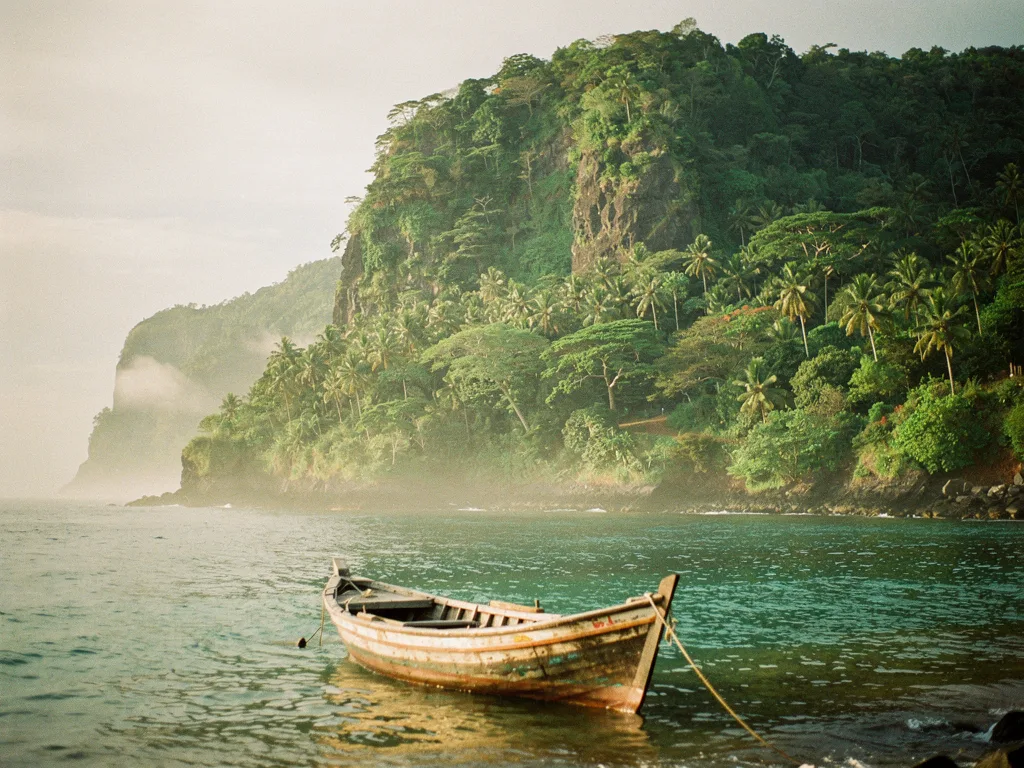
Imagine standing on a black volcanic rock at the edge of the Atlantic, the warm equatorial breeze on your face, while a 300 kg (660 lb) Blue Marlin crashes on your line just a few hundred meters from shore. This is the reality of fishing in São Tomé and Príncipe. This remote volcanic archipelago in the Gulf of Guinea offers one of Africa’s most exciting and least-pressured big-game fishing experiences.
Often called the “Chocolate Islands,” São Tomé and Príncipe (STP) combines dramatic scenery, rich biodiversity, and productive waters that drop from the shoreline into deep ocean trenches. Whether you dream of battling Blue Marlin from a traditional wooden piroga or casting for Giant African Threadfin from a pristine beach, this destination delivers raw, authentic angling adventures.
In this comprehensive guide you will learn everything you need to plan your trip: whether you need a fishing license in São Tomé and Príncipe, the best fishing spots, what species you can target, how much guided tours cost, and all the practical information for travelers from Europe, North America, Asia, and beyond. Regulations may change, so always verify the latest rules with local authorities before you travel.
01Do You Need a Fishing License in São Tomé and Príncipe?
One of the biggest advantages of fishing in São Tomé and Príncipe is the simplicity of the regulations for recreational anglers.
Shore fishing is completely free and does not require any license or permit. You can fish from beaches, rocky outcrops, or piers using spinning gear, bottom rigs, or even hand lines without any bureaucratic hurdles. This makes São Tomé and Príncipe particularly attractive for travelers who want to combine beach time with spontaneous casting sessions.
For offshore and boat fishing, there is currently no formal individual recreational fishing license required for tourists. When you join local crews or book through established operators and resorts, the necessary permissions are generally handled by the captain or the organizing company. Most official regulations from the Direcção das Pescas e Aquacultura focus on commercial and industrial fleets rather than individual sport anglers.
Important: Fishing in rivers and freshwater systems is strictly prohibited in many areas to protect delicate ecosystems and local biodiversity. For example, the river beneath the iconic Pico Cão Grande bridge on São Tomé is off-limits. Always ask your guide before attempting any freshwater fishing.
Even though no personal license is usually needed, responsible angling is expected. The islands form part of a UNESCO Biosphere Reserve (especially Príncipe), and catch-and-release practices for billfish are strongly encouraged. The official fisheries authority is the Direcção das Pescas e Aquacultura (DPA). Their website offers the most up-to-date information on any changes to regulations.
Tip: Print or save a copy of the latest Decree No. 28/2012 (General Regulation on Fisheries) before departure. While it primarily addresses commercial activity, it provides context for sustainable practices.
02Best Fishing Spots in São Tomé and Príncipe
The beauty of fishing in São Tomé and Príncipe lies in how quickly you can reach world-class fishing grounds. The islands’ volcanic origins create dramatic underwater topography — shelves and drop-offs begin very close to shore, bringing pelagic species within easy reach even of small boats.
Bom Bom Island (Príncipe)
This is the crown jewel for blue marlin fishing São Tomé and Príncipe. Located off the north coast of Príncipe, Bom Bom Island offers legendary big-game fishing. The deep-water drop-offs are literally minutes from the dock. Anglers regularly report encounters with Atlantic Blue Marlin exceeding 300 kg (660 lb). The combination of nutrient-rich currents and steep underwater cliffs creates perfect conditions for marlin, sailfish, and tuna.
The scenery is breathtaking: turquoise bays framed by jungle-covered volcanic peaks. Many visitors describe the experience as “fishing in paradise.” Early mornings often feature glassy conditions perfect for trolling large skirted lures.
Boca do Inferno (São Tomé)
On the east coast of São Tomé lies this dramatic rock formation where powerful waves crash through a natural arch. The volcanic channels create high-action currents that attract large Barracuda, Giant Jacks, and Wahoo. Shore fishing São Tomé here can be spectacular, but extreme caution is required — dangerous swells and slippery rocks make it suitable only for experienced anglers with proper footwear and local knowledge.
Ilhéu das Rolas
Situated exactly on the equator south of São Tomé, this small island offers superb light-tackle opportunities. You can target reef species, small tuna, and trevally while surrounded by crystal-clear water. The location is also excellent for combining fishing with snorkeling. Many visitors stay at the eco-lodge on the island and fish right from the beach at dawn and dusk.
Santo António and Baía das Agulhas (Príncipe)
The “Bay of Spires” on Príncipe delivers stunning scenery and unpressured fishing. Sailfish, Wahoo, and Dorado (Mahi Mahi) are common. The dramatic rock spires rising from the sea create a memorable backdrop as you fight powerful pelagic fish. This area is particularly good for fishing charters Principe that focus on a mix of trolling and popping.
Lagoa Azul (Blue Lagoon)
A favorite for families and shore anglers, Lagoa Azul on São Tomé offers protected waters ideal for spinning with lures. Grouper, Snapper, and Blue Runner are the main targets. The calm, clear water also makes it perfect for introducing children to fishing or combining the trip with swimming and snorkeling.
Other notable areas include the waters around Neves and São João dos Angolares, where artisanal fishing communities have generations of knowledge about local fish movements and productive grounds.
The sheer variety of environments — from black sand beaches to dramatic cliffs and equatorial islands — makes every day of fishing in São Tomé and Príncipe feel like a new adventure.
Tip: The best fishing often occurs during the transition between tides. Download a reliable tide app (such as “Tides Near Me”) before your trip. Local captains also watch seabird activity closely — diving birds usually indicate bait balls and feeding pelagics.
03Fish Species You Can Target
The Gulf of Guinea’s warm, productive waters support an impressive array of species, making São Tomé and Príncipe a true bucket-list destination for big-game and inshore anglers alike.
Billfish
Pelagic Species
Reef and Shore Species
The combination of easily accessible big-game fishing and productive inshore reefs means you can experience multiple styles of fishing during a single trip.
Techniques that work well:
04Tours & Guided Experiences
Organized fishing tours Sao Tome and Principe range from authentic artisanal experiences to high-end professional charters. Both offer unique advantages.
Artisanal Piroga Trips
For the most authentic experience, visit fishing villages such as Neves on São Tomé or similar communities on Príncipe. Local fishermen using traditional wooden pirogas (narrow canoes) will take you out for half-day or full-day trips. These excursions typically cost €80–€150 (approx. $85–$160 USD) for a half day and €150–€250 ($160–$270 USD) for a full day. You will fish alongside local experts who understand the currents, bird signs, and seasonal movements better than any guidebook.
While these boats lack modern safety equipment and electronics, the cultural experience and the chance to support local communities are unparalleled. Many visitors donate used tackle at the end of the trip — an act greatly appreciated by the crews who have limited access to quality gear.
Professional Resort-Based Charters
Higher-end options are centered around quality resorts, particularly on Príncipe. The Belo Monte Hotel operates well-equipped walkaround boats perfect for trolling and jigging. Expect to pay €800–€1,200 ($860–$1,290 USD) per day for these professional services, which usually include high-quality tackle, experienced captains, and sometimes lunch.
On São Tomé, Club Maxel has been a reliable operator for many years, specializing in deep-sea big game fishing. Their boats are better suited for targeting Blue Marlin and Yellowfin Tuna with proper fighting chairs and outriggers.
Most professional charters encourage catch-and-release for billfish to maintain the health of the fishery and support the UNESCO Biosphere Reserve status of the islands.
🎣 Fishing tours in Sao Tome and Principe — Book guided fishing tours with local experts.
05Charter Fishing in São Tomé and Príncipe
Serious big-game anglers should consider dedicated charter fishing Sao Tome and Principe options. The islands’ location near productive underwater canyons means you don’t have to travel far to find fish.
Professional charters generally use boats between 25–40 ft (8–12 m) equipped with fighting chairs, outriggers, and quality tackle. Captains often have decades of local knowledge and can adapt to changing conditions quickly.
Current prices for a full-day deep sea fishing Sao Tome and Principe charter typically range from €800 for a standard vessel to €1,200 or more for premium boats with top-tier equipment. This is roughly equivalent to the cost of a high-end restaurant meal for four people back home — excellent value considering the quality of fishing.
When booking, confirm what is included: tackle, bait, bottled water, lunch, and fish cleaning. Most operators prefer clients to bring their own reels and lures, but quality rods are often provided.
The peak season for blue marlin fishing Sao Tome runs from July to September during the “Gravana” (dry season). During these months, water temperatures and current patterns align perfectly for billfish. Yellowfin Tuna and Wahoo can be targeted year-round, though weather is more stable during the dry months.
🚤 Charter fishing in Sao Tome and Principe — Find and book charter boats with experienced captains.
Many charters now offer multi-day packages that combine fishing with island exploration, whale watching (July–October), and visits to cocoa plantations — creating a complete tropical adventure.
06What to Expect on the Water
A typical day of fishing in São Tomé and Príncipe begins early. Most boats depart around 6:00–7:00 am to take advantage of the calm morning waters. As the sun rises over the volcanic peaks, you will often see flying fish skimming across the surface — a sign of healthy pelagic activity below.
The experience feels wild and untamed compared to heavily commercialized fishing destinations. There are no large fleets of sportfishing boats competing for space. Instead, you might share the ocean with traditional fishermen paddling their colorful pirogas.
Weather can change quickly in the Gulf of Guinea. Sudden squalls are possible, especially during the rainy season (October–May). Professional captains monitor conditions carefully and will not hesitate to return to harbor if safety becomes a concern.
The fight with a Blue Marlin in these waters is something you will never forget. The fish often make powerful runs and spectacular jumps against the backdrop of jungle-covered islands. Even if you practice catch-and-release, the memory of these encounters stays with you forever.
After fishing, many captains will help you prepare a fresh catch for dinner. Grilled Wahoo or Tuna with local spices and coconut rice is a memorable way to end the day.
07Costs of Fishing in São Tomé and Príncipe
Fishing here represents excellent value compared to many other big-game destinations.
| Experience | Duration | Price Range (EUR) | Price Range (USD) | Notes |
|-----------------------------------|--------------|-------------------|-------------------|-------|
| Artisanal Piroga Trip | Half-day | €80 – €150 | $85 – $160 | Basic boat, local knowledge |
| Artisanal Piroga Trip | Full day | €150 – €250 | $160 – $270 | Most popular option |
| Professional Resort Charter | Full day | €800 – €1,200 | $860 – $1,290 | Quality gear, experienced crew |
| Multi-day Package (3 days) | 3 days | €2,200 – €3,500 | $2,365 – $3,760 | Includes accommodation |
These prices are significantly lower than comparable big-game fishing in the Caribbean or Indian Ocean. An artisanal full-day trip costs roughly the same as a nice dinner for two in a European capital, while a professional charter is comparable to a mid-range safari day in East Africa.
Additional costs to consider:
Euros are widely accepted, but carrying small denomination notes is wise when dealing with local artisanal crews who may not have change. The local currency is the Dobra (STN), and some villages prefer payment in cash dobra.
08Equipment and Packing Tips
There are essentially no tackle shops on the islands. You must bring your own gear.
Recommended tackle:
Pack everything in hard-sided rod tubes and declare your fishing equipment clearly at customs. There are no restrictions on importing personal gear for recreational use.
Clothing and other essentials:
Donating some of your tackle to your local captain at the end of the trip is a wonderful way to give back. High-quality hooks, fluorocarbon line, and lures are extremely valuable to local fishermen.
🛒 Fishing equipment for Sao Tome and Principe — Find the right gear for your trip.
09Practical Travel Information
Best Time to Visit
The best period for big game fishing Gulf of Guinea is during the dry “Gravana” season from July to September. This is when Blue Marlin fishing peaks and weather conditions are most stable.
Yellowfin Tuna, Wahoo, and most reef species can be targeted year-round. The wet season (October to May) brings more rain but can offer excellent fishing during breaks in the weather, often with fewer visitors.
From the Northern Hemisphere, July–September aligns with summer vacation time. Southern Hemisphere travelers will find this corresponds to their winter — a perfect escape from cooler temperatures at home.
Getting There and Visa Requirements
São Tomé and Príncipe is accessible via international flights to São Tomé International Airport (TMS). Direct flights operate from Lisbon (Portugal), Addis Ababa (Ethiopia), and several African hubs. From Europe, the journey usually takes 6–8 hours including connections.
Visa requirements (as of 2026):
Language and Communication
Portuguese is the official language. English is spoken at higher-end resorts and by most professional fishing guides, but less so in smaller villages. Learning a few basic Portuguese phrases is helpful:
Translation apps like Google Translate work well when you have internet access. Hiring a guide who speaks English removes most language barriers.
Getting Around the Islands
Both São Tomé and Príncipe are best explored by 4x4 vehicle. Roads can be rough, especially during the rainy season. Taxis and organized transfers are available, but renting a car with a driver gives you the most flexibility for reaching remote fishing spots.
🚗 Rent a car in Sao Tome and Principe — Compare prices from 500+ rental companies worldwide.
Internal flights or ferries connect São Tomé and Príncipe. Many serious anglers split their time between both islands to experience the different fishing opportunities and atmospheres.
Safety and Health
While the islands are generally safe, standard travel precautions apply. The artisanal boats used by local fishermen often lack modern safety equipment such as life jackets and VHF radios. For peace of mind, consider bringing your own inflatable life jacket and a personal locator beacon.
Tap water is not safe to drink. Stick to bottled water. Malaria prophylaxis is recommended for the region — consult your doctor before travel. A yellow fever vaccination certificate may be required depending on your country of origin.
Accommodation Options
From basic guesthouses to luxury eco-lodges, there are options for every budget. Many serious fishing travelers choose properties with direct access to the sea or those that can arrange fishing charters directly. Popular choices include Belo Monte on Príncipe and various boutique hotels on São Tomé that work with local captains.
10Cultural Context and Responsible Fishing
São Tomé and Príncipe has a fascinating history as a former Portuguese colony and one of the world’s largest cocoa producers. The fishing communities you will meet have rich cultural traditions and a deep connection to the sea.
Supporting these communities through your fishing activities is one of the most rewarding aspects of a trip here. By using local guides, eating at community restaurants, and donating tackle, you contribute directly to local livelihoods.
The islands’ status as a UNESCO Biosphere Reserve (Príncipe) reflects their exceptional biodiversity. Practicing catch-and-release for marlin, sailfish, and other large specimens helps ensure the fishery remains healthy for future generations.
Local fishermen have been observing temporary closures for lobster and spider crab (santola) to allow stocks to recover. Following these guidelines demonstrates respect for the environment and the people who depend on it.
11FAQ – Fishing in São Tomé and Príncipe
Do you need a fishing license in São Tomé and Príncipe?
No license is required for recreational shore fishing or for tourists joining organized boat trips. Only commercial fishing is strictly regulated.
What is the best time for Blue Marlin fishing in São Tomé?
The peak season runs from July to September during the dry Gravana period. This is when water conditions and current patterns are most favorable for billfish.
Is it safe to go fishing on local artisanal boats?
Many visitors enjoy these authentic experiences, but the boats are basic and often lack modern safety equipment. Consider bringing your own life jacket and checking weather conditions carefully.
Can I keep the fish I catch?
Small amounts for personal consumption are usually allowed, but exporting large quantities is restricted. Catch-and-release is strongly encouraged for billfish and larger specimens.
Are there any tackle shops on the islands?
No. You must bring all your own fishing equipment. There are no specialized fishing retailers in São Tomé and Príncipe.
What currency should I use to pay local fishermen?
While Euros are widely accepted, small Euro notes or the local Dobra (STN) are preferred. Local crews often do not have change for large bills.
Is it possible to combine fishing with other activities?
Absolutely. Many visitors combine fishing trips with visits to cocoa plantations, whale watching, hiking to volcanic peaks, and snorkeling at equatorial beaches.
Do I need any special vaccinations?
Yellow fever vaccination is often required. Malaria prophylaxis is recommended. Consult a travel medicine specialist at least 6–8 weeks before departure.
12Conclusion
Fishing in São Tomé and Príncipe offers a rare combination of world-class big-game action, pristine natural beauty, and authentic cultural experiences. From battling Blue Marlin just minutes from shore to casting for threadfin from black sand beaches, this equatorial archipelago delivers memories that will last a lifetime.
Whether you choose an affordable artisanal piroga trip or a professional charter from a luxury resort, the fishing here feels wild, unspoiled, and deeply rewarding. The lack of bureaucracy around recreational licenses, the warm hospitality of local communities, and the remarkable productivity of the Gulf of Guinea waters make São Tomé and Príncipe a destination every serious angler should consider.
Start planning your adventure today. Book your flights, pack your heaviest tackle, and prepare for an experience that combines the thrill of big-game fishing with the magic of two islands lost in time.
The fish are waiting — and so are the Chocolate Islands.
13Sources & Further Links
Disclaimer: This guide was written in 2026 based on the best available information at the time of publication. Fishing regulations, prices, weather patterns, and safety conditions may change. Always check with the Direcção das Pescas e Aquacultura and your chosen operator for the latest requirements. Prioritize safety, follow local guidelines, and practice responsible catch-and-release fishing to protect this remarkable marine environment for future generations.
Fishing trips in São Tomé and Príncipe
Curated tours & charters with price and click data from our partner dashboards.
View all trips (1)Don't miss any fishing tips!
Get the best fishing destination recommendations weekly in your inbox.
No spam. Unsubscribe anytime.
Read more
Data incorrect?
Help us keep this article up to date — report outdated or incorrect information
More articles