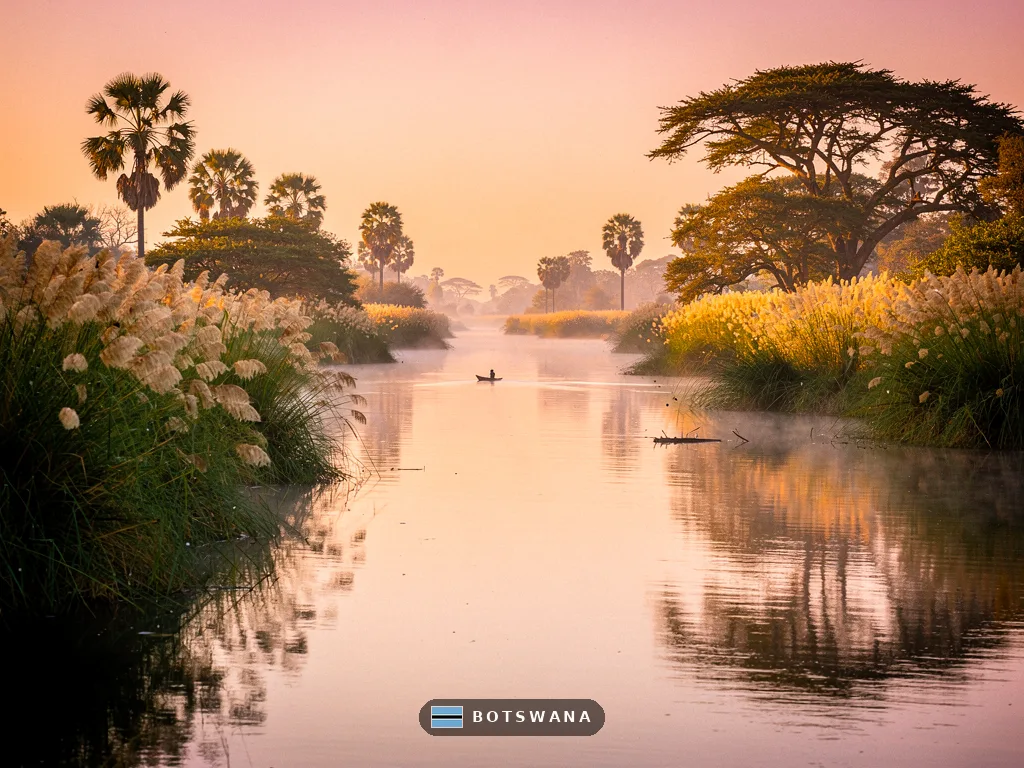
Imagine standing on the edge of a crystal-clear channel in the Okavango Delta, the world’s largest inland delta, as the African sun rises over endless papyrus beds. Your fly rod bends violently as a silver flash erupts from the water — a ferocious Tigerfish (*Hydrocynus vittatus*) with razor-sharp teeth and an attitude to match. This is fishing in Botswana: a perfect blend of world-class angling adventure and unforgettable big-game safari experiences.
Whether you dream of battling 10 kg (22 lb) Tigerfish on fly tackle in the Okavango Panhandle, targeting massive Tilapia (Bream) in remote lagoons, or combining a Chobe River fishing trip with elephant and hippo sightings, Botswana delivers an experience like no other. This comprehensive guide covers everything an international angler needs to know for a successful trip in 2026: how to obtain the mandatory fishing license, top fishing spots, guided tours with current prices, species, regulations, and practical travel advice.
From the remote floodplains of the Linyanti Wetlands to the productive waters of the Chobe River near Kasane, Botswana offers pristine, lightly fished waters that will create memories to last a lifetime. Let’s dive into everything you need to plan your dream fishing safari.
01Fishing Licenses and Permits in Botswana
A fishing license is strictly required for all recreational fishing in Botswana. The Department of Wildlife and National Parks (DWNP) regulates all fishing activities across the country’s rivers, deltas, and dams.
Non-citizens must apply for a Recreational Fishing Licence in person at the nearest DWNP office. You will need to present a certified copy of your passport and, in many cases, a letter of invitation or confirmation from your lodge or camp. For fishing in government dams, an additional entrance permit from the Water Utilities Corporation is usually required.
The application process is straightforward but requires planning. Most luxury lodges and camps handle the paperwork on your behalf if you send your passport details in advance. This service is highly recommended, as DWNP offices are not always located near the fishing areas.
Important note for international travelers: EU, US, UK, Japanese, and other visitors do not need a visa for stays up to 90 days, but you must ensure your passport is valid for at least six months beyond your planned departure from Botswana. Always check the latest entry requirements with your embassy or the Botswana Tourism Organisation before travel.
Shore fishing is technically regulated — “all water bodies” fall under the licensing requirement. However, local citizens are allowed limited subsistence fishing using traditional methods (baskets, traps) without a license, with a daily bag limit of 10 fish. As an international visitor, you must always carry your recreational fishing license.
Tip: Email your lodge at least four weeks before arrival with a scanned copy of your passport. Many camps will have your license ready when you land in Maun or Kasane.
Costs of Fishing Licenses
License fees are divided by residency status (prices current as of 2026, subject to change):
| License Type | Citizens (BWP) | Non-Citizens (BWP) | Approx. EUR | Approx. USD |
|---------------------------|----------------|--------------------|-------------|-------------|
| Monthly Recreational | 30 | 300 | €21.50 | $23 |
| Annual Recreational | 360 | 600 | €43 | $47 |
| Commercial (3 seasons) | 200 | Not available | €14.30 | $15.50 |
These costs are remarkably affordable — roughly the price of one or two restaurant meals in Maun or Kasane for a full month of legal fishing as a non-citizen. Commercial licenses are restricted to Botswana citizens only.
Note: Regulations and fees may change. Always verify the latest information directly with the Department of Wildlife and National Parks or through your chosen lodge.
02Rules and Regulations You Must Follow
Botswana enforces strict conservation measures to protect its unique aquatic ecosystems.
Exporting fish (fresh or dried) requires a separate permit from the DWNP. Most visitors practice catch-and-release and do not need this documentation.
The primary legal framework comes from the Fish Protection Act and the Wildlife Conservation and National Parks Act. Always follow the guidance of your licensed guide or lodge operator.
03Top Fishing Spots and Experiences in Botswana
This is the heart of any Botswana fishing trip. The combination of breathtaking scenery, abundant wildlife, and powerful fish makes every day on the water unforgettable.
1. Okavango Panhandle (Shakawe and Nxamaseri Area)
The Okavango Panhandle is widely regarded as the premier destination for Tigerfish in southern Africa. This narrow, deep stretch of the Okavango River before it fans out into the Delta offers fast-running water and extraordinary fishing.
You will fish from comfortable skiffs or mokoro-style boats, casting to structure where Tigerfish ambush prey. The famous “Catfish Run” — when massive shoals of catfish move upstream and trigger frenzied feeding by Tigerfish — is one of the most spectacular freshwater fishing experiences on Earth. Expect explosive surface strikes and powerful runs that can strip 50–80 meters of line in seconds.
Best months: September to November for peak Tigerfish activity.
2. Chobe River (Kasane)
Where Botswana, Namibia, and Zambia meet, the Chobe River offers a completely different but equally thrilling experience. Tigerfish here can reach impressive sizes — specimens over 9 kg (20 lb) are possible, although 4–6 kg fish are more common.
The river flows past massive herds of elephants that come down to drink, while hippos wallow in the shallows. Fishing here combines high adrenaline angling with one of Africa’s greatest wildlife spectacles. Many visitors describe watching a buffalo herd cross the river while fighting a Tigerfish as a “once-in-a-lifetime” moment.
Half-day and full-day charters operate from Kasane, making this the most accessible option for travelers with limited time.
3. Inner Okavango Delta
The permanent waters of the Inner Delta around camps such as Camp Okavango, Xugana, or Guma Lagoon Camp offer a more intimate experience. Crystal-clear channels and isolated lagoons are perfect for sight fishing with fly or light spinning tackle.
Here you can target not only Tigerfish but also the hard-fighting Nembwe (Olive Bream) and Three-Spot Tilapia. The sheer beauty of the Delta — thousands of square kilometers of wilderness reachable only by small aircraft and boat — makes this a bucket-list destination.
4. Linyanti Wetlands
Remote and seasonal, the Linyanti comes alive during the flood season (typically May to August). The shallow, nutrient-rich waters produce excellent bream fishing and occasional encounters with large Tigerfish and Sharptooth Catfish.
This area feels truly wild. You may fish for hours without seeing another boat, surrounded only by the sounds of African fish eagles and the occasional splash of a feeding crocodile.
5. Botswana’s Major Dams
For travelers based near the capital or looking for a different experience, dams such as Gaborone, Shashe, and Letsibogo offer productive fishing for Tilapia (Bream), Carp, and occasionally Catfish. These waters require both a recreational fishing license and a separate day permit from the Water Utilities Corporation.
While less glamorous than the Delta or Chobe, these dams can provide excellent sport on light tackle and are popular with local anglers.
The sheer variety of environments — from vast inland delta to mighty river systems and man-made lakes — means Botswana can deliver a different fishing experience every day of your trip.
Tip: Pack polarized sunglasses and a wide-brimmed hat. The African sun reflecting off the water is intense and can cause fatigue quickly.
04Target Species and Proven Techniques
Tigerfish — The African Piranha
The Tigerfish is the undisputed king of Botswana’s waters. With its protruding teeth, streamlined silver body, and explosive fighting style, it is often compared to a freshwater tarpon or a giant trevally in its acrobatic power.
- Fly fishing with 8–9 weight rods, fast-sinking lines, and large streamers or poppers
- Spinning with spoons, Rapala-type lures, or soft plastics
- Live bait (small tilapia or “bulldog” fish) drifted in current
The bony mouth makes hook-ups challenging — many strikes are missed. Persistence and quick, powerful hook sets are essential.
Tilapia / Bream (Nembwe, Three-Spot, Redbreast)
These hard-fighting fish offer superb sport on light tackle and are delicious when prepared fresh at camp. Nembwe in particular are known for powerful runs and spectacular jumps.
Sharptooth Catfish (Barbel)
These can grow to enormous sizes — over 30 kg (66 lb) in some waters. They are usually targeted with heavy bottom rigs and natural baits.
05Tours and Guided Experiences
Most visitors fish Botswana through established lodges and camps that provide experienced local guides, boats, tackle, and — crucially — handle all permitting.
Popular operators include:
Typical prices (2026 estimates):
These prices are comparable to high-end fishing lodges in other parts of the world but include the priceless added value of African wildlife viewing.
🎣 Fishing tours in Botswana — Book guided fishing tours with local experts.
🚤 Charter fishing in Botswana — Find and book charter boats with experienced captains.
Many lodges offer combined fishing and safari packages, allowing you to spend mornings on the water and afternoons on game drives. This “safari-fishing” combination is one of Botswana’s biggest attractions for international visitors.
06Equipment Recommendations
Bring high-quality gear that can handle powerful fish in hot conditions. For Tigerfish, an 8–9 wt fly rod with a quality reel and strong drag is essential. Spinning anglers should bring medium-heavy rods rated for 15–30 lb line.
Most lodges provide tackle, but serious anglers bring their own favorite lures and flies. A good selection of large streamers, poppers, and flashy spoons will serve you well.
Essential items to pack:
🛒 Fishing equipment for Botswana — Find the right gear for your trip.
07Practical Travel Information
Best Time to Visit
From a Northern Hemisphere perspective, the prime Tigerfish season (September–November) coincides with autumn in Europe and North America — an excellent time to escape to summer-like conditions in Botswana.
From a Southern Hemisphere viewpoint, the dry season (May–October) offers the best overall wildlife viewing and easier access to remote camps as water levels drop.
Avoid the closed season (January–February) and the peak flood months (March–April) when access becomes extremely difficult.
Getting There and Getting Around
International flights usually arrive in Johannesburg (South Africa) before connecting to Maun (for the Okavango Delta) or Kasane (for the Chobe River). Several airlines offer convenient connections.
Remote lodges are reached by light aircraft transfers (included in most packages) followed by boat transfers. The scenic flights over the Delta are a highlight in themselves.
Language is generally not a barrier — all lodge staff and guides speak excellent English. However, learning a few basic Setswana phrases is always appreciated.
Health and Safety
Consult your doctor about malaria prophylaxis, as the risk exists in northern Botswana. Lodges provide high-quality accommodation and professional guides who prioritize guest safety around crocodiles and hippos.
Staying Connected
Mobile coverage is surprisingly good in many fishing areas, but remote Delta camps may have limited service. Consider an eSIM for affordable data.
📱 Stay connected in Botswana — Get an eSIM for affordable mobile data while traveling.
If you plan to self-drive between fishing areas, a 4x4 vehicle is essential.
🚗 Rent a car in Botswana — Compare prices from 500+ rental companies worldwide.
08Costs and Budget Planning
A typical 7-night fishing safari in Botswana ranges from €3,500 to €8,500 per person (approx. $3,800–$9,200) depending on the level of luxury. This usually includes accommodation, all meals, transfers, game activities, and guided fishing.
Budget travelers can arrange day charters from Kasane for significantly less, but the full lodge experience offers better value when you factor in the wildlife, accommodation, and support.
Compared to other African safari destinations, Botswana is positioned at the premium end but delivers exceptional quality and low angler pressure.
09FAQ – Frequently Asked Questions
Do I need a fishing license in Botswana?
Yes. A recreational fishing license is mandatory for all non-subsistence fishing. Non-citizens pay BWP 300 (€21.50) per month.
What is the best time to fish for Tigerfish in Botswana?
September to November offers the best combination of warm water and active fish. The dry season (June–October) is also excellent for combining fishing with game viewing.
Can I keep the fish I catch?
Most lodges operate on a strict catch-and-release policy, especially for Tigerfish. Always follow your guide’s instructions and local regulations.
Is it safe to fish in Botswana?
Yes, when fishing with licensed professional guides. They are experts at managing the risks associated with wildlife, particularly hippos and crocodiles.
What is the biggest Tigerfish caught in Botswana?
Specimens over 12 kg (26 lb) have been recorded in the Okavango Panhandle, though fish of 5–8 kg provide the majority of sport.
Do I need a visa to visit Botswana?
Citizens of the EU, US, UK, Japan, and many other countries can visit visa-free for up to 90 days. Check the latest requirements before travel.
Can I bring my own fishing tackle?
Yes. There are no unusual restrictions, but you must declare fishing equipment on arrival and ensure it is clean to prevent the spread of invasive species.
Is fly fishing good in Botswana?
Excellent. Many experts consider the Okavango Delta and Panhandle among the finest fly-fishing destinations in Africa for Tigerfish.
10Conclusion
Fishing in Botswana is far more than just catching fish. It is an immersive journey through one of the planet’s most pristine and wildlife-rich wilderness areas. The explosive strikes of Tigerfish against a backdrop of elephants, lions, and spectacular sunsets create experiences that redefine what angling can be.
Whether you choose the remote luxury of an Okavango Delta camp, the accessible excitement of the Chobe River, or a combination safari and fishing adventure, Botswana will deliver memories that last a lifetime. Begin planning early, work with reputable lodges, and respect the strict conservation rules that keep these waters so special.
Your African Tigerfish adventure awaits.
Sources & Further Links
Disclaimer: This guide is for informational purposes only. Fishing regulations, fees, and seasonal information may change. Always check the latest official requirements with the Department of Wildlife and National Parks (DWNP) and your chosen lodge before traveling. The author and FishingWorldGuide.com accept no liability for any inaccuracies or incidents that may occur during your trip. This article was written for 2026.
Don't miss any fishing tips!
Get the best fishing destination recommendations weekly in your inbox.
No spam. Unsubscribe anytime.
Data incorrect?
Help us keep this article up to date — report outdated or incorrect information
More articles