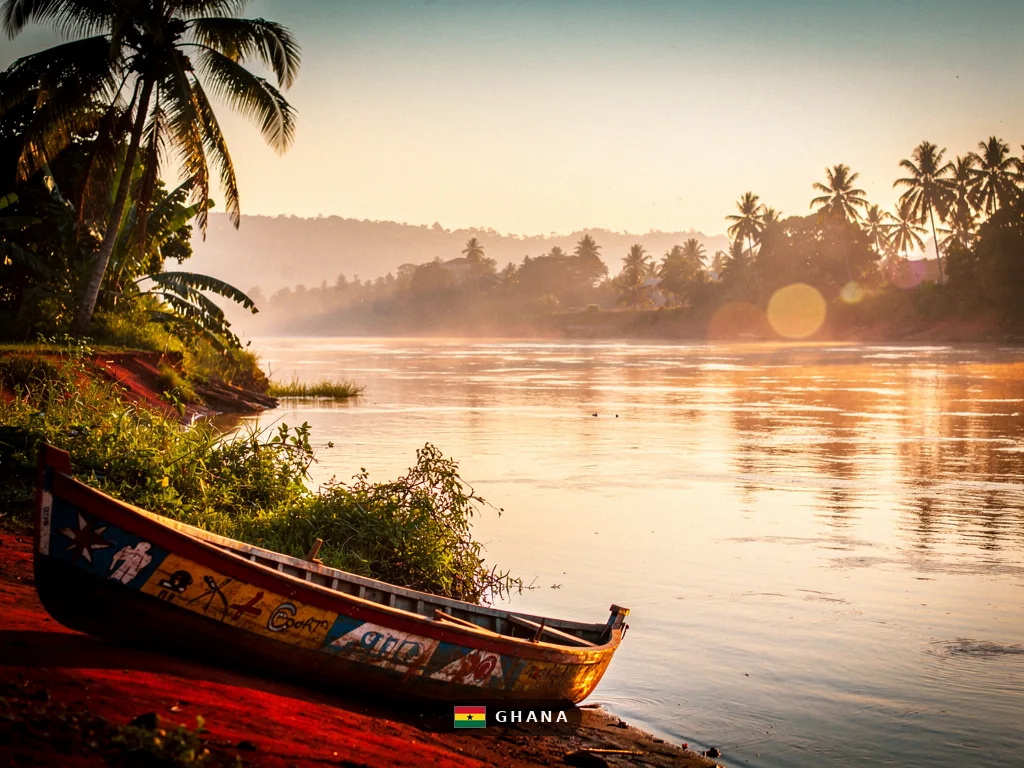
Imagine standing knee-deep in the warm waters where the mighty Volta River meets the Atlantic, your heavy rod bending double as a silver-sided Atlantic tarpon over 50 kg (110 lb) explodes into the air. Or picture yourself 30 km (18 miles) offshore from Tema, watching a sailfish streak across the surface under a bright blue West African sky. This is fishing in Ghana — a destination that remains one of West Africa’s best-kept secrets for both big-game saltwater anglers and freshwater enthusiasts chasing Nile perch on the world’s largest man-made lake.
Whether you are an experienced international angler or a traveler looking to combine culture, history, and world-class fishing, Ghana offers remarkable variety. From the bustling ports of Accra and Tema to the serene shores of Lake Volta and the historic forts of Cape Coast, this guide covers everything you need to plan an unforgettable trip. You will learn exactly when and where to fish, whether you need a fishing license or permit, what the current regulations are, how much it costs, and how to book the best charters and tours.
01Do You Need a Fishing License or Permit in Ghana?
The question “do you need a fishing license in Ghana?” is one of the most common asked by visiting anglers. The answer depends on how and where you plan to fish.
Under the Fisheries Act 2002 (Act 625) and subsequent regulations (including the Fisheries Regulations 2010 – L.I. 1968), all commercial and organized recreational fishing requires a permit. The Fisheries Commission of the Ministry of Fisheries and Aquaculture Development (MoFAD) is the responsible authority.
For independent casual shore fishing, however, a formal recreational fishing license is generally not required in most coastal areas. This makes Ghana particularly attractive for travelers who want to cast a line from the beach or estuary without bureaucracy. That said, it is strongly recommended — and culturally expected — to speak with the local “Chief Fisherman” (often called the *Apafohene*) or community elders if you fish near a village. A small gift or friendly conversation can open doors and ensure a warm welcome.
When you book a charter boat or guided tour, whether for deep sea fishing in Ghana or on Lake Volta, the operator almost always holds a master permit that covers all clients for the duration of the trip. This is the most common and hassle-free way for international visitors to fish legally.
If you prefer to fish independently with your own boat or for extended periods, you must apply for a recreational fishing license in person at the Fisheries Commission headquarters in Accra or at regional offices in Tema or Takoradi. Current estimated fees for a one-day recreational permit range from 270 GHS to 670 GHS (approximately €22–€52 or $24–$56 USD). Prices are not always published publicly and can be negotiated when arranged through a reputable tour operator.
Tip: Always confirm the latest requirements directly with your chosen charter company or the Fisheries Commission before travel. Regulations are currently being updated through the new “Fisheries and Aquaculture Bill 2025,” and requirements for foreign anglers may evolve.
For the most up-to-date official information, consult the Fisheries Commission and Ministry of Fisheries and Aquaculture Development.
02Fishing Regulations & Responsible Angling
Ghana enforces several important rules designed to protect its fish stocks, many of which have faced heavy pressure in recent decades.
Closed seasons are strictly applied to the commercial industrial fleet — usually July and August for trawlers — but these restrictions currently do not apply to recreational sport fishing. This gives visiting anglers a longer effective season than in many other West African countries.
Prohibited practices include the use of explosives (dynamite fishing), chemicals, and powerful underwater lights to aggregate fish. Violations can result in heavy fines or even imprisonment. Minimum landing sizes are in force for more than 20 species; responsible operators practice catch and release, particularly for high-value sport fish such as tarpon, marlin, sailfish, and large Nile perch.
There is currently a moratorium (extended until at least 2026) on the registration of new artisanal fishing canoes, highlighting the government’s commitment to sustainable management.
When fishing on Lake Volta, additional inland waterway rules administered by the Ghana Maritime Authority apply. These focus on safety, navigation, and protection of the lake’s important tilapia and Nile perch populations.
International visitors should be aware that enforcement is stricter around major ports and when fishing with organized operators. Guides and captains are well-informed about current rules and will ensure compliance.
03Best Fishing Spots in Ghana – Where to Make Your Dreams Come True
The diversity of fishing in Ghana is remarkable. From pounding Atlantic surf to the vast inland sea of Lake Volta, here are the destinations that consistently deliver memorable experiences.
Ada Foah – World-Class Tarpon Fishing
At the mouth of the Volta River, Ada Foah is perhaps Ghana’s most famous fishing destination. The brackish estuary where the river meets the Atlantic creates perfect conditions for massive Atlantic tarpon. Fish weighing 40–70 kg (88–154 lb) are regularly encountered, with some specimens exceeding 100 kg (220 lb).
The scenery is breathtaking: palm-fringed lagoons, white-sand beaches, and traditional fishing villages. Many anglers describe the explosive jumps of tarpon in the early morning light as one of the most thrilling sights in sport fishing. You can fish from small local boats, kayaks, or with specialized tarpon guides using heavy spinning or fly tackle. The best months are September to March, though tarpon are present year-round.
Accra & Tema – Deep Sea & Big Game Fishing
Just a short drive from the capital, the ports of Tema and Accra serve as the gateway to superb big game fishing in Ghana. The continental shelf drops off relatively close to shore, putting you within reach of sailfish, blue and white marlin, yellowfin tuna, wahoo, and dorado.
A typical day offshore offers dramatic scenery — bright blue water, occasional visits from dolphins, and the distant sight of the Ghanaian coastline. Many charters report sailfish action almost guaranteed during the peak season (September–March). This is the place to experience the adrenaline of fighting a marlin on 37 kg (80 lb) class tackle while watching flying fish scatter across the waves.
Lake Volta – Freshwater Giants
Spanning over 8,500 km² (3,280 square miles), Lake Volta is one of the largest man-made lakes on Earth. The towns of Akosombo, Yeji, and Kpong are the main bases for freshwater fishing.
Here the star attraction is the mighty Nile perch. Fish of 20–50 kg (44–110 lb) are common, with larger specimens possible. You will also encounter big tilapia, African catfish, and — in the northern arms — occasional tigerfish. Imagine drifting over submerged trees in a traditional wooden boat as the sun sets behind rolling green hills. The experience combines excellent fishing with a profound sense of peace and connection to rural Ghanaian life.
Axim & Cape Three Points
On the western coast, the rocky headlands of Cape Three Points and the town of Axim offer superb light-tackle and shore-based opportunities. Expect strong fights with barracuda, jack crevalle, cubera snapper, and various groupers. The area is less developed than Tema, giving you a more authentic West African coastal experience surrounded by coconut palms and traditional wooden pirogues.
Elmina & Cape Coast
Near the historic UNESCO-listed forts and castles, Elmina and Cape Coast are ideal for travelers who want to combine fishing with rich cultural exploration. Light spinning and bottom fishing from shore or small boats produces excellent snapper and grouper action. Many visitors spend mornings fishing and afternoons touring 17th-century Portuguese, Dutch, and British castles — a powerful reminder of Ghana’s history.
Each of these locations offers its own unique atmosphere. Whether you dream of screaming reels on the open ocean or the quiet thrill of a Nile perch smashing a lure at dawn on Lake Volta, Ghana delivers.
Tip: Combine your fishing trip with a visit to Ghana’s historic sites. Many operators offer cultural packages that include fishing in the morning and guided tours of Cape Coast Castle or Kakum National Park in the afternoon.
04Tours & Guided Experiences in Ghana
Most international visitors choose to fish with professional operators. This not only simplifies licensing but also greatly increases your chances of success and safety.
Popular experiences include:
Operators typically supply quality rods and reels (often Shimano or Penn), bait, and all safety equipment. Many captains have international experience, having previously worked in destinations such as Madeira or South Africa.
Language is rarely a barrier — English is Ghana’s official language, and virtually all professional fishing guides speak it fluently.
Best time to visit from different hemispheres:
The rainy season (April–July) can bring heavier swells offshore and higher water levels on Lake Volta, but freshwater fishing often remains productive.
05Ghana Fishing Charters – What to Expect & How Much It Costs
Charter prices in Ghana offer excellent value compared with many other big-game destinations.
Deep-sea / Big Game Charters (Tema or Ada):
Lake Volta Freshwater Charters:
These prices are roughly comparable to a mid-range restaurant meal for a group in Europe or North America for the freshwater options, while big-game charters remain significantly less expensive than similar trips in the Caribbean or Indian Ocean.
When comparing costs, remember that many charters include fuel, bait, tackle, and — most importantly — the captain’s local knowledge. Tipping is appreciated (10–15 % is customary) when service is excellent.
Here is a quick cost comparison (prices per boat unless noted):
| Experience | Duration | Price Range (EUR) | Price Range (USD) | Includes |
|-----------------------------|--------------|-------------------|-------------------|----------|
| Deep-sea big game | Full day | €450–€750 | $485–$810 | Tackle, bait, captain |
| Tarpon estuary (Ada Foah) | Full day | €320–€550 | $345–$595 | Local guide, lures |
| Lake Volta Nile perch | Full day | €80–€180 | $86–$194 | Boat, guide, basic tackle |
| Multi-day combo tour | 3 days | €650–€1,200 pp | $700–$1,300 pp | Accommodation, meals, fishing |
Always book through established operators to ensure your permit is covered and safety standards are met.
🎣 Fishing tours in Ghana — Book guided fishing tours with local experts.
🚤 Charter fishing in Ghana — Find and book charter boats with experienced captains.
06What Gear to Bring – Equipment Tips for Ghana
Most charter operators provide heavy offshore rods and reels. However, serious anglers should consider bringing their own specialized equipment:
If you prefer to buy or rent additional gear in Ghana, online options through platforms such as Ubuy Ghana can be useful before departure.
🛒 Fishing equipment for Ghana — Find the right gear for your trip.
07Practical Travel Information for International Anglers
Getting There & Visa Requirements
Accra Kotoka International Airport (ACC) is the main entry point with direct flights from Europe, the United States, the United Kingdom, Turkey, and several African hubs.
Visa requirements (as of 2026):
Yellow fever vaccination is mandatory for entry from most countries. Malaria prophylaxis is strongly recommended — consult your doctor well in advance.
Language & Communication
English is the official language and is widely spoken, including by fishing guides and hotel staff. Basic French can be useful in some border areas, but it is rarely needed. Translation apps are helpful for interactions in more remote villages.
Health & Safety
Getting Around
Many fishing packages include transfers from Accra. For independent travel, hiring a car and driver or using reliable taxi apps is recommended. Domestic flights to cities such as Kumasi or Tamale can shorten travel time to northern Lake Volta areas.
📱 Stay connected in Ghana — Get an eSIM for affordable mobile data while traveling.
🚗 Rent a car in Ghana — Compare prices from 500+ rental companies worldwide.
08Frequently Asked Questions
Do I need a fishing license in Ghana for saltwater fishing?
Casual shore fishing usually does not require a formal license, but any boat-based or organized fishing normally requires a permit. Most charters include this in the price.
What is the best time of year for big game fishing in Ghana?
The peak season for marlin, sailfish, and tuna runs from September to March, when seas are generally calmer and billfish are most active.
Are there Nile perch in Lake Volta?
Yes. Lake Volta is famous for large Nile perch, along with tilapia and catfish. Fish over 30 kg (66 lb) are regularly caught.
Is tarpon fishing in Ghana good?
Ada Foah and the Volta River estuary offer some of the best tarpon fishing in West Africa. Fish over 50 kg (110 lb) are common during the right conditions.
Can I practice catch and release in Ghana?
Yes. Most professional operators strongly encourage catch and release, especially for tarpon, billfish, and large Nile perch to ensure sustainability.
What should I pack for a fishing trip to Ghana?
Bring polarized sunglasses, sunscreen (SPF 50+), quick-dry clothing, mosquito repellent, personal medicines, and your favorite lures and terminal tackle. Charters usually supply rods and reels.
Is it safe to drink the water while fishing in remote areas?
No. Always drink bottled or properly treated water. Good operators provide safe drinking water on trips.
09Conclusion
Fishing in Ghana offers an unbeatable combination of thrilling sport, stunning scenery, rich culture, and outstanding value. Whether you hook your first tarpon in the Volta estuary, battle a sailfish under the African sun, or feel the powerful run of a Nile perch on Lake Volta, the memories will last a lifetime.
The country’s straightforward approach to recreational permits, English-speaking guides, and growing number of professional charters make it an increasingly attractive destination for international anglers. Start planning your trip today — the waters of Ghana are waiting.
Book your charter early during the peak season (September–March) and prepare for an African fishing adventure unlike any other.
10Sources & Further Links
Disclaimer: This guide is based on information available in early 2026. Fishing regulations, permit costs, and seasonal patterns may change. Always verify the latest rules with the Fisheries Commission of Ghana or your chosen tour operator before you travel. This article is for informational purposes only and does not replace official advice or professional guidance.
Don't miss any fishing tips!
Get the best fishing destination recommendations weekly in your inbox.
No spam. Unsubscribe anytime.
Data incorrect?
Help us keep this article up to date — report outdated or incorrect information
More articles