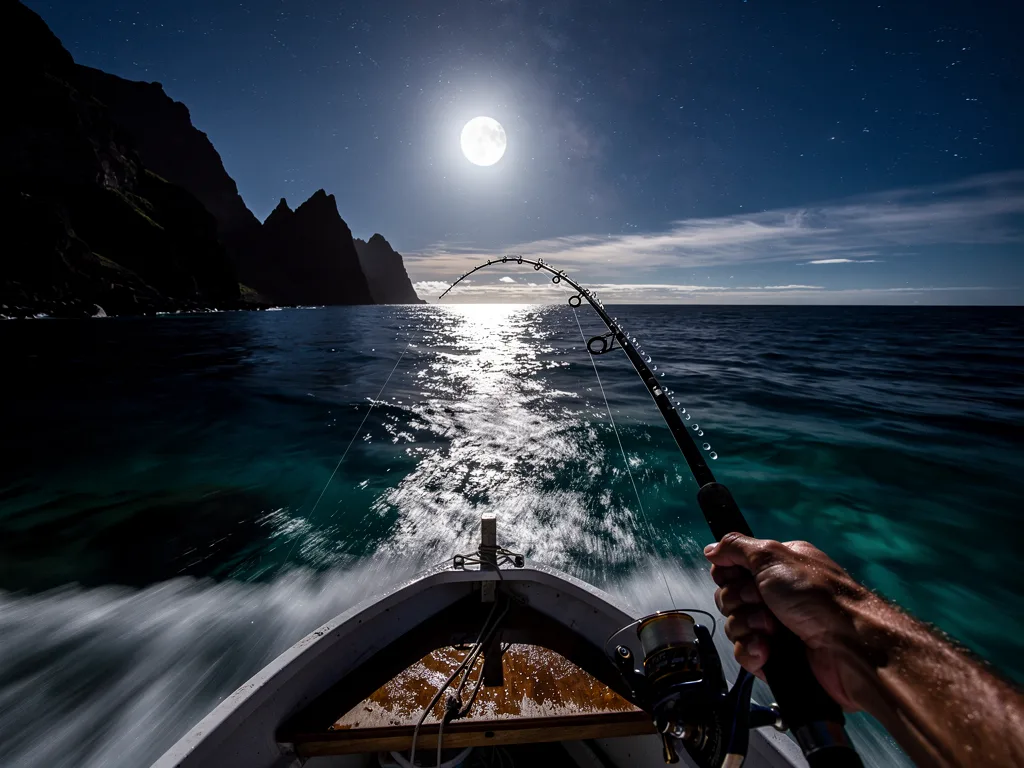
Imagine casting your line into deep indigo waters where a 500-kilogram Blue Marlin could strike at any moment—and you're only fifteen minutes from the marina. Welcome to fishing in Réunion, a French overseas department in the Indian Ocean where the ocean floor drops to depths of 1,000 meters (3,280 feet) within a stone's throw of the volcanic shoreline. This isn't fantasy; it's everyday reality on one of the world's most spectacular—and surprisingly accessible—fishing destinations.
What makes Réunion truly extraordinary for anglers isn't just the trophy fish. It's the remarkable combination of free shore fishing (no license required!), world-class big-game charters at reasonable European prices, and a dramatic volcanic landscape that creates underwater canyons teeming with pelagic giants. Whether you're a budget-conscious traveler casting a traditional bamboo "gaulette" from a black lava beach or a serious angler pursuing your first Grand Slam, Réunion delivers experiences that rival the Seychelles or Mauritius—at a fraction of the cost.
01Do You Need a Fishing License in Réunion?
Here's the news most visiting anglers love to hear: shore fishing in Réunion is completely free and requires no license whatsoever. You can fish from beaches, rocky outcrops, and jetties using traditional methods without any permit. This applies to everyone—locals and visitors alike—making Réunion one of the most accessible fishing destinations for international travelers.
However, the freedom comes with responsibilities. Specific regulations govern where, what, and how you can fish, particularly within the Réserve Naturelle Marine de la Réunion (RNMR), one of the largest marine protected areas in the Indian Ocean.
Sea Fishing Regulations at a Glance
| Activity | License Required? | Notes |
|----------|-------------------|-------|
| Shore fishing (rod/line) | ❌ No | Free and permitted along most coasts |
| Boat fishing (recreational) | ❌ No | Registration required for electric reels |
| Fishing in Marine Reserve | ✅ Yes (free card) | "Carte de pêche traditionnelle" – limited quota |
| Spearfishing | ❌ No | Strictly regulated zones apply |
| Bichique fishing (goby fry) | ✅ Yes | Special authorization required |
The Traditional Fishing Card (Marine Reserve)
If you plan to fish within the Réserve Naturelle Marine de la Réunion, you may need a free "Carte de pêche traditionnelle" (Traditional Fishing Card). This applies specifically for catching certain species like *capucin nain* (a type of sea cucumber), octopus (*zourite* in Creole), or when using gaulette fishing in protected zones.
Key details:
For most visitors staying a few days or weeks, this card won't be necessary—standard shore fishing outside the reserve's core zones doesn't require it. However, always check current boundaries at reservemarinereunion.fr as zones can change.
Freshwater Fishing License
If you're interested in fishing Réunion's rivers and streams (locally called "rivières"), a license is required. The island has limited freshwater fishing compared to its marine opportunities, but species like tilapia and gudgeon can be found inland.
| License Type | Price (EUR) | Price (approx. USD) | Validity |
|--------------|-------------|---------------------|----------|
| Adult Annual | €72.00 | ~$78 | Full calendar year |
| Adult Autumn (50% discount) | €36.00 | ~$39 | September 1 – December 31 |
| Minor Annual (under 18) | €15.00 | ~$16 | Full calendar year |
| Discovery (under 12) | €8.00 | ~$9 | Full year, 1 line only |
| Daily License | €15.00 | ~$16 | Single day |
| Weekly License | €36.50 | ~$40 | 7 consecutive days |
Where to purchase: Online at cartedepeche.fr or at local authorized distributors including fishing shops and some newsstands.
Tip: For most visitors, the daily license at €15 (roughly the cost of a decent restaurant meal) offers the best value for a casual freshwater fishing experience. However, the real attraction in Réunion is the ocean—focus your time there unless you have specific interest in river species.
02Fishing Regulations You Must Know
Réunion takes fisheries management seriously. The marine ecosystem faces pressures from overfishing and climate change, and authorities enforce regulations actively. Here's what every angler needs to know.
Mandatory Catch Marking ⚠️
This is the single most important rule to remember: All fish caught recreationally must be marked immediately upon capture by cutting the lower portion of the tail fin (caudal fin). For boat fishing, this must be done as soon as the fish comes aboard.
Why? The marking system allows authorities to distinguish legally caught fish from those sold commercially. Failure to mark your catch can result in fines if you're controlled at sea or at the dock.
Key Prohibitions
| Prohibition | Details | Reason |
|-------------|---------|--------|
| Sale of catch | Strictly forbidden | Personal consumption only |
| Night fishing | Prohibited in Marine Reserve | Protects nocturnal species |
| Dead fish dumping | Forbidden within 2.5 nautical miles of coast | Attracts sharks to swimming areas |
| Electric reels | Only permitted weekends and holidays | Must be declared in advance |
| DCP (Fish Aggregating Device) fishing | Weekends and holidays only for recreational anglers | Prevents conflict with professionals |
Size and Catch Limits
The Marine Reserve enforces specific limits to protect fish stocks:
| Species | Minimum Size | Season | Daily Limit (Marine Reserve) |
|---------|--------------|--------|------------------------------|
| Langouste (Spiny Lobster) | 23 cm (9 in) | April – November | — |
| Capucin nain | — | February – April | 4 kg (9 lb) |
| Bichique (Goby fry) | — | September – February | 3 kg (7 lb) |
| Fish (general) | 10 cm (4 in) | Year-round | 5 kg (11 lb) per person |
Protected Species — Do NOT Catch
Several species are fully protected and must be released immediately if accidentally caught:
Important: Réunion has one of the highest shark attack rates in the world, primarily involving bull sharks and tiger sharks. Never clean fish in the water, avoid fishing near swimming areas, and follow all local safety advice. The shark risk is real—take it seriously.
03The Best Fishing Spots in Réunion
Now for the heart of what makes Réunion special. This volcanic island offers fishing experiences you simply cannot find elsewhere—from casting off black lava cliffs where the ocean drops to abyssal depths within meters of shore, to tranquil lagoon fishing perfect for families. Here are the spots that will make your trip memorable.
1. Saint-Gilles-les-Bains — The Big-Game Capital ⭐ TOP PICK
Best for: Deep-sea fishing, Blue Marlin, Yellowfin Tuna, Wahoo
Saint-Gilles-les-Bains on the leeward west coast is the undisputed center of Réunion's big-game fishing scene. The marina here hosts the island's largest fleet of charter boats, and for good reason: the underwater topography is a highway for pelagic giants.
What makes this location extraordinary is the speed of access to deep water. A fifteen-minute boat ride puts you in waters exceeding 1,000 meters (3,280 feet) deep—the kind of depths that typically require hours of travel from most fishing destinations. The volcanic shelf drops so dramatically that Blue Marlin, Yellowfin Tuna, and Wahoo patrol practically within sight of land.
The experience: You board at dawn, the Indian Ocean glassy and golden. Within minutes of clearing the harbor, your captain spots working birds—Frigate Birds and Terns diving on baitfish pushed to the surface by hunting tuna. The outriggers go out, lures begin their dance in the spread, and you're fishing waters that have produced Blue Marlin over 600 kg (1,300 lb). The island's volcanic peaks loom behind you, a dramatic backdrop to one of the world's great game fisheries.
Target species by season:
Facilities: Full marina with fuel, bait, ice, fish cleaning stations, restaurants, and accommodation options within walking distance.
2. Saint-Pierre Jetty — Traditional Soul
Best for: Shore fishing, Gaulette technique, Reef fish, Family outings
The southern town of Saint-Pierre offers something different: a glimpse into Réunion's fishing heritage. The historic jetty, with its iconic lighthouse standing sentinel, has been a gathering place for local anglers for generations.
Here you'll see the gaulette in action—Réunion's traditional bamboo rod fishing technique. No reels, no fancy equipment, just a bamboo pole, a line, and generations of skill passed down through families. Local fishermen catch everything from small reef fish to surprising pelagics from this structure, using techniques refined over centuries.
The experience: Arrive in the late afternoon when the golden light hits the volcanic peaks behind the town. Join local anglers on the jetty, cast your line into the clear waters, and watch as the sun sets over the Indian Ocean. The fish aren't enormous here, but the atmosphere is unbeatable—a genuine connection to Réunion's maritime culture.
Target species: Various reef fish (including Lutjanus snappers), small trevally species, occasional small tunas and mackerel.
Practical notes: Easy access from town, no boat needed, perfect for families or anglers without charter budgets. Bring your own gear—there are no rentals on the jetty itself, but tackle shops exist in Saint-Pierre.
3. Pointe des Colimaçons — Dramatic Rock Fishing
Best for: Rock fishing, Shore casting, Trevally, Barracuda
For anglers seeking adventure and dramatic scenery, Pointe des Colimaçons near Saint-Leu delivers both in abundance. These volcanic cliffs plunge directly into the ocean, creating perfect ambush points for predatory fish patrolling the rocky edges.
The experience: Standing on black volcanic rock with waves crashing below, casting lures into the churn where giant trevally hunt. The backdrop is pure drama—the cliff face rises behind you, and before you lies nothing but open Indian Ocean all the way to Madagascar, 800 kilometers (500 miles) distant.
Target species: Giant Trevally (GT), Blue Trevally, Barracuda, various reef predators, occasional Dorado when conditions align.
⚠️ Critical Safety Warning: This spot demands respect. Sneaker waves are common—massive swells that appear without warning and sweep anglers off rocks. Always:
This is advanced shore fishing, not for beginners. The rewards are great—a trophy GT from the rocks is a lifetime achievement—but the risks are real.
4. Langevin Marina — Southern Gateway
Best for: Traditional fishing, Southern waters access, Authentic local experience
The small marina at Langevin in the commune of Saint-Joseph provides access to Réunion's wild southern coast. This area sees fewer tourists and offers a more authentic, less commercialized fishing experience.
The southern coast faces the full force of the Indian Ocean's swells, creating dynamic fishing conditions. The underwater topography here features dramatic drop-offs and seamounts that attract pelagic species. Local fishermen launch traditional pirogues from the protected landing area, and some charter operators work from here when west coast conditions are unfavorable.
Target species: Wahoo, Yellowfin Tuna, various bottom fish including groupers and snappers, occasional Marlin.
Why fish here: If you want to escape the Saint-Gilles crowd and experience fishing with more local flavor, Langevin is your gateway. The southern coast also tends to be less affected by the west coast's occasional wind problems.
5. Étang-Salé and Bassin Pirogue — Lagoon Serenity
Best for: Lagoon fishing, Beginners, Families, Children
Not every fishing moment needs to be an adrenaline-fueled battle with a marlin. The protected lagoon at Étang-Salé, particularly the Bassin Pirogue area, offers calm, shallow waters perfect for relaxed fishing and family outings.
The lagoon is formed by a barrier reef that breaks the ocean swell, creating a natural aquarium alive with smaller reef species. It's an ideal spot to introduce children to fishing, practice techniques, or simply enjoy a peaceful day by the water without the pressure of trophy hunting.
Target species: Small reef fish, various wrasse and damselfish species, occasional small trevally, crabs, and octopus.
Practical notes: The area has facilities including parking, and the calm waters are safe for wading (though always check local advice regarding water quality and any temporary restrictions). A great spot to bring a picnic and make a full day of relaxed fishing.
🎣 Fishing tours in Réunion — Book guided fishing tours with local experts who know the best spots and can provide all equipment.
04Fishing Charters & Guided Tours
While shore fishing in Réunion is free and accessible, the true trophy fish roam the deep offshore waters. Professional charters provide the boats, equipment, and local knowledge to reach them. Here's what you need to know about booking a fishing charter in Réunion.
Big-Game Charter Operators
| Operator | Base | Half-Day Price | Full-Day Price | Capacity |
|----------|------|----------------|----------------|----------|
| Réunion Fishing Club | Saint-Gilles | From €65/person | On request | 6 passengers |
| Blue Pêche au Gros | Saint-Gilles | From €65/person | On request | 6 passengers |
| Océana Pêche au Gros | Saint-Gilles | €130/fisher | €1,000 (private) | 6 passengers |
| Shadow Fishing | Saint-Pierre | On request | On request | Small groups |
| Lounan Pescatourisme | Saint-Gilles | €120/fisher | — | 2 fishers + guide |
What's typically included:
Private vs. Shared Charters
Understanding the difference helps you choose the right experience:
| Aspect | Shared Charter | Private Charter |
|--------|----------------|-----------------|
| Cost (half-day) | €65–130 per person | €520–1,000 total |
| Flexibility | Fixed schedule, shared boat | Your schedule, your targets |
| Best for | Solo travelers, small groups, budget-conscious | Families, groups, serious anglers |
| Personal attention | Shared with 5–6 others | Dedicated crew attention |
| Target species | Captain's discretion | Your choice (within reason) |
What to Expect on a Charter
A typical half-day big-game charter follows this pattern:
1. Departure (usually 6:00 AM or 1:00 PM): Meet at the marina, safety briefing, equipment overview
2. Transit (15–20 minutes): Head to the fishing grounds—you'll be in deep water remarkably fast
3. Fishing (4–5 hours): Trolling for pelagics, with possible bottom fishing depending on conditions
4. Return: Fish cleaning and filleting (you keep what you catch, within limits), celebratory ti'punch
Best value approach: For first-time visitors, a shared half-day charter at €65–130 per person offers an affordable taste of Réunion's offshore fishing. If you hook into a marlin or large tuna, you'll understand why serious anglers return for full-day private charters.
Guided Shore Fishing
If you prefer fishing from shore but want local expertise, guided shore fishing tours are available:
| Service | Price | Duration | Includes |
|---------|-------|----------|----------|
| Réunion Pêche (guided) | €100–250 per person | 6 hours | Transport, equipment, local knowledge |
These tours take you to productive rock marks and beaches, provide appropriate gear, and teach you techniques specific to Réunion's unique conditions. Ideal for anglers uncomfortable with boat fishing or those wanting to develop shore fishing skills for future independent trips.
🚤 Charter fishing in Réunion — Find and book charter boats with experienced captains who know where the big fish swim.
05Fish Species & When to Target Them
Réunion's position in the western Indian Ocean gives it access to an extraordinary diversity of species. Understanding seasonal patterns helps you plan your trip around your target species.
Seasonal Species Calendar
| Season | Months | Primary Targets | Conditions |
|--------|--------|-----------------|------------|
| Austral Summer | December – March | Blue Marlin, Dorado, Yellowfin Tuna, Sailfish | Warm, calm seas; cyclone risk January–March |
| Autumn | April – May | Black Marlin, Wahoo, all pelagics abundant | Transition period, excellent fishing |
| Winter | June – August | Sharks, Yellowfin Tuna, Wahoo | Cooler, some windy days; whale season |
| Spring | September – November | Dorado, Yellowfin Tuna, early Marlin | Warming waters, consistent fishing |
The Pelagic Giants
Blue Marlin (*Makaira nigricans*)
Black Marlin (*Istiompax indica*)
Yellowfin Tuna (*Thunnus albacares*)
Dorado / Mahi-mahi (*Coryphaena hippurus*)
Wahoo (*Acanthocybium solandri*)
Sailfish (*Istiophorus platypterus*)
Shore Fishing Targets
Giant Trevally (*Caranx ignobilis*)
Blue Trevally (*Carangoides ferdau*)
Fishing Techniques Explained
| Technique | How It Works | Target Species |
|-----------|--------------|----------------|
| Trolling | Dragging lures or baits behind a moving boat | Marlin, Tuna, Wahoo, Dorado, Sailfish |
| Jigging | Dropping metal jigs and working them vertically | Groupers, Amberjack, Dogtooth Tuna |
| Popping | Casting surface lures that create disturbance | Trevally, Tuna, various predators |
| Live Bait | Fishing with live fish as bait | Large Trevally, Tuna, Marlin |
| Gaulette | Traditional bamboo rod technique from shore | Reef fish, small game |
06Planning Your Fishing Trip to Réunion
Best Time to Visit
Réunion lies in the southern hemisphere, so seasons are reversed compared to Europe or North America. The island's subtropical climate means fishing is possible year-round, but certain periods suit different priorities:
For big-game fishing (Marlin, Sailfish): November–April
For consistent fishing without crowds: April–June and September–November
For whale watching combined with fishing: June–October
Avoid (or plan carefully): January–March cyclone season
Getting to Réunion
Airport: Roland Garros International Airport (RUN), near Saint-Denis in the north
Direct flights from:
Visa requirements:
Note: Réunion is part of the European Union and uses the Euro (€). This simplifies many aspects of travel for EU visitors and means European banking and phone roaming often work normally.
Where to Stay for Fishing
The west coast (Saint-Gilles-les-Bains, Saint-Leu) puts you closest to the best offshore fishing and has the most charter options. The area also offers beautiful beaches, restaurants, and tourist infrastructure.
Saint-Gilles-les-Bains specifically offers:
For a more authentic, less touristy experience, consider Saint-Pierre on the south coast. You'll have access to southern charter operators and the excellent shore fishing jetty.
Language and Communication
Official languages: French and Réunion Creole
English proficiency: Limited outside the tourism sector. Charter boat captains often speak some English, but don't assume fluency. Learning a few French phrases helps enormously:
Tip: Download an offline French translation app (Google Translate works well) before arriving. Most locals appreciate any effort to speak French, even imperfectly.
🏨 Accommodation near fishing spots in Réunion — Find hotels and lodges close to the best waters, from Saint-Gilles to Saint-Pierre.
07Equipment Recommendations
What to Bring from Home
If you're serious about fishing, bringing your own gear ensures familiarity and quality. Réunion's fish can be large and powerful—don't trust your dream catch to unfamiliar rental equipment if you can avoid it.
For offshore boat fishing:
For shore fishing:
Essential accessories:
What You Can Rent
Charter boats provide all necessary equipment for offshore fishing—typically good quality gear included in the price. For shore fishing, basic equipment can be found at tackle shops in Saint-Gilles and Saint-Pierre, though selection is limited compared to Europe or North America.
Local tackle shops:
🛒 Fishing equipment for Réunion — Find the right saltwater gear for your Indian Ocean adventure.
08Understanding the Costs
Fishing in Réunion offers remarkable value compared to other Indian Ocean destinations. Here's a realistic budget breakdown:
| Expense | Budget Option | Mid-Range | Premium |
|---------|---------------|-----------|---------|
| Shore fishing (per day) | €0 (free access) | €15 (day license for freshwater) | €100–250 (guided tour) |
| Offshore charter (half-day) | €65/person (shared) | €130/fisher (quality shared) | €520–1,000 (private) |
| Charter (full-day) | — | ~€150–200/person | €1,500+ (private premium) |
| Tackle rental | Often included | €20–40/day | — |
| Accommodation (per night) | €50–80 (budget) | €100–180 (mid-range hotel) | €250+ (resort) |
| Meals | €15–25/day (local) | €40–60/day (mix) | €80+/day (fine dining) |
Sample 7-day fishing trip budget (mid-range, from Europe):
| Item | Estimated Cost |
|------|----------------|
| Flights (from Paris) | €800–1,200 |
| Accommodation (7 nights) | €700–1,200 |
| Charters (2 half-days shared) | €150–250 |
| Shore fishing | €0 |
| Meals | €300–400 |
| Car rental (recommended) | €250–350 |
| Total | €2,200–3,400 |
Comparison: A similar trip to the Seychelles would cost 50–100% more; Mauritius comparable or slightly higher. Réunion offers European standards at Indian Ocean prices with easy EU access.
09Legal Considerations for International Anglers
Importing Fishing Equipment
Personal fishing equipment enters Réunion duty-free as personal effects. There are no unusual restrictions on bringing rods, reels, or lures. Pack fragile items carefully—airline baggage handlers are universal in their disregard for "Fragile" labels on rod tubes.
Catch Regulations for Visitors
Key points for international anglers:
Protected Areas
The Réserve Naturelle Marine de la Réunion has specific zones:
Download current zone maps from reservemarinereunion.fr before fishing. Boundaries can change, and "I didn't know" is not an accepted excuse.
Emergency Contacts
10Frequently Asked Questions
Do I need a fishing license in Réunion?
No license is required for recreational shore fishing in Réunion—it's completely free. However, fishing within the Marine Reserve requires a free Traditional Fishing Card for certain activities. Freshwater fishing requires a license purchased at cartedepeche.fr.
Can I keep the fish I catch on a charter?
Yes, you can keep your catch within legal size and bag limits. The crew will clean and fillet your fish for you to take away. Most restaurants will even cook your catch for you—ask your charter operator for recommendations.
What's the best month for marlin fishing in Réunion?
November through April offers the best Blue Marlin fishing, with peak activity typically January–March (though this overlaps with cyclone season). Black Marlin are more common April–June.
Is Réunion safe for tourists?
Réunion is generally safe for tourists, with crime levels similar to metropolitan France. The main safety concerns are natural: shark attacks on swimmers and surfers (not typically anglers), sneaker waves on rocky shores, and cyclones in season. Follow local advice and warning signs.
Can I fish from the beach without a guide?
Absolutely. Shore fishing is free and unrestricted along most of Réunion's coast. Popular spots include Saint-Pierre jetty and various west coast beaches. Use caution on rocky areas—sneaker waves are a real danger.
How do I book a fishing charter?
You can book charters directly through operators' websites, via email, or through platforms like FishingBooker and GetYourGuide. During peak season (December–April), book at least a few weeks in advance for shared charters, further ahead for private.
Are there sharks in Réunion?
Yes, Réunion has a significant shark population including bull sharks and tiger sharks. Shark attacks on swimmers and surfers have occurred, primarily on the east coast. Anglers should exercise caution—never clean fish in the water, and be aware that bleeding fish can attract sharks.
Do charter boat crews speak English?
Some do, particularly operators catering to international tourists. However, French is the primary language. Learning basic fishing terms in French helps communication. Platforms like FishingBooker indicate which operators speak English.
11Conclusion: Why Réunion Should Be Your Next Fishing Destination
Réunion represents something increasingly rare in the fishing world: accessible, world-class fishing without the premium price tag. The island's unique volcanic geography creates the remarkable situation where trophy billfish swim within minutes of the marina. Shore fishing is genuinely free. Charters cost European prices (not Seychelles prices). And the backdrop of volcanic peaks rising 3,000 meters from the sea makes every fishing day visually spectacular.
For European anglers, Réunion offers the chance to catch Indian Ocean giants with EU convenience—Euros, EU banking, EU phone roaming, and no visa. For anglers from further afield, it's an opportunity to experience a unique blend of French culture and tropical island life while pursuing fish that grow larger than almost anywhere else accessible to recreational fishermen.
The key to a successful trip is preparation: understand the regulations (especially mandatory catch marking), book charters in advance during peak season, bring quality gear if you have it, and respect the natural environment—including the sharks that make Réunion their home.
Your Blue Marlin is waiting. The Indian Ocean is calling. Book that flight, reserve that charter, and discover why serious anglers add Réunion to their bucket list.
12Sources & Further Links
*Disclaimer: This article is for informational purposes only. Fishing regulations, prices, and conditions change frequently. Always verify current regulations with official sources (Direction de la mer Sud océan Indien, Réserve Naturelle Marine de la Réunion) before fishing. Prices quoted are approximate as of early 2026 and may vary. FishingWorldGuide.com accepts no liability for decisions made based on this information. Always prioritize safety—the ocean is unpredictable, and Réunion has specific risks including sharks and sneaker waves that require serious attention.*
Don't miss any fishing tips!
Get the best fishing destination recommendations weekly in your inbox.
No spam. Unsubscribe anytime.
Data incorrect?
Help us keep this article up to date — report outdated or incorrect information
More articles