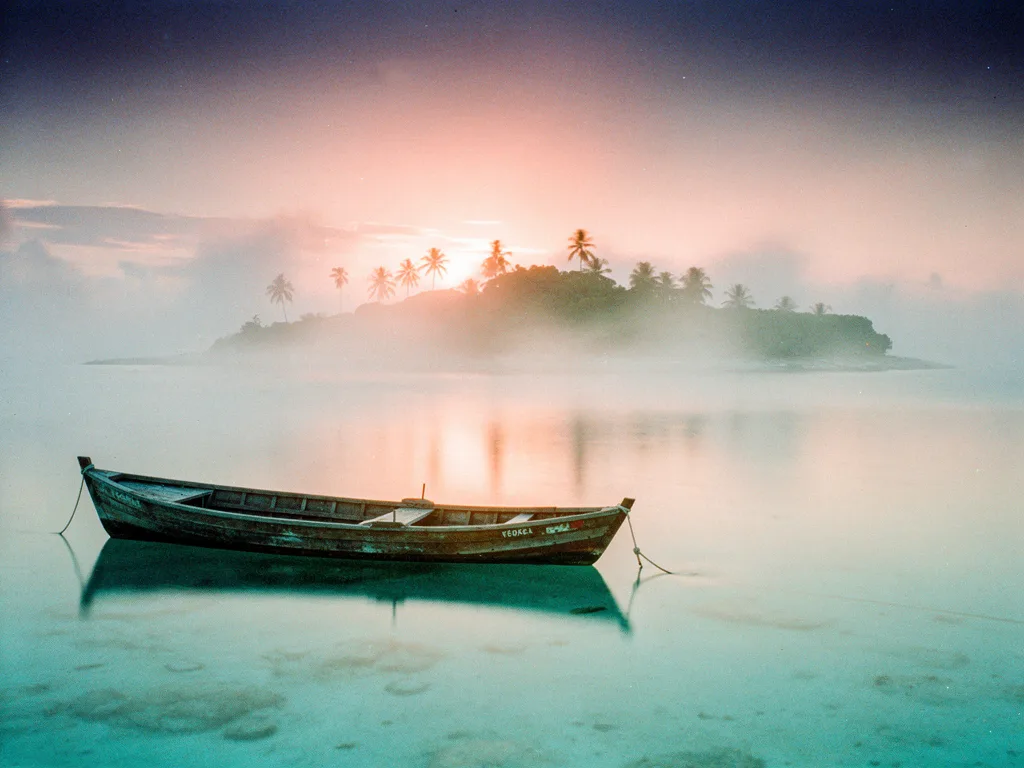
Imagine standing on the edge of a pristine coral atoll, turquoise water stretching to the horizon, as a powerful Giant Trevally (GT) slams your fly or popper with explosive force. Welcome to the Marshall Islands — one of the Pacific’s best-kept secrets for serious saltwater anglers. With 29 atolls and over 1,100 islands scattered across vast stretches of untouched ocean, this remote nation offers world-class fishing for bonefish, GT, tuna, wahoo, mahi-mahi, and marlin.
In this comprehensive guide, you will learn everything you need to plan an unforgettable fishing trip: whether you need a fishing license in the Marshall Islands, the absolute best fishing spots, how to book charters, what the costs are in USD, EUR, and local currency, travel practicalities, and much more. Best of all — no fishing license is required for recreational tourists.
The Marshall Islands combine crystal-clear lagoons, remote outer reefs, and deep Pacific drop-offs that attract migratory pelagics. Whether you prefer sight-fishing for tailing bonefish on flat sandbanks, battling GTs on the flats, or battling blue marlin offshore, this destination delivers some of the most exciting and sustainable angling experiences in the world.
Tip: Regulations can change. Always verify the latest rules directly with the Marshall Islands Marine Resources Authority (MIMRA) before your trip.
01Do You Need a Fishing License in the Marshall Islands?
The short answer is no. Tourists and recreational anglers do not need a fishing license or permit to fish in the Marshall Islands. This makes it one of the most accessible Pacific destinations for visiting anglers.
According to the Marshall Islands Marine Resources Authority (MIMRA), recreational fishing by visitors is permitted without a formal license, provided you follow all conservation regulations. This policy applies to both shore fishing and boat-based angling in lagoons, on reefs, and in offshore waters.
While commercial fishing is strictly controlled and requires various licenses from MIMRA (including foreign vessel licenses, fish processing licenses, and aquaculture permits), these rules do not apply to visiting recreational fishermen. The main legal framework is the Marshall Islands Marine Resources Act 1997 and the Fish Harvest Regulations 2020.
Important Rules You Must Follow
Even without a license, you must respect strict rules designed to protect the fragile ecosystem:
These regulations help ensure that the incredible fishing opportunities remain sustainable for future generations.
Tip: Print or save a copy of the Fish Harvest Regulations 2020 on your phone. Local guides and captains are usually well-informed about current rules.
Because no license application is necessary, you can focus entirely on planning your adventure — choosing the right atoll, the best season, and the type of fishing that excites you most.
02Best Fishing Spots in the Marshall Islands — Where Dreams Are Made
The Marshall Islands’ 29 atolls create an enormous variety of fishing environments. From vast bonefish flats to deep blue-water trenches, each location offers something special. Here are the destinations that consistently deliver unforgettable experiences.
Majuro Atoll – The Most Accessible Option
As the capital and main entry point, Majuro combines convenience with excellent fishing. The lagoon stretches over 40 km (25 miles) and offers superb fishing for bonefish, permit, trevally, and snapper. Many visitors combine a few days here with trips to outer atolls.
The outer reef edge drops quickly into deep water, providing exciting jigging and popping for GTs up to 50+ kg (110+ lb). Offshore, tuna, wahoo, and occasional marlin are available within a short run. The combination of flats, reef, and blue water makes Majuro an ideal base for mixed fishing trips.
Arno Atoll – Bonefish and GT Paradise
Located just 30 km (19 miles) east of Majuro, Arno Atoll is a favorite among serious flats anglers. The atoll features extensive sand flats and turtle-grass areas where bonefish often exceed 5 kg (11 lb). Many describe the bonefishing here as comparable to the best flats in the Seychelles or Christmas Island.
Giant Trevally patrol these same flats, especially during incoming tides. Sight-fishing with poppers or flies for GTs in such clear, shallow water creates heart-pounding moments you will never forget. Local guides know the best pockets and timing for each tide.
Kwajalein Atoll – World-Class Deep-Sea Fishing
One of the largest atolls in the world, Kwajalein offers incredible deep-sea fishing. The lagoon is so large it could hold all of Manhattan Island. Outside the reef, the drop-off plunges into the Pacific, attracting marlin, sailfish, yellowfin tuna, and wahoo.
Many experienced anglers consider the waters around Kwajalein among the best in the central Pacific for blue marlin. The atoll also has excellent bonefish and trevally fishing on its flats, though access is more restricted due to the U.S. military base presence. Day trips or live-aboard options are the usual way to fish here.
Bikini Atoll – The Ultimate Adventure Destination
Famous (and infamous) for nuclear testing in the 1940s and 1950s, Bikini Atoll has recovered ecologically to become one of the most pristine marine environments on Earth. The lagoon contains an astonishing number of giant trevally, huge groupers, and healthy shark populations.
Bonefishing is outstanding, and the outer reefs produce GTs of legendary size. Because of its remoteness, fishing pressure remains extremely low. Access is limited and usually organized through specialized live-aboard vessels or exclusive charters. Note that certain islands still have residual radiation in the soil, but marine life is considered safe.
Other Notable Atolls
Each atoll offers its own unique character. The common thread is water clarity that often exceeds 30 meters (100 feet) and fish that have rarely seen an angler’s hook.
Dream Scenario: Picture yourself poling across a glowing white sand flat at sunrise. A school of bonefish moves like silver ghosts. You make the cast, the fish eats, and the reel screams as it peels 150 meters (500 feet) of line in seconds. That is a typical morning in the Marshall Islands.
For more inspiration on Pacific fishing, see our guides on fishing in Fiji, fishing in the Maldives, and fishing in the Seychelles.
03Tours & Guided Experiences – Making the Most of Your Trip
While it is possible to arrange independent fishing, most visitors choose guided tours for several reasons: local knowledge of tides and spots, proper boats for the conditions, and help with shore access permissions.
Guided day trips typically cost between $300 and $600 USD (€280–€560) per boat, depending on the type of fishing and number of anglers. Half-day options are sometimes available for $150–$300 USD (€140–€280).
Live-aboard charters that visit multiple atolls represent the premium experience. These trips usually run 7–10 days and cost $5,000–$9,000 USD (€4,600–€8,300) per person, including meals, accommodations, and fishing.
Popular experiences include:
English is widely spoken by professional guides in the main tourism areas, but learning a few Marshallese phrases builds goodwill. Translation apps work well when communicating with local boatmen in more remote atolls.
🎣 Fishing tours in Marshall Islands — Book guided fishing tours with local experts.
04Charter Fishing in the Marshall Islands
For those seeking the ultimate experience, booking a dedicated charter boat unlocks the best fishing the Marshall Islands have to offer. Professional captains know exactly where the fish are moving according to moon phase, tide, and current.
Typical charter prices (2026 estimates):
| Type of Charter | Duration | Price per day (USD) | Price per day (EUR) | What to Expect |
|------------------------------|--------------|---------------------|---------------------|------------------------------------|
| Lagoon/Flats Skiff | Full day | $350–$550 | €325–€510 | Bonefish, GT, permit |
| Reef Fishing Boat | Full day | $400–$650 | €370–€600 | Trevally, snapper, grouper |
| Offshore Sportfisher | Full day | $650–$1,200 | €600–€1,110 | Tuna, marlin, wahoo |
| Live-aboard Multi-atoll | 7–10 days | $700–$1,000 pp | €650–€925 pp | All species + remote atolls |
Prices are generally for the entire boat (2–4 anglers). Fuel, tackle, and sometimes lunch are included. Tipping the captain and crew 10–20% is customary and greatly appreciated.
The best charters depart from Majuro, but specialized operators also work out of Kwajalein and arrange transport to outer atolls. Booking 6–12 months in advance is recommended for peak season (April–October).
Many captains specialize in light-tackle and fly fishing, which suits the clear shallow waters perfectly. Larger sportfishing boats with outriggers and fighting chairs are used for serious blue-water campaigns targeting marlin.
🚤 Charter fishing in Marshall Islands — Find and book charter boats with experienced captains.
05Best Time to Visit the Marshall Islands for Fishing
The Marshall Islands enjoy a tropical climate with two main seasons.
Dry Season (December–April): This is generally considered the best period for fishing. Trade winds are more consistent, seas are calmer, and water clarity is often excellent. Bonefish and GT fishing on the flats is outstanding during this time. This period also aligns with Northern Hemisphere winter, making it convenient for anglers from Europe, North America, and Japan.
Wet Season (May–November): Rainfall increases and winds can become more variable. However, this is when pelagic species (tuna, marlin, wahoo) often show their strongest presence. The wet season can still offer superb fishing, especially in protected lagoons.
Peak fishing windows by species:
Water temperature remains between 27–30°C (81–86°F) year-round. From the Southern Hemisphere perspective, the dry season (December–April) coincides with summer holidays in Australia and New Zealand, making it a popular time for those travelers too.
06What to Expect – Species, Techniques, and Experiences
The Marshall Islands offer a remarkable variety of fishing styles in one destination.
Bonefish: Often called the “gray ghost of the flats,” Marshall Islands bonefish average 3–6 kg (7–13 lb) with fish over 8 kg (18 lb) possible. Sight fishing with 8–9 wt fly rods or light spinning gear is the standard approach. The fights are legendary.
Giant Trevally: These powerful predators can exceed 60 kg (132 lb). Fishing for them with large poppers, stickbaits, or heavy flies in shallow water is an adrenaline-fueled experience. The crash of a GT eating in knee-deep water is something you will remember forever.
Tuna and Pelagics: Yellowfin tuna, skipjack, dogtooth tuna, and wahoo are abundant. Trolling with lures or live bait, as well as jigging and popping, produces excellent results. Blue marlin and black marlin are regularly encountered during the right season.
Reef Species: Various snappers, groupers, jobfish, and emperor fish offer great action on lighter tackle.
The scenery is breathtaking. Fishing against the backdrop of graceful coconut palms, white sand beaches, and water so clear you can watch fish from 20 meters away creates a truly special atmosphere. Many visitors describe the Marshall Islands as the closest thing to fishing paradise on Earth.
07Practical Travel Information for International Visitors
How to Get There
The main international airport is Amata Kabua International Airport in Majuro (MAJ). United Airlines operates flights from Honolulu (Hawaii) several times per week. Travel time from Honolulu is approximately 4.5 hours. Connections from Asia, Europe, and Australia usually route through Honolulu or via Fiji and Nauru.
Small inter-island aircraft and boats connect the outer atolls. Some remote destinations are only reachable by live-aboard vessels.
Visa Requirements
Good news for most travelers: citizens of the United States, European Union, United Kingdom, Japan, Australia, New Zealand, Canada, and many other countries receive a free visa on arrival valid for up to 90 days. You will need a valid passport (minimum 6 months validity) and proof of onward travel.
Always check the latest requirements with your nearest Marshall Islands diplomatic mission or official government website, as rules can change.
Language and Communication
The official languages are Marshallese and English. English is widely understood in Majuro and by tourism operators. In remote atolls, a basic Marshallese phrasebook or translation app (such as Google Translate with offline languages) is very useful. Learning to say “thank you” (kommol) and “hello” (yokwe) goes a long way.
📱 Stay connected in Marshall Islands — Get an eSIM for affordable mobile data while traveling.
Currency and Costs
The official currency is the US Dollar (USD). There are no local coins or notes. Bring plenty of small bills for tipping and village purchases. ATMs are available only in Majuro and Ebeye. Credit cards are accepted at major hotels and some charter operators but not in remote areas.
Sample daily budget for an angler (per person, excluding international flights):
A full-day professional charter (roughly the cost of a nice dinner for two in Europe) provides incredible value given the quality of fishing.
Health and Safety
No malaria exists in the Marshall Islands, but dengue fever and Zika are present. Use strong insect repellent, especially at dawn and dusk. Tap water is not always safe to drink — stick to bottled water.
The sun is intense. Bring high-SPF sunscreen, polarized sunglasses, and a wide-brimmed hat. Medical facilities are basic outside Majuro. Comprehensive travel insurance that covers medical evacuation and fishing-related activities is strongly recommended.
08What to Pack – Essential Fishing and Travel Gear
Successful fishing in the Marshall Islands requires proper preparation.
Fishing gear recommendations:
Most charter operators provide basic tackle, but serious anglers bring their favorite rods and reels. Saltwater corrosion is intense — bring plenty of reel oil and cleaning supplies.
Other essentials:
🛒 Fishing equipment for Marshall Islands — Find the right gear for your trip.
09Getting Around the Marshall Islands
Majuro has taxis and a few rental vehicles. For outer atolls, transportation is primarily by small plane or boat. Many serious fishing trips are based on live-aboard vessels that move between fishing locations.
If you plan to explore independently, consider renting a boat with local captain rather than attempting to navigate the complex reef systems yourself. The DiscoverCars platform can help with vehicle rental on Majuro if needed.
🚗 Rent a car in Marshall Islands — Compare prices from 500+ rental companies worldwide.
10Sustainable Fishing and Conservation
The Marshall Islands’ fishing community and MIMRA work hard to protect their marine resources. As a visiting angler, you play an important role by practicing catch and release, especially for sharks, large GTs, and billfish.
Many local operators now use single-hook circle hooks, non-stainless steel hooks, and barbless flies to minimize harm to fish. Supporting operators who follow these practices helps ensure the Marshall Islands remain a world-class fishery for decades to come.
11Frequently Asked Questions
Do I really need a fishing license in the Marshall Islands?
No. Recreational tourists do not need a fishing license. Only commercial operators require licenses from MIMRA.
What is the best month for bonefishing in the Marshall Islands?
December through March generally offers the best combination of weather and fishing conditions for bonefish and GT on the flats.
Can I fish from the beach without permission?
No. All land is privately owned. You must ask local landowners for permission before fishing from shore. It is polite to offer a small gift or payment.
Are there many sharks in the water?
Yes, the waters are healthy and sharks are common, especially around reefs and when fish are being caught. Respect sharks and follow the no-finning regulations.
Is it safe to eat the fish I catch?
Most reef fish are safe, but some species can carry ciguatera toxin. Local guides know which fish are safe to eat in each area. Pelagic species (tuna, wahoo, mahi-mahi) are generally safe.
What is the cost of a typical fishing charter?
Full-day charters range from $350–$1,200 USD (€325–€1,110) depending on the type of fishing and boat. Live-aboard trips cost significantly more but offer remote atoll access.
Do I need special vaccinations?
Standard travel vaccinations are recommended. Hepatitis A, typhoid, and tetanus shots are wise. There is no malaria risk.
How difficult is the fishing compared to other Pacific destinations?
The fishing is world-class but can be demanding. Strong winds, powerful fish, and technical flats fishing reward experienced anglers. However, good guides make it accessible for intermediate fishermen too.
12Conclusion
The Marshall Islands offer a rare combination: no fishing license required, outstanding fishing in nearly untouched waters, and the warm hospitality of Pacific island culture. From stalking bonefish across glowing flats to battling a 50 kg (110 lb) Giant Trevally in knee-deep water, or watching a blue marlin greyhounding behind your offshore lure, this destination creates memories that last a lifetime.
Whether you come for a quick long-weekend escape to Majuro or a full expedition visiting multiple remote atolls, the fishing here will exceed your expectations. The combination of incredible marine biodiversity, dramatic atoll scenery, and genuinely friendly local people makes the Marshall Islands one of the world’s most rewarding fishing destinations.
Start planning your trip today. Book your charter, arrange your flights through Honolulu, and prepare for the fishing adventure of a lifetime in one of the Pacific’s last true frontiers.
Tight lines and clear water!
13Sources & Further Links
Disclaimer: This article is intended for informational purposes only. Fishing regulations, prices, and travel requirements may change. Always check the latest official information from MIMRA and relevant government authorities before planning your 2026 fishing trip to the Marshall Islands. The authors and FishingWorldGuide.com assume no liability for any incidents, changes in conditions, or losses incurred while fishing or traveling.
Don't miss any fishing tips!
Get the best fishing destination recommendations weekly in your inbox.
No spam. Unsubscribe anytime.
Read more
Data incorrect?
Help us keep this article up to date — report outdated or incorrect information
More articles