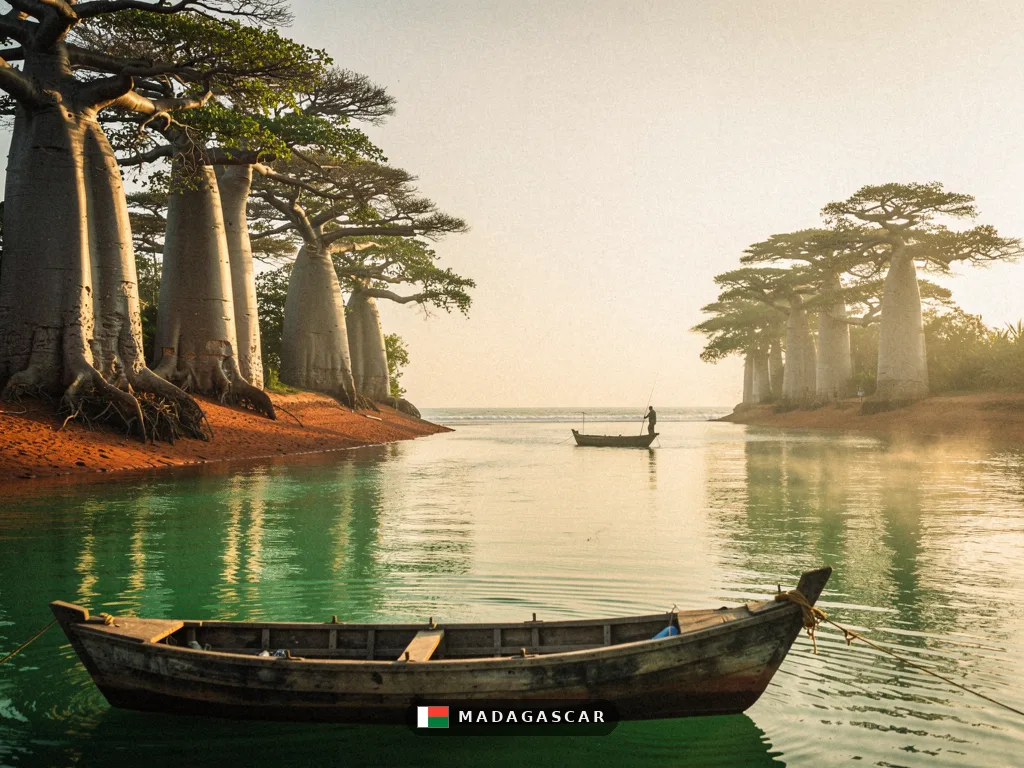
Imagine standing on the deck of a catamaran at sunrise, the warm Indian Ocean breeze on your face, as a massive Giant Trevally explodes on your popper near a remote coral reef. This is not a fantasy — this is fishing in Madagascar, one of the world’s most exciting and biodiverse angling destinations. Often called the “Island Continent,” Madagascar offers unparalleled variety: from explosive inshore popping for GTs to world-class deep-sea trolling for sailfish, marlin, and tuna.
Whether you dream of casting heavy poppers in the Mitsio Archipelago, jigging for dogtooth tuna at Castor Bank, or enjoying a multi-day live-aboard safari around the Radama Islands, this comprehensive guide covers everything you need to plan your trip. You will learn about fishing permits and licenses, the best fishing spots, guided tours and charter prices, target species, travel practicalities, and much more.
Do you need a fishing license in Madagascar? For most visiting sport anglers who book through reputable charter operators, the necessary permits are included in the package. Independent freshwater fishing requires formal authorization from the Ministry of Fisheries and Blue Economy (MPEB). We explain all the details below so you can fish legally and responsibly.
01Fishing Licenses and Permits in Madagascar
Understanding the regulations is the first step to a worry-free fishing trip. Madagascar’s fishing rules distinguish clearly between recreational sea fishing, freshwater angling, and subsistence fishing.
For recreational saltwater fishing, especially when you book a charter or guided tour, a fishing permit is typically arranged by the operator and included in the price. These charters work directly with the Ministry of Fisheries and Blue Economy (MPEB) to obtain the required administrative authorization. This saves you time and bureaucracy.
If you plan to fish independently without a charter, the situation changes. A short-term recreational fishing permit can be obtained from the Direction of Fisheries in Antananarivo or one of the regional offices. According to official information, processing now takes around 15 days. The cost for such a standalone permit generally ranges between 150,000–250,000 MGA (roughly €30–€50 or $32–$54 USD).
Freshwater and continental fishing in rivers and lakes almost always requires a formal authorization. These permits must be requested through the Regional Directions of the MPEB. Rules can vary by region and are subject to annual decrees, particularly regarding closed seasons for certain species or areas. Always verify the latest information locally before traveling inland.
For visitors who simply want to fish from shore without a boat for personal consumption, no license is usually needed. This subsistence-style fishing on foot is generally tolerated for tourists as long as you do not use motorized vessels or sell your catch.
Tip: Book your fishing tour through an established operator such as Nosy Be Rêves de Pêche, Nirvana Fishing, or Tropical Fishing. They handle all permits and ensure you fish within Malagasy law.
Regulations may change, so check the latest rules directly with the Ministry of Fisheries and Blue Economy (MPEB) before departure.
02Do You Need a Fishing License in Madagascar?
This is one of the most common questions from international anglers. The short answer is: usually not as a separate purchase if you fish with a professional charter.
Most sport-fishing operators in Madagascar include the necessary fishing authorization in their package price. The charter company takes care of the paperwork with the MPEB, allowing you to focus on the fishing experience. This arrangement is especially common for deep-sea charters out of Nosy Be and live-aboard expeditions to the Radama Islands or Mitsio Archipelago.
However, if you intend to rent a small boat independently or fish in inland waters, you must obtain the proper permits yourself. Attempting to fish without authorization can lead to fines or confiscation of equipment. Commercial sale of fish caught under a recreational permit is strictly prohibited.
Protected species including marine turtles, dugongs, whale sharks, and certain other sharks are completely off-limits. Many reputable operators enforce strict catch-and-release practices, especially for billfish and large Giant Trevally, to preserve the fishery for future generations.
Important note: Always travel with a copy of your permit or confirmation from your operator. Regulations can be updated annually, and local enforcement officers may ask to see documentation.
03Fishing Rules and Regulations
Madagascar has made significant efforts to combat illegal fishing while promoting sustainable sport fishing. The Fisheries and Aquaculture Code (Law No. 2015-053) forms the legal backbone of these efforts.
Key rules that apply to visiting anglers include:
The government continues to strengthen its fight against illegal, unreported, and unregulated (IUU) fishing, as highlighted in recent national action plans running through 2029.
04Best Fishing Spots in Madagascar
The true magic of fishing in Madagascar lies in its remote, lightly pressured waters. Here are the top destinations that consistently deliver world-class experiences:
1. Mitsio Archipelago
Located north of Nosy Be, the Mitsio Islands are legendary among serious GT anglers. The area’s dramatic rock formations and coral bommies attract enormous Giant Trevally that can exceed 60 kg (132 lb). Heavy popping and vertical jigging are the most productive techniques. Many anglers describe this as one of the best places on Earth for record-class GTs. The scenery — turquoise water against volcanic islands — is simply breathtaking.
2. Nosy Be (The Perfume Island)
The main hub for fishing in Madagascar, Nosy Be offers easy access to both inshore and offshore grounds. The famous “Banc des Cinq Mètres” (Five-Meter Bank) is a short boat ride away and produces excellent results for wahoo, sailfish, yellowfin tuna, and snapper. From here you can also organize day trips or longer expeditions. The island’s relaxed atmosphere, beautiful beaches, and vibrant marine life make it an ideal base for anglers traveling with non-fishing partners.
3. Radama Islands
Lying approximately three hours south of Nosy Be by boat, the Radama Islands feel like a true frontier. With almost no commercial fishing pressure, these islands offer pristine reefs and “virgin” fishing spots. Live-aboard catamarans are the best way to explore the area. Expect fantastic action on dogtooth tuna, giant trevally, groupers, and various snapper species. The remote setting and incredible biodiversity create an unforgettable experience.
4. Cap Saint-Sébastien
This wild northwestern cape is known for powerful currents where massive schools of pelagic fish congregate. It is one of the best locations for huge dogtooth tuna and black marlin. The area’s remoteness means multi-day expeditions are required, but the potential for trophy fish makes the journey worthwhile.
5. Castor & Leven Banks
These massive underwater plateaus lie about 80 km (50 miles) offshore. Reaching them requires a dedicated expedition vessel, but the reward is world-class deep-sea fishing. Expect encounters with blue marlin, swordfish, yellowfin tuna, and massive groupers. The banks are considered among the premier big-game fishing locations in the Indian Ocean.
Other notable areas include the waters around Sainte Marie Island on the east coast and the mangrove estuaries where the beautiful “Red Carp” (Mangrove Snapper) provides exciting shallow-water sport.
Each of these spots offers its own unique magic — from the explosive surface strikes of GTs in the north to the deep-blue offshore battles at the banks. The combination of dramatic scenery, warm clear water, and powerful fish creates fishing memories that last a lifetime.
🎣 Fishing tours in Madagascar — Book guided fishing tours with local experts.
05Target Species and Recommended Gear
Madagascar is home to an incredible variety of game fish. The most sought-after species include:
Professional operators provide high-quality rental gear including Zenaq rods, Stella reels, and premium lures. However, many experienced anglers prefer to bring their own favorite rods and reels. When importing tackle, declare it clearly as “personal fishing equipment” to avoid customs complications. There are no strict limits on personal gear, but bringing large quantities may raise questions.
06Tours and Guided Experiences
Madagascar has developed a sophisticated sport-fishing industry centered on live-aboard safaris. These multi-day expeditions allow you to reach remote atolls and banks that day-trippers cannot access.
Leading operators include:
A typical day charter from Nosy Be costs between €350 and €550 per boat (approximately $375–$590 USD), usually accommodating 2–4 anglers. This price often includes tackle, fuel, guide, and the fishing permit.
Live-aboard catamaran trips are priced from €600 to €1,200 per day all-inclusive (roughly $645–$1,290 USD). These packages typically cover professional crew, all meals, soft drinks, fishing gear, and transfers.
A full 5-day guided expedition generally costs between €1,300 and €2,000 per person (about $1,400–$2,150 USD), depending on the vessel, group size, and destination.
These trips focus on a variety of techniques: heavy popping for GTs, vertical jigging for dogtooth tuna, and trolling for billfish. English-speaking skippers and crew are common on boats catering to international clients, though basic French is helpful as it remains the main foreign language used in Madagascar.
The experience goes far beyond fishing. You will enjoy breathtaking sunsets, snorkel in pristine reefs between sessions, and share stories with fellow anglers from around the world. Many operators also offer specialized “hosted” trips with well-known international anglers or instructors.
🚤 Charter fishing in Madagascar — Find and book charter boats with experienced captains.
07Practical Travel Information for Fishing in Madagascar
Best Time to Visit
The prime fishing seasons are April to June and September to December. These periods offer the best combination of weather stability, water clarity, and fish activity. The cyclone season (January–March) is best avoided, although some years remain fishable. Anglers from the Northern Hemisphere will find April–June convenient, while those from the Southern Hemisphere often prefer September–December.
Getting There
Most sport-fishing travelers fly into Nosy Be (NOS) airport, which offers direct connections from several African and European cities. Many anglers arrive via Antananarivo (TNR) and take a short domestic flight to Nosy Be. Ethiopian Airlines has become a popular routing option through Addis Ababa for travelers from Europe, Asia, and the Americas.
Visa Requirements
Citizens of the EU, US, UK, Japan, Canada, Australia, and many other countries can obtain a Visa on Arrival at the airport. Fees are approximately €10 (about $11 USD) for stays under 15 days or €35 ($38 USD) for up to 30 days. Payment must be made in cash in euros or US dollars. Always check the latest requirements with your embassy or the Embassy of the Republic of Madagascar before travel.
Health and Safety
Malaria prophylaxis is strongly recommended for all visitors. If you are arriving from a yellow-fever endemic country, you must present a valid vaccination certificate. Tap water is not safe to drink; stick to bottled water. Basic French or English is spoken in tourist areas, but a translation app can be helpful in more remote locations.
Language and Communication
While Malagasy is the national language, French is widely used in business and tourism. English is spoken by many fishing guides and hotel staff in Nosy Be. Consider downloading offline translation apps before departure.
Money and Costs
The local currency is the Malagasy Ariary (MGA). At the time of writing, €1 ≈ 5,000 MGA and $1 ≈ 4,600 MGA (exchange rates fluctuate). Credit cards are accepted only in larger hotels and some operators; bring sufficient cash in euros or US dollars for smaller expenses.
Fishing in Madagascar represents a premium experience. A typical 7-night, 5-day fishing package including flights from Europe can cost between €3,500 and €6,500 per person depending on the level of luxury. This is comparable to a high-end safari in East Africa or a bonefishing trip to the Seychelles.
📱 Stay connected in Madagascar — Get an eSIM for affordable mobile data while traveling.
08Equipment and Packing Tips
Bringing your own favorite popping rods or jigging setups can enhance your experience, but quality gear is available for rent. Focus on:
When flying, pack rods in sturdy tubes and declare expensive reels as personal items to simplify customs.
09Costs Overview
Here is a summary of typical expenses:
| Item | Price in MGA | Price in EUR | Price in USD |
|-------------------------------|-----------------------|------------------|------------------|
| Standalone fishing permit | 150,000–250,000 | €30–€50 | $32–$54 |
| Day charter (2–4 anglers) | 1,700,000–2,700,000 | €350–€550 | $375–$590 |
| Live-aboard per day (all-inc) | 2,900,000–5,800,000 | €600–€1,200 | $645–$1,290 |
| 5-day expedition (per person) | 6,300,000–9,700,000 | €1,300–€2,000 | $1,400–$2,150 |
| Visa on arrival (30 days) | — | €35 | $38 |
These prices are indicative and may vary by operator and season. Many packages include transfers, meals, and gear rental, offering good value compared to similar premium destinations.
🛒 Fishing equipment for Madagascar — Find the right gear for your trip.
10Frequently Asked Questions
Do I need a fishing license in Madagascar?
For most charter-based sport fishing, the permit is included in the price. Independent freshwater fishing requires a separate authorization from the MPEB.
What is the best time for fishing in Madagascar?
April to June and September to December offer the most stable weather and excellent fishing conditions.
What is the best fishing spot in Madagascar?
The Mitsio Archipelago is widely regarded as one of the world’s top destinations for Giant Trevally, while the Radama Islands offer pristine remote fishing.
Can I bring my own fishing rods to Madagascar?
Yes. Declare your equipment as personal fishing gear. There are generally no problems bringing reasonable quantities of rods and reels.
Is catch and release practiced in Madagascar?
Most professional operators strongly encourage or require catch and release for billfish and large GTs to ensure sustainable fishing.
Is it safe to travel to Madagascar for fishing?
Yes, provided you stay within established tourist areas such as Nosy Be and follow standard travel advice. The fishing operators are experienced in hosting international visitors.
What species can I catch in Madagascar?
Expect Giant Trevally, dogtooth tuna, sailfish, marlin, wahoo, yellowfin tuna, various groupers, and mangrove snapper.
11Conclusion
Fishing in Madagascar offers a rare combination of world-class angling, stunning natural beauty, and genuine adventure. From the explosive strikes of Giant Trevally in the Mitsio Archipelago to the deep-blue battles at Castor Bank, this Indian Ocean paradise delivers experiences that rank among the best on the planet.
Whether you choose a comfortable day charter from Nosy Be or a full live-aboard expedition to the remote Radama Islands, proper planning will ensure your trip is both successful and responsible. Book with established operators who handle permits, practice conservation, and know the local waters intimately.
The island is waiting. The fish are there. All that remains is for you to book your tickets, pack your heavy popping gear, and prepare for the fishing trip of a lifetime.
Start planning your Madagascar fishing adventure today — the Indian Ocean’s greatest angling secrets are closer than you think.
12Sources & Further Links
Disclaimer: This article is intended as a general guide only. Fishing regulations in Madagascar may change at any time. Always verify the latest requirements directly with the Ministry of Fisheries and Blue Economy (MPEB) and your chosen operator before traveling. This guide was last updated for 2026 but cannot replace official advice. Fishing involves inherent risks — fish at your own responsibility and practice catch-and-release whenever possible to protect Madagascar’s precious marine resources.
Fishing trips in Madagascar
Curated tours & charters with price and click data from our partner dashboards.
 FishingBooker
Frumete Fishing Adventures
FishingBookerCharters in Madagascar
Pre-filtered charters on FishingBooker
Don't miss any fishing tips!
Get the best fishing destination recommendations weekly in your inbox.
No spam. Unsubscribe anytime.
Read more
Data incorrect?
Help us keep this article up to date — report outdated or incorrect information
More articles