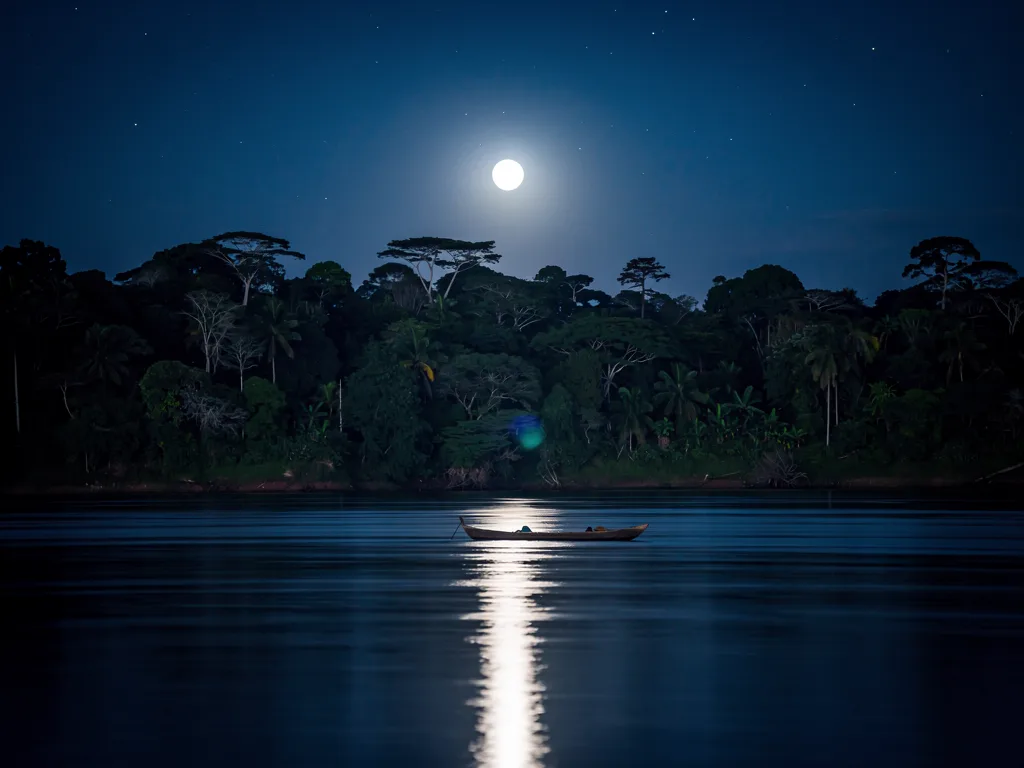
Imagine standing on the deck of a sturdy motorized canoe as the mighty Congo River surges beneath you, its chocolate-brown waters hiding one of the planet’s most fearsome freshwater predators. A sudden explosive strike nearly rips the rod from your hands — you are connected, heart pounding, to a Goliath Tigerfish. This is fishing in the Republic of the Congo (Congo-Brazzaville), a frontier destination that delivers world-class angling combined with raw African adventure.
Whether you dream of battling 50 kg (110 lb) tigerfish in raging rapids, landing colossal tarpon exceeding 100 kg (220 lb) along the Atlantic coast, or exploring remote tributaries while surrounded by lowland gorillas and forest elephants, the Republic of the Congo offers an experience few anglers will ever forget. Unlike its larger neighbor the Democratic Republic of the Congo, Congo-Brazzaville is significantly more stable and accessible for international travelers, making it the safer choice for serious sport fishing expeditions.
In this comprehensive guide you will find everything you need to plan your 2026 fishing trip: how to obtain the required fishing permit, the best fishing spots and seasons, detailed costs in CFA, EUR, and USD, guided tour options, practical travel information including visas and health requirements, and essential safety tips. Regulations may change, so always verify the latest rules with the Ministère de l'Agriculture, de l’Élevage et de la Pêche before departure.
01Do You Need a Fishing License in Republic of the Congo?
Yes — if you are a foreign visitor practicing sport fishing (“pêche sportive”), you are legally required to hold a fishing permit. Local subsistence fishers using traditional methods are often exempt for shore-based or small-scale activity, but international anglers fall under stricter rules.
The Ministry of Agriculture, Livestock, and Fisheries (Ministère de l’Agriculture, de l’Élevage et de la Pêche) oversees all fishing activities. There is currently no online application system for tourist permits. In practice, almost every reputable operator obtains the necessary permit on your behalf and includes the fee in the expedition price. Official taxes for sport fishing campaigns currently stand at approximately 25,000 CFA francs (€38 / $41 USD) per person per campaign.
Applications must be addressed to either the maritime (for Pointe-Noire and Atlantic coast) or continental fishery authorities depending on your chosen location. Serious expeditions to the Congo River or national parks often require additional authorizations. Reputable operators such as Congo Travel and Tours or Goliath Tiger Fishing maintain relationships with the authorities and handle this paperwork weeks or months in advance.
Important note: Attempting to fish without the proper documentation can result in confiscation of equipment, heavy fines, or even deportation. Always book through an accredited outfitter who can provide proof of your legal permit.
📜 Official source: Loi n°2-2000 du 1er février 2000 portant organisation de la pêche maritime en République du Congo (available via the Ministry website).
Fishing in protected areas such as Odzala-Kokoua National Park or Conkouati-Douli National Park requires special additional permits that can only be arranged through authorized lodges or conservation partners.
Prohibited Methods and Regulations
Republic of the Congo enforces strict environmental protection. The use of dynamite, poisons, electrical devices, or any form of destructive fishing is completely illegal and can carry fines of up to 150 million CFA francs (€228,000 / $250,000 USD) plus possible imprisonment.
Most professional operators enforce a strict catch-and-release policy for Goliath Tigerfish to protect this iconic species and the fragile river ecosystem. While not always a legal requirement for every species, ethical angling strongly encourages it. Night fishing is generally discouraged for sport anglers due to safety concerns in remote areas and is restricted for commercial vessels.
Exporting fish (even for personal consumption) requires a sanitary certificate from the veterinary authorities — a complicated process that most sport fishers wisely avoid. The general rule among international visitors is simple: photograph your catch, release it, and take home only memories.
02Best Fishing Spots in the Republic of the Congo
The country’s fishing opportunities are divided between the legendary freshwater systems of the Congo Basin and the largely untapped Atlantic coastline. Here are the destinations that consistently deliver unforgettable experiences.
Lower Congo River – Goliath Tigerfish Capital
Upstream of Brazzaville lies one of the most exciting freshwater fisheries on Earth. The fast-flowing, turbulent waters near Maloukou and the Livingstone Rapids are home to the extraordinary Goliath Tigerfish (*Hydrocynus goliath*). These prehistoric-looking predators can exceed 1.8 m (6 ft) in length and 70 kg (154 lb) in weight. Their razor-sharp teeth and explosive strikes have earned them the nickname “the fish that eats crocodiles.”
Anglers describe the experience as both terrifying and addictive. You troll large silver spoons or cast heavy plugs into swirling eddies while your guide battles the powerful current. When a Goliath hits, the fight can last 30 minutes or more, with the fish leaping clear of the water in dramatic displays of power. The surrounding scenery — towering jungle-clad cliffs, mist rising from the rapids, and the occasional pod of hippos — creates a truly cinematic backdrop.
Pointe-Noire and the Atlantic Coast
The economic capital of Pointe-Noire serves as the gateway to outstanding saltwater fishing. The warm waters of the South Atlantic offer excellent chances at Atlantic Tarpon that regularly exceed 100 kg (220 lb), powerful Giant Trevally, Barracuda, King Mackerel, and seasonal Sailfish.
Charters typically operate from the main port or nearby beaches. You can choose between inshore lagoon fishing, surf casting, or heading 15–30 km (9–19 miles) offshore for bigger pelagics. The combination of rich upwellings and proximity to the Congo Canyon creates one of West Africa’s most productive marine environments. Many visitors combine a few days of tigerfish with a relaxing week chasing tarpon in Pointe-Noire.
Alima River and Oyo/Boundji Region
This major tributary of the Congo offers a more intimate experience. The Alima is famous for slightly smaller but still massive Goliath Tigerfish, enormous Vundu catfish (up to 80 kg / 176 lb), and various *Synodontis* species. Expeditions here often involve multi-day river journeys with overnight camping on pristine sandbanks. The birdlife is spectacular, and the chance to see forest elephants coming to drink adds an unforgettable dimension to your fishing trip.
Conkouati-Douli National Park
Where the coastal lagoon system meets the Atlantic Ocean, Conkouati-Douli offers a unique mix of brackish and saltwater fishing. Tarpon, Snook, and various jack species are the main targets. The real magic lies in the surroundings: you may spot gorillas, chimpanzees, or even sea turtles while casting. Access is strictly controlled — only operators with official park concessions can bring visitors here.
Sangha River – Northern Rainforest
Deep in the north, the Sangha River flows through one of the largest remaining tracts of pristine rainforest in Africa. Fishing expeditions here are true adventures lasting 10–14 days. You target tigerfish, Nile perch, and huge catfish while staying in mobile tented camps. Many operators combine fishing with lowland gorilla tracking, making this a genuine bucket-list wildlife and angling journey.
These diverse environments mean you can enjoy completely different fishing experiences within the same country — from raging whitewater rapids to tranquil mangrove lagoons and deep blue offshore waters.
🎣 Fishing tours in Republic of the Congo — Book guided fishing tours with local experts.
03Core Fish Species and Techniques
Goliath Tigerfish (Mbenga)
The undisputed king of Congolese freshwater. These fish possess 32 dagger-like teeth set in a powerful jaw. Their bright red fins and metallic silver bodies make them one of the most beautiful and intimidating freshwater species.
Recommended techniques:
Atlantic Tarpon
Pointe-Noire offers genuine giants. Fish between 60–130 kg (132–286 lb) are regularly encountered. The acrobatic fights — with multiple greyhounding jumps — are legendary.
Recommended techniques:
Vundu and Other Catfish
The Congo system produces enormous catfish. The Vundu (*Heterobranchus longifilis*) can reach 80+ kg (176 lb). Bottom fishing with heavy sinkers and oily baits (fermented dough, pieces of fish, or even soap in some areas) is the traditional method. Many anglers use sturdy circle hooks and strong braided line to handle the powerful runs.
Other Notable Species
🚤 Charter fishing in Republic of the Congo — Find and book charter boats with experienced captains.
04Tours & Guided Experiences
Independent fishing is strongly discouraged for international visitors due to safety, logistical, and permitting reasons. Organized expeditions are the only practical and legal way to fish productively in the Republic of the Congo.
Congo Travel and Tours (CTT)
One of the most established operators running regular Goliath Tigerfish expeditions from Brazzaville. Their “Tiger Fishing Weekend Trip” offers a shorter introduction, while longer 7–14 day expeditions reach more remote stretches of the Congo and its tributaries. Prices typically range from €450 to €950 per day ($490–$1,030 USD) depending on group size and level of comfort. This includes permits, English-speaking guides, boats, accommodation (tented camps or basic lodges), and most meals. They provide heavy tackle but strongly recommend bringing your own favorite reels and lures.
Goliath Tiger Fishing Expeditions
Specialists focused almost exclusively on monster tigerfish. Their camps on the Congo River and in the Central African Republic border region are legendary among hardcore anglers. A typical 8-day expedition costs approximately €5,500–€8,500 ($6,000–$9,250 USD) per person, including all transfers from Brazzaville, permits, guide services, and full board. Many clients return year after year, drawn by the consistently large fish and professional operation.
Pointe-Noire Saltwater Charters
Local operators in Pointe-Noire offer more accessible half-day and full-day trips. A half-day inshore charter for tarpon and jacks typically costs €350–€500 ($380–$545 USD) for up to 4 anglers. Full-day offshore trips targeting sailfish and larger pelagics range from €700–€1,200 ($760–$1,300 USD). Equipment is usually provided, though serious anglers bring their own heavy spinning or conventional setups.
Luxury Wildlife & Fishing Combinations
Several operators offer 12–16 day trips that combine fishing on the Sangha River with gorilla trekking in Odzala-Kokoua or Nouabalé-Ndoki National Parks. These high-end safaris cost €12,000–€18,000 ($13,000–$19,600 USD) per person but deliver an once-in-a-lifetime blend of angling and wildlife experiences.
Booking tip: Reserve at least 6–9 months in advance for peak dry season (July–November). Most operators require a 50% deposit and will assist with invitation letters for your visa application.
05Practical Travel Information for International Anglers
Best Time to Visit
The dry season from July to November is widely considered prime time for freshwater fishing. Lower water levels concentrate fish in predictable locations and improve visibility for sight fishing and lure presentation. December to March offers a secondary window in some areas, though higher water can make river navigation more challenging.
Saltwater fishing around Pointe-Noire remains productive year-round, with slightly better conditions from May to October when seas are generally calmer. Anglers from the Northern Hemisphere should aim for the Northern Hemisphere summer and autumn, while those from Australia or South America will find the dry season coincides with their winter months.
Visa Requirements
Most nationalities (including EU, US, UK, Japan, Australia, and Canada) require a visa to enter the Republic of the Congo. You must apply at a Congolese embassy or consulate in advance. Tourist visas are typically valid for 30 days and cost approximately €70–€120 ($76–$130 USD).
Your chosen tour operator will normally provide an official invitation letter, which is usually mandatory for approval. Processing times can vary from 2–6 weeks, so apply early. Some operators can arrange visa-on-arrival for certain nationalities if all paperwork is prepared in advance — confirm this when booking.
Health and Safety
Yellow Fever vaccination is mandatory and must be documented in an International Certificate of Vaccination. Malaria prophylaxis is strongly recommended, as are vaccinations for Hepatitis A, Typhoid, and Tetanus. Consult a travel medicine specialist at least 8 weeks before departure.
The Republic of the Congo is considered safer than its neighbor but still requires sensible precautions. All reputable operators maintain excellent safety records and work with experienced local guides. Political situations can change; check current travel advisories from your government before booking.
Getting There and Getting Around
Most international anglers fly into Maya-Maya International Airport in Brazzaville or Antonio Agostinho Neto Airport in Pointe-Noire. Direct flights are available from Paris, Addis Ababa, Nairobi, and several African hubs. Domestic flights between Brazzaville and Pointe-Noire are frequent and inexpensive.
Within the country, your tour operator will handle all transfers, whether by 4x4 vehicle, speedboat, or domestic flight. Independent travel to remote fishing areas is not recommended.
Language can present a barrier outside of major cities and tourist operations. French is the official language. Learning basic French phrases is helpful, though most professional guides speak good English. Translation apps such as Google Translate work reasonably well when you have mobile data.
📱 Stay connected in Republic of the Congo — Get an eSIM for affordable mobile data while traveling.
What to Pack
Local tackle shops are virtually non-existent. You must bring all your own equipment:
🛒 Fishing equipment for Republic of the Congo — Find the right gear for your trip.
06Costs – What to Expect in 2026
Fishing in the Republic of the Congo is a premium experience. A typical 7-day Goliath Tigerfish expedition will cost between €3,500 and €7,000 ($3,800–$7,600 USD) per person. This usually includes:
Add international flights (typically €900–€1,600 / $980–$1,740 USD round-trip from Europe), visa fees, travel insurance, and tips, and a full trip can easily total €5,000–€9,000 ($5,450–$9,800 USD) per person.
Pointe-Noire saltwater charters offer better value, with full-day trips at €700–€1,200 ($760–$1,300 USD) for the boat (shared between 4 anglers). A 10-day mixed freshwater-saltwater itinerary can be arranged for approximately €6,500 ($7,080 USD) including most expenses.
Compared to a high-end fishing trip in Alaska or the Seychelles, Congo expeditions are similarly priced but deliver a far more remote and culturally rich experience.
07Conclusion: Is Fishing in the Republic of the Congo Worth It?
For adventurous anglers seeking the ultimate freshwater challenge and authentic African wilderness, the Republic of the Congo is difficult to beat. The chance to battle a true Goliath Tigerfish in the waters where they were first discovered, combined with the opportunity to witness incredible wildlife, creates memories that last a lifetime.
While the journey requires careful planning, proper health preparations, and a willingness to embrace remote conditions, the reward is an angling experience like no other. The combination of legendary fish, dramatic scenery, and genuine frontier adventure makes Congo-Brazzaville one of Africa’s most exciting emerging fishing destinations.
Ready to chase the fish of your dreams? Contact a reputable operator today, begin the visa process early, and start preparing your tackle for what may become the fishing trip of a lifetime.
08FAQ – Fishing in Republic of the Congo
Do I need a fishing license in Republic of the Congo?
Yes. Foreign sport anglers must obtain an official permit, which is almost always arranged by your chosen tour operator and included in the price (approximately 25,000 CFA / €38 / $41 USD).
What is the best time to fish for Goliath Tigerfish in Congo?
The main dry season from July to November offers the best conditions, with lower water levels making fish more concentrated and accessible.
Is the Republic of the Congo safe for fishing trips?
When traveling with established operators, yes. Congo-Brazzaville is considerably safer than the neighboring Democratic Republic of the Congo. Always follow your guide’s instructions and check current travel advisories.
Can I bring my own fishing rod to Congo?
Absolutely — and you should. Local tackle is extremely limited. Bring heavy, high-quality gear designed for big-game freshwater or saltwater fishing.
Are there any fishing tours that combine angling with gorilla trekking?
Yes. Several high-end operators offer combined 12–16 day itineraries that include tigerfish fishing on the Sangha River and visits to gorilla habituation sites in the national parks.
What is the biggest fish I can realistically catch in the Republic of the Congo?
Goliath Tigerfish over 50 kg (110 lb) are caught every season. Atlantic Tarpon exceeding 100 kg (220 lb) are also possible in Pointe-Noire waters.
Do I need a Yellow Fever vaccination to visit?
Yes — it is mandatory for entry into the country. Carry your vaccination certificate.
09Sources & Further Links
Disclaimer: This guide was written in 2026 and reflects information available at the time of writing. Fishing regulations, permit requirements, and health advisories may change. Always verify the latest requirements directly with the Ministère de l’Agriculture, de l’Élevage et de la Pêche and your chosen operator. The authors and FishingWorldGuide.com assume no liability for any losses, injuries, or inconveniences experienced during your travels.
Don't miss any fishing tips!
Get the best fishing destination recommendations weekly in your inbox.
No spam. Unsubscribe anytime.
Read more
Data incorrect?
Help us keep this article up to date — report outdated or incorrect information
More articles