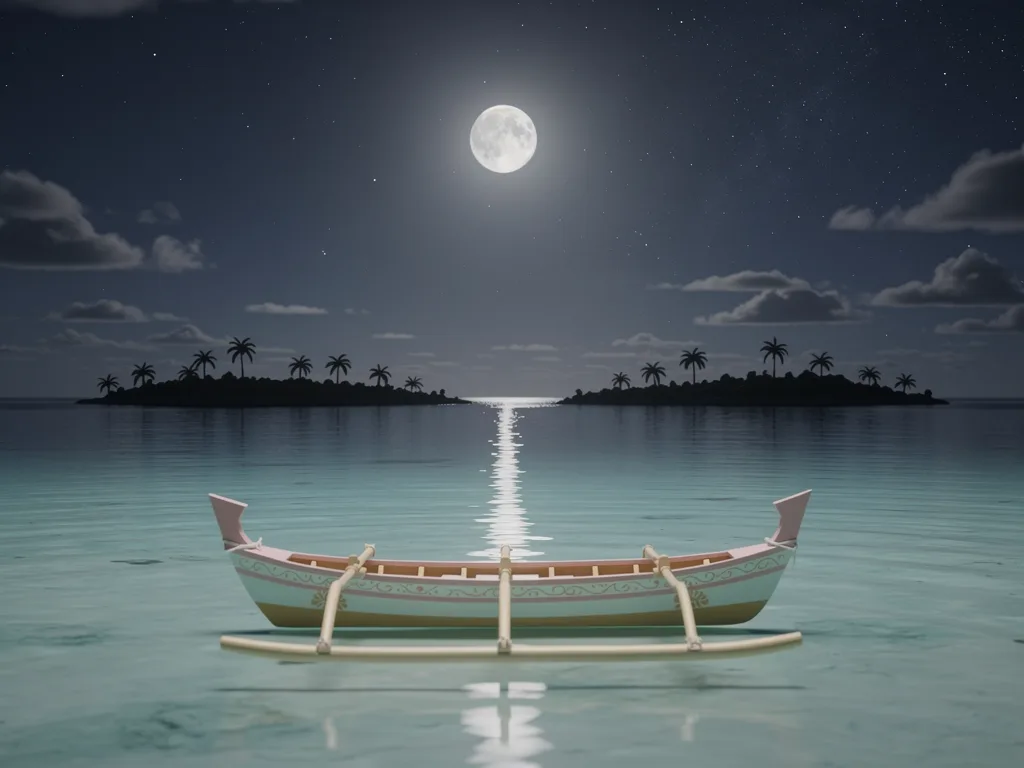
Imagine wading a vast, hard-packed sand flat at first light — the water so clear it looks like liquid glass, the horizon dissolving into an endless expanse of Pacific sky. A school of bonefish materializes from nowhere, their tails catching the sun like silver mirrors. Somewhere out beyond the reef edge, a giant trevally bulldozes through the shallows. Welcome to fishing in Kiribati — one of the most remote, most extraordinary angling experiences on the planet.
Kiribati (pronounced "Kiribas") is a Pacific island nation straddling the equator, best known in angling circles for Christmas Island — Kiritimati — the world's largest coral atoll and arguably the finest bonefish destination on Earth. Whether you're a fly fishing devotee hunting double-digit bones, a spin angler chasing hard-fighting giant trevally, or an offshore enthusiast after sailfish and wahoo, Kiribati delivers with a ferocity and consistency that few destinations can match. This guide covers everything you need to know: fishing permits, regulations, the best spots, guided tours, gear, and how to get there from anywhere in the world.
01Fishing Permits & Licenses in Kiribati
Do You Need a Fishing License?
Yes — all visiting anglers in Kiribati require a pleasure fishing permit before wetting a line. The good news is that the process is refreshingly straightforward for sport fishing tourists.
On Christmas Island (Kiritimati), the permit is obtained directly at Cassidy International Airport (CXI) upon arrival. You complete a card and make payment before exiting the terminal — no pre-application or bureaucratic hoops required. If you're booking through a lodge, the fee is typically included in or facilitated by your package.
Tip: Always confirm with your lodge or tour operator whether the fishing license is included in your package price before you travel. Most reputable operators on Christmas Island handle this seamlessly as part of the arrival process.
How Much Does the Fishing License Cost?
License fees in Kiribati have historically been modest compared to the overall cost of a trip, though they have increased in recent years:
| License Type | Fee (2026) | Approx. EUR | Approx. USD |
|---|---|---|---|
| Annual fishing license (Christmas Island) | AUD $400 | ~€240 | ~$260 |
| Single-visit permit (approx.) | USD $35–$55 | ~€32–€50 | $35–$55 |
Note that during the Australian peak season (June, July, August), fees are quoted in Australian dollars; the rest of the year, fees are typically quoted in US dollars. Always verify current fees with the or your lodge before departure, as these figures are subject to change.
The license fee, in the context of a week-long fishing package costing USD $3,500 or more, is essentially a rounding error — but it is legally required, and fishing without one carries real penalties.
Where to Apply
02Fishing Rules & Regulations
Kiribati's fisheries are governed primarily by the Fisheries Act 2010 (with amendments in 2015, 2017, and 2021) and a series of supporting regulations including the Shark Sanctuary Regulation (2015) and the Fisheries (Conservation & Management of Coastal Marine Resources) Regulation (2019).
Catch Limits
The most important rule for visiting anglers on Christmas Island:
A daily catch limit of FIVE (5) fish of each species per day applies. This is not cumulative — unused quota cannot be carried forward to the next day. The limit refers to the number of fish killed in one day.
In practice, the vast majority of serious sport fishing on Christmas Island — particularly for bonefish — operates on a strict catch-and-release basis, which is both legally reinforced and ethically embraced by the fishing community. Bonefish stocks are explicitly managed under catch-and-release, and this has been the practice since at least 2008.
Protected Zones & No-Kill Areas
A designated "No Kill Zone" has been established in the south-east corner of Christmas Island's lagoon, marked with sign poles. Fishing is permitted in this zone only when accompanied by a licensed tour guide or authorized officer, and all fish caught must be released alive.
Breaking this rule carries a fine of AUD $1,000, and anyone found fishing without a valid permit faces the same penalty.
No Commercial Sale of Catch
A pleasure fishing permit does not allow visitors to trade or sell marine produce. Any fish you catch is for sport or personal consumption only — bringing catches home commercially is explicitly prohibited.
Lobster & Special Species Restrictions
Prohibited Fishing Methods
The Fisheries Act strictly prohibits the use of explosives, poisons, or noxious substances to catch fish. Violations carry a fine of AUD $100,000 and up to 2 years' imprisonment.
The Kiribati Shark Sanctuary
Kiribati is home to one of the world's largest shark sanctuaries — a legally protected zone covering the entire Kiribati Exclusive Economic Zone (EEZ). Within the sanctuary:
An exception exists for I-Kiribati (indigenous) citizens who may harvest sharks for traditional food purposes — but not commercially. Foreign anglers are completely excluded from any shark harvest. This is a serious legal boundary; penalties for illegal fishing in the EEZ without a valid permit reach AUD $250,000.
Tip: If a shark takes your fly or lure while fishing the flats or offshore, cut the line as quickly and safely as possible to avoid undue harm to the animal and to keep yourself on the right side of Kiribati law.
03The Best Fishing Spots in Kiribati
Christmas Island (Kiritimati) — The Crown Jewel
There is no way to overstate this: Christmas Island is one of the greatest sport fishing destinations in the world. Full stop.
Kiritimati is the largest coral atoll on the planet — 250 square miles (650 km²) of white sand flats, iridescent aqua lagoons, coconut palms, and Pacific sky. The flats are hard-packed and extensive, ideal for wading. The visibility is extraordinary. The fish are everywhere.
The bonefish here are legendary. Christmas Island's bones average 2–4 lb (0.9–1.8 kg), with regular encounters in the 5–10 lb (2.3–4.5 kg) range, and truly exceptional fish pushing beyond that. Unlike some destinations where bonefish are pressured and wary, Christmas Island fish feed aggressively and in large schools — you may cast to schools of hundreds of fish moving across the flats like a silver tide.
But it's not just bonefish. The giant trevally (GT) population here is extraordinary. GTs patrol the channels, reef edges, and open flats, hunting in packs and as lone wolves. These are powerful, muscular fish — running from 10 lb (4.5 kg) all the way to over 100 lb (45 kg) — and they will test every bit of tackle and physical strength you have. The take is violent, the run is unstoppable, and the fight is unforgettable.
Beyond the flats, Christmas Island offers excellent offshore fishing for wahoo, tuna (yellowfin and dogtooth), barracuda, sailfish, and occasional blue and black marlin. The drop-offs and current lines just outside the reef produce big pelagic action with relative consistency.
Key species at Christmas Island:
The experience of wading these flats for 6–8 hours a day, guided by local experts who know every channel and tidal movement, is something anglers remember for the rest of their lives. The scenery alone — the interplay of light on impossibly clear water, the silence broken only by wind and the slap of a GT's tail — is worth the journey.
🎣 Fishing tours in Kiribati — Book guided fishing tours with local experts.
The Gilbert Islands (Tarawa Area)
While Christmas Island dominates Kiribati's sport fishing reputation, the Gilbert Islands — and particularly the waters around the capital, South Tarawa — offer their own remarkable game fishing opportunities for adventurous anglers.
Experienced local guides operating out of Tarawa take anglers after sailfish, blue marlin, giant trevally, wahoo, black marlin, yellowfin tuna, dogtooth tuna, and barracuda. This is less developed and less touristic than Christmas Island, which means fewer crowds, raw adventure, and often surprisingly good fishing.
Chartered game fishing trips from Tarawa typically cost AUD $500–$1,000+ (approximately €300–€600 / USD $325–$650), inclusive of boat, fuel, fishing gear, and refreshments. This represents outstanding value for blue-water game fishing in the Pacific.
The Gilbert Islands are accessible from Fiji, making them a viable add-on for anglers traveling the Pacific circuit.
04Fishing Tours & Guided Experiences
Why Use a Guide on Christmas Island?
The flats of Christmas Island reward local knowledge immensely. About 70 professional fishing guides work on Kiritimati, and their impact on your fishing success is enormous. They know the tidal patterns, the channels fish move through at different states of the tide, where the big GTs patrol, and how to spot fish in flat-light conditions that would leave most anglers staring at empty water. Their eyesight — trained from a lifetime on these flats — is simply exceptional.
Lodge-Based Packages (Christmas Island)
The primary way to fish Christmas Island is through a lodge-based package, which typically includes:
Typical package costs:
| Package | Price (USD) | Price (EUR) |
|---|---|---|
| 7-night/6-day guided package | ~$3,500–$3,600+ | ~€3,200–€3,300+ |
| Offshore charter day (from Tarawa) | AUD $500–$1,000 | €300–€600 |
These prices exclude international flights to Christmas Island, which are a significant additional cost given the island's remote location.
Tip: Book well in advance — the best weeks at Christmas Island lodges, particularly during peak bonefish season, fill up 12–18 months ahead. Contact lodges directly or work through a specialist fly fishing travel agency.
🚤 Charter fishing in Kiribati — Find and book charter boats with experienced captains.
05Fishing Techniques & Recommended Gear
Bonefish
Christmas Island is primarily a fly fishing destination, and bonefish are the main quarry. The flats are ideal for wading with a fly rod.
Giant Trevally
GTs demand serious gear. These fish will destroy light tackle.
Offshore Fishing
Standard saltwater offshore tackle applies for wahoo, tuna, and billfish — heavy spinning and trolling setups with appropriate leader material for the species targeted.
🛒 Fishing equipment for Kiribati — Find the right gear for your trip.
06When to Go: Best Seasons for Fishing in Kiribati
One of the great advantages of fishing Kiribati is the year-round season. Kiritimati sits almost exactly on the equator (1°52' N), giving it a remarkably consistent tropical climate with minimal seasonal variation in temperature or fishing quality.
Average water temperature hovers around 28–30°C (82–86°F) year-round. The weather is generally calm and sunny, with occasional rain squalls that rarely disrupt fishing for long.
For Southern Hemisphere travelers: The Austral winter (June–August) coincides with cooler, drier conditions on Christmas Island and is considered by many Australian guides to be the best period.
For Northern Hemisphere travelers: The Northern winter and spring (December–May) are excellent periods to escape cold weather and find consistent bonefish activity.
07Practical Travel Information for International Anglers
Getting There
Christmas Island is remote — delightfully, magnificently remote. That remoteness is part of what makes it so special as a fishing destination, but it does require planning.
Kiritimati (Christmas Island) is serviced by limited flights:
South Tarawa (Gilbert Islands):
Tip for international travelers: Plan your routing carefully. From Europe, the most common route to Christmas Island runs via the US West Coast (Los Angeles or San Francisco) → Honolulu → Kiritimati. From Australia and New Zealand, the Fiji routing is often more convenient.
Visa Requirements
Kiribati's entry requirements vary by nationality. Always verify with the nearest Kiribati embassy or consulate before travel, and check with your airline, as requirements can change.
All visitors should carry a valid passport with at least 6 months' validity beyond their intended stay, onward travel documentation, and evidence of sufficient funds.
Language
The official languages of Kiribati are I-Kiribati (Gilbertese) and English. English is widely spoken in tourism and government contexts, so English-speaking travelers will face minimal language barriers in lodges and at the airport. On-island, guides and lodge staff communicate comfortably in English.
Useful apps: Google Translate has limited I-Kiribati support, but English is sufficient for all practical fishing and travel purposes.
Currency & Money
Tipping: Guides work hard and local tipping culture is appreciated. A typical guide tip of USD $50–$100 per day is common among international anglers and makes a meaningful difference in a local community.
Health & Safety
🏨 Accommodation near fishing spots in Kiribati — Find hotels and lodges close to the best waters.
08Summary: Key Facts for Visiting Anglers
| Topic | Details |
|---|---|
| Permit required? | Yes — for all visiting anglers |
| Where to get it | Cassidy International Airport on arrival (Christmas Island) |
| License cost | AUD $400/year or approx. USD $35–$55 (verify current fee) |
| Catch limit | 5 fish per species per day (Christmas Island) |
| Bonefish | Catch-and-release only |
| Lobster | Completely prohibited for visitors |
| Sharks | Full EEZ shark sanctuary — no harvest by foreign anglers |
| Best spot | Christmas Island (Kiritimati) |
| Season | Year-round |
| Key species | Bonefish, Giant Trevally, Wahoo, Tuna, Sailfish, Marlin |
| Package cost | USD $3,500–$3,600+ per week (excl. flights) |
| Language | English & I-Kiribati; English sufficient |
09FAQ: Fishing in Kiribati
Do I need a fishing license in Kiribati?
Yes. All visiting anglers require a pleasure fishing permit. On Christmas Island, this is obtained at Cassidy International Airport upon arrival. Fees are approximately USD $35–$55 per visit, or AUD $400 annually. Lodge packages typically include or facilitate the permit.
Can I keep the bonefish I catch on Christmas Island?
No — bonefish on Christmas Island are managed exclusively under a catch-and-release system. All bonefish must be returned to the water alive. This regulation has been in place since 2008 and is fundamental to the sustainability of the fishery.
Is Kiribati a good destination for non-fly anglers?
Absolutely. While Christmas Island is primarily known as a fly fishing destination, spinning anglers will find outstanding opportunities, particularly for giant trevally (with heavy spinning gear and surface lures) and for offshore species. Offshore charters target wahoo, tuna, and billfish with conventional trolling and jigging tackle.
What is the best time of year to fish Christmas Island?
Christmas Island fishes well year-round due to its equatorial location. June–August is popular with Australian and New Zealand anglers (Austral winter), while December–May is popular with visitors from the US and Europe (Northern Hemisphere winter/spring). Book well in advance regardless of when you plan to travel.
Can I catch sharks in Kiribati?
No. Kiribati operates one of the world's largest shark sanctuaries, covering its entire Exclusive Economic Zone. Foreign visitors are completely prohibited from catching, killing, or finning sharks. Only indigenous I-Kiribati citizens may harvest sharks for traditional subsistence purposes, and never commercially.
How do I get to Christmas Island (Kiritimati)?
Christmas Island is served by limited weekly flights connecting Honolulu (Hawaii) and Nadi (Fiji), operated by Fiji Airways (verify current schedules before booking). Most international travelers route through either Honolulu or Nadi depending on their origin. From Europe, expect a multi-stop journey of 20–30+ hours.
Are there fishing opportunities beyond Christmas Island?
Yes. The Gilbert Islands, particularly around the capital Tarawa, offer excellent blue-water game fishing for sailfish, marlin, giant trevally, wahoo, and tuna. This option is less developed for tourism but can be arranged through local operators. Tarawa is accessible via Fiji.
What gear should I bring to Christmas Island?
For bonefish: an 8–9 wt fly rod with a quality reel and floating line. For giant trevally: a 10–12 wt fly rod or heavy spinning rod. Bring polarized sunglasses (critical for spotting fish on the flats), a wide-brimmed sun hat, UV-protective clothing, high-SPF sunscreen, and wading shoes suitable for hard sand flats. Lodges can advise on specific fly patterns and lure recommendations.
10Conclusion
Fishing in Kiribati — and specifically on the legendary flats of Christmas Island — is an experience that stands apart from virtually every other destination in the world. The combination of endless, pristine flats, extraordinary numbers of bonefish, heart-stopping encounters with giant trevally, and an almost other-worldly remoteness creates something anglers can't find anywhere else. Add in robust conservation regulations that protect the fishery for future generations, professional local guides, and comfortable lodge-based packages, and you have one of the genuine bucket-list fishing destinations on the planet.
The journey is long. The cost is significant. And every moment is worth it.
Start planning your Kiribati fishing adventure today — and book early. The best weeks fill up fast.
11Sources & Further Links
*Disclaimer: Fishing regulations, permit fees, and entry requirements in Kiribati are subject to change without notice. All information in this article reflects research conducted in 2026, but anglers and travelers are strongly advised to verify current requirements with the Kiribati Ministry of Fisheries & Marine Resources Development, the Kiribati Trade Portal, and official tourism authorities before planning their trip. Neither FishingWorldGuide.com nor its authors accept responsibility for inaccuracies arising from regulatory changes after the publication date.*
Don't miss any fishing tips!
Get the best fishing destination recommendations weekly in your inbox.
No spam. Unsubscribe anytime.
Data incorrect?
Help us keep this article up to date — report outdated or incorrect information
More articles