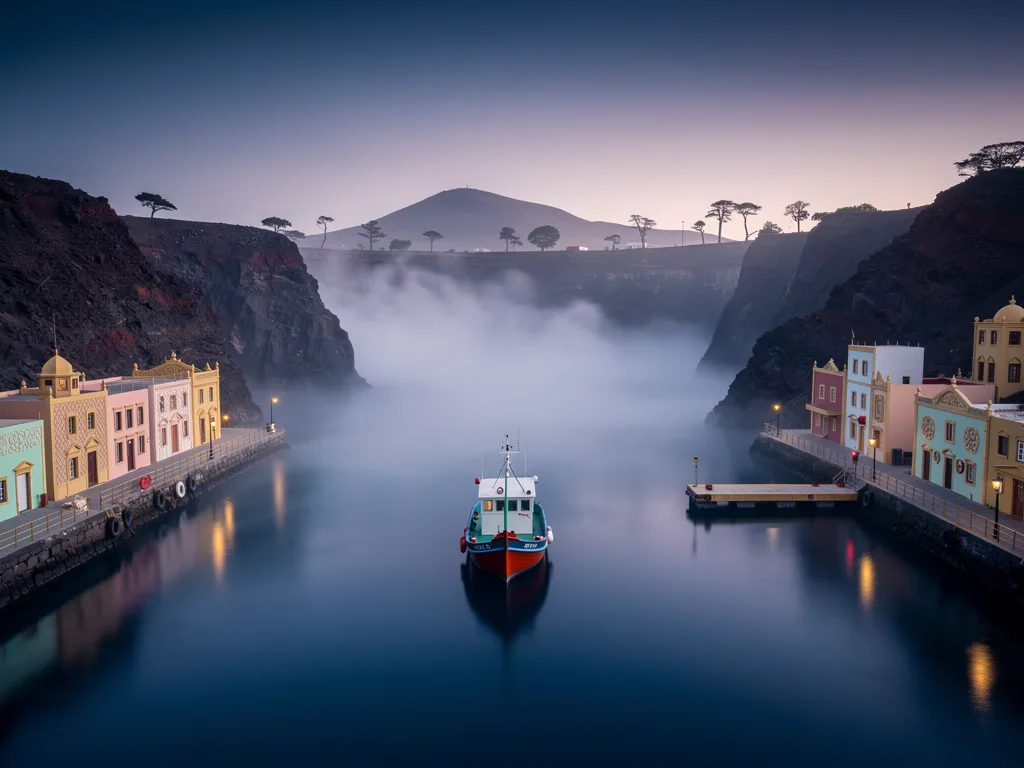
Imagine standing on the deck of a sturdy fishing boat as the Atlantic swells gently beneath you, the volcanic peaks of Cape Verde rising dramatically on the horizon. A massive blue marlin strikes your lure, and the fight begins — one of the most thrilling experiences in big-game fishing. Whether you dream of battling giant trevally in turquoise shallows, casting from black volcanic rocks, or joining a professional charter for blue marlin, fishing in Cape Verde offers an unforgettable adventure.
Located 570 km west of Senegal, the archipelago of Cabo Verde (also known as Cape Verde) is a premier Atlantic fishing destination. Its clear waters, rich in nutrients from upwelling currents, attract pelagic giants like blue marlin, sailfish, wahoo, tuna, and dorado, as well as reef species and powerful shore predators. This comprehensive guide covers everything you need to plan your trip: fishing licenses and permits, the best fishing spots, guided tours and charters with current prices, regulations, travel practicalities, and costs — all tailored for international visitors from Europe, North America, Asia, and beyond.
01Do You Need a Fishing License in Cape Verde?
One of the first questions international anglers ask is: do you need a fishing license in Cape Verde? The answer depends on how and where you plan to fish.
According to national legislation, primarily Decree-Law 54/2005 and the updated Decree-Legislative No. 2/2020, a recreational fishing license (licença de pesca desportiva) is generally required for most forms of fishing in Cabo Verde. This includes boat fishing (recreational or sport fishing) and spearfishing. The competent authority is the Direção Nacional de Pesca e Aquacultura (DNPA) under the Ministry of the Sea.
However, there are important exemptions that benefit many tourists:
For visitors joining organized fishing tours in Cape Verde or charter fishing in Cape Verde, the charter operator typically obtains and includes the necessary sport fishing permit in the trip price. This is by far the most practical and recommended route for international travelers.
If you wish to fish independently (e.g., from a rented boat or with your own spearfishing gear), you must apply for a license in advance. Applications are handled through the DNPA or authorized local agencies. The process can be bureaucratic, often requiring Portuguese language skills or the help of a local fixer. Tourist licenses are available as monthly, quarterly, or annual permits.
Tip: Always confirm current requirements with your chosen charter company or the DNPA before travel. Regulations can change, and enforcement in protected marine areas is increasing.
For the latest official information, refer to the or the FAOLEX database.
02Best Fishing Spots in Cape Verde: Where to Make Your Dreams Come True
The volcanic islands of Cape Verde create a dramatic backdrop for fishing. Crystal-clear waters, dramatic cliffs, and nutrient-rich currents make these islands a paradise for both novice and experienced anglers. Here are the premier locations that will make you dream of your next trip.
Sal Island – Accessible and Diverse
Sal is one of the most popular entry points for international travelers due to its international airport. The waters around Santa Maria and Palmeira offer excellent opportunities.
From the rocky shores near Calheta Funda, you can target shore species like grouper, barracuda, and trevally using light tackle or handlines (no license required). Deep-sea excursions from Santa Maria regularly encounter wahoo, tuna, and dorado. The northern coast offers dramatic rock fishing with powerful currents — perfect for experienced anglers seeking big predators.
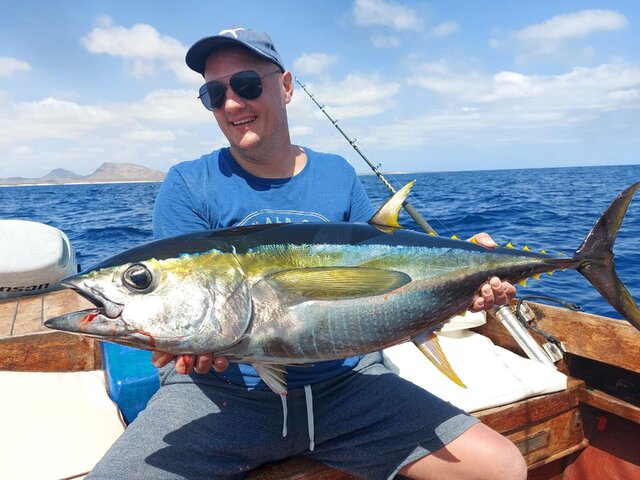
One unforgettable experience is drifting over seamounts where massive schools of skipjack and yellowfin tuna boil on the surface. The contrast between the arid, desert-like landscape of Sal and the rich blue ocean creates a unique, almost otherworldly fishing atmosphere.
Boa Vista – The Blue Marlin Capital
Boa Vista is widely regarded as one of the world's top destinations for blue marlin fishing in Cape Verde. The island's position at the edge of a major continental shelf drop-off creates ideal conditions for pelagic giants.
The peak blue marlin season runs from March to July, with fish averaging 200–400 kg (440–880 lbs). Many charters here practice strict catch-and-release, preserving the population while allowing you to experience the fight of a lifetime. Imagine the electric moment when a cobalt-blue marlin explodes on your trolled lure, its massive dorsal fin slicing through the waves.
Beyond marlin, Boa Vista offers superb fishing for white marlin, sailfish, spearfish, and large wahoo. Shore fishing on the long sandy beaches and rocky points can yield jack, snapper, and even occasional shark.
The scenery is breathtaking: endless white beaches, towering dunes, and turquoise lagoons contrast with the deep indigo of the open Atlantic. Many visitors describe fishing here as a spiritual experience — just you, the ocean, and the volcanic islands shimmering in the distance.
Santiago and Other Islands
The largest island, Santiago, offers a mix of deep-sea and inshore fishing, particularly around Tarrafal and Praia. Fogo, with its active volcano, provides dramatic backdrops for boat fishing, while São Vicente attracts anglers seeking varied reef and pelagic action.
Spearfishing enthusiasts will find clear waters ideal for free-diving (scuba is prohibited for spearfishing). Target species include parrotfish, hogfish, and lobster in the rocky shallows — always respecting protected species and daily limits.
The entire archipelago benefits from the Canary Current, which brings cold, nutrient-rich water. This creates an incredible food chain supporting everything from small baitfish to 500 kg+ (1,100 lbs+) blue marlin.
Best time to visit from different hemispheres:
Tip: Book your trip during the shoulder seasons (April–May or October–November) if you want fewer crowds and still excellent fishing.
03Fishing Species: What You Can Catch in Cape Verde
Cape Verde's waters host over 200 fish species. The most sought-after include:
All billfish are subject to strong catch-and-release ethics. The daily bag limit for demersal species is typically three fish per angler. Selling recreationally caught fish is strictly prohibited.
04Tours & Guided Experiences: Booking Your Cape Verde Fishing Adventure
For most international visitors, joining a professional guided trip is the best way to experience fishing in Cape Verde. Licensed operators handle permits, provide high-quality tackle, and know exactly where the fish are.
Popular options include:
Many charters operate out of Sal, Boa Vista, and São Vicente. Boats range from 8–15 meters with twin engines, fighting chairs, outriggers, and modern electronics. Crews are experienced, often speaking English, Portuguese, and sometimes German or French.
Fishing tours in Cape Verde — Book guided fishing tours with local experts.
When booking, look for operators affiliated with the national fishing associations or those recommended by international platforms. Always confirm that the charter price includes the necessary sport fishing license.
05Charter Boats and Deep Sea Fishing in Cape Verde
Charter fishing in Cape Verde is the pinnacle of the experience. Professional captains with decades of local knowledge dramatically increase your chances of success.
Top-rated charters on platforms like FishingBooker specialize in blue marlin, offering tackle from 30 lb to 130 lb class. Many boats practice 100% catch-and-release for billfish, using circle hooks and careful handling to ensure the fish's survival.
A typical day begins early with bait preparation, then heading to productive banks 15–40 km offshore. The thrill of watching birds working over a school of baitfish or seeing a marlin's sickle-shaped dorsal fin approach your teaser is unmatched.
Safety standards on reputable charters are high, with modern vessels equipped with life rafts, EPIRBs, and VHF radios. Many captains are IGFA certified.
🚤 Charter fishing in Cape Verde — Find and book charter boats with experienced captains.
06Equipment, What to Bring, and Rental Options
Most charter boats provide high-quality rods, reels, lures, and bait. However, serious anglers often bring their own favorite reels or lures.
Recommended gear for self-guided or shore fishing:
For spearfishing, you must use only apnea (breath-hold) or snorkel equipment — scuba is illegal. Powerful pneumatic or band-powered spearguns are recommended, along with a float and line.
🛒 Fishing equipment for Cape Verde — Find the right gear for your trip.
07Costs of Fishing in Cape Verde: Budget Planning
Kap Verde fishing costs are moderate compared to other premium big-game destinations like the Seychelles or Hawaii.
These prices are roughly equivalent to a high-end restaurant meal per person for a half-day trip when shared among friends — excellent value for the quality of fishing.
08Practical Travel Information for International Visitors
Visa Requirements
Getting There and Getting Around
International flights arrive at Amílcar Cabral International Airport (SID) on Sal or Aristides Pereira International Airport (BVC) on Boa Vista. Airlines like TAP Air Portugal, Cabo Verde Airlines, and TUI fly from major European cities. Travel time from London or Frankfurt is approximately 6 hours.
Once on the islands, renting a car is highly recommended for exploring fishing spots.
🚗 Rent a car in Cape Verde — Compare prices from 500+ rental companies worldwide.
Taxis and shared minibuses (aluguer) are also available but less flexible for early-morning fishing departures.
Language and Communication
Official language is Portuguese, but Creole is widely spoken. English is commonly understood in tourist areas and by fishing guides. Translation apps like Google Translate work well with Portuguese. Learning basic Portuguese phrases ("Bom dia", "Obrigado", "Quanto custa?") will be appreciated.
Connectivity
Mobile coverage is good on the main islands. Consider purchasing a local SIM or using an eSIM for affordable data.
📱 Stay connected in Cape Verde — Get an eSIM for affordable mobile data while traveling.
Health and Safety
No specific vaccinations are mandatory, but hepatitis A, typhoid, and tetanus are recommended. Tap water is not drinkable — use bottled water. The islands are generally very safe, though standard travel precautions apply. Respect the strong ocean currents and always fish with a guide in unfamiliar waters.
Currency and Banking
The local currency is the Cape Verdean Escudo (CVE). 1 EUR ≈ 110 CVE; 1 USD ≈ 102 CVE (rates fluctuate). ATMs are available in main towns. Cards are accepted in hotels and larger restaurants but bring cash for smaller vendors and tips.
Best Time to Fish from Different Regions
09FAQ – Common Questions About Fishing in Cape Verde
Do you need a fishing license in Cape Verde for shore fishing?
No, simple handline fishing from the shore for personal consumption does not require a license according to Decree-Law 54/2005.
What is the best island for blue marlin fishing?
Boa Vista is widely considered the top destination for blue marlin, followed by Sal.
Is spearfishing allowed in Cape Verde?
Yes, but only while free-diving or using a snorkel. Scuba diving for spearfishing is prohibited. A license is required.
What is the bag limit for fish in Cape Verde?
Generally three demersal fish per person per day for recreational anglers. Billfish should be released.
Can I sell the fish I catch?
No. Commercialization of recreationally caught fish is strictly illegal.
When is the best time to visit Cape Verde for fishing?
March to July is peak for blue marlin. Year-round fishing is available with different species dominating each season.
Is catch and release practiced?
Yes, especially for all billfish species. Most responsible operators follow strict catch-and-release protocols.
How expensive is charter fishing in Cape Verde compared to other destinations?
It offers excellent value. A full day of big game fishing is often less expensive than comparable trips in the Caribbean or Pacific.
10Conclusion
Fishing in Cape Verde combines world-class sport fishing with dramatic volcanic scenery, warm hospitality, and excellent value for money. Whether you are a seasoned big-game angler chasing a grander blue marlin or a family looking for an exciting shore fishing adventure, the islands of Cabo Verde deliver unforgettable memories.
The combination of clear Atlantic waters, diverse fishing opportunities, and professional charters makes this destination a must-visit for any serious angler. Start planning your trip today — the marlin are waiting.
Sources & Further Links
Disclaimer: The information in this guide is based on official sources and reliable operators as of 2026. Fishing regulations, prices, and conditions may change. Always verify the latest rules with local authorities, the DNPA, or your chosen charter operator before your trip. This article is for informational purposes only and does not replace official advice.
Recommended tours
Fishing trips in Cape Verde
Curated tours & charters with price and click data from our partner dashboards.
 FishingBooker
Cape Verde Fishing Charters
 FishingBooker
CVS Fishing
 FishingBooker
Boat Trips & Fishing – Boa Vista
Don't miss any fishing tips!
Get the best fishing destination recommendations weekly in your inbox.
No spam. Unsubscribe anytime.
Read more
Data incorrect?
Help us keep this article up to date — report outdated or incorrect information
More articles