Buy License Online
Buy fishing license for Australia online
Official authority website
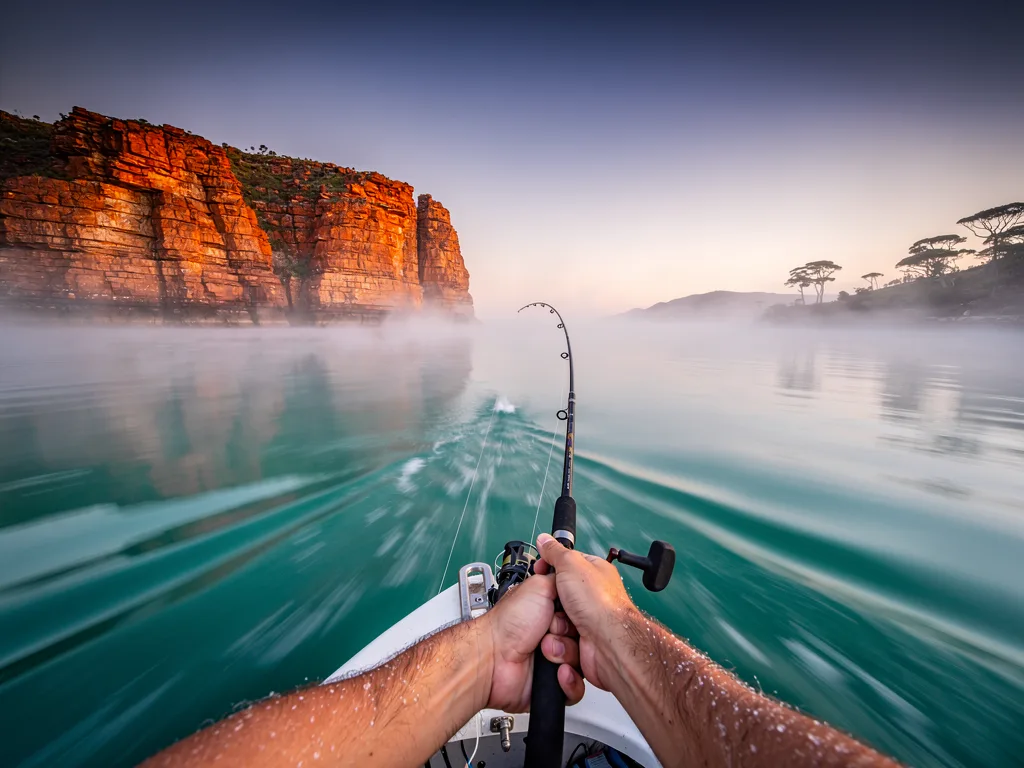
Picture this: the warm salt air on your face as your boat cuts through turquoise waters off the Great Barrier Reef. Suddenly, the reel screams — a massive black marlin has taken your lure and is tail-walking across the Coral Sea. Or imagine standing knee-deep in a Northern Territory river as a metre-long barramundi explodes on your surface lure at golden hour. This is fishing in Australia — a continent-sized playground where the fishing is as wild and diverse as the landscape itself.
From chasing trophy marlin off Cairns to casting for trout in the snow-fed streams of Tasmania, Australia delivers world-class angling experiences in every state and territory. Whether you dream of deep sea fishing Australia's continental shelf, stalking bonefish on remote flats, or battling a metre-plus "barra" in the tropics, this guide covers everything you need: licenses, regulations, the best fishing spots, charter options, and practical travel advice for international anglers.
01Do You Need a Fishing License in Australia?
The short answer is: it depends on which state you're fishing in. Australia has no national fishing license. Instead, each state and territory sets its own rules — and they vary significantly. This is crucial for international visitors to understand, because what's required in New South Wales may not be required in Queensland.
Fishing Licenses by State and Territory
Here's a state-by-state breakdown of recreational fishing license requirements:
| State/Territory | License Required? | Approximate Cost (Short-Term) |
|---|---|---|
| New South Wales | Yes — Recreational Fishing Fee | AUD 7 (~EUR 4 / USD 5) for 3 days |
| Victoria | Yes — Recreational Fishing Licence | AUD 10 (~EUR 6 / USD 7) for 3 days |
| Queensland | No (in most tidal waters) | Free |
| Western Australia | No (for recreational fishing from shore or boat) | Free |
| South Australia | No (for recreational fishing) | Free |
| Tasmania | Yes — for inland and sea fishing (various licences) | AUD 34–80 (~EUR 20–48 / USD 22–52) |
| Northern Territory | No (for recreational fishing) | Free |
| Australian Capital Territory | Yes — for freshwater fishing | AUD 12.50 (~EUR 7.50 / USD 8) for 1 month |
Tip: Even in states where no license is required, you must still follow bag limits, size limits, and seasonal closures. Ignorance of local regulations is not a defence — fines can reach AUD 5,000 (approximately EUR 3,000 / USD 3,250) or more.
Key Regulations You Must Know
Regardless of licensing requirements, Australia enforces strict recreational fishing rules nationwide:
Always check the official fishing guide for the state you're visiting before casting a line. The NSW Recreational Freshwater and Saltwater Fishing Guides (2024–2025 editions) and the Victorian Recreational Fishing Guide are excellent references.
02Best Fishing Spots in Australia
Australia's sheer size means it harbours an extraordinary range of fishing environments — tropical reefs, temperate estuaries, alpine streams, open-ocean shelves, and everything in between. Here are the destinations that should be on every travelling angler's bucket list.
Cairns and the Great Barrier Reef, Queensland
If marlin fishing Cairns is on your bucket list, you've picked the right place. Cairns is the undisputed black marlin capital of the world. Every year from September to December, giant black marlin — fish exceeding 450 kg (1,000 lbs) — migrate along the outer edge of the Great Barrier Reef. This is big-game fishing at its absolute finest.
But the Reef offers far more than marlin. The coral reef systems harbour coral trout, red emperor, Spanish mackerel, giant trevally, and dozens of other species. Light-tackle reef fishing is exceptional year-round, while heavy-tackle marlin season peaks in spring.
The scenery is breathtaking: the world's largest coral reef system stretching to the horizon, with tropical islands dotting the blue water. Most charters depart from Cairns Marlin Marina or Port Douglas, about an hour north.
Northern Territory — Barramundi Country
For many anglers, barramundi fishing Australia is the ultimate adventure. The Northern Territory is barra heartland, and the experience of hooking one of these powerful, acrobatic fish in a remote tropical river is unforgettable.
Top spots include:
The best times are the "Run-off" (late February to April) when floodplains drain and barra feed aggressively, and the "Build-up" (September to November) when humidity and heat drive fish into feeding frenzies before the monsoon.
Warning: The Northern Territory is saltwater crocodile habitat. Never stand in the water longer than necessary, always fish with a companion, and heed all crocodile warning signs. Crocodiles are a real and present danger — this is not a place to wade carelessly.
Sydney and NSW Coast
New South Wales offers the most diverse fishing on Australia's east coast. In Sydney alone, you can catch kingfish, snapper, flathead, bream, and even yellowfin tuna within sight of the Opera House.
Highlights include:
Tasmania — Cool-Water Paradise
Tasmania is Australia's trout fishing mecca. The island's highland lakes and streams hold wild brown trout and rainbow trout in stunning wilderness settings. The Central Highlands — places like Arthurs Lake, Great Lake, and the Bronte Lagoon system — deliver world-class fly fishing from spring through autumn.
But Tasmania isn't just about trout. The sea fishing is outstanding too:
A Tasmanian sea fishing licence is required for marine fishing, and separate inland licences apply for freshwater. Check the Tasmanian Fishing Guide for current rules and limits.
Western Australia — Game Fishing and Remote Adventures
Western Australia is vast and largely untamed, offering fishing experiences that feel truly wild:
South Australia and Victoria
🎣 Fishing tours in Australia — Book guided fishing tours with local experts who know the best spots and seasons.
03Deep Sea Fishing and Charter Experiences
Deep sea fishing Australia style means heading out beyond the continental shelf — or at least to the outer reef edges — to target pelagic species that will test your tackle and your stamina. Australia's charter fleet is extensive, professional, and caters to all experience levels.
What to Expect on a Charter
Most deep sea charter operators offer half-day (4–5 hours), three-quarter day (6–8 hours), and full-day (10–12 hours) trips. Multi-day expeditions are also available for serious anglers targeting marlin or heading to remote locations.
A typical full-day reef fishing charter on the Great Barrier Reef includes:
You'll need to bring sun protection (hat, sunscreen, polarized sunglasses), seasickness medication, and your own drinks if alcohol is permitted.
Charter Prices — What to Budget
| Trip Type | Location | Price Range (AUD) | Price (EUR) | Price (USD) |
|---|---|---|---|---|
| Half-day reef fishing | Sunshine Coast | AUD 150–200 | EUR 90–120 | USD 95–130 |
| Full-day reef fishing | Cairns/Great Barrier Reef | AUD 250–350 | EUR 150–210 | USD 160–225 |
| Full-day game fishing (shared) | Cairns | AUD 400–600 | EUR 240–360 | USD 260–390 |
| Private marlin charter (full day) | Cairns | AUD 1,500–3,500 | EUR 900–2,100 | USD 975–2,275 |
| Full-day deep sea fishing | Yorke Peninsula, SA | AUD 250–350 | EUR 150–210 | USD 160–225 |
| Barramundi charter (full day) | Darwin/NT rivers | AUD 300–600 | EUR 180–360 | USD 195–390 |
For context, a full-day shared reef charter at roughly AUD 300 (EUR 180 / USD 195) costs about the same as a nice dinner for two at a waterfront restaurant in Sydney. The private marlin charters are a significant investment, but for many anglers, battling a giant black marlin off the Great Barrier Reef is a once-in-a-lifetime experience.
Top Charter Operators
Some well-regarded operators include:
🚤 Charter fishing in Australia — Find and book charter boats with experienced captains across all states.
04Target Species: What Can You Catch?
Australia's waters hold an incredible diversity of fish species. Here are the most sought-after targets for visiting anglers:
Saltwater Species
Freshwater Species
05When to Go: Best Fishing Seasons
Australia's seasons are the reverse of the Northern Hemisphere — summer runs from December to February, winter from June to August. But the best fishing season depends entirely on what you want to catch and where.
| Season | Months | Best For | Location |
|---|---|---|---|
| Summer | Dec–Feb | Reef fishing, pelagics, mangrove jack | Queensland, NT (early summer) |
| Autumn | Mar–May | Southern bluefin tuna, trout | Tasmania, SA, Victoria |
| Winter | Jun–Aug | Murray cod, snapper, reef fish | NSW, Queensland reef |
| Spring | Sep–Nov | Black marlin, barramundi (build-up) | Cairns, NT |
Tip for Northern Hemisphere travellers: If you're escaping the European or North American winter, December to February is Australia's summer — perfect for tropical fishing in Queensland and the NT. If you prefer cooler weather and trout fishing, plan your trip for October–November (southern spring) or March–April (southern autumn).
06Equipment and What to Bring
If you're travelling from overseas, you face a choice: bring your own gear or use charter equipment. Here's what we recommend:
What Charters Provide
Almost all ocean charter boats supply quality rods, reels, and terminal tackle as part of the package. For a standard reef or game fishing charter, you don't need to bring any fishing equipment at all.
What to Bring for Shore-Based or Independent Fishing
If you plan to fish independently — from shore, a hire boat, or in freshwater — you'll need your own gear or rentals. Consider:
Essential accessories include polarized sunglasses (critical for spotting fish), a quality landing net, sunscreen rated SPF 50+, and a wide-brimmed hat. Insect repellent is vital in the tropics.
🛒 Fishing equipment for Australia — Find the right saltwater gear for your trip.
07Practical Travel Information for Anglers
Visa Requirements
Most international visitors need a visa to enter Australia:
Apply online well in advance. Processing times are usually quick for ETAs (often within hours), but standard visitor visas can take weeks.
Getting There and Getting Around
Australia's major international gateways are Sydney, Melbourne, Brisbane, Perth, and Cairns. For fishing-focused trips:
Renting a car is highly recommended for most fishing destinations outside the major cities. Distances in Australia are enormous — the drive from Sydney to Cairns is over 2,400 km (1,500 miles). Internal flights are often the practical choice for moving between regions.
🚗 Rent a car in Australia — Compare prices from 500+ rental companies worldwide.
Language and Communication
Australia's official language is English. No language barrier for English-speaking travellers, but for those from non-English-speaking countries, a translation app can help with local fishing terminology (Aussies have unique names for many fish species and techniques).
Mobile coverage is excellent in cities and along major coastal highways, but can be non-existent in remote areas (especially the NT and outback WA). Download offline maps and carry a satellite communication device if heading truly remote.
Health and Safety
📱 Stay connected in Australia — Get an eSIM for affordable mobile data while traveling.
08Cost Overview: Budget Planning
Here's a rough guide to help you budget for a fishing trip to Australia:
| Expense | Budget Option | Mid-Range | Premium |
|---|---|---|---|
| Accommodation (per night) | AUD 40–80 (hostel/motel) | AUD 120–250 (hotel/apartment) | AUD 350+ (resort/lodge) |
| Shared fishing charter (full day) | AUD 150–250 | AUD 250–400 | AUD 400–600 |
| Private charter (full day) | AUD 800–1,200 | AUD 1,200–2,000 | AUD 2,000–3,500+ |
| Fishing license (per week) | AUD 0–28 | — | — |
| Car rental (per day) | AUD 45–70 | AUD 70–120 | AUD 120+ |
| Meals (per day) | AUD 30–50 | AUD 60–100 | AUD 100+ |
All prices in AUD. For reference: AUD 1 ≈ EUR 0.60 ≈ USD 0.65 (rates fluctuate — check current exchange rates before your trip).
09Responsible Fishing in Australia
Australia takes sustainable fishing seriously, and visiting anglers should too:
10Related Destinations
If you're planning a broader fishing trip to the Oceania region, consider combining Australia with:
11FAQ: Fishing in Australia
Do I need a fishing license in Australia?
It depends on the state. New South Wales, Victoria, Tasmania, and the ACT require fishing licenses. Queensland, Western Australia, South Australia, and the Northern Territory do not require a license for most recreational fishing. Always check local regulations before fishing.
Can tourists go fishing in Australia?
Absolutely! Tourists are welcome to fish recreationally in Australia. You'll need the same license (if required) as residents, and you must follow all bag limits, size limits, and seasonal closures. Charter boats handle licensing requirements for their passengers on some trips.
What is the best month for marlin fishing in Australia?
The black marlin season off Cairns peaks from September to December, with October and November being the prime months. This is when the largest marlin congregate along the outer Great Barrier Reef.
Where is the best barramundi fishing in Australia?
The Northern Territory is the undisputed barra capital. The Daly River, Mary River, Adelaide River, and Kakadu's waterways all produce excellent barramundi fishing. The best times are the "Run-off" (March–April) and "Build-up" (September–November).
How much does a fishing charter cost in Australia?
Shared reef fishing charters typically cost AUD 150–350 (~EUR 90–210 / USD 95–225) per person for a full day. Private game fishing charters for marlin can cost AUD 1,500–3,500 (~EUR 900–2,100 / USD 975–2,275) per day for the boat.
Is it safe to fish in the Northern Territory?
Yes, if you take proper precautions. The main hazard is saltwater crocodiles. Always fish with a companion, stay at least 5 m (16 ft) from the water's edge, never stand in the water, and observe all warning signs. Professional charter guides are experienced in crocodile safety.
Can I bring fishing gear into Australia?
Yes, but all fishing equipment must be declared and inspected by Australian biosecurity on arrival. Gear must be clean and dry — any soil, plant material, or organic residue will result in cleaning fees or confiscation. Pack gear separately for easy inspection.
What fish can I catch off the Great Barrier Reef?
The reef offers incredible variety: coral trout, red emperor, Spanish mackerel, giant trevally, nannygai, jobfish, and many more reef species. Off the outer reef, you'll find black marlin, blue marlin, sailfish, yellowfin tuna, wahoo, and mahi-mahi.
12Conclusion
Fishing in Australia is a bucket-list experience that delivers on every level — from the adrenaline rush of a giant black marlin exploding on your lure off Cairns to the quiet satisfaction of landing a wild brown trout on a Tasmanian highland lake. The diversity of species, environments, and experiences is staggering, and the infrastructure — from professional charter fleets to accessible freshwater destinations — makes it remarkably easy for international visitors to enjoy.
Plan ahead, respect local regulations and the environment, and prepare for the fishing adventure of a lifetime. Whether you're a seasoned big-game angler or a casual holiday fisher, Australia has a rod with your name on it.
Tight lines and good luck — we'll see you on the water!
13Sources & Further Links
*Disclaimer: This article was written in 2026 based on publicly available information. Fishing regulations, license requirements, and fees change frequently. Always verify current rules with the relevant state fisheries authority before fishing. Prices are approximate and may vary. This article contains affiliate links — if you book through these links, we may earn a small commission at no extra cost to you.*
Recommended tours
Fishing trips in Australia
Curated tours & charters with price and click data from our partner dashboards.
 FishingBooker
Find Fish Fast – Fishfinder
 FishingBooker
Airlie Beach Fishing Adventures
 FishingBooker
Barra Private Tours
Don't miss any fishing tips!
Get the best fishing destination recommendations weekly in your inbox.
No spam. Unsubscribe anytime.
Read more
Data incorrect?
Help us keep this article up to date — report outdated or incorrect information
More articles