Flats Fishing
Sight-fishing knee-deep saltwater flats for bonefish, permit, tarpon. The most demanding visual style in fishing.
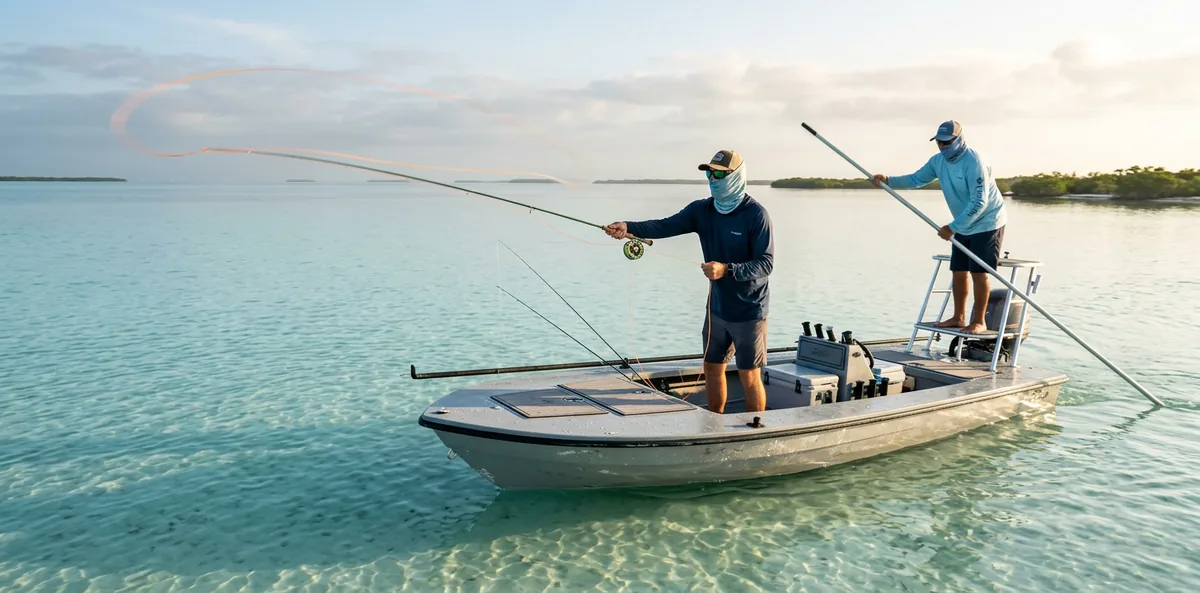
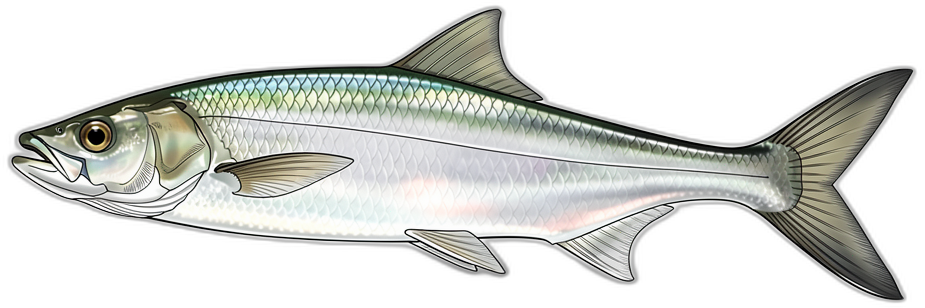
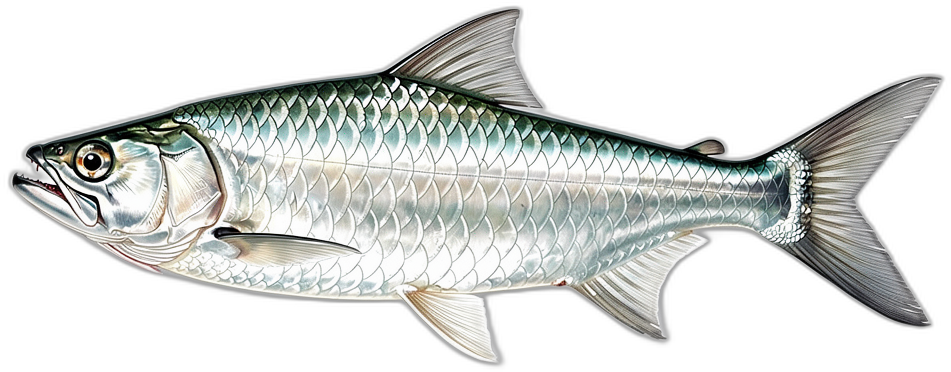
Flats fishing means stalking individual fish in clear shallow saltwater — typically knee-deep to chest-deep — with a guide poling a flats skiff while you stand on the bow with a fly rod or light spinning gear. The targets are the iconic 'flats slam' species: bonefish, permit, and tarpon.
The technique is sight-fishing: spot the fish first (a tail wagging out of the water, a shadow over white sand, a nervous patch on the surface), present the fly or jig within the strike zone, and trigger a bite. Casting matters — 60-foot casts into 15-knot wind are the norm, not the exception. Permit will refuse 99 of 100 perfect presentations; bonefish spook from shadow movement at 40m.
The water is the key feature. Flats are 0.3–1.5m deep, white sand or turtle grass bottom, often with mangrove edges. Tides drive everything: incoming tide brings fish into the flat, outgoing pushes them out to the channel edges. Best windows are dead-low to early-incoming (concentrated fish) and late-incoming (spread out but feeding hard).
Flats destinations are limited and revered: Florida Keys (Islamorada, Marathon), Bahamas (Andros, Abaco), Belize (Ambergris, Turneffe), Mexico (Ascension Bay, Espiritu Santo), Cuba (Jardines de la Reina), Christmas Island, Seychelles (Alphonse, Astove), and the seasonal tarpon migration along Florida's Gulf coast.
Target species


Recommended techniques
Tackle & equipment
Top destinations
Safety & regulations
Sun exposure — sunburn and dehydration are real risks (flats are open). Stingrays in shallow flats — shuffle your feet wading. Sharp coral and oysters cut feet — wear flats boots. Many flats species are catch-and-release only (bonefish, permit, tarpon in most jurisdictions). Polarized sunglasses are required equipment, not optional.
Related trip types
Inshore Fishing
Coastal fishing near shore — bays, estuaries, mangroves, beaches. Light tackle, sight-fishing, accessible for all skill levels.
Reef Fishing
Bottom + drift fishing over coral and rocky reef structures for grouper, snapper, jacks. Action-packed, family-friendly.
Bottom Fishing
Vertical bait-on-the-bottom for groupers, snappers, halibut, lingcod. Reliable producer, technical in deep water.