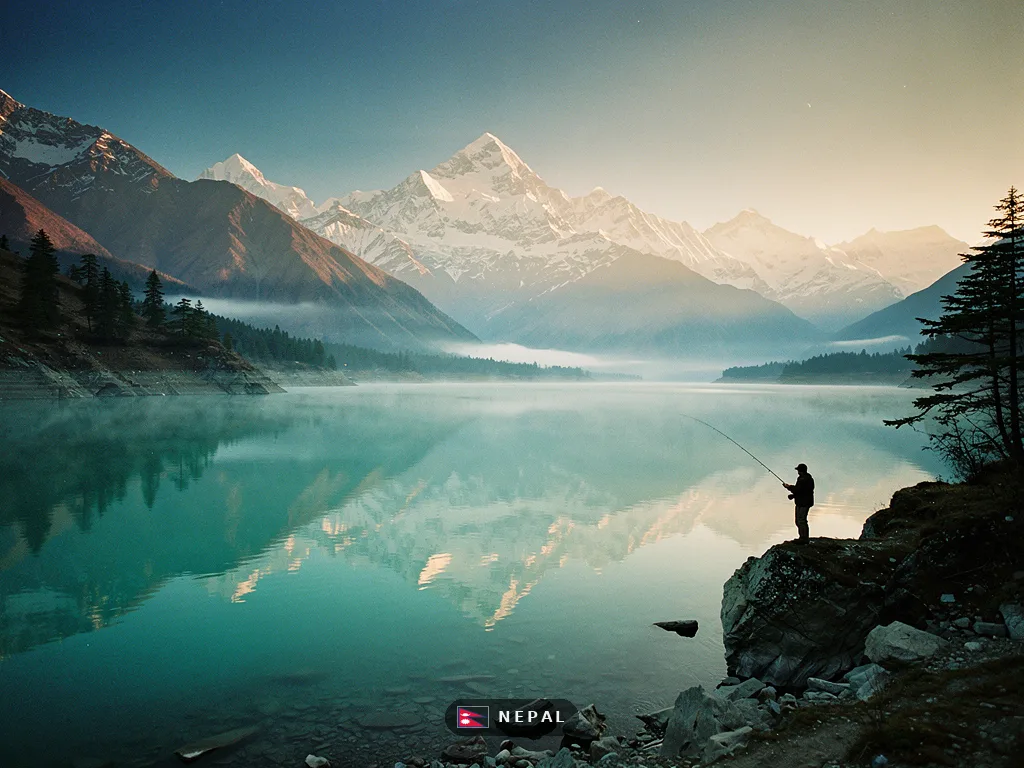
Imagine standing waist-deep in the crystal-clear waters of a Himalayan river, the snow-capped peaks of the Annapurna range towering above you, as a powerful Golden Mahseer — the legendary “Tiger of the River” — strikes your fly with explosive force. This is fishing in Nepal, an unforgettable freshwater adventure that combines world-class sport fishing with dramatic mountain scenery, rich biodiversity, and a deep sense of wilderness.
Whether you dream of battling a 20+ kg (44 lb) Golden Mahseer on the remote Karnali River or casting for Snow Trout in high-altitude streams, Nepal offers experiences that rival the best fishing destinations on earth. In this comprehensive guide you will find everything an international angler needs: how to obtain the mandatory fishing permits, the best fishing spots, detailed costs in NPR, EUR, and USD, guided tour options, regulations, travel practicalities, and expert tips for a successful trip.
Fishing in Nepal is strictly regulated to protect endangered species and fragile ecosystems. A fishing permit is always required. Solo fishing is strongly discouraged, especially in national parks. The vast majority of visiting anglers join professional guided expeditions that combine rafting, camping, and expert local knowledge. This guide is written for travelers from Europe, North America, Australia, Japan, and beyond, with practical information on visas, best seasons, equipment, and cultural considerations.
01Do You Need a Fishing License in Nepal?
Yes — you must have a valid fishing permit to fish anywhere in Nepal. There is no single “national fishing license” like in many Western countries. Instead, permits are issued for specific locations, rivers, or protected areas.
For fishing inside National Parks and Conservation Areas (Chitwan, Bardia, Annapurna, Langtang, etc.), you need a special permit from the Department of National Parks and Wildlife Conservation (DNPWC) or the relevant Conservation Area Management Committee. Permits for rivers outside protected zones are arranged through local authorities or the Fisheries Development Division.
Foreigners almost always obtain daily or weekly permits. Shore fishing is not free; the same permit rules apply whether you fish from the bank or a raft. Self-application is possible but highly bureaucratic. The overwhelming recommendation from operators and official sources is to book through a licensed Nepali trekking or fishing agency based in Kathmandu or Pokhara. These agencies handle all paperwork, coordinate with authorities, and ensure compliance.
Tip: Always use a reputable operator. Attempting to fish without the proper permits can result in heavy fines, confiscation of equipment, or even deportation.
Relevant official sources include the NTNC Online permit system, Nepal Tourism Board permits page, and DNPWC website.
Fishing Permit Costs
Permit fees are charged differently for foreigners, SAARC nationals, and Nepali residents. All prices below are approximate and current as of 2026; they can change.
| Category | Fishing Permit (per day) | Typical Park Entry Fee (per day) | Total Daily Cost (approx.) |
|---------------------------|---------------------------|----------------------------------|----------------------------|
| Foreigners (EU, US, UK, Japan, Australia) | NPR 2,000 (~€14 / $15) | NPR 3,000 (~€21 / $22) | NPR 5,000 (~€35 / $37) |
| SAARC Nationals | NPR 1,000 (~€7 / $7.50) | NPR 1,500 (~€10 / $11) | NPR 2,500 (~€17 / $19) |
| Nepali Residents | NPR 100–200 (~€0.70–1.40)| Varies | NPR 100–500 |
Multi-day expeditions usually bundle these fees into the overall package price. A typical 10–12 day all-inclusive Golden Mahseer expedition costs between €1,800 and €3,500 ($1,950–$3,800) per person. This is roughly equivalent to a mid-range safari in East Africa or a week-long guided fishing trip in Alaska.
For the latest park entry fees, consult the official Nepal Tourism Board park fees page.
02Nepal Fishing Regulations – What You Must Know
Nepal takes conservation seriously. The country’s rivers are home to increasingly endangered species, and regulations reflect this reality.
Regulations are enforced by national park rangers, police, and local communities. Always fish with a licensed guide who knows the current rules. Regulations can and do change; the Central Fisheries Promotion and Conservation Center (CFPCC) publishes updates on their site: cfpcc.gov.np.
Important note for international travelers: Importing your own fishing tackle is straightforward. However, exporting any wild-caught fish or trophies is strictly prohibited under CITES and Nepali law.
03Best Fishing Spots in Nepal – Where to Cast Your Line
The heart of any fishing trip to Nepal lies in its spectacular rivers and lakes. Here are the premier destinations that make anglers dream of the Himalayas.
Karnali River – The Ultimate Trophy Destination
Nepal’s longest and most powerful river offers the best chance at a true monster Golden Mahseer. Flowing through remote western Nepal and Bardia National Park, the Karnali combines massive rapids, deep pools, and pristine wilderness. Fish over 15 kg (33 lb) are regularly landed here. The experience of rafting several days to reach untouched fishing grounds while spotting tigers, rhinos, and elephants on the riverbanks is unforgettable. The scenery — towering cliffs, lush jungle, and snow peaks in the distance — is world-class.
Babai Valley (Bardia National Park)
Located inside Bardia National Park, the Babai River is famous for both fishing and wildlife. Golden Mahseer and Snakehead are the main targets. Because you fish inside a national park, expect frequent sightings of rhinos, deer, crocodiles, and possibly Bengal tigers. The combination of world-class fishing and safari-like wildlife viewing makes this one of the most unique angling experiences on the planet.
Trishuli River – The Most Accessible Option
Only a few hours’ drive from Kathmandu, the Trishuli River is perfect for shorter 2- to 4-day trips. Mahseer and Snow Trout are common. The river offers a good mix of white-water rafting and productive fishing pools. Many first-time visitors to Nepal start here before attempting more remote rivers. The accessibility makes it ideal for travelers combining fishing with a cultural tour of Kathmandu and Pokhara.
Seti River and Seti Karnali
The Seti River system is renowned for its stunning clear water, powerful currents, and excellent Snow Trout and Catfish fishing. The surrounding Himalayan scenery is breathtaking. Several operators run specialized Seti Karnali expeditions that focus on both Mahseer and high-altitude species.
Phewa Lake – Relaxed Lake Fishing in Pokhara
If you want a break from raging rivers, Phewa Lake in Pokhara offers serene fishing for Carp, Catfish, and smaller Mahseer. The backdrop of the Annapurna and Machapuchare mountains reflected in the lake is spectacular. This is an excellent option for families, beginners, or those recovering from multi-day rafting expeditions. A half-day boat rental and guide costs around NPR 3,000–5,000 (€21–35 / $23–38).
Each of these locations offers a completely different experience — from high-adrenaline remote expeditions to peaceful lakeside casting with Himalayan views. The diversity is one of the main reasons fishing in Nepal remains a bucket-list destination.
🎣 Fishing tours in Nepal — Book guided fishing tours with local experts.
04Fish Species and Fishing Techniques
The star of the show is the Golden Mahseer (*Tor putitora* and *Tor tor*), a powerful, golden-colored fish that can exceed 25 kg (55 lb). Known for its incredible fighting ability, it is often compared to salmon or large trout but with far more power. Other key species include:
Techniques vary by location and species:
Local guides are incredibly skilled at reading water and adapting techniques to daily conditions. Many expeditions include instruction for those new to Himalayan fishing.
05Tours & Guided Experiences in Nepal
Solo fishing is not recommended and is often illegal inside protected areas. Almost every visitor joins a guided expedition. Top operators include Himalayan River Fun, Karnali Rafting & Adventure, Alpha Adventure Treks, Regulus Nepal, and Nepal Guide Treks.
Typical packages combine rafting to reach remote fishing pools, riverside luxury camping (tents with beds, dining tents, hot showers), expert fishing guides, national park permits, domestic flights, and all meals. A 4-day Babai River Golden Mahseer trip might cost €650–950 ($700–1,030) per person. A full 10–12 day Karnali or Seti Karnali expedition ranges from €1,800 to €3,500 ($1,950–$3,800), depending on group size and luxury level.
These tours are not just about catching fish — they are complete wilderness adventures that immerse you in Nepal’s natural and cultural heritage. Most operators emphasize conservation education and leave-no-trace principles.
🚤 Charter fishing in Nepal — Find and book charter boats with experienced captains.
06Practical Travel Information for International Anglers
Best Time to Visit
The prime fishing seasons are pre-monsoon (March–May) and post-monsoon (October–November). March to May offers excellent weather and active fish before the rivers rise. October and November bring clear skies, lower water levels, and spectacular autumn colors in the mountains. Fishing is almost impossible during the monsoon (June–September).
Travelers from the Northern Hemisphere will find October–November aligns perfectly with autumn, while Southern Hemisphere visitors can combine a European summer trip with spring fishing in Nepal.
Visa Requirements
Most nationalities (EU, US, UK, Canada, Australia, Japan, etc.) receive visa on arrival at Kathmandu Tribhuvan International Airport. Fees are USD $30 for 15 days, $50 for 30 days, and $125 for 90 days. You must have a passport valid for at least 6 months and one passport photo. Check the latest requirements on the Department of Immigration website.
Getting There and Getting Around
Fly into Kathmandu (KTM). Many expeditions include a short domestic flight to Nepalgunj or other regional airports. Once on the river, travel is by inflatable raft or jeep. Road conditions outside the Kathmandu–Pokhara corridor can be rough; a good guide company handles all logistics.
Language: Nepali is the official language, but English is widely spoken in the tourism sector. Learning a few phrases (“Namaste”, “Dhanyabad”) is appreciated. Translation apps like Google Translate work well with offline Nepali packs.
Equipment and What to Bring
Bring your own high-quality gear. Recommended:
Rentals are available in Kathmandu and Pokhara but are often limited. Quality specialized tackle for “river monsters” is scarce locally.
🛒 Fishing equipment for Nepal — Find the right gear for your trip.
Health and Safety
Altitude can reach 2,000–3,000 m (6,500–10,000 ft) on some trips. Drink only bottled or treated water. Malaria risk exists in Terai lowland areas (Bardia, Chitwan). Bring insect repellent, sunscreen, and any personal medications. Travel insurance that covers remote evacuation is strongly recommended.
07Costs – How Much Does a Fishing Trip to Nepal Cost?
A budget 4-day Trishuli River package can start at €450 ($490) per person. Mid-range 7–9 day expeditions average €1,200–2,200 ($1,300–2,380). Premium 10–14 day remote Karnali or Babai trips cost €2,500–4,000 ($2,700–4,300). These prices usually include permits, guides, rafting, camping, meals, and transport from Kathmandu.
Compared with similar adventures elsewhere, Nepal offers excellent value. A week of guided Mahseer fishing with rafting and full service costs roughly the same as a 4-day guided trip in British Columbia or a mid-tier African safari.
Additional expenses include international flights ( €650–1,200 / $700–1,300 round-trip from Europe), visa, tips (10–15% of package price), and personal shopping in Kathmandu or Pokhara.
📱 Stay connected in Nepal — Get an eSIM for affordable mobile data while traveling.
08Frequently Asked Questions
Do I need a fishing license in Nepal?
Yes. A location-specific fishing permit is mandatory for all recreational fishing. It is best arranged through a licensed operator.
What is the best season for Golden Mahseer fishing in Nepal?
The best periods are March–May and October–November, avoiding the monsoon season when fishing is closed.
Can I fish alone in Nepal?
Solo fishing is strongly discouraged and often illegal inside national parks and conservation areas. A licensed guide is required.
What is the biggest fish I can catch in Nepal?
Golden Mahseer over 20 kg (44 lb) and Goonch Catfish exceeding 50 kg (110 lb) have been recorded, though catch-and-release is the norm.
Is catch and release practiced in Nepal?
Yes — especially for Golden Mahseer and Goonch. Most professional operators follow a strict catch-and-release policy.
What should I pack for a fishing trip to Nepal?
Bring high-quality rods (especially 8–9 wt fly rods), strong lines, appropriate clothing for both hot lowlands and cold mountains, polarized sunglasses, and personal medications.
How do I get a fishing permit for Nepal?
The easiest and safest way is to book a guided package with a reputable operator who will arrange all necessary permits from DNPWC and local authorities.
Are there fly fishing opportunities in Nepal?
Absolutely. Many operators now specialize in fly fishing for Mahseer and Snow Trout using streamers and sinking lines.
09Conclusion
Fishing in Nepal is far more than a simple angling trip — it is a profound journey into one of the world’s most spectacular mountain landscapes. From the thunder of the Karnali River to the serene beauty of Phewa Lake, every cast comes with views that take your breath away and the chance to battle one of the most powerful freshwater fish on earth.
By choosing a responsible operator, respecting strict catch-and-release ethics, and obtaining all required permits, you contribute to the conservation of these precious rivers for future generations. Whether you are an experienced trophy angler or a passionate traveler looking for a unique adventure, Nepal promises memories that will last a lifetime.
Ready to plan your Himalayan fishing expedition? Contact reputable operators through the links in this guide, secure your permits early, and prepare for the fishing trip of a lifetime.
10Sources & Further Links
Disclaimer: This article is for informational purposes only. Fishing regulations in Nepal can change without notice. Always verify the latest requirements directly with the Department of National Parks and Wildlife Conservation (DNPWC), your chosen licensed operator, and official authorities before you travel. The authors and FishingWorldGuide.com assume no liability for any errors, changes in regulations, or incidents that may occur during your trip. Responsible angling and respect for local communities and ecosystems are essential.
Don't miss any fishing tips!
Get the best fishing destination recommendations weekly in your inbox.
No spam. Unsubscribe anytime.
Data incorrect?
Help us keep this article up to date — report outdated or incorrect information
More articles