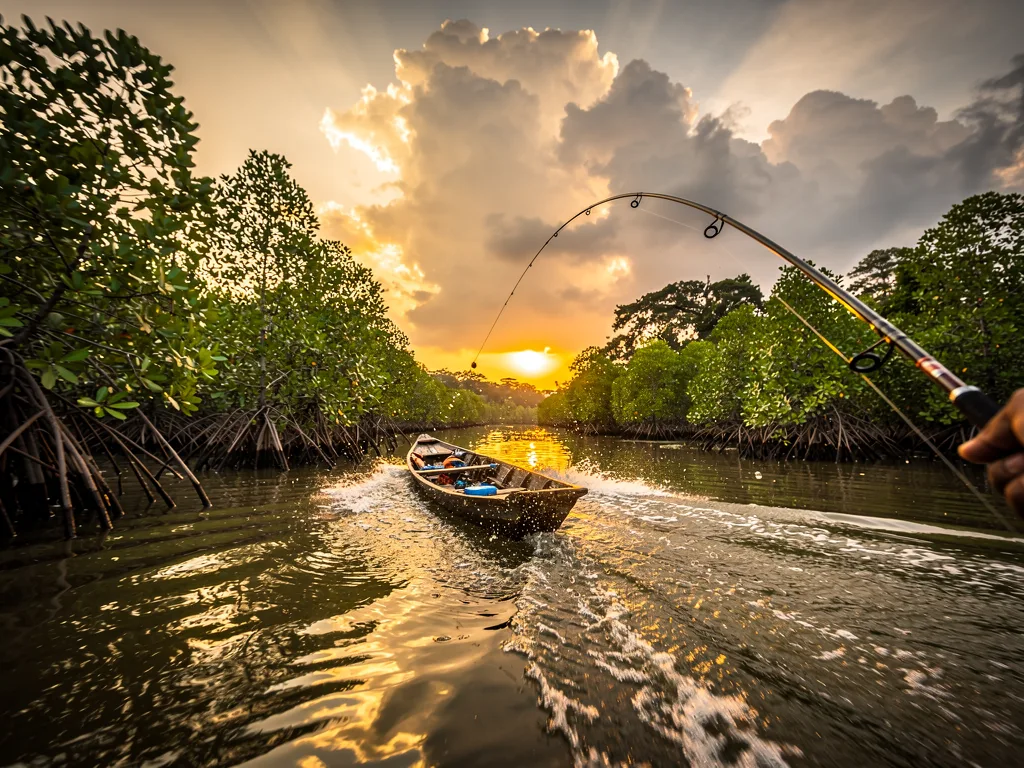
Imagine casting a surface lure across a lily-covered lagoon while traditional wooden boats drift past floating villages. Moments later, an explosive strike turns the water into chaos as a powerful snakehead erupts in a shower of spray. This is just one of the unforgettable experiences awaiting you when you go fishing in Cambodia.
From the world’s largest freshwater lake, the Tonle Sap, to the mighty Mekong River with its prehistoric giant catfish, and on to the pristine coral islands of Koh Rong and the mangrove-lined rivers near Koh Kong, Cambodia offers one of Southeast Asia’s most diverse and rewarding fishing destinations. Whether you dream of battling aggressive freshwater predators on topwater lures or trolling for barracuda in turquoise tropical waters, this country delivers.
In this comprehensive guide, you will find everything you need to plan a successful fishing trip to Cambodia in 2026: from fishing permits and current regulations, through the very best fishing spots and target species, to practical advice on guided tours, charters, costs, equipment, best travel times, and visa requirements for travelers from Europe, the USA, UK, Japan, Australia and beyond.
01Do You Need a Fishing License in Cambodia?
The good news for international anglers is simple: you do not need a fishing license for recreational rod-and-line fishing in Cambodia.
According to the Fisheries Administration (FiA) under the Ministry of Agriculture, Forestry and Fisheries (MAFF), recreational angling with rod and line in public waters is permitted without a state-issued permit. This makes Cambodia one of the easiest countries in Southeast Asia for visiting anglers to fish legally.
Shore fishing is generally free at most locations. The only situations where you will need to pay a fee are:
However, certain protected areas are completely off-limits. Fish sanctuaries (Fish Sanctuaries) and conservation zones around Irrawaddy dolphin habitats in the Mekong are strictly prohibited. Always check with your guide or local authorities before fishing.
Important: While no license is required for personal recreational fishing, commercial fishing methods, explosives, poisons, and electrofishing are strictly banned and carry severe penalties. The country is currently updating its fisheries legislation (expected finalization in 2025–2026), so regulations may evolve. Always verify the latest rules through official channels or with a reputable local guide.
Because no standard fishing license fee applies, your budget can focus entirely on travel, accommodation, guides, and equipment — making Cambodia an exceptionally affordable fishing destination compared to neighboring Thailand or Vietnam.
02Fishing Regulations and Seasons in Cambodia
Cambodia’s fisheries are governed by the Law on Fisheries (2006), with updates and amendments expected in 2025–2026. The Fisheries Administration (FiA) is the primary authority.
The most important regulation for anglers is the closed season (ban on commercial fishing), which helps protect spawning stocks:
During these periods, small-scale “family fishing” for personal consumption using simple rod-and-line methods is generally still allowed. However, commercial operations are prohibited. As a visiting angler on a recreational trip, you will usually be able to fish year-round with a responsible local guide, especially when practicing catch-and-release.
Prohibited practices (with heavy fines and possible jail time):
Minimum size limits are not strictly enforced for most recreational tourists, but responsible anglers follow the “catch and release” principle for large or threatened species.
Best time to visit from different hemispheres:
03Top Fishing Spots in Cambodia – Where to Make Your Dream Catch
The real magic of fishing in Cambodia lies in its incredible variety of environments. Here are the destinations that consistently deliver unforgettable experiences.
1. Tonle Sap Lake (near Siem Reap) – The Beating Heart of Cambodia
The Tonle Sap is the largest freshwater lake in Southeast Asia and one of the most productive freshwater fisheries in the world. During the rainy season, the lake expands to more than 15,000 km² (5,800 sq mi), flooding vast forests and creating a labyrinth of channels and floating villages.
Target species: Giant snakehead (up to 10–15 kg / 22–33 lb), various catfish species, climbing perch, and Asian redtail catfish.
The experience: Picture yourself in a narrow wooden boat gliding through submerged trees while casting frog-patterned surface lures. The explosive strikes of snakehead on topwater are legendary — often compared to the aggression of northern pike but in a tropical setting. At dawn and dusk, the lake comes alive with birds, and the scenery of stilt houses and floating schools is simply magical.
Many visitors combine a day of fishing with a visit to the famous floating villages. Local guides know exactly where the fish hide among the water hyacinth and lotus beds.
2. Mekong River (Kratie and Stung Treng provinces)
The Mekong in Cambodia is wild, powerful, and home to some of the largest freshwater fish on Earth.
Target species: Giant Mekong catfish (protected in wild but sometimes available in controlled environments), giant barb, freshwater stingrays, Siamese carp, and various predatory catfish.
The experience: Fishing deep pools and rocky runs below Kratie offers a genuine sense of adventure. The possibility of hooking a fish weighing over 50 kg (110 lb) is real, although most recreational catches are in the 5–20 kg (11–44 lb) range. The backdrop of lush jungle, distant hills, and the occasional sighting of rare Irrawaddy dolphins (fishing is prohibited in core dolphin zones) makes this one of the most memorable fishing destinations in Asia.
3. Koh Rong and Koh Rong Samloem Islands
These tropical islands off the coast of Sihanoukville feature crystal-clear waters, coral reefs, and dramatic drop-offs.
Target species: Barracuda, giant trevally (GT), grouper, snapper, king mackerel, and even occasional sailfish or tuna further offshore.
The experience: Imagine snorkeling in the morning, then spending the afternoon trolling or jigging around rocky outcrops. At night, squid fishing from the beach or pier under headlamps is incredibly popular and productive. The combination of beach paradise, clear water, and strong-fighting reef fish makes Koh Rong a favorite for couples or families who want both fishing and relaxation.
4. Sihanoukville and Surrounding Coastal Waters
This area offers the best infrastructure for serious offshore fishing.
Target species: Queenfish, king mackerel, cobia, barracuda, trevally, and various reef species.
The experience: Modern charter boats can take you to productive wrecks and seamounts within 30–90 minutes of the harbor. The water is warm (28–30°C / 82–86°F) year-round, and the chance of landing a trophy GT or large grouper is excellent.
5. Koh Kong and the Mangrove Rivers (southwest border with Thailand)
One of Cambodia’s best-kept fishing secrets. Dense mangrove forests meet clear rivers and the open sea.
Target species: Barramundi (also called Asian sea bass), mangrove jack, threadfin salmon, and snapper.
The experience: Poling through narrow mangrove channels at dawn while casting lures into the roots produces heart-stopping strikes. The wild, remote feeling here is unmatched. Many visitors describe it as a mix between the Australian Top End and the Amazon.
Tip: Always hire a local guide or join an organized tour when fishing remote areas. Not only will they greatly increase your success rate, they will also help you avoid protected zones and navigate language barriers.
04Tours & Guided Fishing Experiences in Cambodia
Most international visitors choose guided tours for both safety and success. Here are some of the best options available:
Local fishermen can often be hired directly for 20–40 EUR per day on the Tonle Sap or in coastal villages, though language can be a barrier (download Google Translate with Khmer language pack in advance).
All reputable tours emphasize sustainable practices and catch-and-release for larger specimens.
🎣 Fishing tours in Cambodia — Book guided fishing tours with local experts.
05Charter Boats and Deep-Sea Fishing
For serious offshore anglers, charter boats based in Sihanoukville and Koh Kong offer modern equipment and experienced captains. A typical 8–10 hour deep-sea charter for up to 6 people ranges from 250–450 USD (roughly the cost of a nice dinner for two in Europe or North America per person when shared).
Many charters include:
Popular species on these trips include giant trevally, Spanish mackerel, cobia, and various groupers. Some operators also offer overnight trips to more remote islands.
🚤 Charter fishing in Cambodia — Find and book charter boats with experienced captains.
06Target Species and Recommended Techniques
Snakehead (Channa striata and micropeltes): The star of freshwater fishing in Cambodia. These aggressive ambush predators respond explosively to frog lures, spinnerbaits, and poppers fished over vegetation. Best technique: walking-the-dog with surface frogs at first and last light.
Mekong Giant Catfish and other large catfish: While wild giants are protected, some controlled lakes allow catch-and-release opportunities. Heavy tackle (80–150 lb braid) and large baitfish or pellets are required.
Barramundi (Lates calcarifer): Excellent sport in the mangrove systems around Koh Kong. Use shallow-diving minnow lures or soft plastics along structure.
Saltwater species (barracuda, trevally, grouper): Trolling with large plugs, jigging vertical structures, or casting poppers near reefs and bommies produces fast action.
Squid and cuttlefish: Night fishing with LED headlamps and simple squid jigs from piers or boats on Koh Rong is extremely productive and family-friendly.
07What Equipment Should You Bring to Cambodia?
Local rental equipment is often basic (hand lines or simple spinning rods). Serious anglers should bring:
🛒 Fishing equipment for Cambodia — Find the right gear for your trip.
Pack light but strong — humidity and tropical conditions are tough on equipment.
08Practical Travel Information for International Anglers
Visa requirements (2026):
Getting around:
Language: Khmer is the official language. English is widely spoken in tourist areas (Siem Reap, Sihanoukville, Koh Rong) but less so with local fishermen. Translation apps (Google Translate with offline Khmer pack) are very useful.
Health and safety: Use standard tropical travel precautions — drink bottled water, use mosquito repellent, and check latest travel advisories from your government (e.g., U.S. State Department, UK FCDO, or equivalents).
Currency: The Cambodian Riel (KHR) is used alongside the US Dollar. Prices are often quoted in USD. Current approximate exchange: 1 USD ≈ 4,100 KHR.
📱 Stay connected in Cambodia — Get an eSIM for affordable mobile data while traveling.
🚗 Rent a car in Cambodia — Compare prices from 500+ rental companies worldwide.
09Costs of Fishing in Cambodia – A Realistic Budget
Cambodia remains one of the most affordable fishing destinations in Southeast Asia.
Daily budget examples (per person):
A full week of varied fishing (Tonle Sap, Mekong, and coastal) with guides, accommodation, and meals can be done comfortably for 800–1,500 EUR (850–1,600 USD) per person, excluding international flights.
This is significantly less than comparable trips in Australia, New Zealand, or many parts of Thailand.
10Conclusion: Why You Should Go Fishing in Cambodia Now
Cambodia offers a rare combination: world-class fishing across dramatically different environments, extremely low regulatory barriers for recreational anglers, and costs that make a multi-week trip realistic for many travelers. The contrast between casting for giant snakehead among floating villages at sunrise and battling powerful reef fish in the clear waters of Koh Rong is unmatched.
The country’s fisheries are under increasing pressure from commercial activity, making 2026 an excellent time to visit — while the experience remains authentic and the fish stocks in guided areas are still strong. By choosing responsible operators who practice catch-and-release, you can enjoy an incredible sporting adventure while supporting local communities.
Whether you are an experienced lure angler looking for explosive surface action or a traveling family wanting to combine beach time with light fishing, Cambodia has something special waiting for you.
Pack your travel rod, book your e-Visa, and prepare for one of the most memorable fishing journeys of your life.
11FAQ – Frequently Asked Questions about Fishing in Cambodia
Do I need a fishing license to fish in Cambodia?
No. Recreational rod-and-line fishing in public waters is allowed without a license. Only private fishing parks charge a daily fee.
What is the best time of year to go fishing in Cambodia?
The dry season from November to February offers the most comfortable weather. October is excellent for the Tonle Sap due to high water levels.
Can I catch Mekong giant catfish?
Wild giant catfish are protected. Some controlled lakes offer catch-and-release opportunities with special permits through guided tours.
Is it safe to eat the fish I catch?
Most fish caught on recreational trips are safe when properly cooked. However, large predatory fish from the Mekong may contain mercury — catch-and-release is recommended for very large specimens.
What should I bring from home?
A quality travel rod, braided line, and a good selection of lures (especially frogs and poppers). Local equipment is basic.
Are there any areas where fishing is completely prohibited?
Yes. Fish sanctuaries and core Irrawaddy dolphin protection zones are strictly off-limits.
Is English spoken by fishing guides?
In tourist areas and with professional operators, yes. With local village fishermen, you may need translation apps.
Can I combine fishing with a family holiday?
Absolutely. Many families split their time between angling trips and beach or temple visits.
12Sources & Further Links
Disclaimer: This article is intended as a general travel and fishing guide only. Fishing regulations, visa rules, and safety conditions may change. Always check the latest official information from the Cambodian Fisheries Administration (FiA), MAFF, and your government’s travel advisory before your trip. The authors and FishingWorldGuide.com accept no liability for any inaccuracies or incidents that may occur. Practice responsible catch-and-release fishing and support local conservation efforts. Updated for 2026.
Fishing trips in Cambodia
Curated tours & charters with price and click data from our partner dashboards.
View all trips (1)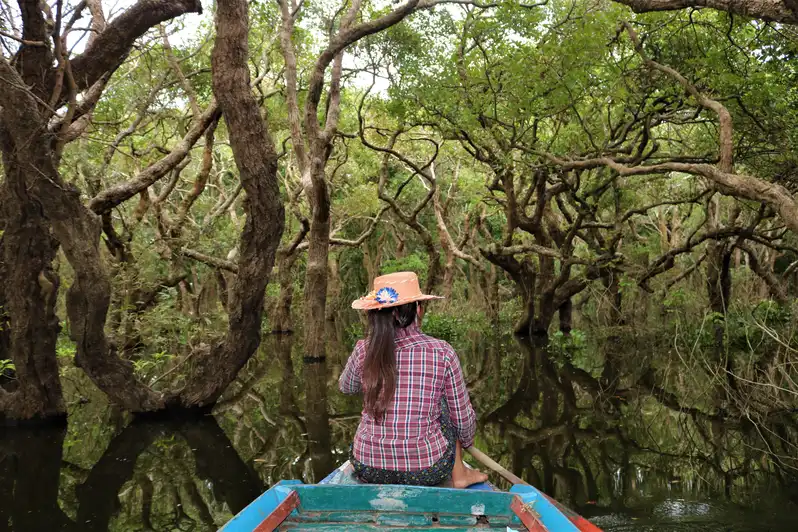
Don't miss any fishing tips!
Get the best fishing destination recommendations weekly in your inbox.
No spam. Unsubscribe anytime.
Read more
Data incorrect?
Help us keep this article up to date — report outdated or incorrect information
More articles