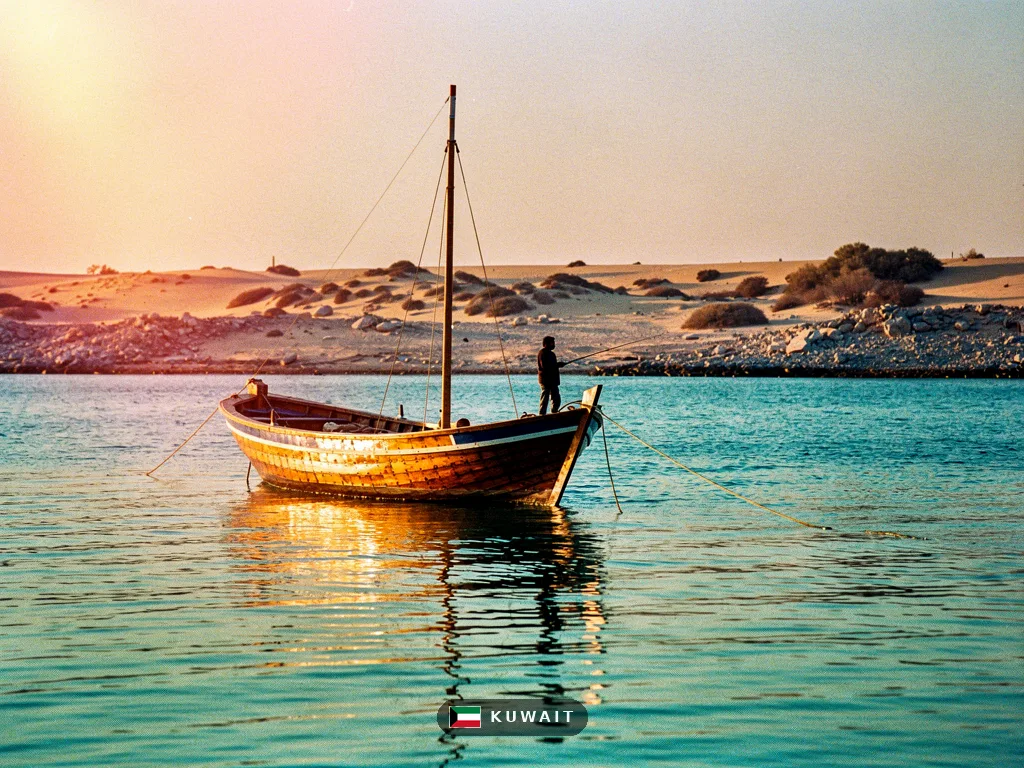
Imagine casting a line into the turquoise waters of the Arabian Gulf, where the desert meets the sea under a blazing sun. The thrill of hooking a powerful kingfish that strips line at lightning speed or gently lifting a prized hamour (grouper) from a coral reef structure — this is what awaits you when you go fishing in Kuwait. Whether you are an experienced offshore angler or a traveler looking for a unique Middle Eastern adventure, Kuwait offers remarkable opportunities for both shore and deep sea fishing.
This comprehensive guide answers the most important questions for international visitors: Do you need a fishing license in Kuwait? What are the best fishing spots? How can you book fishing tours or charter boats safely and legally? You will also find practical travel information including visa requirements, best seasons, costs in Kuwaiti Dinar (KWD), EUR, and USD, and essential tips to make your trip smooth and compliant with local regulations.
Fishing in Kuwait is strictly regulated to protect fragile marine ecosystems and fish stocks. The Public Authority for Agriculture Affairs and Fish Resources (PAAAFR) and the Environment Public Authority (EPA) oversee all activities. While many areas require special permits, booking a professional charter removes most of the administrative burden and gives you access to the richest fishing grounds beyond the restricted three-nautical-mile coastal zone. Regulations can change with little notice due to environmental conservation efforts or regional security considerations, so verification with local authorities before your trip is essential.
01Do You Need a Fishing License in Kuwait?
The question “do you need a fishing license in Kuwait?” does not have a simple yes-or-no answer. It depends on whether you fish from shore, from a private boat, or on a licensed charter.
For general coastal and shore fishing from public piers and jetties, many local hobbyists participate without formal paperwork, yet officially, shore fishing is heavily restricted. Large sections of the coastline are off-limits, especially near oil installations, military zones, and protected nursery areas. Fishing without authorization in these zones can result in heavy fines (from 50 KWD / 150 EUR / 165 USD upward), equipment confiscation, or even boat impoundment.
Kuwait Bay fishing is particularly sensitive. This area serves as a vital nursery for many commercial species and is strictly protected. Recreational fishing here is generally prohibited for the general public. To obtain an exemption, you must book an appointment through the official Sahel government electronic services application. Even with approval, you may only use hook and line, and any boat must be properly registered with the owner on board.
If you plan to fish from your own boat outside of Kuwait Bay, you must stay beyond three nautical miles (5.5 km) from the coast. Fishing closer to shore with a private vessel is not permitted. Boat registration, safety equipment, and compliance with maritime security rules are mandatory.
The good news for most international visitors is that the easiest and safest way to enjoy fishing in Kuwait is by joining a licensed charter or guided fishing tour. Professional operators hold the necessary permits, know the exact legal boundaries, and provide all required equipment. This approach eliminates the need for you to navigate the complex permit process yourself.
Tip: Always download the Sahel app before your trip if you wish to explore possibilities for independent fishing in permitted areas. However, most visitors find that chartered experiences provide better fishing success and peace of mind.
Regulations are strictly enforced by the Coast Guard and environmental police. Penalties for using prohibited methods (nets, traps, or anything other than hook and line for recreational anglers) or fishing in closed areas can be severe. Because rules can change quickly, especially during spawning seasons for species like shrimp or *Zubeidi* (pomfret), it is wise to confirm current restrictions with your chosen charter operator or the PAAAFR.
02Best Fishing Spots in Kuwait: Where to Cast Your Line
The most rewarding fishing spots in Kuwait are best accessed by boat. Due to shoreline access restrictions and maritime security considerations, independent shore fishing is limited for visitors. Chartered trips open up the truly productive areas where the desert coastline gives way to rich reefs, drop-offs, and open Gulf waters.
Al Khiran
Located in the south of the country, Al Khiran stands out as the premier destination for both locals and international anglers. This modern residential and marina area features man-made canals that connect to the open sea, giving easy access to excellent fishing grounds. The mix of shallow flats, channels, and deeper offshore waters supports a wide variety of species.
Many reputable charter operators are based here, offering half-day, full-day, and multi-day excursions. The scenery is striking — golden desert dunes contrast with turquoise water, creating a memorable backdrop as you head out at sunrise. Expect calm mornings perfect for trolling or bottom fishing before the afternoon sea breeze picks up.
Failaka Island
Failaka Island fishing offers a fascinating blend of history and angling. Located northeast of Kuwait City, this island was once an important ancient settlement and today provides diverse fishing environments. Rocky shorelines, sandy bottoms, and nearby reef structures attract snapper, emperor fish (sheri), and grouper.
Most visitors reach Failaka Island on organized boat trips. The journey itself is part of the adventure, passing through historic waters while watching for dolphins that frequently accompany boats. The island’s clear waters make it excellent for sight fishing in shallower areas when conditions allow.
Kubbar Island
Kubbar Island, with its pristine coral reefs and crystal-clear waters, is a favorite for reef fishing enthusiasts. This small island lies further offshore and is typically visited on full-day charters. The healthy reef systems support healthy populations of hamour, various snappers, and other colorful reef species. The surrounding waters also offer chances at pelagic fish when trolling between islands.
The experience of anchoring near Kubbar’s dramatic underwater structures while the desert horizon stretches in every direction creates a dreamlike fishing setting that few other places can match.
Kuwait Bay and Coastal Areas
As noted earlier, Kuwait Bay fishing is heavily restricted. Only those who successfully navigate the Sahel permit process and follow strict hook-and-line rules may fish here. For most travelers, it is far more practical and productive to focus on areas south of the bay or offshore waters.
Offshore and deep sea grounds become the main target once you pass the three-nautical-mile limit. Here the seafloor drops away, and larger predatory fish patrol the depths and mid-water columns. These areas produce some of the most exciting deep sea fishing in Kuwait.
The variety of habitats — from shallow mangrove-lined inlets in the south to deep offshore banks — means that with the right guide, you can target multiple species in a single day. Many charters combine bottom fishing over reefs with trolling for pelagics, maximizing your chances of a memorable catch.
Tip: The best fishing often occurs during the cooler months when water temperatures are lower and fish are more active. Early morning departures help you avoid the strongest sun and take advantage of the calmest sea conditions.
Each of these locations offers its own unique fishing experience. Al Khiran provides convenience and variety, Failaka adds historical interest, and Kubbar delivers pristine reef fishing. Offshore expeditions open up the possibility of larger kingfish, cobia, and other powerful Gulf species. The common thread is that professional charters make these dreams accessible while keeping you on the right side of Kuwait’s strict marine regulations.
03Fish Species: What You Can Catch Fishing in Kuwait
The Arabian Gulf’s warm waters support an impressive array of species, making fishing in Kuwait rewarding for both food-focused anglers and sport fishermen.
Hamour (Grouper) is perhaps the most prized catch. These powerful bottom dwellers inhabit reef structures and rocky outcrops. A typical hamour in these waters weighs 5–15 kg (11–33 lb), though larger specimens are possible. They fight hard, often trying to retreat into crevices, which makes strong tackle essential. Bottom fishing with fresh bait or jigs is the most effective technique.
Kingfish (King Mackerel) provides some of the fastest and most exciting sport. These silver torpedoes can exceed 20 kg (44 lb) and are renowned for their blistering runs and acrobatic jumps. Trolling with lures or live bait in mid-water columns around reefs and drop-offs is the preferred method. The explosive strikes of kingfish create some of the most memorable moments in kingfish fishing Kuwait.
Sheri (Emperor Fish) is extremely common and makes an excellent table fish. These strong fighters are usually caught on bottom rigs and average 2–6 kg (4.4–13 lb). Their delicate white flesh is highly valued in local cuisine.
Cobia are another sought-after species, often appearing near floating debris or following larger rays. They can reach 30 kg (66 lb) and provide a powerful, dogged fight that tests both angler and tackle.
Other common catches include various snappers, barracuda, trevally, and during certain seasons, Spanish mackerel. The diversity means that even if one species is not biting, another is usually available.
Seasonal patterns play an important role. Many species are more active during the cooler months from October to May. Spawning closures for certain species (particularly shrimp and pomfret) are strictly enforced, so charters adjust their targets accordingly.
Local captains possess deep knowledge of these patterns and will adapt techniques and locations daily based on tides, water temperature, and recent catches. This local expertise is one of the strongest arguments for booking guided fishing tours in Kuwait.
04Tours & Guided Experiences: Booking Fishing Tours in Kuwait
For international visitors, joining organized fishing tours in Kuwait is by far the most practical and enjoyable option. Professional operators handle all permitting, registration, safety requirements, and navigation through restricted zones, allowing you to focus entirely on fishing.
Most charters depart from marinas in Kuwait City or from Al Khiran in the south. Trips range from four-hour inshore excursions to full-day or even multi-day offshore adventures. Prices typically start from around 250 KWD (750 EUR / 820 USD) for a half-day shared trip and can reach 800–1200 KWD (2,400–3,600 EUR / 2,600–3,900 USD) for a private full-day deep sea charter with top equipment and an experienced captain.
What can you expect on a typical trip? You will usually be collected from your hotel, provided with high-quality rods, reels, bait, and safety gear, and taken to the best fishing grounds for the conditions. Captains often speak good English and are happy to explain local techniques and fish species. Many boats also provide coolers with ice, soft drinks, and sometimes light meals.
Popular operators on platforms such as FishingBooker specialize in both light-tackle inshore fishing and heavy offshore expeditions targeting kingfish, tuna, and big grouper. The boats are well-maintained, equipped with GPS, fish finders, and all necessary safety equipment to meet Kuwaiti maritime standards.
Booking in advance is strongly recommended, especially during the peak season from October to May. Last-minute availability can be limited, particularly for English-speaking captains.
🎣 Fishing tours in Kuwait — Book guided fishing tours with local experts.
🚤 Charter fishing in Kuwait — Find and book charter boats with experienced captains.
Guided experiences not only simplify the complex regulatory environment but also dramatically increase your chances of success. Captains know exactly where and when particular species are feeding, which rigs work best, and how to stay within legal fishing corridors. Many visitors report that a single day on a well-chosen charter provides more memorable fishing than several days of independent attempts.
05Equipment, Techniques and What to Bring
Most charter operators in Kuwait supply all necessary fishing equipment, which removes another layer of complexity for traveling anglers. Typical setups include heavy spinning or conventional reels suitable for both bottom fishing and trolling. Lines are usually 20–50 lb test, with stronger gear available for targeting big kingfish or large grouper.
If you prefer to bring your own tackle, focus on corrosion-resistant gear that can handle the Gulf’s salty environment. Good-quality braided line, a selection of jigs (80–200 g), strong circle hooks, and wire leaders for toothy species like barracuda are recommended. A medium-heavy spinning rod (2.4–2.7 m / 8–9 ft) capable of casting 50–150 g lures covers most situations.
Sun protection is non-negotiable. Temperatures can exceed 40 °C (104 °F) even in the shoulder seasons, and reflection off the water intensifies the sun’s power. Bring high-SPF sunscreen, polarized sunglasses, a wide-brimmed hat, and long-sleeved lightweight clothing. Hydration is equally important — charters usually provide water, but bringing extra is wise.
Motion sickness medication is recommended for those sensitive to waves, especially on longer offshore trips where the sea can become choppy in the afternoons.
For independent fishing (where permitted), you must ensure your tackle complies with the hook-and-line-only rule. No nets, traps, or spears are allowed for recreational use.
🛒 Fishing equipment for Kuwait — Find the right gear for your trip.
Local captains are usually happy to demonstrate the most effective local techniques. Bottom fishing with fresh bait (often squid or small fish caught earlier that day) works exceptionally well over reefs. Trolling with brightly colored lures or live bait produces explosive strikes from kingfish and other pelagics. Many charters also practice light jigging, which can be highly productive in the right spots.
06Costs of Fishing in Kuwait: Budget Planning
Understanding the costs helps you plan your fishing in Kuwait experience realistically. Here is a transparent breakdown (prices approximate and subject to change):
These prices are roughly comparable to a high-end restaurant meal per person for shorter trips, while full-day private charters represent a significant but worthwhile investment for serious anglers seeking access to remote islands and productive offshore banks.
Compared with neighboring Gulf countries, Kuwait charter prices sit in the mid-to-upper range, reflecting the strict regulatory environment, high-quality boats, and the expertise required to navigate legal fishing zones.
Additional costs to consider include:
Many charters include bait, ice, and soft drinks, but confirm this when booking. Bringing your own terminal tackle can reduce costs slightly, though most visitors find it more convenient to use the provided equipment.
07Practical Travel Information for Fishing in Kuwait
Best Time to Visit
The ideal window for fishing in Kuwait runs from October to May. During these cooler months, daytime temperatures range from 20–32 °C (68–90 °F), making time on the water far more comfortable. Fish are generally more active, and the sea is often calmer in the mornings.
Summer (June to September) brings extreme heat — frequently above 45 °C (113 °F) — and higher humidity. Fishing is still possible but far less pleasant, and many operators reduce their schedule. International travelers from Europe, North America, or East Asia should aim for the Northern Hemisphere winter or early spring.
Visa Requirements
Most nationalities can obtain a visa on arrival or an e-visa for tourism. Citizens of the EU, USA, UK, Japan, Australia, and many other countries receive a 30-day visa upon entry (extendable). Check the latest requirements through official Kuwaiti government portals or your local embassy, as rules can change. A valid passport with at least six months’ validity is required.
Getting There and Getting Around
Kuwait International Airport receives direct flights from major hubs in Europe, Asia, and the Middle East. Once in the country, most visitors use taxis, ride-hailing apps (Careem and Uber operate reliably), or arrange transfers through their charter company.
Renting a car gives you more independence, particularly if staying in Al Khiran, but be aware that driving in Kuwait requires an international driving permit in addition to your home license for many nationalities. Traffic can be heavy in Kuwait City.
📱 Stay connected in Kuwait — Get an eSIM for affordable mobile data while traveling.
🚗 Rent a car in Kuwait — Compare prices from 500+ rental companies worldwide.
Language and Cultural Considerations
Arabic is the official language, but English is widely spoken in business, tourism, and among charter captains. Learning a few basic Arabic phrases (hello, thank you, please) is appreciated. Kuwait is a conservative Muslim country — dress modestly when not on the boat, respect local customs, and avoid public displays of affection. Alcohol is not widely available.
Safety and Maritime Security
Regional security considerations occasionally lead to temporary sailing bans issued by the Ministry of Interior. Your charter operator will be the best source of up-to-date information. Always follow their guidance regarding restricted zones.
Accommodation Recommendations
Many anglers stay in Kuwait City for its international hotels and easy access to marinas, or in the newer Al Khiran area for a resort-style experience closer to the best fishing grounds. Both locations offer a range of international-standard hotels and serviced apartments.
08FAQ – Fishing in Kuwait
Do you need a fishing license in Kuwait?
For most visitors joining a licensed charter, no personal fishing license is required as the operator holds the necessary permits. Independent fishing, especially in Kuwait Bay or from shore, requires permits obtained through the Sahel application and is heavily restricted.
What is the best time of year for fishing in Kuwait?
The peak season runs from October through May when temperatures are more comfortable and fish are more active. Avoid the extreme summer heat from June to September if possible.
What species can I catch fishing in Kuwait?
Popular targets include hamour (grouper), kingfish (king mackerel), sheri (emperor fish), cobia, snapper, barracuda, and trevally. The exact mix depends on the season, location, and technique.
Is shore fishing allowed in Kuwait?
Shore fishing is heavily restricted and prohibited in many areas. Licensed charters provide the safest and most reliable way to fish legally.
Are there any closed seasons or protected areas?
Yes. Kuwait Bay is largely off-limits except with special permits. Seasonal spawning closures apply to certain species, and large sections of the coast near sensitive installations are prohibited. Always check current status.
How much does a fishing charter cost in Kuwait?
Half-day shared trips start around 80–120 KWD (240–390 USD) per person. Private full-day charters typically range from 600–1,200 KWD (1,950–3,900 USD) depending on boat size, duration, and distance traveled.
What should I bring on a fishing trip in Kuwait?
Sun protection (high-SPF sunscreen, hat, polarized sunglasses, long-sleeved clothing), motion sickness remedies if needed, and a good camera. Most equipment is provided by charters.
Is it safe to go deep sea fishing in Kuwait?
Yes, when using reputable licensed operators who monitor maritime security notices. Modern boats carry all required safety equipment.
09Conclusion
Fishing in Kuwait offers a unique blend of challenging sport, spectacular Gulf scenery, and the chance to target hard-fighting species like hamour and kingfish in a part of the world few anglers ever experience. While the regulatory environment is strict — particularly regarding fishing license Kuwait requirements and protected areas such as Kuwait Bay — professional charters make the entire process straightforward and highly rewarding.
By choosing a reputable guided trip from Al Khiran, Failaka Island, Kubbar Island, or the offshore banks, you maximize your chances of success while staying fully compliant with local laws. The combination of warm turquoise waters, dramatic desert landscapes, and the thrill of a big kingfish strike creates memories that last a lifetime.
Start planning your adventure today. Browse available charters, check the latest travel advisories, and prepare for one of the most distinctive fishing experiences in the Middle East. The waters of Kuwait are waiting — and the fish are biting.
10Sources & Further Links
Disclaimer: This guide is for informational purposes only and reflects the best available information at the time of writing in 2026. Fishing regulations in Kuwait are subject to change, often at short notice. Always verify the latest rules directly with the Public Authority for Agriculture Affairs and Fish Resources (PAAAFR), the Environment Public Authority (EPA), or your chosen licensed charter operator before fishing. This article does not constitute legal advice. The authors and publishers assume no liability for any errors, omissions, or consequences arising from the use of this information. Safe travels and tight lines!
Don't miss any fishing tips!
Get the best fishing destination recommendations weekly in your inbox.
No spam. Unsubscribe anytime.
Data incorrect?
Help us keep this article up to date — report outdated or incorrect information
More articles