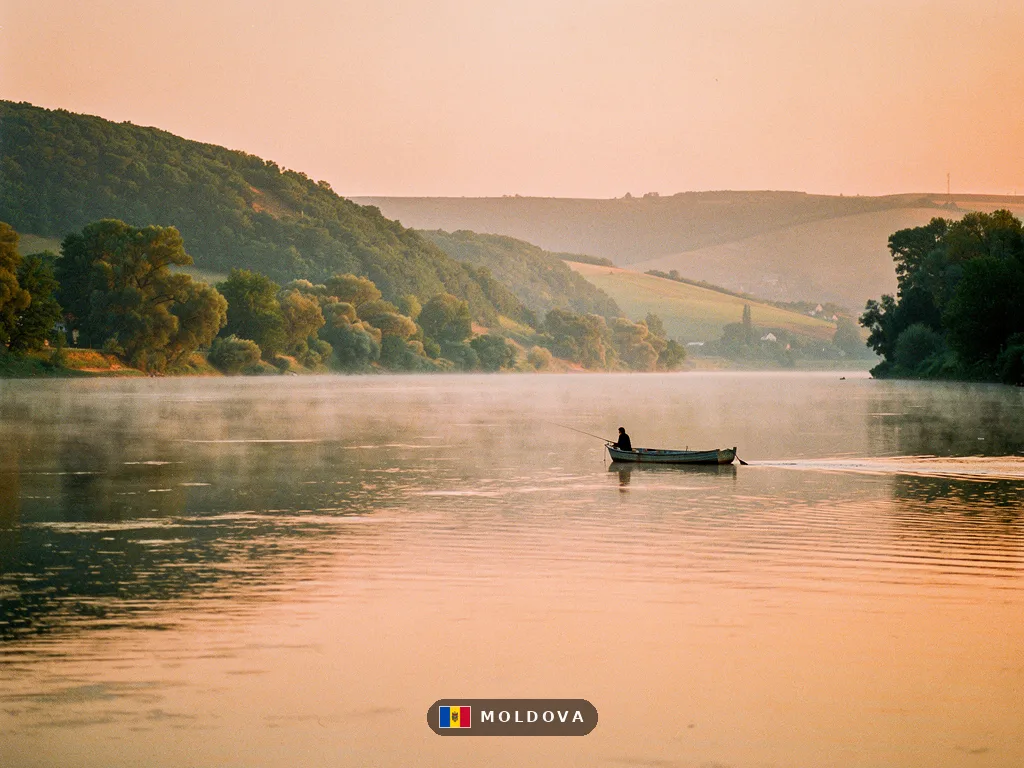
Imagine standing on the banks of the mighty Dniester River as the morning mist rises over the water, your rod bent by a powerful catfish or a hard-fighting carp. Or picture yourself on a frozen lake in winter, drilling through the ice for perch while snow-dusted hills frame the horizon. Welcome to fishing in Moldova — a hidden gem for international anglers seeking authentic freshwater experiences in Eastern Europe.
Moldova may be one of Europe’s smallest and least-visited countries, but its rivers, reservoirs, and lakes offer world-class opportunities for carp fishing, catfish fishing, predator angling, and even ice fishing. Whether you are a seasoned fly angler, a specimen carp hunter, or a family looking for a relaxing day by the water, this comprehensive guide covers everything you need to plan your trip. You will learn exactly how to obtain your mandatory fishing permit through the e-Pescuit system, where to find the best fishing spots, which species you can target, how guided tours and charters work, and all the practical travel information for visitors from the EU, US, UK, Japan, and beyond.
In this 2026 guide we explain Moldova fishing regulations in detail, compare costs in Moldovan Lei (MDL), EUR, and USD, and help you avoid costly mistakes. Regulations change frequently — especially spawning closures — so always verify the latest rules before you travel. Let’s dive in and help you plan an unforgettable fishing adventure in Moldova.
01Do You Need a Fishing License in Moldova?
Yes — you must have a valid fishing permit to fish in Moldova. Unlike some countries where recreational sea fishing is free, Moldova requires a personal, non-transferable permit (*permis de pescuit*) for all sport, amateur, and recreational fishing in natural water bodies. This rule exists to protect the country’s aquatic ecosystems and ensure sustainable fish populations.
The good news is that obtaining your license is now fully digital. The e-Pescuit platform (https://e-pescuit.mediu.gov.md/) allows you to apply and pay online within minutes. Payments are handled securely through the government’s MPay gateway. You can choose between daily permits, annual permits, or special categories for pensioners and children. A typical one-day permit currently costs around 50–80 MDL (approximately 2.50–4 EUR / 2.70–4.40 USD) — roughly the price of a cup of coffee in Chișinău.
Important exceptions: Fishing in privately managed commercial ponds or “pay lakes” is usually regulated by the pond owner. These venues often charge their own entrance or catch fees instead of (or in addition to) the state permit. Always confirm the exact requirements when booking.
If you plan to fish near the state border — which is common because both the Dniester River and Prut River form natural borders — you will likely need an additional free border-zone access permit. This can be obtained through the Border Police e-Permis system at https://border.gov.md/.
Tip: Download the e-Pescuit confirmation on your phone and carry a paper copy. Environmental inspectors perform regular checks, and fines for fishing without a permit can reach several hundred euros plus confiscation of gear.
02Understanding Moldova Fishing Regulations
Moldova enforces strict environmental protection laws managed by the Agenția de Mediu (Environmental Agency) and the Inspectoratul pentru Protecția Mediului. Breaking the rules can result in heavy fines, equipment confiscation, or even criminal charges in serious cases.
Spawning Season Closures
Fishing is strictly prohibited during the annual spawning period, which usually runs from April to June, although exact dates vary by water body and are announced each year by the Environmental Agency. Always check the latest announcements on http://am.gov.md/ before booking flights. Some tributaries and reservoirs may have additional short-term bans.
Daily Limits and Gear Restrictions
Permitted Fishing Times and Locations
Fishing is allowed only from sunrise to sunset. Night fishing is prohibited on all natural waters.
Restricted Zones
Fishing is banned year-round within 100 meters upstream and downstream of bridges, in protected nature reserves, near dams, and in certain reservoir tributaries. Look for official signage and never assume an area is open.
Border areas require extra attention. Large stretches of the Dniester and Prut are border zones. You must carry both your fishing permit and the border access document. The Border Police are helpful but thorough; having proper documentation avoids unnecessary delays.
These regulations are designed to protect native species such as carp, catfish, pike, perch, zander, chub, and barbel. Sustainable practices like catch-and-release are strongly encouraged, especially for larger specimens.
03Best Fishing Spots in Moldova — Where to Wet Your Line
The heart of any fishing trip is the destination itself. Moldova’s natural waters offer varied scenery from wide river valleys and limestone cliffs to tranquil reservoirs surrounded by rolling hills and vineyards. Here are the top natural fishing locations that consistently deliver memorable experiences.
Dniester River and Dubăsari Reservoir
The Dniester River is Moldova’s premier fishing destination. Flowing 1,362 km from the Carpathians to the Black Sea, it forms the eastern border with Ukraine for much of its course through Moldova.
Anglers dream of the powerful catfish fishing here. Specimens over 20 kg (44 lb) are regularly caught, with some reports of fish exceeding 50 kg. The river also holds huge carp, grass carp, pike, zander, and European catfish. The Dubăsari Reservoir (created by a dam) is particularly popular because its calmer waters allow boat fishing and offer excellent carp and predator action.
The scenery is spectacular: steep limestone banks, dense forests, and traditional villages. Early morning sessions with the sun rising over the water create unforgettable memories. In autumn the surrounding forests turn golden, making it one of the most photogenic fishing locations in Eastern Europe.
Prut River and Costești-Stânca Reservoir
The Prut River forms Moldova’s western border with Romania. Slower and more meandering than the Dniester in many sections, it offers superb carp fishing Moldova opportunities. Many local and visiting anglers target common carp and mirror carp that can exceed 15–20 kg.
The Costești-Stânca Reservoir is a large border lake shared with Romania. It is one of the best places for consistent catches of bream, roach, crucian carp, pike, and zander. Boat access is easier here, and several local operators offer guided trips.
Smaller tributaries such as the Răut, Bîc, Ichel, Cogîlnic, and Ialpug provide intimate fishing experiences. These narrower rivers are perfect for light tackle, float fishing, or lure fishing for chub, barbel, and perch. The landscape here feels almost untouched — wildflower meadows, old oak forests, and the occasional stork nesting in the trees.
Natural Lakes and Wetlands
Lake Cahul and the Manta wetlands in the south offer unique fishing in a wetland environment. These areas are particularly good for carp, tench, and various coarse fish. The birdlife is spectacular, with pelicans, herons, and eagles often visible while you fish.
Many visitors combine fishing with wine tasting, as Moldova’s famous vineyards are often located near these river valleys. After a successful morning on the water, you can visit a local winery for a well-earned glass of local Cabernet or the famous sparkling wine.
Ice fishing in Moldova becomes a major activity from December to February when lakes and slow river sections freeze solidly. Perch, pike, and zander are the main targets. Local anglers use short ice rods, small jigs, and live bait. The experience of sitting on a frozen reservoir with a thermos of tea while waiting for the tip-up to flag is something many international visitors describe as magical.
Tip: The best fishing occurs in early morning and late evening. Spring (after spawning closure) and autumn usually provide the most consistent action and pleasant temperatures (15–25 °C / 59–77 °F).
04Species You Can Target in Moldova
Moldova’s waters support a rich variety of fish. The most sought-after species include:
The combination of strong catfish and large carp makes Moldova an excellent destination for specimen hunters, while the variety of smaller species keeps general coarse anglers and families happy.
05Tours & Guided Experiences
While it is perfectly possible to organize your own fishing trip, many international visitors prefer to book guided tours, especially for their first visit. Local guides know the best spots, current regulations, the most productive baits, and can help with language barriers.
Guided day trips typically cost 150–350 MDL per person (8–18 EUR / 9–20 USD) depending on duration, species targeted, and whether transport and tackle are included. Multi-day packages that include accommodation, meals, and daily guided fishing range from 1,200–2,500 MDL per day (60–125 EUR / 65–135 USD).
Popular experiences include:
Most guides speak Russian and Romanian; some also speak English or German. Hiring an English-speaking guide is highly recommended for first-time visitors.
🎣 Fishing tours in Moldova — Book guided fishing tours with local experts.
06Charter Fishing and Boat Options
Private charter boats are available on the larger reservoirs and slower sections of the Dniester and Prut. A full-day charter with captain, tackle, and bait usually costs 800–1,800 MDL (40–90 EUR / 44–98 USD) for up to four anglers. This works out cheaper per person than many Western European charters and offers access to otherwise difficult-to-reach areas.
Captains are experienced in local conditions and know exactly where the big catfish and carp lie. Some charters include fish finders, downriggers, and heavy catfish gear. For ice fishing, local operators provide ice augers, shelters, and safety equipment.
🚤 Charter fishing in Moldova — Find and book charter boats with experienced captains.
07What Equipment Do You Need?
For catfish fishing, bring heavy rods (2.4–3 m, 100–200 lb test), large reels with strong drag, and wire traces. Popular baits include nightcrawlers, live fish, chicken liver, and stink baits.
Carp anglers should pack 3.5–3.75 lb test curve rods, big-pit reels, bite alarms, and a good selection of boilies, pop-ups, and PVA bags. A robust unhooking mat and weigh sling are essential if you want to photograph and release big fish safely.
For predator fishing, light spinning rods (10–30 g lures) and a selection of spoons, crankbaits, and soft plastics work well. Ice fishing requires short 50–70 cm rods, small reels, ice augers, and tip-ups or electronic bite indicators.
Many local operators rent quality tackle, which is a good option for international travelers who prefer not to carry heavy gear on flights. A basic rod-and-reel combo rental costs around 50–100 MDL per day (2.50–5 EUR / 2.70–5.50 USD).
🛒 Fishing equipment for Moldova — Find the right gear for your trip.
08Practical Travel Information for International Visitors
Visa Requirements
Citizens of the EU, US, UK, Canada, Japan, Australia, and many other countries can enter Moldova visa-free for up to 90 days. You only need a valid passport. Always check the latest requirements on official government websites before travel, as rules can change.
Getting to Moldova
The main international airport is Chișinău International Airport (KIV). Direct flights operate from major European hubs (Frankfurt, Paris, London, Vienna, Istanbul) as well as some Middle Eastern and CIS cities. Flight time from London or Frankfurt is approximately 3 hours.
From the airport, taxis to central Chișinău cost around 150–200 MDL (8–10 EUR). For longer transfers to fishing areas, renting a car is recommended.
Getting Around
Public transport is limited in rural fishing areas. Renting a car gives you the greatest flexibility to reach remote riverbanks and lakes. International driving licenses are accepted.
🚗 Rent a car in Moldova — Compare prices from 500+ rental companies worldwide.
Language and Communication
The official language is Romanian (often called Moldovan locally). Russian is widely spoken, especially among older generations. English is less common outside Chișinău and tourist areas. Translation apps such as Google Translate work well; downloading offline language packs is recommended. Hiring a fishing guide solves most communication challenges.
Accommodation and Food
Options range from budget guesthouses (200–400 MDL/night) to comfortable fishing lodges and agritourism farms near the rivers (500–1,200 MDL/night). Many lodges offer full board with traditional Moldovan cuisine — think mamaliga (polenta), grilled fish, placinta pastries, and excellent local wines.
Currency and Costs
The official currency is the Moldovan Leu (MDL). 1 EUR ≈ 19 MDL, 1 USD ≈ 17.5 MDL (rates fluctuate). Most rural areas are cash-only; carry sufficient MDL. ATMs are available in larger towns.
A typical week-long fishing trip including permit, accommodation, some meals, car rental, and a couple of guided days costs 800–1,800 EUR per person depending on the level of comfort — significantly less than comparable trips in Western Europe.
Stay Connected
Mobile coverage is good near towns but can be patchy in remote river valleys. An eSIM is the most convenient solution for international travelers.
📱 Stay connected in Moldova — Get an eSIM for affordable mobile data while traveling.
Best Time to Visit
Temperatures range from -5 °C (23 °F) in winter to 28 °C (82 °F) in summer. Pack layers and good rain gear.
09Costs Overview
| Item | Cost in MDL | Cost in EUR | Cost in USD | Notes |
|-----------------------------|-----------------|-----------------|-----------------|-------|
| Daily fishing permit | 50–80 | 2.50–4.00 | 2.70–4.40 | State e-Pescuit permit |
| Guided full-day trip | 400–800 | 20–40 | 22–44 | Per person, incl. tackle |
| Private boat charter (full day) | 800–1,800 | 40–90 | 44–98 | Up to 4 anglers |
| Car rental (per day) | 350–600 | 18–30 | 20–33 | Economy car |
| Basic guesthouse (per night)| 250–500 | 13–25 | 14–27 | Double room |
| Fishing lodge with meals | 800–1,500 | 40–75 | 44–82 | Per person, full board |
These prices are 2026 estimates and may vary with inflation and season.
10FAQ – Frequently Asked Questions About Fishing in Moldova
Do you need a fishing license in Moldova?
Yes. All fishing in natural waters requires a permit obtained via the e-Pescuit platform. Private commercial ponds may have separate rules.
How do I buy a fishing permit in Moldova?
Apply online at https://e-pescuit.mediu.gov.md/ and pay through the MPay gateway. You can choose daily or annual permits.
What are the best fishing spots in Moldova?
The Dniester River and Dubăsari Reservoir for catfish, the Prut River and Costești-Stânca Reservoir for carp, plus numerous smaller rivers and natural lakes.
Is ice fishing allowed in Moldova?
Yes, on frozen lakes and slow river sections during winter, provided you avoid protected wintering pits.
Can I fish from a boat in Moldova?
Only on lakes, ponds, and reservoirs. Boat fishing is prohibited on rivers; you must fish from the shore.
What is the daily catch limit?
5 kg of fish per person per day. There are also restrictions on the number of hooks (maximum 5 total).
Do I need a special permit to fish near the border?
Yes. For border zones along the Dniester and Prut rivers you need a free border access permit from the Border Police e-Permis system.
Are there English-speaking fishing guides?
Some professional guides offer English-language services. Booking through reputable platforms increases your chances of finding one.
What is the best time of year for catfish fishing in Moldova?
Late spring after the spawning closure through to October. Warm water temperatures increase feeding activity.
Is catch-and-release practiced in Moldova?
It is strongly encouraged, especially for large fish. Many local anglers practice it, and guides usually promote sustainable fishing.
11Conclusion
Fishing in Moldova offers a perfect mix of authentic Eastern European adventure, beautiful scenery, and excellent sport with catfish, carp, and predators. The digital e-Pescuit system makes obtaining your fishing license straightforward, while the diversity of rivers, reservoirs, and lakes ensures every angler finds their ideal experience.
Whether you dream of battling a giant catfish on the Dniester at dawn, quietly stalking carp on the Prut, or enjoying peaceful ice fishing under a winter sky, Moldova delivers memorable fishing trips at surprisingly affordable prices.
Start planning today: apply for your permit, book a guide or charter for your first few days, and prepare to discover one of Europe’s best-kept freshwater fishing secrets. The fish are waiting — and the Moldovan countryside is ready to welcome you.
Safe travels and tight lines!
12Sources & Further Links
Disclaimer: This article is for informational purposes only. Fishing regulations in Moldova are subject to change, especially seasonal spawning closures. Always verify the latest rules with the official Environmental Agency (Agenția de Mediu) and obtain all required permits before fishing. The authors and FishingWorldGuide.com assume no liability for any incidents, fines, or problems arising from the information provided. Regulations may differ in 2026 — double-check all official sources before your trip.
Don't miss any fishing tips!
Get the best fishing destination recommendations weekly in your inbox.
No spam. Unsubscribe anytime.
Data incorrect?
Help us keep this article up to date — report outdated or incorrect information
More articles