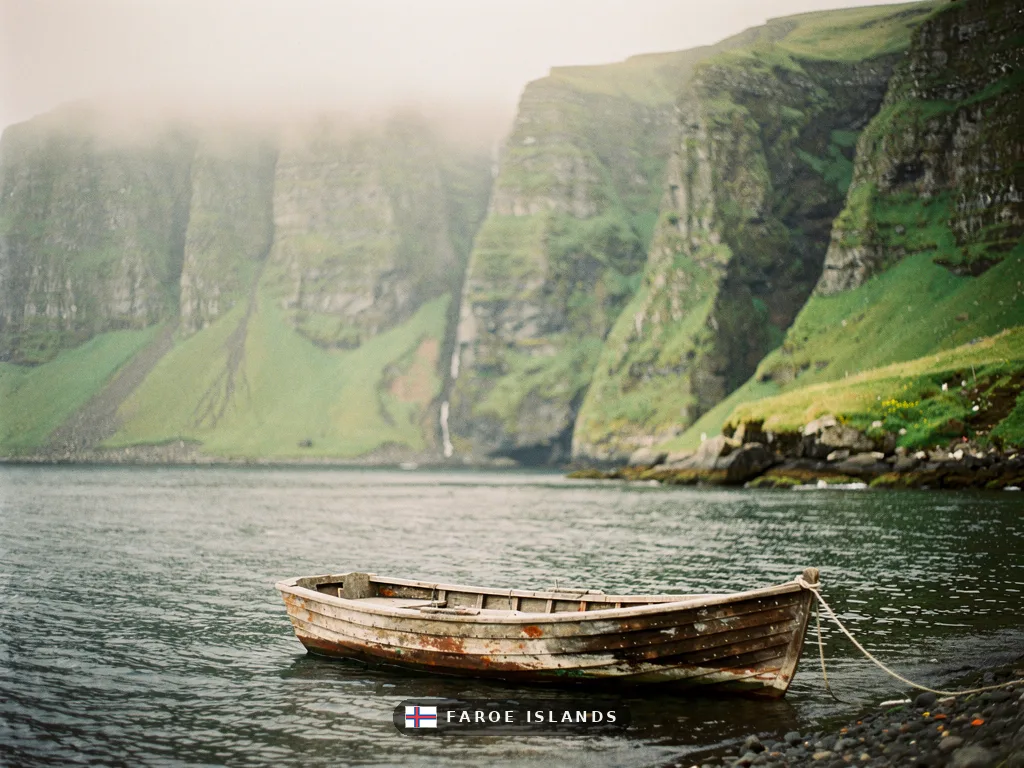
The Faroe Islands offer one of the most raw and rewarding fishing experiences in the North Atlantic. This remote archipelago of 18 dramatic islands sits between Iceland and Scotland, where every point is less than 5 km from the sea. Whether you dream of battling giant halibut from a deep-sea charter, reeling in hefty cod from wave-battered shores, or stalking Arctic char in crystal-clear mountain lakes, fishing in Faroe Islands delivers unforgettable adventures against a backdrop of sheer cliffs, misty fjords, and Viking heritage.
This comprehensive guide covers everything an international angler needs to plan a successful trip. You will learn exactly when you need a fishing permit, which species to target and where, how to book the best guided tours and charter boats, what the costs are in DKK, EUR, and USD, and all the practical details for travelers from Europe, North America, Asia, and beyond. Regulations can change, so always double-check with local authorities upon arrival.
01Do You Need a Fishing License in the Faroe Islands?
One of the biggest advantages of visiting the Faroe Islands is the freedom to fish in the sea without bureaucracy. No fishing license is required for saltwater fishing. This applies whether you fish from the shore, harbors, piers, or from a boat. You can cast a line almost anywhere along the coast as long as you respect private property and do not interfere with commercial harbor operations.
This policy makes the Faroe Islands particularly attractive for spontaneous travelers. You can arrive, rent a car, drive to a promising headland, and start fishing within minutes. The only requirements are that you follow sustainability rules and the “catch only what you intend to eat” principle that governs recreational angling here.
Freshwater fishing is entirely different. Every lake, stream, and river on the islands is privately owned. You must purchase a specific permit for each body of water you wish to fish. Popular lakes such as Leynavatn, Mjóuvøtn, and the lake in Saksun are managed by the Faroese Fishing Association, and day permits are available. Without the correct permit you risk a heavy fine and damage to relationships with local landowners who generously allow controlled access.
Permits for freshwater fishing typically cost around 200–400 DKK (27–54 EUR / 29–58 USD) per day depending on the location and can be bought at regional information centers (Kunningarstovan), certain petrol stations (e.g., in Kollafjørður), or directly from the landowners. Many visitors choose to combine a few days of free shore fishing with one or two paid freshwater sessions to experience both environments.
Tip: Print or save a screenshot of your freshwater permit on your phone. Mobile coverage is generally excellent, but some remote valleys have limited signal.
02Strict Gear Disinfection Rules – Read This Before You Pack
The Faroe Islands maintain one of the cleanest marine and freshwater ecosystems in the world. To protect it from diseases such as Infectious Hematopoietic Necrosis (IHN), authorities enforce mandatory disinfection of all incoming fishing equipment.
Every single item — rods, reels, lines, lures, waders, boots, nets, and even landing mats — must be thoroughly cleaned and disinfected before you arrive. While a veterinary certificate is not officially required, you must be ready to declare that your gear has been properly sanitized. Random checks can occur at the airport or harbor.
The Faroese Food and Veterinary Authority (hfs.fo) recommends using approved disinfectants such as Virkon S or similar products effective against IHN. Clean your gear at home, allow it to dry completely, and consider bringing a copy of the disinfectant safety data sheet. Many experienced anglers choose to rent equipment locally instead of risking complications at customs. Local operators can provide disinfected rods, reels, and tackle for both sea and lake fishing.
Failure to comply is not only a legal risk but an ethical one — introducing disease could devastate the very fish populations that make the islands so special.
03Fishing Regulations and Best Practices
Faroese angling culture is built on respect and sustainability. The overarching rule is simple: catch only what you intend to eat. Fish caught recreationally must be consumed within the Faroe Islands — exporting fish is strictly prohibited.
These rules are not heavily policed for tourists, but locals take them seriously. Observing them earns goodwill and ensures the fishing remains world-class for future visitors.
04Best Fishing Spots in the Faroe Islands – Where to Make Your Dreams Come True
The dramatic scenery is as much a part of the experience as the fish. Imagine standing on black basalt cliffs with Atlantic swells crashing 200 meters below while a 15 kg cod fights on your line, or hiking through emerald valleys to a lake so clear you can count the spots on cruising Arctic char.
Top Shore Fishing Locations
Vestmanna Cliffs and surrounding areas on Streymoy offer excellent access to cod, pollock, and saithe. The cliffs create powerful currents that concentrate baitfish, and the scenery is breathtaking. Many visitors combine a boat tour of the bird cliffs with shore fishing afterward.
Sandoy and Suðuroy provide gentler shore access with good plaice and flounder fishing in the sandy bays. On Suðuroy, the area around Tvøroyri is popular for both day and night fishing, especially when mackerel and herring move in during summer.
Kalsoy and the “Seal Woman” coastline near Mikladalur deliver reliable coalfish and occasional large ling. The dramatic landscape here, featuring the iconic statue and crashing waves, makes every session feel cinematic.
Nólsoy Island, just a short ferry ride from Tórshavn, is a favorite among locals for halibut fishing from shore. Larger specimens (up to 50 kg) are occasionally landed by patient anglers using heavy rigs from the rocky points.
Deep Sea and Boat Fishing Hotspots
The real magic often happens when you head offshore. The continental shelf drops dramatically around the islands, creating nutrient-rich upwellings that attract massive schools of fish.
The waters between Streymoy and Vágar are legendary for halibut fishing. These flat giants can exceed 100 kg, and fighting one from a charter boat in the shadow of towering cliffs is an experience you will never forget. Many captains also know spots for giant cod and haddock.
Skálafjørður fjord on Eysturoy offers sheltered deep-sea fishing with excellent pollock and ling fishing even in rougher weather. It is a favorite for half-day charters.
The remote island of Fugloy in the northeast is rarely visited but rewards those who make the journey with virtually untouched fishing for large saithe and occasional trophy halibut.
Freshwater Fly Fishing Lakes
For a completely different experience, head inland. Leynavatn on Streymoy is one of the most famous brown trout lakes. The surrounding mountains create a dramatic amphitheater, and fish average 1–3 kg with some true trophies exceeding 5 kg. Fly fishing with traditional wet flies or small streamers produces excellent sport.
Mjóuvøtn (the “Small Lakes”) near Kvívík offer superb Arctic char fishing. These fish fight incredibly hard in the cold, oxygen-rich water. Early morning or late evening sessions under the midnight sun in summer are particularly magical.
The lake in Saksun, surrounded by some of the most beautiful Faroese scenery, combines excellent trout fishing with a traditional turf-roofed village that feels like stepping back in time.
Tip: Book freshwater permits at least one day in advance during peak summer months (June–August), as popular lakes can become fully booked.
These locations showcase why so many international anglers return year after year. The combination of abundant fish, dramatic North Atlantic scenery, and the feeling of having the place to yourself is hard to match anywhere in Europe.
05Fish Species You Can Target in the Faroe Islands
The cold, clean waters support a rich variety of species that will test both your tackle and your skills.
Saltwater highlights:
Freshwater highlights:
The season for most species runs year-round, but the most comfortable and productive period is May to September when daylight is long and weather is (relatively) milder.
06Tours & Guided Experiences – Making the Most of Your Trip
While shore fishing is free and accessible, many visitors choose guided tours for safety, local knowledge, and access to the best offshore spots. Professional guides also handle all the regulations and provide properly disinfected equipment.
Popular options include half-day shore and boat combinations (around 1,200–1,800 DKK / 160–240 EUR / 175–260 USD per person) and full-day deep-sea fishing charters (2,500–4,500 DKK / 335–600 EUR / 365–650 USD). These prices usually include tackle, bait, lunch, and sometimes filleting of your catch.
For fly fishing enthusiasts, specialized freshwater guiding is available on the best lakes for approximately 1,800–2,800 DKK (240–375 EUR / 260–410 USD) per day, including transport, permit, and expert guidance.
English-speaking guides are the norm, so language barriers are minimal. Many operators cater specifically to international visitors and can customize trips for families, photographers, or corporate groups.
🎣 Fishing tours in Faroe Islands — Book guided fishing tours with local experts.
🚤 Charter fishing in Faroe Islands — Find and book charter boats with experienced captains.
07Deep Sea Fishing and Charter Boats
Deep sea fishing in Faroe Islands is where many visitors experience their personal bests. Modern charter boats equipped with powerful engines, fish finders, and safety gear take you to productive grounds within 30–90 minutes of the main harbors.
Expect to target cod, haddock, ling, and the prized Atlantic halibut. A typical full-day charter for up to 6–8 anglers costs 12,000–18,000 DKK (1,600–2,400 EUR / 1,750–2,600 USD) for the boat, which works out to roughly 2,000–3,000 DKK per person when shared.
Many captains offer both jigging and drifting techniques. Heavy-duty boat rods (30–50 lb class) are usually provided. For halibut fishing, captains often use specialized heavy tackle and large baitfish rigs.
Safety briefings are thorough, and all vessels meet strict North Atlantic maritime standards. The combination of professional skippers who read the ever-changing weather and the sheer abundance of fish makes these charters consistently successful.
08What to Expect – A Typical Fishing Day in the Faroe Islands
Picture this: You wake at 5 a.m. to soft golden light on the fjord. After a traditional Faroese breakfast of skerpikjøt, rye bread, and strong coffee, your guide picks you up. Within an hour you are drifting over a 60-meter-deep reef. Your rod bends double as a 12 kg cod powers away. Later, after a lunch of freshly grilled fish on the boat, you move to a deeper spot where the captain’s sonar shows a massive mark. Twenty minutes later you are locked in battle with a 40 kg halibut that will feed the entire group for days.
In freshwater, you might spend a serene day knee-deep in a cold lake, surrounded by puffins and sheep, with Arctic char rising to your carefully presented dry fly as the sun refuses to set.
The weather adds excitement — one moment it can be bright sunshine, the next a dramatic squall. This unpredictability is part of the charm and is why experienced anglers always pack layered clothing and good rain gear.
09Practical Travel Information for International Visitors
Getting There
The main airport is Vágar (FAE), with direct flights from Copenhagen, Reykjavik, Edinburgh, and seasonal connections from other European cities. Atlantic Airways and Scandinavian Airlines are the primary carriers. From the airport, rental cars are the best way to explore.
Visa Requirements
Citizens of the EU/EEA, US, UK, Canada, Australia, New Zealand, and Japan can enter visa-free for up to 90 days. The Faroe Islands are not part of the Schengen Area, but entry is usually straightforward if you have permission to enter Denmark. Always check the latest rules on visitfaroeislands.com before travel.
Travelers from other regions should verify requirements through their local Danish embassy or the Faroese government website.
Best Time to Visit from Different Hemispheres
Getting Around and Language
A rental car is almost essential. Driving is on the right, roads are excellent but narrow with many single-lane sections. International driving licenses are accepted.
English is widely spoken, especially in tourism. Learning a few Faroese phrases (e.g., “Góðan dagin” for hello) is appreciated but not necessary. Translation apps work well thanks to good 4G/5G coverage.
📱 Stay connected in Faroe Islands — Get an eSIM for affordable mobile data while traveling.
🚗 Rent a car in Faroe Islands — Compare prices from 500+ rental companies worldwide.
Costs Overview
| Item | Price in DKK | Price in EUR | Price in USD |
|-------------------------------|-------------------|------------------|------------------|
| Freshwater day permit | 200–400 | 27–54 | 29–58 |
| Half-day guided shore trip | 1,200–1,800 | 160–240 | 175–260 |
| Full-day deep sea charter (per person, shared) | 2,000–3,500 | 270–470 | 290–510 |
| Car rental (compact, per day) | 450–650 | 60–87 | 65–95 |
| Mid-range hotel (double room) | 900–1,600 | 120–215 | 130–235 |
| Typical restaurant meal | 180–280 | 24–37 | 26–40 |
These prices are comparable to other Nordic destinations — expect costs similar to Iceland but generally lower than Norway for charters.
10Equipment Considerations and Rental Options
Bringing your own gear requires thorough disinfection as mentioned earlier. Many visitors prefer to rent locally to avoid hassle. Quality rods, reels, and terminal tackle suitable for both heavy offshore work and delicate freshwater fly fishing are available through operators and a few specialist shops in Tórshavn and Klaksvík.
For saltwater, bring or rent 20–50 lb class boat rods and strong braid (at least 30 lb test). For halibut fishing, even heavier gear (80 lb class) is sometimes necessary. In freshwater, a 5–7 wt fly rod with floating and intermediate lines covers most situations.
Layered, waterproof clothing is essential. The famous “Faroese weather” means you can experience sun, rain, wind, and fog in the same day.
🛒 Fishing equipment for Faroe Islands — Find the right gear for your trip.
11Sustainable Fishing and Respecting Local Culture
Faroese people have lived from the sea for over 1,000 years. Showing respect for local traditions, taking only what you need, and supporting small family operators helps preserve this unique fishing culture. Many villages still practice traditional pilot-whale drives and seabird harvesting under strict regulation — understanding the context of these practices enriches your visit.
12Conclusion – Why You Should Book Your Faroe Islands Fishing Trip Now
Few places combine such incredible fishing opportunities with scenery that literally takes your breath away. Whether you are a seasoned offshore angler chasing halibut or a traveling family looking for easy shore fishing for cod, the Faroe Islands deliver an authentic, uncrowded experience.
Start planning today. Book your flights, reserve your charters early for the peak summer months, and prepare for an adventure that will rank among the best of your angling life. The fish are waiting, the cliffs are calling, and the North Atlantic is ready to test you.
13FAQ – Common Questions About Fishing in the Faroe Islands
Do you need a fishing license in the Faroe Islands for sea fishing?
No. Saltwater fishing is free and does not require a license. Only freshwater fishing requires a permit.
What is the best time of year for halibut fishing in Faroe Islands?
May to September offers the best combination of weather and fish activity, although halibut can be caught year-round.
Can I export the fish I catch back home?
No. All recreationally caught fish must be consumed within the Faroe Islands. Export is prohibited.
Is fly fishing possible in the Faroe Islands?
Yes. Several lakes offer excellent fly fishing for brown trout and Arctic char. Guides are available.
How do I disinfect my fishing gear before traveling?
Clean all equipment thoroughly with an approved disinfectant such as Virkon S and allow it to dry completely. Bring proof of the process if possible.
What currency is used and are cards accepted?
The Faroese Krone (DKK) is used. Credit and debit cards are widely accepted, but having some cash is useful in remote areas.
Is it safe to fish from the shore in the Faroe Islands?
Generally yes, but always maintain a safe distance from cliff edges, monitor tides and swells, and check weather forecasts.
Are there English-speaking fishing guides?
Yes. Almost all professional guides and charter captains speak excellent English.
14Sources & Further Links
Disclaimer: This guide was written in 2026. Fishing regulations, permit prices, and operational details may change. Always verify the latest information with official local authorities, Kunningarstovan information centers, or licensed operators before your trip to the Faroe Islands. The authors and FishingWorldGuide.com assume no liability for any inaccuracies or changes after publication.
Fishing trips in Faroe Islands
Curated tours & charters with price and click data from our partner dashboards.
 GetYourGuide
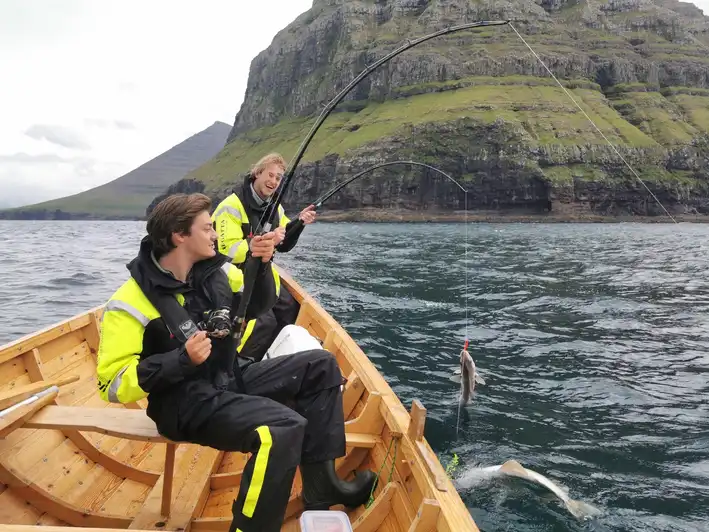
Hvannasund: Guided Boat Tour with Fishing
 GetYourGuide
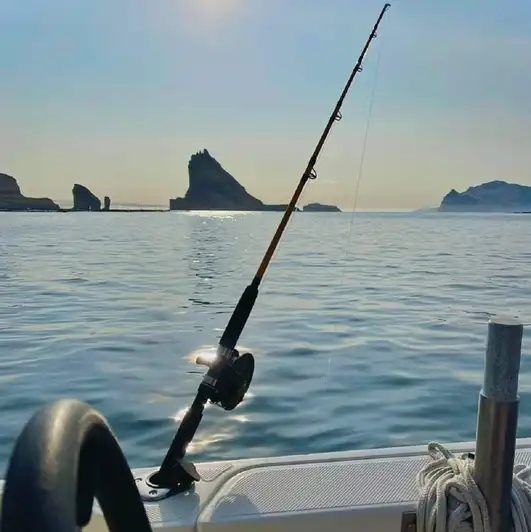
Private fishing tour with local skipper in Vágar area
Don't miss any fishing tips!
Get the best fishing destination recommendations weekly in your inbox.
No spam. Unsubscribe anytime.
Read more
Data incorrect?
Help us keep this article up to date — report outdated or incorrect information
More articles