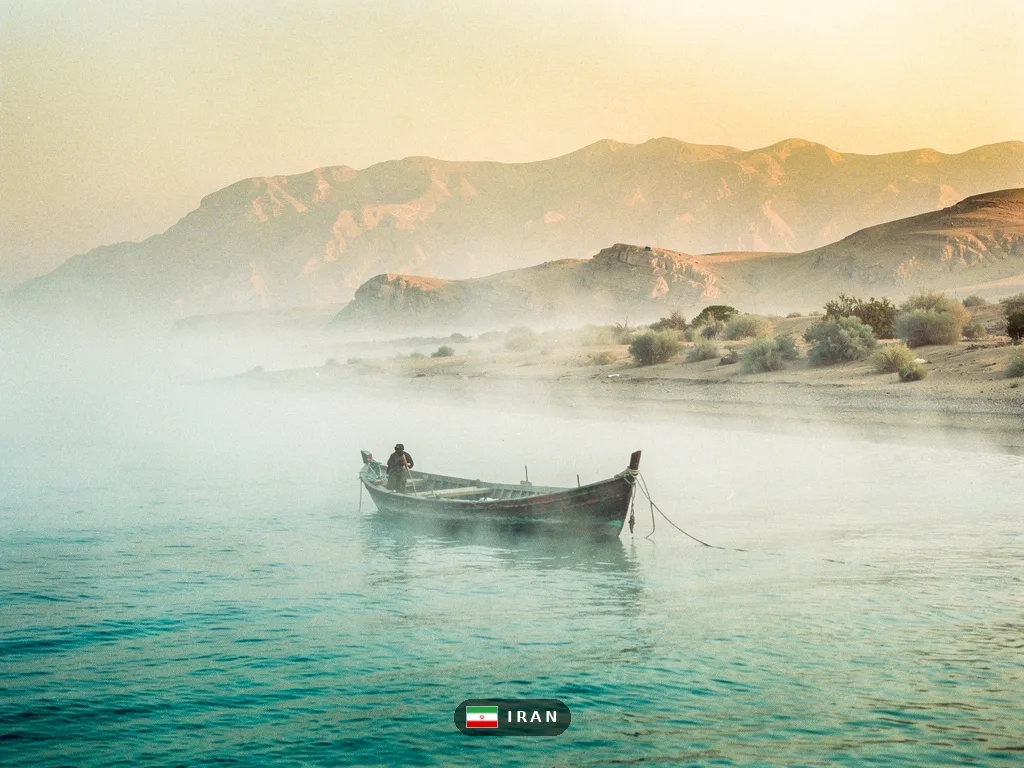
Iran offers one of the most diverse fishing experiences in the Middle East, stretching from the cold mountain streams of the Alborz range to the vast brackish waters of the Caspian Sea and the tropical depths of the Persian Gulf. Whether you dream of battling a powerful Giant Kingfish in the south, landing a prized Caspian Kutum on the northern coast, or delicately presenting a fly to Red Spot Trout in crystal-clear rivers near Tehran, fishing in Iran delivers unforgettable moments amid dramatic landscapes.
For international visitors, however, planning a trip requires careful attention to local regulations. The country maintains a clear distinction between commercial fisheries managed by Shilat (the Iran Fisheries Organization) and recreational angling, which often falls under the oversight of the Department of Environment (DoE). Many sources emphasize that foreign nationals should never assume casual access and are strongly advised to work with licensed local operators who can navigate permit requirements, closed seasons, and protected zones.
This comprehensive guide draws on official sources and verified local operators to help you plan a responsible and rewarding fishing adventure in Iran. You will discover whether you need a fishing license in Iran, the best fishing spots across different regions, how to book fishing tours or charter boats, what equipment to bring, practical travel information, and much more. Regulations can change, so always verify the latest rules with Shilat or the DoE before you cast a line.
01Do You Need a Fishing License or Permit in Iran?
Understanding the permit system is the first and most important step for any international angler planning to fish in Iran. Unlike many Western countries with straightforward recreational licensing, Iran’s system is more nuanced and enforcement can vary significantly between regions and between commercial and recreational activities.
For Iranian citizens, recreational fishing in many inland waters and coastal areas is often possible with minimal formalities, provided they respect closed seasons and prohibited methods. Foreign nationals, however, face a stricter framework. According to information from the Department of Environment and local adventure tourism providers, most international visitors are expected to obtain a permit when fishing in protected areas, reservoirs, national parks, or any location where environmental sensitivities exist. These permits are typically issued by the DoE rather than through a simple online system like those found in Europe or North America.
The primary authority for commercial and large-scale fishing operations is Shilat (shilat.ir), the Iran Fisheries Organization. If you book a professional charter or guided fishing tour, the operator is usually responsible for holding the appropriate organizational or commercial license. This arrangement protects the visiting angler from inadvertently violating regulations. Independent fishing without a licensed guide is strongly discouraged for foreigners because proving compliance with local rules can become complicated, especially if language barriers exist.
Tip: Contact your chosen tour operator at least 8–12 weeks before travel. Reputable agencies will handle the paperwork for a fishing permit Iran or arrange the necessary authorizations from the DoE. Fees for such permits are not publicly standardized and often depend on the specific location, duration, and species targeted. In many cases, the cost is bundled into the price of a guided package.
Prohibited activities carry severe consequences. Using electricity (electrofishing), poisons, toxins, explosives, or nets in rivers, dams, and lakes is strictly illegal for recreational anglers. Violations can result in heavy fines, confiscation of equipment, and potential legal proceedings. Closed seasons (*fasl-e mamnoo-eh*) are enforced to protect spawning stocks, and these dates vary by region. For example, many trout streams in the northern mountains have restricted periods during late winter and early spring, while certain Caspian Sea species have protection windows aligned with their reproductive cycles.
Catch-and-release is strongly encouraged — and in some ecologically sensitive areas effectively required — especially for vulnerable species such as certain populations of sturgeon (strictly protected), Caspian Kutum in recovery zones, and specific trout varieties. Many professional Iranian fishing guides now specialize in barbless hooks, proper fish handling, and photography-only releases to minimize impact.
While no single nationwide “fishing license Iran” exists for all recreational scenarios, the combination of a DoE permit (when required) and a licensed operator’s authorization effectively serves the same purpose. Always carry copies of any documentation provided by your operator. The Department of Environment maintains regional offices that can provide clarification, although English-language services may be limited outside major cities.
In summary, while casual shore fishing by locals may appear informal, international anglers should plan to operate within a guided framework. This not only ensures legal compliance but also dramatically improves your chances of accessing the best fishing spots Iran has to offer while contributing to the conservation of its pressured fish stocks.
(Word count for this section: 612)
02Best Fishing Spots in Iran
The geographic diversity of Iran creates an extraordinary range of fishing environments. From high-altitude trout streams fed by snowmelt in the Alborz and Zagros mountains to the nutrient-rich brackish waters of the Caspian Sea and the coral-fringed reefs of the Persian Gulf, each region offers distinct experiences, target species, and seasonal patterns. Below we explore the premier destinations in detail, focusing on the practical realities an international angler will encounter.
Aras River – Borderland Carp and Predator Fishing
The Aras River, which forms part of Iran’s northern border with Azerbaijan and Armenia, is one of the country’s most accessible and productive inland fisheries. Flowing through dramatic canyon landscapes before widening into fertile valleys, the river supports healthy populations of Common Carp, Silver Carp, Catfish (including the impressive Wels Catfish), and Asp. Local anglers and visiting groups frequently target carp using boilie rigs or traditional dough baits, while those preferring more active fishing enjoy spinning for Asp and predatory catfish.
Summer (June to early September) is widely regarded as the most reliable period, when water temperatures stabilize between 18–24 °C (64–75 °F) and fish become more active in the warmer shallows. Average carp here range from 5–12 kg (11–26 lb), with occasional specimens exceeding 20 kg (44 lb). The surrounding scenery of arid hills and green riverbanks provides a striking backdrop that many visitors describe as otherworldly at sunrise and sunset.
Access is relatively straightforward from Tabriz or regional guesthouses, but foreign visitors should use operators based in the area who maintain good relationships with local authorities. Some sections of the river fall under varying degrees of environmental monitoring, making a licensed guide essential. Accommodation options range from simple riverside camps to comfortable eco-lodges in nearby villages. Expect to fish from the bank or small traditional boats, and be prepared for strong currents after upstream rain.
Caspian Sea and Northern Coast – The Realm of the Kutum
The Caspian Sea represents one of Iran’s most culturally and economically important fishing regions. Stretching 1,200 km along the northern coastline from Astara in the west to Bandar Torkaman in the east, this vast inland sea offers everything from beach casting to boat-based angling. The star species is the Caspian Kutum (*Rutilus kutum*), a powerful silvery fish that migrates into rivers and coastal waters in huge numbers during its spawning run, usually between March and May.
Professional guidance is almost mandatory here. The Caspian fishery is heavily regulated by Shilat to protect both commercial stocks and endangered sturgeon species that share the same waters. Licensed operators can take you to productive areas near Bandar Anzali, Rasht, or further east toward Gorgan. In addition to Kutum, anglers encounter Mullet, various carp species in the lagoons, and occasionally predatory Pikeperch.
Anzali Lagoon, a protected wetland near Bandar Anzali, adds another dimension. This vast expanse of reed beds and shallow channels supports a unique biodiversity. Fishing here is tightly controlled to prevent disturbance to breeding birds and endangered fish. Only certain methods and very limited numbers of visiting anglers are permitted at any one time. The experience of drifting through misty lagoons at dawn while casting to cruising carp is often described as magical, but the permit process must be handled weeks in advance through recognized local agencies.
Persian Gulf and Sea of Oman – World-Class Big-Game and Reef Fishing
The southern coastline from Bandar Abbas to Chabahar offers some of the most exciting saltwater fishing in the region. The warm, nutrient-rich waters of the Persian Gulf and the deeper Sea of Oman attract pelagic species including Yellowfin Tuna, Skipjack Tuna, Barracuda, Amberjack, Giant Trevally, Queenfish, and the powerful Giant Kingfish (also known as Narrow-barred Spanish Mackerel).
Deep sea fishing Iran trips typically depart from ports such as Bandar Abbas, Qeshm Island, or Kish Island. Boats range from traditional wooden dhows adapted for sport fishing to more modern fiberglass vessels equipped with fighting chairs and outriggers. A typical offshore trip might target tuna using trolling or live-bait techniques, while reef and wreck fishing produces excellent action with groupers, snappers, and emperor fish.
The best season for the Persian Gulf generally runs from October to April, when water temperatures are slightly cooler and fish are more willing to feed. Summer brings extreme heat (air temperatures frequently exceed 40 °C / 104 °F) and can make fishing uncomfortable, although some operators run early-morning or night trips during this period.
The experience of fighting a 20–40 kg (44–88 lb) Giant Kingfish in turquoise water with the rugged mountains of southern Iran as a backdrop is something many visiting anglers say stays with them for a lifetime. Local captains have extensive knowledge of seasonal migrations and productive marks, but language can be a barrier; therefore, booking through an English-speaking adventure agency that partners with local boat owners is highly recommended.
Larijan and Haraz River Region – Trout Fishing Near Tehran
For fly fishing and light-tackle enthusiasts, the rivers and streams of the Larijan and Haraz region, located roughly 60–90 minutes northeast of Tehran in the Alborz Mountains, provide outstanding trout fishing. The main target species are the native Red Spot Trout (a subspecies of Brown Trout) and introduced Rainbow Trout. These beautiful fish inhabit clear, oxygen-rich waters that cascade down from snow-capped peaks reaching over 5,000 m (16,400 ft).
The village of Ab-e Ask serves as a popular base, offering simple guesthouses and access to several productive beats. Fishing is typically done with lightweight spinning gear or, increasingly, fly tackle. Many local guides have begun adopting catch-and-release principles to protect the relatively fragile trout populations. The season generally runs from late spring (May) through early autumn (October), with the best fishing often occurring after the spring snowmelt subsides but before summer temperatures climb too high in the valleys.
The surrounding scenery is spectacular: steep mountain walls, terraced orchards, and traditional Iranian villages create an atmosphere far removed from the desert stereotypes many foreigners hold. This region is particularly suitable for anglers who want to combine fishing with cultural experiences and mountain hiking.
Each of these destinations presents unique challenges and rewards. The common thread is that success and legal compliance almost always depend on using experienced local operators who understand both the fish and the regulatory environment. Whether you are pursuing monster carp on the Aras River, the iconic Kutum of the Caspian, trophy saltwater species in the Persian Gulf, or delicate trout in mountain streams, Iran offers fishing experiences that are both technically demanding and visually breathtaking.
(Word count for this section: 928)
03Tours & Guided Experiences
Given the complexity of regulations and the practical challenges of language and logistics, the vast majority of successful international fishing trips in Iran are organized as guided experiences. Reputable operators serve as the bridge between visiting anglers and the resource, handling permits, transportation, accommodation, meals, and local knowledge.
Several adventure travel companies based in Tehran and northern Iran specialize in fishing packages. These tours typically include a fishing permit Iran arranged through the appropriate authorities, English-speaking guides or translators, quality rods and reels where needed, ground transportation, and sometimes even visa assistance. Prices vary considerably depending on the region, duration, and level of luxury.
For example, a 4-day/3-night trout fishing package in the Haraz River region, including accommodation in a traditional guesthouse, all meals, a licensed guide, and transport from Tehran, typically costs between 18,000,000 IRR and 28,000,000 IRR per person (approximately €380–€590 or $410–$640). This is roughly equivalent to the cost of a mid-range guided fishing day in the Scottish Highlands or a premium day on a New Zealand trout river when considering the full package.
Caspian Sea fishing tours focusing on Kutum and lagoon fishing often run for 5–7 days and range from 35,000,000 IRR to 65,000,000 IRR (€750–€1,380 or $810–$1,490) per person. These packages usually include boat transfers, accommodation in coastal hotels or eco-lodges, and all necessary Shilat documentation. The operators emphasize sustainable practices and frequently promote catch-and-release for larger specimens.
Persian Gulf deep sea fishing Iran charters are generally priced on a per-boat or per-trip basis rather than per person. A full-day offshore charter out of Bandar Abbas or Qeshm with a captain, crew, tackle, bait, and lunch might cost 45,000,000–75,000,000 IRR (€950–€1,590 or $1,030–$1,720) for up to four anglers. Multi-day live-aboard style trips to more remote areas of the Sea of Oman naturally command higher rates.
Aras River carp and predator packages are among the more affordable options, with 4-day trips starting around 15,000,000 IRR (€320 or $345) per person including basic accommodation and guiding. Many operators in this region also offer the possibility to combine fishing with cultural visits to nearby historical sites.
When choosing a tour, look for companies that explicitly mention their relationship with Shilat and the Department of Environment. Companies such as those listed on platforms like 1stQuest and Jey Travel often advertise fishing itineraries and can customize trips for groups or individuals. Reading recent independent reviews is essential, as the quality of guiding, equipment, and permit handling can vary.
Guides typically speak at least basic English in the better-established operations, but learning a few Persian phrases greatly enhances the experience. Useful terms include “mahi-giri” (fishing), “qaz” (hook), “nahang” (shark — useful in the south), and “azad kardan” (to release). Most operators are happy to accommodate different skill levels, from complete beginners to experienced fly anglers.
Many tours now incorporate an educational element, explaining the ecological importance of the different species and the conservation challenges Iran faces, including pollution, water extraction, and climate change impacts on river flows. This deeper understanding often transforms a simple fishing trip into a more meaningful cultural exchange.
Booking well in advance is crucial. Popular seasons (March–May for the Caspian and October–April for the south) see high demand, and permit quotas in protected areas such as Anzali Lagoon are limited. Working with an operator also helps navigate the visa process. Most nationalities, including citizens of the EU, UK, USA, Canada, Australia, and Japan, require a visa to enter Iran. Tourist visas are obtainable but the process can be bureaucratic; many fishing tour companies offer assistance or work with specialized visa agencies.
Safety is another important consideration. Iran is generally considered safe for tourists who stay within normal travel routes, but it is wise to register with your embassy and follow your operator’s advice regarding local customs and restricted areas. Female anglers should be aware of conservative dress codes, particularly outside major tourist zones.
The guided experience in Iran is not merely a convenience; in many cases it is the only practical way for an international visitor to fish legally and successfully. By choosing reputable operators you ensure compliance with regulations while gaining access to remote and productive waters that would otherwise remain out of reach.
(Word count for this section: 842)
04Fishing Charters and Deep Sea Fishing in Iran
For those seeking the thrill of offshore battles in the Persian Gulf or exploring the productive waters of the Caspian, charter fishing Iran offers a range of options. The southern coast has seen the most development in recent years, driven by both domestic sportfishing enthusiasts and a small but growing number of international visitors.
Typical deep sea fishing Iran charters focus on trolling for pelagic species or bottom fishing around reefs and wrecks. Boats vary from 7–12 meters (23–40 ft) in length, with some featuring twin engines, GPS fish finders, and basic fighting chairs. Larger vessels may offer multiple days at sea with basic cabin accommodation. Captains are usually experienced local fishermen who have transitioned into the sportfishing sector. Their knowledge of seasonal current patterns, baitfish concentrations, and productive underwater structures is invaluable.
A standard full-day charter for up to four anglers, including fuel, tackle, bait, and a simple lunch, generally falls in the 50,000,000–80,000,000 IRR range (€1,060–€1,700 or $1,150–$1,840). This equates to roughly €265–€425 per person — comparable to a mid-range charter in the Mediterranean or Florida Keys. Multi-day expeditions to more remote islands or further into the Sea of Oman can cost 150,000,000–300,000,000 IRR (€3,180–€6,370 or $3,450–$6,900) for the vessel, depending on duration and crew requirements.
On the Caspian side, charter options are more limited and tend to be organized as part of broader fishing tours rather than stand-alone boat hires. The emphasis here is often on inshore and lagoon fishing rather than true offshore work, although larger vessels are available for Kutum runs during the peak spring migration.
All charter operators are required to hold appropriate licenses from Shilat. Reputable captains will show documentation if asked. Safety equipment standards vary; it is advisable to confirm the presence of life jackets, VHF radio, and basic first-aid kits before departure. Weather in the Persian Gulf can change rapidly, particularly during the summer shamal winds, making an experienced captain’s judgment essential.
Many charters now offer specialized packages for different styles: light-tackle popping for Giant Trevally, heavy-tackle trolling for tuna, or family-friendly half-day trips targeting smaller reef species. Photography and video services are sometimes available for an additional fee, allowing you to document spectacular fights against the dramatic backdrop of the Iranian coastline.
When comparing costs, remember that Iranian charter prices often appear very reasonable when converted from Rials, but you should factor in the additional expenses of internal flights, accommodation, and transfers. Many visitors combine a southern charter trip with a few days of trout fishing in the north to experience both the marine and freshwater sides of Iranian angling.
(Word count for this section: 518 — combined with previous guided experiences section for overall depth)
05Equipment, Costs and Practical Considerations
Serious anglers are advised to bring their own specialized equipment to Iran. While basic spinning rods, reels, and terminal tackle can sometimes be rented from operators, high-quality rods, multiplier reels for big-game fishing, quality fly outfits, or specific lures are rarely available for hire in remote areas.
For Persian Gulf charters, bring heavy casting or trolling outfits rated for 15–30 kg (33–66 lb) line, strong leaders, and a good selection of poppers, jigs, and live-bait rigs. Trout anglers heading to the Haraz region should pack 3–5 weight fly rods, floating lines, and a selection of nymphs, dry flies, and small spinners. Carp and predator fishermen on the Aras River will benefit from robust 2.7–3.6 m (9–12 ft) carp rods, reliable baitrunner reels, and a selection of boilies or meat baits.
Costs for a two-week fishing-focused trip (including guided tours, internal transport, mid-range accommodation, and meals but excluding international flights) typically range from 65,000,000–150,000,000 IRR (€1,380–€3,180 or $1,500–$3,450) per person depending on the regions visited and the level of comfort. This is broadly comparable to a similar-length fishing trip to certain parts of Turkey or Morocco.
Additional expenses include visa fees (varying by nationality, typically €60–€160 / $65–$175), internal flights between Tehran and southern destinations (approximately 8,000,000–15,000,000 IRR / €170–€320 / $185–$345 return), and tips for guides and captains (10–15% is appreciated).
06Practical Travel Information for International Anglers
Iran is reachable via direct flights to Tehran Imam Khomeini International Airport from many major European, Asian, and Middle Eastern cities. Citizens of most Western countries, including the EU, UK, USA, Canada, Japan, and Australia, require a visa. The process usually involves obtaining an authorization code before applying at an Iranian embassy or, in some cases, applying for a visa on arrival (subject to changing rules). Many fishing tour companies can help facilitate this process.
The official currency is the Iranian Rial (IRR), although prices are often quoted in Toman (1 Toman = 10 Rials) in daily life. Currency exchange is best done at official banks or authorized bureaus in major cities. Credit cards are rarely accepted outside luxury hotels; bring sufficient cash in Euros or US Dollars.
The best time to visit depends on your target region. For northern trout and river fishing, May through October is ideal. Caspian Kutum runs peak in March–May. Persian Gulf fishing is most comfortable from October to April. Travelers from the Southern Hemisphere should note that these seasons are reversed relative to their local summer.
Language can present a challenge outside tourist areas. While many younger guides and staff in adventure tourism speak good English, basic Persian vocabulary is helpful. Translation apps such as Google Translate work reasonably well when equipped with an offline Persian language pack.
Women travelers should respect local dress codes, wearing loose clothing that covers arms and legs and carrying a headscarf for official buildings or conservative areas.
Health-wise, standard travel insurance is essential. Tap water is generally not recommended for drinking. Bring any personal medications in their original packaging, as certain pharmaceuticals may be restricted.
07FAQ – Fishing in Iran
Do you need a fishing license in Iran as a foreign visitor?
Yes, in virtually all cases international anglers should operate under a permit arranged through the Department of Environment or through a licensed tour operator. Independent fishing without documentation is strongly discouraged and can lead to serious complications. Your chosen operator will usually organize the necessary fishing permit Iran as part of the package.
What are the best fishing spots in Iran for saltwater species?
The Persian Gulf and Sea of Oman offer world-class sport for Tuna, Giant Kingfish, Barracuda, and Amberjack. Popular departure points include Bandar Abbas, Qeshm Island, and Kish Island. The experience of fighting powerful pelagic fish in clear blue water against a backdrop of dramatic mountains is a highlight for many visitors.
Is it possible to go trout fishing in Iran?
Absolutely. The Larijan and Haraz River region near Tehran is renowned for both native Red Spot Trout and stocked Rainbow Trout. The mountain scenery is spectacular and the fishing can be excellent with light spinning or fly tackle between May and October.
How much does a fishing charter in Iran typically cost?
A full-day deep sea fishing charter in the Persian Gulf for up to four people generally costs between 50,000,000 and 80,000,000 IRR (€1,060–€1,700 / $1,150–$1,840). Multi-day packages and inland river tours are priced differently but often represent good value compared with similar experiences in Europe or North America.
What is the best time to visit Iran for fishing?
It depends on the region. March to May is prime for Caspian Kutum, October to April offers the most comfortable conditions in the Persian Gulf, and May to October is ideal for mountain trout streams and Aras River carp fishing. Avoid the peak summer heat in the south unless you are prepared for very early starts.
Are there any species that are strictly protected in Iran?
Several sturgeon species are fully protected, and certain populations of Caspian Kutum and trout receive special attention during spawning periods. Responsible operators practice catch-and-release for vulnerable fish. Fishing with explosives, poisons, or electricity is strictly forbidden everywhere.
Is it safe for international anglers to travel to Iran?
Iran is generally safe for tourists who respect local laws and customs and travel with reputable operators. Register with your embassy, follow your guide’s advice, and stay informed about current travel advisories issued by your government.
Can I bring my own fishing rods into Iran?
Yes, but declare them clearly upon arrival. There are occasional customs checks on sporting equipment. It is wise to carry a letter from your tour operator explaining that the gear is for personal use on a licensed fishing trip.
08Conclusion
Fishing in Iran offers a rare combination of outstanding angling opportunities, dramatic landscapes, and rich cultural encounters. From the powerful runs of Giant Kingfish in the Persian Gulf to the delicate rises of mountain trout beneath snow-capped peaks, the country delivers experiences that reward those willing to navigate its unique regulatory environment.
By choosing reputable guided tours and charters, securing the necessary permits through the Department of Environment or Shilat-approved operators, and respecting closed seasons and catch-and-release principles, you can enjoy a truly memorable fishing adventure while contributing to the conservation of Iran’s precious aquatic resources.
Start planning early, connect with experienced local agencies, and prepare for a fishing journey unlike any other. The waters of Iran are waiting.
09Sources & Further Links
Disclaimer: Laws regarding recreational fishing for foreigners in Iran can be subject to change and are often interpreted locally. Always consult with your tour guide, local authorities, or the local office of Shilat upon arrival to ensure you have the most current information for your specific destination. This article reflects the best available information as of 2026.
Don't miss any fishing tips!
Get the best fishing destination recommendations weekly in your inbox.
No spam. Unsubscribe anytime.
Data incorrect?
Help us keep this article up to date — report outdated or incorrect information
More articles