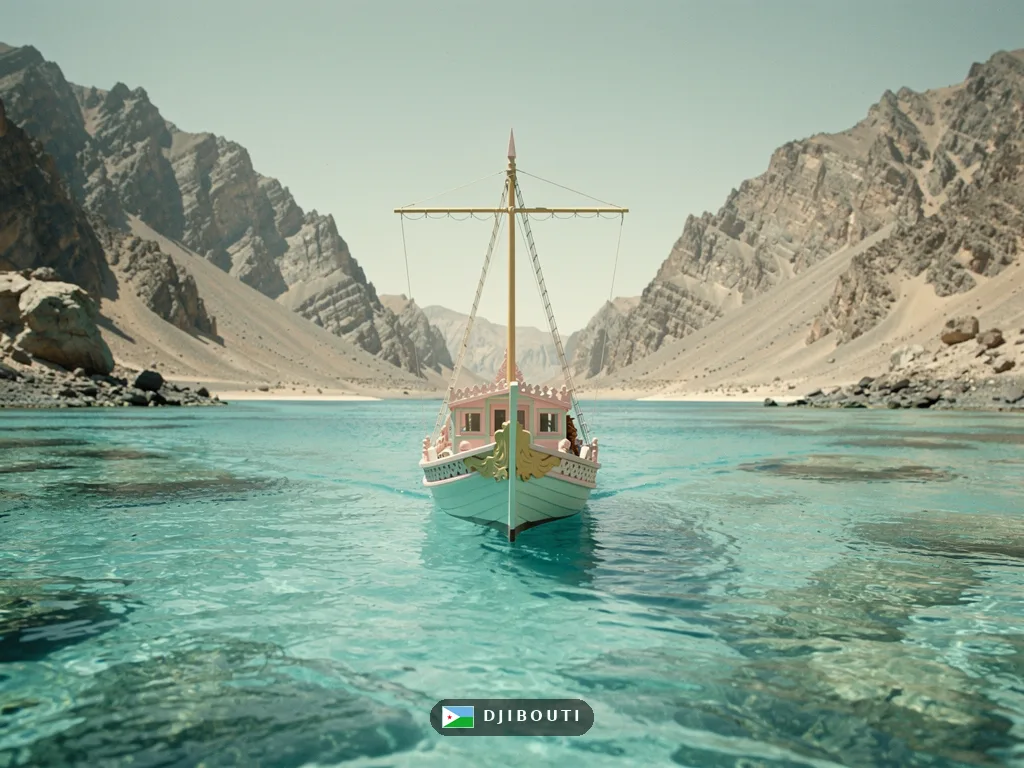
Djibouti offers one of the most exciting yet largely undiscovered fishing destinations where the nutrient-rich waters of the Red Sea and the Gulf of Aden collide. If you are searching for fishing in Djibouti, you will find powerful currents, migratory pelagics, and legendary giant trevally that make this African nation a bucket-list adventure for experienced saltwater anglers. Whether you are planning a deep-sea charter or exploring the Seven Brothers Archipelago, this comprehensive guide covers everything you need: how to obtain your fishing permit Djibouti, current regulations, the best fishing spots, guided tours, costs in DJF, EUR and USD, and practical travel advice for visitors from Europe, North America, Asia and beyond.
The strategic geography of Djibouti creates a marine environment teeming with life. Warm waters mix with cooler upwellings, supporting massive bait balls that attract sailfish, dorado, kingfish, and the much-sought-after GT. However, do you need a fishing license in Djibouti? The answer is yes for almost all boat-based recreational fishing. Understanding the fishing license Djibouti rules is essential before you book any trip.
This article draws directly from official Djiboutian legislation including the Fisheries Code (Loi n°187/AN/02/4ème L) and the implementing decree Arrêté n°2007-0036/PR/MAEM, as well as insights from specialist operators active in the region. Regulations can change, so always verify the latest requirements with the Ministry of Agriculture, Livestock and the Sea or your chosen tour operator. By the end of this guide you will have a clear, actionable plan to fish Djibouti responsibly and successfully.
01Do You Need a Fishing License in Djibouti?
Yes, you need a fishing permit Djibouti for almost all forms of recreational angling that involve a boat. According to the national Fisheries Code (Loi n°187/AN/02/4ème L) and the specific regulation Arrêté n°2007-0036/PR/MAEM, any person engaging in non-professional fishing in Djiboutian waters must hold a Permis de Pêche Non Professionnelle.
This permit is issued by the fisheries administration, which falls under the Ministry of Agriculture, Livestock and the Sea (Ministère de l’Agriculture, de l’Élevage et de la Mer). The address of the ministry in Djibouti City is Boulevard du 27 Juin. Applications are usually handled through licensed operators rather than directly by individual tourists, because the paperwork requires French-language forms and supporting documents such as a passport copy, proof of accommodation, and sometimes a health declaration.
The cost of the non-professional fishing permit is not published as a fixed public tariff in the official gazette. In practice, reputable operators such as Aden Fishing include the permit fee in their package price. Expect the permit component to add roughly 15,000–25,000 DJF (approximately 75–125 EUR or 80–135 USD) per person for a multi-day trip. This fee helps fund enforcement and marine conservation in one of the least-fished stretches of the western Indian Ocean.
Shore fishing is treated differently. Persons fishing from the beach or rocks without using any vessel (“pêcheurs à pied”) are generally exempt from needing a formal fishing license Djibouti. You must still respect all protected-species rules and bag limits. Spear fishing is completely prohibited for everyone, regardless of whether you hold a permit.
The permit is strictly personal and non-transferable. It usually remains valid for the duration of your declared stay, up to a maximum of 30 days. Overstaying or fishing without the permit can result in confiscation of gear, fines, and possible deportation. Because Djibouti’s enforcement vessels patrol the waters around the capital and the islands, the risk of being checked is real.
Professional fishing is reserved exclusively for Djiboutian nationals or registered local companies under artisanal categories A, B and C. Foreign visitors cannot engage in any commercial activity. This clear separation protects local livelihoods while opening limited recreational access for tourists through licensed sport-fishing companies.
When you book a trip with an authorized operator they will normally complete the permit application on your behalf and present the approved document when you board the boat. This removes most of the administrative burden and ensures compliance. Always ask to see a copy of your permit before departure; keeping a digital and printed version with you while at sea is recommended.
In summary, unless you are strictly shore fishing without a boat, the answer to “do you need a fishing license in Djibouti” is yes. Obtaining the Permis de Pêche Non Professionnelle through a professional outfitter is the safest and most practical route for international visitors.
(Word count for this section: 578)
02Fishing Regulations and Rules in Djibouti
Djibouti maintains relatively strict marine resource rules designed to protect the fragile ecosystem where the Red Sea meets the Gulf of Aden. The core legal framework is the Fisheries Code (Loi n°187/AN/02/4ème L), supplemented by the 2007 decree that details licensing, gear restrictions, and sanctions.
For holders of a non-professional fishing permit the daily bag limit is 10 fish per person per outing. Organized groups or companies are allowed a maximum of 100 fish per outing. These numbers apply to the total combined catch; there are no species-specific limits published for recreational anglers. However, all operators we reviewed practice 100 % catch and release for giant trevally, sailfish, and other iconic species to minimize actual mortality.
Completely prohibited methods include:
Protected species that may not be targeted or retained under any circumstances include all marine mammals, sea turtles, and their eggs. Many operators also voluntarily release whale sharks and manta rays even though the legal texts focus primarily on turtles and cetaceans.
Minimum size rules are not widely published for recreational fishing, but the 10-fish bag limit already encourages selective angling. Most sport-fishing boats in Djibouti focus on tagging and photography rather than harvest. The emphasis on catch and release Djibouti is not merely a marketing phrase; it is a practical necessity given the remote nature of the fishing grounds and the limited enforcement resources.
All fishing activity is restricted to daylight hours in many zones, and there are seasonal closures around certain island groups to protect breeding aggregations. These closures are communicated by the Ministry and are usually respected by the handful of professional operators. You will receive an updated briefing on current closures when you collect your permit.
Gear-wise, heavy popping rods, jigging setups, and high-speed trolling outfits are standard. Live bait is rarely used; most fishing is done with large surface poppers, stickbaits, or vertical jigs. Bringing your own high-quality equipment is advisable because rental gear in Djibouti is limited and often heavily used.
Environmental regulations also cover waste disposal. All boats must return with their garbage; plastic lures, leader material, and old line must not be discarded at sea. Many operators work with local NGOs to remove ghost nets and marine debris during their trips.
Violation of these rules can lead to immediate permit revocation, gear confiscation, and fines that range from 50,000 DJF (≈ 250 EUR / 270 USD) up to several hundred thousand DJF for serious offences such as using explosives. Repeat offenders face criminal prosecution. Because the waters are patrolled by both the Djiboutian Navy and the fisheries inspection service, the risk of detection is higher than many visitors expect.
It is therefore in your interest to fish only with a fully licensed operator who understands the fishing regulations Djibouti and carries the correct documentation. This not only keeps you legal but also supports the local economy and sustainable practices that will allow future generations of anglers to enjoy these waters.
The combination of nutrient-rich currents, remote atolls, and a genuine conservation ethos makes Djibouti an exceptional destination, provided you respect the rules. Always treat the fishing permit Djibouti and the associated regulations as non-negotiable parts of your journey.
(Word count for this section: 612)
03Best Fishing Spots in Djibouti
The crown jewel of best fishing spots Djibouti is undoubtedly the Seven Brothers Archipelago, also known as the Sawabi Islands. Located approximately 60 km northeast of Djibouti City in the Bab el-Mandeb Strait, these seven rugged volcanic islands create dramatic drop-offs, strong tidal currents, and turbulent rips that concentrate baitfish. The area is world-renowned for giant trevally Djibouti exceeding 50 kg (110 lb). Popping with large surface lures at dawn and dusk produces heart-stopping strikes that often result in blistering runs into the coral. Many anglers describe the experience as more violent than GT fishing in the Seychelles or northern Australia because the fish here have never seen heavy angling pressure.
Between the islands, deep channels hold massive schools of bluefin trevally, golden trevally, and African pompano. Jigging with 200–300 g metal lures in 30–60 m of water regularly produces dogtooth tuna, amberjack, and big cubera snapper. The water clarity can exceed 30 m on calm days, allowing you to watch the fish ascend from the depths—an unforgettable sight.
A second premier location is the Strait of Ghoubet (sometimes spelled Ghoubet al Kharab). This narrow, fjord-like inlet lies southwest of Djibouti City and is characterized by extreme tidal currents that can reach 6–8 knots. These currents push nutrient-rich water from the Gulf of Tadjoura, creating spectacular feeding frenzies. Ghoubet fishing is legendary for giant trevally, mahi mahi (dorado), Spanish mackerel, kingfish (king mackerel), and sailfish. The steep underwater cliffs drop from 10 m to over 200 m within a few boat lengths, offering both shallow popping and deep jigging in the same drift. Many operators run live-aboard-style expeditions here because the strait is exposed and the best fishing often occurs at first light.
Closer to the capital, the Musha and Maskali Islands provide a more accessible introduction to Djibouti fishing. Only 20–30 minutes by speedboat from Djibouti City harbour, these protected islands sit inside a marine reserve and offer excellent reef fishing for groupers, snappers, jobfish, barracuda, and queenfish. Although the GTs here are generally smaller than at Seven Brothers, the consistency of action makes these islands ideal for half-day or full-day charters. The surrounding seagrass beds also hold permit and bonefish on the flats, although specialized sight-fishing guides are still rare.
Further afield, the waters off Obock in the far north and the Gulf of Aden coastline toward the Somali border attract seasonal runs of sailfish and striped marlin. These areas are logistically more challenging and are usually visited on multi-day mother-ship expeditions. The seasonal upwelling in the Gulf of Aden brings cold, oxygen-rich water that triggers massive sardine boils, which in turn attract billfish, wahoo, and yellowfin tuna. Fishing here feels truly exploratory; you may go hours without seeing another vessel.
Each of these locations has its own character. Seven Brothers is about raw power and trophy GTs. Ghoubet is about adrenaline and current-driven chaos. Musha-Maskali is about convenience and variety. A well-planned two-week itinerary can combine all three, giving you a complete picture of what deep sea fishing Djibouti has to offer.
The best fishing usually occurs during the calmer months when wind speeds drop below 15 knots. Early morning and late afternoon are prime times; the middle of the day can be brutally hot and the fish less active. Local knowledge about tide stages is crucial—many of the best bites coincide with the change of tide when baitfish are swept across the reefs.
Because the infrastructure is limited, almost all serious fishing happens through organized operators who maintain camps on the islands or live-aboard vessels. These operators know exactly which moon phase, tide, and wind direction will produce the best results at each spot. They also carry the necessary safety equipment for the remote locations and maintain radio contact with the coastguard.
The sheer variety of environments—fringing reefs, oceanic drop-offs, tidal straits, and open gulf—means that every day on the water can feel completely different. One morning you might be casting poppers to 60 kg GTs crashing through bait on a shallow reef flat; the next afternoon you could be dropping 300 g jigs to 120 m for amberjack and grouper. This diversity is what makes fishing Djibouti so addictive for experienced anglers.
Conservation is taken seriously by the better operators. Many use circle hooks, de-hooking tools, and release mats. They record catch data that is sometimes shared with the Ministry to help monitor fish stocks. By choosing operators who practice genuine catch and release Djibouti, you contribute to the long-term health of these remarkable fisheries.
(Word count for this section: 942)
🎣 Fishing tours in Djibouti — Book guided fishing tours with local experts.
04Tours & Guided Experiences
Because of the remote nature of the best fishing grounds, the complexity of the permitting process, and the safety considerations in an area with strong currents and limited infrastructure, joining a professional fishing tours Djibouti package is by far the most practical and safest choice.
The leading specialist is Aden Fishing Djibouti. Operating from Djibouti City and maintaining seasonal camps near the Seven Brothers and Ghoubet, Aden Fishing offers fully equipped expeditions that include the boat, captain, fishing guide, fuel, tackle, transfers from the airport or hotel, meals, and soft drinks. Their packages automatically include the non-professional fishing permit so you do not have to navigate the ministry offices yourself. Most of their trips follow a strict catch and release philosophy, with the exception of a small number of fish kept for the table when clients specifically request it.
Typical offerings include:
Prices for a 4-day Seven Brothers trip generally start from 1,450,000 DJF per person (≈ 7,300 EUR / 7,900 USD) when sharing a twin cabin. This may seem expensive, but it covers everything from airport pickup to the fishing permit, all meals prepared by onboard chefs, and high-quality Shimano or comparable tackle. Shorter day charters from Djibouti City to the near islands cost approximately 180,000–250,000 DJF per boat (≈ 900–1,250 EUR / 980–1,350 USD) for up to four anglers, including tackle and lunch.
Other operators occasionally appear on the scene, but many are simply day-boat owners without proper licensing for foreign clients. Sticking with established names that appear in international fishing publications or on specialist platforms reduces risk. Always confirm that the operator holds a current commercial fishing licence and can produce your fishing permit Djibouti before you depart.
Most tours begin with a detailed briefing on safety, local customs, and fishing etiquette. You will be shown how to use the radio, what to do in case of a medical emergency, and the exact catch-and-release protocols. Guides are usually experienced local fishermen who have grown up on these waters combined with international skippers who bring knowledge from other Indian Ocean destinations.
Language can be a consideration. While many skippers speak good English, French remains the primary business language. Having a translation app such as Google Translate with the offline French-Arabic-English pack installed is useful. If you have specific dietary requirements or medical needs, communicate them at the booking stage; the remote nature of the camps makes last-minute changes difficult.
During the trip you can expect long but exhilarating days. Departures are often before sunrise to catch the best bite. After fishing you return to the mothership or island camp for fresh meals—often including grilled fish caught earlier in the day—followed by equipment maintenance and stories around the fire. Many guests describe the social side of these expeditions as memorable as the fishing itself.
Some operators also offer side activities such as snorkelling with whale sharks (in season), visiting traditional Afar villages, or relaxing on pristine beaches between fishing sessions. These cultural elements help you appreciate the wider context of this fascinating country at the crossroads of Africa and the Middle East.
Because the number of professional sport-fishing boats is small, availability is limited, especially during the peak seasons of March–June and September–November. Booking 6–9 months in advance is strongly recommended. Flexible travellers can sometimes join last-minute cancellations, but this is risky.
The guided experience also provides an educational component. Skippers explain the complex current systems, how water temperature influences fish movement, and the ecological importance of the Bab el-Mandeb Strait as a migration corridor. Many returning clients report becoming more conscious of marine conservation after seeing the pristine reefs and learning about the threats these waters face from illegal foreign trawlers.
In short, a well-organized charter fishing Djibouti trip transforms what could be a complicated and potentially frustrating independent adventure into a safe, productive, and life-enhancing experience. The combination of professional skippers, included permits, high-quality tackle, and remote island camps creates an offering that is hard to replicate anywhere else in the region.
(Word count for this section: 878)
🚤 Charter fishing in Djibouti — Find and book charter boats with experienced captains.
05When to Go: Djibouti Fishing Season
The Djibouti fishing season is dictated by wind, temperature, and current patterns rather than traditional monsoon cycles found further east. The best windows are March to June and September to November. During these months average daytime temperatures range between 28 °C and 34 °C (82–93 °F), winds are generally lighter (8–15 knots), and sea conditions allow comfortable travel to the outer islands.
July and August are extremely hot, often exceeding 40 °C (104 °F) with high humidity. Although fishing can still be productive, the physical strain on anglers and the risk of heat-related illness make these months less attractive. December to February brings stronger northerly winds that can make the Strait of Ghoubet and the Seven Brothers area uncomfortable or even unsafe for smaller vessels.
From a hemispheric perspective, European and North American anglers find the March–June window ideal because it falls during spring and early summer at home. Anglers from Australia or South America can target the September–November period, which coincides with their spring.
Billfish action (sailfish and marlin) tends to peak during the transitional months of April–May and October. Giant trevally are catchable year-round but respond particularly well to surface lures when water temperatures are between 26 °C and 29 °C. The nutrient upwellings that fuel the food chain are strongest when the winds have blown consistently for several days, creating the “weather window” that experienced captains watch for.
06Practical Travel Information
Getting There and Visa Requirements
Djibouti’s international airport (JIB) receives direct flights from Paris, Addis Ababa, Dubai, Istanbul, and Doha. Major carriers include Air France, Ethiopian Airlines, Qatar Airways, Turkish Airlines, and Djibouti Airlines. Flight time from Europe is approximately 7 hours via Dubai or Addis Ababa.
Visa policy is straightforward. Citizens of the EU, USA, UK, Canada, Australia, Japan, and most other developed nations can obtain a 30-day tourist visa on arrival at the airport for 30 USD / 28 EUR. You will need a return ticket and proof of accommodation. Citizens of certain countries (including some African and Middle Eastern nations) require a pre-arranged visa from a Djiboutian embassy. Always check the latest requirements on your government’s travel advice website before booking.
Getting Around
Once in Djibouti City, the most practical way to reach the departure port or your hotel is by taxi or pre-booked transfer arranged by your fishing operator. Taxis are inexpensive (around 1,500–3,000 DJF / 8–15 EUR / 9–16 USD for trips within the capital). Car rental is possible but not recommended for visitors because of chaotic traffic, poor road signage, and the requirement for an international driving permit. For trips to Obock or further north, domestic flights or organized boat transfers are the norm.
Language and Communication
French and Arabic are the official languages. Afar and Somali are widely spoken. English is understood in hotels, the airport, and by most fishing guides, but do not expect fluency everywhere. Download the Google Translate app with French and Arabic language packs before departure. Learning basic French phrases such as “bonjour”, “merci”, and “combien ça coûte?” will be greatly appreciated.
For staying connected while traveling in Djibouti, consider purchasing a local SIM card upon arrival (Orange or Djibouti Telecom). Data packages are affordable, but coverage is limited once you leave the capital. Many fishing boats now offer Starlink or satellite Wi-Fi as an add-on.
📱 Stay connected in Djibouti — Get an eSIM for affordable mobile data while traveling.
🚗 Rent a car in Djibouti — Compare prices from 500+ rental companies worldwide.
Health and Safety
No specific vaccinations are legally required, but hepatitis A, typhoid, and tetanus are strongly recommended. Malaria prophylaxis is advised for trips outside Djibouti City, especially during the rainy seasons. The sun is intense; bring high-factor sunscreen, a wide-brimmed hat, and polarized sunglasses. Drink only bottled water. Medical facilities in the capital are basic; serious conditions usually require evacuation to Europe or Dubai. Comprehensive travel insurance that covers fishing and emergency medical repatriation is essential.
Currency and Costs
The local currency is the Djiboutian Franc (DJF). The exchange rate is fixed at approximately 177 DJF = 1 USD. Euros are also widely accepted in tourist areas. ATMs are available in Djibouti City but can run out of cash; bring sufficient USD or EUR in small denominations. Credit cards are accepted only in larger hotels and by some operators.
A typical 7-night fishing package including flights from Europe can cost between 4,500 EUR and 8,000 EUR (4,800–8,500 USD) per person depending on group size and whether you choose basic or luxury accommodation. This is comparable to a high-end live-aboard trip in the Maldives or a remote Australian GT safari.
What to Pack
Focus on practical, quick-dry clothing in neutral colours. Long-sleeved shirts and lightweight trousers protect against both sun and evening insects. A waterproof windbreaker is essential for early-morning boat rides. Bring polarized sunglasses (multiple pairs), reef-safe sunscreen (SPF 50+), lip balm with SPF, and a buff or neck gaiter. For fishing, pack heavy-duty gloves, pliers, a good rain jacket, and polarized sun-glasses. Serious anglers should bring their favourite popping and jigging rods (30–50 lb class) and reels spooled with 80–130 lb braid. Although operators supply tackle, your own gear is often better matched to the size of the fish you will encounter.
07Equipment for Fishing in Djibouti
The heavy nature of the fishing in Djibouti demands robust gear. For giant trevally popping, most experts use 7'6"–8' rods rated for 80–120 lb braid, matched with reels holding at least 400 m of 80 lb PE. Large surface poppers between 120 mm and 200 mm, stickbaits, and pencil lures in white, pink, and natural baitfish colours produce the best results. Jigging outfits should be capable of handling 200–400 g jigs in depths down to 120 m.
🛒 Fishing equipment for Djibouti — Find the right gear for your trip.
If you prefer to travel light, most operators can supply quality gear, although the exact model selection is limited. Bring spare reels, braided line, leader material (80–200 lb fluorocarbon or monofilament), and a comprehensive selection of hooks, split rings, and assist hooks. A good pair of polarized binoculars helps spot working birds and surface activity from a distance.
08Costs Overview
| Item | Price in DJF | Price in EUR | Price in USD |
|-----------------------------------|-----------------------|------------------|------------------|
| Non-professional fishing permit (included in package) | 15,000–25,000 | 75–125 | 80–135 |
| 1-day charter (up to 4 anglers) | 180,000–250,000 | 900–1,250 | 980–1,350 |
| 4-day/3-night Seven Brothers trip (per person, twin share) | 1,450,000+ | 7,300+ | 7,900+ |
| Airport transfer | 5,000–10,000 | 25–50 | 28–55 |
| Tourist visa on arrival | 5,300 | 28 | 30 |
These prices are indicative and can vary with fuel costs, group size, and season. Compared with a high-end restaurant meal in a European capital, a single day’s guided fishing represents a significant but worthwhile investment given the quality of the experience.
09FAQ – Fishing in Djibouti
Do you need a fishing license in Djibouti?
Yes. Recreational boat anglers must obtain a Permis de Pêche Non Professionnelle. Shore anglers without a boat are generally exempt but still subject to all other regulations. The easiest way is to book with a licensed operator who includes the permit in the package.
What is the bag limit when fishing in Djibouti?
The legal limit is 10 fish per person per outing for non-professional permit holders. However, most sport-fishing operators enforce 100 % catch and release for GT, sailfish, and other trophy species.
When is the best time for giant trevally in Djibouti?
The prime seasons are March–June and September–November. Early mornings and late afternoons during these months offer the most consistent surface action at the Seven Brothers and Ghoubet.
Is spearfishing allowed in Djibouti?
No. Spearfishing is strictly prohibited under national law for both locals and visitors.
Can I bring my own fishing rods to Djibouti?
Yes. There are no specific import restrictions on sporting fishing tackle for personal use. Pack rods in a hard tube and declare them as sports equipment on your customs form. Reels should be emptied of line or placed in carry-on luggage to avoid damage.
How difficult is it to reach the Seven Brothers Islands?
The islands lie roughly 60 km from Djibouti City and require a 3–5 hour boat journey depending on sea conditions. Most visitors stay on live-aboard vessels or at basic island camps for several days rather than making daily return trips.
Are there any health risks I should be aware of?
The main concerns are intense heat, dehydration, and possible malaria outside the capital. Comprehensive travel insurance covering emergency evacuation is mandatory. Consult a travel doctor at least six weeks before departure.
Do operators in Djibouti practice catch and release?
The majority of specialist sport-fishing companies, including Aden Fishing, follow a 100 % catch-and-release policy for all billfish and large trevally to protect the fishery for the future.
10Conclusion
Fishing in Djibouti delivers a rare combination of untouched waters, powerful fish, and genuine adventure. From the heart-pounding surface strikes of giant trevally at the Seven Brothers to the adrenaline of fishing swirling currents in the Strait of Ghoubet, this destination rewards those willing to accept its logistical challenges. By securing your fishing permit Djibouti through a reputable operator, respecting the strict regulations, and choosing sustainable catch and release practices, you become part of the solution that will keep these remarkable waters productive for decades to come.
Whether you are a dedicated GT enthusiast, a billfish angler looking for new grounds, or simply an adventurous traveller who loves to fish, Djibouti offers experiences that few other places can match. Plan well, book early, and prepare for some of the most exciting saltwater fishing on the planet.
Start planning your trip today. The nutrient-rich waters where the Red Sea meets the Gulf of Aden are waiting.
11Sources & Further Links
Disclaimer: This information is for general guidance only and reflects the situation as of 2026. Fishing regulations, fees, and operating conditions may change. Always consult the Ministry of Agriculture, Livestock and the Sea or your chosen licensed operator for the most up-to-date requirements before travelling. The authors and FishingWorldGuide.com accept no liability for any loss, damage, or inconvenience experienced by readers who rely on this guide.
Don't miss any fishing tips!
Get the best fishing destination recommendations weekly in your inbox.
No spam. Unsubscribe anytime.
Data incorrect?
Help us keep this article up to date — report outdated or incorrect information
More articles