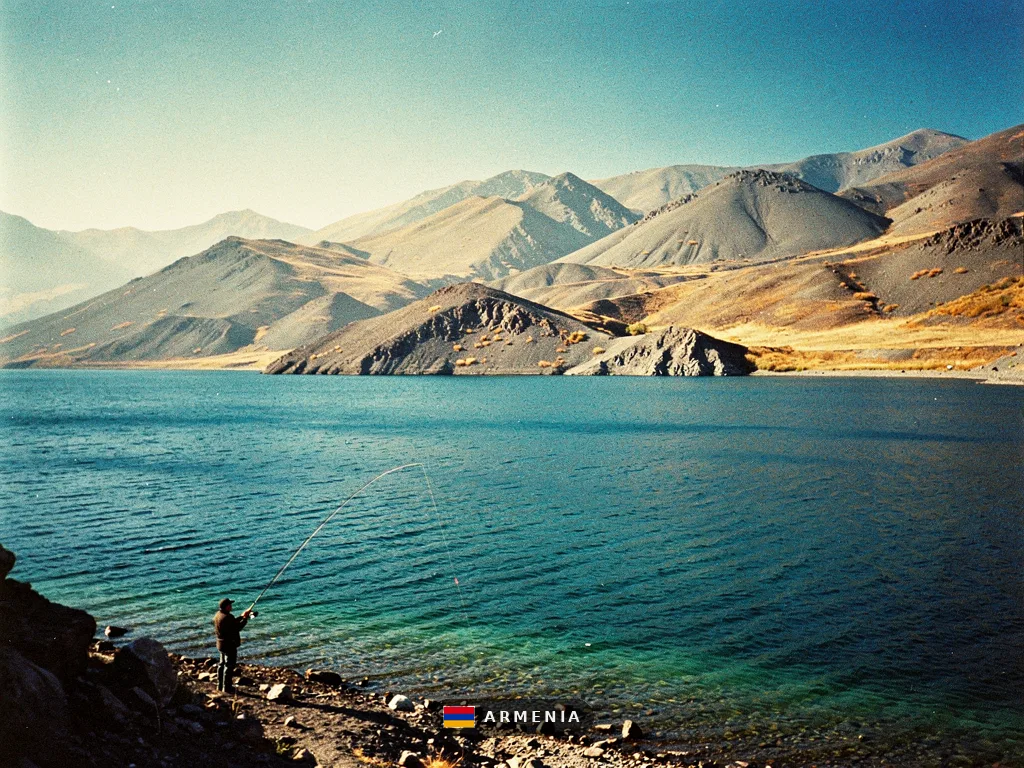
Fishing in Armenia offers a unique blend of high-altitude alpine lakes, fast-flowing mountain streams, and emerging guided experiences set against the dramatic backdrop of the Caucasus Mountains. Whether you are chasing trout in crystal-clear highland rivers or targeting whitefish on the vast waters of Lake Sevan, this guide covers everything an international angler needs to plan a successful and responsible Armenia fishing trip. With simple permit rules, breathtaking scenery, and costs starting around $200 per day for guided charters, Armenia is an increasingly attractive destination for adventurous travelers seeking authentic experiences away from crowded European or Asian hotspots.
From the shores of Lake Sevan, the largest lake in the Caucasus, to the remote tributaries of the Hrazdan River near Yerevan, opportunities for trout fishing Armenia and mountain stream fishing Armenia are plentiful. However, the sector remains developing, with a strong emphasis on sustainability to protect fragile ecosystems. This comprehensive guide draws on official sources from the Ministry of Environment and practical reports from anglers who have fished these waters. You will learn exactly when and where to fish, what permits (if any) you need, how to book guided fishing tours Armenia, what gear to bring, and how to navigate travel practicalities as an international visitor.
01Do You Need a Fishing License in Armenia?
One of the first questions international anglers ask is: do you need a fishing license in Armenia? The answer is nuanced. For casual recreational shore fishing in most rivers and smaller lakes, there is currently no widely enforced tourist fishing license or fishing permit Armenia required. Most visitors report that they can fish without a specific government-issued document, especially when using rod-and-line methods in non-protected public waters.
The Ministry of Environment of the Republic of Armenia maintains a legal framework for “fishing for social purposes” (amateur fishing). This framework typically involves a formal application process and is primarily designed for locals or organized groups rather than short-term tourists. Official resources such as env.am and the legal database arlis.am outline these rules, but in practice, casual travelers rarely complete the paperwork for a day or two of fishing.
That said, the situation changes significantly if you plan to fish in protected areas, use a boat, target specific protected species, or join commercial-style operations. In these cases, hiring a local guide or tour operator is strongly recommended because the operator will handle any necessary compliance, permits, or notifications. Protected zones around Lake Sevan, for example, fall under Sevan National Park regulations where unauthorized fishing can result in fines or confiscation of gear.
Tip: Always ask your accommodation, guide, or tour company about current requirements upon arrival. Regulations can change quickly to protect endangered ecosystems, and what is accepted today may be tightened tomorrow. Carrying a printed or digital copy of the latest rules from the Ministry of Environment website is a smart precaution.
If you intend to keep fish rather than practice catch-and-release, you must respect minimum size limits (often around 500 g for whitefish and certain trout) and avoid prohibited methods such as nets or traps. These tools are generally reserved for licensed professional fishers. Recreational anglers are expected to use only rod-and-line equipment.
For travelers from the EU, US, UK, Japan, and most other countries, no special visa is required for stays up to 180 days. You simply need a valid passport. This makes spontaneous Armenia fishing trips relatively straightforward from a bureaucratic standpoint. However, language can be a barrier outside Yerevan. Most guides speak English or Russian, and translation apps such as Google Translate with offline Armenian and Russian packs are useful.
In summary, while a formal fishing license Armenia is not strictly required for casual shore angling, responsible behavior and the use of a guide in sensitive areas are essential. This pragmatic approach allows you to focus on the excitement of catching trout in stunning mountain settings without unnecessary paperwork.
(Word count for section: 582)
02Fishing Regulations and Sustainable Practices in Armenia
Fishing regulations in Armenia are shaped by the need to protect the country’s unique biodiversity, particularly in Lake Sevan, which has suffered from decades of ecological pressure. The Ministry of Environment closely monitors commercial and certain amateur activities. While casual rod-and-line fishing faces few day-to-day checks, stricter rules apply to specific species, seasons, and locations.
Closed seasons are among the most important regulations. For whitefish (Sig), spawning typically occurs in December and January, leading to total bans on fishing, boat usage, and even the presence of visible fishing gear in many zones of Lake Sevan. These seasonal closures are strictly enforced to allow stocks to recover. Violators risk significant fines. Always check the latest seasonal calendar on env.am or through your guide before planning a winter trip.
Minimum catch sizes form another key part of the rules. For several commercial and recreationally important species, a minimum weight of approximately 500 g is enforced. Fish below this size must be released immediately. The use of barbless hooks and careful handling techniques are encouraged to maximize survival rates during catch and release.
Nets, traps, and other passive gear are heavily restricted and usually only permitted for licensed professional fishers. Recreational anglers must stick to spinning, baitcasting, or fly-fishing setups. In many highland streams, local communities practice traditional sustainable methods, and visitors are expected to follow suit.
Sustainable fishing is not just a regulatory requirement — it is a growing ethos among Armenian operators and residents. Many guided fishing tours Armenia now promote catch-and-release practices, especially for endemic trout species. This helps preserve populations for future generations and maintains the reputation of Armenia as a responsible fishing destination.
Lake Sevan is the focal point of conservation efforts. Once severely depleted, the lake is now subject to a complex restoration program supported by international organizations. As a result, certain areas are designated as no-fishing zones year-round. Boat tours operating on the lake must follow approved routes and quotas. When you book a charter, ensure the operator is licensed and follows these guidelines.
The Hrazdan River, which flows from Lake Sevan toward Yerevan, has fewer restrictions but still falls under general bioresource protection laws. In the upper reaches, where the river is narrower and faster, trout fishing is popular but should be practiced lightly. Downstream sections near the capital see more occasional local fishing and are generally open to visitors without special permits.
Remote mountain streams in the Caucasus offer some of the most pristine mountain stream fishing Armenia experiences. These areas are often only accessible by 4x4 vehicle and local knowledge. Because they are far from monitoring stations, the responsibility for sustainable behavior lies entirely with the angler and guide. Following “no-trace” principles — packing out all litter, avoiding spawning beds, and limiting daily take — is essential.
International visitors from Europe, North America, or Asia should note that enforcement is inconsistent but can be strict in protected areas. A good local guide acts as both a mentor and a safeguard against unintentional violations. Many operators partner with the Ministry of Environment and stay updated on the latest decrees published on arlis.am.
Climate change is also affecting regulations. Rising temperatures and fluctuating water levels in Lake Sevan have led to more dynamic seasonal adjustments. What was open in May one year might face temporary restrictions the next. Checking official sources or working with a reputable operator is the only reliable way to stay compliant.
By respecting these rules you contribute to the long-term health of Armenia’s waters. Sustainable practices not only protect fish stocks but also support the local communities that depend on healthy ecosystems for tourism and traditional livelihoods.
(Word count for section: 612)
03Best Fishing Spots in Armenia
The best fishing spots Armenia offers range from the vast, windswept expanse of Lake Sevan to intimate highland streams tucked between snow-capped peaks. Each location delivers a distinctive experience, different target species, and varying levels of accessibility. Lake Sevan fishing is undoubtedly the flagship attraction, but the Hrazdan River and numerous mountain streams provide equally memorable days on the water.
Lake Sevan – The Crown Jewel of Armenian Fishing
Lake Sevan sits at an altitude of approximately 1,900 meters (6,234 feet) above sea level, making it one of the highest large freshwater bodies in the world. Its deep blue waters cover more than 1,200 km² and are surrounded by dramatic volcanic mountains. For many international visitors, a day on Lake Sevan is the highlight of an Armenia fishing trip.
The lake is famous for its whitefish (Coregonus lavaretus, locally called “Sig”), which was introduced in the Soviet era and has become a staple. You can also target several trout species, including introduced rainbow trout and the endemic Sevan trout (ishkhan), although the latter is heavily protected and usually subject to strict catch-and-release only. Local operators often provide spinning gear suitable for whitefish or light trolling setups for trout.
Fishing here is best done from a boat. Specialized boat tours depart from various points around the lake, particularly near the towns of Sevan and Martuni. Early morning and late afternoon are the most productive times, when fish are more active near the surface or along drop-offs. The scenery is breathtaking: you fish with views of the Sevanavank monastery perched on a peninsula, snow-capped peaks in the distance, and the fresh mountain air at altitude.
Because of its protected status within Sevan National Park, boat captains must follow approved routes and respect daily quotas. Many tours combine fishing with a traditional lunch where, if regulations allow, part of the catch is prepared Armenian-style — grilled with herbs and served with fresh lavash bread and local vegetables. This culinary element turns a fishing excursion into a full cultural experience.
Success rates vary with the season. Late spring through early autumn (May to October) offers the best weather window, with water temperatures between 12 °C and 18 °C (54–64 °F). Winter fishing is possible but heavily restricted due to spawning closures. Ice fishing is occasionally practiced by locals but is not recommended for tourists without specific local arrangements.
Lake Sevan can produce fish in the 1–3 kg range for whitefish and occasional larger trout. The sheer size of the lake means you need local knowledge to find productive areas — something a good guide provides. Many visitors describe the experience as peaceful yet exhilarating, with the added thrill of watching eagles soar overhead while waiting for a bite.
Hrazdan River – Convenient Fishing Close to Yerevan
The Hrazdan River originates from Lake Sevan and flows 146 km through mountain gorges before reaching the capital, Yerevan. Its upper sections offer fast-flowing, oxygen-rich water perfect for trout. The river is easily accessible on a day trip from Yerevan, making it ideal for travelers with limited time.
Trout fishing Armenia on the Hrazdan is typically done with light spinning or fly tackle. Brown trout and rainbow trout are the main targets, with fish averaging 0.5–1.5 kg. The river’s varied structure — riffles, pools, and undercut banks — provides excellent holding spots. Early mornings in June and September often produce the best action.
The surrounding landscape is a mix of rocky canyons, green meadows, and occasional villages. Fishing here feels intimate compared to the open waters of Sevan. You can wade in many sections, although the current can be strong after rain. Local anglers are generally friendly and may offer advice or even share a spot if you greet them respectfully.
Access is straightforward along the main highway from Yerevan to Sevan, but some of the best stretches require a short hike or 4x4 transport. Water quality is generally good in the upper reaches, although it deteriorates closer to the city. Focus on the sections between the lake outflow and the town of Hrazdan for the highest chance of success.
Mountain Streams and Highland Tributaries
For those seeking solitude and wild beauty, the numerous small mountain streams and highland tributaries across Armenia represent some of the finest mountain stream fishing Armenia available. These waters are often located in remote valleys of the Lesser Caucasus range, requiring a sturdy vehicle and an experienced local guide.
Streams in regions such as Dilijan National Park, the mountains near Lake Arpi, and the slopes of Mount Aragats hold healthy populations of native trout. Fish here are typically smaller (200–600 g) but fight hard in the fast current. The water is exceptionally clear, often revealing fish holding behind rocks or in plunge pools.
The experience is immersive. You hike along rhododendron-lined trails, listening to the constant rush of water while surrounded by wildflowers in summer or vivid autumn colors. Many streams are small enough that a short, lightweight fly rod or ultralight spinning setup is perfect. Dry flies, small spinners, and nymphs all work well depending on the time of day and insect activity.
Because these areas are remote, success depends heavily on local knowledge. Guides know which tributaries are fishing well after recent rainfall and which hold larger resident fish. They also ensure you stay on public land and avoid any privately managed areas.
Weather can change rapidly in the highlands. A bright sunny morning can turn into afternoon thunderstorms, so checking forecasts and carrying appropriate clothing is essential. The best months are June through September when snowmelt has subsided and water levels are fishable.
Each of these locations delivers a different flavor of fishing. Lake Sevan offers big water and boat-based adventure, the Hrazdan provides convenient access and respectable trout, and the mountain streams deliver pristine wilderness experiences that few international anglers ever discover. Combining two or three different spots during a week-long Armenia fishing trip gives you a comprehensive taste of what this Caucasus nation has to offer.
(Word count for section: 948)
🎣 Fishing tours in Armenia — Book guided fishing tours with local experts.
04Tours & Guided Experiences in Armenia
Organized fishing tours Armenia and guided experiences remain somewhat limited compared to more established destinations, but the quality is high and the service is personal. Most operators are based in Yerevan and specialize in day trips or multi-day excursions to Lake Sevan, the Hrazdan River, or remote mountain streams. These tours are ideal for international visitors because they handle transportation, equipment, compliance with regulations, and local knowledge.
A typical one-day guided trip to Lake Sevan includes pickup from your hotel in Yerevan (about 1.5 hours’ drive), a fully equipped boat with an experienced captain, spinning or light trolling rods, lunch, and transfer back to the city. Prices generally range from $200 to $300 USD (€185–€280) per person for a private tour. This is roughly equivalent to the cost of a good restaurant dinner in many European capitals but delivers a full day on one of the world’s highest alpine lakes with expert guidance.
For trout fishing Armenia on the Hrazdan River, half-day or full-day options are available. These usually cost $150–$220 USD (€140–€205) and include transportation, guide, tackle, and snacks. Because the river is closer to the capital, more of the day is spent fishing rather than traveling. Guides often teach basic fly-casting techniques if you are new to the method.
Multi-day packages that combine Lake Sevan, river fishing, and mountain stream fishing Armenia are becoming more popular. A three-day package might cost $650–$950 USD (€600–€880) per person, including all meals, 4x4 transport, accommodation in guesthouses or small hotels, and professional guiding. These trips allow you to experience different waters and fishing styles while learning about Armenian culture, cuisine, and history along the way.
Reputable operators include local travel companies such as those featured on platforms like Spinnaker Travel and various Yerevan-based outfitters. Many advertise through international booking sites, making it easy to reserve from abroad. When choosing a tour, look for operators who emphasize sustainability, have English-speaking guides, and possess the necessary permissions to operate in Sevan National Park.
What should you expect on a typical day? Your guide will collect you early (often around 6 a.m. for best fishing times), provide a safety briefing, and drive through scenic mountain roads while explaining the ecology of the region. Upon arrival at the lake or river, you will receive properly rigged tackle suited to the target species. Guides are usually patient instructors, happy to demonstrate techniques and help less experienced anglers.
Many tours include a cultural element. After fishing, you might visit a local monastery, enjoy a picnic with traditional Armenian dishes, or watch your guide prepare fresh fish over an open fire. These moments create lasting memories beyond simply catching fish.
For serious fly fishers, specialized mountain stream tours focus on highland tributaries. These require more physical effort — hiking and wading — but reward you with untouched waters and wild trout. Expect to pay a premium for these experiences because of the logistics involved in reaching remote valleys. A full-day mountain stream trip typically costs $250–$350 USD (€230–€325).
Group tours for up to four people can reduce the per-person cost. However, private tours are recommended if you want maximum flexibility and fishing time. Children are usually welcome on lake tours but may find river and stream fishing too demanding.
Booking in advance is advisable, especially during the peak summer months (July and August) when both local and international tourists compete for guide availability. Many operators require a 50% deposit via bank transfer or online payment platforms.
Guides also serve an important regulatory role. They ensure you fish only in permitted areas, respect closed seasons, and practice ethical catch-and-release. This is particularly valuable given the complex and sometimes changing rules around Lake Sevan.
Language is rarely an issue on guided fishing tours Armenia. Most professional guides speak good English in addition to Armenian and Russian. If your guide’s English is limited, they often work with a translator or use simple visual aids and demonstration.
In recent years, some operators have begun offering photography-focused fishing tours or catch-and-release only packages that appeal to conservation-minded travelers. These align well with Armenia’s push toward sustainable tourism.
Whether you choose a relaxed day on Lake Sevan or an adventurous week exploring multiple rivers and streams, a guided experience greatly increases your chances of success and ensures you fish responsibly. The combination of expert local knowledge, provided equipment, and cultural immersion makes guided tours the smartest choice for most international visitors.
(Word count for section: 912)
🚤 Charter fishing in Armenia — Find and book charter boats with experienced captains.
05Best Time to Visit for Fishing in Armenia
The best time to visit Armenia for fishing is generally from late spring to early autumn — May through October. During these months, weather is most stable, water levels are suitable, and fish are active. However, the ideal timing depends on your target species and preferred fishing style.
For Lake Sevan fishing, June to September offers the most comfortable conditions. Daytime temperatures range from 18 °C to 26 °C (64–79 °F), and the lake is free of ice. Whitefish and trout are more willing to take lures or flies in warmer water. Avoid the peak of summer (mid-July to mid-August) if you dislike crowds or extreme high-altitude UV exposure.
Trout fishing Armenia on the Hrazdan River and in mountain streams is often most productive in May–June and September–October. In early summer, insect hatches are strong, making dry-fly fishing excellent. Autumn brings cooler water temperatures that stimulate feeding before winter. July and August can be warm, with lower water levels and reduced activity during the heat of the day.
Winter fishing is possible but challenging. December and January bring strict spawning closures on Lake Sevan, and many mountain streams are frozen or inaccessible due to snow. Some locals practice ice fishing on protected sections of the lake, but this is not recommended for international tourists without extensive local support.
From a hemispheric perspective, anglers from the Northern Hemisphere will find the May–October window perfectly aligned with their summer and early autumn. Travelers from Australia, New Zealand, or South America can combine an Armenia fishing trip with a Northern Hemisphere summer escape, enjoying long daylight hours and pleasant temperatures while it is winter at home.
Weather in the Caucasus is highly variable. Mountain streams can rise quickly after thunderstorms, and afternoon winds on Lake Sevan can make boating uncomfortable. Always build flexibility into your itinerary. Having a backup plan — such as switching from lake to river if weather deteriorates — is wise.
06What to Expect – Species, Scenery and Local Culture
When you go fishing in Armenia you can expect to encounter several species. Lake Sevan is best known for whitefish, which can reach 2–3 kg and are excellent eating when prepared fresh. Endemic Sevan trout (ishkhan) are protected in most areas and should be released. Rainbow and brown trout are present in both the lake and rivers, with river fish typically more aggressive.
The scenery is spectacular. Fishing at 2,000 meters (6,500 feet) elevation gives you panoramic views of volcanic peaks, ancient monasteries, and vast skies. The air is crisp and clean. In summer, wildflowers carpet the hillsides; in autumn, the forests turn brilliant red and gold.
Armenian hospitality is legendary. Local fishers and guides are usually delighted to meet international visitors and often share stories, food, and even fishing spots. Expect to be offered strong coffee, homemade fruit preserves, or a glass of local cognac after a successful day. Many tours end with your catch (if legally kept) being turned into a delicious meal with fresh herbs, garlic, and pomegranate.
Language can be a barrier outside tourist areas. Learning a few basic Armenian phrases (“barev” for hello, “shnorhakalutyun” for thank you) goes a long way. Most guides in the fishing tourism sector speak English, and translation apps work well in Yerevan and larger towns.
07Equipment and Gear Recommendations
Serious anglers should bring their own travel rods. High-quality gear is scarce in Armenia, and rental equipment is often basic. For Lake Sevan, pack medium spinning rods (2.4–2.7 m) with 8–12 lb line, or light trolling setups. For rivers and streams, a 4–6 weight fly rod or ultralight spinning combo (1–4 kg) is ideal.
Bring a selection of spinners, spoons, small crankbaits, dry flies, nymphs, and leaders. Polarized sunglasses, a landing net, forceps, and a wading staff are essential. Because of the altitude and strong sun, high-SPF sunscreen, a hat, and layers of clothing are necessary. Rain jackets are useful even in summer.
If you are booking a guided tour, most operators provide basic rods and reels. Confirm exactly what is included when you book.
🛒 Fishing equipment for Armenia — Find the right gear for your trip.
08Practical Travel Info for International Anglers
Yerevan’s Zvartnots International Airport is the main entry point, with direct flights from many European cities, the Middle East, and seasonal connections from North America. Taxis, rideshares, and rental cars are available at the airport. Driving in Armenia requires caution — mountain roads can be narrow and local driving habits assertive.
For getting around to fishing spots, a 4x4 vehicle is highly recommended for mountain streams. Many operators include transport in their packages. If you prefer independence, renting a car with GPS is possible, though English-language signage is limited outside major routes.
Accommodation ranges from modern hotels in Yerevan to guesthouses and eco-lodges near Lake Sevan. Prices are reasonable — expect to pay €40–€80 ($43–$86) per night for comfortable mid-range options that often include home-cooked meals.
Currency is the Armenian Dram (AMD). At the time of writing, 1 USD ≈ 385 AMD and 1 EUR ≈ 410 AMD. Credit cards are accepted in cities but not in remote areas, so carry cash. ATMs are widely available in Yerevan and Sevan.
Language barriers are manageable with English-speaking guides. Download offline maps and translation apps before traveling to areas with limited internet.
Health-wise, no special vaccinations are required beyond routine ones. Tap water is generally safe in cities but stick to bottled water in remote areas. Altitude sickness is possible on Lake Sevan and higher streams — ascend gradually and stay hydrated.
📱 Stay connected in Armenia — Get an eSIM for affordable mobile data while traveling.
09Costs of an Armenia Fishing Trip
A realistic daily budget for a fishing-focused trip is $250–$400 USD (€230–€370) per person when using guided services. This includes the guided tour or charter ($200–$300), meals, accommodation, and local transport. Independent fishing with rented transport and minimal guiding can reduce costs to around $120–$180 per day but requires more research and self-reliance.
A one-week guided fishing trip including accommodation, most meals, and five full days of guided fishing typically totals $1,800–$2,800 USD (€1,670–€2,600). This is comparable to a mid-range fishing holiday in Eastern Europe but offers far more dramatic scenery and fewer other anglers.
Flights from major European hubs cost €150–€350 return, while long-haul travelers from North America or Asia should budget €700–€1,200. Internal transfers and 4x4 rentals add another €200–€400 for the week.
Compared with popular destinations like Turkey or Georgia, Armenia offers better value for truly remote and uncrowded mountain stream fishing Armenia experiences.
🚗 Rent a car in Armenia — Compare prices from 500+ rental companies worldwide.
10FAQ – Fishing in Armenia
Do you need a fishing license in Armenia?
For casual recreational shore fishing with rod and line in most rivers and smaller lakes, no fishing license Armenia is currently required. However, fishing in protected areas such as parts of Sevan National Park or using boats usually requires working with a licensed guide who manages compliance. Always confirm the latest rules with the Ministry of Environment or your operator upon arrival.
What is the best time of year for Lake Sevan fishing?
The optimal period is May through October. June to September generally offers the most stable weather and best fishing conditions for whitefish and trout. Winter months bring strict spawning closures and limited access.
Which species can I catch in Armenia?
Main targets include whitefish (Sig) on Lake Sevan, rainbow trout, brown trout, and the protected endemic Sevan trout (usually catch-and-release only). Mountain streams primarily hold smaller wild brown trout.
Is fly fishing possible in Armenia?
Yes. Many mountain streams and upper sections of the Hrazdan River offer excellent opportunities for fly fishing. Specialized guided tours can provide appropriate tackle and instruction if you do not bring your own.
How much does a guided fishing day cost?
Expect to pay $200–$300 USD (€185–€280) for a full-day private guided tour including transport, equipment, and usually lunch. Multi-day packages range from $650 to $950 USD for three days.
Can I keep the fish I catch?
It depends on the location, species, and size. Many areas and operators encourage catch-and-release, especially for trout. Where keeping fish is allowed, you must respect minimum size limits (often 500 g) and daily quotas. Your guide will advise you on the day.
What should I bring from home?
Bring your own travel rod, preferred lures or flies, polarized sunglasses, comfortable wading boots, rain jacket, and layers for variable mountain weather. Local tackle shops have limited selection and quality.
Is Armenia safe and welcoming for international anglers?
Yes. Armenians are known for their hospitality. The country is generally safe for tourists. Using a reputable guide reduces any minor risks associated with remote mountain travel or language barriers.
11Conclusion
An Armenia fishing trip delivers far more than just fish on the line. It offers a journey into one of the most beautiful and least-visited corners of the Caucasus, where snow-capped mountains reflect in alpine lakes and wild trout rise in crystal streams. With straightforward permit rules for casual angling, high-quality guided fishing tours Armenia available from $200 per day, and a growing focus on sustainability, the country is an excellent choice for adventurous international anglers.
Whether you spend your days chasing whitefish across the vast waters of Lake Sevan, stalking trout along the Hrazdan River, or exploring hidden mountain streams, you will return home with stories, photographs, and memories that last a lifetime. Book your guided tour early, respect the regulations, practice ethical angling, and prepare to be captivated by both the fishing and the warm Armenian welcome.
Start planning your 2026 adventure today — the waters of Armenia are waiting.
12Sources & Further Links
Disclaimer: This guide is for informational purposes only and based on data available in 2026. Fishing regulations, permit requirements, seasonal closures, and safety conditions in Armenia can change without notice. Always verify the latest rules directly with the Ministry of Environment of Armenia, local authorities, or your chosen guide before fishing. The authors and FishingWorldGuide.com assume no liability for any incidents, fines, or problems that may occur during your trip. Practice responsible angling, prioritize safety, and respect local communities and ecosystems.
Don't miss any fishing tips!
Get the best fishing destination recommendations weekly in your inbox.
No spam. Unsubscribe anytime.
Data incorrect?
Help us keep this article up to date — report outdated or incorrect information
More articles