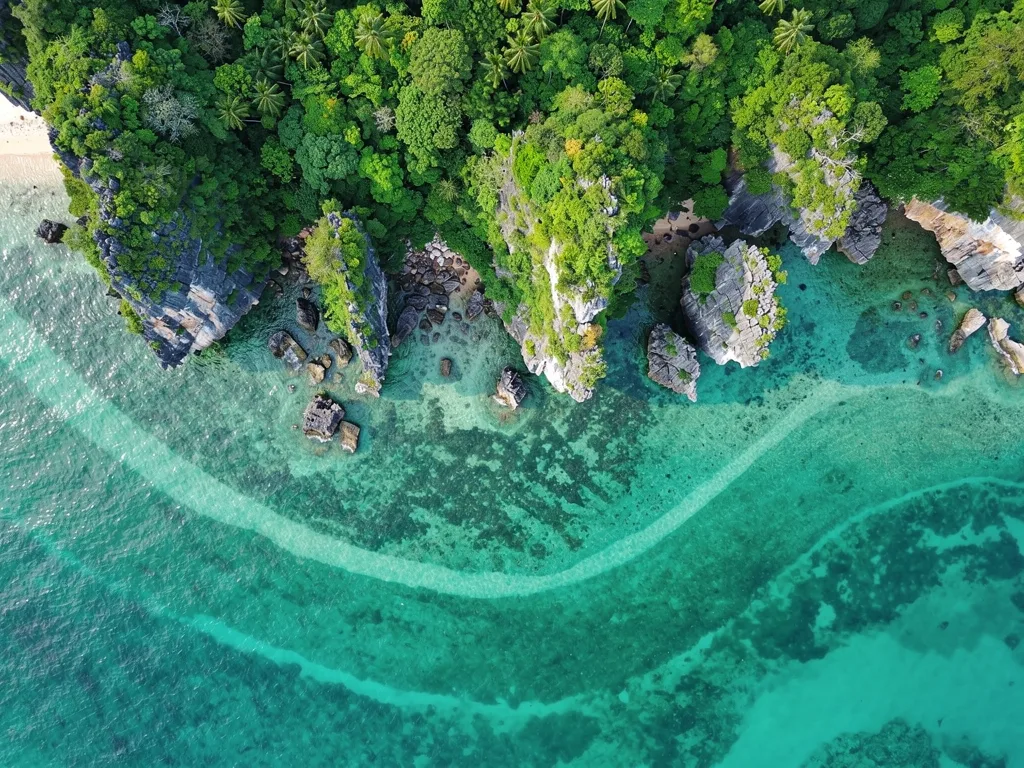
Thailand is one of the most exciting fishing destinations in the world — and one of the most accessible. Whether you dream of battling a billfish in the turquoise waters of the Andaman Sea, landing a record-breaking Mekong giant catfish at a freshwater fishing park near Bangkok, or casting a line from a tropical beach at sunrise, fishing in Thailand offers something extraordinary for every type of angler. Better yet, unlike most countries, Thailand does not require a fishing license for recreational rod fishing — making it an especially welcoming destination for international visitors.
This comprehensive guide covers everything you need to know: regulations, top fishing areas, seasons, costs, and practical tips for anglers traveling from Europe, North America, Asia, and beyond.
01Do You Need a Fishing License in Thailand?
One of the biggest surprises for international anglers is that Thailand does not require a fishing license or permit for recreational rod fishing in public waters. This applies to both Thai nationals and foreign visitors alike. You can legally fish from public beaches, riverbanks, and other public waterways without purchasing any permit.
However, there are important caveats:
Tip: Always confirm with your tour operator or fishing park whether any special permits are needed for the specific waters you plan to fish. Regulations can vary significantly by location.
02Fishing Regulations & Rules in Thailand
Prohibited Fishing Methods
Thailand's fisheries legislation strictly prohibits certain methods of fishing, regardless of whether a permit is held:
These bans are enforced under the Royal Ordinance on Fisheries B.E. 2558 (2015), Thailand's main legal framework governing fisheries activities. The ordinance was updated to align with international standards and targets the prevention of illegal, unreported, and unregulated (IUU) fishing.
Marine National Park Restrictions
Fishing of any kind is prohibited inside Thailand's marine national parks. This is one of the most important regulations for visiting anglers to know:
Tip: The Similan Islands are world-famous for diving and fishing, but make sure you understand exactly where the national park boundaries begin. Ask your charter captain or tour operator before casting a line.
Endangered Species Protections
Fishing for the wild Mekong giant catfish is illegal in Thailand (as well as Laos and Cambodia). This critically endangered species is protected by law.
Interestingly, Thailand is the only country that legally permits fishing for privately stocked Mekong giant catfish at licensed freshwater fishing lakes. These fish are bred through a government programme, and private lakes purchase the young fish from official breeding facilities. This system actually supports conservation by funding the breeding programme. Several famous fishing parks near Bangkok stock these fish legally, giving anglers a once-in-a-lifetime opportunity to catch one of the world's largest freshwater fish.
Catch Limits
Bag and size limits for most species are relatively generous in Thailand's public waters. At private fishing parks, most venues operate on a strict catch-and-release policy, particularly for exotic and trophy species such as arapaima and giant catfish.
Commercial Fishing Restrictions
Commercial fishing rights in Thailand may only be granted to Thai nationals or Thai-majority companies (more than 70% Thai ownership). This does not affect recreational anglers but is worth noting if you are involved in any commercial fishing activities.
03Fishing License Costs in Thailand
Since no government fishing license is required, your main costs will be:
| Expense | Cost (THB) | Cost (EUR) | Cost (USD) |
|---|---|---|---|
| Public freshwater/saltwater fishing | Free | Free | Free |
| Basic fishing park entry (e.g., Boon Mar Ponds, Bangkok) | 100 THB | ~€2.70 | ~$2.80 |
| Mid-range freshwater fishing park (half/full day) | 500–1,500 THB | ~€14–41 | ~$14–42 |
| Full-day saltwater charter (Phuket, Koh Samui) | 14,900–20,000+ THB | ~€400–540 | ~$415–556 |
| Marine national park fine (per person) | 500 THB | ~€13 | ~$14 |
*Exchange rate used: 1 EUR ≈ 37 THB; 1 USD ≈ 36 THB (approximate as of early 2026)*
Tip: A full-day saltwater fishing charter in Phuket or the Gulf of Thailand costs roughly the same as a mid-range hotel room in those areas — generally excellent value given that it typically includes tackle, bait, food, and an experienced local guide.
04Top Fishing Areas in Thailand
Thailand's diverse geography — from the Andaman Sea coast to the Gulf of Thailand, and from northern mountain rivers to the central plains — means there is a remarkable variety of fishing environments within a relatively compact country.
1. Phuket & the Andaman Sea (Saltwater)
Phuket is Thailand's premier big game saltwater fishing destination. The warm, deep waters of the Andaman Sea are home to some of the most sought-after pelagic species in Southeast Asia:
The Andaman Sea offers some of the best opportunities for offshore trolling and popping in Asia. Many charter operators run out of Chalong Bay and Ao Po marina.
2. Bangkok & the Central Plains (Freshwater)
The area around Bangkok and the neighbouring provinces to the east and south is home to some of the world's most extraordinary freshwater fishing parks:
For anglers who want to experience catching exotic giant freshwater species, the Bangkok region is unparalleled anywhere in the world.
3. Kanchanaburi (Freshwater)
Located roughly 130 km (80 miles) west of Bangkok, Kanchanaburi is best known historically for the Bridge on the River Kwai — but among anglers, it is famous for something else entirely:
4. Chiang Mai & Northern Thailand (Freshwater)
Thailand's mountainous north offers a different kind of fishing experience in cooler, cleaner river and reservoir environments:
5. Gulf of Thailand (Saltwater)
The Gulf of Thailand provides diverse saltwater fishing opportunities along a long coastline:
🎣 Fishing tours in Thailand — Book guided fishing tours with local experts.
05Best Time to Visit Thailand for Fishing
Thailand's climate is governed by the monsoon cycle, which divides the fishing calendar into distinct seasons:
| Period | Conditions | Best For |
|---|---|---|
| October–April (dry season) | Clear skies, calm seas, stable rivers | All-round best period; saltwater offshore fishing; billfish peak |
| November–April | Peak Andaman season | Sailfish, marlin, tuna (Phuket/Andaman Sea) |
| May–October | Monsoon season; rough seas on Andaman side | Mahi-mahi, wahoo; freshwater fishing parks year-round |
| June–July | Monsoon begins; rivers rising | Giant snakehead in jungle rivers |
| October–February | Post-monsoon; rivers and lakes excellent | Snakehead, jungle river species, northern Thailand |
For visitors from the Southern Hemisphere (Australia, South Africa, South America): Thailand's peak fishing season — October to April — falls during your spring and summer, making it an excellent long-haul fishing destination for your off-season at home.
For visitors from Europe and North America: The November–March window avoids peak heat (temperatures can reach 38–40°C / 100–104°F in April–May) and coincides with the best saltwater fishing season.
Tip: Freshwater fishing parks near Bangkok are productive year-round and largely unaffected by the monsoon, making them a reliable option whenever you visit.
06Common Fish Species in Thailand
Freshwater Species
Saltwater Species
07Practical Information for International Anglers
Visa Requirements
Thailand offers visa-free or visa-on-arrival access to citizens of many countries, making it one of the most convenient destinations for international anglers:
Tip: Visa policies change frequently. Always check with the in your home country before booking your trip.
Getting Around & Reaching Fishing Areas
Fishing Equipment
Most fishing parks and charter operators provide all necessary tackle, rods, reels, bait, and lures as part of their fees. You do not need to bring your own equipment, though serious anglers are welcome to bring personal gear.
Language
Health & Safety
Currency & Payments
🛒 Fishing equipment for Thailand — Find the right gear for your trip.
08Special Notes for Foreign Anglers
Fishing in National Parks
If your itinerary takes you near any of Thailand's 42 marine national parks, be extremely cautious about where you cast a line. The boundaries are not always clearly marked on the water, and the fines — while moderate in absolute terms — are applied per person on the boat. Always ask your charter captain to confirm your position relative to park boundaries.
Guided vs. Independent Fishing
For first-time visitors, guided fishing tours and fishing park visits are strongly recommended over independent fishing in unfamiliar waters. Benefits include:
Respecting Local Customs
09Legal Framework
Thailand's fisheries sector is governed by the Royal Ordinance on Fisheries B.E. 2558 (2015) and subsequent amendments. Key objectives include:
The Department of Fisheries (กรมประมง), part of the Ministry of Agriculture and Cooperatives, is the primary authority responsible for regulating both commercial and recreational fishing in Thailand.
As of February 2024, the Thai Parliament voted unanimously (416–0) to pass eight new Fisheries Draft Acts. These legislative updates may eventually introduce new requirements or modify existing regulations. It is advisable to check current rules with the Department of Fisheries before your trip.
Contact Information — Department of Fisheries:
10FAQ: Fishing in Thailand
Do I need a fishing license to fish in Thailand as a tourist?
No. Thailand does not require a fishing license for recreational rod fishing by tourists or Thai nationals in public waters. However, private fishing parks charge their own entry fees, and marine national parks prohibit fishing altogether.
Can I fish in the Similan Islands?
Not inside the national park boundaries. Fishing is prohibited within the Similan Islands National Park, and private vessels must obtain a permit before entering park waters. Charter boats operate in the waters surrounding the park, which offer excellent fishing.
How much does a fishing charter cost in Thailand?
Full-day saltwater fishing charters start at around 14,900–15,900 THB (approximately €400–430 / USD $415–442) out of Phuket or the Gulf of Thailand. Prices vary by boat size, target species, and season.
What is the best time of year to fish in Thailand?
The dry season from October to May is generally the best period for fishing. The peak saltwater season on the Andaman Sea (Phuket) is November to April for billfish. Freshwater fishing parks near Bangkok are excellent year-round.
Are there any fish I am not allowed to catch in Thailand?
Yes. Fishing for wild Mekong giant catfish is illegal. Fishing inside marine national parks is prohibited. Always check with your guide or operator about protected species at any given location.
Can I bring my own fishing equipment to Thailand?
Yes. There are no specific import restrictions on personal fishing tackle for tourists. However, most fishing parks and charter operators provide all equipment as part of their service, so it is not necessary unless you have strong preferences for your own gear.
Is fishing at Bungsamran Fishing Park near Bangkok worth it?
Absolutely — for freshwater anglers, Bungsamran is a bucket-list destination. It holds ten IGFA world records and gives anglers the chance to fish for Mekong giant catfish, arapaima, and siamese carp that can weigh hundreds of kilograms.
What language do fishing guides speak in Thailand?
English is widely spoken by guides at major fishing parks and charter companies in tourist areas. In more remote locations, a translation app (Google Translate has good Thai support) can be useful.
11Conclusion
Thailand is an exceptional fishing destination precisely because it combines minimal bureaucracy (no fishing license required), extraordinary biodiversity (from world-record freshwater giants to blue-water billfish), and outstanding value for international visitors. Whether you are a seasoned big-game angler targeting Andaman sailfish or a first-time traveller wanting to experience the surreal world of Bangkok's freshwater fishing parks, Thailand delivers experiences that are difficult to replicate anywhere else in the world.
Plan your trip for the dry season (October–May) for the best conditions, book your charter or fishing park visit in advance during peak season, and always confirm current regulations with your operator or the Department of Fisheries before you arrive.
Ready to fish Thailand? Browse fishing tours and charters →
12Sources & Further Links
1. 2. 3. 4. 5. Bungsamran Fishing Park — Official Site (IGFA World Records)
6. 7. Thailand National Parks — Marine Protected Areas Information
8. IGFA (International Game Fish Association) — World Records Database
9. ---
*Disclaimer: The information in this article reflects regulations and conditions as understood in 2026. Fishing regulations, visa policies, and entry requirements can change without notice. Always verify current rules with the Thai Department of Fisheries (www.fisheries.go.th), your tour operator, and the relevant embassy or consulate of Thailand in your home country before traveling. FishingWorldGuide.com accepts no liability for decisions made based on the information provided in this article.*
Recommended tours
Fishing trips in Thailand
Curated tours & charters with price and click data from our partner dashboards.
 FishingBooker
Funthaisea Game Fishing – Catapult
 FishingBooker
BKK Fishing Tour – Snakehead Pond Fishing
 FishingBooker
Krabi 27ft Fishing Speedboat - 4pax
Don't miss any fishing tips!
Get the best fishing destination recommendations weekly in your inbox.
No spam. Unsubscribe anytime.
Read more
Data incorrect?
Help us keep this article up to date — report outdated or incorrect information
More articles