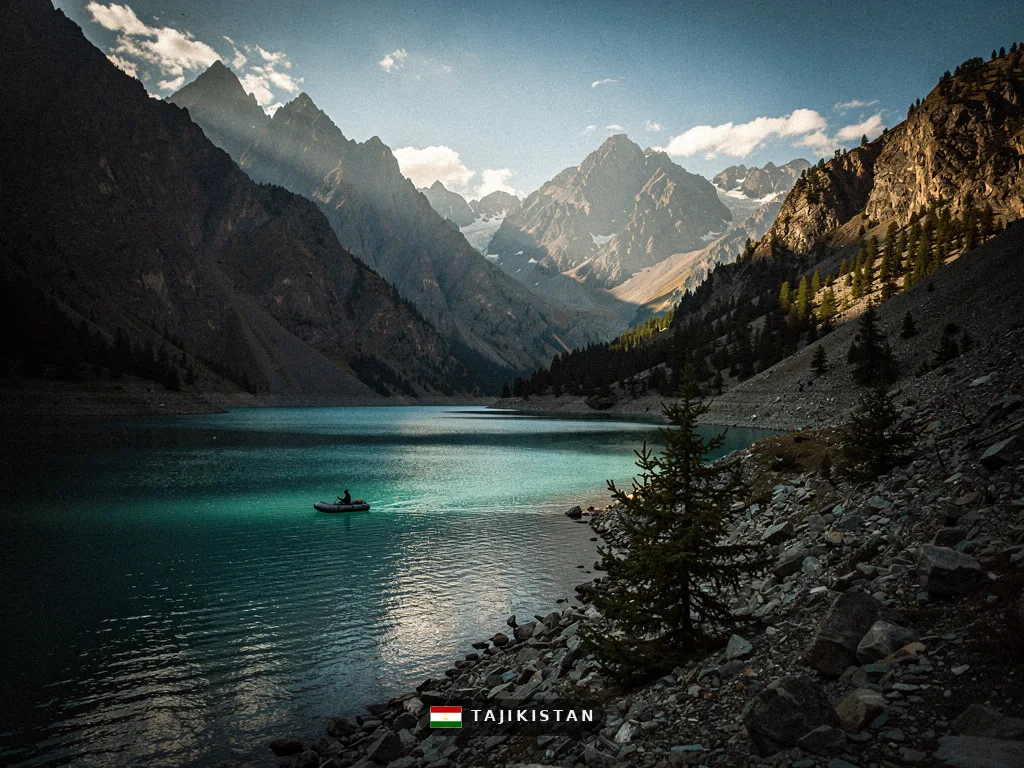
Imagine standing on the shore of a turquoise lake surrounded by snow-capped peaks rising over 4,000 metres (13,000 feet), casting your fly into crystal-clear water where an elusive Amu Darya trout might strike. This is the reality of fishing in Tajikistan. Tucked between the high Pamir and Tian Shan mountain ranges in Central Asia, Tajikistan offers some of the most remote and pristine freshwater fishing experiences on Earth.
While the country is still developing its tourism infrastructure, adventurous international anglers are increasingly discovering its high-altitude lakes and fast-flowing rivers. Species like the powerful Marinka (Snow Trout), the legendary Amu Darya Trout, and high-mountain Osman reward those willing to travel far from the beaten path. Whether you dream of backcountry fly fishing in the Pamirs or spinning for giant catfish in vast reservoirs, Tajikistan delivers unforgettable wilderness angling.
This comprehensive guide covers everything you need to plan your trip: fishing licenses and permits, top fishing spots, guided tours with current prices, regulations, best travel seasons, what equipment to bring, and practical advice for travelers from Europe, North America, Asia, and beyond. Regulations can change, so always verify the latest rules with local authorities or your chosen tour operator before you travel.
01Fishing Licenses and Permits in Tajikistan
Unlike many popular fishing destinations where you can simply buy a license online, fishing in Tajikistan requires careful planning. A fishing permit is mandatory for all types of angling, including shore fishing, river fishing, and lake fishing. The Committee for Environmental Protection under the Government of the Republic of Tajikistan (often referred to as the Ministry of Agriculture and Water Resources in older documents) oversees licensing and conservation.
Foreign visitors cannot easily apply for permits independently. There is no centralized English-language online portal. Instead, most international anglers obtain their fishing permits through licensed local tour operators or professional guides. These operators handle the bureaucracy, which can otherwise be time-consuming and conducted primarily in Tajik or Russian.
Standard Fishing Permits
Standard amateur fishing permits typically cost between 5 and 15 USD (4.60–14 EUR). The exact fee depends on the duration of your trip, the specific water bodies you plan to fish, and whether you are targeting protected species. These permits are usually valid for a set number of days and specific regions. Multi-day backcountry expeditions often include the permit cost in the overall package price.
Additional Permits for Remote Areas
If your fishing adventure takes you into the famous Pamir Mountains (Gorno-Badakhshan Autonomous Oblast — GBAO), you will need a separate GBAO permit in addition to your standard visa and fishing license. This permit is essential for travel in the region and can be arranged through your tour operator.
For waters located inside Tajik National Park (including areas around Lake Yashilkul, parts of the Bartang Valley, and other protected high-altitude lakes), you must also purchase a daily park entrance permit. These currently cost 15–25 Tajik Somoni (TJS), which is approximately 1.30–2.20 EUR or 1.40–2.40 USD per day.
Important note: Even if you plan to fish from the shore of a remote mountain lake, a valid permit is still required. Enforcement focuses on conservation rather than tourism revenue, and local authorities take illegal fishing seriously.
Tip: Always work with a reputable local operator who can secure all necessary permits in advance. Attempting to fish without proper documentation can lead to heavy fines, confiscation of equipment, or even legal problems.
For the latest official regulations, refer to the Law of the Republic of Tajikistan On Fisheries and related licensing documents.
02Rules and Regulations – What You Must Know
Tajikistan enforces strict regulations to protect its fragile high-altitude ecosystems. Understanding these rules is essential for any responsible angler.
Closed Seasons
The general closed season for fishing in rivers, lakes, and reservoirs runs from April 1 to June 15 to protect spawning fish. There is an additional specific closure for trout species in southwestern Tajikistan from October 15 to December 15. Fishing during these periods is strictly prohibited and can result in significant penalties.
Prohibited Methods and Gear
Dynamite fishing, chemical poisoning, and the use of electric shock devices are completely illegal and carry heavy fines or even imprisonment. The use of nets is also heavily restricted for amateur anglers.
Minimum Size Limits
To ensure sustainable populations, Tajikistan enforces the following minimum size limits (measured from tip of snout to end of tail):
Fish below these sizes must be released immediately with minimum harm.
Daily Catch Limits
Amateur anglers are generally limited to around 5 kg (11 lbs) of fish per person per day. For many visitors, especially those targeting trophy mountain trout, catch-and-release is strongly encouraged and often practiced as standard. In protected national park waters, catch-and-release may be mandatory for certain species.
Regulations may vary slightly between regions and can be updated annually. Always confirm the current closed seasons and limits with your licensed guide or the Committee for Environmental Protection.
03Popular Fish Species in Tajikistan
The fish of Tajikistan are specially adapted to extreme environments — cold, oxygen-rich waters at high altitudes with powerful currents.
Amu Darya Trout (*Salmo trutta oxianus*) is the ultimate prize for many fly fishers. This subspecies of brown trout is endemic to the Amu Darya river basin. It is known for its beautiful coloration and powerful fighting ability in fast mountain streams. Reaching weights of 2–4 kg (4.4–8.8 lbs) in prime waters, these fish test both your tackle and your skills.
Marinka (Snow Trout, *Schizothorax* spp.) is perhaps the most widespread and iconic species. These strong fighters are perfectly adapted to cold, turbulent rivers and can grow surprisingly large. Marinka are powerful, stubborn opponents that often take long, strong runs in heavy current.
Osman is a high-altitude specialist found in the deepest and coldest Pamir lakes, such as Yashilkul. These fish have unique physiological adaptations that allow them to thrive above 3,500 m (11,500 feet).
In the lower river systems and large reservoirs like Nurek, you will also encounter Wels Catfish, Silver Carp, Zander (Pikeperch), and various Carp species. These can provide excellent sport on heavier tackle, especially when fishing from boats.
04Top Fishing Spots – Where to Experience Tajikistan’s Best Angling
The true magic of fishing in Tajikistan lies in its spectacular scenery. Here are the premier destinations that make anglers dream of Central Asia’s mountains.
Lake Iskanderkul – Fann Mountains
Nestled at 2,200 m (7,200 feet) in the breathtaking Fann Mountains, Lake Iskanderkul is one of the most accessible high-mountain fishing destinations. Its turquoise waters are surrounded by dramatic peaks. While the local trout here tend to be smaller (usually 0.5–1.5 kg / 1–3.3 lbs), the sheer beauty of the landscape makes every cast memorable. Many visitors combine fishing with hiking to nearby waterfalls and mountain passes. The lake is roughly 130 km (80 miles) from the capital Dushanbe, making it feasible for shorter trips.
Lake Yashilkul – Pamir Mountains
Known as “The Green Lake,” Yashilkul sits at an impressive 3,700 m (12,100 feet) on the Pamir Plateau. This large alpine lake is famous for Marinka and Osman. The water is exceptionally clear, allowing you to often see fish before they strike. Fishing here feels otherworldly — the surrounding treeless landscape, dramatic rocky peaks, and vast skies create an almost spiritual experience. Many anglers combine fishing with multi-day treks or horse tours in the region. The altitude demands respect; proper acclimatization is essential.
Khafrazdara Valley Lakes – Bartang Region
For the truly adventurous, the remote lakes of the Khafrazdara Valley in the Bartang region represent high-altitude fishing at its purest. These pristine waters are home to healthy populations of Amu Darya Trout. Reaching these lakes requires serious 4WD transport, possibly horse trekking, and several days of commitment. The reward is fishing in places that see very few visitors each year. The surrounding scenery of the Pamir Mountains is among the most spectacular in Central Asia.
Vakhsh River
The Vakhsh River system offers a wonderful variety of fishing experiences. In its upper reaches, you can target mountain trout in fast-flowing sections. Further downstream, particularly in the middle and lower sections, larger species such as Catfish, Carp, and Zander become more common. The contrast between the wild mountain sections and the broader river valleys makes the Vakhsh a fascinating destination for multi-species anglers.
Nurek Reservoir
At over 70 km (43 miles) long, the massive Nurek Reservoir is one of Tajikistan’s largest bodies of water. It holds impressive numbers of Silver Carp, Amur Carp, and sizeable Wels Catfish. This is the place for boat-based fishing using spinning gear, heavy bottom rigs, or even fly fishing for smaller species near the shores. While less remote than the mountain lakes, the reservoir offers reliable action and the chance to catch genuinely large fish — some catfish here exceed 50 kg (110 lbs), though specimens of 10–20 kg (22–44 lbs) are more commonly landed.
Each of these locations offers a completely different fishing experience, from technical fly fishing in crystal streams to powerful battles with reservoir monsters, all set against some of the world’s most dramatic mountain scenery.
🎣 Fishing tours in Tajikistan — Book guided fishing tours with local experts.
05Tours and Guided Experiences
Given the challenging logistics, language barriers (Tajik and Russian dominate; English is limited outside major cities), and the need for proper permits, guided fishing tours are the best and often only practical option for most international visitors.
Tour operators typically organize everything: permits, transport (usually rugged 4WD vehicles), accommodation (yurts, homestays, or tented camps), meals, and local guiding. Packages range from day trips near Dushanbe to multi-week backcountry expeditions deep into the Pamirs.
Paramount Journey specializes in high-end mountain trekking combined with fishing expeditions. Their experienced guides know the most productive high-altitude waters and provide full logistical support.
Travelotajikistan offers well-structured packages, including their popular “Fishing on the Vakhsh” tour, which combines river and reservoir fishing. Prices for these multi-day tours typically start from around 500 USD (approx. 460 EUR) for a 5–6 day basic package and can reach 1,500 USD (1,380 EUR) or more for fully supported 10–14 day expeditions into remote Pamir valleys. These prices usually include permits, transport from Dushanbe, most meals, and basic equipment if needed.
Pamir Horse Adventure provides unique horse-trekking fishing trips to remote lakes that are otherwise almost impossible to reach. These tours combine authentic cultural experiences with world-class mountain angling.
Smaller local operators based in Khorog (the capital of the Pamir region) can also arrange more customized trips, often working closely with the Pamir Eco-Cultural Tourism Association (PECTA).
Most tours run from June to September when mountain passes are accessible and weather is most stable. November to March offers opportunities for lowland river and reservoir fishing, though conditions are much colder.
🚤 Charter fishing in Tajikistan — Find and book charter boats with experienced captains.
06What Equipment to Bring
Tajikistan has almost no specialized fishing shops stocking high-quality modern gear. You must bring your own equipment.
For high-mountain streams and rivers, a lightweight fly fishing rod in the 3–5 weight class (9–10 ft / 2.7–3 m) with floating line is ideal for targeting trout and Marinka. Bring a good selection of dry flies, nymphs, and streamers that imitate local insects and baitfish.
For reservoir fishing and targeting larger catfish or carp, bring sturdy spinning or casting rods rated for 20–60 g (0.7–2.1 oz) lures, along with strong braided line (20–40 lb test). Heavy-duty terminal tackle, large hooks, and robust landing nets are essential.
A reliable pair of polarized sunglasses, neoprene waders (or at least sturdy hiking boots), and a good rain jacket are must-haves. Because of the extreme altitude and rapidly changing mountain weather, bring layers of warm clothing even in summer. Night-time temperatures can drop below freezing at higher elevations.
Tip: Pack your gear in durable, waterproof duffel bags suitable for rough 4WD transport and possible horse packing.
🛒 Fishing equipment for Tajikistan — Find the right gear for your trip.
07Practical Travel Information
Best Time to Visit
For high-altitude Pamir and Fann Mountain fishing, the prime season is June to September. During these months, mountain passes are usually open, weather is relatively stable, and fish are active. From a Northern Hemisphere perspective, this coincides with summer. Travelers from the Southern Hemisphere will find this matches their winter period.
Lowland river and reservoir fishing (Vakhsh River and Nurek Reservoir) can be productive from November to March, offering a completely different experience during the colder months.
Getting There and Visas
Most international visitors fly into Dushanbe International Airport (DYU). Direct or one-stop flights are available from major hubs in Europe, Turkey, Russia, China, and Central Asia.
Visa requirements vary by nationality. Citizens of many countries (including most EU nations, the UK, USA, Canada, Japan, and Australia) can obtain a visa on arrival or an e-visa online. However, if you plan to visit the GBAO region for Pamir fishing, you must obtain the GBAO permit in advance or together with your visa. Check the latest requirements through official sources such as the Pamirs.org visa guide or your local Tajik embassy, as rules can change.
Language and Communication
Tajik (a Persian language) and Russian are the main languages. English is spoken by few people outside the tourism sector. A good translation app (such as Google Translate with offline Tajik and Russian language packs) is very helpful. Working with a licensed guide who speaks some English removes most communication barriers.
Health and Safety
Altitude sickness is a genuine risk above 3,000–3,500 m (9,800–11,500 feet). Acclimatize properly, stay hydrated, and consider consulting a doctor before your trip about preventive medication. Drink only bottled or properly treated water. Medical facilities are limited outside Dushanbe, so comprehensive travel insurance that covers high-altitude trekking and medical evacuation is strongly recommended.
Costs and Budgeting
Daily guided fishing experiences typically range from 20–60 USD (18–55 EUR), while full multi-day expeditions cost 500–1,500 USD (460–1,380 EUR) total, depending on group size, duration, and remoteness. These prices are roughly comparable to a mid-range guided fishing trip in Eastern Europe or Central Asia.
Food and basic accommodation in homestays are very affordable — often 10–20 USD (9–18 EUR) per day. Domestic transport (4WD with driver) is the largest additional expense for independent travelers.
📱 Stay connected in Tajikistan — Get an eSIM for affordable mobile data while traveling.
Getting Around
Public transport is limited and unreliable for reaching remote fishing areas. Almost all serious fishing trips require 4WD vehicles, often with experienced mountain drivers. Hiring a car and driver through your tour operator is the safest and most practical solution.
🚗 Rent a car in Tajikistan — Compare prices from 500+ rental companies worldwide.
08Costs Overview
| Item | Typical Cost (USD) | Typical Cost (EUR) | Notes |
|-----------------------------|------------------------|-----------------------|-------|
| Fishing Permit (standard) | 5–15 | 4.60–14 | Per person, duration dependent |
| National Park Fee | 1.40–2.40 per day | 1.30–2.20 per day | For protected areas |
| Guided Day Trip | 20–60 | 18–55 | Basic local guiding |
| Multi-day Expedition (5–7 days) | 500–1,000 | 460–920 | All-inclusive, small group |
| Full 10–14 Day Pamir Trip | 1,200–1,500 | 1,100–1,380 | High-end, remote access |
| Basic Homestay + Meals (per day) | 10–20 | 9–18 | Very affordable |
All prices are approximate and subject to change. Many operators quote in USD for stability.
09Frequently Asked Questions
Do I need a fishing license to fish in Tajikistan?
Yes. A fishing permit is mandatory for all fishing activities. Independent application is difficult; most visitors arrange permits through licensed tour operators.
What is the best time of year for fishing in the Pamir Mountains?
June to September offers the best conditions for high-altitude lakes and rivers. Lower elevation fishing is possible outside this window but with much colder weather.
Can I fish independently or do I need a guide?
While technically possible in some accessible areas, the lack of infrastructure, language barriers, permit complexity, and difficult mountain logistics make guided tours strongly recommended for international visitors.
What is the GBAO permit and do I need it?
The GBAO permit is required to enter the Gorno-Badakhshan Autonomous Region (Pamir). It is essential for almost all of the best high-mountain fishing destinations and must be obtained in advance or with your visa.
Are there any dangerous animals or major risks?
The main risks are related to altitude sickness, extreme weather changes, and challenging mountain roads. There are no significant dangerous wildlife threats to anglers, though brown bears exist in some remote areas.
What species can I realistically catch?
Expect to target Amu Darya Trout, Marinka (Snow Trout), Osman, and in lower waters, various Carp, Catfish, and Zander. Trophy fish are possible but the experience and scenery are often the main rewards.
Is catch-and-release practiced?
Yes, especially for mountain trout species. Many operators and conscientious anglers practice catch-and-release to help preserve fragile populations.
10Conclusion
Fishing in Tajikistan is not a comfortable, well-trodden angling holiday. It is a true adventure into one of the world’s most spectacular and least-visited mountain regions. The combination of remote high-altitude lakes, powerful endemic fish, and awe-inspiring Pamir scenery creates memories that last a lifetime.
By working with experienced local operators, securing all necessary permits, and preparing properly for high-altitude conditions, you can enjoy an authentic fishing experience far from the crowds. Whether you are a dedicated fly fisher chasing Amu Darya Trout or a multi-species angler looking for something completely different, Tajikistan offers a fishing journey like no other.
Start planning early, respect the fragile environment, and prepare to be humbled by the scale and beauty of the “Roof of the World.”
11Sources & Further Links
Disclaimer: This article is intended for informational purposes only. Fishing regulations, permit requirements, and costs in Tajikistan may change at any time. Always verify the latest rules with the Committee for Environmental Protection or your licensed local operator before planning your trip. The authors and FishingWorldGuide.com assume no liability for any incidents, legal issues, or changes that may occur. Information is based on data available as of 2026.
Don't miss any fishing tips!
Get the best fishing destination recommendations weekly in your inbox.
No spam. Unsubscribe anytime.
Data incorrect?
Help us keep this article up to date — report outdated or incorrect information
More articles