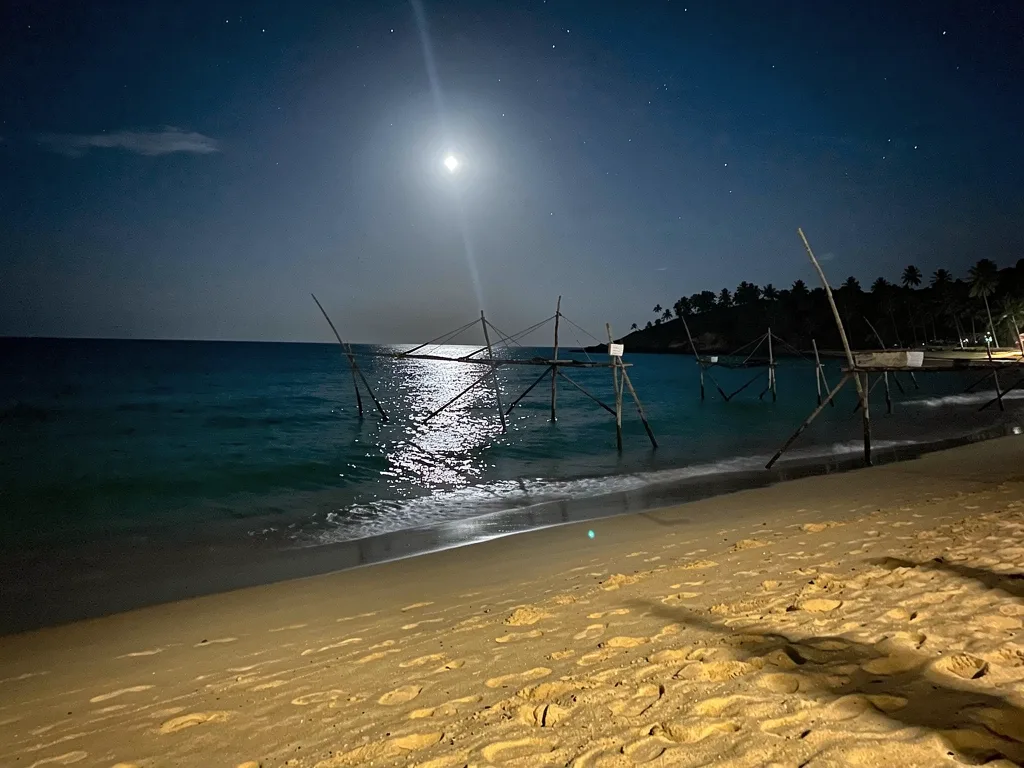
Imagine a tropical island where marlin breach the deep blue Indian Ocean, mahseer tear through jungle rivers, and coral-fringed lagoons hold fish that most anglers only dream about. Fishing in Sri Lanka offers exactly this — an extraordinary blend of deep-sea thrills, freshwater adventure, and scenery so stunning it almost distracts you from the rod in your hand. Whether you're chasing a 100 kg (220 lb) blue marlin offshore, casting for tilapia in an ancient irrigation reservoir, or fly-fishing a highland stream, Sri Lanka punches far above its weight as a fishing destination.
This guide covers everything an international angler needs to know: licensing rules, the best fishing spots, guided tour options, gear, and practical travel tips — so you can spend less time planning and more time fighting fish.
01Do You Need a Fishing License in Sri Lanka?
The good news for visiting anglers: recreational sport fishing in Sri Lanka is essentially free and does not require a license for rod-and-reel fishing. If you're visiting as a tourist and fishing for sport, you can cast a line without obtaining a formal permit.
That said, the rules become more specific in certain contexts:
Tip: If you're joining a licensed fishing charter or guided tour, your operator handles all relevant registrations on your behalf. Always verify that your charter is SLTDA-registered before booking.
How to Obtain a Fishing License (If Required)
If your activity falls outside casual recreational fishing — for example, you're running a vessel or fishing commercially — the process is straightforward:
1. Approach the Department of Fisheries and Aquatic Resources (DFAR).
2. Collect and fill in the application form provided by the officer.
3. Submit all required documents and the completed form.
4. Pay the prescribed fee as set by the authority.
Licenses are valid for up to one year and can be renewed but are not transferable. Processing typically takes around two weeks.
DFAR Contact Details:
Note: Specific license fee amounts were not publicly available at the time of writing. Contact DFAR directly for current fees before planning a commercial or vessel-based trip.
02Fishing Regulations & Protected Areas
The Legal Framework
Sri Lanka's fishing industry is governed primarily by the Fisheries and Aquatic Resources Act, No. 2 of 1996, which provides for the management, regulation, conservation, and development of all fisheries and aquatic resources. Recent amendments include the Recreational Fishing Management Regulations 2023 and updated Fishing Operations Regulations (2023 amendment).
Enforcement is handled jointly by DFAR, the Sri Lanka Navy, and the Coast Guard, who conduct regular patrols, inspections, and awareness programs.
Banned Methods and Prohibited Fishing
Sri Lanka takes conservation seriously. The following methods are banned or heavily restricted:
Marine Protected Areas
Sri Lanka has declared several Marine Sanctuaries where fishing is prohibited or heavily restricted:
Fisheries reserves also exist across the island. Fishing in these areas without a permit is illegal and punishable. Always check local signage and ask your guide or charter operator about any no-go zones near your planned fishing area.
Warning: Fishing without a valid license (where required) is a punishable offense and can result in the withdrawal of any existing licenses. Fines and legal action can follow.
03The Best Fishing Spots in Sri Lanka
This is where Sri Lanka truly shines. Few countries of its size offer such a diverse range of angling environments — from world-class offshore big game to tranquil highland trout streams.
1. Mirissa & Galle — Deep-Sea Big Game (South Coast)
The waters off Sri Lanka's south coast are among the finest big-game fishing grounds in Asia. The continental shelf drops quickly just south of Mirissa, meaning you're in 500–1,000 m (1,600–3,300 ft) water within a short boat ride. This is prime territory for:
The best season for south coast offshore fishing runs from November to April, coinciding with the northeast monsoon's calm seas on the southern and western coasts. Mirissa has developed a solid charter infrastructure, with several SLTDA-registered operators running full-day and half-day trips.
2. Trincomalee — East Coast Offshore Paradise
Sri Lanka's east coast opens up during the southern hemisphere's winter months (May to October), when the southwest monsoon batters the south but the east coast basks in calm, clear water. Trincomalee, blessed with one of the world's finest natural harbors, is the jumping-off point for:
The water around Trincomalee is extraordinarily clear, making it double as a world-class diving destination. Fish here and you'll also be treated to sightings of blue whales and spinner dolphins — Sri Lanka is one of the best places on earth to see them.
3. Hikkaduwa & Bentota — Inshore Reef Fishing (West Coast)
The shallow reef systems along the west coast offer excellent inshore fishing from small traditional outrigger canoes (known as *oruwa*). Species include:
Note that Hikkaduwa is a Marine Sanctuary — confirm with your local guide exactly where you can and cannot fish.
4. Freshwater Fishing — Lakes, Reservoirs & Rivers
Sri Lanka's interior holds a surprisingly rich freshwater fishery, centered on ancient irrigation reservoirs called "wewa" or "tanks" that dot the cultural triangle.
Key freshwater species:
Top freshwater spots:
🎣 Fishing tours in Sri Lanka — Book guided fishing tours with local experts.
04Guided Fishing Tours & Charters in Sri Lanka
For most visiting anglers, booking a guided trip or charter is the smartest move. Local expertise dramatically increases your catch rate, eliminates permit headaches, and ensures you stay within legal and safety guidelines.
Deep-Sea Charters
Full-day offshore charters typically operate out of Mirissa, Hikkaduwa, Trincomalee, and Negombo. A standard full-day charter (6–8 hours) costs approximately:
| Duration | Local Price (LKR) | EUR | USD |
|---|---|---|---|
| Half day (4 hrs) | 20,000–35,000 LKR | €55–€95 | $60–$105 |
| Full day (7–8 hrs) | 35,000–70,000 LKR | €95–€190 | $105–$210 |
| Multi-day package | From 120,000 LKR | From €330 | From $360 |
*Prices typically include rod, reel, bait/lures, and soft drinks. Confirm what's included before booking.*
According to FishingBooker, Sri Lanka charters start from around £70 (approximately €82 / $90) for a shared or half-day trip. Private full-day big game boats run considerably more.
Recommended Operators
Tip: Always ask to see your operator's SLTDA registration and check that the vessel has safety equipment (life jackets, radio, first aid kit). The Indian Ocean can change quickly.
🚤 Charter fishing in Sri Lanka — Find and book charter boats with experienced captains.
05Best Time to Fish in Sri Lanka
Sri Lanka has two monsoon seasons that divide the island into distinct fishing windows — a crucial factor for planning your trip.
| Season | Months | Best Coast/Area |
|---|---|---|
| Northeast monsoon (calm south/west) | November – April | South coast, West coast, offshore big game |
| Southwest monsoon (calm east) | May – October | East coast (Trincomalee), freshwater |
| Year-round | All year | Freshwater reservoirs, some sheltered bays |
Tip for Southern Hemisphere visitors: Sri Lanka's "winter" fishing season (November–April) coincides with the southern hemisphere's summer — a great escape for Australian, South African, or South American anglers.
06Target Species Quick Reference
| Species | Where | Best Season | Method |
|---|---|---|---|
| Blue/Black Marlin | South & east coast offshore | Nov–Apr (south), May–Sep (east) | Trolling |
| Yellowfin Tuna | South & east coast offshore | Year-round | Trolling, jigging |
| Sailfish | South coast offshore | Nov–Apr | Trolling |
| Wahoo | South coast offshore | Nov–Apr | High-speed trolling |
| Giant Trevally | East coast reefs | May–Oct | Popping, jigging |
| Barracuda | Inshore reefs, all coasts | Year-round | Casting, trolling |
| Mahseer | Highland rivers (Kelani, Mahaweli) | Year-round (best Oct–Feb) | Lure, fly, live bait |
| Tilapia | Inland reservoirs | Year-round | Bait, lure |
| Snakehead | Lowland rivers and tanks | Year-round | Surface lures |
07Fishing Gear & Equipment
Sri Lanka's climate demands tropical-rated gear. Here's what to bring or buy:
Offshore & Deep-Sea
Freshwater
What's Available Locally
Major towns like Colombo, Kandy, and Negombo have fishing tackle shops. However, specialized big-game gear is limited — bring your own quality rods, reels, and lures if you're serious. Most charter boats supply rods and reels but quality varies.
🛒 Fishing equipment for Sri Lanka — Find the right gear for your trip.
08Practical Travel Information for International Visitors
Getting to Sri Lanka
Sri Lanka is well-connected internationally. Bandaranaike International Airport (CMB) near Colombo handles most international arrivals, with direct or one-stop connections from:
A second international airport, Mattala Rajapaksa International Airport (HRI), is located near Hambantota in the deep south — useful for the south coast fishing scene.
Visa Requirements
Most international visitors need a visa. Sri Lanka operates an Electronic Travel Authorization (ETA) system, obtainable online before arrival:
Tip: Always check the latest visa information at the official Sri Lanka ETA portal (eta.gov.lk) before travel, as requirements and fees change.
Getting Around
Currency & Costs
Language
Sri Lanka's official languages are Sinhala and Tamil. English is widely spoken in tourist areas, hotels, and by fishing charter operators — communication is generally easy for English speakers. Away from the coast, a translation app (Google Translate works offline with downloaded language packs) helps in local markets and rural areas.
Useful Sinhala phrases for anglers:
Accommodation Near Fishing Spots
| Location | Budget (per night) | Mid-Range | Upscale |
|---|---|---|---|
| Mirissa | LKR 3,500–7,000 ($11–$21) | LKR 10,000–18,000 ($30–$55) | LKR 25,000+ ($76+) |
| Trincomalee | LKR 3,000–6,000 ($9–$18) | LKR 8,000–15,000 ($24–$45) | LKR 20,000+ ($61+) |
| Hikkaduwa | LKR 4,000–8,000 ($12–$24) | LKR 12,000–22,000 ($36–$67) | LKR 30,000+ ($91+) |
| Kitulgala | LKR 5,000–10,000 ($15–$30) | LKR 12,000–20,000 ($36–$61) | LKR 25,000+ ($76+) |
| Kandy | LKR 3,500–8,000 ($11–$24) | LKR 10,000–20,000 ($30–$61) | LKR 35,000+ ($106+) |
🏨 Accommodation near fishing spots in Sri Lanka — Find hotels and lodges close to the best waters.
Food, Health & Safety
09Conservation & Responsible Fishing
Sri Lanka's marine and freshwater ecosystems are under pressure from population growth, coastal development, and climate change. As an international angler, you can make a difference:
Tip: Sri Lanka's mahseer population is a national treasure. Several tour operators specifically offer mahseer fishing on a strict catch-and-release basis, contributing to habitat monitoring and conservation.
10FAQ: Fishing in Sri Lanka
Do I need a fishing license as a tourist in Sri Lanka?
No. Recreational rod-and-reel fishing for sport does not require a license for visiting tourists in Sri Lanka. If you're on a licensed charter, your operator manages all permits. A license is required for commercial fishing operations.
What is the best time of year to go fishing in Sri Lanka?
It depends on where you fish. The south and west coasts are best from November to April (northeast monsoon). The east coast (Trincomalee) is prime from May to October (southwest monsoon). Freshwater fishing is productive year-round, with October to February often the best months.
What big fish can I catch in Sri Lanka?
Sri Lanka offers outstanding big-game fishing with blue marlin, black marlin, sailfish, yellowfin tuna, wahoo, and giant trevally offshore. Freshwater targets include mahseer, snakehead, tilapia, and catfish.
How much does a fishing charter cost in Sri Lanka?
A half-day charter costs approximately LKR 20,000–35,000 (€55–€95 / $60–$105). A full-day deep-sea big game charter runs LKR 35,000–70,000 (€95–€190 / $105–$210), depending on the boat and number of anglers.
Is fishing allowed in Sri Lanka's marine sanctuaries?
No. Areas such as Hikkaduwa, Pigeon Island, the Basses Reefs, and Polhena Reef are designated Marine Sanctuaries where fishing is prohibited. Violators can face serious penalties.
Can I bring my own fishing tackle to Sri Lanka?
Yes. There are no restrictions on bringing personal fishing tackle as carry-on or checked luggage (check airline rules for sharp items). Specialized big-game gear is hard to find locally, so bring what you need.
Do charter boats in Sri Lanka have safety equipment?
SLTDA-registered operators are required to meet safety standards. Always confirm life jackets, communication equipment, and first aid kits are on board before departure.
Can I fly-fish for trout in Sri Lanka?
Small populations of rainbow trout introduced during the British colonial era exist in highland streams near Nuwara Eliya. These are limited and the fishery is fragile. Local guides in the hill country can advise on access. This is a niche experience rather than a mainstream fishery.
11Conclusion
Sri Lanka is one of Asia's most underrated fishing destinations. The combination of world-class offshore big game, captivating freshwater mahseer fishing, and one of the world's most beautiful island settings makes it an exceptional choice for any angling adventure. Best of all, recreational fishing is free — your main investment is getting there and choosing the right local guides to maximize your time on the water.
Whether you're a seasoned offshore angler chasing marlin off Mirissa, a fly fisher drawn to a jungle river in the hill country, or a family wanting a fun day out on a traditional outrigger, Sri Lanka has a fishing experience that will stay with you long after the tan fades.
Start planning your trip, book a reputable charter, respect the island's protected waters, and get ready for the fight of your life.
12Sources & Further Links
*Disclaimer: The information in this article was researched and compiled in 2026 to the best of our knowledge. Fishing regulations, license requirements, fees, visa rules, and operator details can change without notice. Always verify current requirements with the Sri Lanka Department of Fisheries and Aquatic Resources (fisheriesdept.gov.lk), the Sri Lanka Tourism Development Authority (sltda.gov.lk), and your country's embassy before travel. FishingWorldGuide.com accepts no liability for any inaccuracies or for decisions made based on this article. Fish responsibly and respect local conservation rules.*
Recommended tours
Fishing trips in Sri Lanka
Curated tours & charters with price and click data from our partner dashboards.
 FishingBooker
ReelCrazy – Tangalle Sport Fishing Charter
 FishingBooker
Dts Lanka
 FishingBooker
Snapper Fishing Tour – Hiriketiya
Don't miss any fishing tips!
Get the best fishing destination recommendations weekly in your inbox.
No spam. Unsubscribe anytime.
Read more
Data incorrect?
Help us keep this article up to date — report outdated or incorrect information
More articles