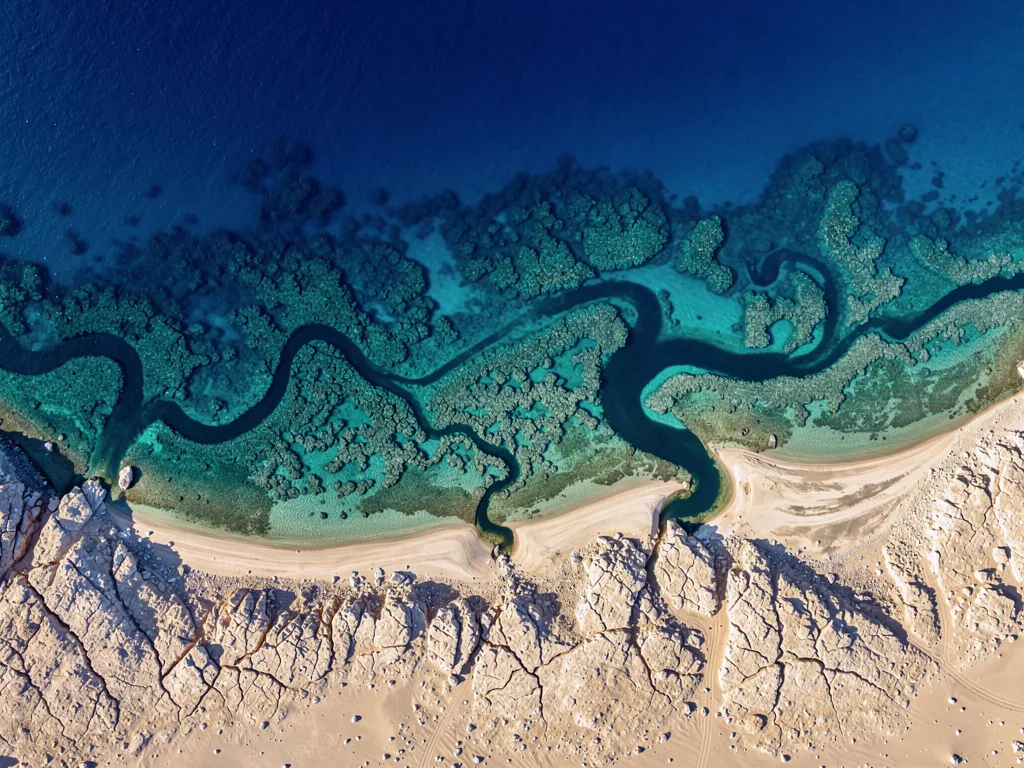
Saudi Arabia is rapidly emerging as one of the most exciting and least-pressured saltwater fishing destinations in the world. With over 3,700 km (2,300 miles) of coastline along the crystal-clear Red Sea and the nutrient-rich Arabian Gulf (also known as the Persian Gulf), the Kingdom offers world-class opportunities for everything from wading for Giant Trevally (GT) on remote flats to battling massive Yellowfin Tuna and Sailfish in deep blue water. Thanks to Vision 2030 and the introduction of the Saudi eVisa, international anglers can now experience this previously closed frontier.
Whether you dream of stalking Indo-Pacific Permit on the Farasan Banks, jigging for Dogtooth Tuna off Jeddah, or catching Hamour (Grouper) in the calmer Gulf waters near Dammam, this comprehensive guide covers everything you need to plan an unforgettable trip. You will learn about fishing permits (most tourists fish through licensed operators who handle paperwork), current regulations, top fishing spots, guided tour options with real prices, best travel seasons, and practical advice for visitors from Europe, North America, Asia, and beyond.
Fishing in Saudi Arabia remains relatively untouched compared to popular destinations like the Maldives or Seychelles. The combination of warm waters, healthy coral reefs, and strict protection in many areas creates exceptional catch rates and the chance to land true trophy fish. This guide draws on official regulations from the Ministry of Environment, Water and Agriculture (MEWA) and the Saudi Red Sea Authority (SRSA) to ensure you travel confidently and responsibly.
01Do You Need a Fishing License in Saudi Arabia?
The rules for fishing in Saudi Arabia distinguish clearly between locals, residents, and international tourists. Understanding these distinctions is essential before you book flights or charters.
For shore fishing with rod and hook, recreational angling from the beach is generally allowed for Saudi citizens and residents without a special permit in many areas. However, you must respect closed seasons, protected zones, and bag limits. Foreign tourists are strongly advised not to fish independently from shore without local guidance, as regulations can be enforced strictly and language barriers may create complications.
Boat-based fishing requires a permit in all cases. According to official MEWA guidelines, any fishing activity conducted from a vessel must be covered by an appropriate license. For tourists, the simplest and most common solution is to book with a licensed charter operator. Reputable companies such as those operating out of Jeddah, Yanbu, or in the Farasan Banks include the necessary temporary fishing permits and Border Guard notifications in their packages. This removes the administrative burden and ensures full legal compliance.
Residents and citizens can apply for a recreational rod fishing license through the Naama Portal (naama.sa) or the National Platform (my.gov.sa). The process typically involves submitting identification, completing a short training module on responsible fishing, and paying a nominal administrative fee. Current fees for residents range from 50 SAR to 200 SAR (€12–€50 / $13–$53), depending on the type and duration of the permit.
Tourists who prefer to organize private trips must work with registered operators who coordinate directly with the Saudi Border Guard. Failure to notify the authorities of departure and return times can result in significant fines. The official recommendation from both MEWA and the Saudi Red Sea Authority is clear: international visitors should fish exclusively through licensed professional guides or charter companies.
Tip: Always carry your passport or a copy when fishing. Border Guard vessels routinely check documentation on the water, especially near sensitive areas or in the southern Red Sea.
Regulations are subject to change, particularly as the Kingdom expands its tourism infrastructure. Always verify the latest rules directly with your chosen operator or through the MEWA website before travel.
02Fishing Regulations and Protected Areas
Saudi Arabia enforces a robust set of fishing regulations designed to protect its marine resources while allowing sustainable recreational angling. These rules are outlined in the “Regulation of Fishing, Investment and Preservation of Live Aquatic Resources within Territorial Waters” issued by MEWA.
Prohibited methods for recreational anglers include the use of nets, traps, spearguns, and explosives. Only rod-and-line or hand-line fishing is permitted for tourists. Commercial methods are strictly reserved for licensed artisanal and industrial fishermen.
Closed seasons are strictly observed to protect spawning stocks:
These bans are actively enforced, and violations can result in fines of up to 10,000 SAR (€2,300 / $2,650).
Catch limits and size restrictions exist for several species, although exact numbers can vary by region. Operators usually provide up-to-date information. Catch-and-release is strongly encouraged — and in many cases required — for iconic reef species such as certain groupers, sharks, and rays. The Red Sea Global initiative has created multiple protected marine areas where fishing is either limited or completely prohibited to allow coral ecosystems to recover.
No-fishing zones include:
When fishing from a boat, you must report your departure and expected return time to the Saudi Border Guard via your charter captain. This is a mandatory security measure that applies to all vessels, including yachts and fishing boats.
Environmental stewardship is a growing priority. Saudi Arabia is investing heavily in coral reef protection and has joined international efforts to preserve the unique marine biodiversity of the Red Sea. Many operators now practice 100% catch-and-release for Giant Trevally, Permit, and sharks.
Tip: Download the Naama app or check the MEWA website before your trip for the latest seasonal bans and protected area maps. Mobile reception is good near the coast but can be limited in remote southern regions — consider an eSIM for reliable data.
03Best Fishing Spots in Saudi Arabia: Where to Cast Your Line
The true magic of fishing in Saudi Arabia lies in its diverse and largely unexplored waters. Here are the premier destinations that should be on every serious angler’s bucket list.
Jeddah – Deep Water Close to Shore
Jeddah, Saudi Arabia’s bustling Red Sea gateway, offers some of the most accessible world-class fishing. The continental shelf drops dramatically just a few kilometers from shore, giving anglers quick access to pelagic species. Expect strong chances of Yellowfin Tuna (up to 80 kg / 176 lb), Wahoo, Sailfish, and various Amberjack. Bottom fishing over reefs produces excellent Grouper (Hamour) and Red Snapper.
The combination of deep-sea trolling, vertical jigging, and reef fishing makes Jeddah suitable for all experience levels. Early morning departures often yield the best action before the sea breeze picks up in the afternoon.
Yanbu – The Diving Capital with Serious Game Fish
Known internationally for its pristine dive sites, Yanbu also delivers outstanding fishing. The reefs here teem with Barracuda, King Mackerel, and large Grouper. Perhaps most excitingly, the area is famous for Hammerhead Shark sightings — though these are strictly catch-and-release. Light spinning and popping techniques work beautifully around the numerous coral heads and submerged islands.
The clear water (visibility often exceeds 30 m / 100 ft) makes sight fishing possible on calm days, creating an almost Caribbean experience with a distinctly Arabian flavor.
Farasan Banks – The Ultimate GT and Flats Fishery
For many serious saltwater fly fishers, the Farasan Banks represent the pinnacle of fishing in Saudi Arabia. This remote archipelago of islands, sandbars, and turquoise flats lies approximately 100 km (62 miles) off the southern Red Sea coast. The area is home to one of the healthiest populations of Giant Trevally found anywhere in the Indian Ocean. Fish exceeding 50 kg (110 lb) are possible on fly or popping gear.
You will also encounter Indo-Pacific Permit, Triggerfish, Bonefish, and a staggering variety of other flats species. The experience of poling across untouched flats with visibility so clear you can watch fish approach your fly is unforgettable. Multi-day liveaboard expeditions are the best way to access this pristine wilderness.
Umluj – The “Maldives of Saudi Arabia”
Umluj’s stunning shallow lagoons and barrier reefs create perfect conditions for light-tackle and sight-fishing. The area combines excellent snorkeling with productive spinning and fly fishing. Many visitors describe it as a hybrid adventure — fish in the morning, snorkel pristine reefs in the afternoon. The dramatic desert-meets-ocean scenery adds to the sense of adventure.
Al Jubail and Dammam – Arabian Gulf Treasures
On the eastern side of the Kingdom, the Arabian Gulf offers a completely different experience. These calmer, shallower waters are famous for Hamour (Grouper), Sobaity Seabream, Spangled Emperor (Sherry), and Silver Pomfret. The fishing here tends to be more relaxed, with excellent opportunities for both boat and limited shore fishing. Water temperatures are slightly higher than the Red Sea, producing year-round action, although extreme summer heat can be challenging.
Each of these locations offers a unique blend of scenery, species, and fishing style. From the dramatic drop-offs of Jeddah to the wild flats of Farasan, Saudi Arabia truly delivers a lifetime of fishing memories.
Dreaming of battling a 50 kg Giant Trevally on the flats? The Farasan Banks experience is regularly described by experienced guides as comparable to the best of the Seychelles or northern Australia — but with far fewer anglers.
04Species You Can Target in Saudi Arabia
The marine biodiversity of Saudi Arabia supports an impressive array of game fish. Here are the most sought-after species and the techniques that work best:
The variety ensures that whether you prefer fly fishing, heavy offshore trolling, light spinning, or traditional bottom fishing, you will find rewarding opportunities.
05Tours & Guided Experiences: Booking Your Saudi Fishing Adventure
Most international visitors choose guided charters for both convenience and regulatory compliance. Here are some of the best options currently available:
Deep-Sea Charters in Jeddah and Yanbu typically cost between 1,800 SAR and 4,200 SAR (€450–€1,000 / $490–$1,090) for a 6–8 hour trip. Prices vary according to boat size, number of anglers (usually 4–6 maximum), and whether tackle and bait are included. Premium vessels with air-conditioned cabins and professional crews command higher rates.
Specialized Fly-Fishing Trips to the Farasan Banks are premium experiences. A full-week liveaboard expedition, including accommodation, all meals, guiding, and tackle, often costs upwards of $10,000 (€9,200) per person. While expensive, these trips offer access to waters rarely fished by outsiders and include support from experienced international guides.
Companies such as Capt. Mako Charters in Jeddah, Wild Sea Expedition, and Arabian Fly Sport Fishing have built strong reputations among international clients. Many captains speak good English and understand the expectations of visiting anglers from Europe, the USA, UK, Japan, and Australia.
Liveaboard vessels ranging from comfortable 40-foot boats to luxurious 131-foot (40 m) mother ships operate multi-day trips, especially in the southern Red Sea. These allow you to reach remote atolls and flats that day charters cannot access.
When booking, confirm that the operator holds current licenses from both MEWA and the Saudi Red Sea Authority. Reputable companies will happily provide documentation and explain exactly what permits are included in your package.
🎣 Fishing tours in Saudi Arabia — Book guided fishing tours with local experts.
🚤 Charter fishing in Saudi Arabia — Find and book charter boats with experienced captains.
06What to Expect on a Typical Fishing Day in Saudi Arabia
A typical Red Sea charter begins early — often departing the marina at 5:30 or 6:00 AM to take advantage of calm morning conditions. After a safety briefing and permit check with the Border Guard, you head offshore toward chosen fishing grounds.
Morning sessions might focus on trolling for pelagics or jigging over deep reefs. As the sun rises higher, captains often switch to reef fishing or, in the south, move toward flats for sight fishing. Lunch is usually served onboard — often featuring freshly caught fish grilled with Arabic spices, rice, and salads (unless you are practicing full catch-and-release).
Language is rarely a barrier on professional charters. Most captains and crew speak English in addition to Arabic. However, learning a few basic Arabic phrases (“Shukran” for thank you, “Samak” for fish) enhances the cultural experience.
Weather plays a major role. The best conditions occur between November and April when daytime temperatures range from 20–28°C (68–82°F). Summer fishing (May–September) is possible but requires starting very early or fishing at night to avoid extreme heat that can exceed 40°C (104°F).
07Costs of Fishing in Saudi Arabia: Budget Planning
Understanding the real costs helps you plan effectively:
| Item | Price in SAR | Price in EUR | Price in USD | Notes |
|-------------------------------|-------------------|------------------|------------------|-------|
| Resident Rod License (annual) | 50–200 SAR | €12–€50 | $13–$53 | Not usually needed for tourists |
| Half-day Charter (4 anglers) | 1,800–2,800 SAR | €450–€700 | $490–$765 | Tackle often included |
| Full-day Deep Sea Charter | 2,800–4,200 SAR | €700–€1,050 | $765–$1,145 | Most popular option |
| Week-long Farasan Liveaboard | 35,000–45,000 SAR| €8,700–€11,200 | $9,500–$12,200 | Per person, all-inclusive |
| eVisa | 535 SAR | €135 | $145–$160 | 1-year multiple entry |
These prices are comparable to premium destinations in the Maldives or remote parts of Australia. When compared to a high-end restaurant meal in Jeddah (approximately 300 SAR / €75 / $82 per person), a full-day charter represents good value given the quality of the experience and the expertise provided.
Additional costs to consider include international flights, accommodation in coastal cities (ranging from budget hotels at 300 SAR/night to luxury resorts at 1,500+ SAR), and ground transportation. Hiring a private driver or renting a car is often necessary outside major cities.
🛒 Fishing equipment for Saudi Arabia — Find the right gear for your trip.
08Practical Travel Information for International Visitors
Best Time to Visit
From a Northern Hemisphere perspective, the prime season runs from November to April, offering pleasant temperatures and excellent fishing. Anglers from Australia or South America may find the May–September period more convenient despite the heat, as this aligns with their winter. Night and early-morning fishing can be highly productive during the hottest months.
Visa Requirements
Citizens of more than 60 countries, including the EU, USA, UK, Canada, Japan, Australia, and South Korea, can obtain a Saudi eVisa online in minutes. The visa allows multiple entries for one year and costs approximately 535 SAR (€135 / $145). Always check the latest requirements on the official Visit Saudi website, as rules evolve rapidly under Vision 2030.
Getting There and Around
Major international airports in Jeddah (JED) and Riyadh (RUH) receive flights from all continents. Domestic flights or private transfers are needed to reach smaller coastal towns like Yanbu or Umluj. Rental cars are available but driving in Saudi Arabia requires an International Driving Permit in addition to your national license. Many charter operators offer airport transfers as part of their packages.
Health and Safety
No specific vaccinations are required beyond routine travel shots, though Hepatitis A and Typhoid are recommended. The biggest environmental hazard is extreme heat — stay hydrated and use high-SPF sunscreen. Alcohol is strictly prohibited throughout the Kingdom; do not attempt to bring any on board fishing vessels. Respect local customs and dress modestly when in towns.
Language and Communication
While Arabic is the official language, English is widely spoken in the tourism and charter fishing sectors. Translation apps such as Google Translate work well as backup. Learning basic Arabic greetings will be warmly appreciated.
Connectivity
Mobile coverage is excellent near major cities and along much of the Red Sea coast. For remote areas like the Farasan Banks, consider a travel eSIM to avoid expensive roaming charges.
📱 Stay connected in Saudi Arabia — Get an eSIM for affordable mobile data while traveling.
🚗 Rent a car in Saudi Arabia — Compare prices from 500+ rental companies worldwide.
09Equipment Recommendations
Most deep-sea and reef fishing charters in Saudi Arabia supply heavy tackle, including rods, reels, lures, and bait. However, serious fly fishers and light-tackle enthusiasts should bring their own gear. Recommended setups include:
Local purchase of specialized fly or light spinning gear is difficult, so arrive fully prepared.
10Conclusion: Is Saudi Arabia Your Next Fishing Adventure?
Fishing in Saudi Arabia offers a rare combination of pristine waters, trophy fish, and authentic cultural immersion that is becoming increasingly difficult to find in more established destinations. From the adrenaline of fighting a massive GT on the Farasan flats to the serenity of watching the sun rise over the Red Sea while waiting for a Sailfish strike, the Kingdom delivers experiences that will stay with you forever.
With professional operators handling permits and logistics, traveling here is easier than ever. Whether you are an experienced offshore angler, a passionate fly fisher, or a family looking for a unique holiday combining fishing and culture, Saudi Arabia deserves serious consideration.
Start planning today by contacting reputable charter companies and securing your eVisa. The fish are waiting — and the waters have never been more accessible.
11FAQ – Frequently Asked Questions
Do tourists need a fishing license in Saudi Arabia?
Most international tourists do not need to apply for a personal license if they fish with a licensed charter operator. The operator typically includes all necessary permits and Border Guard clearances in the booking price. Independent fishing is strongly discouraged.
What is the best time of year for fishing in Saudi Arabia?
The peak season for most visitors is November to April, when temperatures are comfortable (20–28°C / 68–82°F) and fish are highly active. Summer fishing is possible but best done at dawn or after sunset due to extreme heat.
Can I fly fish in Saudi Arabia?
Absolutely. The Farasan Banks are world-renowned as a premier destination for saltwater fly fishing, particularly for Giant Trevally, Permit, and Triggerfish. Several specialist operators cater specifically to fly anglers.
Is it safe to drink the water on fishing boats?
Reputable operators provide bottled drinking water. Never drink from the tap or use ice made from untreated water. Bring a reusable bottle and refill from provided sealed bottles.
Are there any species I must release?
Many operators enforce voluntary or mandatory catch-and-release for sharks, large groupers, rays, and certain protected reef fish. Always follow your captain’s guidance regarding local regulations.
Can women participate in fishing charters in Saudi Arabia?
Yes. Women are welcome on all professional fishing charters. Modest clothing that protects against the sun is recommended. Many female anglers have enjoyed successful trips in recent years.
How do I book a fishing trip to the Farasan Banks?
Contact specialist operators such as Wild Sea Expedition or established international agents. Trips are usually booked many months in advance due to limited availability and high demand.
What should I pack besides fishing gear?
Passport, eVisa confirmation, sunscreen (high SPF), polarized sunglasses, reef-safe insect repellent, modest clothing for land excursions, motion-sickness remedies, and a dry bag for electronics.
12Sources & Further Links
Disclaimer: This article is intended for informational purposes only and does not constitute legal advice. Fishing regulations in Saudi Arabia may change at any time. Always verify the latest rules with official authorities including the Ministry of Environment, Water and Agriculture (MEWA) and your chosen licensed operator before fishing. The authors and FishingWorldGuide.com accept no liability for any incidents, fines, or problems that may occur while fishing in Saudi Arabia. Data is accurate as of 2026 but subject to updates.
Don't miss any fishing tips!
Get the best fishing destination recommendations weekly in your inbox.
No spam. Unsubscribe anytime.
Data incorrect?
Help us keep this article up to date — report outdated or incorrect information
More articles