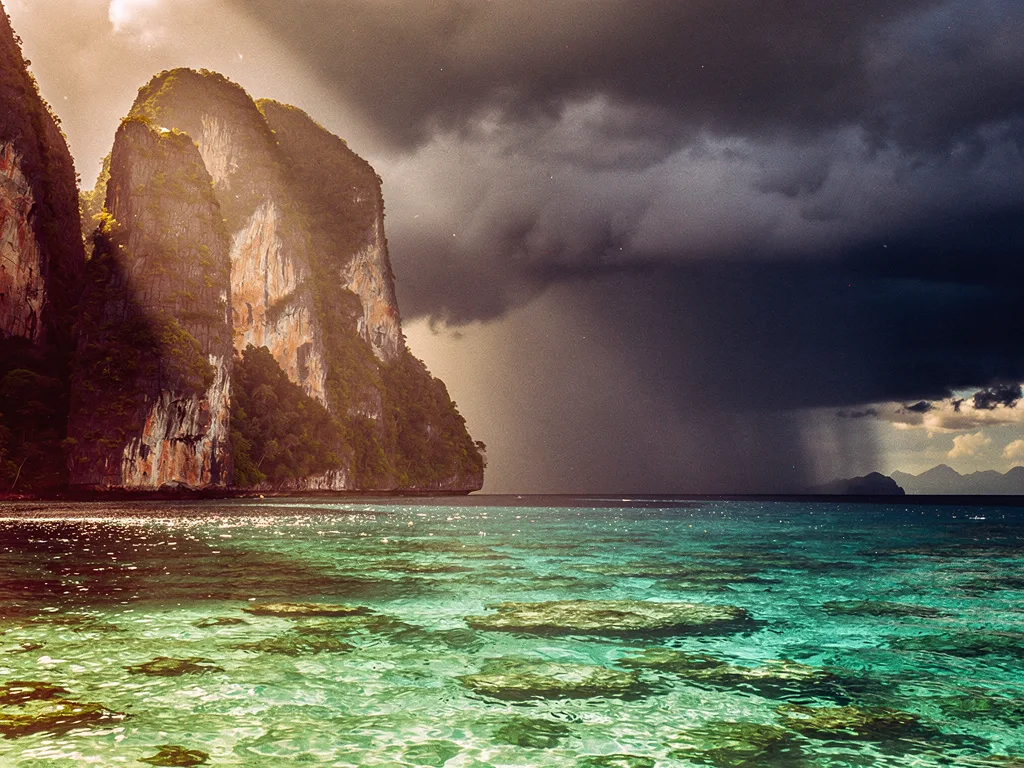
Picture yourself drifting on crystal-clear waters above a coral reef bursting with color, your line cutting through the warm tropical sea as a dogtooth tuna explodes on your lure. Or imagine standing knee-deep in a jungle river, stalking mahseer while the jungle orchestra plays around you. Fishing in the Philippines is one of Southeast Asia's most rewarding — and most underrated — angling adventures.
With over 7,600 islands, more than 36,000 kilometers (22,400 miles) of coastline, and an extraordinary diversity of marine and freshwater ecosystems, the Philippines offers world-class fishing for anglers of every style. From deep-sea big-game fishing off Batangas to reef fishing around Palawan and freshwater angling in Luzon's mountain lakes, this archipelago has it all.
This complete guide covers everything international anglers need to know: fishing licenses and permits, the best fishing spots, guided tour options, species to target, rules to follow, and practical travel tips to make your Philippine fishing adventure unforgettable.
01Do You Need a Fishing License in the Philippines?
This is where things get a little complicated — and it's important to get it right before you wet a line.
The Legal Framework
The Philippines' fisheries system is governed primarily by Republic Act No. 8550 (the Philippine Fisheries Code of 1998) and its amendment, Republic Act No. 10654 (2015), which was enacted to prevent illegal, unreported, and unregulated (IUU) fishing. The key regulatory authority is the Bureau of Fisheries and Aquatic Resources (BFAR), under the Department of Agriculture.
Formally, Philippine law reserves the use and exploitation of fishery and aquatic resources in Philippine waters exclusively for Filipino citizens. This means that foreign nationals — including tourists — need proper permits or licenses to fish legally in Philippine waters.
Recreational Fishing for Tourists
Here's the honest picture: there is some ambiguity in how recreational fishing licenses are enforced for tourists. Some sources suggest that casual rod-and-reel fishing by tourists is tolerated without a formal license, while others — and official regulations — indicate that a license is required.
The safest and most legally sound approach is:
Tip: When in doubt, contact the BFAR regional office or the local municipal fisheries office before your trip. Regulations can change, and local rules may differ from national guidelines.
License Fees
A standard recreational or municipal fishing license typically costs between 500 and 1,000 Philippine Pesos (PHP) — approximately €8–€16 (USD $9–$18). That's roughly the price of a meal at a mid-range Filipino restaurant, making it a minor expense worth the peace of mind.
Fees vary by municipality, so always confirm current rates at the local office.
Where to apply: BFAR Central Office, Diliman, Quezon City, Metro Manila. Phone: +63 8539-5685. Email: [email protected]. Website: bfar.da.gov.ph. Alternatively, apply at the local LGU or BFAR regional office near your fishing destination.
Documents typically required:
Processing time is generally 15–30 days, so apply well in advance of your trip.
02Fishing Regulations & Restrictions in the Philippines
The Philippines takes fisheries conservation seriously, and there are important rules every angler — local or foreign — must follow.
Prohibited Fishing Methods
The following methods are strictly illegal under Philippine law:
Protected Species: What You Must NOT Target
This is critically important for every visiting angler:
Absolutely prohibited (targeting or possession):
⚠️ Important: Even accidentally wounding a whale shark or manta ray while fishing for other species is illegal. If you hook one, you must release it immediately and carefully.
Sharks in general are subject to strict regulations — intentional shark fishing is prohibited for all vessel types operating in Philippine waters. If you catch a shark as bycatch, you must release it unharmed unless it is a non-protected, non-prohibited species and within legal size limits.
Closed Seasons
The Philippines enforces closed fishing seasons for certain species and areas:
Marine Protected Areas (MPAs)
The Philippines has up to 1,800 marine protected areas (also called Marine Sanctuaries, Marine Reserves, and Marine Parks). These range from complete no-take zones to areas with restricted fishing. MPAs vary in enforcement effectiveness, but in well-managed areas, violations are taken seriously.
Before fishing any reef or coastal area, check whether it falls within an MPA. Local dive shops, boat operators, and the municipal LGU can tell you which areas are restricted.
Fisheries Management Areas
Philippine waters are divided into 12 Fisheries Management Areas (FMAs), plus a special area covering parts of Benham Rise. Each FMA may have specific rules regarding species, gear, and seasons. This regional system means you need to verify regulations for your specific destination.
03The Best Fishing Spots in the Philippines
Now for the part every angler really came for. The Philippines is a fishing paradise of staggering variety — here are the destinations that should be on every serious angler's bucket list.
1. Batangas — The Big Game Capital
Located just a few hours south of Manila, Batangas is the Philippines' most accessible big-game fishing destination. The deep underwater canyons and drop-offs off the Batangas coast attract blue marlin, black marlin, yellowfin tuna, dorado (mahi-mahi), and wahoo in impressive numbers.
Puerto Galera, just across the Verde Island Passage (one of the world's most biodiverse marine areas), is a particularly popular base for offshore fishing charters. The passage creates strong currents that concentrate baitfish and, consequently, the predators that follow them.
Best months: November to May, with peak big-game action from January to April.
2. General Santos City — "Tuna Capital of the Philippines"
General Santos City (GenSan) in Mindanao is famous throughout Asia as a tuna fishing hub. The waters of the Celebes Sea and the Pacific Ocean nearby produce giant yellowfin tuna of legendary size — fish exceeding 100 kg (220 lbs) have been recorded. Trolling and deep dropping are the primary methods.
For anglers who want to experience the raw excitement of world-class tuna fishing, GenSan is arguably the most impressive destination in the entire archipelago.
Best months: Year-round, with peak action from October to February.
3. Palawan — Tropical Paradise Fishing
Palawan is consistently rated among the world's most beautiful islands, and its fishing matches its scenery. The waters around Coron, El Nido, and Puerto Princesa offer extraordinary reef fishing — grouper, snapper, jack, barracuda, and giant trevally (GT) patrol the dramatic limestone karst formations and pristine reefs.
Giant trevally (locally called maliputo) fishing around Palawan's outer reefs is a bucket-list experience. These powerful fish are ambush predators that will smash surface poppers with explosive violence — it's one of the most thrilling experiences in tropical saltwater fishing.
Best months: November to May (dry season). The southwest monsoon (June–October) can make some areas inaccessible.
4. Subic Bay & Zambales — Accessible Reef Fishing
Just 2–3 hours northwest of Manila, Subic Bay (site of the former US naval base) offers excellent inshore and reef fishing. The protected deep-water bay holds jacks, trevally, snapper, grouper, and sea bass, while offshore fishing produces tuna and billfish.
The infrastructure here is excellent — well-maintained marinas, experienced charter operators, and easy access from the capital make Subic Bay ideal for anglers with limited time.
Best months: November to May.
5. Samar & Leyte — Off the Beaten Track
The waters around Eastern Samar and Leyte in the Eastern Visayas are among the least-fished in the Philippines, yet they border the Pacific Ocean — home to some of the richest fishing grounds in the world. Dogtooth tuna, yellowfin tuna, giant trevally, and wahoo are abundant here.
This is frontier fishing — fewer charters, less infrastructure, but extraordinary rewards for adventurous anglers willing to venture off the tourist trail.
Best months: March to September (avoiding typhoon season, which peaks October–December in this region).
6. Freshwater Fishing — Laguna de Bay & Mountain Lakes
Freshwater anglers are not left out. Laguna de Bay, the largest lake in the Philippines (just southeast of Manila), offers fishing for tilapia, bighead carp, catfish, and snakehead (dalag). The snakehead, a voracious predator, has developed a cult following among lure-fishing enthusiasts.
In northern Luzon, the mountain lakes and rivers around Baguio and the Cordillera offer beautiful scenery and the chance to catch native species including tilapia and freshwater eels in a cooler, highland environment.
🎣 Fishing tours in the Philippines — Book guided fishing tours with local experts.
04Target Species at a Glance
| Species | Local Name | Where | Best Method |
|---|---|---|---|
| Yellowfin Tuna | Tambakol | GenSan, Batangas, Samar | Trolling, deep drop |
| Blue/Black Marlin | Malasugue | Batangas, Davao | Trolling |
| Giant Trevally | Maliputo | Palawan, Visayas | Popping, jigging |
| Dorado / Mahi-Mahi | Dorado | Nationwide offshore | Trolling, lures |
| Wahoo | Tanguingue | Offshore, GenSan | Trolling |
| Dogtooth Tuna | Laho | Eastern Visayas | Jigging |
| Grouper | Lapu-lapu | Reef areas nationwide | Bottom fishing |
| Snapper | Maya-maya | Reef areas nationwide | Bottom fishing |
| Snakehead | Dalag | Laguna de Bay, rivers | Lure fishing |
| Barracuda | Boto | Reefs nationwide | Jigging, lures |
05Guided Fishing Tours & Charters in the Philippines
Whether you're a first-timer or an experienced angler, fishing with a local guide dramatically increases both your catch rate and your safety. The Philippines has a growing network of professional fishing charter operators, especially around Manila, Batangas, Subic Bay, and Palawan.
What to Expect from a Philippine Fishing Charter
Most full-day offshore charters include:
Typical Charter Prices
| Charter Type | Duration | Price Range (PHP) | Price (EUR) | Price (USD) |
|---|---|---|---|---|
| Half-day inshore | 4–5 hours | 3,000–6,000 | €48–€96 | $54–$108 |
| Full-day inshore | 8–10 hours | 5,000–10,000 | €80–€160 | $90–$180 |
| Full-day offshore | 8–12 hours | 10,000–25,000 | €160–€400 | $180–$450 |
| Multi-day live-aboard | 2–5 days | 25,000–80,000 | €400–€1,280 | $450–$1,440 |
*Prices are per boat (typically 2–4 anglers) and are approximate. Always confirm current pricing directly with operators.*
Recommended Fishing Bases by Region
Manila / Batangas area:
Palawan:
General Santos City:
Subic Bay:
🚤 Charter fishing in the Philippines — Find and book charter boats with experienced captains.
06Best Time to Fish in the Philippines
The Philippines has a tropical climate with two main seasons: the dry season (amihan/northeast monsoon) from November to May, and the wet season (habagat/southwest monsoon) from June to October. However, the timing varies significantly by region.
By Season
| Season | Months | Conditions | Best Regions |
|---|---|---|---|
| Dry Season | Nov–May | Calmer seas, excellent visibility | Palawan, Batangas, Subic |
| Wet Season | Jun–Oct | Rougher seas, some areas inaccessible | East coast (Pacific side) |
| Typhoon Season | Jul–Nov | Typhoons possible; avoid offshore trips | Plan carefully |
By Hemisphere (for planning purposes)
Tip: Always check the Philippine Atmospheric, Geophysical and Astronomical Services Administration (PAGASA) weather forecasts before heading offshore. Conditions can change rapidly, and local boat operators will advise on safe fishing days.
07Practical Travel Information for International Anglers
Visa Requirements
The Philippines operates a relatively open visa policy:
Extensions to up to 30 days are usually straightforward and can be done at Bureau of Immigration offices in major cities.
Getting Around
The Philippines' island geography means domestic flights and ferries are essential for reaching fishing destinations outside Manila. Major carriers like Cebu Pacific and Philippine Airlines operate extensive domestic networks. Ferries (including fast craft) connect many islands and are often scenic and pleasant.
For local transport, tricycles, jeepneys, and habal-habal (motorcycle taxis) are common in provincial areas. In Manila and major cities, Grab (the Southeast Asian equivalent of Uber) is widely available.
Language
The official languages are Filipino (Tagalog) and English. English is widely spoken throughout the Philippines, especially in tourist areas, cities, and by fishing charter operators. This makes the Philippines one of the most accessible Southeast Asian destinations for English-speaking anglers — communication is rarely a barrier.
Useful Tagalog phrases for anglers:
Currency & Costs
The local currency is the Philippine Peso (PHP). Exchange rates approximate as of 2026:
ATMs are widely available in cities and tourist areas. Credit cards are accepted at hotels and larger businesses, but cash is king in smaller fishing villages. Bring sufficient pesos when heading to remote areas.
General cost of living for anglers:
Health & Safety
Bringing Fishing Gear
You can bring your own fishing tackle to the Philippines without issues. Declare expensive equipment at customs if required (for items exceeding duty-free allowances). Most common tackle and lures are available in Manila and larger cities, though selection may be limited in remote areas.
🏨 Accommodation near fishing spots in the Philippines — Find hotels and lodges close to the best waters.
08Fishing Equipment for the Philippines
Recommended Gear by Fishing Style
Offshore/Big Game:
Reef & Inshore:
Freshwater:
🛒 Fishing equipment for the Philippines — Find the right gear for your trip.
09Frequently Asked Questions (FAQ)
Do tourists need a fishing license in the Philippines?
Technically yes — foreign nationals are required to obtain appropriate permits to fish in Philippine waters. A Municipal Fishing License, obtained from the local LGU or BFAR office, is the standard option for recreational anglers. Enforcement varies by area, but obtaining a license is strongly recommended to avoid legal complications. If you book a guided charter, the operator will typically handle licensing requirements.
How much does a fishing license cost in the Philippines?
A standard municipal recreational fishing license typically costs 500–1,000 PHP (approximately €8–€16 / $9–$18). Fees vary by municipality.
Where can I apply for a fishing license in the Philippines?
At the Bureau of Fisheries and Aquatic Resources (BFAR) central office in Quezon City, or at the relevant local government unit (LGU) or BFAR regional office in the area where you plan to fish. You can also contact BFAR at [email protected] or by phone at +63 8539-5685.
Is it legal to fish for sharks in the Philippines?
No. Intentional shark fishing is prohibited for all vessels in Philippine waters. Whale sharks, manta rays, and all Endangered, Threatened, and Protected (ETP) shark species are fully protected — catching, possessing, or trading them is a serious criminal offense.
What are the best fishing spots in the Philippines for beginners?
Batangas and Subic Bay are ideal for beginners — they're close to Manila, have well-organized charter operators with English-speaking staff, and offer a range of fishing styles from reef fishing to offshore trolling.
What is the best time of year to visit the Philippines for fishing?
Generally, November to May (the dry season) offers the most stable sea conditions and excellent fishing across most of the archipelago. For big-game fishing in Batangas, January to April is peak season. General Santos City offers great tuna fishing year-round.
Can I bring my own fishing gear to the Philippines?
Yes, you can bring your own fishing tackle. There are no specific restrictions on personal fishing gear for tourists, though declare high-value equipment at customs if required.
Are there marine protected areas where fishing is banned?
Yes — the Philippines has up to 1,800 Marine Protected Areas (MPAs), many of which prohibit all fishing. Always check with local authorities or your charter operator before fishing in coastal or reef areas.
10Conclusion: Cast Off into Philippine Waters
The Philippines is, without question, one of the most spectacular fishing destinations on the planet. The sheer diversity — from deep-sea billfish to reef-dwelling giants, from freshwater snakehead to tropical tuna — means there's something here for every angler. And beyond the fishing, the warmth of Filipino hospitality, the stunning scenery, and the extraordinary natural environment make every trip an experience that goes far beyond the catch.
Prepare properly — understand the regulations, respect the protected species and marine areas, and book with reputable local operators. The Philippine fisheries are a national treasure worth preserving, and responsible anglers are welcome here with open arms.
Now start planning. The yellowfin tuna of General Santos City and the giant trevally of Palawan are waiting.
11Sources & Further Reading
*Disclaimer: This article was researched and written in 2026. Fishing regulations, license requirements, fees, and species protections in the Philippines may change without notice. Local government units (LGUs) may impose additional or different requirements from national regulations. Always verify current rules with the Bureau of Fisheries and Aquatic Resources (BFAR), your local LGU, or a licensed local fishing operator before your trip. The author and FishingWorldGuide.com accept no liability for outdated information or regulatory changes. Fishing in marine protected areas or for protected species carries serious legal penalties — always fish responsibly and sustainably.*
Recommended tours
Fishing trips in Philippines
Curated tours & charters with price and click data from our partner dashboards.
View all trips (1)Don't miss any fishing tips!
Get the best fishing destination recommendations weekly in your inbox.
No spam. Unsubscribe anytime.
Read more
Data incorrect?
Help us keep this article up to date — report outdated or incorrect information
More articles