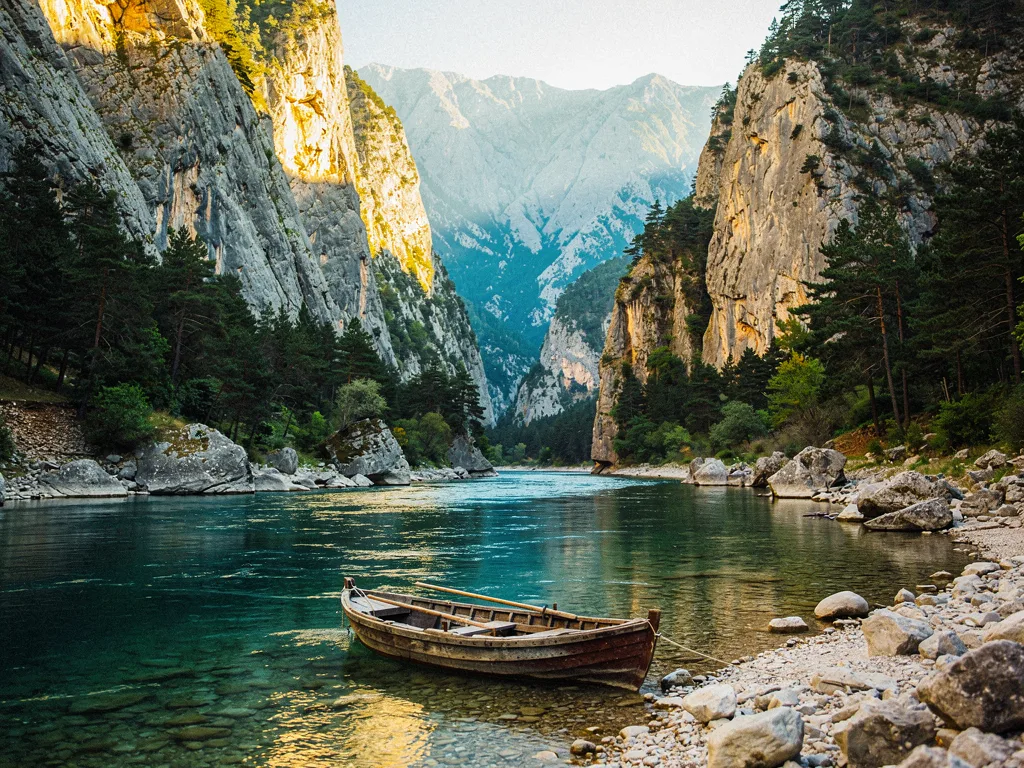
Imagine casting a fly into the crystal-clear waters of the Tara River, surrounded by the deepest canyon in Europe, with the chance of hooking a powerful Danube salmon (Hucho). Or picture yourself drifting over the ancient depths of Skadar Lake, where giant carp cruise beneath lily pads, while the Adriatic Sea offers blue-water adventures just a short drive away. Fishing in Montenegro delivers this remarkable variety — from wild mountain rivers and vast inland lakes to the sheltered bays and open Mediterranean waters of the Adriatic coast.
This comprehensive guide equips international anglers with everything needed for a successful and legal trip in 2026. Under the new Law on Sport and Recreational Fishing (effective since June 2025), regulations have been modernized to align with EU standards while protecting Montenegro’s rich aquatic ecosystems. You will learn exactly how to obtain your fishing license, the best fishing spots that will make you dream of returning, guided tours and charters with current prices, detailed regulations including catch limits and closed seasons, and all the practical travel information you need.
Whether you are a fly-fishing enthusiast targeting trout and grayling in the north, a sea angler chasing sea bass and tuna, or a family looking for relaxed carp fishing on Skadar Lake, Montenegro offers world-class experiences in one of Europe’s most beautiful and accessible destinations.
01Do You Need a Fishing License in Montenegro?
Yes, a fishing license (known locally as *dozvola za sportski ribolov*) is mandatory for almost all forms of recreational fishing in Montenegro under the 2025 law. The system is managed by the Ministry of Agriculture, Forestry and Water Management and supported by the Savez za sportski ribolov na moru Crne Gore (SSRM) for marine fishing and National Parks of Montenegro for inland waters.
For shore fishing in the sea, the situation is nuanced. While many locals and tourists casually cast from piers or rocky shores without immediate inspection, the updated law technically requires a permit for all recreational fishing. In practice, enforcement for simple shore casting remains light for visitors, but carrying a daily license is strongly recommended to avoid potential fines. For boat fishing, freshwater angling, or any organized activity, a license is strictly enforced.
Licenses are typically purchased through local sport fishing clubs (KSR), authorized tourist agencies, or directly via the SSRM network. Electronic catch logging via a mobile app is now part of the system, encouraging responsible angling and helping authorities monitor stocks.
Children under 14 fish free of charge but must be supervised by a licensed adult. Spearfishing requires a separate permit and is restricted to breath-hold methods only (no scuba equipment).
Tip: Always keep your license on you while fishing. Digital versions on your phone are often accepted, but a printed copy provides extra peace of mind.
02Types of Fishing Licenses and Costs in Montenegro
All fees are paid in Euro (EUR), the official currency of Montenegro. Prices are remarkably affordable — a full day of legal fishing often costs less than a coffee and pastry in many Western cities.
| License Type | Duration | Price (EUR) | Price (USD approx.) | Best For |
|-----------------------|-------------------|-------------|---------------------|----------|
| Daily License | 1 day | €5 | $5.50 | Short trips, testing waters |
| Short-term | Up to 5 days | €10 | $11 | Weekend getaways |
| Medium-term | Up to 10 days | €15 | $16.50 | One-week holidays |
| Monthly | Up to 30 days | €30 | $33 | Extended stays |
| Annual (Residents) | 1 year | €20–€60 | $22–$66 | Locals & long-term visitors |
Spearfishing annual permits sit at the higher end of the annual range. Prices can vary slightly between clubs but remain standardized across most providers in 2026. These costs are roughly equivalent to one restaurant meal in coastal towns like Budva or Kotor.
For the most current rates and to purchase online or find distribution points, visit the official SSRM website.
03Fishing Regulations and Rules You Must Know
Montenegro’s 2025 law introduced clear, EU-aligned rules designed to protect fish stocks while allowing sustainable recreational angling.
Daily Catch Limits: You may keep up to 5 kg of fish or cephalopods plus one additional specimen that exceeds 5 kg. This generous but responsible limit applies across both marine and freshwater environments.
Closed Seasons (Lovostaj):
Minimum Size Limits (examples):
Strictly Prohibited:
The law also encourages catch-and-release, especially on premium rivers like the Tara and Lim, where many guides operate exclusively on a no-kill basis for conservation.
Regulations may change, so always verify with the latest official sources before your trip. The National Parks of Montenegro and SSRM provide up-to-date information.
04Best Fishing Spots in Montenegro: Where to Make Your Dreams Come True
Montenegro’s geography creates an almost perfect fishing playground — rugged mountains with world-class rivers, the largest lake in the Balkans, and a dramatic Adriatic coastline with deep sheltered bays.
Tara River and the Tara Canyon
Often called the “Tear of Europe,” the Tara River flows through the deepest canyon on the continent (up to 1,300 m deep) and is a UNESCO World Heritage site. This is Montenegro’s premier fly-fishing destination. Crystal-clear, fast-flowing water supports excellent populations of brown trout, grayling, and the legendary Danube salmon (Hucho hucho) — one of Europe’s most prized freshwater game fish.
Casting dry flies or nymphs in the pools and riffles while surrounded by towering limestone cliffs and pristine beech forests is an unforgettable experience. The river’s accessibility varies — some stretches require a short hike, while others are reached by raft or 4x4. Many visitors describe days on the Tara as the highlight of their entire Montenegro holiday.
Skadar Lake (Skadarsko Jezero)
The largest lake in the Balkans straddles the border with Albania and is a paradise for relaxed fishing. Famous for huge carp, northern pike, eel, and catfish, Skadar offers both boat and shore fishing. The lake’s shallow, vegetated bays and floating meadows create a unique ecosystem.
Early morning sessions as the sun rises over the mountains and reflects on the calm water are magical. Local fishermen often use traditional methods, but modern carp anglers with bite alarms and boilies do very well. Note the closed season from mid-March to early June.
Bay of Kotor (Boka Bay)
This stunning fjord-like bay is one of the most beautiful enclosed seas in the world. Its deep waters (reaching over 40 m in places) come close to shore, making it excellent for both boat and shore fishing. Target gilthead bream, sea bass, squid, and occasionally larger predators.
The sheltered nature of the bay means fishing is possible even when the open sea is rough. Kayak fishing has become popular here, allowing you to explore hidden coves and dramatic cliffs.
Budva and Petrovac Coast
The central Adriatic coast offers excellent surfcasting and rock fishing. From rocky headlands you can target barracuda, dentex, amberjack, and mullet. Early mornings or late evenings often produce the best results. Many tourists combine a beach holiday in Budva with early-morning fishing sessions.
Lim and Ljuča Rivers (Plav Region)
In the mountainous northeast near Prokletije National Park, these rivers offer superb fishing for grayling and lake trout. The Ljuča is particularly special — a slow-moving, gin-clear stream ideal for technical dry-fly fishing. The surrounding alpine scenery makes every cast feel like a postcard.
Each of these locations offers its own unique atmosphere — whether you crave wild adventure in the mountains or relaxed days by the sea, Montenegro has a fishing experience that will stay with you forever.
Tip: The contrast between fishing the roaring Tara one day and the tranquil waters of the Bay of Kotor the next is one of the unique joys of a Montenegro fishing holiday.
🎣 Fishing tours in Montenegro — Book guided fishing tours with local experts.
05Tours & Guided Experiences: Make the Most of Your Trip
While it is possible to fish independently, hiring a local guide dramatically increases your success rate and provides valuable local knowledge, especially on technical rivers or when navigating marine regulations.
Fly Fishing on Tara and Lim Rivers: Professional guides charge between €80 and €150 per day. This typically includes transportation from your accommodation, all necessary tackle (if needed), lunch, and expert instruction. Many operators focus on catch-and-release and offer multi-day packages that include accommodation in traditional mountain lodges.
Popular providers include Montenegro Adventure, Go Fishing Europe, and specialized operators focusing on Huchen (Danube salmon) in the northern rivers. A full week of guided fly fishing can cost €800–€1,500 depending on group size and accommodation standard.
Sea Charters in Budva, Bar, and Tivat: Deep-sea trolling for tuna and swordfish or bottom fishing for bream and dentex are the main offerings. A full-day charter for up to 4–6 people typically costs €350–€700, which includes licenses for all participants, quality tackle, bait, fuel, and an experienced captain. Half-day options are sometimes available for €200–€350.
Notable boats include *Lady Sofia* out of Bar, which has strong reviews for both inshore and offshore trips, and operators based in Budva such as Predator. Many charters now offer family-friendly options with lighter tackle for children.
Guided trips also help you navigate the electronic catch logging requirements and ensure you stay within protected zones.
Tip: Book guided days in advance during peak season (July–August). Many top guides are fully booked months ahead.
06Popular Species and Fishing Techniques
Montenegro offers an impressive variety of fish across freshwater and marine environments.
Freshwater Highlights:
Saltwater Highlights:
Techniques:
Catch-and-release is strongly encouraged — and in many cases required — on the best rivers to ensure future generations can enjoy the same experiences.
07Equipment, What to Bring, and Local Availability
Montenegro’s fishing shops in Podgorica, Kotor, and Budva stock basic rods, reels, and terminal tackle. However, serious anglers should bring their own specialized gear, especially high-quality fly rods (4–6 wt for rivers, 8 wt for larger streams), saltwater spinning or jigging setups, and polarized sunglasses for spotting fish in clear water.
For fly fishing the Tara, bring a selection of nymphs, dry flies, and streamers sized 8–18, plus plenty of tippet in 4x to 6x. Waders and felt-soled boots are useful but check local requirements regarding felt soles (some areas discourage them to prevent invasive species).
If you are traveling with only hand luggage, many guided operators can supply quality rented tackle for an additional fee.
🛒 Fishing equipment for Montenegro — Find the right gear for your trip.
08Practical Travel Information for International Visitors
Best Time to Visit:
Getting There:
Montenegro has two international airports — Tivat (near the Bay of Kotor) and Podgorica (central). Both receive direct flights from many European cities. Rental cars are strongly recommended as many fishing locations are best reached by private vehicle.
🚗 Rent a car in Montenegro — Compare prices from 500+ rental companies worldwide.
Visa Requirements:
Montenegro is not in the Schengen Area but offers visa-free entry for up to 90 days to citizens of the EU, USA, UK, Canada, Australia, Japan, and many other countries. Check the latest requirements for your nationality before travel.
Language:
Montenegrin (a variant of Serbian) is the official language. English is widely spoken in tourist areas and among fishing guides. German and Russian are also common. Translation apps work well, but learning basic phrases such as “dobar dan” (hello) and “hvala” (thank you) is appreciated.
Currency and Costs:
Everything is priced in Euros. Montenegro offers excellent value compared to Western Europe. A week’s fishing holiday including accommodation, some guided days, and car rental can often be arranged for €800–€1,500 per person depending on standards.
Accommodation:
Options range from luxury hotels in the Bay of Kotor to traditional stone houses in mountain villages near the Tara River. Many fishing packages include comfortable rural guesthouses with home-cooked meals.
Health and Safety:
Tap water is generally safe in towns. Mountain rivers can be cold even in summer — take appropriate precautions. Sun protection is essential on the coast. There are no major health risks for anglers, but standard travel insurance is recommended.
📱 Stay connected in Montenegro — Get an eSIM for affordable mobile data while traveling.
09Charter Fishing in Montenegro
For those seeking the ultimate offshore experience, Montenegro’s charter fleet continues to grow. Modern boats equipped with quality electronics operate from Bar, Budva, and Herceg Novi.
A typical blue-water charter might involve trolling for tuna or drifting over reefs for groupers and dentex. Prices of €350–€700 per day work out to roughly €60–€120 per person when shared among four to six anglers — comparable to a good dinner in a coastal restaurant.
Many captains are experienced, English-speaking, and understand the requirements of international visitors. Combining a morning charter with an afternoon exploring the historic towns of Kotor or Perast creates a perfect balanced holiday.
🚤 Charter fishing in Montenegro — Find and book charter boats with experienced captains.
10Frequently Asked Questions
Do I need a fishing license for shore fishing in Montenegro?
While enforcement is rare for simple pier or rock fishing, the 2025 law requires a permit for all recreational fishing. Purchasing a daily license (€5) is the safest and most responsible choice.
What is the best month for fly fishing in Montenegro?
May to June and September to October are generally considered the best periods, offering comfortable temperatures, good water levels, and active trout and grayling.
Can I eat the fish I catch in Montenegro?
Yes, within the legal bag limits and size restrictions. However, many visitors choose catch-and-release on the premium rivers to help conserve stocks.
Is spearfishing allowed in Montenegro?
Yes, but you must obtain a specific permit, be over 18, and fish only on breath-hold (no scuba). Certain areas are completely protected.
How difficult is it to catch Danube salmon in the Tara River?
It is challenging and requires good guiding, proper tackle, and often several days of persistence. Success rates improve dramatically with an experienced local guide.
Are there any English-speaking fishing guides in Montenegro?
Yes, many operators catering to international visitors speak excellent English. Fly-fishing and charter captains are usually fluent.
What documents do I need to bring for fishing in Montenegro?
A valid passport, your fishing license (purchased locally), and ideally a copy of your travel insurance. No special fishing qualifications are required for recreational angling.
11Conclusion
Fishing in Montenegro offers an unbeatable combination of outstanding variety, dramatic scenery, and remarkable value. From battling powerful Hucho in the Tara Canyon to drifting quietly over Skadar Lake at sunrise or feeling the pull of a tuna on an Adriatic charter, the experiences available here will create memories that last a lifetime.
The 2025 modernization of fishing laws has brought clearer regulations while keeping costs low and access relatively simple for visiting anglers. By obtaining the appropriate license, respecting closed seasons and size limits, and ideally fishing with a knowledgeable local guide for at least part of your trip, you will enjoy world-class angling while contributing to the sustainable management of Montenegro’s precious waters.
Start planning your Montenegro fishing adventure today — whether it’s a dedicated fly-fishing week in the mountains or a relaxed mix of sea charters and coastal sightseeing, this beautiful Balkan country promises to exceed your expectations.
12Sources & Further Links
Disclaimer: Regulations, prices, and conditions described in this article are based on information available in early 2026. Fishing laws can change, and local conditions vary. Always check the latest official requirements with the Ministry of Agriculture, Forestry and Water Management, SSRM, or National Parks of Montenegro before your trip. This guide is for informational purposes only and does not replace official advice or legal responsibility. FishingWorldGuide.com and its authors assume no liability for any incidents, fines, or changes that may occur.
Recommended tours
Don't miss any fishing tips!
Get the best fishing destination recommendations weekly in your inbox.
No spam. Unsubscribe anytime.
Data incorrect?
Help us keep this article up to date — report outdated or incorrect information
More articles