Trolling
Drag lures or natural baits behind a moving boat to cover ground for surface predators — workhorse technique for marlin, tuna, mahi.
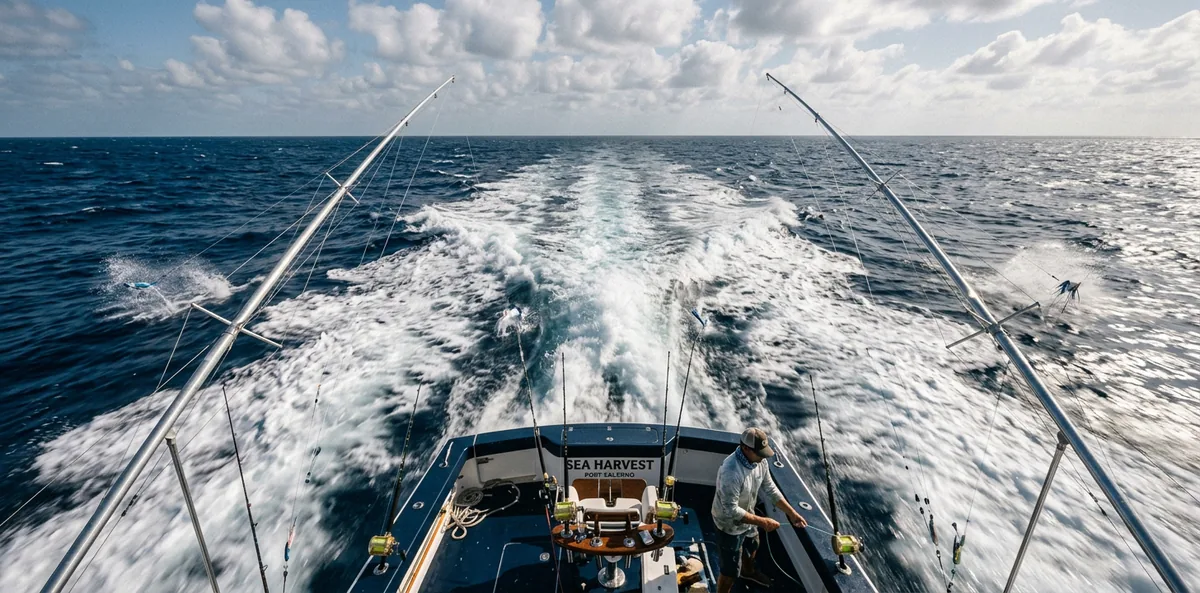
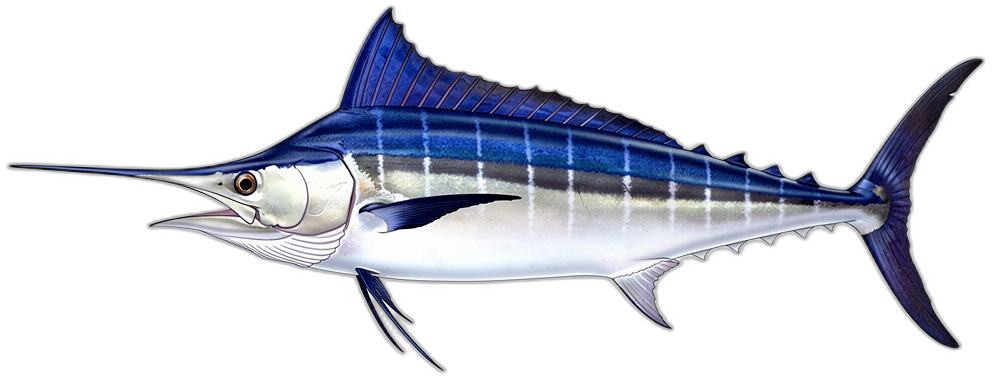
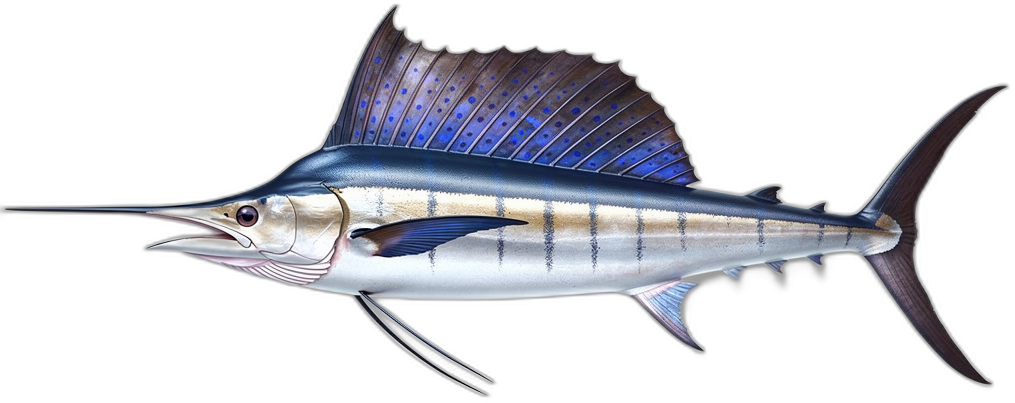
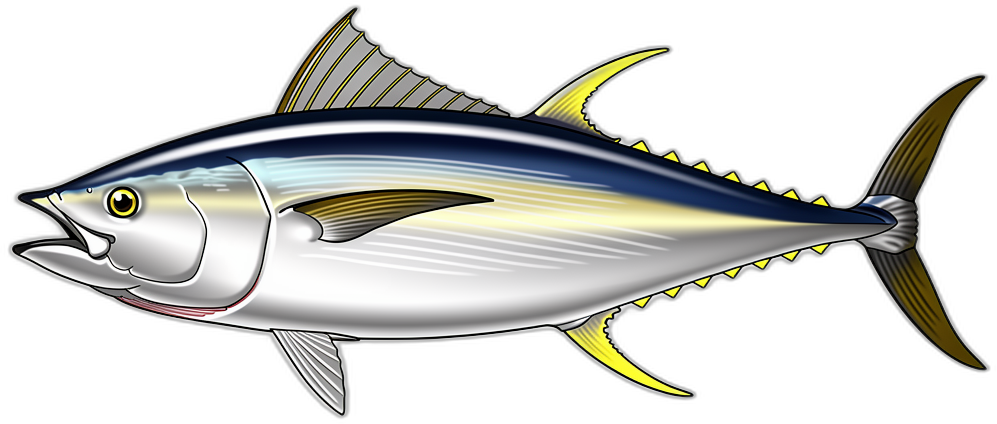
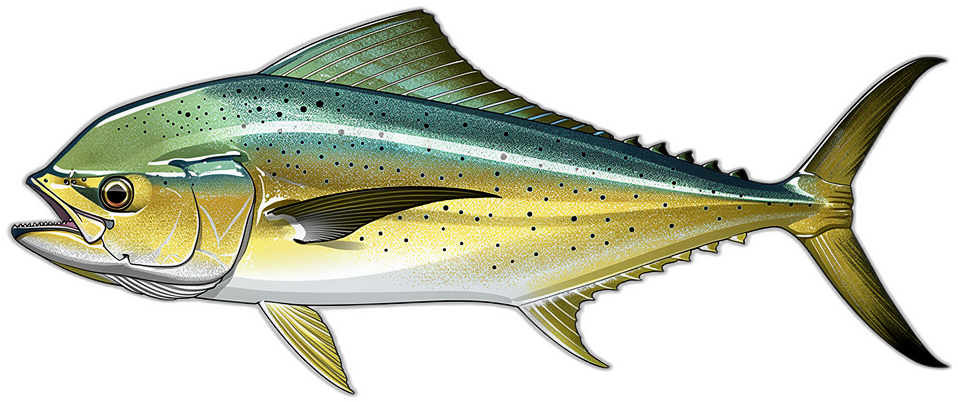
Trolling is the fundamental method of offshore saltwater fishing: pull baits or lures behind the boat at 5–9 knots while covering miles of water searching for predators. It's how nearly every deep-sea charter operates. The reasoning is simple — pelagic fish like marlin, tuna, and mahi-mahi are constantly moving, and you have to move too to find them.
A typical trolling spread is 4–9 lines with staggered distances — the long rigger lines run 80–150m back, short riggers at 30–60m, flat lines closest to the boat. Each line carries a lure or rigged bait designed for a different position in the spread: chuggers and jets on the corners (close to the wake), large skirted marlin lures on the long riggers, daisy chains and teasers without hooks to attract fish into the spread.
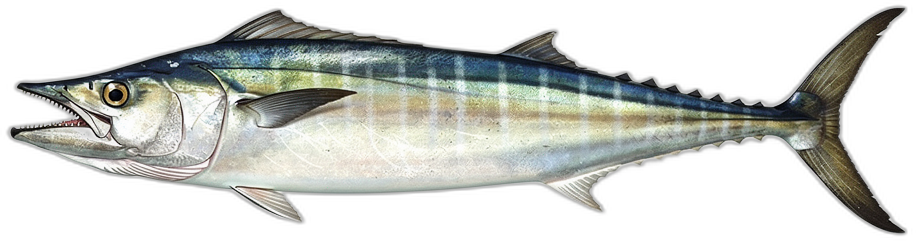
Trolling speed matters: 5–6 knots for live bait (slow troll), 6–8 knots for skirted lures, up to 12 knots for high-speed wahoo lures. Captain reads the surface for tide rips, current edges, weed lines, bait schools, and bird activity — these are the markers where pelagics feed.
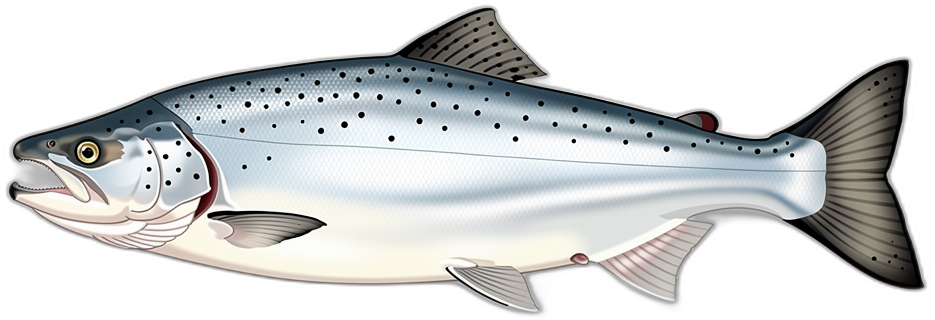
Not just for offshore: shallow-water trolling for striped bass, bluefish, salmon (Great Lakes), pike (lakes), and king mackerel (US Gulf coast) all use the same principle with smaller tackle. Downriggers, planer boards, and lead-core lines extend trolling to mid-depth species.
Target species


Recommended techniques
Tackle & equipment
Top destinations
Safety & regulations
Lines crossing during a strike — multi-fish hookups can tangle the spread fast. Outrigger clips need adjustment when sea state changes. Trolling speed too high stresses tackle and kills bait. Watch for boats crossing the spread. Always retrieve lines before maneuvering in tight quarters.
Related trip types
Deep Sea Fishing
Offshore big-game pursuit of pelagic species over deep continental shelf — marlin, tuna, mahi-mahi from a sportfishing boat.
Big Game Fishing
Trophy billfish + giant tuna with heavy stand-up tackle, often tournament-grade. The pinnacle of sportfishing.
Offshore
Mid-distance blue-water fishing — between inshore and true deep-sea. 5–25 nm out, mixed bag of pelagics + structure species.