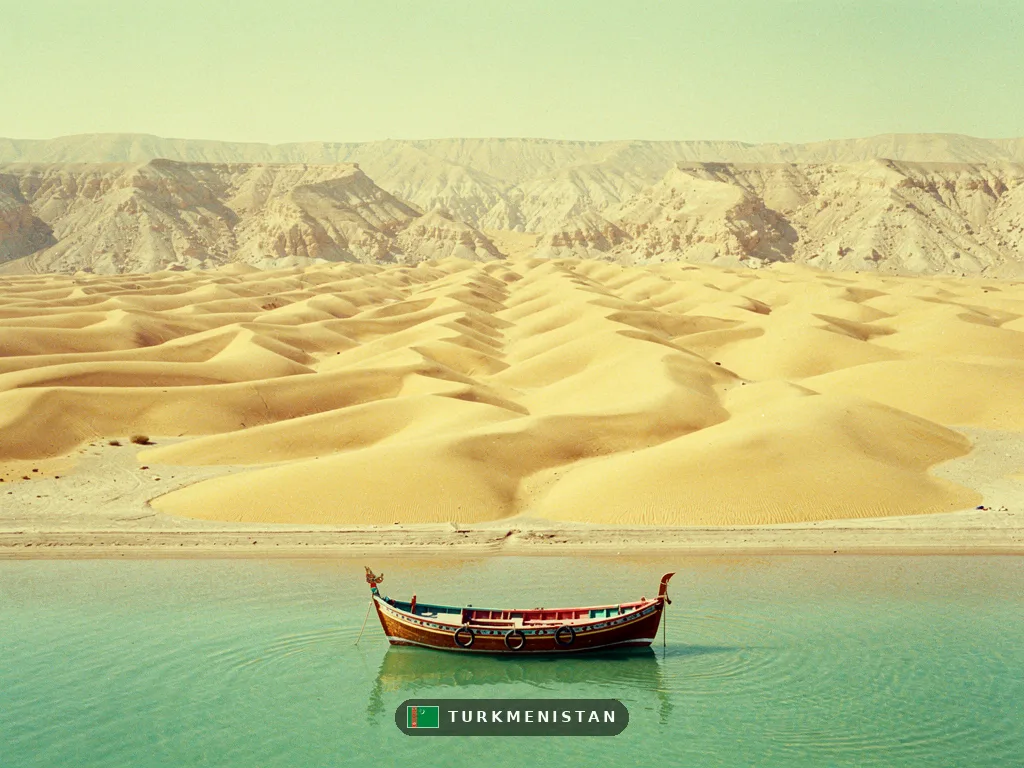
Turkmenistan remains one of the least-visited destinations for international anglers, yet it offers unique opportunities for those willing to navigate its strict regulatory environment. Fishing in Turkmenistan is tightly controlled by state authorities, with a strong emphasis on protecting aquatic resources in the Amu Darya river system, the Caspian Sea coastline, and inland reservoirs. Whether you dream of battling large catfish in the mighty Amu Darya, targeting carp in remote reservoirs, or seeking the thrill of Caspian Sea species, success depends entirely on securing the correct fishing permit Turkmenistan through licensed local operators.
This comprehensive guide equips you with everything needed to plan a compliant fishing adventure. You will learn exactly how to obtain the necessary permissions, which seasons are open or closed, the top fishing waters, realistic costs in Turkmenistan manat (TMT), EUR, and USD, and practical travel advice for visitors from the EU, USA, UK, Japan, and other regions. Because Turkmenistan is a highly regulated country with significant bureaucratic requirements, almost every successful fishing trip is arranged through government-approved tour operators who handle the paperwork, local permissions, and logistics.
The experience of fishing in Turkmenistan is far from casual weekend angling. It combines dramatic Central Asian landscapes — from the arid Karakum Desert to the vast waters of the Amu Darya — with the satisfaction of catching species such as common carp (*Cyprinus carpio*), European catfish (*Silurus glanis*), and, in carefully managed areas, various endemic fish. Sturgeon fishing is strictly prohibited for amateurs, reflecting the country’s conservation priorities. With the right preparation, however, an expedition here can become a once-in-a-lifetime journey into one of Central Asia’s most untouched fishing frontiers.
Throughout this article we address the most common questions: Do you need a fishing license in Turkmenistan? What are the current Turkmenistan fishing regulations? Where are the best fishing spots Turkmenistan has to offer? How do you book fishing tours Turkmenistan or charter fishing in Turkmenistan safely? We also explore language barriers, visa requirements, and how to respect local laws while creating unforgettable memories on the water.
Important note: All information reflects the regulatory situation known in early 2026. Turkmenistan fishing regulations can change without public notice, especially during spawning periods or in response to environmental priorities. Always verify the latest rules directly with a registered local tour operator before you travel.
01Do You Need a Fishing License in Turkmenistan?
Yes — you need official permission to fish in Turkmenistan. Recreational or “amateur” fishing is allowed, but it is not an open-access activity like in many other countries. The State Fish Protection and Water Bio-Resources Control Department, operating under the Ministry of Finance and Economy, is the central authority responsible for issuing permissions and enforcing rules across all velayats (provinces).
For local citizens, membership in one of the regional “Hunters’ and Fishermen’s Societies” often simplifies the process. These societies maintain close contacts with provincial offices of the State Department and can sometimes fast-track seasonal permissions. Foreign visitors face a more complex situation. There is no online portal, no simple tourist fishing license, and no “pay-and-fish” system. Every foreign angler must obtain a specific permit tied to a particular water body, time period, and often a registered local operator or guide.
The practical reality for international travelers is clear: arranging fishing in Turkmenistan independently is extremely difficult and, in many regions, effectively impossible. The country operates a highly controlled system with surveillance in border areas, particularly along the Caspian Sea. Attempting to fish without the correct documentation can result in fines, confiscation of equipment, or more serious legal consequences. This is why virtually every reputable guide to fishing Turkmenistan strongly recommends working exclusively through licensed, government-approved tour operators.
These operators maintain relationships with the provincial offices of the State Fish Protection Department. They can secure the necessary “special orders” or permissions that are required for specific districts. When you book a guided package, the operator typically includes the cost of all permits in the tour price. This not only keeps you legal but also provides peace of mind in a country where carrying your passport and documentation at all times is mandatory.
Language barriers add another layer of complexity. While Russian and Turkmen are the main languages used in official interactions, English is rarely spoken in provincial government offices. A professional local operator acts as both translator and facilitator, ensuring that your intentions are clearly communicated and that all paperwork meets current requirements.
Tip: If you only have a short stay in Ashgabat or are combining fishing with a general sightseeing trip, consider a half-day or full-day excursion arranged by a major tour agency. These short trips usually stay within permitted zones near the capital and include all necessary permissions.
The permit process also reflects Turkmenistan’s strong focus on conservation. Seasonal closures are enforced rigorously to protect spawning populations, and gear is restricted to rod-and-line methods only. Understanding these rules before you arrive will help you plan a responsible and successful trip. In the following sections we explore the exact regulations, the best fishing locations, and how to book the right fishing tours Turkmenistan has available.
(Word count for this section: 578)
02Turkmenistan Fishing Regulations You Must Know
Turkmenistan fishing regulations are designed first and foremost to safeguard the country’s limited freshwater and marine resources. The rules are enforced by the State Fish Protection and Water Bio-Resources Control Department and can vary between the five velayats: Ahal, Balkan, Dashoguz, Lebap, and Mary. Changes are frequent, especially in response to water levels in the Amu Darya or environmental concerns in the Caspian Sea basin.
The most important regulation concerns seasonal closures. Spawning bans typically run from March to June across much of the country. During this period, fishing is strictly prohibited on the Amu Darya, the Murgab and Tejen rivers, the Karakum Canal, and most reservoirs. These closures protect key species during their reproductive cycles. Violating a spawning ban can lead to heavy fines and the permanent loss of any future permissions. Even outside the ban period, local authorities may impose temporary restrictions if water levels drop or fish stocks show signs of stress.
When fishing is permitted, gear is strictly limited. Only rod-and-line or spinning equipment is allowed for recreational anglers. You may use no more than three hooks per line, and the use of nets, traps, spears, or any commercial-style gear requires a separate commercial license that is almost never granted to foreigners. Catch-and-release is encouraged, particularly for larger specimens of catfish and carp that may be important for breeding. There is no single published bag limit that applies nationwide; instead, local operators receive specific quotas for each tour based on current scientific assessments.
Sturgeon species are completely protected in Turkmen waters. Commercial sturgeon fishing has been banned for years, and amateur targeting of any sturgeon is illegal. If you accidentally hook a sturgeon, the correct procedure — as advised by local guides — is to release it immediately with minimal handling. The conservation of these ancient fish is a national priority shared with other Caspian nations.
Border zones add another regulatory layer. Much of the Caspian Sea coastline in Balkan Province is a sensitive border area. Amateur boat fishing within a certain distance of the shore may require additional naval or border-guard clearances. Many operators therefore concentrate inland activities on the Amu Darya in Lebap and Dashoguz velayats or on carefully selected reservoirs where permissions are easier to obtain.
Foreigners must always fish in the company of a registered guide or as part of an officially approved tour. Solo fishing, even with a permit, is strongly discouraged and in many places simply not allowed. Your guide carries the group permit and is responsible for ensuring that all activity stays within the authorised boundaries and methods.
Regulations also cover environmental protection. You must not leave any litter, disturb nesting birds in wetland areas, or damage riparian vegetation. In some reservoirs, motorboats above a certain horsepower are prohibited to reduce noise and pollution. Always ask your operator about the latest rules before you leave Ashgabat.
Because rules change frequently, the only practical way to stay compliant is to work with a reputable local company that maintains daily contact with the State Department. These operators receive updated notices about spawning closures, temporary bans, and permitted zones well before the information reaches the general public. This is particularly important for visitors from the EU, USA, UK, or Japan who may be unfamiliar with Central Asian bureaucracy.
(Word count for this section: 512)
03Best Fishing Spots in Turkmenistan
The best fishing spots Turkmenistan offers are concentrated in three distinct environments: the mighty Amu Darya river, several large inland reservoirs, and the Caspian Sea coastline. Each location delivers a different fishing experience and targets different species. Because access is strictly controlled, nearly all productive fishing occurs as part of organised tours.
Amu Darya River – The Heart of Turkmen Fishing
The Amu Darya, known locally as the Jeýhun, forms the lifeblood of eastern Turkmenistan and is widely regarded as the premier destination for serious anglers. Flowing 1,400 km (870 miles) through the country before entering the Aral Sea basin, the river offers more than 600 km (373 miles) of fishable water within Turkmen borders. The section between Türkmenabat (formerly Chardzhev) and the border with Uzbekistan is particularly productive.
Here you can target massive European catfish that regularly exceed 50 kg (110 lb). Local operators report specimens up to 80 kg (176 lb) have been landed in recent years, although most anglers practice catch-and-release for these giants. Strong spinning rods with heavy lures or live bait are the preferred method. The river’s braided channels, deep holes, and submerged snags provide perfect habitat.
Common carp and grass carp are also abundant. During the permitted autumn and winter windows, carp fishing with boilies or traditional dough baits can be outstanding. The surrounding landscape is dramatic: red desert cliffs on one side, irrigated cotton fields and reed beds on the other. Birdlife is spectacular, with flocks of flamingos, pelicans, and various raptors adding to the experience.
Because the Amu Darya forms part of the international border in places, fishing tours usually operate from the Turkmen side under special permits arranged months in advance. Typical tours last 4–7 days and include camping on the riverbank or staying in simple guesthouses in nearby villages. The best fishing often occurs at first light and late evening when the catfish become most active.
Murgab and Tejen Rivers
Further south, the Murgab and Tejen rivers flow out of the mountains of Afghanistan and offer different fishing opportunities. These waters are narrower and clearer than the Amu Darya, making them excellent for targeting smaller catfish, barbel, and various carp species. The Murgab is particularly popular with locals during the cooler months. Access is easier than on the main river, and several operators run day trips from Mary city. However, these rivers are also subject to the March–June spawning closure and water levels can drop dramatically in late summer.
Inland Reservoirs – Reliable Carp and Catfish Action
Several large reservoirs offer more predictable fishing than the rivers. The Duyeboyun Reservoir near the Uzbek border is frequently mentioned by visiting anglers as one of the most accessible and productive waters. Created to support irrigation, this reservoir holds healthy populations of carp that can reach 15–20 kg (33–44 lb) and catfish up to 40 kg (88 lb). Because the water body is entirely within Turkmen territory and away from international borders, permits are often easier to obtain than for the Amu Darya.
Other important reservoirs include those along the Karakum Canal system. These artificial lakes provide stable water levels year-round (outside the spawning ban) and are popular with both local and international groups. Fishing from the bank or from small boats is permitted, although larger motorised vessels usually require additional approval. Many operators offer combined packages that include a few days on a reservoir followed by a transfer to the Amu Darya for bigger fish.
Caspian Sea Coastline – Balkan Province
The Caspian Sea coast in Balkan Province represents the most challenging but potentially rewarding Caspian Sea fishing Turkmenistan experience. The shoreline near Turkmenbashi (formerly Krasnovodsk) holds populations of several marine and anadromous species. However, this is a sensitive border zone with naval presence and strict movement controls. Amateur fishing from the shore is sometimes possible, but boat fishing almost always requires coordination with both the State Fish Protection Department and border authorities.
Target species here include mullet, various herring, and, during migration periods, Caspian salmon (actually a type of trout) and kutum. Deep-sea fishing for larger predatory fish is rare because most charter boats are geared toward commercial activities. The logistical challenges and additional permitting requirements mean that only the most dedicated anglers pursue deep sea fishing Turkmenistan. Most visitors instead choose to combine a short coastal excursion with their main freshwater program further east.
The sheer variety of environments — from the fast-flowing Amu Darya to the still waters of desert reservoirs and the brackish Caspian — makes Turkmenistan a fascinating destination despite the bureaucratic hurdles. Each spot offers not only different fishing techniques but also completely different scenery and cultural experiences. In the next section we explore how to turn these dreams into reality through properly organised guided fishing Turkmenistan tours.
(Word count for this section: 912)
🎣 Fishing tours in Turkmenistan — Book guided fishing tours with local experts.
04Tours & Guided Experiences in Turkmenistan
Because independent fishing is not feasible for foreigners, fishing tours Turkmenistan arranged by licensed operators represent the only realistic way to experience the country’s waters. These tours combine transportation, accommodation, meals, all necessary permits, and the services of an experienced local guide who understands both the fishing and the complex regulatory environment.
Several government-approved agencies in Ashgabat specialise in niche adventure tourism, including fishing. While specific operator names change over time, the typical structure of a quality tour remains consistent. A standard 6-day Amu Darya catfish expedition usually costs between 1,800 and 2,800 TMT per person per day (approximately 480–750 EUR or 520–810 USD) when booked for a group of four anglers. This price includes:
Smaller groups or solo travellers should expect to pay a supplement that can increase the daily rate by 30–40 %. Longer expeditions that combine the Amu Darya with reservoir fishing or a short Caspian Sea excursion naturally cost more — often 12,000–18,000 TMT (3,200–4,800 EUR / 3,450–5,180 USD) for a 10-day package.
Day trips from Ashgabat to nearby reservoirs are significantly cheaper. These usually cost 450–750 TMT (120–200 EUR / 130–215 USD) per person and include transport, a guide, lunch, and all permits for the chosen water. Such trips are ideal for travellers who want to test the waters before committing to a longer expedition.
What should you expect on a typical guided trip? After arriving in Ashgabat and completing the final permit formalities, you travel east across the Karakum Desert. The journey itself is part of the adventure, with stops at ancient Silk Road sites or to watch local horsemen. Upon reaching the river, your guide will demonstrate the most effective techniques for the current conditions — perhaps heavy spinning with large soft-plastic lures for catfish or legering with boilies for carp.
Evenings are spent around the campfire listening to local stories while your guide prepares fresh-caught fish using traditional Turkmen recipes. The camaraderie and cultural exchange are often cited by returning visitors as equally memorable as the fishing itself.
Language can be a barrier. While the best operators employ English-speaking guides, many boatmen speak only Turkmen or Russian. Learning a few basic phrases in Russian or Turkmen greatly enhances the experience. Translation apps such as Google Translate with offline language packs are useful, although connectivity is limited outside major towns.
Safety is taken seriously. Operators provide life jackets, satellite phones for emergency communication, and detailed risk assessments. You should still bring comprehensive travel insurance that explicitly covers fishing activities and emergency medical evacuation — standard policies often exclude adventure sports in remote regions.
Several operators also offer photography-focused or catch-and-release specialist tours. These tours place greater emphasis on minimal disturbance to the fish and habitat, using barbless hooks and specialised unhooking mats. Such experiences appeal to conservation-minded anglers from Europe, North America, and Japan.
When comparing guided fishing Turkmenistan options, always confirm that the operator is officially registered with the State Committee for Tourism and that they hold current agreements with the State Fish Protection Department. Reputable companies are happy to provide copies of their licences and recent client references. They will also advise you honestly about current water conditions, likely catch rates, and any active spawning closures that might affect your chosen dates.
Booking well in advance is essential. Popular operators receive requests from international clients many months ahead, especially for the prime autumn and early winter windows when fishing is permitted and weather conditions are most comfortable. Last-minute requests are rarely successful because the permit process itself can take 4–8 weeks.
(Word count for this section: 874)
🚤 Charter fishing in Turkmenistan — Find and book charter boats with experienced captains.
05Costs of Fishing in Turkmenistan
Understanding the full costs helps you budget accurately for a trip that is more expensive than fishing holidays in more accessible countries. The biggest single expense is usually the guided tour package itself, which, as outlined above, ranges from 1,800 TMT (480 EUR / 520 USD) to 2,800 TMT (750 EUR / 810 USD) per person per day depending on group size and duration.
Visa and invitation letter costs must also be factored in. Most nationalities require a visa obtained through a Letter of Invitation (LOI) arranged by a licensed Turkmen travel agency. The LOI itself typically costs 50–150 USD, while the visa fee at the embassy or upon arrival (where available) ranges from 60 to 150 USD depending on nationality and validity period. Citizens of the EU, USA, UK, and Japan all require visas; only a handful of countries enjoy visa-free access.
Internal flights or train travel within Turkmenistan are relatively inexpensive. A one-way flight from Ashgabat to Türkmenabat costs around 80–120 TMT (21–32 EUR / 23–35 USD). Private 4×4 transfers, which most fishing tours use, add significantly more but are included in the tour price.
Equipment is another consideration. While basic rods and reels can sometimes be rented from operators, the quality is often modest. Serious anglers bring their own heavy spinning outfits capable of handling 50+ kg (110+ lb) fish. A good quality travel rod, large baitcaster reel, heavy braid, and selection of large lures can easily cost 400–800 EUR (430–860 USD) if purchased new. Bring plenty of spare line and hooks, as replacements are almost impossible to find locally.
Accommodation outside of organised tours is limited. A night in a mid-range hotel in Ashgabat costs 150–300 TMT (40–80 EUR / 43–86 USD). Riverside guesthouses during tours are usually simple but clean and included in the package price.
Food costs during a tour are covered, but if you extend your stay for sightseeing you should budget 30–50 TMT (8–13 EUR / 9–14 USD) per day for meals. Bottled water is essential and adds another 5–10 TMT per day.
Total cost for a typical 8-day fishing-focused trip including international flights from Europe, all permits, guided fishing, accommodation, meals, and transfers usually falls between 4,500 and 7,500 EUR (4,850–8,080 USD) per person. This is comparable to a high-end fishing safari in Namibia or a remote lodge stay in Alaska — a reflection of the logistical challenges and the exclusivity of the experience.
Comparing costs helps put things in perspective. A full day’s guided fishing in Turkmenistan costs roughly the same as a premium deep-sea charter day in the Maldives or a week’s coarse fishing holiday with accommodation in the UK. The difference is that in Turkmenistan you are effectively paying for the services of facilitators who navigate an entire bureaucratic system on your behalf.
(Word count for this section: 518)
🛒 Fishing equipment for Turkmenistan — Find the right gear for your trip.
06Practical Travel Info for Fishing in Turkmenistan
Visa and Entry Requirements
Almost all international visitors require a visa. The process begins with obtaining a Letter of Invitation (LOI) from a licensed Turkmen travel agency. Once you have the LOI, you can apply at a Turkmen embassy or, in some cases, receive a visa on arrival at Ashgabat International Airport. Processing times vary from two to six weeks. Citizens of the EU, USA, UK, and Japan should begin the process at least three months before travel. Always check the latest requirements with your chosen tour operator, as rules can change.
Getting There and Getting Around
Most visitors fly into Ashgabat International Airport (ASB). Direct flights operate from Istanbul, Dubai, Moscow, and a handful of other hubs. From the airport, your tour operator will usually arrange private transfer to your hotel. Domestic travel to fishing regions is by 4×4 vehicle, as the railway network is limited and domestic flights are infrequent.
Language and Communication
Turkmen is the official language, although Russian is still widely used in business and government. English is spoken by staff in major hotels and by the best fishing guides, but rarely elsewhere. Download offline translation apps and learn basic courtesy phrases. A local SIM card with data can be purchased at the airport, but coverage is poor outside cities. Consider purchasing an eSIM before departure for reliable connectivity when available.
📱 Stay connected in Turkmenistan — Get an eSIM for affordable mobile data while traveling.
Health and Safety
No specific vaccinations are required beyond routine ones, but hepatitis A and typhoid are recommended. Tap water is not safe to drink; use bottled water at all times. Medical facilities outside Ashgabat are basic, so comprehensive travel insurance with medical evacuation coverage is essential. The desert climate brings extreme temperature swings — daytime temperatures can exceed 40 °C (104 °F) in summer while nights can drop below freezing in winter.
Best Time to Visit from Different Hemispheres
The optimal fishing windows are autumn (September–November) and early spring (February–early March), avoiding the March–June spawning closure. For travellers from the Northern Hemisphere, this conveniently matches the European and North American autumn or late winter. Anglers from Australia, New Zealand, and South America will find that their summer (December–February) overlaps with Turkmenistan’s colder but fishable winter period, when catfish remain active in deeper water.
Cultural Respect and Local Laws
Turkmenistan maintains strict social rules. Always carry your passport. Photography of government buildings, border areas, or military installations is prohibited. Dress modestly, especially when visiting rural villages. Alcohol is available but should be consumed discreetly. Showing respect for local customs and Islamic traditions will be warmly reciprocated by your hosts and guides.
(Word count for this section: 492)
07FAQ – Fishing in Turkmenistan
Do you need a fishing license in Turkmenistan?
Yes. All fishing requires official permission from the State Fish Protection and Water Bio-Resources Control Department. Foreign visitors cannot obtain a simple tourist license and must fish as part of an organised tour that includes all necessary permits. Attempting to fish without documentation is illegal and can result in serious penalties.
What are the main target species for fishing in Turkmenistan?
The most commonly caught species are common carp, grass carp, European catfish (wels), barbel, and several smaller endemic fish. Sturgeon are strictly protected and must not be targeted. In the Caspian Sea, mullet, herring, and kutum are occasionally caught during permitted periods.
When is the best time for Amu Darya fishing?
The prime seasons are September to November and late February to early March. These periods avoid the strict March–June spawning closure and offer comfortable temperatures. Catfish are most active during the warmer months, while carp fishing can be excellent in the cooler periods.
Can I bring my own fishing equipment to Turkmenistan?
Yes, and it is strongly recommended. Local specialised tackle is limited. Pack heavy spinning or baitcasting rods capable of handling large catfish, strong braid (at least 30–50 lb test), and a selection of large lures and hooks. Declare all equipment clearly on your customs form and ensure nothing could be interpreted as commercial fishing gear.
Is charter fishing or deep sea fishing possible in the Caspian Sea?
Limited opportunities exist, but they require extensive additional permits because much of the coast is a border zone. Most international anglers focus on the freshwater fisheries of the Amu Darya and inland reservoirs. True offshore charters are rare and usually arranged only for specialist groups.
How difficult is it to organise a fishing trip independently?
It is extremely difficult and not recommended. The bureaucracy, language barriers, and requirement to work with authorised operators make independent fishing impractical for foreigners. All successful trips are arranged through licensed local tour companies that handle every aspect of permitting and logistics.
What should I pack for a fishing expedition in Turkmenistan?
In addition to robust fishing tackle, bring high-factor sunscreen, insect repellent, a wide-brimmed hat, quality binoculars, a head torch, warm layers for cold desert nights, and any personal medications. A good water filter or plenty of purification tablets is useful as a backup to bottled water.
Are there any protected or forbidden areas for fishing?
Yes. Military zones, certain border areas along the Caspian Sea and Amu Darya, and all waters during the spawning closure are strictly off-limits. Your operator will ensure you only fish in permitted locations and will carry all documentation to prove compliance if questioned.
(Word count for FAQ section: 528)
08Conclusion
Fishing in Turkmenistan is not a casual holiday experience but a carefully orchestrated adventure that rewards those willing to embrace its challenges. The combination of massive catfish in the Amu Darya, productive carp action in desert reservoirs, and the exotic setting of one of Central Asia’s most isolated countries creates a truly unique destination. By working with reputable local operators, securing all required permits well in advance, and respecting the strict seasonal regulations, you can enjoy safe, legal, and highly memorable fishing in a part of the world few anglers ever reach.
The journey requires patience, flexibility, and respect for local authorities, but the reward is an authentic encounter with wild waters and warm hospitality that will stay with you long after you return home. Start planning early, choose a trusted operator, and prepare to experience one of the last truly frontier fishing destinations on Earth.
09Sources & Further Links
Disclaimer: This guide is for informational purposes only and does not replace official advice. Fishing regulations in Turkmenistan can change without notice. Always verify the latest requirements with a licensed local tour operator and the relevant provincial authorities before you travel. The authors and FishingWorldGuide.com accept no liability for any inconvenience, loss, or damage resulting from the use of this information. Regulations, prices, and permit requirements are correct to the best of our knowledge as of 2026.
Don't miss any fishing tips!
Get the best fishing destination recommendations weekly in your inbox.
No spam. Unsubscribe anytime.
Data incorrect?
Help us keep this article up to date — report outdated or incorrect information
More articles