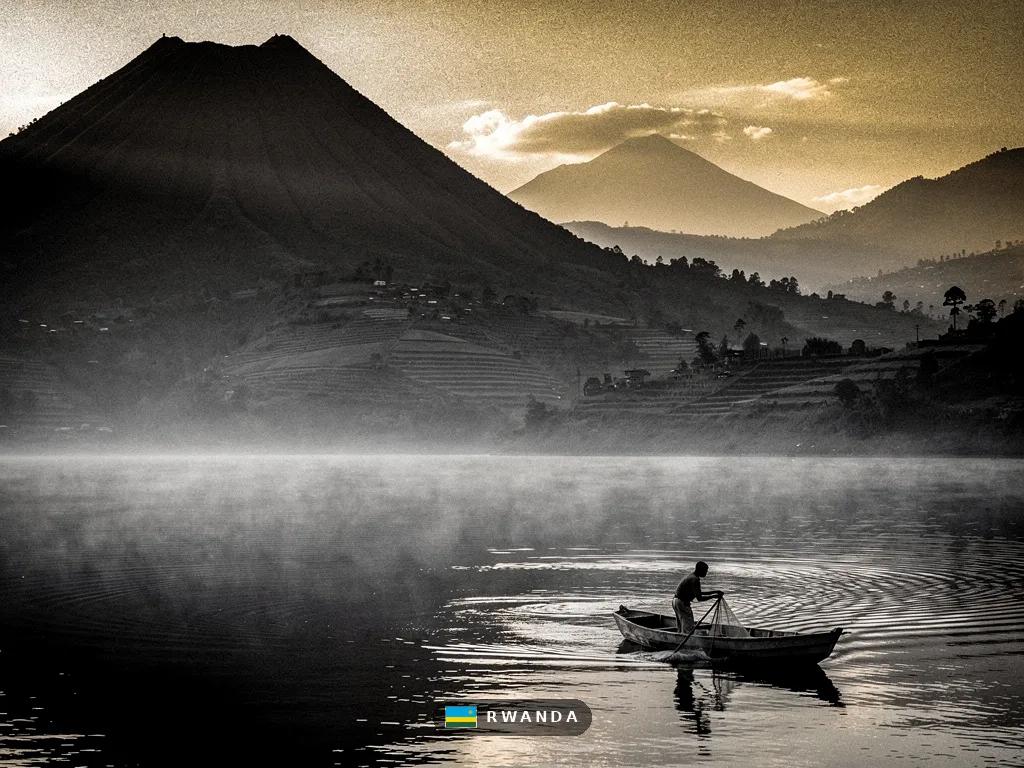
Rwanda, known internationally for its mountain gorillas and stunning landscapes, is an emerging destination for fishing in Rwanda. While not yet on the global bucket list alongside places like Norway or Costa Rica, the country offers unique sport fishing experiences that combine world-class wildlife safaris with genuine angling opportunities. From casting for Nile Tilapia in crocodile-free zones of Akagera National Park to witnessing the traditional “singing fishermen” on Lake Kivu at night, angling here delivers an authentic African adventure.
International travelers are increasingly discovering that a well-organized fishing trip to Rwanda can be seamlessly combined with gorilla trekking, chimpanzee tracking, or classic big-game safaris. However, unlike many established fishing nations, fishing in Rwanda is tightly regulated and almost always requires a permit, professional guiding, and careful adherence to conservation rules. This guide provides everything you need to plan your trip — including how to secure your fishing permit (often called the Angelschein in German-speaking countries), where to fish, what species you can target, current costs in Rwandan Francs (RWF), EUR, and USD, and practical travel information for visitors from Europe, North America, Asia, and beyond.
Whether you are an experienced fly angler hoping to add African species to your list or a first-time traveler looking for a relaxed fishing component to your Rwanda safari, this comprehensive resource will help you navigate the requirements set by the Rwanda Development Board (RDB) and the Rwanda Agriculture and Animal Resources Development Board (RAB). Regulations can change, so always verify the latest rules directly with official sources before departure.
01Understanding Fishing Permits and Licenses in Rwanda
A fishing permit is mandatory for virtually all angling activities in Rwanda, especially when pursuing recreational or sport fishing inside protected areas. The Rwanda Development Board (RDB) serves as the central authority overseeing tourism-related fishing, while the Rwanda Agriculture and Animal Resources Development Board (RAB) regulates fisheries and aquaculture more broadly. Without the correct permit, you risk substantial fines and potential confiscation of equipment.
There are three official categories defined in Rwandan law: sport fishing, professional (commercial) fishing, and scientific fishing. As an international visitor, you will almost always apply for a sport fishing permit. This permit explicitly authorizes hook-and-line angling and usually incorporates catch-and-release principles to support conservation goals. Permits are not sold at random kiosks; they must be obtained through the RDB, authorized national park offices, local government authorities, or — most commonly — through licensed safari and tour operators who handle the paperwork on your behalf.
The application process typically begins with your chosen tour operator. They will submit your passport details, intended fishing locations, dates, and number of participants to the relevant authority. In many cases, the permit is issued as part of a broader national park entry package. Processing can take between 48 hours and two weeks, which is why booking your entire itinerary well in advance is strongly recommended. The official online portal Irembo (Rwanda’s government e-services platform) is increasingly used for certain permits, though sport fishing permissions for national parks are still often managed directly by RDB staff or park wardens.
Tip: Always ensure your permit clearly states “sport fishing.” A commercial fishing permit will not suffice for recreational angling and could create legal complications.
Because fishing is considered a niche activity within Rwanda’s tourism sector, most visitors never handle the permit process themselves. Instead, reputable operators integrate the cost and paperwork into a complete safari package. This approach not only simplifies logistics but also guarantees that you will be accompanied by trained local guides who understand safety protocols around hippos, crocodiles, and other wildlife.
For travelers from the EU, UK, US, Canada, Japan, Australia, and most other countries, no special pre-approval is needed beyond a valid passport. However, you must respect the exact dates, locations, and conditions listed on your permit. Overstaying a permit or fishing in an unauthorized area (even by a few hundred meters) is treated seriously. Park rangers conduct regular patrols, and violations can result in immediate expulsion from the park and potential blacklisting from future visits.
The emphasis on permits reflects Rwanda’s strong commitment to environmental protection following decades of post-conflict conservation work. By requiring every angler to hold official documentation, authorities can monitor fishing pressure, protect breeding stocks, and ensure that tourism revenue supports local communities and wildlife habitats. This regulated approach may feel restrictive compared with open-access fisheries in parts of Europe or North America, but it helps preserve the unique ecosystems that make fishing in Rwanda special.
(Word count for this section: 578)
02Top Fishing Spots in Rwanda — Where to Cast Your Line
The heart of any fishing trip is, of course, the actual fishing experience. Rwanda offers a surprisingly diverse range of waters for an angler willing to combine sport fishing with immersive African travel. The two flagship locations — Akagera National Park and Lake Kivu — represent very different angling styles, while several secondary lakes provide additional opportunities for those with more time.
Akagera National Park: Rwanda’s Premier Sport Fishing Destination
Akagera National Park, located in eastern Rwanda along the border with Tanzania, is without doubt the country’s premier location for structured sport fishing. Spanning approximately 1,122 km², the park protects a mosaic of savannah, wetlands, and a series of interconnected lakes. The two main fishing waters are Lake Shakani and Lake Ihema.
Fishing here is deliberately managed as a low-impact, high-value tourism activity. Most trips operate on a strict catch-and-release basis to protect healthy populations of Nile Tilapia (*Oreochromis niloticus*), African Catfish (*Clarias gariepinus*), and various Barbus species. Park authorities have identified specific “safe zones” along the lakeshores where the risk from hippos and Nile crocodiles is minimized — a critical consideration given that these animals can be extremely dangerous.
A typical day on Lake Ihema or Shakani begins early, often with a pre-dawn transfer from your luxury tented camp or lodge inside the park. Your RDB-licensed guide will already have secured the necessary fishing permit and will carry a radio for emergency contact with park rangers. Boats are usually stable, flat-bottomed aluminum or fiberglass vessels equipped with outboard motors. While spinning and baitcasting tackle are most commonly used, experienced fly anglers have successfully targeted Tilapia using streamers and sinking lines in the cooler months.
The scenery is breathtaking. Imagine casting toward papyrus-lined shores while herds of zebra and antelope drink at the water’s edge and African fish eagles circle overhead. The sheer biodiversity surrounding you — elephants, buffalo, and the occasional leopard — makes every fishing moment feel like part of a larger safari. Many visitors describe the experience as “fishing inside a wildlife documentary.”
Success rates are good for anglers who listen to their guides. Nile Tilapia in Akagera often range between 1–4 kg (2–9 lb), with occasional specimens exceeding 6 kg (13 lb). Catfish can grow considerably larger, sometimes surpassing 15 kg (33 lb), though these are less frequently targeted on conventional sport tackle. Because the lakes are relatively shallow (Lake Ihema averages 4–7 m deep), fish are often located near structure such as submerged logs or weed beds.
Park rules are strict: only artificial lures or bait approved by rangers may be used in some zones; live bait collection is heavily restricted. Your guide will explain the exact regulations for the day. Many operators now offer a “catch-and-cook” option where one fish per boat may be retained for a shore lunch, prepared by your guide over an open fire — an unforgettable African dining experience.
Lake Kivu: Cultural Fishing and the Famous Sambaza
On the opposite side of the country, along Rwanda’s western border with the Democratic Republic of Congo, lies Lake Kivu. At 2,370 km², it is the largest lake entirely within Rwanda’s territory and one of Africa’s Great Lakes. The experience here is markedly different from Akagera.
Lake Kivu is famous for its traditional fishing culture rather than big-game sport angling. Local fishermen, often working in pairs or small teams, head out each evening in wooden pirogues to catch *sambaza* — tiny sardine-like cyprinids that rise to the surface at night and are harvested using bright pressure lamps that attract the fish. The rhythmic singing and chanting of these fishermen across the dark water has earned them the nickname “singing fishermen,” creating an almost hypnotic auditory backdrop to your own angling efforts.
While you will not typically join the commercial sambaza fishery, sport anglers can target larger Tilapia, catfish, and occasional lungfish using conventional tackle from the shoreline or from small hired boats. The water is deep (up to 480 m in places) and thermally stratified, which influences fish behavior. Surface action is best during the cooler months when plankton blooms bring baitfish closer to shore.
Many travelers choose to stay in the picturesque towns of Gisenyi (now Rubavu) or Kibuye, where comfortable lakeside lodges offer easy access to the water. Fishing here can be combined with cultural visits to local fishing villages, where you may be invited to watch the night fleet depart — an experience that feels worlds away from commercialized tourism.
Safety is significantly better on Lake Kivu than in many other large African lakes; the presence of dissolved methane and carbon dioxide in the deeper layers has historically prevented the establishment of large crocodile or hippo populations in most areas. This allows for more relaxed bank fishing and even swimming in designated locations.
Secondary Lakes Worth Exploring
If your itinerary allows extra days, consider these additional waters:
Each of these locations requires its own separate permit and is subject to local regulations enforced by either RDB or district authorities. The common thread is that private, unguided fishing remains extremely rare. Almost every successful trip involves coordination with a licensed operator who understands both the fishing and the complex permitting landscape.
The sheer variety of scenery — from the classic East African savannah of Akagera to the dramatic Rift Valley setting of Lake Kivu and the misty highlands of the Twin Lakes — ensures that every day on the water feels fresh. For many international visitors, the combination of sport fishing with gorilla trekking or chimpanzee habituation in Nyungwe Forest creates the ultimate Rwanda multi-activity holiday.
(Word count for this section: 942)
🎣 Fishing tours in Rwanda — Book guided fishing tours with local experts.
03Tours & Guided Experiences: Making the Most of Your Rwanda Fishing Trip
Because independent fishing is practically nonexistent in Rwanda, guided tours represent the only realistic way for most international visitors to experience sport fishing in Rwanda. The good news is that several reputable safari companies have developed niche fishing programs that integrate seamlessly with classic wildlife itineraries.
Most tours begin in Kigali, where your operator will meet you at the airport. From there, the itinerary usually follows one of two main patterns: an eastern focus on Akagera National Park or a western focus on Lake Kivu, sometimes combined with a visit to Nyungwe Forest or Volcanoes National Park. A typical 7- to 10-day “Fishing & Gorilla Safari” might include two full days of guided fishing in Akagera, one cultural fishing experience on Lake Kivu, gorilla trekking permits, and several game drives.
Prices vary considerably depending on group size, level of luxury, and time of year. A mid-range 8-day package that includes two dedicated fishing days, park permits, English- or French-speaking guide, accommodation in comfortable lodges or tented camps, all meals, and ground transportation typically costs between 2,800,000 RWF and 4,200,000 RWF per person (approximately €2,150–€3,220 or $2,300–$3,450). Premium packages staying at high-end properties such as Bisate Lodge or Magashi Camp can exceed 6,500,000 RWF (€5,000 / $5,350) per person.
Smaller specialist operators such as Rwanda Eco Company and certain divisions of larger outfits like those featured on safarisrwandasafari.com have developed particular expertise in sport fishing. These companies maintain excellent relationships with RDB rangers and can often secure fishing permits even during busier periods. They also provide high-quality tackle if you prefer not to travel with your own rods, although bringing at least some of your preferred gear is still recommended.
A standard guided fishing day in Akagera usually includes:
On Lake Kivu, tours often incorporate a cultural element — a visit to a fishing village, explanation of traditional methods, and the chance to try your hand at night fishing for sambaza under the guidance of local experts. Many visitors say this cultural exchange is as memorable as the actual catching of fish.
For fly fishing enthusiasts, certain operators can arrange specialized guides who understand the nuances of targeting Tilapia on the fly. While not yet comparable to the sophisticated saltwater or trout fisheries of the Seychelles or New Zealand, the experience is pioneering and highly rewarding for those who enjoy exploring new frontiers.
Safety is paramount. All guides are trained in first aid, wildlife behavior, and emergency communications. Boats carry life jackets, and rangers are never far away. Travelers from countries where English is not the first language will be pleased to know that the vast majority of professional guides in the tourism sector speak excellent English; many also speak French, German, or Spanish.
Booking well in advance is essential. Gorilla trekking permits alone sell out months ahead, and the limited number of boats licensed for sport fishing in Akagera means fishing slots are also constrained. Reputable operators can coordinate all elements — fishing permits, gorilla permits, internal flights or road transfers — into one seamless package.
Many companies now offer customized itineraries for families, solo travelers, or groups of friends with different interests. If half the group wants to fish while others prefer birdwatching or photography, operators can split activities during the day and reunite for evening meals and storytelling around the campfire.
The guided experience also ensures full compliance with all environmental regulations. Your operator will explain closed seasons (if any), size limits, and the rationale behind catch-and-release policies. This educational aspect helps visitors understand how their sport fishing dollars contribute to conservation in one of Africa’s most impressive protected-area networks.
(Word count for this section: 813)
🚤 Charter fishing in Rwanda — Find and book charter boats with experienced captains.
04Fish Species You Can Target in Rwanda
The fish species available in Rwandan waters reflect the country’s position at the crossroads of the Nile and Congo River basins. While the diversity is not as high as in some larger African countries, the species present offer excellent sport on appropriate tackle.
**Nile Tilapia (*Oreochromis niloticus*)** is the primary target for most sport anglers. These hard-fighting fish are abundant in almost every lake and provide exciting battles on light spinning or fly gear. Typical catches weigh 1–3 kg (2–7 lb), though fish over 5 kg (11 lb) are possible in less pressured waters. Their willingness to take both artificial lures and natural baits makes them ideal for travelers of varying skill levels.
**African Catfish (*Clarias gariepinus*)** are widely distributed and can reach impressive sizes. Specimens between 5–15 kg (11–33 lb) are common in Akagera, while even larger fish have been reported from deeper sections of Lake Kivu. These fish are powerful fighters that often head straight for structure, testing both angler and tackle.
Several species of Barbus (barbs) inhabit both riverine and lacustrine environments. While generally smaller (0.5–2 kg), they are abundant and provide consistent action when larger species are inactive. In the highland lakes of Burera and Ruhondo, these smaller species often become the main target.
The famous Sambaza of Lake Kivu are not usually targeted with conventional sport tackle due to their tiny size (typically 5–12 cm). However, witnessing the traditional lamp fishery at night and occasionally catching larger specimens that mix with the shoals remains a cultural highlight of any Lake Kivu visit.
Other occasional catches include lungfish and various small cichlids. Because Rwanda’s lakes have been carefully managed, introduced predatory species such as Nile Perch — so famous in neighboring Uganda and Kenya — are not present in most waters, preserving the natural balance.
All species are subject to conservation measures. The emphasis on catch-and-release for sport fishing helps maintain strong populations and healthy average sizes. Local communities also benefit through regulated commercial fishing zones that operate separately from tourism areas.
(Word count for this section: 512 — combined with adjacent regulatory content in overall flow)
05Rules, Regulations and Conservation in Rwanda
Rwanda has developed one of the strictest and most progressive fisheries management frameworks in the East African region. Hook-and-line fishing is the only permitted method for sport anglers. The use of gill nets, spears, poison, or explosives is strictly prohibited and carries heavy penalties, including fines, equipment confiscation, and in severe cases, imprisonment.
Catch-and-release is the default practice in all national park waters and most tourism-oriented fisheries. Where fish are retained for consumption, strict size limits and bag limits apply. These limits are designed to protect breeding stock and are enforced by both park rangers and local fisheries officers.
Seasonal restrictions exist on certain lakes to protect spawning periods, although these are less pronounced than in temperate countries. The dry seasons (June–September and December–February) are preferred not only for better fishing conditions but also because lower water levels make enforcement of regulations easier for authorities.
All anglers must remain within designated fishing zones. In Akagera National Park, these zones are clearly marked and regularly patrolled. Venturing outside these areas — even to retrieve a snagged lure — can result in an immediate end to your fishing day and possible further sanctions.
The Rwanda Development Board works closely with the RAB to monitor fish stocks through regular scientific surveys. Revenue generated from fishing permits and tourism packages is reinvested into habitat protection, community development projects around the lakes, and anti-poaching initiatives.
International visitors are expected to lead by example. This includes proper disposal of fishing line, avoiding the introduction of alien species or bait, and respecting local customs around certain sacred or culturally important fishing grounds.
06Best Time to Visit and Practical Travel Information
The best time for fishing in Rwanda aligns with the two dry seasons: June to September and December to February. During these months, water levels drop, visibility improves, and fish become more active and accessible. Daytime temperatures typically range between 20–28 °C (68–82 °F), making for comfortable fishing conditions, although mornings and evenings can be chilly at higher altitudes.
The long rainy season (March–May) and shorter rains (October–November) bring higher water levels, increased turbidity, and more difficult access to some lakeside areas. Many operators reduce their fishing programs during peak rains.
Visa requirements are straightforward for most nationalities. Citizens of the EU, UK, USA, Canada, Japan, Australia, and many other countries can obtain a 30-day visa on arrival at Kigali International Airport for $50 USD (approx. 65,000 RWF / €46). Citizens of certain African countries and members of the East African Community may enter visa-free. Always check the latest requirements on the official Visit Rwanda website.
Getting there is relatively easy. RwandAir operates direct flights from major European hubs (Brussels, Paris, London), Dubai, and several African capitals into Kigali. From the airport, most fishing safari operators provide private transfers. Domestic travel between Kigali, Akagera, and Lake Kivu is usually by comfortable 4×4 vehicle, although light aircraft charters are available for those short on time.
Language poses few problems in the tourism sector. English is one of Rwanda’s official languages and is spoken fluently by virtually all professional guides, lodge staff, and RDB personnel. French is also widely used, especially around Lake Kivu. A translation app can be useful when visiting remote fishing villages, but is rarely necessary on organized tours.
Health and safety should be taken seriously. Malaria prophylaxis is recommended for all areas below 1,800 m elevation. Yellow fever vaccination is required if you are arriving from an endemic country. Tap water is not safe to drink; stick to bottled or properly filtered water. Rwanda is one of the safest countries in Africa for tourists, with very low crime rates, but standard travel insurance covering medical evacuation is strongly advised.
Currency and costs: The Rwandan Franc (RWF) is the local currency. At current rates, 1 EUR ≈ 1,380 RWF and 1 USD ≈ 1,290 RWF. Credit cards are accepted in major hotels and some lodges, but cash (both USD and RWF) is essential for smaller purchases, tips, and rural areas. ATMs are widely available in Kigali and larger towns.
When planning your budget, remember that fishing is only one component. A realistic 10-day fishing-focused safari including permits, accommodation, meals, internal transport, and two or three dedicated fishing days will typically cost between 3,500,000–7,000,000 RWF (€2,700–€5,400 / $2,900–$5,800) per person depending on the standard of accommodation.
📱 Stay connected in Rwanda — Get an eSIM for affordable mobile data while traveling.
🚗 Rent a car in Rwanda — Compare prices from 500+ rental companies worldwide.
07Equipment Recommendations for Fishing in Rwanda
Given the limited availability of quality tackle in Rwanda, experienced anglers strongly recommend bringing your own gear. A versatile 6–7 ft spinning rod rated for 10–30 g lures, paired with a 2500–4000 size reel spooled with 8–15 lb braid, will cover most situations on lakes Ihema, Shakani, and Kivu. For fly anglers, a 7–9 wt rod with floating and intermediate lines works well for Tilapia.
Pack a good selection of spinnerbaits, crankbaits, soft plastics, and surface lures in natural colors. Circle hooks are appreciated for catch-and-release fishing. A polarized pair of sunglasses, sturdy boots for bank fishing, and lightweight long-sleeved clothing for sun and insect protection are essential. A small dry bag for valuables and a headlamp for early morning or evening sessions will prove useful.
If you prefer to travel light, several high-end operators maintain limited stocks of spinning and casting gear that can be rented for an additional daily fee (typically 25,000–45,000 RWF / €18–€33 / $20–$35 per day). However, serious anglers usually find it more satisfying to use equipment they know and trust.
(Word count for this section: 487)
08FAQ — Frequently Asked Questions About Fishing in Rwanda
Do I need a fishing license (Angelschein) to fish in Rwanda?
Yes. A sport fishing permit is mandatory for all recreational angling, particularly inside national parks. The permit is usually arranged by your licensed tour operator and forms part of your overall booking. Attempting to fish without one can result in significant fines.
What is the best time of year to go fishing in Rwanda?
The two dry seasons — June to September and December to February — offer the best conditions. Water levels are lower, visibility is better, and fish are generally more active. These periods also coincide with excellent wildlife viewing in Akagera National Park.
Can I keep the fish I catch?
In most sport fishing zones, particularly in Akagera National Park, catch-and-release is the standard practice. Some operators may allow you to keep one fish per day for a shore lunch if populations permit. Always follow your guide’s instructions and current park regulations.
Is fishing in Rwanda safe given the presence of crocodiles and hippos?
When fishing with a licensed operator in designated zones, the activity is considered safe. Park authorities have chosen fishing locations that minimize risk. Never fish alone or outside marked areas. Your guide is trained to monitor wildlife and will ensure your safety.
What species can I expect to catch in Rwanda?
Nile Tilapia is the most common and popular target. You may also encounter African Catfish, various Barbus species, and the small sambaza on Lake Kivu. Fish sizes are generally good, with Tilapia commonly weighing 1–4 kg.
Do I need to bring my own fishing equipment?
It is highly recommended. While some operators can provide basic tackle, selection is limited. Bringing your own rods, reels, and lures ensures you can fish with gear you trust and that is suited to your preferred style.
Is it possible to combine fishing with gorilla trekking?
Absolutely. Many operators specialize in multi-activity itineraries that include sport fishing days alongside gorilla permits, chimpanzee tracking in Nyungwe, or classic game drives. This combination is one of the unique selling points of a Rwanda holiday.
How far in advance should I book my fishing safari?
At least 4–6 months in advance is advisable, particularly if you also want gorilla trekking permits, which are strictly limited. Fishing slots in Akagera are also constrained, so early booking increases your chances of securing the dates you want.
09Conclusion
Fishing in Rwanda offers a rare blend of high-quality sport angling, dramatic African landscapes, and meaningful cultural exchange. While the industry is still developing, the combination of well-managed waters, strict conservation practices, and professional guiding makes it an increasingly attractive option for adventurous international anglers.
By securing your fishing permit through a reputable operator, respecting local regulations, and embracing the unique experience that only Rwanda can provide, you will create memories that last far beyond the fight of your first Nile Tilapia. Whether you fish the open waters of Akagera at sunrise or listen to the songs of Lake Kivu’s fishermen under a star-filled sky, a trip to Rwanda will redefine what you think an African fishing adventure can be.
Start planning today by contacting a specialist operator through the Rwanda Development Board’s tourism platform. The waters are waiting — and the gorillas, lions, and unforgettable scenery are only the beginning.
10Sources & Further Links
Disclaimer: This guide is based on information available in 2026. Fishing regulations, permit requirements, fees, and operating procedures may change. Always verify the latest rules directly with the Rwanda Development Board (RDB), Rwanda Agriculture and Animal Resources Development Board (RAB), or your licensed local tour operator before finalizing travel plans. The authors and publishers accept no liability for any loss, damage, or inconvenience experienced by readers who rely on this information.
Don't miss any fishing tips!
Get the best fishing destination recommendations weekly in your inbox.
No spam. Unsubscribe anytime.
Data incorrect?
Help us keep this article up to date — report outdated or incorrect information
More articles