Buy License Online
Buy fishing license for Norway online
Official authority website
Imagine standing at the edge of a crystal-clear Arctic river as a 20-pound Atlantic salmon takes your fly, or wrestling with a halibut the size of a barn door beneath Norway's midnight sun. This isn't fantasy—this is fishing in Norway, one of the world's last great angling frontiers. With over 100,000 kilometers (62,000 miles) of coastline, thousands of pristine lakes, and hundreds of legendary salmon rivers, Norway offers fishing experiences that most anglers only dream about.
What makes fishing in Norway particularly attractive is its remarkably accessible regulations. Sea fishing is completely free for everyone—no license required. Whether you're a fly-fishing purist chasing Atlantic salmon, a deep-sea enthusiast targeting trophy cod, or a family looking for accessible shore fishing, Norway delivers world-class opportunities with scenery that takes your breath away.
01Fishing Licenses and Permits in Norway
Norway has a refreshingly straightforward fishing permit system—perhaps the simplest in Scandinavia. The key distinction is between saltwater and freshwater fishing.
Sea Fishing: No License Required
This is Norway's biggest draw for visiting anglers: sea fishing from shore or boat is completely free for everyone, including foreign tourists. You do not need any permit, license, or fee to fish in the ocean, fjords, or coastal waters. This applies whether you're fishing from:
You simply need to follow national regulations regarding minimum fish sizes, protected species, and catch limits. The Norwegian government maintains this policy to encourage public access to marine resources, making it one of the most angler-friendly coastal fishing destinations in Europe.
Tip: While no license is required, you must still follow regulations. Download the official fishing rules and keep the minimum size chart handy. When in doubt, ask local fishing shops or your charter captain.
Freshwater Fishing: License Required
For fishing in rivers and lakes, a license is mandatory. The system works on two levels:
National Fishing Fee (Fiskeravgift)
Anyone 18 years or older who wants to fish for salmon, sea trout, or Arctic char in Norwegian rivers and waterways must pay the national fishing fee. This is a government fee that goes toward conservation and management of these valuable species.
| Fee Type | Price (2025) | EUR Approx. | USD Approx. |
|----------|--------------|-------------|-------------|
| Individual | 347 NOK | ~€30 | ~$33 |
| Family (spouse/partner + children 18-20) | 554 NOK | ~€48 | ~$53 |
| Children under 18 | FREE | — | — |
How to pay: Online at fiskeravgift.miljodirektoratet.no. The fee is valid for the entire calendar year.
Penalty: Fishing without the fee can result in a 3,000 NOK fine (~€260/$280).
Local Fishing Permit (Fiskekort)
In addition to the national fee, you must purchase a local fishing permit from the landowner or fishing rights holder for the specific river or lake you want to fish.
- Day permits: 100-500 NOK (~€9-43)
- Weekly permits: 400-2,000 NOK (~€35-175)
- Premium salmon beats: 500-3,000+ NOK per day (~€43-260+)
Statskog's Norgeskort
This comprehensive annual permit covers fishing on state-owned land throughout Norway. It provides access to hundreds of lakes and rivers where Statskog (the Norwegian state land management agency) holds fishing rights.
This is an excellent option for anglers who want flexibility to fish multiple inland locations without purchasing individual permits for each.
02Best Fishing Spots in Norway
Norway's fishing landscape is remarkably diverse. From the Arctic waters of Finnmark to the salmon rivers of Trøndelag and the legendary Lofoten Islands, each region offers unique experiences.
Lofoten Islands and Vesterålen – World-Famous Sea Fishing
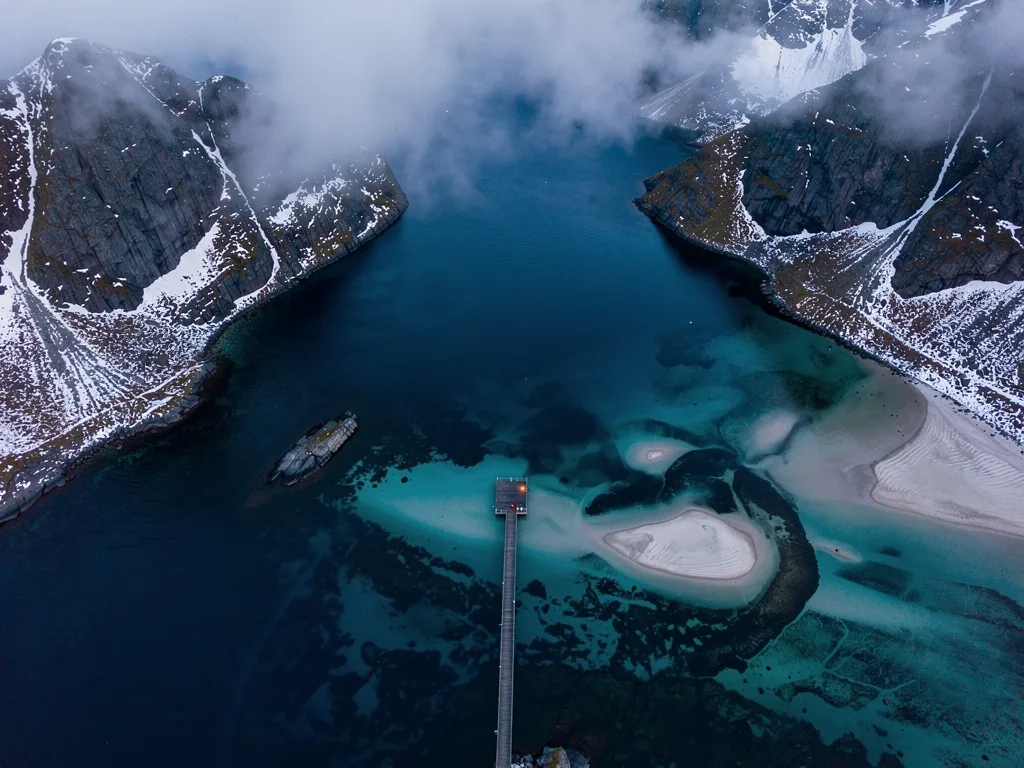
The Lofoten archipelago, straddling the Arctic Circle in Nordland county, is arguably Norway's most famous fishing destination. For centuries, this dramatic landscape of sharp peaks rising directly from the sea has drawn fishermen seeking the legendary Skrei—migratory cod that arrive in winter to spawn.
What makes Lofoten special:
The winter Skrei fishery (January through April) is legendary. These massive cod, often weighing 15-30 kg (33-66 lbs), migrate from the Barents Sea to the spawning grounds around Lofoten. The fishing villages of Svolvær, Henningsvær, and Kabelvåg bustle with activity as anglers from across Europe arrive to target these trophy fish.
Summer brings the midnight sun, allowing 24-hour fishing. Species include halibut, coalfish (saithe), haddock, wolffish, and mackerel. The scenery—red wooden rorbu cabins perched over the water with jagged peaks as backdrop—creates an unforgettable fishing atmosphere.
Key fishing spots in Lofoten:
Best time to visit:
Gaula River – Atlantic Salmon Paradise
The Gaula, flowing through Trøndelag in central Norway, is one of the world's great Atlantic salmon rivers. Consistently producing 4,000+ salmon annually, it offers anglers genuine chances at trophy fish exceeding 20 lbs (9 kg).
What makes Gaula special:
With 153 km (95 miles) of salmon-holding water, the Gaula provides diverse fishing opportunities. The river features long, glide-like pools perfect for fly fishing, interspersed with faster riffles and deep holding lies. The average salmon weighs 12-18 lbs (5.5-8 kg), but fish over 40 lbs are caught each season.
The river's watershed includes numerous tributaries, and the main river is divided into many beats controlled by different landowners. This means you can find fishing to suit various budgets and skill levels.
Famous beats:
Season: June 1 – August 31
Permits: Purchase through Elveguiden or individual beat websites. Prices range from 500-3,000+ NOK per day depending on the beat and timing.
Namsen River – The Queen of Rivers
The Namsen, also in Trøndelag, earned its nickname "The Queen of Rivers" for its consistent production of large Atlantic salmon. What distinguishes Namsen is its traditional fishing methods and big-water character.
What makes Namsen special:
The Namsen is famous for "elvebåt" fishing—traditional boat fishing where a guide rows you across the river while you fish. This method, developed over centuries, allows anglers to cover water effectively and is perfectly suited to the Namsen's powerful flows. Modern fly fishing has also gained popularity here.
The river typically produces 1,500-2,000+ salmon annually, with good numbers of fish in the 15-25 lb class. The water is big and demanding, suited to double-handed (spey) rods of 13-15 feet.
Best areas:
Season: June – August (varies by zone)
Alta River – Legendary Trophy Salmon
For anglers seeking the ultimate Atlantic salmon challenge, the Alta River in Finnmark, northern Norway, represents the pinnacle. This Arctic river has produced more world-record salmon than any other river on Earth.
What makes Alta special:
The Alta holds the record for the largest Atlantic salmon ever caught on rod and line—a staggering 32.5 kg (71.6 lbs) fish landed in 2024. Fish exceeding 20 kg (44 lbs) are caught most seasons. This is genuinely trophy fishing.
The river flows through dramatic Arctic landscape, with pools named after their legendary fish. The fishing is strictly regulated, with permits allocated through a lottery system years in advance. Expect to pay premium prices and face significant competition for permits.
Key facts:
If you secure an Alta permit, you're experiencing salmon fishing at its absolute finest.
Sørøya – Halibut Capital of Norway
Located in Finnmark, far above the Arctic Circle, Sørøya has earned its reputation as Norway's halibut capital. This remote island offers some of the best halibut fishing in Europe.
What makes Sørøya special:
The waters around Sørøya consistently produce halibut over 150 cm (59 inches), with fish exceeding 200 cm caught annually. The fishing grounds are diverse—from shallow coastal areas to deep offshore seamounts where giant halibut prowl.
Beyond halibut, the area offers excellent cod, wolffish, and redfish fishing. The remote location means minimal fishing pressure and pristine waters. Professional fishing camps like Camp Halibut provide boats, equipment, and expert local knowledge.
Season breakdown:
Getting there: Fly to Alta or Hammerfest, then drive or arrange transfer to fishing camp.
🎣 Charter fishing in Norway — Find and book charter boats with experienced captains.
03Fishing Seasons in Norway
Norway's long latitudinal span—from the temperate south to the high Arctic north—creates varied fishing seasons depending on your target and location.
Winter (December – March)
Skrei Cod Season: The winter cod migration to Lofoten and Vesterålen is Norway's most famous winter fishery. These large spawning cod arrive in January and remain through April. Expect cold conditions (often below freezing) but excellent fishing.
Ice Fishing: Inland lakes freeze solid, offering ice fishing for trout, char, and perch. Popular areas include the mountain lakes around Tromsø and interior Finnmark.
Northern Lights: Winter fishing coincides with the aurora borealis season, adding magic to the experience.
Spring (April – May)
Skrei Finale: The cod season peaks and winds down through April.
Halibut Season Begins: May marks the start of serious halibut fishing, particularly in northern Norway. This is prime time for trophy fish.
Salmon Season Opens: Major salmon rivers open June 1, with early season fishing often productive.
Summer (June – August)
Peak Salmon Season: The prime months for Atlantic salmon fishing across Norway. Long daylight hours (midnight sun north of the Arctic Circle) allow extended fishing sessions.
Halibut and Species Variety: Summer offers the broadest range of species—halibut, cod, coalfish, haddock, mackerel, wolffish, and sea trout.
Midnight Sun: North of the Arctic Circle, the sun never sets from late May through late July, enabling 24-hour fishing.
Autumn (September – October)
Halibut Numbers Peak: While May produces giants, September and October offer the best numbers of halibut.
Sea Trout and Char: River fishing for sea trout and Arctic char peaks as these fish prepare to spawn.
Northern Lights Return: Late September sees the aurora return, combining excellent fishing with spectacular night skies.
Year-Round Considerations
| Season | Best For | Weather | Daylight Hours |
|--------|----------|---------|----------------|
| Winter (Dec-Mar) | Skrei cod, ice fishing | Cold, snowy | Very short |
| Spring (Apr-May) | Halibut giants, early salmon | Cool, variable | Rapidly increasing |
| Summer (Jun-Aug) | Salmon, all species | Mild | Midnight sun (north) |
| Autumn (Sep-Oct) | Halibut numbers, sea trout | Cool | Decreasing |
04Regulations and Rules You Need to Know
While Norway's fishing regulations are accessible, ignorance is no excuse. Here are the key rules every angler must follow.
Sea Fishing Regulations
Equipment restrictions:
Protected species (year-round protection):
Minimum sizes for key species:
| Species | Minimum Size |
|---------|--------------|
| Cod | 44 cm |
| Halibut | 80 cm |
| Haddock | 40 cm |
| Saithe/Coalfish | 35 cm |
| Mackerel | 30 cm |
| Wolffish | 40 cm |
Special halibut rules:
Seasonal cod closures:
Other important rules:
Freshwater Fishing Regulations
Equipment rules for salmon rivers:
Season dates:
Catch limits:
The 100-meter zone:
At river mouths, special restrictions apply within 100 meters of the river/sea boundary. Fishing may be prohibited when the river is closed for salmon.
Disinfection requirements:
Many salmon rivers require documented equipment disinfection before fishing. This prevents the spread of Gyrodactylus salaris, a parasite devastating to salmon. Disinfection costs around 50 NOK and is valid for 20 days.
05Fishing Tours and Guided Experiences
While DIY fishing is entirely possible in Norway, guided experiences offer significant advantages—local knowledge, equipment, boat access, and convenience.
Deep-Sea Fishing Charters
Charter boats operate throughout Norway's coast, from the Oslofjord in the south to Finnmark in the Arctic north.
Typical offerings:
What's included:
Popular operators:
🎣 Fishing tours in Norway — Book guided fishing tours with local experts.
Salmon Fishing Guides
For salmon fishing, a good guide transforms the experience. They know the pools, the holding lies, and the best flies for current conditions.
Guide services:
Premium lodges:
Shore Fishing and Family Trips
For beginners and families, shore fishing offers accessible fun without the cost of boat charters.
What to expect:
Ice Fishing Tours
Winter ice fishing provides a uniquely Norwegian experience—drilling through meter-thick ice to catch Arctic char and trout.
Typical tours:
06Fish Species and Techniques
Norway's waters host an impressive variety of species, from the legendary Atlantic salmon to powerful halibut and numerous marine species.
Atlantic Salmon (Laks)
The king of Norwegian sport fish. Atlantic salmon enter rivers from spring through autumn, with peak runs in June and July.
Techniques:
Best rivers: Gaula, Orkla, Namsen, Alta, Lakselva
Cod (Torsk)
The iconic Norwegian saltwater species. Resident cod inhabit coastal waters year-round, while migratory Skrei arrive in winter.
Techniques:
Best locations: Lofoten, Vesterålen, coastal Norway
Halibut (Kveite)
The ultimate Norwegian sea fishing prize. These flatfish grow enormous—fish over 200 cm are caught annually.
Techniques:
Best locations: Sørøya, Finnmark coast, Lofoten
Other Notable Species
| Species | Norwegian Name | Best Season | Technique |
|---------|---------------|-------------|-----------|
| Coalfish/Saithe | Sei | May-Oct | Jigging, spinning |
| Haddock | Hyse | May-Sep | Bottom fishing |
| Mackerel | Makrell | Jul-Aug | Feathering, spinning |
| Wolffish | Steinbit | Jun-Jul | Bottom fishing |
| Redfish | Uer | Jun-Aug | Deep jigging |
| Sea Trout | Sjøørret | Jun-Sep | Fly fishing, spinning |
| Arctic Char | Røye | Jun-Sep | Fly fishing, spinning |
| Brown Trout | Ørret | May-Sep | Fly fishing, spinning |
| Pike | Gjedde | May-Oct | Spinning, fly fishing |
07Practical Travel Information for Anglers
Planning a fishing trip to Norway requires attention to logistics, timing, and local considerations.
Getting to Norway
Major airports with good fishing access:
Airlines: Norwegian Air, SAS, Widerøe (domestic), plus numerous European carriers.
Ferries: Connect Norway to Denmark (Hirtshals), Germany (Kiel), and Sweden (Strömstad). Popular with anglers bringing boats or substantial equipment.
Visa Requirements
Visa-free entry (90 days within 180-day period):
Schengen visa required:
Important: Starting in 2026, travelers from visa-exempt countries must obtain ETIAS authorization before departure. This electronic travel authorization costs approximately €7 and is valid for three years.
Equipment: Bring or Rent?
Bring your own:
Rent locally:
Rental costs:
Accommodation Options
Norway offers fishing-specific accommodation that enhances the experience:
Rorbu cabins: Traditional fisherman's cabins, particularly in Lofoten. Often located directly on the water with fish cleaning facilities and boat rental options.
Fishing camps: Full-service operations providing accommodation, boats, equipment, and local knowledge. Popular for serious sea fishing trips.
Fishing lodges: Premium salmon river operations offering guiding, prime beats, and luxury accommodation. Expensive but provide everything needed.
Camping: Norway's "right to roam" (allemannsretten) allows camping on uncultivated land. Many campgrounds are located near fishing waters.
🏨 Accommodation near fishing spots in Norway — Find hotels and lodges close to the best waters.
Language and Communication
Norwegian is the official language, but English is widely spoken throughout Norway, particularly in tourism and fishing industries. Most Norwegians under 60 speak excellent English.
Useful Norwegian fishing terms:
Costs Summary
Understanding Norway's costs helps with budget planning. Norway is expensive, but fishing itself can be remarkably affordable.
| Item | Cost (NOK) | EUR | USD |
|------|-----------|-----|-----|
| National fishing fee (individual) | 347 | ~€30 | ~$33 |
| National fishing fee (family) | 554 | ~€48 | ~$53 |
| Local day permit (typical) | 100-500 | €9-43 | $10-48 |
| Premium salmon beat (per day) | 500-3,000+ | €43-260+ | $48-290+ |
| Rod rental (per day) | 150-200 | €13-17 | $14-19 |
| Charter boat (half-day, 4-6 people) | 3,000-8,000 | €260-700 | $290-770 |
| Charter boat (full day, up to 6) | 7,000-15,000 | €600-1,300 | $670-1,450 |
| Guided salmon fishing (per day) | 4,000-8,000 | €350-700 | $385-770 |
| Rorbu cabin (per night) | 800-2,500 | €70-220 | $77-240 |
For comparison: A restaurant dinner in Norway typically costs 300-500 NOK per person. A pint of beer costs 80-120 NOK in bars.
08Exporting Your Catch
If you catch fish and want to bring it home, strict regulations apply.
Tourist Export Quota (2025)
Maximum: 18 kg of fish or fish products
Important: From January 2027, the quota will be reduced to 10 kg.
What's Excluded
Freshwater species (salmon, trout, char) are not included in the export quota. These cannot be exported by tourists.
Documentation Required
The tourist fishing business must provide:
Keep all documentation—you may need to present it at customs.
09FAQ: Fishing in Norway
Do I need a fishing license for sea fishing in Norway?
No. Sea fishing in Norway is completely free for everyone, including tourists. No license or permit is required. You only need to follow regulations regarding minimum sizes, protected species, and closed seasons.
How much does a fishing license cost in Norway?
For freshwater fishing, you need to pay the national fishing fee (347 NOK for individuals, ~€30) plus a local fishing permit for the specific river or lake (100-500 NOK per day typically). Children under 18 fish free without paying the national fee.
When is the best time to fish in Norway?
The best time depends on your target. For Atlantic salmon, June through August is peak season. For Skrei cod, January through April is best. For halibut, May offers the best chance at trophy fish, while September-October produces the best numbers.
Can tourists fish salmon in Norway?
Yes, but you must pay the national fishing fee and purchase a local permit for the specific river. Premium salmon beats can be expensive and sell out months or years in advance. Early booking is essential for famous rivers.
Is Norway good for fly fishing?
Excellent. Norway offers world-class fly fishing for Atlantic salmon, brown trout, Arctic char, and sea trout. The large salmon rivers are suited to double-handed (spey) rods, while smaller waters and lakes are perfect for single-handed rods.
What fish can I catch from shore in Norway?
Cod, coalfish, haddock, mackerel, wrasse, flounder, and sea trout are all catchable from shore. Norway's long coastline offers countless shore fishing spots, especially around rocky points and near river mouths.
Do I need a boat to fish in Norway?
Not necessarily. Shore fishing is free and productive for many species. However, a boat significantly expands your options, especially for halibut and deep-water species. Boat rental is available at most coastal destinations.
Are there size limits for fish in Norway?
Yes. Key minimum sizes include cod (44 cm), halibut (80 cm), haddock (40 cm), and mackerel (30 cm). Halibut over 2 meters must be released regardless of minimum size.
Can I sell fish I catch in Norway?
No. Tourists are strictly prohibited from selling their catch. Fish must be for personal consumption or export within legal limits.
Is fishing allowed year-round in Norway?
Sea fishing is permitted year-round, though some species have seasonal protections. Salmon rivers have defined seasons (typically June 1 – August 31). Ice fishing operates when lakes are frozen (December through March in most areas).
10Conclusion
Norway stands as one of the world's great fishing destinations—a place where accessible regulations meet pristine waters teeming with fish. The free sea fishing policy removes barriers for visiting anglers, while the salmon rivers offer bucket-list experiences for the dedicated fly fisher. From battling monster halibut under the midnight sun to pulling a 20-pound salmon from a crystalline river, Norway delivers fishing memories that last a lifetime.
The key to a successful Norwegian fishing trip is preparation: book early for premium salmon beats, check current regulations before fishing, and consider guided experiences to maximize your time on the water. Whether you're a seasoned angler or trying fishing for the first time, Norway's waters welcome you with open arms and fish worth traveling for.
Pack your gear, book your ticket, and prepare for fishing unlike anywhere else on Earth.
11Sources & Further Links
Disclaimer: This article was compiled from official sources and research in January 2026. Fishing regulations, permit prices, and quotas may change. Always verify current rules with the Norwegian Directorate of Fisheries and Norwegian Environment Agency before fishing. Fishing World Guide accepts no liability for any inaccuracies or regulatory changes.
Recommended tours
Fishing trips in Norway
Curated tours & charters with price and click data from our partner dashboards.
 FishingBooker
Fishing Guide Davidsen
 FishingBooker
Arctic Cruise - Arctic Princess
 FishingBooker
AnglerPilot
Don't miss any fishing tips!
Get the best fishing destination recommendations weekly in your inbox.
No spam. Unsubscribe anytime.
Read more
Data incorrect?
Help us keep this article up to date — report outdated or incorrect information
More articles