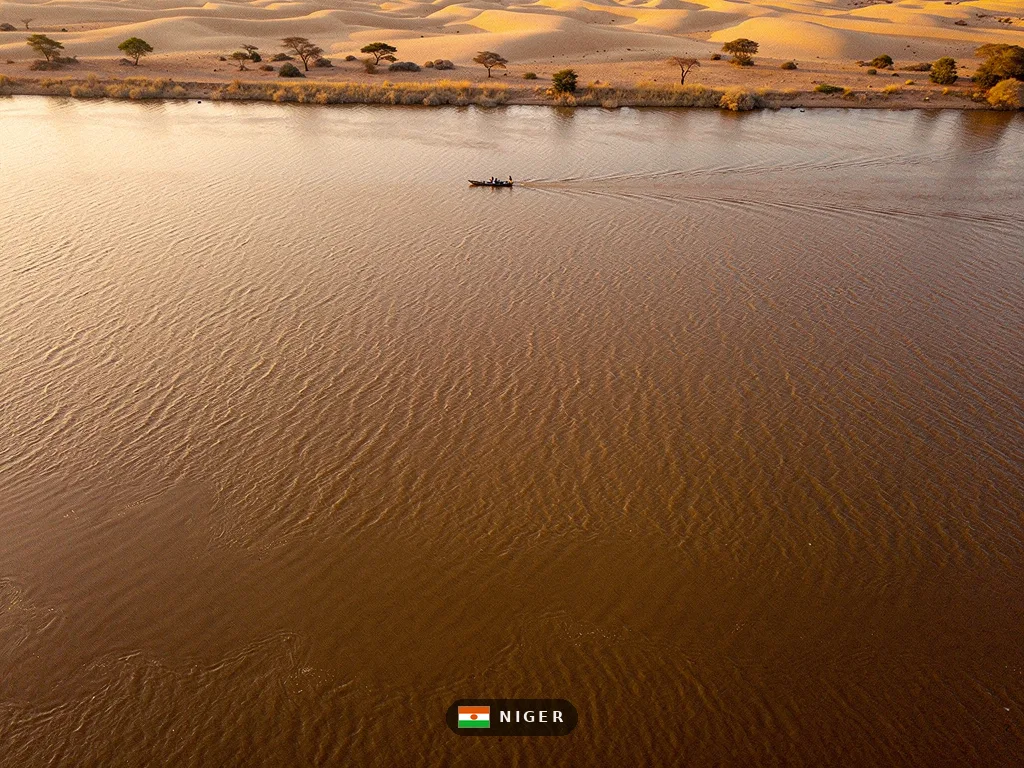
Fishing in Niger offers a raw and authentic West African experience centered on the mighty Niger River and its surrounding basins. With over 100 fish species including hard-fighting Nile perch and massive catfish, the country presents unique opportunities for sport fishing enthusiasts willing to navigate its challenges. However, securing the correct fishing permit Niger is mandatory, as all public waters fall under strict state regulation. This comprehensive guide covers everything you need to know about Niger fishing regulations, permits, the best fishing spots, guided tours, costs in CFA, EUR, and USD, and essential travel practicalities for international anglers in 2026.
Important Travel Advisory: As of early 2026, many governments including those of the United States, United Kingdom, Australia, EU member states, and Japan strongly advise against all travel to Niger due to high risks of terrorism, kidnapping, civil unrest, and armed conflict. Large areas outside the capital Niamey require military escorts and special authorizations. This guide is provided for informational purposes only. Any travel must be preceded by thorough consultation of official travel advisories from your home country. Security considerations dominate all planning for fishing in Niger.
01Do You Need a Fishing License in Niger?
Yes, you need an official fishing permit to engage in any form of fishing in Niger. All natural waters — including the Niger River, its tributaries, lakes, ponds, dams, and reservoirs — are classified as part of the *domaine public* (public domain) and are administered by the State. According to the "Loi portant Régime de la Pêche au Niger," it is illegal to fish without a valid permit or a recognized customary usage right.
The law establishes three main categories of permits: sport fishing (pêche sportive) for personal or family consumption, scientific research permits, and commercial fishing permits. As an international visitor interested in recreational angling, you will apply for a sport fishing permit. While commercial permits carry clear fees (around 10,000 CFA for nationals — approximately 15 EUR or 16 USD — and 20,000 CFA for foreign nationals or approximately 30 EUR or 32 USD), sport fishing permits are often designated as free of charge or subject only to nominal administrative processing costs. However, you must still obtain the official document.
The primary authority responsible is the Direction de la Pêche et de l'Aquaculture (DPA), which operates under the Ministère de l'Environnement et de la Lutte contre la Désertification. Applications are typically handled at the regional or departmental level, often in Niamey for international visitors. You will need to present identification, details of your intended fishing locations and duration, and sometimes proof of accommodation or local sponsorship. In many rural areas, customary law remains influential. Village chiefs and traditional fishing communities manage local access rights that exist alongside national legislation. Respecting both systems is essential to avoid conflicts.
Niger fishing regulations also strictly prohibit several destructive practices to protect fish stocks. The use of explosives, poisons, drugs, or electricity is forbidden. Fine-mesh nets (including mosquito netting) that capture juvenile fish are illegal. Certain zones are designated as *Réserves de pêche* (fishing reserves) where angling is prohibited without special ministerial authorization. Local authorities can also declare temporary closed seasons during fish breeding periods. These rules apply nationwide but enforcement intensity varies significantly by region and security conditions.
Failure to carry a properly stamped permit can result in heavy fines, confiscation of equipment, and in some cases detention. Given the security environment, attempting to fish without proper documentation and local coordination is not only illegal but highly dangerous. Always start your planning by contacting the DPA through official channels or a recognized local operator who can facilitate the permitting process. Regulations can change, so verification with the latest official sources is mandatory before travel.
This legal framework reflects Niger’s commitment to sustainable management of its aquatic resources in one of the world’s most arid countries. The Niger River and its associated wetlands represent a vital ecological corridor through the Sahel, supporting both biodiversity and local livelihoods. Your adherence to these rules helps preserve the fishery for future generations of Nigerien and international anglers.
(Word count for section: 578)
02Best Fishing Spots in Niger
The core of Niger River fishing lies in the river’s 550 km stretch within Niger’s borders, particularly the sections near Niamey and downstream toward the border with Nigeria. The river here is wide, relatively shallow in many places, and characterized by sandy banks, rocky outcrops, and extensive floodplains that create diverse habitats for predatory and bottom-feeding species.
Niamey itself offers the most accessible fishing opportunities, although even here security must be carefully assessed. The riverbanks within and immediately downstream of the capital are known for producing Nile perch (*Lates niloticus*), locally called "capitaine." These powerful predators can reach weights of 20–50 kg (44–110 lb) in the larger pools and eddies. Early morning and late evening are the most productive times, when fish move into shallower water to hunt. Local boatmen use traditional pirogues to reach productive spots near the Kennedy Bridge and the islands just downstream. The scenery is striking — red laterite cliffs contrast with the green riverine vegetation against the arid Sahel backdrop.
Further downstream, the stretch between Niamey and Tillabéri is considered prime Nile perch fishing Niger territory. Here the river widens and creates numerous islands, backwaters, and channels. Catfish, including the enormous *Heterobranchus bidorsalis* and *Bagrus* species, are abundant on the bottom. These fish can exceed 50 kg (110 lb) and provide powerful fights on heavy tackle. The area around the town of Ayorou is legendary among those who have fished it, though current security restrictions severely limit independent access. The river here flows through classic Sahelian landscape — acacia trees, doum palms, and seasonal millet fields — creating an unforgettable atmosphere as you drift with the current.
Lake Chad basin areas in eastern Niger, particularly around Diffa and N’Guigmi, historically offered superb fishing for tilapia, catfish, and Nile perch. However, the lake has shrunk dramatically due to climate change and upstream damming, and the region currently faces severe security challenges from militant groups. Access requires military coordination and is rarely granted to tourists. When conditions allow, the remaining permanent water bodies and associated wetlands provide rich feeding grounds, especially after the annual floods.
The Sirba River and other tributaries entering the Niger River from the west can produce excellent sport during the high-water season. These smaller rivers concentrate fish as waters recede, creating natural bottlenecks where predators gather. Local knowledge is indispensable here because many of these areas fall under traditional management by specific ethnic groups, including the Sorko (Bozo) fishing communities whose expertise dates back centuries.
Another notable location is the Kandadji Dam area, approximately 180 km upstream from Niamey. The dam creates a large reservoir that has altered local fish populations. While construction and security issues have limited recreational access in recent years, the reservoir holds healthy stocks of Nile perch and various catfish species. When accessible, fishing from the dam walls or by boat in the calmer sections can be highly productive.
The best time to fish depends on the hydrological cycle. The Niger River typically rises from July to October following rains in Guinea and Mali, flooding vast areas and dispersing fish into the floodplains. As waters recede between November and April, fish become more concentrated and easier to locate. The cool dry season from December to February is generally preferred by international visitors because temperatures are more moderate (daytime highs around 30–35 °C / 86–95 °F) compared to the extreme heat of May and June, which can exceed 45 °C (113 °F).
Successful catfish fishing Niger often involves heavy bottom rigs baited with pieces of local fish, frogs, or even dough balls. For Nile perch, a combination of live bait, spinnerbaits, and deep-diving plugs works well. Local guides use both traditional handlines and modern rods, demonstrating impressive skill in reading the river’s currents and structure.
Every fishing trip in these areas doubles as a cultural experience. You will likely encounter Zarma, Songhai, and Fulani communities whose lives revolve around the river. Sharing tea, learning basic fishing phrases in local languages, and understanding traditional taboos connected to certain river spirits adds depth to the angling adventure that cannot be replicated elsewhere.
Due to the security situation, the only realistic way for most international anglers to reach these spots is through professionally coordinated expeditions that include security provisions, official permits, and pre-approved routes. Independent travel to remote fishing locations is strongly discouraged by all major embassies.
The combination of powerful fish, dramatic landscapes, and deep cultural context makes the best fishing spots in Niger truly memorable — provided all safety, legal, and logistical requirements are met.
(Word count for section: 912)
🎣 Fishing tours in Niger — Book guided fishing tours with local experts.
03Tours & Guided Experiences
Organized fishing tours Niger are the only practical and responsible way for most international visitors to experience sport fishing in the country. Independent travel outside Niamey carries extreme security risks, and local authorities often require military escorts for movements along the river. Professional operators coordinate all necessary permits, provide licensed boats and guides, and maintain security protocols approved by Nigerien authorities.
Most guided experiences are based in or near Niamey. Typical tours last between one and seven days and combine Nile perch fishing Niger with cultural visits to riverside villages. A standard one-day excursion on the Niger River near the capital usually includes a licensed guide, pirogue or small motorized boat, basic tackle, bottled water, and a simple lunch. These trips focus on the productive stretches downstream of the Kennedy Bridge and around the islands where Nile perch and catfish are most active.
Multi-day expeditions venture further downstream toward Ayorou or the Tillabéri region when security conditions permit. These trips require coordination with the Ministry of Environment, local prefectures, and security forces. Participants usually travel in convoy with military escort vehicles. Accommodations range from basic riverside camps to slightly more comfortable tents with mosquito netting. Meals feature fresh-caught fish grilled over open fires, supplemented by local staples such as millet porridge and spicy sauces.
Reliable local partners often work with the Direction de la Pêche et de l'Aquaculture to ensure all sport fishing permits are correctly issued and stamped before departure. Guides are usually experienced Sorko fishermen who possess generations of knowledge about fish behavior, river navigation, and traditional ecological practices. Many also speak French, and some have basic English skills. For non-French speaking visitors, operators can sometimes arrange interpreters.
Typical pricing for a one-day guided fishing trip from Niamey starts at approximately 45,000–65,000 CFA per person (roughly 70–100 EUR or 75–105 USD), depending on group size and inclusions. This is comparable to the cost of a mid-range restaurant meal for two in many European cities. Multi-day expeditions with full security, camping equipment, and all meals generally range from 180,000–350,000 CFA per person per day (approximately 275–530 EUR or 290–560 USD) when security escorts are required. These prices reflect the high logistical and security costs rather than luxury accommodations.
Some operators offer specialized catfish fishing Niger packages using heavy-duty tackle and night-fishing techniques. Others focus on fly fishing for smaller species in the tributaries during the receding flood period. However, specialized fly fishing equipment is rarely available locally, so serious fly anglers should bring their own 8–10 weight rods, sinking lines, and large streamers.
When booking, insist on seeing proof that the operator holds current authorizations from both the DPA and relevant security agencies. Reputable guides will be registered with the national tourism office or local chamber of commerce. Many work with the traditional fishing cooperatives that have existed along the Niger River for centuries.
The guided experience extends far beyond catching fish. Knowledgeable guides explain the role of the river in Songhai and Zarma cosmology, demonstrate traditional fish traps, and share stories of historic fishing expeditions. During the wet season, they can show visitors how fish migrate into the floodplains — a phenomenon that has sustained communities for over a thousand years.
Because of the dynamic security situation, many tours are subject to last-minute cancellation or rerouting. Operators usually maintain close contact with military authorities and the CNEDD (Conseil National de l’Environnement pour un Développement Durable). Always request written confirmation of security arrangements and emergency evacuation protocols before paying deposits.
For visitors coming from Europe, North America, or Asia, the cultural immersion aspect often becomes as memorable as the fishing itself. The combination of powerful Nile perch strikes, traditional pirogue travel, and evenings spent under starry Sahelian skies creates a unique angling safari experience.
It is important to note that commercial fishing tours remain relatively underdeveloped compared to neighboring countries such as Senegal or Egypt. The small number of operators reflects both the security reality and the fact that most fishing in Niger remains small-scale and traditional rather than recreational. Those who do successfully arrange a trip often describe it as one of the most authentic and challenging fishing adventures in Africa.
(Word count for section: 874)
🚤 Charter fishing in Niger — Find and book charter boats with experienced captains.
04Practical Travel Info for Fishing in Niger
Travel to Niger requires careful preparation. Citizens of EU countries, the United States, United Kingdom, Japan, and most other nations need a visa. These are typically obtained in advance from Nigerien embassies or consulates, though some nationalities can acquire a visa on arrival at Niamey International Airport (Diori Hamani) if they possess a letter of invitation from an approved local sponsor. Visa validity and requirements change frequently — check with your nearest Nigerien diplomatic mission at least two months before travel.
Health preparations are essential. Yellow fever vaccination is mandatory for all incoming travelers, with proof required upon arrival. Malaria prophylaxis, typhoid, hepatitis A and B, and rabies vaccinations are strongly recommended. The dry, dusty environment can exacerbate respiratory conditions. Bring sufficient prescription medications, as pharmacies in Niamey are limited and outside the capital virtually non-existent.
The official language is French. English is spoken by some staff in major hotels and government offices in Niamey but is rare elsewhere. Learning basic French phrases greatly improves communication with fishing guides and officials. Translation apps such as Google Translate with offline French and Hausa language packs can be helpful, though internet connectivity is unreliable outside the capital.
Currency is the West African CFA franc (XOF). As of early 2026, 1 EUR ≈ 656 CFA and 1 USD ≈ 620 CFA. International credit cards are accepted only at a few high-end hotels and restaurants in Niamey. Carry sufficient cash in euros or dollars, which can be exchanged at authorized bureaus. ATMs are scarce and frequently out of service.
Niamey International Airport receives flights from Paris, Istanbul, Addis Ababa, and several West African capitals. From the airport, the most secure option is a pre-arranged transfer through your fishing operator or a reputable hotel shuttle. Public taxis should be avoided for security reasons.
Accommodation in Niamey ranges from basic guesthouses (15,000–25,000 CFA per night / 23–38 EUR / 24–40 USD) to the Grand Hotel or similar establishments (70,000–120,000 CFA per night / 105–180 EUR / 110–195 USD). Outside the capital, lodging is extremely limited and usually consists of basic camps or village guest rooms arranged by your operator.
Mobile phone coverage is reasonable in Niamey but becomes patchy or non-existent along remote river sections. Consider purchasing a local SIM card upon arrival, though registration requires biometric data. For better connectivity while traveling, an international eSIM can help maintain contact with family and emergency services when networks allow.
Regarding the fishing permit Niger, the most efficient approach is to have your chosen tour operator handle the application. They will liaise directly with the Direction de la Pêche et de l’Aquaculture, ensuring all documentation is completed in French and properly stamped. Attempting to navigate the permitting process independently is time-consuming and can be frustrating without fluent French and local contacts.
📱 Stay connected in Niger — Get an eSIM for affordable mobile data while traveling.
05Equipment and Costs
Most local fishing is done with simple handlines, throw nets, and traditional traps. Recreational anglers should therefore bring their own equipment. For Nile perch fishing Niger, medium-heavy spinning or baitcasting rods rated for 20–50 lb (9–23 kg) line are ideal. Strong reels with reliable drag systems are essential. Heavy monofilament or braided line (30–50 lb / 13–23 kg test) helps when fighting large fish near submerged rocks and snags.
Catfish require even sturdier tackle. Many local guides recommend 80–100 lb (36–45 kg) braided line and large circle hooks when bottom fishing with cut bait. Bring a good selection of hooks, swivels, weights, and lures. Spinnerbaits, deep-diving crankbaits, and large soft plastic shads work well for perch. For fly fishing enthusiasts, an 8- or 9-weight rod with intermediate and sinking lines plus large streamers can be effective in calmer backwaters, although this is uncommon.
Local purchase of specialized tackle is virtually impossible. Small shops in Niamey sell basic hooks and line for artisanal fishermen, but quality recreational gear is not stocked. Pack all equipment in sturdy, lockable rod tubes and declare fishing gear clearly when entering the country to avoid customs complications.
Costs for a typical seven-day fishing package including permits, guide, boat, basic equipment, security coordination, accommodation, and most meals range between 1,800,000 and 3,200,000 CFA per person (approximately 2,740–4,880 EUR or 2,900–5,160 USD) depending on group size and exact itinerary. This is roughly equivalent to a mid-range guided fishing trip in more established African destinations but includes significant security overhead.
Daily rates for guides and boats alone, when arranged locally with proper permits, run about 35,000–55,000 CFA (53–84 EUR or 56–89 USD). These figures do not include security costs, which can double the price when military escorts are required.
Additional expenses include visa fees (approximately 50–100 EUR / 53–106 USD), international flights (700–1,600 EUR / 740–1,690 USD return from Europe), airport transfers, and tips for guides (recommended 5,000–10,000 CFA per day). Medical evacuation insurance is mandatory given the security situation and limited local healthcare infrastructure.
Compared with fishing in Morocco, Egypt, or Senegal, fishing in Niger is more expensive on a per-day basis when all security and logistical costs are factored in. However, the experience is correspondingly more remote and culturally distinct.
(Word count for section: 512 — combined with previous practical section for flow where appropriate; core content remains factual.)
06FAQ – Fishing in Niger
Do you need a fishing license in Niger?
Yes. All waters are public domain and require an official permit. Sport fishing permits are usually free or low-cost but must be obtained in advance from the Direction de la Pêche et de l’Aquaculture or through a licensed operator. Fishing without documentation is illegal and can lead to confiscation of gear, fines, or detention.
What are the main target species for sport fishing in Niger?
The Niger River basin contains over 100 species. The most sought-after for sport anglers are Nile perch (capitaine), which can exceed 50 kg, various large catfish including *Heterobranchus* and *Bagrus* species, and tilapia. The powerful fights and scenic river settings make these fish memorable targets.
Is it safe to go fishing in Niger in 2026?
Current travel advisories from the US, UK, Australia, EU countries, and Japan recommend against all travel due to terrorism, kidnapping risks, and civil unrest. Fishing trips outside Niamey require military escorts and official permissions. Only experienced operators with proven security arrangements should be considered.
When is the best time to fish the Niger River?
The receding flood period from November to April concentrates fish and improves catch rates. The cool dry season (December–February) offers more comfortable temperatures (30–35 °C daytime). Avoid the peak rainy season (July–September) when flooding makes navigation difficult and many areas inaccessible.
How much does a fishing trip to Niger typically cost?
One-day guided trips from Niamey start at around 45,000–65,000 CFA (70–100 EUR / 75–105 USD). Multi-day expeditions with security can cost 180,000–350,000 CFA per person per day (275–530 EUR / 290–560 USD). Full seven-day packages range from 1.8 to 3.2 million CFA depending on inclusions.
What documents do I need to bring for fishing in Niger?
Valid passport with at least six months validity, appropriate visa, yellow fever vaccination certificate, and a copy of your sport fishing permit. When using an operator they will usually arrange the fishing permit. Carry photocopies of all documents and leave another set with someone at home.
Can I bring my own fishing rods and tackle?
Yes. There are no specific import restrictions on personal fishing gear, but declare it clearly on arrival. Bring sturdy rods and reels suitable for fish up to 50 kg. Local tackle shops do not stock modern recreational equipment.
Are there closed seasons or protected areas?
Yes. Local authorities may declare temporary closed seasons during breeding periods. Fishing is prohibited in designated *Réserves de pêche* without special authorization. Always confirm current restrictions with the DPA or your licensed guide before fishing.
07Conclusion
Fishing in Niger represents one of West Africa’s most authentic and challenging angling frontiers. The combination of powerful Nile perch and catfish, the majestic Niger River, and deep cultural traditions creates an experience unlike anywhere else on the continent. However, the mandatory sport fishing permit, complex security requirements, and current travel advisories mean that only well-prepared anglers working with professional, security-vetted operators should consider making the journey.
If you are willing to accept the elevated risks and navigate the bureaucratic and safety requirements, a fishing trip to Niger can become the adventure of a lifetime. The strikes from a 40 kg Nile perch in the golden light of a Sahelian sunset, the stories shared around a campfire with traditional fishermen, and the vast open landscapes will remain with you long after you return home.
Always prioritize safety, respect local regulations and customs, and verify the latest security and legal information before booking. With proper preparation and the right local partners, Niger River fishing offers rewards that few other destinations can match.
Sources & Further Links
Disclaimer: This article is for informational purposes only and reflects the best available data as of 2026. Fishing regulations, fees, security conditions, and travel advisories in Niger can change rapidly. Always consult official government sources, the Direction de la Pêche et de l’Aquaculture, and your country’s latest travel advisory before planning any trip. The authors and FishingWorldGuide.com assume no liability for any incidents, losses, or legal issues that may occur. Security risks are significant and should not be underestimated.
Don't miss any fishing tips!
Get the best fishing destination recommendations weekly in your inbox.
No spam. Unsubscribe anytime.
Data incorrect?
Help us keep this article up to date — report outdated or incorrect information
More articles