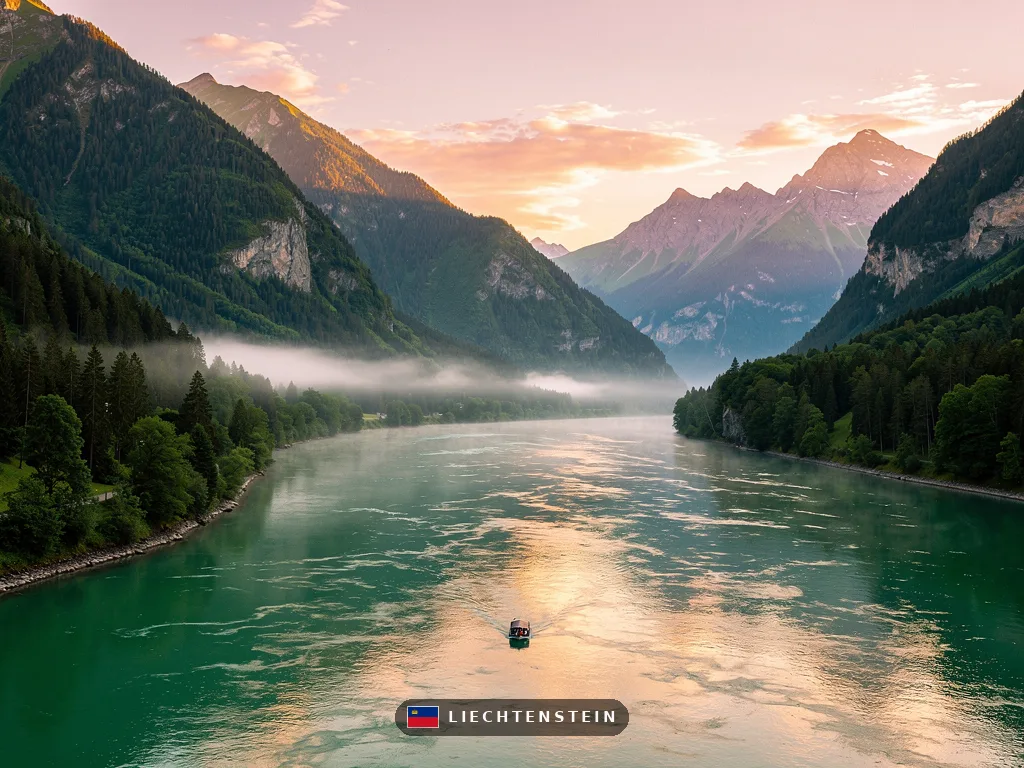
Imagine standing on the shore of a crystal-clear Alpine reservoir at 1,300 meters (4,265 feet) above sea level, surrounded by dramatic mountain peaks, with a light breeze carrying the scent of pine forests. You cast your line into the deep, cold waters hoping for a strike from a powerful brown trout or a lively rainbow trout. This is the serene reality of fishing in Liechtenstein, a small but beautifully preserved principality nestled between Switzerland and Austria.
While Liechtenstein is one of Europe’s tiniest countries (just 160 km²), its waters are managed with exceptional care. The focus is on sustainability rather than mass tourism. If you are an international angler dreaming of Alpine fishing Liechtenstein, this comprehensive guide will walk you through everything you need to know — from obtaining the required fishing permit Liechtenstein to discovering the best fishing spots Liechtenstein and understanding strict Liechtenstein fishing regulations.
Whether you are a traveler from the EU, the United States, the United Kingdom, Japan, or beyond, this article provides practical, up-to-date information for 2026 to help you plan a responsible and memorable fishing adventure.
01Do You Need a Fishing License in Liechtenstein?
Yes — you absolutely need a fishing license (known locally as a Fischereikarte or fishing permit) to fish anywhere in Liechtenstein. There are no free-fishing zones or tourist exemptions that allow you to cast without documentation.
The Fischereiverein Liechtenstein (FVL) holds the vast majority of fishing rights across the principality’s rivers, streams, and lakes. According to the official Liechtenstein Fisheries Ordinance (Fischereiverordnung – FischV), all angling is strictly regulated to protect native fish populations and maintain the ecological balance of these sensitive Alpine ecosystems.
To obtain a standard multi-year or annual permit, you must typically pass a fishing examination (Fischereiprüfung). This test, usually held once a year in autumn, covers fish biology, conservation rules, water ecology, and local regulations. The exam ensures that every angler possesses sufficient knowledge to fish responsibly.
Fortunately, visitors and international travelers have a practical option: the guest fishing permit Liechtenstein specifically for the most accessible location — Stausee Steg. These daily or weekly permits allow you to experience trout fishing Liechtenstein without becoming a full member of the association or passing the exam.
Important Note: Fishing without a valid permit is considered a serious offense. Fines can be substantial, and enforcement is strict. Always carry both your fishing permit and a government-issued photo ID (passport or driver’s license) while on the water.
02Fishing Licenses and Permits: Your Options in Liechtenstein
The fishing license Liechtenstein system is designed around conservation. Here is what international visitors need to know:
Guest Permits for Stausee Steg
The Stausee Steg reservoir is the primary destination for non-resident anglers. The Fischereiverein Liechtenstein issues special visitor permits directly for this scenic Alpine lake.
These prices are roughly equivalent to a high-end restaurant meal in Vaduz or a guided city tour. Payment is often possible via PayPal or through authorized vendors in the village of Steg or Triesenberg.
Youth permits and family options may be available — always confirm current rates directly with the FVL before travel, as minor adjustments can occur annually.
Full Membership Path
For those planning repeated visits or wishing to access other waters (such as sections of the Rhine River or smaller mountain streams), you must become a member of the Fischereiverein Liechtenstein. This involves:
1. Passing the official fishing exam
2. Paying annual membership dues
3. Adhering to strict catch reporting via the official Fischfangbuch (catch log)
Membership is primarily aimed at local residents, but serious international anglers who demonstrate commitment to conservation may be considered after direct application.
Age Regulations
Special youth fishing days and educational programs are occasionally organized by the FVL — an excellent way for families to introduce children to sustainable Alpine fishing Liechtenstein.
Visa Requirements for Fishing Travelers
Most visitors from the EU, EEA, Switzerland, the United States, Canada, United Kingdom, Japan, Australia, and many other countries can enter Liechtenstein visa-free for up to 90 days. Since Liechtenstein is part of the Schengen Area (via its customs union with Switzerland), you will clear immigration in Zurich or at the Swiss border. Always check the latest entry rules on official government websites before booking flights, especially if combining your trip with visits to neighboring Switzerland or Austria.
03Best Fishing Spots in Liechtenstein: Stausee Steg and Beyond
Although Liechtenstein’s territory is compact, its fishing waters offer breathtaking scenery and high-quality trout fishing. The crown jewel for visitors is undoubtedly Stausee Steg.
Stausee Steg – The Premier Visitor Destination
Located in the mountainous Triesenberg region at approximately 1,300 meters (4,265 feet) elevation, Stausee Steg is a beautiful man-made reservoir surrounded by steep Alpine slopes, dense forests, and panoramic mountain views. The water is cold and oxygen-rich — perfect conditions for healthy trout populations.
Target Species:
You will fish primarily from the shore or designated banks. The reservoir offers varied structure — deeper central areas, shallower margins with submerged features, and rocky drop-offs. Early mornings and late evenings often produce the best action as fish become more active in the cooler temperatures. The surrounding scenery is spectacular: snow-capped peaks in early season, vibrant green meadows in summer, and spectacular autumn colors.
Many visiting anglers describe Stausee Steg fishing as a peaceful, almost meditative experience. The silence is broken only by the sound of your line, the occasional cowbell from distant pastures, and the splash of a rising trout. Because visitor numbers are carefully controlled through the permit system, you will rarely encounter crowds.
Other Waters – Limited Access
Beyond Stausee Steg, fishing opportunities exist in the Rhine River (Alter Rhein and Binnenkanal) and various small mountain streams. However, these waters are almost exclusively reserved for FVL members. Access for guests is only possible through special arrangements coordinated well in advance via the association secretariat.
The Rhine sections within Liechtenstein can produce larger fish, including occasional pike, perch, and substantial trout, but wading is prohibited in most flowing waters except specific Rhine areas. Bridge fishing is strictly forbidden everywhere.
Because of the strong emphasis on conservation, catch-and-release is encouraged in many zones, and strict minimum catch sizes and closed seasons protect spawning fish. For example, native brown trout and grayling have clearly defined protected periods that you must observe.
04Tours & Guided Experiences in Liechtenstein
Commercial fishing tours Liechtenstein and charter fishing Liechtenstein options are extremely limited compared to neighboring Switzerland or Austria. This is not a destination for large-scale fishing tourism — the principality deliberately prioritizes ecological sustainability over volume.
That said, the Fischereiverein Liechtenstein occasionally organizes guided introductory days for visitors, especially during the summer months. These experiences are usually led by experienced FVL members who can show you the best techniques for the local waters, explain the regulations in detail, and help you maximize your chances while remaining fully compliant.
If you wish to arrange a private guided session at Stausee Steg, the best approach is to contact the FVL secretariat directly by email (sekretariat@fischen.li) or phone (+423 230 03 74) several months in advance. They can connect you with suitable guides or mentors.
🎣 Fishing tours in Liechtenstein — Book guided fishing tours with local experts.
For those seeking deeper exploration, combining a fishing day at Stausee Steg with a multi-day trip through the Alpine region (including Swiss or Austrian waters) is a popular strategy among international visitors. Several operators in nearby Switzerland offer multilingual guides who can incorporate a Liechtenstein stop.
05Practical Advice for Fishing in Liechtenstein
Equipment Recommendations
For trout fishing Liechtenstein at Stausee Steg, light to medium spinning or fly fishing setups work best. Recommended gear includes:
Because the reservoir is at high altitude, weather can change rapidly. Bring layers, waterproof clothing, and sturdy hiking shoes for the walk from parking areas to fishing spots. A small tackle backpack is ideal as there are limited facilities directly at the lake.
🛒 Fishing equipment for Liechtenstein — Find the right gear for your trip.
Best Time to Visit
The prime season for Alpine fishing Liechtenstein runs from late spring through early autumn:
From the Southern Hemisphere perspective (Australia, New Zealand, South America), the European summer (December–February in your local calendar) is the opposite of your summer fishing season, making it an attractive escape during your winter months.
Winter ice fishing is not traditionally practiced at Stausee Steg due to regulations and variable ice conditions.
Catch Reporting and Conservation
Every permitted angler is expected to maintain an accurate catch record in the official logbook. This data helps the FVL manage fish stocks and adjust future stocking programs. You will usually receive the logbook together with your permit.
Strict adherence to closed seasons, minimum sizes, and daily bag limits is mandatory. For example, certain sections may have zero-retention rules for native brown trout during specific periods to protect breeding stock.
06Practical Travel Info for International Visitors
Getting There:
Liechtenstein has no commercial airport. The closest major airport is Zurich (ZRH) in Switzerland, approximately 110 km (68 miles) away. From Zurich, you can take a train to Buchs SG or Feldkirch (Austria) and then a local bus into Liechtenstein. The entire journey from the airport usually takes 1.5–2 hours.
Alternatively, fly into Innsbruck (Austria) or Friedrichshafen (Germany) for slightly different routing options. A car provides the most flexibility, especially for reaching the higher-altitude Stausee Steg.
🚗 Rent a car in Liechtenstein — Compare prices from 500+ rental companies worldwide.
Language Considerations:
The official language is German. Most official forms, the fishing exam, and many signs are in German. However, many FVL members and tourism staff speak excellent English. Translation apps such as Google Translate or DeepL work well for written communication. When calling the FVL office, a basic knowledge of German or the willingness to speak English slowly will usually suffice.
Accommodation:
The villages of Steg, Triesen, or Triesenberg offer the closest accommodation to the reservoir. Options range from comfortable guesthouses and family-run hotels to holiday apartments. Vaduz, the capital, is only 15–20 minutes by car and provides more hotel choices if you prefer a central base for sightseeing between fishing days.
Currency and Costs:
Liechtenstein uses the Swiss Franc (CHF). Many places also accept Euros, but you will usually receive change in CHF. Current exchange rates (as of early 2026 planning): 1 CHF ≈ 1.07 EUR ≈ 1.15 USD.
Beyond the fishing permit itself, expect typical Alpine prices for accommodation and meals. A mid-range hotel room costs CHF 120–220 (EUR 128–235 / USD 138–253) per night. A hearty meal at a local restaurant will set you back CHF 25–45 (EUR 27–48 / USD 29–52).
Stay Connected:
Mobile coverage is excellent throughout the country thanks to Swiss networks. However, standard roaming charges from non-EU countries can be expensive.
📱 Stay connected in Liechtenstein — Get an eSIM for affordable mobile data while traveling.
07Tours & Guided Experiences – Expanded Options
While independent shore fishing at Stausee Steg with a day permit is the most common approach, some visitors arrange tailored experiences through the Fischereiverein or neighboring Swiss operators.
Guided half-day or full-day sessions typically cost between CHF 250–450 (EUR 265–480 / USD 285–520) depending on group size and duration. These prices include expert local guidance, transport from your accommodation, and assistance with permit formalities.
For fly fishing enthusiasts, specialized guides can demonstrate traditional European nymphing techniques or dry fly fishing suited to the clear mountain waters. These sessions are particularly valuable for first-time visitors who want to understand the local fish behavior and habitat.
🚤 Charter fishing in Liechtenstein — Find and book charter boats with experienced captains.
Note that true “charter boats” are not available on the relatively small Stausee Steg reservoir, which is fished exclusively from shore. The term here refers more broadly to guided fishing services.
08Understanding Liechtenstein Fishing Regulations in Depth
The Liechtenstein fishing regulations are among the most conservation-oriented in Europe. Key rules include:
All regulations are detailed in the official Fischereiverordnung (FischV). You can review the current legal text on the government’s legal database.
The Fischereiverein Liechtenstein plays a central role in enforcement and education. Their website (www.fischen.li) contains the latest information on permitted techniques, current stocking schedules, and any temporary restrictions due to environmental conditions.
09Planning Your Perfect Fishing Trip to Liechtenstein
A typical four-day itinerary for an international angler might look like this:
Many travelers combine Liechtenstein with fishing excursions in the neighboring Swiss canton of St. Gallen or the Austrian state of Vorarlberg, where more diverse opportunities (including lake charters and river float trips) are available.
10FAQ – Frequently Asked Questions about Fishing in Liechtenstein
Do you need a fishing license in Liechtenstein?
Yes. All fishing requires an official permit. International visitors can purchase daily or weekly guest permits for Stausee Steg without taking the full fishing exam.
What is the cost of a fishing permit in Liechtenstein?
A day permit for Stausee Steg costs CHF 45 (approx. EUR 48 / USD 52). A weekly permit is CHF 170 (approx. EUR 180 / USD 195). Prices may be updated annually.
Can I fish in Liechtenstein as a tourist?
Yes, primarily at Stausee Steg using a guest fishing permit. Access to other waters is very limited and usually requires coordination with the Fischereiverein Liechtenstein well in advance.
What fish can I catch in Liechtenstein?
The main target species are brown trout and rainbow trout. Some waters also hold grayling and other cold-water species. Fish quality is excellent due to the pristine Alpine environment.
Is fly fishing allowed in Liechtenstein?
Yes. Both spinning and fly fishing are permitted at Stausee Steg, provided you follow all size limits, closed seasons, and technique restrictions listed in the regulations.
When is the best time for trout fishing in Liechtenstein?
The period from May to October offers the best conditions, with September and early October often providing the most consistent action and beautiful scenery.
Do I need to speak German to fish in Liechtenstein?
Basic English is usually sufficient for communication with the FVL and local tourism staff, though official documents are in German. Translation apps are helpful.
Can children fish in Liechtenstein?
Children aged 12–14 may fish under adult supervision. From age 14, independent fishing with a valid permit is generally allowed. Special youth programs exist.
11Conclusion
Fishing in Liechtenstein offers a rare combination of breathtaking Alpine scenery, carefully managed waters, and the satisfaction of practicing truly sustainable angling. While the system is more regulated than in many other countries, this very regulation ensures that the fish populations remain healthy and the experience remains special.
By respecting the Liechtenstein fishing regulations, obtaining the correct fishing permit Liechtenstein through the Fischereiverein Liechtenstein, and approaching your trip with patience and preparation, you will create memories that last a lifetime.
Whether you are coming for a single day at the beautiful Stausee Steg or planning a longer exploration of the Alpine region, the pristine waters and dramatic mountain backdrop make this one of Europe’s most rewarding — if exclusive — fishing destinations.
Start planning today by visiting the official FVL website and securing your guest permit early, especially during the popular summer months. The trout are waiting beneath the surface of those clear mountain waters.
Sources & Further Links
Disclaimer: Regulations, permit prices, and seasonal restrictions may change. Always verify the latest information directly with the Fischereiverein Liechtenstein (www.fischen.li) before your trip. This guide was prepared for informational purposes in 2026 and does not replace official advice. Practice catch-and-release where possible and respect the environment so future generations can also enjoy these beautiful Alpine waters.
Don't miss any fishing tips!
Get the best fishing destination recommendations weekly in your inbox.
No spam. Unsubscribe anytime.
Data incorrect?
Help us keep this article up to date — report outdated or incorrect information
More articles