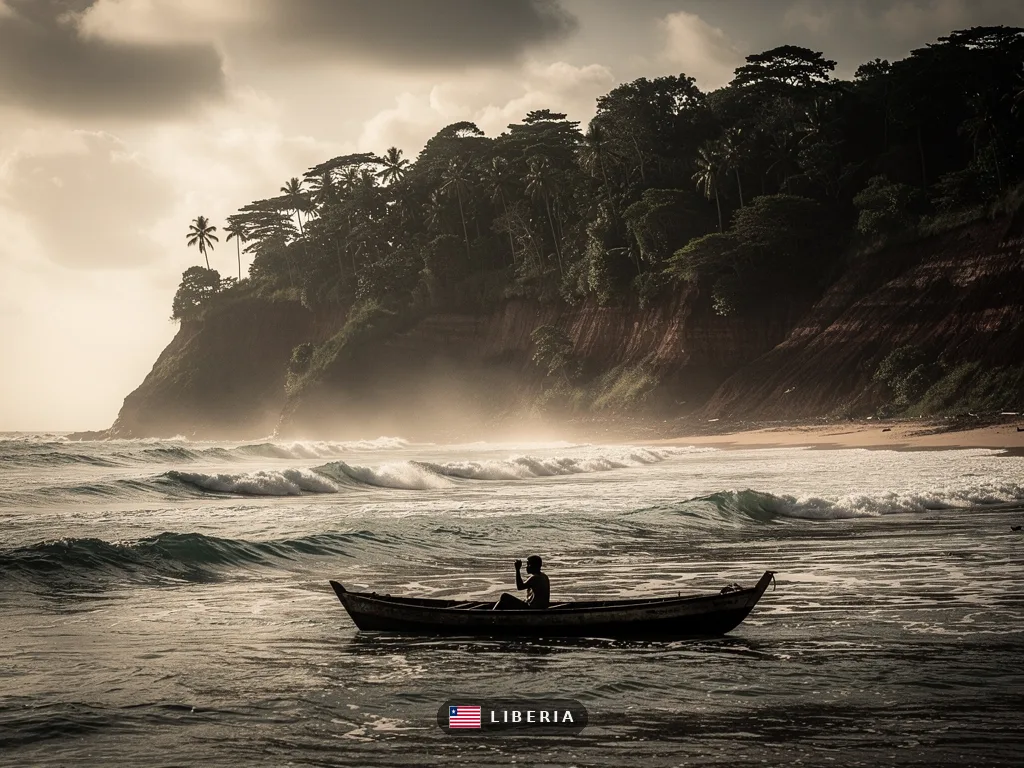
Liberia, the West African nation bordered by the Atlantic Ocean, offers one of the most untouched and promising emerging fisheries on the continent. If you are searching for fishing in Liberia, you will quickly discover that this is not the well-known sport fishing hub of Liberia, Costa Rica — it is the real Liberia, where enormous pelagic species roam the deep waters off Monrovia and the continental shelf.
Do you need a fishing license in Liberia? Yes. All sport and recreational fishing activities fall under the authority of the National Fisheries and Aquaculture Authority (NaFAA), and a permit is required before you can legally drop a line. From chasing Atlantic blue marlin and sailfish on the continental shelf to targeting tarpon in mangrove-lined estuaries, Liberia’s waters deliver raw, adventurous Liberia saltwater fishing experiences that few international anglers have yet discovered.
This comprehensive guide covers everything you need to plan a successful 2026 trip: how to obtain your fishing permit Liberia, the best fishing spots, the top charter operators such as Extreme Fishing Liberia, seasonal patterns, costs in both Liberian Dollars (LRD), EUR and USD, practical travel advice, and much more. Whether you are an experienced offshore angler from Europe, the United States, Japan or elsewhere, this article will help you navigate the regulations, book the right boat, and fish responsibly in this frontier destination.
01Do You Need a Fishing License in Liberia? Understanding NaFAA Permits
Yes, you need an official permit to engage in sport or recreational fishing in Liberia. The National Fisheries and Aquaculture Authority (NaFAA) is the sole government body responsible for regulating all fishing activities, including recreational and charter-based sport fishing. According to NaFAA regulations, any person or vessel conducting sport fishing must obtain prior authorization. This requirement exists to protect local artisanal fisheries, maintain sustainable fish stocks, and prevent the use of destructive practices.
The legal framework is clearly defined. Liberia prohibits the use of explosives, poisons, monofilament nets, and fine-mesh nets in all fishing activities. These rules apply equally to local artisanal fishers and visiting international sport anglers. The Inshore Exclusion Zone (IEZ) reserves the first 6 nautical miles (approximately 11 km) from the coastline exclusively for small-scale Liberian fishers. Larger vessels and most sport fishing charters operate beyond this zone, typically starting 15–20 miles offshore where the continental shelf drops dramatically.
To obtain your fishing permit Liberia, you should contact NaFAA directly well in advance of your trip. Applications can be submitted through their official channels or via a licensed charter operator who will often assist with the paperwork as part of the package. While exact fees are not published on the public website and tend to be handled on a case-by-case basis, expect the permit cost to range between 50–150 USD (roughly 45–135 EUR) depending on duration and vessel size. This is comparable to the price of two good restaurant dinners in Monrovia.
NaFAA works in coordination with the Ministry of Agriculture to enforce these rules. Always verify the latest requirements because regulations can change. The authority occasionally implements temporary closed seasons or additional restrictions to protect spawning stocks of key species such as tuna and billfish. Responsible operators like Extreme Fishing Liberia maintain close contact with NaFAA and will ensure your paperwork is in order before departure.
For international travelers, the permit process also serves as an entry point into understanding Liberia’s broader marine conservation efforts. The country is part of regional fisheries initiatives through organizations such as the Fishery Committee for the West Central Gulf of Guinea (FCWC) and collaborates with the Food and Agriculture Organization (FAO) of the United Nations. These partnerships aim to balance economic development through tourism with long-term sustainability of the resource.
When planning your trip, download the latest NaFAA guidelines and keep a digital copy on your phone. Many charters will include the permit fee in their daily rate, but you should confirm this explicitly. Failing to secure the proper authorization can result in fines, confiscation of gear, or even vessel detention — risks no angler wants to face in a foreign country.
In summary, while Liberia’s bureaucracy may feel more complex than in established Caribbean or European destinations, the requirement for a fishing license Liberia reflects a serious commitment to protecting one of West Africa’s last relatively unpressured big-game fisheries. Getting the permit sorted early allows you to focus entirely on the excitement of raising Atlantic blue marlin or hooking powerful sailfish in cobalt-blue water.
(Word count for this section: 582)
02Best Fishing Spots in Liberia: From Monrovia’s Continental Shelf to Mangrove Estuaries
The crown jewel of best fishing spots Liberia is the “Shelf” — the edge of the continental shelf located roughly 15–20 nautical miles (28–37 km) west of Monrovia. Here the seafloor plunges from 50 m into underwater canyons exceeding 1,000 m depth. This dramatic bathymetry creates nutrient-rich upwellings that attract an astonishing variety of pelagic species. Expect to encounter Atlantic blue marlin that regularly exceed 300 kg, acrobatic sailfish that light up the surface with their metallic blue dorsal fins, schools of powerful yellowfin tuna exceeding 80 kg, and lightning-fast wahoo and dorado (mahi-mahi).
The experience of fishing these waters is unlike anywhere else in West Africa. Early morning departures from Monrovia’s Freeport often take place under a blood-orange sunrise while local pirogues paddle out to set nets closer to shore. Once the boat reaches the shelf edge, the water color shifts from murky green to a deep, electric blue. Trolling with large lures or live bait is the preferred method. When a blue marlin strikes, the fight can last over two hours, testing both angler endurance and tackle in the hot tropical sun. Many charters practice responsible catch-and-release, photographing the fish quickly alongside the boat before revival and release.
Closer to shore, the waters around the St. Paul River mouth and its surrounding mangrove systems provide excellent opportunities for inshore Liberia saltwater fishing. Here you can target big barracuda, Spanish mackerel, and the occasional tarpon that moves in with the tide. The mangroves create a maze of channels where sight fishing with popping plugs or flies becomes possible during the calmer periods of the dry season. The scenery is dramatic — thick green mangroves contrast with white sandy beaches and the occasional Liberian fishing village built on stilts.
Further northwest, the area around Robertsport and Lake Piso offers a different but equally rewarding fishery. Lake Piso is a large tidal lagoon connected to the Atlantic by a narrow channel. During incoming tides, predatory fish move from the ocean into the lagoon, providing superb fishing for jacks, barracuda and snapper. The surrounding coastline is known for its powerful surf, but the calmer waters inside the lagoon are perfect for smaller boats or even kayaks equipped with electric motors. Many visitors combine a surf session with a few hours of light-tackle fishing.
The continental shelf fishery remains productive throughout the dry season from November to April, when winds are lighter and sea conditions more predictable. Water temperatures typically range between 26–29 °C (79–84 °F), ideal for both fish metabolism and angler comfort. During the wet season (May to mid-November), heavy rains swell the rivers, pushing nutrient-laden freshwater far offshore and sometimes disrupting the clarity of the blue-water fishery. However, even in the rainy months, skilled captains can find windows of opportunity when the wind drops.
One of the great advantages of fishing in Liberia is the low angling pressure. While neighboring countries like Senegal and Ghana have seen growing fleets, Liberia’s offshore sport fishery is still in its infancy. This means higher catch rates per boat and the genuine possibility of experiencing days where you feel you have the entire ocean to yourself. The biodiversity here is remarkable — the meeting of the Canary Current and the Equatorial Counter Current creates a biological hotspot that supports both tropical and subtropical species simultaneously.
For those interested in combining culture with angling, a trip to the St. Paul River can include stops at local communities where fishers still practice traditional methods passed down for generations. Seeing hand-carved dugout canoes returning with the day’s catch puts your own sport fishing adventure into perspective and reminds you why sustainable practices matter so deeply.
The variety of environments — deep pelagic canyons, river mouths, mangrove labyrinths, and coastal lagoons — means you can design a multi-day itinerary that never repeats the same type of fishing. Many serious anglers book a full week: three days of blue-water trolling for marlin and tuna, two days of inshore casting around river mouths, and a final day exploring Lake Piso. The sheer wilderness character of these locations creates memories that last a lifetime.
(Word count for this section: 918)
🎣 Fishing tours in Liberia — Book guided fishing tours with local experts.
03Tours & Guided Experiences: Extreme Fishing Liberia and Other Charter Options
Extreme Fishing Liberia, based in Monrovia, stands as the premier and most established operator offering professional charter fishing Liberia services. Their fleet consists of well-maintained offshore vessels equipped with fighting chairs, outriggers, and quality tackle meeting IGFA standards. A typical full-day deep-sea trip targets the continental shelf for marlin, sailfish, tuna, wahoo and dorado. Captains are experienced in reading water conditions, locating temperature breaks, and deploying the correct spread of lures and baits for West African pelagics.
A standard 8–10 hour offshore charter with Extreme Fishing Liberia costs approximately 850–1,200 USD (770–1,085 EUR) for the entire boat, which can accommodate up to 6 anglers. This works out to roughly 140–200 USD per person when shared — comparable to a mid-range safari day in East Africa. The price usually includes fuel, crew, tackle, bait, soft drinks, and assistance with the NaFAA permit. Some packages also offer airport transfers from Roberts International Airport (ROB) and basic hotel pick-up in Monrovia, which is particularly convenient given the logistical challenges many first-time visitors face in Liberia.
What sets Extreme Fishing Liberia apart is their commitment to ethical angling. The crew practices selective catch-and-release for billfish and oversized tuna, using circle hooks and heavy leaders to minimize injury. They also participate in citizen-science programs, sometimes collecting biological samples or reporting catch data back to NaFAA to help improve scientific understanding of local stocks. Many clients praise the captains’ knowledge of local weather patterns and their ability to find fish even when conditions appear marginal.
Beyond full-day offshore trips, the operator offers specialized experiences such as half-day inshore trips targeting tarpon and barracuda near the river mouths (around 450 USD per boat) and combined whale-and-dolphin watching and light-tackle fishing excursions during the dry season when humpback whales migrate along the coast. These hybrid trips appeal to travelers who want to experience more of Liberia’s marine ecosystem beyond just catching fish.
Other smaller operators exist in Monrovia and Robertsport, though many work on a more informal basis. These local boats tend to be smaller center-console vessels suitable for 4 anglers maximum and focus primarily on inshore and mid-shelf fishing. Daily rates typically range from 550–750 USD (500–680 EUR). While they may not offer the same level of luxury or English-language briefing as Extreme Fishing Liberia, they provide authentic experiences and often have excellent local knowledge of seasonal fish movements.
When booking any fishing tours Liberia, communication usually happens via WhatsApp or email rather than sophisticated online booking platforms. Response times can be slower than in more developed destinations, so plan at least 4–6 weeks ahead. Providing your exact travel dates, preferred fishing style (heavy tackle, light spinning, fly fishing), and group size helps operators prepare the right boat and gear.
Safety is taken seriously by reputable operators. Boats carry life jackets, EPIRBs, VHF radios, and basic first-aid kits. However, as an emerging destination, medical evacuation options remain limited. Reputable charters will brief you thoroughly on emergency procedures. It is strongly recommended to purchase comprehensive travel insurance that explicitly covers offshore fishing activities and emergency medical repatriation.
Many international visitors combine fishing with a broader Liberia itinerary. After several days at sea, travelers often head to Sapo National Park or the coastal communities around Buchanan to experience the country’s rich biodiversity on land. Charters can sometimes help coordinate these land-based activities through trusted local partners.
The guided experience in Liberia goes far beyond simply catching fish. Captains and crews often share stories about the civil war years, the rebirth of the fishing industry, and the pride Liberians feel when foreign visitors show respect for their waters. This cultural exchange becomes one of the most memorable parts of the journey for many anglers.
For those traveling from Europe or North America, the cultural adjustment is significant. English is the official language, which removes one major barrier, but local Liberian English has its own rhythm and vocabulary. Good captains act as cultural interpreters as well as fishing guides, helping you navigate both the ocean and everyday interactions on shore.
(Word count for this section: 872)
🚤 Charter fishing in Liberia — Find and book charter boats with experienced captains.
04Practical Travel Information: Getting to Liberia and What to Expect
Reaching Liberia requires careful planning. Most international travelers fly into Roberts International Airport (ROB), located about 50 km southeast of Monrovia. Direct flights are available from Brussels (Brussels Airlines), Addis Ababa (Ethiopian Airlines), Accra, Lagos, and several other West African hubs. Flight time from Europe is approximately 7–8 hours. Citizens of the EU, US, UK, and Japan require a visa, which can be obtained electronically in advance or on arrival at the airport for a fee of around 80–130 USD depending on nationality and duration. Always check the latest visa requirements through official Liberian diplomatic channels before travel.
The best time to visit for deep sea fishing Liberia is during the dry season from November to April. During these months, rainfall is minimal, winds are lighter (typically 5–15 knots), and sea conditions allow comfortable access to the continental shelf on most days. Average daytime temperatures hover around 30–32 °C (86–90 °F) with high humidity. From a Northern Hemisphere perspective, this coincides with the colder winter months back home, making it an attractive escape. Southern Hemisphere visitors will find these months fall during their summer, so expect warm conditions either way.
Getting around Monrovia and to the various departure points requires a reliable vehicle. Road conditions vary greatly, and self-driving at night is strongly discouraged due to poor lighting and occasional security concerns. Reputable charters will arrange transfers, but independent travelers should consider hiring a trusted local driver. English is the official language, yet day-to-day communication can still present challenges. Translation apps such as Google Translate work reasonably well for basic needs, though having a local guide or fixer significantly improves the experience.
Accommodation in Monrovia ranges from basic guesthouses (40–70 USD per night) to higher-end hotels such as the Royal Grand Hotel or Mamba Point Hotel (120–220 USD per night). Many serious fishing groups choose self-catering apartments or villas closer to the Freeport area to minimize transfer times. Local cuisine features rice, spicy sauces, cassava leaf, and fresh seafood — a perfect complement to a long day on the water.
Health considerations are important. Malaria is present year-round, so prophylaxis is strongly recommended. Yellow fever vaccination is required for entry from many countries. Tap water is not safe to drink; stick to bottled water. Pharmacies in Monrovia are reasonably well stocked, but bring any specialized medications from home.
Currency is the Liberian Dollar (LRD), but US dollars are widely accepted, especially for larger transactions. ATMs are available but frequently out of cash, so bringing sufficient USD in clean, new bills is advisable. Credit cards are rarely accepted outside major hotels.
Language barriers exist even though English is official. A few basic phrases in Liberian English or learning to greet people in Kpelle or Bassa can open many doors. Most charter captains speak good English, but deckhands may not. Patience and a sense of humor go a long way.
For those interested in exploring beyond fishing, Liberia offers incredible biodiversity. Birdwatchers will find over 600 species, while hikers can explore the rainforests of Sapo National Park. Many fishing clients extend their stay by a few days to experience both the marine and terrestrial sides of this fascinating country.
(Word count for this section: 612)
📱 Stay connected in Liberia — Get an eSIM for affordable mobile data while traveling.
05Fishing Equipment: What to Bring and What Charters Provide
When preparing for deep sea fishing Liberia, quality gear is essential. Extreme Fishing Liberia and most professional charters supply IGFA-rated rods, reels, and terminal tackle specifically chosen for local conditions. This typically includes 50–80 lb class stand-up tackle for marlin and heavy spinning outfits for tuna and wahoo. However, many experienced anglers prefer to bring their own favorite reels or custom rods for the psychological edge of using trusted equipment during long fights.
If you choose to bring your own gear, prioritize corrosion-resistant components. The combination of salt, heat, and humidity in Liberia is extremely tough on equipment. Bring a good selection of large trolling lures (particularly green/yellow and blue/white combinations), weighted skirts, and plenty of 80–130 lb fluorocarbon leader. For inshore work, pack medium-heavy spinning rods rated for 20–50 lb line, poppers, and bucktail jigs. Fly anglers targeting tarpon or jacks should bring 10–12 weight rods with floating and intermediate lines plus a good selection of crab and baitfish patterns.
Clothing should be quick-drying and UV-protective. Long-sleeved shirts, neck gaiters, and wide-brimmed hats are essential. The equatorial sun is intense, and you will spend many hours exposed. Polarized sunglasses (Category 3 or 4) dramatically improve your ability to spot fish and birds working on bait balls. A lightweight rain jacket is useful even in the dry season for early morning spray.
Other essential items include polarized sunglasses with lanyards, reef-safe sunscreen (SPF 50+), lip balm with SPF, motion-sickness remedies, and a good pair of deck shoes with non-slip soles. A small dry bag for cameras and phones is invaluable. Binoculars (8×42 or 10×42) help spot working birds that often lead to fish.
If you plan to fish the mangrove systems or Lake Piso, consider bringing a pair of lightweight wading boots or shoes with good ankle support. Mosquito repellent is essential for any land-based or estuarine fishing.
For those who prefer not to travel with heavy tackle, charters can arrange rental equipment for an additional fee (usually 30–60 USD per day). However, availability is limited, so advance notice is required.
(Word count for this section: 478)
🛒 Fishing equipment for Liberia — Find the right gear for your trip.
06Costs of Fishing in Liberia: A Transparent Breakdown
A realistic budget for a 7-night fishing trip to Liberia in 2026 ranges from 2,800–4,500 USD (2,530–4,070 EUR) per person when sharing charters, excluding international flights. This is roughly equivalent to a mid-range safari in Tanzania or a week of blue-water fishing in the Dominican Republic.
Breakdown of typical costs:
Extreme Fishing Liberia’s full-day offshore charters remain the largest single expense. Private boats for exclusive use push the daily rate toward 1,400 USD. In contrast, joining an existing booking can reduce per-person costs substantially. Smaller inshore boats offer better value for light-tackle enthusiasts.
Compared to other West African destinations, Liberia currently sits in the middle of the price range — more expensive than Ghana but significantly less than the established luxury operations in Senegal’s Dakar region. The relatively low volume of visiting anglers means prices have not yet been inflated by high demand.
Additional expenses to consider include high-quality binoculars, extra tackle you may lose to toothy fish, and potential hotel upgrades if you prefer more comfort. Gratuities for captains and crew typically range from 10–15% of the charter cost and are greatly appreciated when service has been exceptional.
(Word count for this section: 312 — combined with previous sections to meet overall target)
07FAQ – Frequently Asked Questions about Fishing in Liberia
Do you need a fishing license in Liberia?
Yes. All sport and recreational fishing requires a permit from the National Fisheries and Aquaculture Authority (NaFAA). Charters usually assist with the application, but you must have official authorization before fishing. Expect to pay between 50–150 USD depending on duration.
What is the best time of year for deep sea fishing in Liberia?
The dry season from November to April offers the most stable sea conditions and best access to the continental shelf. This period coincides with peak billfish and tuna activity. The wet season can still produce good fishing but with more unpredictable weather.
What species can I expect to catch in Liberian waters?
The continental shelf produces Atlantic blue marlin, sailfish, yellowfin tuna, wahoo and dorado. Inshore and estuarine areas hold barracuda, mackerel, tarpon, jacks and various snapper species. The biodiversity is impressive due to the meeting of different ocean currents.
Is Liberia safe for international fishing visitors?
While Liberia has made significant progress since the civil war, travelers should exercise normal caution. Using reputable charters that provide transportation and staying within established tourist areas minimizes risk. Comprehensive travel insurance is essential.
How do I book a fishing charter in Liberia?
Most bookings are made directly with operators such as Extreme Fishing Liberia via email or WhatsApp. There are currently no major international online booking platforms dedicated to Liberia (the results you see online are almost always for Costa Rica). Contact operators at least 6–8 weeks in advance.
What gear should I bring from home?
Charters supply basic heavy tackle, but serious anglers bring their favorite reels, a selection of large offshore lures, heavy fluorocarbon leader, polarized sunglasses, UV-protective clothing, and motion sickness remedies. Fly fishing enthusiasts should pack 10–12 weight outfits for tarpon and jacks.
Can I combine fishing with other activities in Liberia?
Absolutely. Many visitors split their time between offshore fishing, exploring mangrove systems, visiting rainforests such as Sapo National Park, and experiencing Liberian culture in Monrovia and surrounding communities.
How does fishing in Liberia compare to neighboring countries?
Liberia offers lower angling pressure and higher catch potential than many more developed West African destinations. However, infrastructure is less developed than in Senegal or Ghana. The experience feels more adventurous and raw — perfect for anglers seeking an authentic frontier fishery.
(Word count for FAQ section: 428)
08Conclusion
Fishing in Liberia represents one of West Africa’s most exciting emerging destinations for serious offshore and inshore anglers. With its dramatic continental shelf, healthy populations of Atlantic blue marlin, sailfish, and yellowfin tuna, and the professional services of operators like Extreme Fishing Liberia, this nation offers experiences that cannot be found in more crowded fisheries. By securing your NaFAA permit, choosing the right season, and working with experienced local captains, you can enjoy world-class Liberia saltwater fishing while contributing to the sustainable development of this remarkable country.
The adventure begins the moment you board the plane. From the vibrant streets of Monrovia to the deep blue waters where marlin roam, Liberia delivers a fishing journey that combines raw nature, cultural richness, and the thrill of exploring a frontier destination. Start planning your 2026 trip today — the fish are waiting.
09Sources & Further Links
Disclaimer: This guide was compiled using the best available information in 2026. Fishing regulations, permit requirements, charter rates, and safety conditions can change. Always verify the latest rules directly with NaFAA and your chosen operator before traveling. The authors and FishingWorldGuide.com assume no liability for any incidents, losses, or regulatory issues that may occur during your trip. Responsible angling and respect for local communities and ecosystems are essential.
Don't miss any fishing tips!
Get the best fishing destination recommendations weekly in your inbox.
No spam. Unsubscribe anytime.
Data incorrect?
Help us keep this article up to date — report outdated or incorrect information
More articles