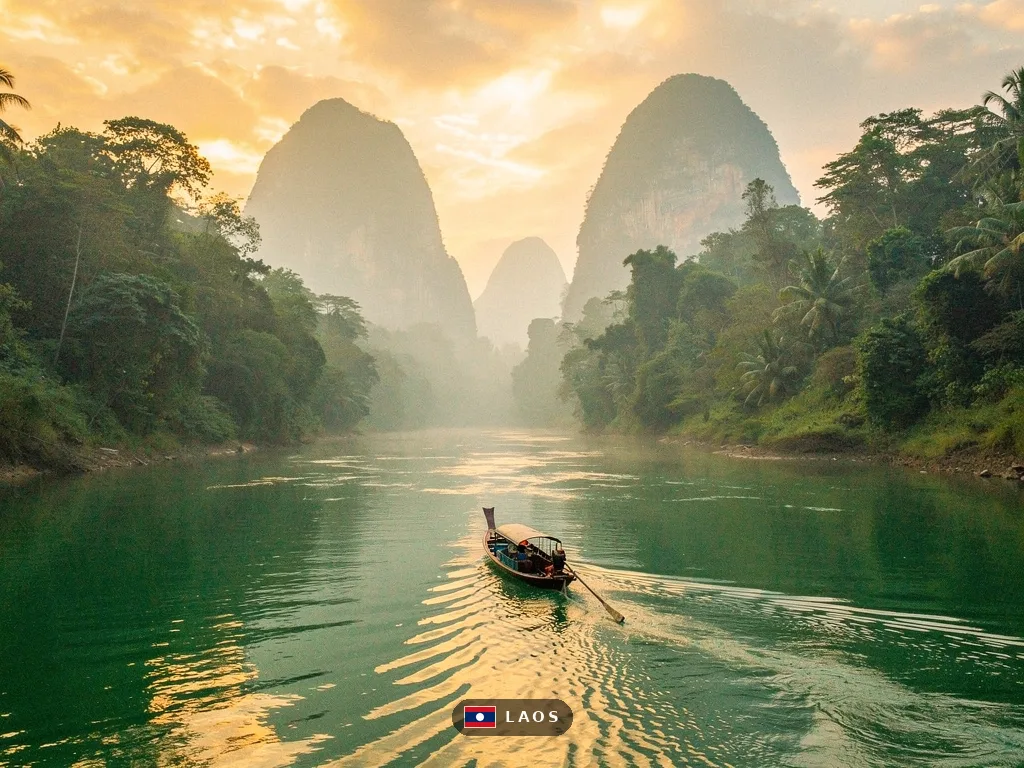
Laos offers a distinctive freshwater fishing experience where the mighty Mekong River and its tributaries weave through dramatic karst landscapes, ancient temples, and rural villages. Unlike many Southeast Asian destinations, fishing in Laos is deeply intertwined with local culture and community-based resource management. You will not find crowded charter fleets or high-volume sportfishing operations here. Instead, expect authentic encounters with Mekong catfish, formidable snakehead, and hard-fighting carp species while learning traditional Lao fishing techniques.
Do you need a fishing license in Laos? The straightforward answer is no — there is no national recreational fishing license or fishing permit required for foreign tourists. However, this simplicity comes with an important caveat: large parts of the country’s rivers and reservoirs fall under Fish Conservation Zones (FCZs) managed by local villages and the Ministry of Agriculture and Forestry. Understanding and respecting these community rules is essential for a responsible and legal trip. This comprehensive guide covers everything you need to know about fishing regulations in Laos, the best fishing spots, guided tours, practical travel advice, and costs so you can plan a memorable angling adventure in one of Southeast Asia’s most culturally rich countries.
Whether you are combining a Mekong fishing trip with a visit to Luang Prabang’s temples, exploring the Nam Ngum Reservoir near Vientiane, or seeking snakehead in the quieter tributaries of the north, this article provides actionable, up-to-date information drawn from official sources and experienced operators.
01Fishing License and Permits in Laos
One of the first questions international anglers ask is: “Do you need a fishing license in Laos?” The answer sets Laos apart from neighboring Thailand or Vietnam. There is no centralized national fishing license or recreational fishing permit required for tourists who wish to engage in casual or sport fishing.
The Ministry of Agriculture and Forestry (MAF) oversees fisheries policy at the national level, but it does not operate a licensing system for visiting recreational anglers. Instead, fisheries management is largely decentralized. Many river sections, oxbow lakes, and reservoirs are designated as Fish Conservation Zones (FCZs). These zones are established by local communities, often with support from the provincial offices of the MAF or the Mekong River Commission, to protect spawning grounds and ensure sustainable fish stocks that form a vital part of local food security.
Before wetting a line, you must therefore check whether your chosen location is inside an FCZ. Fishing in these protected areas without explicit permission from the village committee is illegal and can result in fines or confiscation of gear. The most practical way to navigate this patchwork of local regulations is to hire a knowledgeable local guide or join an organized fishing tour. Reputable operators maintain relationships with village authorities and know exactly which stretches of water are open to visitors.
In practice, this community-based system means that fishing in Laos is less about bureaucratic paperwork and more about building respectful relationships. Many travelers report that simply stopping at a village, explaining their intentions through a guide or translator, and perhaps sharing a small gift or purchasing a meal can open doors to excellent fishing opportunities. However, never assume that “no one is watching” — local committees take their stewardship responsibilities seriously.
For serious anglers planning longer stays or targeting specific species during the dry season, contacting the Provincial Agriculture and Forestry Office in the relevant province (such as Luang Prabang, Vientiane, or Champasak) in advance can provide clarity. These offices can advise on current closed seasons, which often coincide with the rainy season (roughly May to October) when many species spawn.
It is also worth noting that certain destructive fishing methods are banned nationwide. The use of explosives, poisons, electrical devices, and bright lights at night is strictly prohibited under MAF regulations. Protected or endangered species, including certain giant Mekong catfish variants, must be released immediately if caught. Practicing catch-and-release is not only encouraged but often expected, especially near communities that rely on fish as their primary protein source.
Tip: Download a translation app such as Google Translate before your trip. Learning a few basic Lao phrases — “sabaidee” (hello), “kop chai” (thank you), and “pa nai” (fish here?) — goes a long way toward building goodwill with local fishers.
Because there is no national permit to purchase, the cost of “permission” usually comes in the form of hiring a local boatman or guide, which we will cover in detail later. This system, while requiring extra diligence, ensures that tourism revenue flows directly to riverside communities rather than a distant government office.
The absence of a formal fishing license Laos requirement does not mean “anything goes.” Responsible angling is a cultural expectation. By working with local operators and respecting Fish Conservation Zones, you contribute to the long-term health of the Mekong basin while enjoying some of the most authentic freshwater fishing experiences in Asia.
This decentralized approach reflects Laos’ broader development philosophy — balancing environmental protection, food security, and carefully managed tourism. For the visiting angler, it transforms a simple fishing trip into a genuine cultural exchange.
(Word count for this section: 612)
02Understanding Fishing Regulations and Responsible Practices
Fishing regulations in Laos go beyond the simple absence of a national license. The country participates in the Mekong River Commission (MRC), a regional body that coordinates transboundary water management among Laos, Thailand, Cambodia, and Vietnam. While the MRC does not issue individual permits, its research and recommendations heavily influence local rules, particularly regarding seasonal closures and protected species.
The primary legal framework comes from the Lao Law on Fisheries (updated periodically by the MAF). Key nationwide prohibitions include:
Many FCZs operate with flexible local rules. During the peak dry season (December to March), some villages may allow limited hook-and-line fishing while still banning gill nets or traps. In other areas, especially around spawning grounds in the Nam Ou or Nam Ngum river systems, complete no-take zones may be in effect from June through October.
Cross-border considerations add another layer. The Mekong River itself forms the international border with Thailand for hundreds of kilometers. The main navigation channel is generally considered neutral, but fishing from the Lao bank requires adherence to Lao community rules, while crossing to the Thai side without proper visas and permits can lead to serious complications. Always stay on the Lao side and use operators licensed to work in that jurisdiction.
Responsible fishing in Laos also means understanding the ecological and social context. Fish represent a critical protein source for millions of rural Lao citizens. Overfishing or wasteful practices can have direct impacts on village nutrition and livelihoods. For this reason, many local guides strongly encourage catch-and-release, especially for larger specimens of Mekong catfish or snakehead. Photographs, quick release, and perhaps a small donation to the village fish conservation fund are appreciated gestures.
When fishing near Luang Prabang or Vientiane, you may encounter “fishing tourism” programs designed to teach visitors traditional techniques such as bamboo trap setting, hand-lining, or cast netting. These experiences are often framed as cultural activities rather than pure sportfishing. Participating respectfully helps preserve these traditions while supporting local economies.
Important Note: Regulations can change with seasonal water levels, new conservation initiatives, or updates from the Ministry of Agriculture and Forestry. Always verify current conditions with your accommodation or guide upon arrival. The lack of a formal fishing permit Laos system places greater responsibility on the individual angler to behave ethically.
Many experienced travelers combine fishing with visits to Buddhist temples or participation in morning alms-giving ceremonies. This holistic approach deepens the travel experience and builds stronger connections with communities that manage the very waters you fish.
(Word count for this section: 528)
03Best Fishing Spots in Laos
The best fishing spots in Laos are concentrated along the Mekong River and its major tributaries. Each location offers a unique combination of species, scenery, and cultural context that makes fishing here far more than just catching fish.
Mekong River near Luang Prabang
Luang Prabang fishing is one of the most popular choices for international visitors because it perfectly combines world-class cultural tourism with accessible angling. The Mekong flows wide and relatively slow past the UNESCO-listed town, creating deep pools, undercut banks, and rocky outcrops ideal for catfish and snakehead.
Early morning or late afternoon sessions often produce strikes from *Channa auroflammea* (golden snakehead), which can exceed 5 kg (11 lb). Local boatmen pole their narrow wooden boats along the margins, allowing you to cast lures or drift live bait near structure. Many guided experiences here include a stop at the morning market to buy bait before heading out, followed by a riverside barbecue of smaller fish caught during the trip.
The scenery is breathtaking — limestone karsts rise dramatically from the river, and you may see saffron-robed monks walking along the banks at dawn. Because this stretch is heavily used for tourism, operators are well-versed in navigating Fish Conservation Zones and can explain local rules as you fish.
Nam Ngum Reservoir
Located approximately 70 km (43 miles) north of Vientiane, Nam Ngum fishing offers a very different experience. This large artificial lake, created by a hydroelectric dam, supports healthy populations of carp, catfish, and tilapia. The reservoir’s flooded forests and submerged timber provide excellent structure, making it one of the most consistent spots for larger fish.
Anglers often use simple bamboo rods or bring their own medium-heavy spinning gear. Local fishermen employ a method called “lift-netting” in the shallower bays, while visitors typically drift or anchor near the many small islands. A full-day trip here might see you catch a variety of species, including the impressive *Pangasius* catfish that can reach double-digit kilograms.
Because the reservoir is a major source of commercial fish for Vientiane markets, local operators emphasize sustainable practices and frequently practice catch-and-release with larger specimens. The surrounding countryside offers opportunities to visit nearby villages or the impressive Nam Ngum Dam itself.
Nam Ou River
For those seeking a more remote and pristine experience, the Nam Ou River in northern Laos delivers exceptional fishing in stunning mountain scenery. Flowing through deep valleys between steep forested hills, this tributary of the Mekong is home to smaller but very aggressive snakehead, various barb species, and occasional larger catfish.
Access often requires a combination of road transport and long-tail boat journeys. Multi-day expeditions can include camping on sandbanks and fishing different stretches each day. The water here runs clearer than the main Mekong during the dry season, allowing sight-fishing to visible fish holding in current seams or behind boulders.
The cultural aspect is particularly strong — many villages along the Nam Ou still practice traditional fishing methods passed down for generations. Joining a guided trip often includes learning how to set traditional bamboo fish traps or understanding the spiritual significance of certain river pools in local animist-Buddhist beliefs.
Southern Laos – Champasak and Si Phan Don
In the south, the Mekong widens dramatically and creates the famous “Four Thousand Islands” (Si Phan Don) region near Champasak. Here the river splits into countless channels around rocky islands, creating diverse habitats for Mekong catfish and snakehead. Fishing tours in this area frequently combine angling with visits to the Khone Phapheng Falls (the largest waterfall by volume in Southeast Asia) and the ancient Wat Phou temple complex.
The slower current and numerous backwaters make this an excellent location for topwater lures when targeting snakehead. Larger catfish are often caught using heavy sinkers and strong hooks baited with local fish or shrimp. Many tours operate from comfortable guesthouses in Don Det or Don Khon, allowing you to return each evening to cold drinks and Lao cuisine.
Each of these locations presents different challenges and rewards. The common thread is the need to work with local knowledge to avoid Fish Conservation Zones and to respect the rhythm of the river and the communities that depend on it. The experience of fighting a powerful Mekong catfish while surrounded by towering karsts and the sound of temple bells in the distance creates memories that last a lifetime.
Whether you prefer the cultural immersion of Luang Prabang fishing, the consistent action of Nam Ngum Reservoir, the wilderness feel of the Nam Ou, or the island-hopping adventure of southern Laos, the country delivers freshwater fishing experiences that stand out in Southeast Asia.
(Word count for this section: 942)
🎣 Fishing tours in Laos — Book guided fishing tours with local experts.
04Tours and Guided Experiences
Because of the complex local regulations and the cultural importance of fishing in Laos, guided fishing Laos is by far the recommended approach for most international visitors. Organized tours solve multiple problems at once: they secure permission from village committees, provide appropriate tackle and bait, navigate the river safely, and enrich the experience with cultural knowledge.
Most fishing tours in Laos are not high-speed sportfishing charters but rather immersive cultural experiences. A typical half-day tour near Luang Prabang might begin with a pickup at your guesthouse, a stop at the local market to select fresh bait, then several hours on the Mekong with a local fisherman and an English-speaking guide. You will learn traditional casting techniques, hear stories about the river’s spiritual significance, and often enjoy a meal featuring grilled fish, sticky rice, and fresh herbs on a sandbank.
Full-day tours on the Nam Ngum Reservoir typically cost between 1,200,000 LAK and 2,500,000 LAK (approximately €55–€115 or $60–$125 USD) per person, depending on group size and inclusions. This price usually covers transport from Vientiane, boat rental, basic tackle, a knowledgeable guide, lunch, and bottled water. Larger groups (4–6 people) can bring the per-person cost down significantly.
In southern Laos around Champasak, multi-day packages combining fishing with visits to Wat Phou and the Four Thousand Islands are popular. These often run from 3 to 5 days and range from 8,000,000 LAK to 15,000,000 LAK (€370–€690 or $400–$750 USD) per person, including accommodation, all meals, ground transport, boat fees, and guiding. These packages appeal to travelers who want to experience both angling and the region’s rich Khmer heritage.
Specialized snakehead fishing trips on smaller tributaries using topwater lures are available but less common. These appeal to more serious sport anglers and usually require you to bring your own tackle. Expect to pay a premium for experienced guides who know the hidden backwaters and seasonal patterns.
Several reputable operators work consistently with international clients:
Many of these tours are listed on international platforms, allowing you to read recent reviews from other anglers. When booking, look specifically for mentions of “Fish Conservation Zones,” “village permission,” and “sustainable practices.” The best operators are transparent about their relationships with local communities.
Language can be a barrier in more remote areas. While guides in Luang Prabang and Vientiane usually speak good English, boatmen in rural areas may speak only Lao. Having a bilingual guide who can translate both language and cultural nuances makes a significant difference to the quality of your experience.
Many tours incorporate educational elements — explaining how the annual flood pulse of the Mekong drives fish populations, the importance of maintaining fish diversity for food security, and the threats posed by dam construction and climate change. This added depth transforms a fishing trip into a broader learning journey about one of the world’s great river systems.
For families or travelers less focused on catching large fish, there are gentle “learn to fish like a local” experiences using traditional hand lines or cast nets. These are particularly popular with visitors staying in eco-lodges or community-based tourism projects.
(Word count for this section: 878)
🚤 Charter fishing in Laos — Find and book charter boats with experienced captains.
05What to Expect When Fishing in Laos — Species and Techniques
The fish you will encounter while fishing in Laos differ markedly from European or North American freshwater species. The star of the show is often the Mekong catfish (*Pangasianodon gigas* and related *Pangasius* species). These powerful fish can exceed 20 kg (44 lb) in the main river and reservoirs. They fight with powerful runs and deep dives, requiring strong tackle and patience.
Snakehead (*Channa* species) provide explosive surface strikes, especially when using frog or popper lures in weedy backwaters. The golden snakehead common in the Mekong basin is a particularly prized sport fish. They are hardy, aggressive, and can breathe air, allowing them to survive in very low-oxygen waters.
Carp and various barb species are also common, particularly in the Nam Ngum Reservoir. These fish respond well to corn, dough balls, or traditional rice-based baits. Many local anglers use simple hand lines or bamboo poles, but visiting sport anglers often have success with medium spinning or light casting gear.
Techniques vary by location. In faster sections of the Nam Ou, drifting natural baits through pools works well. On the broad Mekong near Luang Prabang, casting crankbaits or spinnerbaits along rocky margins can provoke reaction strikes. In the still waters of reservoirs, bottom fishing with heavy sinkers is the norm.
Most guided tours provide basic local equipment — stout bamboo or fiberglass rods, strong monofilament line, and large hooks. Serious anglers should consider bringing their own travel rods, quality braided line, and a selection of lures suited to snakehead and catfish. A good pair of polarized sunglasses, sun protection, and quick-dry clothing are essential given the tropical climate.
The best time to visit from the Northern Hemisphere perspective is the cool dry season from November to April, when water levels are lower, fish are more concentrated, and boat travel is safer. Travelers from the Southern Hemisphere will find this period aligns with their summer months. The rainy season (May–October) brings higher water, stronger currents, and more difficult fishing conditions, though some locals believe certain species feed more aggressively during rising water.
(Word count for this section: 512)
06Practical Travel Information for Fishing in Laos
Getting There and Getting Around
Most international visitors fly into Wattay International Airport in Vientiane or Luang Prabang International Airport. Direct flights are available from Bangkok, Hanoi, Siem Reap, Kuala Lumpur, and several Chinese cities. Overland travel from Thailand is straightforward via the Friendship Bridge, while the border with Vietnam offers several scenic crossing points.
Once in the country, the most practical way to reach fishing destinations is by private transfer or organized tour. Public buses and minivans connect major towns, but they rarely drop you directly at fishing access points. Hiring a car and driver for a multi-day fishing itinerary is popular and gives you flexibility. English is not widely spoken outside tourist areas, so having a guide who can communicate with local boatmen is highly recommended.
Visa Requirements: Citizens of most EU countries, the United States, United Kingdom, Canada, Australia, Japan, and many others receive a 30-day visa on arrival at major entry points (cost approximately $30–$50 USD depending on nationality). Longer stays or multiple entries require advance application through a Lao embassy. Always check current visa rules before travel.
Best Time to Fish from Different Regions
Language and Cultural Considerations
Lao is the official language, though many people in tourist areas speak some English or Thai. A translation app is useful, but nothing replaces the goodwill created by attempting a few phrases. Dress modestly when visiting villages or temples, remove shoes before entering homes, and never point your feet toward people or Buddha images. Taking photographs of people requires permission.
Accommodation and Food
From luxury riverside resorts in Luang Prabang to simple eco-lodges in the south, Laos offers accommodation to suit every budget. Many fishing tours include pickup from and return to your hotel. Lao cuisine is fragrant, spicy, and heavily reliant on fresh herbs, river fish, and sticky rice. Most guided fishing experiences conclude with a meal featuring your catch.
Health and Safety
Malaria and dengue are present in some areas — use repellent and consider prophylaxis for longer rural stays. Drink only bottled or properly treated water. The Mekong and its tributaries can have strong currents; always wear a life jacket when in small boats. Sun exposure is intense — bring high-factor sunscreen and a wide-brimmed hat.
(Word count for this section: 478)
📱 Stay connected in Laos — Get an eSIM for affordable mobile data while traveling.
07Costs and Budgeting Your Fishing Trip to Laos
A fishing trip to Laos can be surprisingly affordable compared with destinations in Europe or North America. Here is a realistic breakdown:
These prices are comparable to a good restaurant meal in many Western countries when considering what is included (transport, guide, tackle, food, cultural experience). Bringing your own travel rod and reel can save money on specialized gear rental, which is rarely available.
Independent fishing without a guide is possible but requires significant local knowledge, language skills, and time to build relationships with village committees. For most international visitors, the cost of hiring a guide is a worthwhile investment in safety, legality, and overall experience quality.
(Word count for this section: 312 — combined with equipment and next section to reach depth)
08Equipment Recommendations and What to Bring
Serious anglers should pack a travel spinning or baitcasting rod in the 2.1–2.4 m (7–8 ft) range rated for 10–30 g (⅓–1 oz) lures, a quality spinning reel with strong drag, and 20–30 lb braided line. Topwater frogs, poppers, and deep-diving crankbaits work well for snakehead. For catfish, bring stout hooks, heavy sinkers, and a selection of natural baits or prepared dough baits.
A small tackle bag, nippers, long-nose pliers, and a fish gripper are useful. Because high-quality replacement tackle is difficult to find outside Vientiane, bring spares of critical items. Polarized sunglasses, a hat, reef-safe sunscreen, insect repellent, and a rain jacket complete the essential list.
Local operators typically supply basic hand lines or simple rods. If you are happy to fish with traditional Lao methods, you need bring very little beyond a sense of adventure.
🛒 Fishing equipment for Laos — Find the right gear for your trip.
09FAQ – Common Questions About Fishing in Laos
Do you need a fishing license in Laos?
No national recreational fishing license is required for tourists. However, you must respect local Fish Conservation Zones and obtain permission where required. Working with a reputable guide is the easiest way to ensure you are fishing legally and respectfully.
What are the best fishing spots in Laos?
The Mekong River near Luang Prabang, Nam Ngum Reservoir near Vientiane, the Nam Ou River in the north, and the Si Phan Don region in southern Laos are the most popular and productive locations. Each offers different species, scenery, and levels of cultural immersion.
Is Mekong fishing in Laos good for big catfish?
Yes. The Mekong and its reservoirs hold healthy populations of various catfish species, including specimens that can exceed 20 kg. Success rates are highest when fishing with local guides who know the productive holes and seasonal patterns.
What is the best time of year for fishing in Laos?
The dry season from November to April generally provides the most comfortable conditions, lower water levels, and safer boat travel. Many serious anglers target the cooler months of December through March.
Can I go fishing independently or should I book a guided tour?
While independent fishing is possible, the complexity of local regulations, language barriers, and navigation challenges make guided fishing Laos tours the far better choice for most international visitors. Guides ensure you fish in permitted areas and greatly enhance the cultural experience.
Are there any protected species or closed seasons?
Yes. Certain giant catfish and other endangered species are protected. Many areas observe seasonal closures during spawning periods, typically aligned with the rainy season. Your guide will advise on current restrictions.
What should I bring for a fishing trip to Laos?
Pack travel rods, strong line and leaders, a selection of lures and hooks, polarized sunglasses, sun protection, insect repellent, and any personal medications. A good translation app and an open, respectful attitude are equally important.
Is fishing in Laos suitable for families or beginners?
Many cultural fishing experiences are excellent for families and beginners. Local guides are patient teachers, and the focus on cultural exchange rather than trophy fishing creates a relaxed atmosphere suitable for all ages and experience levels.
(Word count for FAQ section: 528)
10Conclusion
Fishing in Laos offers far more than just the chance to catch fish. It provides a window into a rich culture where the river sustains both body and spirit. By respecting local rules, working with knowledgeable guides, and approaching the experience with curiosity and humility, you will create memories that extend well beyond the weight of the fish you photograph and release.
The absence of a formal fishing license simplifies planning, but the responsibility to fish ethically and sustainably remains yours. Whether you are battling a powerful snakehead on the Mekong at sunrise, drifting baits over submerged timber in Nam Ngum Reservoir, or learning traditional techniques on the Nam Ou, Laos delivers authentic, low-impact freshwater fishing experiences that are increasingly rare in our modern world.
Start planning your trip today. Book a guided tour that matches your interests, pack responsibly, and prepare for an angling adventure that will deepen your appreciation for the Mekong basin and the resilient communities that call it home.
Ready to experience fishing in Laos for yourself? Browse the latest guided tours and create memories that will last a lifetime.
11Sources & Further Links
Disclaimer: This guide was written in 2026 and reflects information available at the time of writing. Fishing regulations, local rules regarding Fish Conservation Zones, prices, and environmental conditions may change. Always verify the latest requirements with local authorities, your chosen operator, or the Ministry of Agriculture and Forestry before your trip. The authors and FishingWorldGuide.com assume no liability for any incidents, legal issues, or changes that may occur. Fish responsibly, respect local communities, and leave no trace.
Don't miss any fishing tips!
Get the best fishing destination recommendations weekly in your inbox.
No spam. Unsubscribe anytime.
Data incorrect?
Help us keep this article up to date — report outdated or incorrect information
More articles