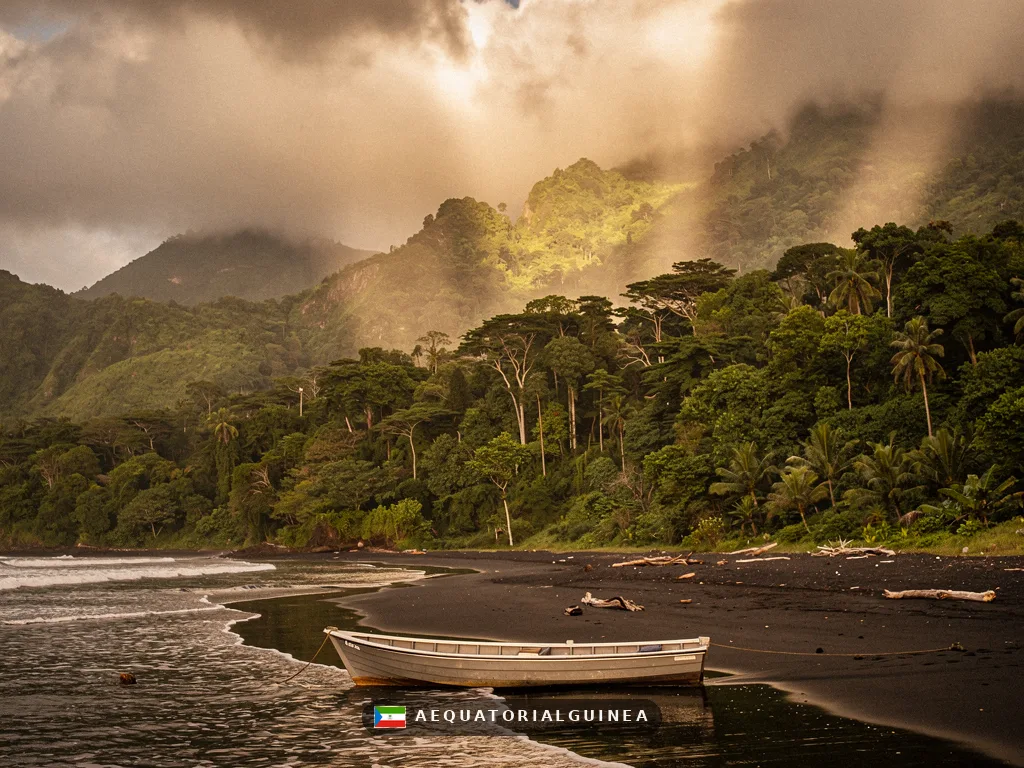
Equatorial Guinea offers one of the most untouched and least-visited fishing destinations in the Gulf of Guinea. With rich marine biodiversity, warm tropical waters, and virtually no formalized recreational fishing license Equatorial Guinea system, the country presents a unique opportunity for adventurous anglers seeking an authentic, off-the-grid experience. Whether you are casting from the shores of Bioko Island or exploring deeper waters near Bata on the mainland, you will encounter strong populations of barracuda, groupers, jacks, and other powerful predatory species.
This comprehensive guide covers everything you need to plan a safe and successful trip: current regulations (including the fact that no recreational fishing license is required for most activities), the best fishing spots, what species to target, how to arrange tours or charters, practical travel advice, costs in XAF, EUR, and USD, and essential safety considerations. Because recreational fishing infrastructure remains limited, independent travel demands careful preparation and often the support of experienced local operators.
Do you need a fishing license in Equatorial Guinea? For purely recreational shore or small-boat fishing, the answer is currently no. The country’s fisheries laws focus almost entirely on commercial and artisanal operations. However, you must still comply with broader maritime and visa regulations, carry proper identification at all times, and consider working with a reputable operator to avoid any misunderstandings with local authorities.
01Fishing Licenses and Permits in Equatorial Guinea
Equatorial Guinea does not maintain a dedicated recreational fishing license system for tourists or visiting anglers. Law No. 11/2017, which governs the sector under the Ministry of Fisheries and Water Resources, concentrates on industrial vessel quotas, sustainable management of commercial stocks, and the protection of the artisanal maritime fisheries zone that extends six nautical miles (approximately 11 km) from the coast.
This means that if you are fishing recreationally from the shore or using small local boats (known locally as cayucos), you generally do not need to purchase a fishing permit. The government currently classifies recreational fishing as a minor activity, practiced mainly by expatriates living in Malabo or Bata and a small number of locals. Catches by recreational anglers are not yet systematically recorded in national fisheries statistics, although authorities have signaled plans to improve data collection in the coming years.
That said, the absence of a formal fishing license Equatorial Guinea does not mean you can operate without any oversight. Foreigners fishing from any motorized vessel are strongly advised to obtain prior authorization from local maritime authorities or to fish under the umbrella of an established operator. Unauthorized maritime activity can raise suspicions in a country where security services maintain a high profile. Always carry your passport, visa documentation, and a copy of any correspondence with local guides or hotels.
For those planning to fish in deeper waters or to use larger vessels, it is prudent to contact the Ministry of Fisheries and Water Resources in Malabo in advance. While no standard sport-fishing permit exists, a letter of introduction or temporary authorization can help smooth interactions at checkpoints or with patrol vessels. Photography permits are also required for any filming or drone use near the coast, and these should be arranged before arrival.
Internal travel permits are mandatory when moving between Bioko Island and the mainland or between different regions of Rio Muni. These are obtained from the Ministry of Interior and can take several days to process. Failure to carry the correct permits can result in fines or delays at the numerous military and police checkpoints scattered across the country.
In summary, while you do not need a traditional recreational fishing license, thorough documentation and preferably the assistance of a local fixer or professional operator remain essential. The regulatory environment prioritizes the fight against illegal, unreported, and unregulated (IUU) fishing, so any activity that appears commercial in scale without proper permits can lead to serious consequences.
The lack of a formalized licensing system also means there are no official bag limits or size restrictions specifically written for recreational anglers. In practice, responsible visitors follow the unwritten rule of catching only what they can reasonably consume or release unwanted fish to support sustainability. Local artisanal fishers, who depend on these waters for their livelihood, generally appreciate visitors who adopt a conservation-minded approach.
(Word count for this section: 528)
02Understanding the Rules and Regulations
Equatorial Guinea’s fisheries regulations are designed primarily to protect artisanal fishing communities and to rebuild stocks pressured by decades of industrial activity. Under Law No. 11/2017, industrial trawlers and purse seiners are strictly prohibited from operating within the first four nautical miles (7.4 km) of the coastline. This coastal band is reserved for small-scale fishers using traditional methods.
Recreational fishing falls into a gray zone that is tolerated rather than actively promoted. Because sport fishing is not yet a significant economic sector, specific rules for rod-and-reel anglers have not been drafted. This creates both opportunity and risk. On one hand, you can fish relatively freely; on the other, any dispute with authorities will be interpreted through the lens of national security and resource protection rather than tourism-friendly sport-fishing guidelines.
The government has increased efforts to combat IUU fishing, including stronger monitoring of foreign vessels within the country’s massive Exclusive Economic Zone (EEZ), which extends 200 nautical miles (370 km) offshore. While recreational anglers are unlikely to be mistaken for illegal commercial operators when using small boats, it is wise to fish visibly with sporting tackle rather than nets or longlines that could be misinterpreted.
Protected marine areas are limited but growing. Certain reefs and estuaries receive informal protection from local communities. Visiting anglers should respect these zones and avoid anchoring on fragile coral structures. Spearfishing is practiced by some locals but is best avoided by tourists unless accompanied by a guide who knows exactly where it is acceptable.
When fishing from the mainland near Bata or from Bioko’s volcanic coasts, you will frequently encounter artisanal fishers. A respectful attitude and occasional small gestures (such as sharing a soft drink or offering to help pull a canoe) go a long way toward building goodwill. In many coastal villages, the local chief or fisheries committee may appreciate a brief courtesy visit before you begin casting.
Exporting fish is strictly regulated. You may not take large quantities out of the country without permits from both the fisheries ministry and customs. For most visitors, the focus remains on the experience rather than transporting catch home. Catch-and-release practices, especially for larger grouper and barracuda, help maintain healthy populations.
Currency and payment for any official permissions are handled in Central African CFA Francs (XAF). At the time of writing, 1 EUR equals approximately 655 XAF, while 1 USD equals roughly 600 XAF. Always carry sufficient cash, as electronic payments are rarely accepted outside major hotels in Malabo.
Because regulations can change rapidly and enforcement can be unpredictable, the most practical approach is to work with an experienced local operator who maintains good relationships with authorities. These operators can arrange the necessary permissions, provide transportation past checkpoints, and ensure that your fishing activities remain clearly recreational.
Overall, the regulatory framework in Equatorial Guinea is still evolving. The country is working to diversify its economy beyond oil, and responsible sport fishing could eventually become part of a sustainable tourism strategy. For now, visitors enjoy a rare level of freedom balanced by the need for common sense, respect for local communities, and thorough preparation.
(Word count for this section: 512)
03Best Fishing Spots in Equatorial Guinea
The best fishing spots in Equatorial Guinea are concentrated around the two main population centers: Bioko Island in the northwest and the coastal stretch of Rio Muni near Bata on the mainland. These areas provide access to the nutrient-rich waters of the Gulf of Guinea, where warm currents and upwellings support abundant baitfish and the larger predators that follow them.
Bioko Island is the most accessible and scenically dramatic location. The island is a volcanic outlier rising steeply from the Atlantic. Its black sand beaches and rocky headlands create excellent structure for casting. The waters off Malabo’s northern coast offer reliable action for jacks and smaller barracuda, especially during the early morning and late afternoon when baitfish schools move closer to shore. Many visitors base themselves in the capital and arrange day trips by small boat to the calmer leeward side near Luba. Here, volcanic drop-offs descend quickly to 30–50 m (100–165 ft), providing habitat for sizable groupers. Local fishers report consistent catches of yellowfin grouper and occasional African hind in these zones.
Further south on Bioko, the village of Riaba serves as a launching point for trips toward the southeast coast. The area features a mix of mangroves, small estuaries, and fringing reefs. This environment is ideal for light tackle fishing. You can target snapper, barracuda, and various species of jack using surface poppers or live bait. The scenery is spectacular: steep, forested slopes plunge directly into the ocean, and you will often fish in the shadow of Pico Basilé, the island’s 3,011 m (9,878 ft) volcano. During the drier months, water clarity improves dramatically, allowing sight fishing for cruising predators.
On the mainland, Bata and the surrounding coastline of Rio Muni represent the second major fishing region. The city of Bata is the economic heart of the mainland and offers better access to larger vessels capable of reaching deeper offshore grounds. The beaches north and south of the city, particularly around Mbini Beach, are popular with local anglers. Here you can fish from shore or hire a local pirogue to reach the mouths of small rivers that empty into the Atlantic. These estuarine zones concentrate baitfish after rains, attracting large barracuda and cubera snapper.
A short drive south of Bata lies the town of Mbini. The waters off Mbini are known among expatriates for producing some of the largest groupers encountered in the region. Rocky pinnacles and submerged ledges create perfect ambush points. Anglers using heavy conventional tackle with large live baits or vertical jigs often connect with powerful fish that can exceed 30 kg (66 lb). Because the continental shelf drops relatively close to shore in this part of the Gulf of Guinea, even shorter boat rides can put you over productive depths.
For those seeking true deep sea fishing Equatorial Guinea experience, longer-range trips depart from Luba on Bioko or from Bata. These excursions can reach the edge of the continental shelf where seasonal tuna, wahoo, and larger billfish occasionally appear. However, such trips require careful planning, reliable vessels, and experienced captains who understand the unpredictable currents and sudden squalls common in the Gulf.
The variety of habitats — from mangrove-lined estuaries to deep volcanic drop-offs — means you can experience multiple fishing styles during a single visit. Shore casting at dawn on a deserted black-sand beach, drifting bait near a reef at midday, and trolling offshore at sunset can all be part of the same day. The sheer lack of other recreational boats adds to the feeling of exploration. You will often have entire stretches of coastline to yourself, something that has become rare in more developed African coastal nations.
Local knowledge remains the greatest asset. Villagers near Riaba or fishers in Mbini can point out productive spots that do not appear on any chart. They also understand seasonal movements: barracuda tend to be more aggressive during the transition between wet and dry seasons when water temperatures fluctuate. Groupers are more active around the full moon when tidal flows are strongest.
Because infrastructure is limited, every trip to these spots becomes an adventure. You may travel by dugout canoe, shared taxi, or arranged 4×4. The reward is the chance to fish waters that see very little angling pressure. The Gulf of Guinea’s productivity is legendary among marine biologists, and that richness translates into powerful fights and the constant possibility of something unexpected taking your lure.
Exploring these locations also offers a cultural dimension. You will interact with Fang, Bubi, and Ndowe communities whose relationship with the sea stretches back centuries. Many local fishers still use hand-carved paddles and traditional knowledge passed through generations. Sharing the day’s catch or learning their techniques for preparing barracuda can become some of the most memorable parts of the journey.
The best fishing spots Equatorial Guinea has to offer are defined not only by their fish but by their remoteness and the sense of discovery they provide. In an era when many famous angling destinations feel crowded, the volcanic coasts of Bioko and the wild shores near Bata remain genuinely frontier experiences.
(Word count for this section: 912)
🎣 Fishing tours in Equatorial Guinea — Book guided fishing tours with local experts.
04Target Species and Fishing Techniques
The waters of Equatorial Guinea support a rich variety of reef and pelagic species that offer exciting sport on both light and heavy tackle. The three most commonly targeted fish by visiting recreational anglers are barracuda, groupers, and jacks, though the diversity extends well beyond these.
Barracuda (*Sphyraena* spp.) are the most aggressive and acrobatic species you will encounter. Great barracuda frequently exceed 15 kg (33 lb) and are known for their explosive strikes on surface lures. They patrol the edges of drop-offs and reef flats, especially during tidal changes. Effective techniques include fast-retrieved poppers, spoon lures, and wire traces to prevent bite-offs from their razor teeth. Early morning sessions around Bioko’s rocky points can produce double-digit fish in quick succession.
Groupers (*Epinephelus* spp.) represent the heavyweight champions of the inshore grounds. Several species inhabit the volcanic reefs and rocky ledges, with many individuals weighing between 10 and 40 kg (22–88 lb). They are notorious for powerful initial runs that can bury your line in structure within seconds. The most productive method is vertical jigging with heavy metal lures or drifting large live baits (small jacks or squid) directly above pinnacles. Strong conventional reels with high drag settings and braided line of at least 50 lb test are essential.
Jacks (family *Carangidae*), including crevalle jack, African pompano, and giant trevally, provide fast, powerful fights in both shallow and mid-depth waters. They often hunt in schools, creating explosive surface feeds that are perfect for topwater fishing. Lures that imitate baitfish, such as metal jigs, bucktail jigs, or stickbaits, work exceptionally well. Jacks are also excellent light-tackle opponents when targeted on spinning gear in the 20–40 lb class.
Other species occasionally encountered include cubera snapper, various species of mackerel, African threadfin, and, during deeper offshore trips, wahoo and yellowfin tuna. The biodiversity of the Gulf of Guinea means that every trip carries the possibility of a new personal best or an entirely unfamiliar species.
Because there are no specialized tackle shops in the country, you must bring all equipment with you. A versatile travel rod setup is recommended: a medium-heavy spinning outfit (20–40 lb) for general use, a heavier conventional setup (50–80 lb) for jigging and live bait, and a lighter outfit for targeting smaller jacks and snapper in estuaries. Pack at least 400 m of quality braided line on each reel, a good selection of leaders (including single-strand wire for toothy fish), and an assortment of lures ranging from 20 g surface poppers to 300 g deep-water jigs.
Local operators often provide small boats without sophisticated electronics. Success depends heavily on understanding tidal movements and using your own fish-finder or watching for bird activity. Many visitors hire local fishers to paddle or motor them to productive areas, then fish from the small vessels or transfer to shore.
The tropical climate means fishing is possible year-round, but certain seasons offer advantages. The drier periods (December to February and July to August) generally bring calmer seas and better visibility, making it easier to spot feeding fish and to navigate small boats safely. During the rainy season, increased river outflow can color the water and push fish closer to structure, creating excellent ambush opportunities for barracuda and jacks.
Night fishing can also be productive around lighted docks in Malabo or Bata, where squid and baitfish gather and attract larger predators. However, safety considerations make organized daytime trips the preferred choice for most international visitors.
The raw power of the fish in these waters, combined with the lack of heavy angling pressure, means fights are often long and spectacular. A 20 kg grouper peeling 100 m of line in its first run against a volcanic ledge is an experience few anglers forget. Likewise, the explosive surface strike of a large barracuda in the shadow of Bioko’s jungle-covered slopes creates lasting memories.
Responsible practices are important. Many groupers are long-lived and slow-growing; releasing larger specimens helps maintain breeding stocks. Local communities appreciate visitors who return excess catch or share it with nearby villages rather than wasting fish.
(Word count for this section: 638)
05Tours and Guided Experiences
Because independent recreational fishing is logistically complex and bureaucratically challenging in Equatorial Guinea, the vast majority of successful visiting anglers arrange their trips through experienced local operators or regional adventure specialists. These tours provide not only access to the best fishing spots but also the necessary permits, transportation, safety support, and cultural interpretation that make a trip run smoothly.
Several small operators based in Malabo and Bata cater to expatriates and occasional adventurous tourists. They typically offer half-day and full-day excursions using small motorized boats (6–8 m) equipped with basic safety gear. A typical full-day guided trip targeting inshore reefs and drop-offs costs between 180,000 and 300,000 XAF (approximately 275–460 EUR or 300–500 USD) for up to four anglers, including boat, captain, fuel, and basic tackle. This price is roughly equivalent to a mid-range restaurant meal for four people in Europe or North America for an entire day of exclusive fishing.
For those seeking genuine deep sea fishing Equatorial Guinea experiences, longer offshore charters are available but require more planning. A two-day trip to the continental shelf edge can cost 750,000–1,200,000 XAF (1,145–1,830 EUR or 1,250–2,000 USD) for the boat, reflecting the higher fuel consumption and the need for larger, more seaworthy vessels. These trips often include overnight stays at basic coastal camps or return to port each evening depending on sea conditions.
Specialized African safari and adventure operators with experience in Central Africa can organize complete fishing packages that include visa assistance, internal permits, accommodation, ground transportation, and English- or French-speaking guides. These all-inclusive trips typically range from 2,500 to 4,500 EUR (2,700–4,900 USD) per person for a seven-day itinerary that combines fishing with cultural visits and comfortable lodging. While significantly more expensive than independent travel, they dramatically reduce risk and maximize fishing time.
Local fishing cooperatives in villages such as Riaba on Bioko and Mbini on the mainland sometimes organize informal guided experiences. These can be arranged on-site for considerably lower rates — often 80,000–150,000 XAF per day (120–230 EUR or 130–250 USD) for a boat and local captain. The advantage is an extremely authentic experience and direct economic benefit to coastal communities. The disadvantage is the lack of English language skills and potentially basic safety equipment. A translator app or a bilingual fixer from Malabo can help bridge communication gaps.
When choosing an operator, look for those who maintain good relationships with maritime authorities and who emphasize sustainable practices. The best guides understand local currents, know which reefs are most productive at different stages of the tide, and can advise on which species to release. Many also offer instruction in local fishing techniques, such as using live bait caught with throw nets or traditional hand-lining methods.
Safety should be your primary concern when evaluating tours. Reliable operators provide life jackets, communication devices (VHF radio or satellite phone), and have clear weather-check protocols. Given the remote nature of many fishing locations and the possibility of sudden tropical storms, these measures are not optional luxuries.
Language barriers can be significant. While Spanish is the official language (alongside French and Portuguese in some contexts), many coastal residents speak only local languages or basic Spanish. Hiring a guide who speaks English or bringing a reliable translation application is highly recommended. Simple courtesy phrases in Spanish or French will also help build rapport.
Many tours incorporate cultural elements beyond fishing. You may visit traditional Bubi villages on Bioko, learn about the spiritual significance of the ocean in local cosmology, or participate in the preparation of the day’s catch using local recipes. These experiences enrich the journey and help visitors understand the deeper context of the marine environment they are enjoying.
Because the country receives relatively few dedicated fishing tourists, most operators are flexible and can customize itineraries. Some specialize in light-tackle and sight-fishing excursions, while others focus on heavy-tackle reef fishing or exploratory offshore trips. Discuss your target species, preferred fishing style, and physical fitness level when making arrangements.
Booking well in advance is essential. Popular operators can be fully committed months ahead, especially during the optimal dry-season windows. Reliable communication can be challenging; operators often rely on WhatsApp or email checked irregularly. Patience and clear written confirmation of all details are necessary.
Working with the right operator transforms what could be a frustrating or even risky independent adventure into a safe, productive, and culturally rich experience. The investment in professional guidance pays dividends in both fish landed and memories created.
(Word count for this section: 874)
🚤 Charter fishing in Equatorial Guinea — Find and book charter boats with experienced captains.
06Equipment, Costs and Practical Considerations
Equatorial Guinea has virtually no infrastructure for visiting recreational anglers. There are no fishing tackle stores, no established charter fleets with English-speaking crews, and no dedicated marinas. You must therefore bring all necessary equipment with you and be prepared for self-sufficiency.
Recommended gear includes:
Luggage limits on regional flights (especially the short hop from Douala in Cameroon or Libreville in Gabon) can be restrictive. Many visitors ship a tackle box via courier to their hotel in Malabo or Bata in advance.
Costs for a typical seven-day fishing-focused trip break down as follows (prices in XAF, with approximate EUR and USD equivalents):
| Item | Cost (XAF) | EUR | USD |
|-----------------------------|----------------|---------|---------|
| Round-trip international flight (from Europe) | 650,000–1,100,000 | 990–1,680 | 1,080–1,830 |
| Visa and permits | 90,000–150,000 | 140–230 | 150–250 |
| Accommodation (7 nights, mid-range) | 350,000–700,000 | 530–1,070 | 580–1,170 |
| Guided fishing (6 days) | 1,200,000–2,100,000 | 1,830–3,200 | 2,000–3,500 |
| Meals and internal transport | 180,000–280,000 | 275–430 | 300–470 |
| Total (per person) | 2,470,000–4,340,000 | 3,770–6,630 | 4,110–7,220 |
These figures represent a realistic mid-range budget. Luxury options with private transfers and higher-end lodging can easily exceed 6,000 EUR per person, while a very basic trip staying in local guesthouses and using informal local boats can be completed for under 2,500 EUR if you are prepared to accept lower safety standards and limited English support.
Flights to Malabo (SSG) usually route through Madrid, Paris, Addis Ababa, or major West African hubs. Once in the country, domestic flights between Malabo and Bata are available but frequently delayed. Shared taxis and private drivers are the main means of reaching fishing villages.
Accommodation options remain limited. In Malabo, the Hotel Bahia or Ureca Suites offer reasonable comfort. Near Bata, the Hotel Panafrica is a common choice for business travelers and can serve as a base. Coastal eco-lodges are almost non-existent; most visitors stay in small guesthouses or arrange camping with operator support.
🛒 Fishing equipment for Equatorial Guinea — Find the right gear for your trip.
07Practical Travel Information for Anglers
Travel to Equatorial Guinea requires significant preparation. Visa requirements are strict. Citizens of the EU, US, UK, Japan, and most other countries must obtain an e-visa in advance through the official government portal or via an embassy. Processing can take up to three weeks. You will also need a yellow-fever vaccination certificate, which is checked upon arrival. Malaria prophylaxis is strongly recommended, and comprehensive travel insurance that covers medical evacuation is essential.
Internal movement requires additional permits. A special travel document must be obtained from the Ministry of Interior for travel between Bioko and the mainland and for movement within Rio Muni. Photography permits are required for any image-taking outside of tourist hotels. These bureaucratic steps explain why most successful fishing visitors work with an operator who can handle the paperwork.
The climate is hot and humid year-round, with average temperatures of 25–30 °C (77–86 °F). Rainfall is heavy, especially from March to May and September to November. The most comfortable periods for fishing are the drier months of December–February and July–August when seas tend to be calmer. However, even in the dry season, afternoon thunderstorms can appear suddenly.
Health and safety are paramount. Medical facilities are limited; serious conditions usually require evacuation to Europe or South Africa. Drink only bottled water, avoid ice in drinks, and be cautious with street food. Road travel after dark is not recommended due to poor lighting and the risk of checkpoints.
The economy is heavily cash-based. ATMs are scarce and unreliable. Bring sufficient US dollars or euros in clean, new notes that can be exchanged for CFA francs. Credit cards are accepted only at a handful of upscale hotels and almost never in villages.
Language can be a barrier. Spanish is the official language on Bioko, while French is more commonly understood on the mainland. Local languages (Fang, Bubi) predominate in fishing communities. Translation apps such as Google Translate with offline Spanish–English and French–English packs are useful, though internet connectivity is patchy outside Malabo.
Security considerations include the presence of numerous checkpoints. Always carry your passport and all permits. Maintain a low profile, avoid discussing politics, and treat all uniformed personnel with respect. Petty crime is relatively rare but can occur in larger towns.
Despite these challenges, those who navigate the system successfully often describe Equatorial Guinea as one of the most rewarding and authentic destinations they have visited. The combination of untouched fishing grounds, dramatic volcanic scenery, and genuine cultural encounters creates a trip unlike any other in West or Central Africa.
📱 Stay connected in Equatorial Guinea — Get an eSIM for affordable mobile data while traveling.
🚗 Rent a car in Equatorial Guinea — Compare prices from 500+ rental companies worldwide.
08FAQ – Fishing in Equatorial Guinea
Do you need a fishing license in Equatorial Guinea?
No formal recreational fishing license is currently required for shore fishing or small-boat angling. The country’s regulations focus on commercial and artisanal fishing. However, you should still obtain appropriate visas, internal travel permits, and, where possible, work with a local operator who can provide documentation of your recreational intentions. Always check with the nearest Equatorial Guinea embassy before travel, as policies can evolve.
What are the best fishing spots in Equatorial Guinea?
The prime locations are the coastal waters of Bioko Island (particularly around Luba, Riaba, and the capital Malabo) and the mainland coast near Bata and Mbini. These areas offer a mix of rocky drop-offs, estuarine zones, and deeper reef structures that hold barracuda, groupers, and jacks. The volcanic geology of Bioko creates dramatic underwater topography that concentrates fish.
What species can I target while fishing in Equatorial Guinea?
The most common catches are barracuda, various grouper species, jacks (including crevalle and giant trevally), snapper, and mackerel. During longer offshore trips, wahoo, tuna, and occasionally sailfish or marlin may be encountered. The Gulf of Guinea’s rich upwelling supports healthy predator populations with relatively light angling pressure.
Is deep sea fishing possible in Equatorial Guinea?
Yes, though it requires careful planning and experienced captains. Longer-range charters from Luba or Bata can reach the continental shelf where larger pelagic species patrol. These trips are more expensive and weather-dependent but offer the chance to experience true blue-water fishing in an almost unexplored corner of the Atlantic.
How much does a fishing trip to Equatorial Guinea cost?
A realistic seven-day mid-range trip costs between 3,800 and 6,500 EUR (approximately 4,100–7,000 USD) per person, including flights, permits, accommodation, and guided fishing. Budget trips are possible for under 2,500 EUR if you accept basic conditions, while luxury arrangements with private support can exceed 8,000 EUR.
When is the best time to visit for fishing?
The drier seasons from December to February and July to August generally offer the calmest seas and most comfortable conditions. However, fishing is possible year-round. Local knowledge of tidal cycles and baitfish movements often proves more important than the calendar month.
What should I pack for a fishing trip to Equatorial Guinea?
Bring all your own tackle, including travel rods, quality braided line, a wide selection of lures and jigs, wire leaders, and heavy-duty reels. Pack sun protection, rain gear, sturdy shoes suitable for rocky shores, prescription medicines, and sufficient cash in euros or dollars. There are no tackle shops in the country.
Is it safe to travel and fish independently in Equatorial Guinea?
Independent travel is possible but not recommended for first-time visitors due to bureaucratic complexity, language barriers, and the frequency of checkpoints. Most successful fishing trips are arranged through experienced local operators or established adventure companies that handle logistics and permissions. Comprehensive travel insurance and strict adherence to all regulations are essential.
(Word count for FAQ section: 682)
09Conclusion
Fishing in Equatorial Guinea remains a frontier experience that rewards those willing to navigate its unique challenges. The absence of a recreational fishing license simplifies one aspect of preparation, but the real work lies in securing the right permits, choosing trustworthy local partners, and arriving with the right mindset and equipment. The reward is access to powerful fish in breathtaking, lightly pressured waters where volcanic islands meet the rich currents of the Gulf of Guinea.
Whether you stand on a black sand beach at sunrise watching a barracuda smash a popper, feel the heavy pull of a big grouper from a rocky ledge, or experience the thrill of offshore trolling far from any other boats, the memories created here will last a lifetime. The country’s combination of dramatic scenery, rich marine life, and genuine cultural encounters makes it far more than simply another fishing destination.
For the adventurous angler seeking something truly different, Equatorial Guinea offers an authentic African Atlantic experience that is still in its infancy. With careful planning, respect for local communities and authorities, and the support of experienced operators, you can enjoy a trip that few other international anglers have undertaken.
The waters are waiting. The fish are strong. The adventure is real.
10Sources & Further Links
Disclaimer: Regulations in Equatorial Guinea can change rapidly, and local enforcement of rules can be strict. Always verify your status with the nearest Embassy of Equatorial Guinea before departure to ensure you are not in violation of any maritime or local laws. The information in this guide is based on the best available data as of 2026 but should be cross-checked with official sources. Fishing World Guide assumes no liability for any loss, damage, or inconvenience experienced by readers who rely on this information.
Don't miss any fishing tips!
Get the best fishing destination recommendations weekly in your inbox.
No spam. Unsubscribe anytime.
Read more
Data incorrect?
Help us keep this article up to date — report outdated or incorrect information
More articles