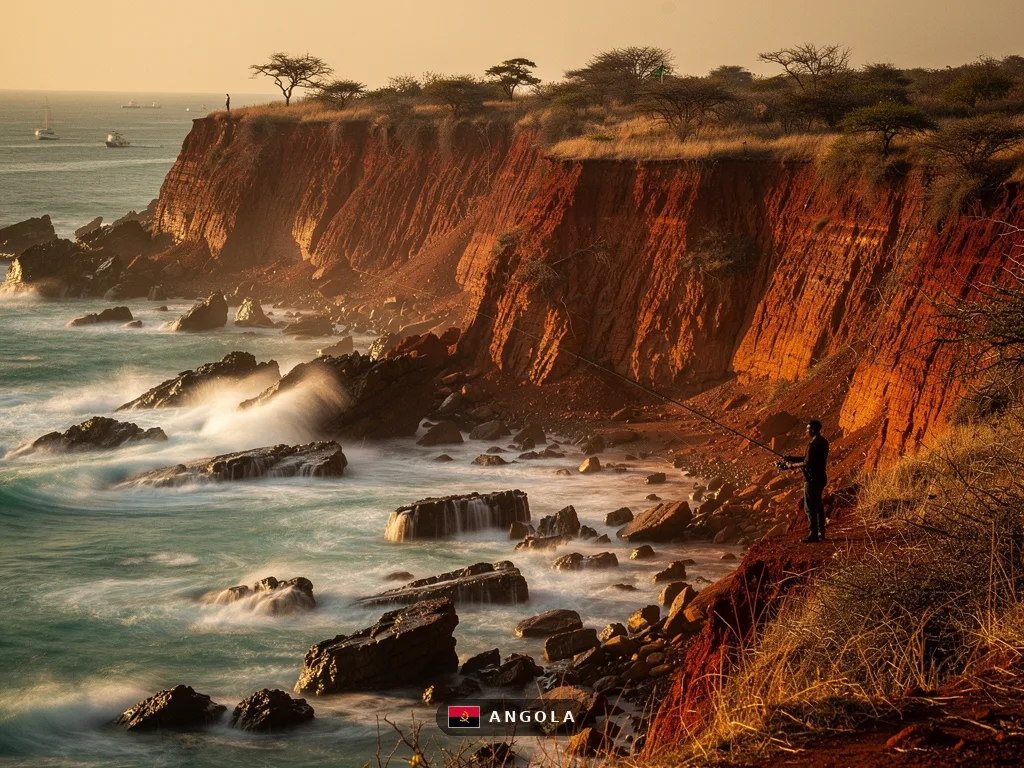
Angola is an emerging sportfishing paradise along the southwest coast of Africa, offering world-class opportunities for marlin fishing Angola, sailfish, tarpon, and tigerfish that rival more famous destinations. Whether you dream of battling a black marlin in the deep blue off Benguela or fighting a leaping tarpon in the brackish waters of the Kwanza River, this guide provides everything you need to plan a successful trip. From understanding whether you need a fishing license Angola to finding the best fishing spots Angola and booking Angola fishing charters, we cover the practical realities for international travelers.
The country’s 1,650 km (1,025 miles) Atlantic coastline and powerful river systems create diverse habitats that support an impressive array of game fish. Reputable operators typically handle the necessary fishing permit Angola requirements through the Ministério das Pescas e Recursos Marinhos, allowing visitors to focus on the thrill of the catch rather than bureaucracy. This comprehensive guide draws on current regulations, real operator insights, and verified seasonal patterns to help you fish Angola responsibly and successfully in 2026 and beyond.
01Do You Need a Fishing License in Angola?
Yes, you need a fishing license in Angola. Under Angolan law, all recreational and sport fishing activities must be properly licensed. Unlike many popular tourist destinations where sea fishing is unregulated for visitors, Angola treats both marine and freshwater angling as activities that require official authorization. The primary legal framework falls under the oversight of the Ministério das Pescas e Recursos Marinhos (Ministry of Fisheries and Marine Resources).
As an international visitor, you will rarely apply for a personal fishing license Angola yourself. Instead, your chosen charter operator, fishing lodge, or authorized outfitter is legally responsible for obtaining and carrying the appropriate recreational fishing permit (Pesca Recreativa) or sport fishing permit (Pesca Desportiva). This system exists because many of the best fishing areas overlap with commercial fishing zones, oil infrastructure, or environmentally sensitive estuaries. Always confirm in writing before booking that your operator holds current licenses and will handle all paperwork for your group.
The process is designed to ensure compliance with national conservation goals and to generate revenue for fisheries management. Licenses are typically issued on a daily, weekly, or trip-specific basis and must be kept onboard or with the guide at all times. Failure to fish under a licensed operation can result in fines, confiscation of gear, or even deportation, so working exclusively with established professionals is non-negotiable.
Tip: When contacting operators, specifically ask them to confirm they are licensed under the latest Decreto Presidencial governing sport fishing. Many reputable companies list this compliance directly on their websites or booking confirmations.
Regulations are published in the Diário da República (the official government gazette), though these documents are primarily in Portuguese. English-speaking operators can usually translate the key points for you. The emphasis on licensed operations also helps protect vulnerable ecosystems such as mangrove-lined estuaries and river mouths, which serve as critical nurseries for tarpon and snappers.
Costs for the permits themselves are generally included in the price of your guided trip or charter. Expect the operator’s fee to cover licensing at roughly 15,000 to 45,000 Angolan Kwanza (AOA) per person per day (approximately €15–€45 or $16–$48 USD), depending on whether you are targeting inland waters, inshore, or offshore big-game species. This range reflects the administrative costs and any conservation levies attached to high-value billfish trips.
Conservation is a growing priority. Most high-quality operators practice strict catch-and-release protocols, especially for marlin, sailfish, and large tarpon. This aligns with both ethical angling standards and evolving national policy. Some areas may have bag limits or protected species lists that your guide will explain before departure.
In summary, while the bureaucracy may seem complex, the system is straightforward once you book with the right partner. Reputable operators remove the hassle, ensure you fish legally, and contribute to the long-term sustainability of Angola’s emerging sport fishery. Always verify current rules directly with your chosen outfitter, as regulations can be updated through new presidential decrees.
(Word count for this section: 578)
02Fishing Regulations and Responsible Practices in Angola
Angolan fishing regulations focus heavily on separating commercial, subsistence, and recreational activities while protecting key marine and riverine habitats. The Ministry of Fisheries and Marine Resources is the central authority, and all sportfishing must comply with rules published in the official gazette. Explosives, toxic substances, and electrocution are strictly forbidden, reflecting a national commitment to sustainable resource use.
Gear restrictions are common in organized sportfishing. Competitions and many charter operations limit line strength to a maximum of 65 kg (143 lbs) to reduce environmental impact and promote fair-chase angling. Circle hooks are increasingly encouraged or required for billfish to improve survival rates during catch-and-release. Your operator will advise on compliant tackle when you book.
Certain zones are completely off-limits to recreational fishing. You cannot fish within a 1,000-meter (0.62-mile) radius of any oil platform — a significant consideration given Angola’s extensive offshore petroleum industry. Fishing is also prohibited inside most marine national parks and in many sensitive estuarine systems that function as fish nurseries. Your guide must know the exact boundaries; reputable operators carry updated charts and GPS waypoints showing permitted fishing grounds.
National policy increasingly favors catch-and-release for iconic species. Marlin, sailfish, and large tarpon are almost always released alive by professional operators. This practice supports the long-term health of the fishery and maintains Angola’s reputation as a high-quality destination. Many lodges photograph every release and contribute data to regional tagging programs, helping scientists understand migration patterns along the West African coast.
Seasonal closures or restrictions may apply in specific river systems during spawning periods. The Ministry occasionally issues temporary prohibitions to protect breeding stocks, particularly in the lower reaches of the Kwanza and Congo rivers. Always confirm with your operator whether any short-term measures are in force for your travel dates.
Safety regulations are equally important. All offshore charters must carry proper safety equipment, including life jackets, EPIRBs, and VHF radios. Many operators work under international safety standards even if local enforcement is sometimes limited. In remote areas such as the Namibe coast, communication can be challenging, making experienced local captains essential.
International visitors should be aware that enforcement is primarily targeted at unlicensed commercial operations rather than properly permitted sport anglers. However, this does not mean you can ignore the rules. Fishing without operator-provided permits can lead to serious complications, including vessel impoundment. The smartest approach is to let your chosen lodge or charter company manage all legal aspects while you focus on enjoying the fishing.
Language can present a barrier. While many coastal guides in Luanda and Benguela speak good English, operators in more remote areas may primarily use Portuguese. Using a translation app such as Google Translate with offline Portuguese packs is recommended. Booking through an international booking platform or a lodge with English-speaking management removes most communication difficulties.
Angola’s regulations continue to evolve as the country develops its tourism sector. New presidential decrees regularly refine the framework for Pesca Desportiva. The most responsible operators stay current with these changes and adjust their practices accordingly. By choosing established companies that work transparently with the Ministry, you contribute to the growth of a well-managed sport fishery that benefits both local communities and visiting anglers.
(Word count for this section: 512)
03Best Fishing Spots in Angola
The best fishing spots Angola offer a remarkable variety of environments, from powerful river estuaries to deep offshore canyons. Each area presents distinct opportunities and challenges that make the country an exciting destination for adventurous international anglers.
Kwanza River (Rio Kwanza) – Tarpon and Giant Threadfin Paradise
The Kwanza River, particularly its lower reaches and mouth near Luanda, is arguably the most famous fishery in the country. This mighty river flows 965 km (600 miles) from the highlands before emptying into the Atlantic, creating a nutrient-rich estuary that attracts massive schools of tarpon. Anglers regularly encounter fish weighing 40–80 kg (88–176 lbs), with occasional giants exceeding 100 kg (220 lbs). The mix of brackish water and strong currents produces explosive strikes and spectacular acrobatic fights.
Beyond tarpon, the Kwanza is home to giant threadfin (Polydactylus quadrifilis), which can exceed 30 kg (66 lbs) and provide powerful, dogged battles in the surf zone. Various snapper species, including the prized African red snapper, also inhabit the deeper holes and structure near the river mouth. Many specialized fishing lodges operate along the lower Kwanza, offering both boat and bank access. The scenery is spectacular — think mangrove-lined channels, sweeping sandbars, and dramatic sunsets over the Atlantic.
Fishing here often involves live bait, popping, or jigging depending on the tide. The best action typically occurs during the moving tides, especially the last two hours of the outgoing tide when baitfish are swept out of the estuary. Expect early starts; many guides depart at first light to take advantage of the cooler morning hours before the equatorial sun becomes intense.
Several established camps maintain comfortable accommodation with modern facilities despite the remote feeling. These lodges provide transport from Luanda, all meals, and fully equipped boats with experienced local captains who understand the complex currents and shifting sandbars. The Kwanza River fishery is particularly popular with fly anglers targeting tarpon, although heavy conventional tackle is usually necessary for the largest fish.
Luanda Coastline and Offshore Banks
Luanda, the capital, serves as the main hub for deep sea fishing Angola. The coastline north and south of the city features a narrow continental shelf that drops quickly into productive depths. Charter boats based in the Luanda marina regularly target wahoo, yellowfin tuna, dorado (mahi-mahi), and various billfish species. The proximity to deep water means runs of only 20–40 km (12–25 miles) can put you over prime fishing grounds.
The underwater topography includes seamounts and canyons that concentrate bait and attract predators. Marlin fishing is viable here, with both blue and striped marlin appearing during the warmer months. Sailfish are more consistent, often found in the 100–300 meter (330–985 feet) depth range where temperature breaks are pronounced. Local captains use a mix of trolling with natural baits and artificial lures, and many practice tag-and-release to support conservation efforts.
Inshore options around Luanda include reef fishing for groupers, snappers, and barracuda. These shorter trips are ideal when weather conditions prevent offshore runs or when you want a less physically demanding day. The city itself offers good infrastructure, making it an accessible entry point for first-time visitors to Angola.
Benguela and Lobito – Billfish and Deep-Water Hotspots
The Benguela region, located approximately 400 km (250 miles) south of Luanda, has gained international recognition for its outstanding billfish fishery. The cold, nutrient-rich Benguela Current collides with warmer tropical waters, creating exceptional productivity. This area is particularly famous for sailfish Angola and marlin. Charter operators report high success rates during the peak season, with multiple hook-ups in a single day being common.
Lobito, with its historic harbor, serves as a convenient base. The waters off Benguela and Lobito offer varied fishing styles: heavy tackle trolling for blue marlin, lighter spin and fly tackle for sailfish, and vertical jigging over deep structures for amberjack, cubera snapper, and large groupers. The dramatic coastal scenery features red sandstone cliffs and sweeping beaches that provide a stunning backdrop to your fishing day.
Many operators here run larger vessels (10–15 meters / 33–49 feet) equipped with fighting chairs, outriggers, and modern electronics. Trips typically last 8–10 hours and include all tackle, bait, and refreshments. The combination of productive waters and professional crews makes Benguela one of the top choices for serious big-game anglers.
Namibe Coast – Remote and Rugged Adventure
Further south, the Namibe province offers a more adventurous, less-visited experience. The coastline is rugged, with desert landscapes meeting the Atlantic in dramatic fashion. This area is known for its uncrowded beaches and rocky points that produce excellent surf casting and light-tackle boat fishing. Species include kob, steenbras, various sharks, and occasional large trevally.
Because of its remoteness, fishing here requires more self-sufficiency. Operators typically organize fully supported expeditions with camping or basic lodge accommodation. The lack of fishing pressure means fish can be larger and less wary, but the logistical challenges are greater. Namibe rewards anglers who appreciate wilderness experiences as much as the catch itself.
Congo River Mouth (Soyo) – Untapped Potential
The mouth of the Congo River near Soyo represents one of Angola’s most exciting frontier fisheries. The massive outflow of the Congo creates a unique transition zone where freshwater meets the Atlantic, attracting both river species and oceanic predators. Tarpon, giant threadfin, cubera snapper, and even occasional Nile perch-like tigerfish have been reported in this dynamic environment.
Access to the Soyo area usually requires organized trips as infrastructure is limited. The fishing combines elements of both the Kwanza River experience and true offshore big-game angling. Strong currents and ever-changing water clarity demand skilled local knowledge. Those who make the journey often describe it as the most rewarding and least crowded fishing experience in the country.
Throughout all these locations, the combination of warm tropical waters, nutrient upwellings from the Benguela Current, and diverse structure creates a rich ecosystem. The best operators maintain detailed logs of seasonal patterns, tidal influences, and moon phases to maximize your chances. Many also practice responsible fishing by limiting harvest to a few fish for dinner while releasing the majority of catches, especially trophy specimens.
The sheer scale of the Angolan coastline means you can find solitude even in productive waters. Whether you prefer the social atmosphere of a Benguela billfish trip or the wild isolation of a Namibe surf-casting expedition, the country delivers memorable fishing experiences that few other African destinations can match.
(Word count for this section: 942)
🎣 Fishing tours in Angola — Book guided fishing tours with local experts.
04Tours & Guided Experiences
Fishing tours Angola and charter fishing Angola are the only practical and legal way for most international visitors to experience the country’s sport fishery. Independent fishing without a licensed local operator is neither permitted nor advisable given the regulatory framework and safety considerations.
Most serious fishing takes place through specialized lodges or charter companies that maintain their own vessels, English-speaking (or translator-equipped) crews, and current permits. These operators coordinate with the Ministry of Fisheries and Marine Resources to ensure every trip is fully compliant. When you book a multi-day package, the cost of licensing is almost always included in the quoted rate.
Popular operators offer a range of experiences. In the Kwanza River area, several well-established fishing camps provide all-inclusive packages that include airport transfers from Luanda, comfortable accommodation, all meals, experienced local guides, and fully equipped boats. A typical 7-night, 6-day fishing package focusing on tarpon and threadfin ranges from €2,800 to €4,200 ($3,000–$4,500 USD) per person sharing, including all licenses and transfers. Single supplement and additional days are available.
Offshore charters out of Luanda and Benguela usually operate on a daily or half-day basis. A full-day big-game charter (8–10 hours) with a 12-meter (39-foot) vessel, captain, and mate typically costs between €850 and €1,600 ($910–$1,710 USD) for up to four anglers, with all tackle, bait, and licenses included. Prices vary according to the season, target species, and whether you require specialized equipment such as tournament-grade marlin tackle.
In Benguela and Lobito, several companies specialize in billfish. A three-day offshore package including accommodation in a comfortable hotel, daily charters, and all meals generally falls in the €2,200–€3,300 ($2,350–$3,530 USD) range per person. These trips often achieve high success rates for sailfish, with seasonal peaks producing double-digit release days for skilled crews.
For more remote experiences in Namibe or Soyo, expect fully supported expedition-style trips. These usually run 8–10 days and include overland transfers, camping or basic lodge stays, and multiple fishing methods. Costs range from €4,000 to €6,500 ($4,280–$6,950 USD) per person, reflecting the additional logistics required to reach these pristine areas.
Many operators now offer specialized options:
Guides are usually local fishermen with generations of knowledge about seasonal patterns, bait movements, and productive structures. Many have received additional training in catch-and-release techniques, fish photography, and basic English. The best operators maintain high safety standards and modern vessels equipped with GPS, fish finders, and reliable engines.
When choosing an operator, look for membership in recognized international sportfishing organizations or partnerships with established African travel companies. Check recent client reviews for mentions of safety, professionalism, and actual catch results rather than just promotional claims. Reputable companies willingly provide references and detailed itineraries.
Booking well in advance is recommended, especially for the peak billfish season between November and April. Many lodges have limited rooms and boat capacity, and the best dates fill quickly. Flexible travelers can sometimes secure last-minute deals during the shoulder seasons (May–June or October), when weather remains good but demand is lower.
All professional operators emphasize conservation. You will likely be asked to follow strict catch-and-release guidelines for billfish and large tarpon. Many provide release certificates or photographs that serve as souvenirs while contributing to scientific tagging databases. This responsible approach helps ensure that Angola’s emerging fishery remains sustainable for future generations.
(Word count for this section: 868)
🚤 Charter fishing in Angola — Find and book charter boats with experienced captains.
05Best Time to Fish in Angola
Choosing the best time to visit depends on your target species and tolerance for weather conditions. Angola’s fishing calendar is influenced by the interaction between the warm Angola Current and the cold Benguela Current, as well as the seasonal movement of the Intertropical Convergence Zone.
November to April is widely regarded as the prime season for big-game and billfish. During these months, water temperatures rise, and the majority of marlin, sailfish, and dorado migrate into Angolan waters. Sailfish action is often excellent from December through March, while blue marlin encounters increase significantly in January and February. This period coincides with the southern hemisphere summer, bringing warmer air temperatures (28–32 °C / 82–90 °F) and generally more stable sea conditions in the mornings.
The Kwanza River tarpon fishery remains productive year-round but often sees its best action during the transitional months when water levels and salinities create optimal feeding conditions. Many experienced tarpon anglers prefer the shoulder months of October and May, when fewer tourists are present and fish can be less pressured.
May to October offers more comfortable daytime temperatures (22–27 °C / 72–81 °F) and is often preferred by travelers who dislike extreme heat. During this period the fishery shifts toward other species: snapper, groupers, kob, and threadfin become the main targets. Offshore fishing for tuna and wahoo remains consistent, although billfish numbers are generally lower. This is also a good time for light-tackle and fly-fishing enthusiasts who prefer smaller, more technical presentations.
Rainfall patterns vary dramatically between the north and south. The northern regions, including Luanda and the Kwanza River, experience a wet season from November to April, which can affect river clarity and road access. The southern provinces of Benguela and Namibe are much drier year-round, making them more reliable regardless of season.
Ocean conditions are another important consideration. The Benguela Current brings cooler, nutrient-rich water that can create fog and strong winds, particularly from June to September. Experienced captains know how to work with these patterns, often scheduling early starts to complete the fishing before afternoon winds increase.
International travelers from the northern hemisphere should note that the Angolan peak season (November–April) coincides with winter in Europe and North America, making it an attractive escape. Visitors from Australia or South America will find the shoulder seasons align better with their summer holidays.
Moon phases also influence fishing success. Many captains prefer the days around the new moon when tidal movements are strongest and nighttime feeding activity increases. Conversely, the full moon can sometimes make fish more difficult during daylight hours as they feed heavily at night.
No matter when you choose to visit, working with a reputable operator who monitors real-time conditions will dramatically improve your experience. They can adjust locations and techniques based on current water temperatures, wind direction, and bait movements. Flexible travelers who can adapt to seasonal variations often enjoy the most memorable trips while avoiding peak crowds and higher prices.
(Word count for this section: 526)
06Practical Travel Information for Visiting Angola
Traveling to Angola requires careful preparation. Citizens of the European Union, United States, United Kingdom, Japan, and most other countries require a visa. Visa-on-arrival is available at Luanda’s Quatro de Fevereiro International Airport for many nationalities but can involve long queues and occasional bureaucratic complications. Applying for an e-visa or through an Angolan embassy before travel is generally recommended for peace of mind. The standard tourist visa allows a stay of up to 30 days and costs approximately 12,000 AOA (€12 / $13 USD).
A yellow fever vaccination is mandatory for entry into Angola. You must present an International Certificate of Vaccination or Prophylaxis at immigration. Malaria prophylaxis is strongly advised, and many travelers also receive hepatitis A, typhoid, and tetanus booster shots. Consult a travel medicine specialist at least six weeks before departure.
The official currency is the Angolan Kwanza (AOA). International credit cards are accepted in major hotels and some restaurants in Luanda, but cash is essential elsewhere. ATMs are increasingly common in cities but unreliable in rural areas. Bring US dollars in clean, new bills as they are the easiest currency to exchange. Current exchange rates fluctuate; at the time of writing, €1 ≈ 950 AOA and $1 ≈ 880 AOA.
Safety remains an important consideration. While Luanda, Lobito, and Benguela are generally safe for organized travelers, road travel outside major centers requires caution. Using reputable transfer services arranged by your fishing operator is strongly recommended. Petty crime can occur in crowded urban areas, so keep valuables secure and avoid displaying expensive fishing gear unnecessarily.
English is not widely spoken outside the main tourist and business sectors, although many fishing guides and lodge staff have good working knowledge. Learning a few basic Portuguese phrases is helpful. Translation apps work well in areas with mobile coverage. Most fishing operators catering to international clients employ English-speaking representatives or provide translators.
Internal flights operated by TAAG or private charter companies connect Luanda with Benguela, Lubango, and other regional airports. Road transfers are used for shorter distances to fishing camps. Expect travel times of 4–6 hours by vehicle from Luanda to the lower Kwanza River area. Domestic flights cost between €80 and €250 ($85–$270 USD) one way depending on the route.
Health infrastructure outside Luanda is limited. Many remote fishing lodges have basic medical kits and satellite phones for emergencies. Comprehensive travel insurance that covers medical evacuation and fishing-related activities is essential. Ensure your policy explicitly includes “sport fishing” or “big game fishing” to avoid any coverage disputes.
Internet and mobile coverage vary. Major cities have 4G service, but many fishing areas have little to no signal. Purchasing a local SIM card upon arrival is inexpensive and useful for when you return to urban areas. Several eSIM providers now offer coverage in Angola that can be activated before departure.
Pack practical clothing: lightweight long-sleeve shirts, quick-dry trousers, a wide-brimmed hat, polarized sunglasses, and reef-safe sunscreen. Even in the tropics, early mornings on the water can be cool, so a light jacket is useful. Bring copies of your passport, visa, vaccination certificate, and insurance details in both paper and digital formats.
For travelers arriving from Europe or North America, direct flights to Luanda are available from Lisbon, Paris, Dubai, and Johannesburg. Flight time from Europe is approximately 8–9 hours. Many fishing packages include transfers from the airport to the lodge, simplifying the logistics considerably.
By planning carefully and working with established operators who understand both the fishing and the practical realities of travel in Angola, you can enjoy a safe, legal, and highly rewarding angling adventure in one of Africa’s most promising emerging destinations.
📱 Stay connected in Angola — Get an eSIM for affordable mobile data while traveling.
(Word count for this section: 612)
07Equipment Considerations for Fishing in Angola
Most professional operators in Angola supply all necessary tackle, which removes much of the logistical burden for international travelers. High-quality rods, reels, lines, lures, and terminal tackle suited to local conditions are provided as part of your package. This is particularly helpful for species like tarpon and marlin, which require specialized heavy gear.
If you prefer to bring your own equipment, communicate clearly with your operator well in advance. Many lodges have limited storage and may need to adjust boat setups if you are bringing multiple rod tubes. For Kwanza River tarpon fishing, bring heavy spinning or baitcasting outfits rated for 30–65 kg (65–143 lb) line. Reliable multipliers such as the Shimano Tiagra or Penn International series are popular among visiting anglers.
For offshore marlin fishing Angola and sailfish, 24–37 kg (50–80 lb) class tackle is standard. rollers with high gear ratios work well for sailfish, while heavier stand-up gear is preferred for blue marlin. Bring a selection of large lures, squid daisy chains, and fresh bait rigging needles. Many operators prefer that you use circle hooks to maximize catch-and-release survival rates.
Light-tackle and fly anglers targeting threadfin, snapper, or smaller tarpon should pack 8–10 weight fly rods with floating and intermediate lines. Poppers, deceivers, and crab patterns in various sizes and colors produce good results. Conventional light spinning gear in the 10–20 lb class is also effective for inshore work.
Reels must be thoroughly rinsed with fresh water after each use due to the corrosive salt environment. Bring spare spools, plenty of leader material (both mono and fluorocarbon), and a comprehensive repair kit. Quality polarized sunglasses, a buff or neck gaiter for sun protection, and a good pair of fishing pliers are essential personal items.
Luggage limits on domestic flights within Angola can be restrictive. Many travelers use hard-sided rod tubes and keep valuable reels in carry-on luggage. If you are bringing expensive tackle, consider comprehensive insurance coverage specifically for sporting equipment.
Guides can provide advice on local bait preferences and effective color patterns once you arrive. Many have years of experience translating between international tackle trends and what actually works in Angolan waters. Being flexible and listening to local knowledge often leads to better results than relying exclusively on techniques that work elsewhere in Africa or the Caribbean.
(Word count for this section: 478)
🛒 Fishing equipment for Angola — Find the right gear for your trip.
08Costs of Fishing in Angola
Understanding the real costs helps you budget accurately for a trip to Angola. A typical 7-night tarpon-focused trip on the Kwanza River, including accommodation, all meals, transfers, boat, guide, and licenses, currently ranges from €2,800 to €4,500 ($3,000–$4,800 USD) per person when sharing a double room. Single supplements usually add 25–35% to the price.
Daily offshore charters in Luanda or Benguela cost €850–€1,800 ($910–$1,930 USD) for the boat, covering up to four anglers. This works out at roughly €210–€450 ($225–$480 USD) per person for a full day of big-game fishing, comparable to premium destinations in the Caribbean or Indian Ocean. Licenses and bait are included in these rates.
Flights from major European hubs to Luanda typically cost €650–€1,200 ($695–$1,285 USD) return, depending on the season and how far in advance you book. Internal flights or road transfers to fishing areas add another €150–€400 ($160–$430 USD).
Additional expenses include:
Compared to more established African fishing destinations such as South Africa or Senegal, Angola currently offers competitive value, particularly for multi-day all-inclusive river packages. The relatively small number of operators and developing infrastructure keep prices from being bargain-basement, but the quality of fishing and level of service often exceed expectations.
Booking directly with lodges can sometimes reduce costs compared to using international agents, but you may lose certain consumer protections. Many travelers prefer the security of booking through established African specialist tour companies that have long-standing relationships with Angolan operators.
Prices can fluctuate with fuel costs, currency exchange rates, and changes in government levies on tourism activities. Always request a detailed quotation that specifies exactly what is included regarding licenses, transfers, tackle, and conservation fees.
(Word count for this section: 468)
09FAQ – Fishing in Angola
Do you need a fishing license in Angola?
Yes. All recreational and sport fishing requires proper licensing under Angolan law. Fortunately, reputable operators and lodges handle the necessary permits through the Ministry of Fisheries and Marine Resources. Confirm in writing that your chosen outfitter is fully licensed before you book. Attempting to fish without operator-provided documentation is not permitted and can lead to serious penalties.
What are the best fishing spots in Angola?
The Kwanza River stands out for tarpon and giant threadfin, while the offshore waters off Benguela and Lobito are famous for marlin and sailfish. The Luanda coastline offers convenient access to both inshore and deep-sea fishing. More adventurous anglers head to the remote Namibe coast or the dynamic waters at the mouth of the Congo River near Soyo. Each area has its own seasonal strengths and requires different techniques.
When is the best time to fish for marlin and sailfish in Angola?
The prime big-game season runs from November to April, when warmer waters bring large numbers of billfish close to the coast. Sailfish are particularly active from December through March. Shoulder months of May and October can still produce good fishing with fewer crowds and more comfortable temperatures. Your operator can advise on exact patterns for the year you plan to travel.
Is catch-and-release practiced in Angola?
Most professional operators strongly promote catch-and-release, especially for marlin, sailfish, and large tarpon. Many lodges have adopted international best practices including the use of circle hooks, proper handling techniques, and photography without removing fish from the water. This approach helps maintain the quality of the fishery for future visitors.
What species can I realistically expect to catch?
Angola offers tarpon, giant threadfin, various snapper and grouper species, wahoo, yellowfin tuna, dorado, sailfish, blue marlin, and occasionally other billfish. The exact mix depends on location, season, and fishing method. Reputable guides will set realistic expectations based on current conditions and your preferred style of fishing.
How safe is it to travel to Angola for fishing?
With proper planning and by using established operators, fishing trips to Angola are generally safe. Use lodge-arranged transfers, follow local advice, and maintain standard travel precautions. Comprehensive travel insurance covering medical evacuation and fishing activities is essential. Most visitors who stick to organized programs report positive, trouble-free experiences.
What visa and health requirements exist for fishing visitors?
Most nationalities require a visa, which can be obtained in advance or on arrival at Luanda airport. A current yellow fever vaccination certificate is mandatory for entry. Malaria prophylaxis and other routine vaccinations are strongly recommended. Consult official government travel advice for your specific nationality before booking.
Should I bring my own fishing tackle or use provided equipment?
Most operators supply quality local tackle suited to Angolan conditions, which saves weight and potential customs complications. If you have favorite rods or reels for specific techniques (especially fly fishing), bringing them is usually possible if you coordinate with the lodge in advance. A compromise approach — bringing reels and leaders while using provided rods — often works well.
(Word count for FAQ section: 612)
10Conclusion
Angola represents one of Africa’s most exciting emerging sportfishing destinations. With its diverse mix of tarpon-rich river estuaries, productive offshore banks, and rugged coastline, the country offers memorable experiences for anglers of all preferences. By understanding the requirement for licensed operators, choosing the right season and location for your target species, and booking with reputable professionals, you can enjoy world-class fishing while supporting the sustainable development of this frontier fishery.
The combination of marlin, sailfish, tarpon, and a host of inshore species, set against dramatic African scenery, creates a unique appeal. Whether you are chasing a grand slam on the Kwanza River or hunting blue marlin in the deep waters off Benguela, the adventure and the potential for exceptional catches make the journey worthwhile.
Start planning your trip today by contacting established operators who can handle permits, provide expert guidance, and ensure your visit complies with all current regulations. The fish are waiting — and Angola is ready to welcome responsible international anglers who respect its waters and contribute to their future.
11Sources & Further Links
Disclaimer: This guide is for informational purposes only and based on data available in 2026. Fishing regulations in Angola are subject to change. Always verify the latest rules, visa requirements, and health advisories with official government sources and your chosen operator before travel. The authors and publishers assume no liability for any loss, damage, or inconvenience caused by reliance on the information contained in this article.
Don't miss any fishing tips!
Get the best fishing destination recommendations weekly in your inbox.
No spam. Unsubscribe anytime.
Data incorrect?
Help us keep this article up to date — report outdated or incorrect information
More articles