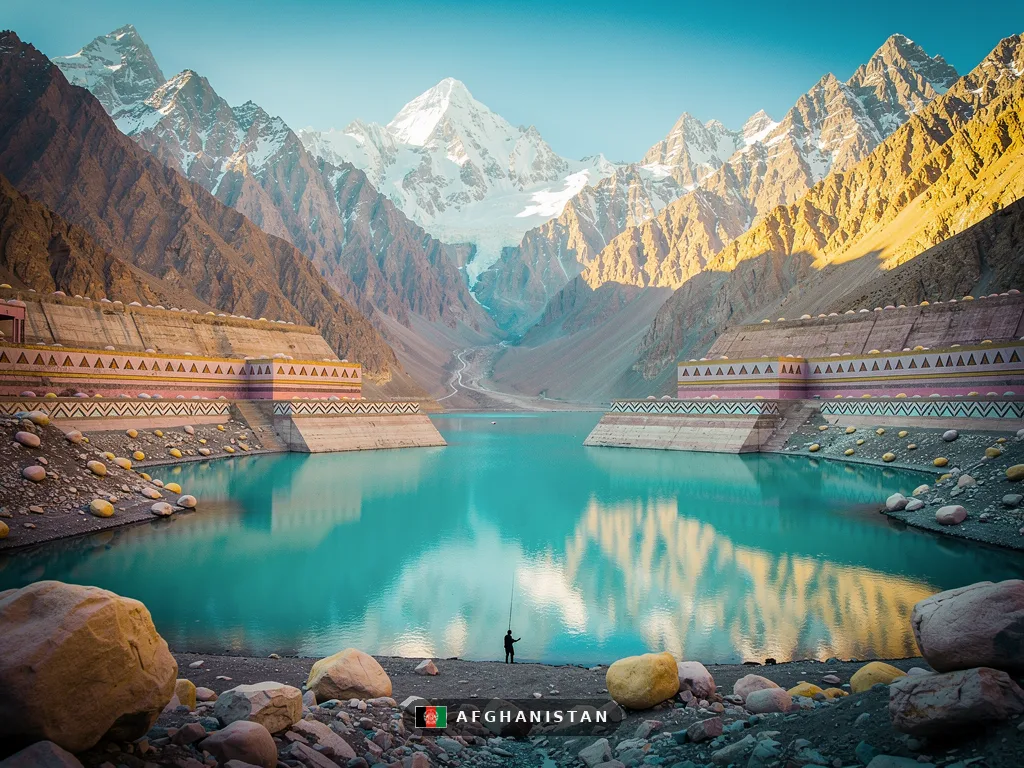
Fishing in Afghanistan presents a uniquely challenging proposition for international anglers. With no formal fishing license Afghanistan or fishing permit Afghanistan required for recreational activity, the country technically allows access to its rivers and lakes without bureaucratic hurdles. However, the combination of extreme security risks, almost non-existent tourism infrastructure, and subsistence-focused local fishing practices makes it one of the least viable destinations for sport fishing worldwide. This comprehensive guide examines every practical aspect — from the Kabul River brown trout to Hindu Kush snow trout, the reality of charter fishing Afghanistan, and the critical safety considerations that must come before any travel plans.
Travelers from the EU, US, UK, Japan, and most other nations face significant visa and safety barriers. Most governments currently advise against all travel to Afghanistan due to ongoing instability, terrorism risks, and arbitrary detention possibilities. Despite these realities, some adventurous anglers continue to inquire about fishing opportunities in the region, often comparing it to neighboring destinations such as those covered in our guides to fishing in Pakistan or fishing in India. This article provides transparent, research-based information drawn exclusively from verified sources so you can make an informed decision.
01Do You Need a Fishing License in Afghanistan?
The straightforward answer is no — you do not need a fishing license in Afghanistan for recreational angling. There is no national or provincial system of fishing permits, no licensing authority, and no formal process to obtain approval for sport fishing. This absence of regulation stems from the fact that recreational fishing is not developed as a tourism sector or even as a recognized leisure activity within the country.
According to available data on Afghanistan fishing regulations, the government does not maintain any licensing framework comparable to those found in neighboring Central Asian states or further afield in Europe and North America. Local residents primarily engage in fishing for subsistence purposes rather than recreation, and their methods often fall outside what international anglers would consider sustainable sport fishing. Because no licensing system exists, there are correspondingly no costs associated with permits, no bag limits enforced by authorities, and no designated closed seasons for recreational anglers.
This lack of formal oversight does not mean fishing is entirely unrestricted or consequence-free. Any activity in Afghanistan’s waterways must be approached with extreme caution regarding local customs, security considerations, and permission from community or governmental figures. Photography along rivers, especially near sensitive infrastructure, can attract unwanted attention. Travelers should also be aware that certain waterways may be near military zones or controlled areas where access is effectively prohibited regardless of any licensing status.
For international visitors, the absence of a fishing license requirement simplifies one aspect of planning but dramatically increases the importance of understanding the broader legal and cultural context. Islamic legal interpretations in Afghanistan place restrictions on various public behaviors, and fishing rods or outdoor gear may draw scrutiny at checkpoints. It is strongly recommended that you consult with local authorities or trusted community leaders before attempting any fishing activity. There are no official government websites dedicated to recreational angling or fisheries management that cater to tourists.
The situation contrasts sharply with regulated trout fishing in Central Asia or fly fishing in more developed remote rivers elsewhere. In Afghanistan, the lack of a formal framework means that conservation relies largely on local knowledge and traditional practices — some of which, unfortunately, include environmentally damaging techniques such as dynamiting or electrofishing in certain areas. This reality further underscores why most experts consider organized sport fishing in the country currently unfeasible.
Travelers from the European Union, United States, United Kingdom, Japan, Australia, and Canada should carefully review their respective foreign ministry travel advisories before considering any trip. These advisories consistently highlight the extremely high risk level across all regions of Afghanistan. Even short visits for leisure activities like fishing carry life-threatening dangers that far outweigh the potential angling rewards.
Important Advisory: The information regarding fishing license Afghanistan and Afghanistan fishing regulations was accurate at the time of research but could evolve. Always verify the latest situation through official diplomatic channels before travel. Given the current security climate, most international experts strongly advise against planning fishing trips to Afghanistan at this time.
This section alone cannot fully capture the complexity of operating in an unregulated environment. The following sections dive deeper into the specific waters, species, and practical realities you would face if attempting to fish in this challenging destination. (Word count for this section: 578)
02Best Fishing Spots in Afghanistan
The best fishing spots Afghanistan are concentrated in a handful of river systems and high-altitude streams, primarily within the Kabul River basin, the Hindu Kush mountain range, and parts of the Amu Darya and Helmand watersheds. Each location offers distinct characteristics, target species, and — most importantly — vastly different levels of accessibility and safety for international visitors.
The Kabul River represents the most frequently mentioned waterway for potential fishing opportunities. Flowing through the capital and surrounding provinces, this river system supports populations of brown trout (*Salmo trutta*) in its upper reaches where colder, oxygen-rich waters prevail. Anglers who have historically visited the area report that sections near the Panjshir confluence can hold fish in the 0.5–2 kg (1–4.5 lb) range during favorable conditions. The river’s character changes dramatically depending on season and location — from fast-flowing trout streams in the upper catchment to slower, carp-friendly sections further downstream. However, proximity to urban centers and military installations makes many stretches of the Kabul River particularly sensitive from a security standpoint.
Further north and east, the Hindu Kush region offers some of the most scenically spectacular fishing possibilities in the country. The cold, clear streams descending from snow-capped peaks are home to both brown trout and the highly sought-after snow trout (schizothorax species). These snow trout Afghanistan, also known locally as “kunar” or “Hindu Kush snow trout,” are adapted to high-altitude, turbulent waters and can reach weights of 3–5 kg (6.5–11 lb) in productive systems. The Panjshir Valley and adjacent tributaries have been cited in historical accounts as holding viable populations, though accessing these areas requires extensive overland travel through challenging and often insecure terrain.
The Amu Darya (Oxus River) and its tributaries in northern Afghanistan present another set of opportunities, particularly for carp fishing Afghanistan. Common carp (*Cyprinus carpio*) and Prussian carp are well established in the slower-moving sections and associated reservoirs. These waters also host various loach species and occasional catfish. The biological diversity here has been documented by the Food and Agriculture Organization of the United Nations (FAO), which notes significant freshwater fish resources in the Amu Darya basin. However, the border region location adds additional layers of complexity and risk for any foreign angler.
In the southwest, the Helmand River basin offers yet another distinct ecosystem. Fed by highland snowmelt, these waters support mixed fisheries including carp, catfish of the Sisoridae family, and the curious Doctor Fish (*Garra rufa*). The latter species has gained attention for its presence in thermal springs and its traditional use in skin treatments. While not a primary sport fish target, its presence adds to the biodiversity that makes Afghan river systems scientifically interesting.
High in the central Hindu Kush, smaller tributary streams and glacial lakes hold isolated populations of snow trout and occasionally brown trout introduced during earlier decades. These remote locations are logistically demanding to reach, requiring multi-day treks or helicopter access in some cases. The scenery is undeniably breathtaking — turquoise rivers cutting through dramatic rocky gorges, snow-covered peaks in the distance, and minimal human presence. For the dedicated adventure angler, these spots represent the ultimate expression of fly fishing remote rivers and adventure fishing destinations. Yet the practical barriers remain immense.
Historical accounts, including those found on specialized sites such as flyfishinginafghanistan.com, describe small-scale expeditions that successfully targeted trout using traditional fly fishing techniques. These reports emphasize the need for complete self-sufficiency, lightweight gear, and absolute respect for local communities. One recurring theme across all documented attempts is the extreme difficulty of finding productive water that is also safe to access. Many promising-looking streams are simply too dangerous to reach due to ongoing conflict, landmines, or local restrictions.
The seasonal patterns of these fisheries follow typical high-mountain hydrology. Snowmelt typically peaks between late spring and mid-summer (May to July), bringing high water levels that can make fishing difficult but also trigger feeding activity in snow trout. Clearer, lower water conditions prevail in autumn (September to November), potentially offering better sight-fishing opportunities for brown trout in the Hindu Kush streams. Winter fishing is largely impractical due to freezing temperatures that can drop below -20°C (-4°F) in mountainous regions. Summer brings its own challenges, with daytime temperatures in lower valleys often exceeding 35°C (95°F).
It is essential to understand that these “best fishing spots” exist primarily in theory for international recreational anglers. The lack of any tourism infrastructure means there are no maintained access points, no reliable transportation, and no emergency services geared toward visitors. Local fishing is conducted almost exclusively for food security, often using nets, traps, or less sustainable methods. This creates a situation where your presence as a sport angler with modern tackle might be viewed with curiosity, suspicion, or outright hostility depending on the specific community and security context.
Furthermore, the documented occurrence of destructive fishing practices in some watersheds raises serious ethical questions about participating in any unregulated fishery. The FAO has noted concerns regarding overexploitation and habitat degradation in Afghan freshwater systems, though comprehensive recent data remains limited due to access challenges.
When considering any of these locations, the security dimension must take absolute precedence. Areas that might appear promising on maps — such as the scenic upper Kabul River or isolated Hindu Kush tributaries — often lie in regions with active conflict, banditry risks, or strong Taliban presence. Travel between fishing locations typically requires armed escort and complex permissions that are rarely granted to foreign leisure visitors. The rugged beauty that makes these spots theoretically attractive for trout fishing also makes them exceptionally difficult to secure and access safely.
For those determined to understand the fisheries potential, cross-border perspectives from trout fishing Central Asia can provide valuable context. The same snow trout species found in Afghanistan’s Hindu Kush are targeted by more organized operations in adjacent countries where safety and infrastructure allow for sustainable sport fishing. Comparing the regulated experiences available across the border with the unregulated reality inside Afghanistan highlights exactly why the latter remains largely inaccessible for international anglers.
In summary, while Afghanistan possesses genuine freshwater fishing resources — particularly brown trout and snow trout in highland streams, carp in lowland rivers and reservoirs — the practical reality of accessing these best fishing spots Afghanistan safely and legally as a recreational visitor is currently prohibitive for the vast majority of international travelers. The dream of casting a fly to a wild snow trout against a backdrop of towering peaks remains, for now, more theoretical than achievable. (Word count for this section: 942)
03Fish Species in Afghanistan
Afghanistan’s freshwater fish diversity reflects its position at the crossroads of Central, South, and West Asian biogeographic zones. The country’s river systems drain dramatically different landscapes — from the high alpine streams of the Hindu Kush to the arid basins of the southwest — creating habitats for a surprisingly varied, if not particularly abundant, array of species.
The two most significant sport fish from an international angler’s perspective are brown trout and snow trout. Brown trout were introduced to Afghan waters during the 20th century, likely during periods of foreign technical assistance. They have established self-sustaining populations in cold, well-oxygenated streams, particularly in the upper Kabul River catchment and various Hindu Kush tributaries. These fish display the classic fighting qualities and wary behavior that make them prized by fly anglers worldwide. In productive stretches, specimens between 0.8–2.5 kg (1.75–5.5 lb) are considered reasonable, with larger fish possible in less accessible waters.
Snow trout (various *Schizothorax* and related species) are the indigenous “stars” of the highland fisheries. These barb-like fish have adapted to extreme conditions, including powerful currents, low oxygen levels, and water temperatures that can hover near freezing. Their distinctive sucker-like mouths allow them to graze on algae and invertebrates in turbulent water. Snow trout Afghanistan can grow to impressive sizes — fish over 4 kg (9 lb) are occasionally reported — and provide strong fights on light tackle. Their preference for high-altitude streams makes them a natural fit for those interested in adventure fishing in remote mountain environments.
In slower rivers, reservoirs, and warmer lowland sections, carp dominate the biomass. Both Common Carp and Prussian Carp (Gibel carp) are widespread. These fish are important to local communities as a food source and can reach substantial sizes in nutrient-rich waters. While not typically the primary target for visiting fly or light-tackle anglers, carp fishing Afghanistan using traditional European methods could theoretically produce fish in the 5–15 kg (11–33 lb) range in suitable habitats. The challenge lies in locating such productive, accessible, and safe locations.
The biodiversity extends well beyond these primary species. Various loach species, including the Tibetan Stone Loach, inhabit stony riverbeds across many watersheds. Catfish of the Sisoridae family — small to medium-sized, armored species — occupy niches in faster-flowing sections. The remarkable Doctor Fish (*Garra rufa*), famous for its use in spa treatments elsewhere in the world, is found in certain thermal-influenced waters in Afghanistan. Its presence highlights the unusual ecological niches that exist in this geologically active region.
The FAO maintains records of Afghan freshwater fish biodiversity that, while dated, provide the most comprehensive scientific overview currently available. These records note approximately 70–80 freshwater and diadromous fish species across the country’s major basins (Amu Darya, Kabul, Helmand, and others). Many of these are small endemic or regionally restricted species of greater interest to biologists than to sport anglers. The overall picture is one of moderate diversity constrained by harsh environmental conditions, water extraction for agriculture, and, in some areas, historical and current overexploitation.
Seasonal movements of these fish species follow predictable patterns driven by snowmelt, temperature, and spawning requirements. Brown trout and snow trout tend to be most active during spring and autumn when water temperatures are moderate. Carp feeding increases during warmer months. However, the lack of systematic fisheries monitoring means that precise seasonal patterns for specific rivers remain largely undocumented in publicly available sources.
From a conservation perspective, many Afghan fish populations face significant pressures. The use of destructive methods such as dynamite fishing, electrofishing, and unrestricted netting has been reported in various basins. These practices, combined with habitat degradation from agriculture, deforestation, and water diversion, create genuine threats to long-term sustainability. The absence of formal regulations or enforcement capacity exacerbates these problems.
For visiting anglers, this biological richness represents both opportunity and responsibility. The chance to catch a wild snow trout in the shadow of the Hindu Kush is undeniably compelling for those passionate about trout fishing Central Asia. Yet the lack of any bag limits, size limits, or management framework means that any fishing activity carries an ethical weight. The few documented sport fishing visits have emphasized catch-and-release practices and minimal environmental impact.
It is worth noting that almost all available information on these species comes from scientific surveys, historical military accounts, or extremely limited recreational reports rather than from any organized angling community. There are no local fishing clubs, no published guidebooks, and no established body of angler knowledge comparable to that found in neighboring countries. This information vacuum further complicates attempts to plan a meaningful fishing trip.
The Doctor Fish and certain loach species have cultural significance in traditional medicine, adding another layer of complexity to how local communities view aquatic resources. Understanding and respecting these cultural dimensions is essential for any visitor attempting to engage with Afghan fisheries.
In practical terms, targeting these species requires specialized approaches. Brown trout and snow trout respond well to fly fishing techniques — particularly nymphing and streamer fishing in the faster waters. Carp fishing demands more traditional bottom rigs or specialized European carp tactics. The complete absence of local tackle shops means you must bring everything with you, including appropriate rods, reels, lines, flies, and terminal tackle. Spare parts become critically important given the remote nature of most potential fishing locations.
The unique combination of species found in Afghanistan — particularly the high-altitude snow trout and introduced brown trout — creates a fishery that, in more stable times, could have developed into a notable adventure angling destination. As it stands, however, these fish remain largely the domain of local subsistence fishers and the occasional extremely dedicated (and risk-tolerant) explorer. (Word count for this section: 712)
04Tours & Guided Experiences
Organized fishing tours Afghanistan and guided experiences are virtually non-existent. Unlike neighboring countries that have developed nascent sport fishing industries, Afghanistan offers no commercial operators, no licensed fishing guides, and no established tour companies specializing in angling experiences for international visitors.
The complete absence of fishing tours Afghanistan reflects the broader reality that recreational fishing has not been developed as part of the country’s tourism portfolio. There are no safari-style fishing camps in the Hindu Kush, no riverside lodges catering to fly fishermen, and no day-trip operations running out of Kabul or other major centers. This situation stands in stark contrast to the thriving guided fishing sectors found across Central Asia, the Indian subcontinent, or further afield.
A small number of historical accounts describe independent travelers who arranged informal guiding through local contacts. These arrangements were typically made through community leaders, former military interpreters, or personal connections developed over multiple visits to the country. Such “guides” were rarely experienced sport fishing professionals; rather, they were local residents familiar with the terrain, basic fishing locations, and — most critically — the complex security dynamics of specific districts.
These informal arrangements carried significant risks and limitations. Communication barriers were common, with many local contacts speaking only Pashto or Dari rather than English. The lack of professional training meant that guides often had limited understanding of modern catch-and-release techniques, proper fish handling, or the specific requirements of fly fishing. Equipment was typically basic at best, forcing visiting anglers to bring their entire setup.
The security dimension dominates any discussion of guided experiences. Even if a knowledgeable local could be found, arranging safe transport to fishing locations, securing necessary permissions, and ensuring safe return would require coordination with multiple local powerbrokers, security officials, and community elders. The cost of such arrangements — when possible at all — would be substantial, involving vehicles, fuel, potential armed escort, and significant “facilitation” payments. These costs could easily reach several thousand USD per week, with no guarantee of actually reaching viable fishing water.
Some online forums and historical websites, including references found on flyfishinginafghanistan.com, mention sporadic attempts to organize small group expeditions during periods of relative stability between 2002 and 2010. These efforts typically involved ex-military personnel with regional experience who leveraged their contacts to facilitate access. Success rates were low, and many such initiatives were ultimately abandoned due to deteriorating security conditions.
For travelers specifically seeking charter fishing Afghanistan experiences, the situation is even more restricted. There are no dedicated charter boats because there is virtually no lake or reservoir sport fishing infrastructure. The few larger water bodies that might support boat-based fishing are primarily used for transportation, irrigation, or local subsistence netting. Importing or maintaining specialized fishing boats would be extremely difficult and likely to attract unwanted official attention.
The language barrier presents another significant challenge. While some younger Afghans in urban centers speak English, the rural and mountainous areas where the best fishing opportunities theoretically exist are dominated by Pashto and Dari speakers. Professional translation services are almost non-existent outside major cities, and the use of translation apps requires reliable internet connectivity that is often unavailable in remote fishing regions.
Cultural factors further complicate guided experiences. Conservative interpretations of Islamic principles in many areas may view recreational fishing — particularly by foreign, non-Muslim visitors — with skepticism or disapproval. Photography of fishing activities, especially if it involves women or sensitive landscapes, can create additional complications. Any guided experience would need to be built on deep cultural respect and extensive prior relationship building.
The economic reality for potential local guides is also worth considering. Most rural Afghans engage with rivers primarily for food security rather than leisure. The concept of being paid simply to accompany someone while they catch and release fish is unfamiliar and potentially incomprehensible in communities struggling with basic needs. This creates a fundamental mismatch between international sport fishing expectations and local realities.
When compared with organized operations in neighboring countries, the gap becomes even more apparent. Where Pakistan and India have at least some developing infrastructure for trout fishing and carp fishing, Afghanistan has seen almost total regression in tourism-related services since 2021. The few remaining adventure tourism operators focus primarily on trekking, mountaineering, or cultural tours rather than fishing.
For those still determined to pursue some form of guided experience, the only realistic pathway involves extended prior engagement with trusted Afghan contacts, preferably those with connections to diaspora communities. Even then, success depends entirely on rapidly changing security conditions, local permissions that can be withdrawn at any moment, and a level of personal risk tolerance that exceeds that required for almost any other fishing destination worldwide.
The absence of professional fishing tours and guided experiences ultimately reinforces the central conclusion of this guide: Afghanistan does not currently function as a viable sport fishing destination. The dream of hiring a local expert to show you secret Hindu Kush trout streams remains precisely that — a dream rather than a bookable product. Those seeking genuine guided fishing adventures in Central Asia would be better served exploring more stable neighboring countries where infrastructure, albeit basic, actually exists. (Word count for this section: 685)
🎣 Fishing tours in Afghanistan — Book guided fishing tours with local experts.
🚤 Charter fishing in Afghanistan — Find and book charter boats with experienced captains.
05Equipment and Practical Considerations
Preparing equipment for fishing in Afghanistan requires complete self-sufficiency. There are no tackle shops, no rod rentals, and no specialized outdoor retailers catering to visiting anglers anywhere in the country. Every item you might need — from flies to waders, from leaders to landing nets — must be brought from home.
For targeting brown trout and snow trout in mountain streams, a lightweight fly fishing setup is ideal. A 4–6 weight rod (approximately 2.1–2.7 m / 7–9 ft) offers versatility for both dry fly and nymph techniques. Given the rugged terrain, choose the lightest possible carbon fiber models that can withstand rough handling during multi-day treks. A quality reel with good drag is essential, as snow trout can make powerful runs in fast current. Bring multiple spare spools loaded with floating, intermediate, and sinking lines to cover different water conditions.
Fly selection should emphasize patterns that imitate local food sources. Small nymphs (sizes 14–18) in stonefly, mayfly, and caddis imitations work well for both brown trout and snow trout. Streamers in sizes 6–10 can produce larger fish, particularly in deeper pools. Terrestrial patterns become relevant during summer months when grasshoppers and beetles fall into high-mountain streams. Given the complete lack of resupply options, bring at least twice the quantity of flies you think you might need, along with ample tippet material in 4X through 7X diameters.
For carp fishing in lowland rivers and reservoirs, European-style carp rods (3.5–3.9 m / 11.5–13 ft, 2.5–3.5 lb test curve) paired with large capacity reels would be appropriate. However, the logistical challenge of transporting such specialized equipment through multiple checkpoints makes this option impractical for most travelers. Many visitors choose instead to focus exclusively on trout species in the highlands.
Terminal tackle, weights, pliers, forceps, hook sharpeners, and floatant must all be included in your kit. A compact repair kit containing epoxy, dental floss, and replacement guides can save a trip if equipment fails far from any assistance. Headlamps, multi-tools, and basic first aid supplies specifically designed for remote travel are non-negotiable.
Clothing choices must account for extreme temperature variations. Daytime temperatures in summer can exceed 35°C (95°F) in valleys while nights at altitude regularly drop below freezing. Layering is essential. Technical fishing clothing that offers UV protection, quick drying, and some level of abrasion resistance performs best. Waterproof breathable outer layers are critical given the unpredictable mountain weather patterns. Sturdy hiking boots that can double as wading footwear are preferable to traditional wading boots that may be difficult to transport.
Food and water purification become major considerations for any multi-day fishing expedition. Local water sources should always be treated, preferably through a combination of filtration and chemical treatment. Freeze-dried meals, energy bars, and high-calorie snacks should be calculated with a safety margin for unexpected delays — which are common in Afghanistan.
Perhaps the most important “equipment” is not fishing gear at all but rather the means to navigate complex human terrain. This includes appropriate local clothing that allows you to blend in as much as possible, gifts for community leaders, and — in some cases — the capacity to provide medical assistance to local families. Such gestures often prove more valuable than any piece of fishing equipment.
The total weight of a properly equipped self-sufficient fishing expedition can easily exceed 25–30 kg (55–66 lb) when including camping gear, food, water treatment, and safety equipment. This creates significant challenges for both air travel and overland movement within Afghanistan. Many historical expeditions relied on pack animals or local porters for transport once inside the country.
Communication equipment deserves special attention. Satellite phones or satellite messaging devices (such as Garmin inReach) are strongly recommended given the patchy mobile phone coverage and frequent power outages. Reliable GPS units with pre-loaded maps of the specific regions you plan to visit are essential. Paper maps should be carried as backup.
All equipment must be carefully considered from a security and cultural perspective. High-end carbon fiber rods in expensive cases may attract unwanted attention or be perceived as suspicious. Simpler, more utilitarian-looking gear sometimes raises fewer questions. Photography equipment should be used discreetly and never near military installations, government buildings, or in ways that might be interpreted as intelligence gathering.
The complete lack of backup options means that equipment failure can end a trip instantly. This reality places a premium on quality, redundancy, and careful preparation. Many experienced remote-area anglers recommend testing every piece of equipment on similar domestic trips before committing to a journey as logistically complex as one to Afghanistan.
Given all these factors, the equipment requirements for fishing in Afghanistan far exceed those for typical international fishing destinations. The self-reliance demanded by the total absence of supporting infrastructure makes this a trip only for the most experienced, well-equipped, and risk-tolerant adventurers — if they choose to undertake it at all. (Word count for this section: 612)
06Costs and Practical Travel Info
Putting realistic numbers on the cost of fishing in Afghanistan is extremely difficult because no commercial fishing tourism industry exists. Any trip would be entirely DIY, and expenses would vary dramatically based on group size, duration, security arrangements, and specific destinations.
The largest single expense would almost certainly be security and facilitation. Historical accounts from the 2005–2015 period suggest that basic security arrangements, vehicles, drivers, and permissions for travel outside major cities could cost between 800–2,000 USD per day for a small group. These figures included armed escorts where deemed necessary, which dramatically increased costs. In the current environment, such arrangements would likely be even more expensive and difficult to organize.
Internal transportation costs depend entirely on the mode used. Domestic flights within Afghanistan are limited and subject to frequent cancellation. Overland travel by private vehicle with driver typically costs 150–400 USD per day depending on distance and security requirements. Fuel prices fluctuate but generally hover around 0.80–1.20 USD per liter (roughly 3–4.50 USD per gallon).
Accommodation in Kabul or other major centers ranges from basic guesthouses at 30–80 USD per night to better-protected compounds that can cost several hundred USD nightly when security services are included. Once in rural or mountainous areas, camping becomes the only realistic option for fishing expeditions. This requires complete camping equipment and adds to the logistical burden.
Food costs for a self-catering expedition are relatively modest — perhaps 15–30 USD per person per day if sourcing locally where possible. However, the need to bring specialized lightweight expedition food from home significantly increases this budget. Bottled water or purification supplies add further expense.
The cost of bringing comprehensive fishing equipment from your home country must also be factored in. International baggage fees, potential customs duties on expensive sporting equipment, and the risk of equipment loss or damage all contribute to the total financial commitment. A well-equipped fly fishing setup with redundant gear might represent an investment of 2,000–4,000 USD before you even leave home.
When attempting to compare these costs to familiar references, a realistic bare-bones two-week independent fishing-focused trip — if it could be safely arranged at all — would likely exceed 8,000–15,000 USD per person. This is substantially more than comparable guided trout fishing trips in neighboring countries, where professional services, accommodation, and transport are included for a fraction of that amount. The vastly higher cost reflects the extraordinary logistical and security overhead rather than any superior fishing quality.
Getting There and Visa Requirements
Most international travelers fly into Kabul’s Hamid Karzai International Airport (KBL), though flight options are extremely limited and subject to sudden changes. Major carriers from the region provide the primary connections. Citizens of the EU, US, UK, Japan, and most Western nations require a visa to enter Afghanistan. The visa process is complex, unpredictable, and typically requires sponsorship from an Afghan entity. Processing times can stretch to several months, and approval is never guaranteed.
Health and Insurance
Comprehensive travel insurance that specifically covers high-risk destinations, war, and evacuation is essential. Standard policies almost universally exclude Afghanistan. Medical facilities capable of treating serious trauma or illness are extremely limited. Malaria, typhoid, and other preventable diseases remain concerns in many areas. Current vaccinations and prophylactic medications should be arranged well in advance.
Language and Cultural Considerations
Dari and Pashto are the primary languages. English is spoken by some in urban centers but virtually nowhere in rural fishing areas. Translation apps may help but require internet connectivity that is often unavailable. Learning basic courtesy phrases in Dari or Pashto demonstrates respect and can smooth interactions significantly.
Connectivity
Mobile phone coverage is limited and inconsistent outside major population centers. Internet access is similarly patchy. For fishing expeditions in the Hindu Kush or other remote regions, satellite communication devices are strongly recommended. An eSIM solution for when cellular coverage exists can help manage costs.
📱 Stay connected in Afghanistan — Get an eSIM for affordable mobile data while traveling.
🚗 Rent a car in Afghanistan — Compare prices from 500+ rental companies worldwide.
Seasonal Timing
The most practical window for any highland fishing would theoretically be late spring through early autumn (May to October), avoiding the worst of winter snow and summer valley heat. However, security conditions rather than weather should dictate any travel decisions.
All costs mentioned are approximate and based on historical data. Current economic conditions in Afghanistan, including currency fluctuations and inflation, make precise budgeting challenging. The Afghan Afghani (AFN) is the local currency, though USD is widely used in many transactions. Exchange rates fluctuate significantly; at the time of writing, 1 USD ≈ 70–75 AFN (approximately 0.95–1.05 EUR).
The combination of very high costs, extreme logistical complexity, and overwhelming safety concerns leads most rational analysts to conclude that fishing in Afghanistan represents poor value compared to alternative destinations in Central Asia, the Indian subcontinent, or further afield. (Word count for this section: 728)
07FAQ
Do you need a fishing license in Afghanistan?
No formal fishing license or permit is required for recreational fishing in Afghanistan. There is no national licensing system, no provincial authorities issuing permits, and no official process for obtaining approval. This lack of bureaucracy might seem appealing, but it reflects the almost complete absence of recreational fishing as an organized activity rather than any official encouragement of sport angling. You should still seek local permission and guidance before fishing, particularly in rural areas where community norms and security considerations take precedence over any written regulations.
What are the best fishing spots in Afghanistan?
The most frequently mentioned waters include the upper Kabul River for brown trout, various Hindu Kush tributaries for snow trout, and sections of the Amu Darya and Helmand basins for carp and other species. The Panjshir Valley region has historically been noted for trout fishing potential. However, “best” in this context is highly theoretical — many of these locations are difficult or impossible to access safely. Security conditions, not fish populations, should be the primary factor when evaluating any potential fishing location in Afghanistan.
Is it safe to go fishing in Afghanistan?
The security situation in Afghanistan remains extremely volatile. Most governments advise against all travel to the country due to risks of terrorism, kidnapping, arbitrary detention, and general lawlessness. Fishing in remote areas increases these risks significantly. Even with local contacts and security arrangements, there are no guarantees of safety. The overwhelming consensus among international security analysts is that leisure travel, including fishing trips, should not be undertaken at this time.
What fish species can you catch in Afghanistan?
Afghanistan’s rivers support brown trout, snow trout (Schizothorax species), common carp, Prussian carp, various loach species, catfish, and the unusual Doctor Fish (*Garra rufa*). Brown trout and snow trout in the highland streams offer the most appealing sport for international anglers. Fish sizes are generally modest by global standards, though larger specimens exist in less pressured waters. The overall fish populations face pressure from destructive local fishing practices and habitat challenges.
Are there any fishing tours or charter boats available?
Currently there are no professional fishing tours Afghanistan, no licensed fishing guides, and no charter boat operations catering to recreational anglers. A tiny number of independent travelers have arranged informal guiding through personal contacts, but these are not bookable commercial experiences. The complete absence of organized services reflects both security concerns and the fact that sport fishing has never developed as part of the country’s tourism offering.
What equipment should I bring?
You must bring everything. There are no tackle shops or rental services. A lightweight 4–6 weight fly rod, quality reel, appropriate flies, tippet, and all associated accessories are recommended for trout fishing. Comprehensive camping gear, water purification, satellite communication devices, and culturally appropriate clothing are equally important. Plan for complete self-sufficiency, including repair kits and redundant critical items, because assistance will not be available in remote fishing areas.
When is the best time to fish in Afghanistan?
From a purely environmental perspective, late spring through early autumn offers the most practical conditions for highland trout fishing. However, security considerations completely override seasonal weather patterns. There is no “best time” that overcomes the fundamental risks associated with travel in the current environment. Any decision to visit must be based primarily on up-to-date security assessments rather than fishing calendars.
How does fishing in Afghanistan compare to neighboring countries?
Fishing in Afghanistan is substantially more difficult, expensive, and dangerous than in neighboring Pakistan, Tajikistan, or other Central Asian nations. Those countries offer at least some basic infrastructure, professional guides in certain areas, and significantly lower security risks. The same snow trout species targeted in Afghanistan can often be caught in more accessible and better-managed waters across the border, making the comparative value of an Afghan fishing trip extremely low for all but the most specialized adventurers. (Word count for FAQ section: 682)
08Conclusion
Fishing in Afghanistan remains an idea that appeals to a very small number of highly adventurous anglers drawn to remote, unexplored waters and the prospect of catching wild brown trout and snow trout in stunning mountain scenery. The complete lack of licensing requirements, the presence of genuinely interesting fish species, and the wild character of the Hindu Kush and Kabul River systems create a theoretical allure that is hard to ignore for dedicated explorers.
However, the practical realities documented throughout this guide paint a very different picture. The absence of any tourism infrastructure, the complete lack of professional guides or reliable services, the overwhelming security risks, and the ethical questions surrounding unregulated fisheries combine to make Afghanistan an unsuitable destination for recreational fishing in the current environment.
For the vast majority of international anglers, the time, money, and personal risk required to pursue fishing in Afghanistan would be far better invested in more stable countries within Central Asia, the greater Himalayan region, or further destinations where sport fishing is properly supported and celebrated. The fish populations in Afghanistan’s rivers deserve protection and sustainable management that can only come with improved stability and governance.
If the security situation in Afghanistan improves dramatically in coming years and a genuine recreational fishing sector begins to develop, this guide will be updated accordingly. Until then, we strongly recommend exploring the many excellent and safer fishing opportunities available in neighboring countries and beyond. Those interested in true adventure fishing should focus on destinations where the risks are calculated and managed rather than inherent to daily life.
Dreaming about casting to snow trout in the shadow of the Hindu Kush is harmless. Planning and undertaking such a trip under current conditions is something we cannot recommend.
09Sources & Further Links
Disclaimer: This guide is for informational purposes only and reflects the situation as of 2026. Fishing regulations, security conditions, and travel advisories can change rapidly. Always consult official government sources, local authorities, and professional security advisors before planning any travel to Afghanistan. The authors and FishingWorldGuide.com strongly advise against recreational fishing trips to Afghanistan under current conditions due to extreme safety risks. We bear no responsibility for any incidents that may occur should readers choose to disregard this advice.
Don't miss any fishing tips!
Get the best fishing destination recommendations weekly in your inbox.
No spam. Unsubscribe anytime.
Data incorrect?
Help us keep this article up to date — report outdated or incorrect information
More articles