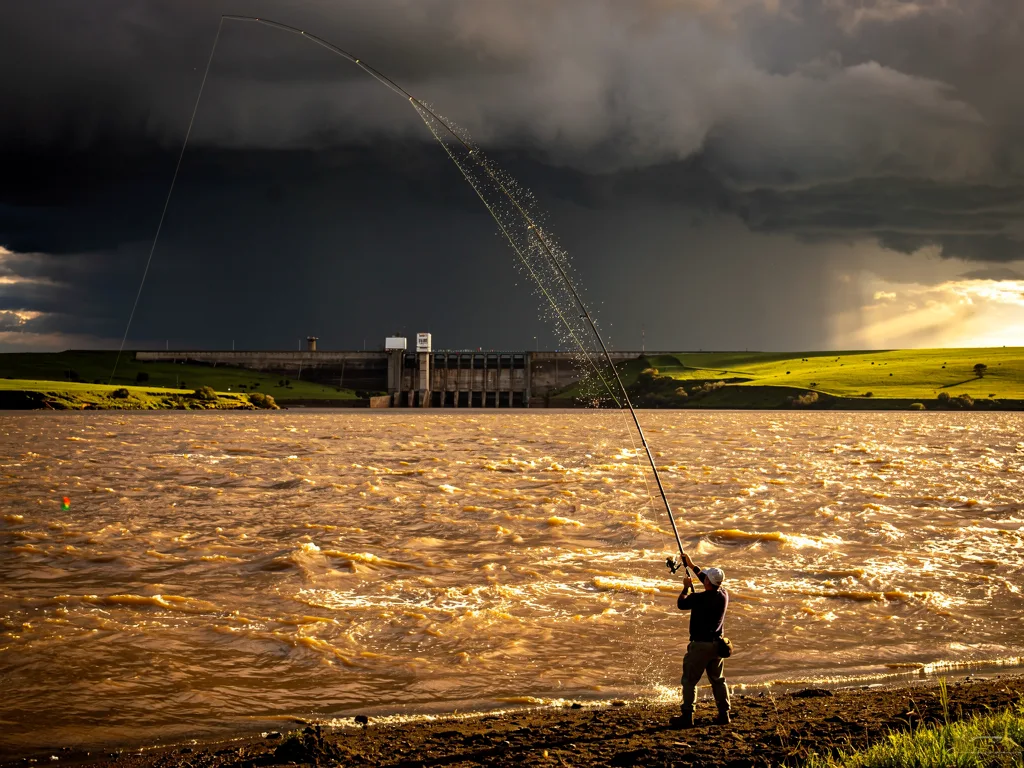
Imagine casting your line into crystal-clear waters beneath a golden sunset, the fierce pull of a golden dorado testing every ounce of your skill and strength. Welcome to Uruguay – one of South America's best-kept angling secrets, where world-class freshwater and marine fishing meet remarkably simple regulations. Fishing in Uruguay offers something extraordinary: no recreational fishing license required, diverse species from aggressive dorado to prized black drum, and pristine waters that range from the mighty Río Uruguay to the wild Atlantic coast.
This comprehensive guide covers everything international anglers need to know: permit requirements (spoiler: you can start fishing immediately), the top destinations that draw serious fishermen from around the globe, species you'll encounter, and practical travel tips to make your fishing adventure seamless.
01Do You Need a Fishing License in Uruguay?
Great news for visiting anglers: Uruguay is one of the few countries worldwide where recreational sport fishing is completely FREE and does NOT require a license!
According to Article 44 of Law No. 19.175 (2013), "Sport fishing may be freely practiced, provided there are no prohibitions." This legislation makes Uruguay exceptionally angler-friendly – you can simply arrive, grab your gear, and start fishing from shore without any permit fees, applications, or bureaucratic procedures.
What This Means for International Visitors
Whether you're fishing from Montevideo's scenic Rambla, the rocky shores of Punta del Este, or the legendary waters of Salto Grande, recreational fishing is open to everyone. There are no fees to pay, no forms to complete, and no permits to obtain before wetting your line.
Exceptions: When You DO Need Permits
While recreational fishing is free, certain activities still require authorization:
| Activity | Permit Required? | Where to Obtain |
|----------|------------------|-----------------|
| Recreational/sport fishing | ❌ NO | Free to fish |
| Tournament fishing | ✅ YES | DINARA approval required |
| Commercial fishing | ✅ YES | DINARA offices |
| Fishing in protected areas | ✅ YES | Special authorization |
| Research/collecting | ✅ YES | DINARA scientific permit |
Tip: Even though no license is needed, all other regulations still apply – minimum sizes, closed seasons, prohibited methods, and protected areas. Familiarize yourself with these rules before fishing.
02Key Fishing Regulations in Uruguay
Prohibited Fishing Methods
The following fishing methods are strictly prohibited nationwide under Article 21 of Law 19.175:
Minimum Sizes and Catch Limits
Uruguay regulates minimum sizes for several important commercial and sport species. These apply to all anglers, including tourists:
| Species | Common Name | Size Regulation | Tolerance |
|---------|-------------|-----------------|-----------|
| Corvina blanca | White Croaker | Regulated minimum | 5% tolerance |
| Pescadilla | Striped Weakfish | Regulated minimum | 5% tolerance |
| Merluza | Hake | Regulated minimum | 15% tolerance |
| Pez espada | Swordfish | Regulated minimum | 15% tolerance |
Protected Species
Certain species have special protections that all anglers must respect:
Closed Seasons (Vedas)
Uruguay implements seasonal closures (vedas) to protect spawning populations. These vary by species and region – check the DINARA website for current closures before your trip. The golden dorado spawning season (late October to early January) is particularly important: while fishing remains permitted, practicing catch-and-release is strongly encouraged during this period.
Where Fishing is Prohibited
Certain areas are completely off-limits to all fishing:
03The Best Fishing Destinations in Uruguay
Uruguay offers remarkable diversity for a relatively small country. From powerful river systems teeming with aggressive predators to an Atlantic coastline rich with marine species, you'll find exceptional fishing experiences throughout the territory.
🥇 Río Uruguay & Salto Grande – The Golden Dorado Capital
Location: Near Salto city, approximately 500 km (310 miles) from Montevideo
The Salto Grande area on the Río Uruguay has earned legendary status among serious anglers worldwide. This is golden dorado territory – one of South America's most spectacular game fish, known for explosive strikes, acrobatic fights, and brute strength that belies its streamlined body.
What Makes It Special:
The tailwaters below the Salto Grande Dam create perfect conditions for trophy dorado. Cold, oxygen-rich water released from the dam attracts baitfish, which in turn draw hungry dorado. Multiple IGFA world records have been set in these waters, and specimens exceeding 20 kg (44 lb) are caught regularly.
The restricted zone immediately below the dam offers the most productive fishing, with strict limits on boat numbers ensuring a quality experience. Only two boats are permitted per fishing shift, making advance booking essential.
Key Species:
| Species | Average Weight | Maximum | Best Technique | Peak Season |
|---------|----------------|---------|----------------|-------------|
| Golden Dorado | 5-15 kg | 20+ kg | Fly fishing, spinning, trolling | Nov-Mar |
| Surubí | 10-30 kg | 50 kg | Bottom fishing, live bait | Oct-Mar |
| Boga | 1-3 kg | 5 kg | Float fishing, bait | Year-round |
| Bagre (Catfish) | 1-5 kg | 10 kg | Bottom fishing | Year-round |
| Patí | 5-15 kg | 20 kg | Bottom fishing | Year-round |
Prime Spots Within the Area:
1. Salto Chico rapids – Fast water perfect for sight-fishing
2. Restricted Zone below dam – Requires permit; book through operators
3. Ayuí Grande stream mouth – Productive mixed fishery
4. Dayman River confluence – Good for variety species
Fishing Techniques:
Golden dorado demand respect and the right approach. These aggressive predators have razor-sharp teeth that slice through standard fishing line. Wire leaders are essential. Popular techniques include:
Best Time to Visit:
November through March (Uruguay summer) offers the most consistent action, with warm temperatures activating the dorado's metabolism. However, year-round fishing is possible, and local operators know where fish hold during cooler months.
Pro Tips from Local Experts:
🥈 Punta del Este & Maldonado – Premier Marine Fishing
Location: Southeast coast, 140 km (87 miles) from Montevideo
Punta del Este is Uruguay's most famous beach destination, but beneath the glamorous surface lies serious fishing potential. The confluence of the Río de la Plata and Atlantic Ocean creates nutrient-rich waters that attract an impressive variety of marine species.
What Makes It Special:
This region boasts Uruguay's most developed fishing infrastructure. Excellent charter services operate from the marina, offering everything from half-day inshore trips to full-day offshore expeditions for tuna and billfish. The variety is remarkable: one day you might catch croaker from the beach, the next battle a shark offshore.
Key Fishing Areas:
Species Calendar:
| Season | Months | Target Species | Best Method |
|--------|--------|----------------|-------------|
| Summer | Dec-Feb | Corvina blanca, Pescadilla, Pejerrey | Shore fishing, light tackle |
| Autumn | Mar-May | Burriqueta, Brotola | Bottom fishing from jetties |
| Winter | Jun-Aug | Brótola, Congrio | Deep water jigging |
| Spring | Sep-Nov | Corvina negra, Mero | Surf casting, boat fishing |
Offshore Fishing:
From November through May, offshore boats target:
Charter Pricing (2026):
| Trip Type | Duration | Price Range (EUR) | Price Range (USD) |
|-----------|----------|-------------------|-------------------|
| Half-day inshore | 4-5 hours | €600-650 | $650-700 |
| Full-day nearshore | 8 hours | €1,000-1,050 | $1,100-1,150 |
| Full-day offshore | 10-12 hours | €2,000-2,100 | $2,150-2,300 |
🥉 Rocha Coast – Wild Atlantic Experience
Location: Eastern coast, 220-250 km (135-155 miles) from Montevideo
For anglers seeking a more rugged, authentic experience, the Rocha coast delivers pristine wilderness fishing. This less-developed region offers excellent shore fishing opportunities and a rich marine ecosystem that remains largely undiscovered by international tourists.
What Makes It Special:
The Rocha coastline stretches for over 100 km (60 miles) of wild Atlantic beaches, rocky points, and protected lagoons. Cabo Santa María at La Balconada offers spectacular ocean fishing from a rocky peninsula, while the coastal lagoons provide sheltered waters for smaller species.
Top Spots:
1. Cabo Santa María (La Balconada) – Dramatic rocky peninsula; excellent for corvina negra, grouper, and wreckfish
2. Arroyo Valizas – River mouth with predator species including tararira
3. Barra de Valizas – Beach fishing for corvina
4. Laguna Garzón – Sheltered lagoon fishing
Target Species:
| Species | Weight Range | Season | Technique |
|---------|--------------|--------|-----------|
| Corvina negra | 5-15+ kg | Dec-Mar | Surf casting |
| Shark (various) | 10-50+ kg | Oct-Dec | Heavy tackle |
| Mero (Grouper) | 3-15 kg | Year-round | Bottom fishing |
| Garopa (Wreckfish) | 2-10 kg | Year-round | Jigging |
| Sargo (Sea Bream) | 1-5 kg | Year-round | Float fishing |
Best Seasons:
Important Safety Note: Red tide (marea roja) warnings are occasionally issued for the Rocha region. These harmful algal blooms can make shellfish and certain fish species unsafe to eat. Always check the DINARA website for current alerts before consuming your catch.
Montevideo's Rambla – Urban Shore Fishing
Location: Capital city waterfront
Not every angler has time for expedition-style fishing. If you're staying in Montevideo for business or tourism, excellent shore fishing is available literally steps from your hotel.
What Makes It Special:
Montevideo's Rambla – the scenic coastal avenue – stretches over 22 km (13.5 miles), providing continuous public access to the Río de la Plata. You can fish before breakfast, during lunch breaks, or in the evening after meetings.
Best Locations:
1. Escollera Sarandí – Historic stone breakwater near the Old Town
- Fish both sides: harbor and open water
- Species: Pejerrey, Pescadilla, Burriqueta, occasional Corvina
- Easy access from downtown hotels
2. Punta Carretas – Peninsula with lighthouse
- Mixed terrain (rocky and muddy bottom)
- Species: Brótola, Burriqueta, Pejerrey
- Less crowded than central locations
Typical Catch:
| Species | Size | Frequency | Best Time |
|---------|------|-----------|-----------|
| Pejerrey (Silverside) | 200-500 g | Very common | Year-round |
| Corvina blanca | 1-5 kg | Seasonal | Summer |
| Brótola (Flatfish) | 0.5-2 kg | Common | Year-round |
| Burriqueta | 0.5-2 kg | Common | Autumn/Winter |
Best Times:
Early morning and evening produce the best results. Night fishing with lights attracts pejerrey in large numbers.
Río Negro Basin – Tararira Territory
Location: Central Uruguay, Durazno and Soriano departments
The Río Negro basin offers something unique: the tararira tornasol, a native species found almost exclusively in Uruguayan waters. This fish displays stunning iridescent coloring (tornasol means "iridescent" in Spanish) and fights aggressively.
What Makes It Special:
The Río Negro is Uruguay's longest river entirely within national territory. Its basin includes numerous tributaries, streams, and lagoons that provide diverse fishing environments. Near the Represa de Palmar (Palmar Dam), anglers can also target large dorado.
Key Species:
| Species | Weight | Characteristics | Best Method |
|---------|--------|-----------------|-------------|
| Tararira tornasol | Up to 10 kg | Native, iridescent coloring | Surface lures |
| Dorado | 5-15 kg | Aggressive, strong fighter | Fly fishing |
| Tararira común | 1-5 kg | Common variety | Live bait |
Best Spots:
Techniques:
Season:
August through March is the primary season. Note that catch-and-release is mandatory for dorado in this region.
🎣 Fishing tours in Uruguay — Book guided fishing tours with local experts who know the best waters and techniques.
04Fishing Tours & Guided Experiences in Uruguay
While shore fishing is free and accessible, hiring a guide dramatically improves your chances – especially for golden dorado, where local knowledge is essential.
Multi-Day Dorado Packages
Wild Waters Uruguay (uruwild.com.uy)
Specializes in northern rivers expeditions for dorado and tararira. Their packages include lodge accommodation, all meals, guided fishing, and transfers. The focus is on wading clear waters and sight-fishing, providing an immersive experience in Uruguay's wild interior.
River Plate Anglers / Fishing With Larry
One of the most established operators in the Salto Grande region:
| Package | Duration | 2026 Rates |
|---------|----------|------------|
| Standard (Apr-Oct) | 5 nights, 4 fishing days | From $5,600 USD |
| Peak Season (Nov-Mar) | 5 nights, 4 fishing days | From $6,600 USD |
What's Included:
Charter Fishing in Punta del Este
For marine fishing, several operators run from the Puerto de Punta del Este marina:
| Trip Type | Duration | Price Range |
|-----------|----------|--------------|
| Half-day inshore | 4-5 hours | €600-650 (approx. $650-700 USD) |
| Full-day nearshore | 8 hours | €1,000-1,050 (approx. $1,100-1,150 USD) |
| Full-day offshore | 10-12 hours | €2,000-2,100 (approx. $2,150-2,300 USD) |
Offshore trips (November to May) target tuna, amberjack, and billfish species.
🚤 Charter fishing in Uruguay — Find and book charter boats with experienced captains who know where the fish are biting.
DIY vs. Guided: Which is Right for You?
| Factor | DIY Shore Fishing | Guided Trip |
|--------|-------------------|-------------|
| Cost | Minimal (equipment only) | $500-6,600+ USD |
| Knowledge required | High | None needed |
| Access to prime spots | Limited | Full access |
| Equipment | Bring your own | Usually provided |
| Best for | Experienced anglers, shore species | Trophy dorado, offshore |
05Fish Species Guide: Freshwater & Marine
Freshwater Species
Uruguay's rivers host some of South America's most exciting freshwater species:
| Species | Scientific Name | Max Weight | Best Location | Characteristics |
|---------|-----------------|------------|---------------|-----------------|
| Golden Dorado | *Salminus brasiliensis* | 20+ kg | Río Uruguay, Salto Grande | Aggressive, acrobatic, sharp teeth |
| Surubí | *Pseudoplatystoma* spp. | 50 kg | Río Uruguay | Large catfish, bottom dweller |
| Tararira tornasol | *Hoplias malabaricus* | 10 kg | Río Negro basin | Native, iridescent coloring |
| Boga | *Megaleporinus* spp. | 3-5 kg | All rivers | Strong fighter, vegetarians |
| Patí | *Luciopimelodus pati* | 15 kg | Río Uruguay | Large catfish |
| Bagre | Various species | 5 kg | All waters | Common catfish |
Marine Species
The Atlantic coast and Río de la Plata estuary offer diverse marine fishing:
| Species | Spanish Name | Best Season | Method | Size Range |
|---------|--------------|-------------|--------|------------|
| Black Drum | Corvina negra | Dec-Mar | Surf casting | 5-15+ kg |
| White Croaker | Corvina blanca | Summer | Light tackle | 1-5 kg |
| Striped Weakfish | Pescadilla | Year-round | Jigging | 1-4 kg |
| Flatfish | Brótola | Year-round | Bottom fishing | 0.5-2 kg |
| Silverside | Pejerrey | Year-round | Light tackle | 200-500 g |
| Shark | Tiburón | Oct-Dec | Heavy tackle | 10-50+ kg |
| Grouper | Mero | Year-round | Bottom fishing | 3-15 kg |
06Practical Travel Information for Anglers
Getting to Uruguay
By Air:
By Ferry:
By Land:
Visa Requirements
Uruguay maintains a generous visa policy for tourists:
| Nationality | Visa Requirement | Maximum Stay |
|-------------|------------------|--------------|
| EU citizens | No visa needed | 90 days |
| United States | No visa needed | 90 days |
| United Kingdom | No visa needed | 90 days |
| Canada | No visa needed | 90 days |
| Australia | No visa needed | 90 days |
| Japan | No visa needed | 90 days |
| Brazil | No visa needed | Unlimited (MERCOSUR) |
| Argentina | No visa needed | Unlimited (MERCOSUR) |
Tip: Visa regulations can change. Always verify requirements with the Uruguayan consulate in your country before traveling.
Best Fishing Seasons
Uruguay's seasons are opposite to the Northern Hemisphere:
| Season | Months | Weather | Best For |
|--------|--------|---------|----------|
| Summer | Dec-Feb | Hot (25-35°C) | Dorado peak, marine fishing |
| Autumn | Mar-May | Mild (15-25°C) | Transition, varied species |
| Winter | Jun-Aug | Cool (5-15°C) | Brótola, bottom fish |
| Spring | Sep-Nov | Warming (15-25°C) | Corvina negra, shark |
Peak Dorado Season: November through March
Best Marine Fishing: October through April
Shark Season: October through December
Equipment Recommendations
What to Bring:
| Item | Specification | Purpose |
|------|---------------|---------|
| Fly rod | 7-9 weight | Dorado, freshwater species |
| Spinning rod | Medium-heavy | Surf casting, versatile use |
| Braided line | 20-40 lb test | Strength for toothy species |
| Wire leaders | Essential | Dorado teeth protection |
| Surface lures | Poppers, spoons | Topwater action |
| Jigs | Various weights | Bottom fishing |
🛒 Fishing equipment for Uruguay — Pack the right gear for dorado with their razor-sharp teeth and powerful fights.
What to Rent Locally:
Local Fishing Shops:
Language and Communication
Language Tips:
Spanish is essential in most fishing locations. While English is spoken at major hotels and some tour operators, rural areas and local fishing spots require basic Spanish.
Useful Fishing Terms:
| Spanish | English |
|---------|---------|
| Caña | Fishing rod |
| Carretel | Reel |
| Anzuelo | Hook |
| Carnada | Bait |
| Señuelo | Lure |
| Línea | Line |
| Pescar | To fish |
| Pescador | Fisherman |
| Embarcación | Boat |
| Guía | Guide |
Translation Apps: Download offline Spanish translation before traveling to remote areas.
Currency and Costs
Currency: Uruguayan Peso (UYU)
Approximate Exchange Rates (2026):
Tip: Credit cards are accepted in cities and tourist areas. Carry cash (Uruguayan pesos) for rural fishing locations, bait shops, and smaller establishments.
Approximate Costs:
| Item | Cost (UYU) | Cost (EUR) | Cost (USD) |
|------|-----------|------------|------------|
| Restaurant meal | 800-1,500 | €18-33 | $19-36 |
| Local beer | 200-350 | €4-8 | $5-8 |
| Bait (live) | 100-300 | €2-7 | $2-7 |
| Fuel per liter | 70-90 | €1.50-2 | $1.50-2 |
| Budget hotel/night | 2,500-4,000 | €55-90 | $60-95 |
| Mid-range hotel/night | 4,500-8,000 | €100-180 | $105-190 |
Health and Safety
Vaccinations: No special vaccinations required for Uruguay. Standard travel immunizations (hepatitis, tetanus) recommended.
Sun Protection: Uruguay's sun is intense, especially in summer. Bring high-SPF sunscreen, polarized sunglasses, and protective clothing.
Water: Tap water is safe to drink in most urban areas. In rural locations, ask locally or use bottled water.
Emergency Numbers:
🏨 Accommodation near fishing spots in Uruguay — Find hotels and lodges close to the best waters, from Montevideo to Salto.
07Regulations for Foreign Anglers
Bringing Fishing Equipment
Personal fishing gear for tourists generally faces no restrictions. However:
Exporting Your Catch
If you plan to bring fish home:
| Quantity | Requirements |
|----------|--------------|
| Personal consumption | Generally allowed |
| Large quantities | Export certificate from DINARA required |
| Vacuum-sealed/frozen | Accepted by most airlines |
Contact DINARA for current export regulations and obtain necessary certificates before your departure date.
Marine Mammal Protection
Uruguay takes marine mammal protection seriously. If you accidentally hook or encounter a whale, dolphin, or sea lion:
08Frequently Asked Questions
Is a fishing license required in Uruguay?
No. Recreational sport fishing is free and does not require a license in Uruguay. Article 44 of Law 19.175 states that sport fishing may be freely practiced. Simply arrive and start fishing from shore or book a charter boat – no permits needed.
What is the best fish to catch in Uruguay?
The golden dorado (Salminus brasiliensis) is Uruguay's premier sport fish. Known for aggressive strikes, acrobatic fights, and sizes up to 20+ kg, dorado in the Salto Grande area attract anglers from around the world. Marine species like black drum (corvina negra) and shark are also popular targets.
When is the best time to fish in Uruguay?
November through March (Uruguay summer) offers the best dorado fishing and excellent marine conditions. October through December is prime for sharks. Year-round fishing is possible, but winter (June-August) sees reduced activity and cooler temperatures.
Can tourists bring fish home from Uruguay?
Yes, for personal consumption quantities. Vacuum-sealed and frozen fish are accepted by most airlines. For larger quantities, obtain an export certificate from DINARA before departure.
Are fishing guides necessary in Uruguay?
For shore fishing in accessible locations like Montevideo's Rambla, guides aren't necessary. However, for trophy dorado fishing at Salto Grande, a guide is strongly recommended – they provide access to restricted zones, essential local knowledge, and dramatically improve success rates.
Is Uruguay safe for tourists?
Yes, Uruguay is considered one of South America's safest countries for tourists. Normal travel precautions apply. The biggest risks are sun exposure and water safety when fishing from rocks or boats.
What fishing gear should I bring to Uruguay?
Bring 7-9 weight fly rods for dorado, medium-heavy spinning rods for surf casting, 20-40 lb braided line, and essential: wire leaders for dorado's sharp teeth. Surface lures (poppers) and various jigs work well. Basic tackle and live bait are available locally.
Can I fish from shore in Montevideo?
Absolutely. Montevideo's Rambla provides over 22 km of publicly accessible waterfront. Popular spots include Escollera Sarandí (near Old Town) and Punta Carretas. Pejerrey, corvina, and brótola are common catches. Best times are early morning and evening.
09Conclusion
Uruguay offers something increasingly rare in the fishing world: world-class angling without bureaucratic barriers. The absence of license requirements for recreational fishing means you can focus on what matters – the thrill of the catch, the beauty of pristine waters, and the satisfaction of exploring one of South America's most welcoming destinations.
From the explosive power of golden dorado in the Río Uruguay to the wild Atlantic shores of Rocha, from convenient urban fishing in Montevideo to multi-day expeditions in the interior, Uruguay delivers diverse experiences for every angler. The country's stable democracy, safe travel environment, and reasonable costs make it an ideal destination for international fishermen seeking something different.
Plan your trip around your target species: November-March for dorado, October-December for sharks, and year-round for shore fishing along the Rambla. Whether you book a guided expedition or explore independently, respect the regulations, practice catch-and-release when appropriate, and discover why serious anglers are adding Uruguay to their bucket lists.
10Sources & Further Information
*Disclaimer: This article was compiled from official sources and is current as of January 2026. Fishing regulations can change without notice. Always verify current rules with DINARA and local authorities before fishing. Fishing World Guide assumes no responsibility for inaccuracies or changes to regulations. Catch-and-release is encouraged for sport fishing to preserve Uruguay's valuable fish populations for future generations.*
Recommended tours
Don't miss any fishing tips!
Get the best fishing destination recommendations weekly in your inbox.
No spam. Unsubscribe anytime.
Data incorrect?
Help us keep this article up to date — report outdated or incorrect information
More articles