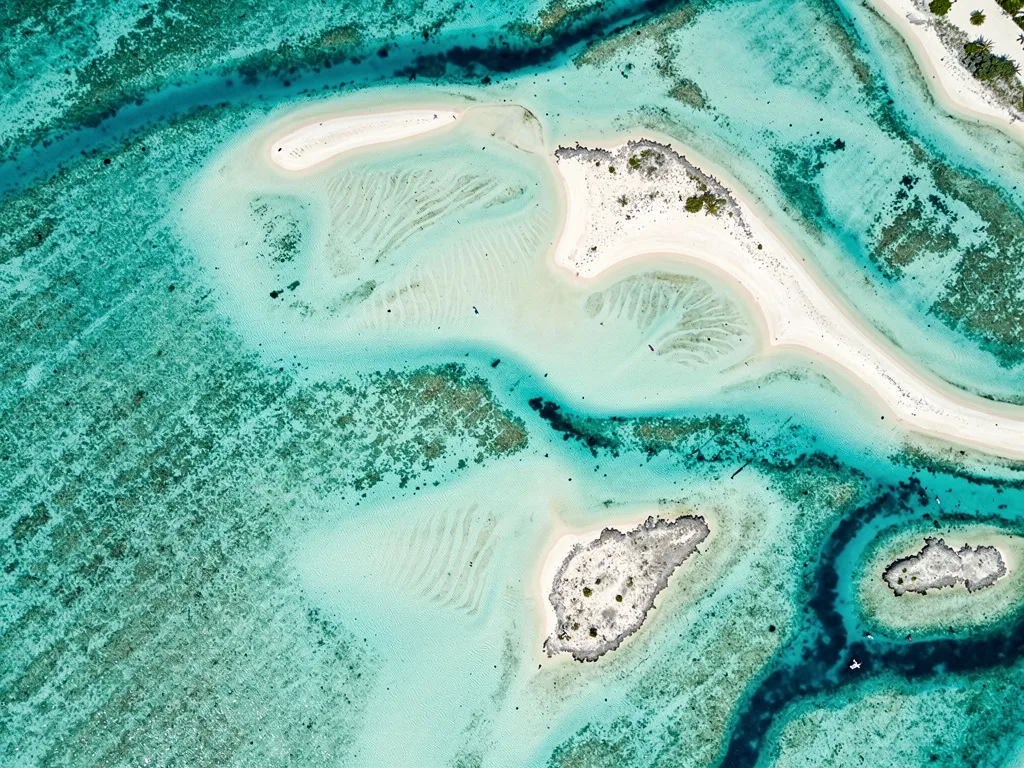
Imagine casting your line into crystal-clear turquoise waters above a coral reef, with the Caribbean sun warming your back and a bonefish darting across a white sand flat just meters away. The Turks and Caicos Islands (TCI) offer some of the most spectacular saltwater fishing in the entire world — from world-class bonefishing on the shallow Caicos flats to deep-sea encounters with blue marlin and yellowfin tuna just minutes offshore. But before you wet a line in these pristine waters, you need to understand the fishing license requirements and regulations that protect this extraordinary marine environment. This complete guide covers everything international visitors need to know about fishing permits in the Turks and Caicos Islands in 2026.
01Overview: Fishing in the Turks and Caicos Islands
The Turks and Caicos Islands are a British Overseas Territory located in the Atlantic Ocean, southeast of the Bahamas and north of Haiti and the Dominican Republic. The archipelago consists of two island groups — the Caicos Islands and the Turks Islands — surrounded by the third-largest coral reef system in the world.
Fishing here is exclusively saltwater fishing. There are no rivers or lakes, and therefore no freshwater fishing opportunities. What TCI lacks in freshwater variety, it more than makes up for in the extraordinary diversity and quality of its marine fisheries — from the famous shallow flats to the deep-blue offshore canyons.
Key fact: All recreational fishing in TCI is subject to a licensing requirement, and regulations are actively enforced. Penalties for non-compliance are severe.
02Fishing License Requirements in Turks and Caicos
Who Needs a Fishing License?
A recreational fishing license is required for every person on board a vessel who is 16 years of age or older and does not hold Turks and Caicos Islander Status. This applies regardless of whether that person is actively fishing or not — if fishing gear is present on the boat, everyone aboard who is not exempt must hold a valid license.
Important: Even if you are simply a passenger on a fishing charter and not personally holding a rod, you are legally required to have a license if you do not have TCI Islander Status. Reputable charter companies will usually arrange this on your behalf.
Vessel Registration
In addition to personal licenses, the vessel itself must be registered for fishing with the Department of Fisheries & Marine Resources Management before any legal fishing can take place. If you are booking a guided charter, this is handled by the charter operator. If you plan to fish from your own or a rented vessel, verify the registration status before heading out.
03Fishing License Types and Costs
Recreational fishing licenses in the Turks and Caicos Islands are available in three durations. Prices are set in USD (the official currency of TCI):
| License Type | Government Office Price | Marina/Charter Price | EUR (approx.) |
|---|---|---|---|
| 1-Day License | $10 USD | $10–$15 USD | €9–€14 |
| 30-Day License | $30 USD | $30–$35 USD | €28–€32 |
| Annual License | $60 USD | $60 USD | €55 |
| Lionfish License (1 Year) | $60 USD | $60 USD | €55 |
For context: A one-day fishing license at $10 USD costs roughly the same as a soft drink and snack at a Providenciales café — a negligible expense compared to the cost of a charter trip or travel to TCI.
Some charter companies offer a flat-rate boat license fee of $70 USD covering up to 6 persons, which can be more economical for groups.
Lionfish Special License
The invasive lionfish is the only species in TCI for which special collection rules apply. A separate lionfish hunting license is available for $60 USD (approximately €55) and is valid for one year. It must be obtained from the Department of Fisheries (located on South Dock Road, Providenciales). This license uniquely permits:
04Where to Buy a Fishing License in Turks and Caicos
Official Government Offices
Licenses can be purchased directly from:
- Phone: +1 (649) 338-4171
Marinas and Charter Companies
One-day and 30-day licenses are conveniently available at marinas across Providenciales. Key locations include:
Tip: Bring a government-issued photo ID (passport, national identity card, or driver's license) when purchasing your license, as issuers may request it. International visitors should bring their passport as standard.
Charter Arrangements
If you book a fishing charter, most reputable operators will organize your fishing license on your behalf and include it in the overall package or add it as a transparent fee. Always confirm this when booking to avoid any confusion upon arrival.
05Fishing Regulations and Catch Rules
Understanding TCI's fishing regulations is essential — not just to avoid fines, but to help preserve one of the Caribbean's most pristine marine environments for future generations.
Daily Catch Limits
A recreational fishing license holder is permitted to keep:
Catch-and-Release Species
⚠️ All billfish and sharks are strictly catch-and-release only. This includes blue marlin, white marlin, sailfish, and swordfish. These species may not be retained under any circumstances.
Prohibited Methods
The following fishing methods are illegal for recreational anglers in TCI:
Closed Seasons
TCI actively manages its key species through seasonal closures. The approximate seasons are:
| Species | Open Season |
|---|---|
| Nassau Grouper | March 1 – November 30 |
| Lobster | August 1 – March 31 (approx. mid-August to April) |
| Conch | Mid-October – mid-July (approximate) |
| Stingrays / Flatfish | November – December |
Important: It is illegal to be in possession of Nassau Grouper outside of its open season. Always verify current season dates with the DECR before your trip, as exact dates may shift slightly year to year.
Minimum Size: Nassau Grouper
Nassau grouper must measure at least 21 inches (53 cm) to be legally retained by recreational anglers.
Protected Areas
Fishing and collecting marine products (including conch and lobster) is a criminal offense inside national parks and nature reserves. Key protected areas include:
If you are fishing independently (not with a guide), it is your personal responsibility to know the boundaries of protected areas. Download the TCI DECR maps or consult the DECR directly before your trip.
Penalties for Fishing Without a License
The penalties for non-compliance are extremely serious:
⚠️ Fishing without a valid license can result in a fine of up to $50,000 USD and/or up to 12 months imprisonment. This is not a formality — regulations are actively enforced.
06Best Fishing Waters and Spots in Turks and Caicos
The Caicos Flats — World-Class Bonefishing
The shallow saltwater flats surrounding the Caicos Islands (Providenciales, North Caicos, Middle Caicos, South Caicos, and East Caicos) are renowned among fly-fishing enthusiasts worldwide. The bonefishing here is genuinely world-class, with fish typically ranging from 4 to 11 lbs (1.8–5 kg). These crystal-clear flats also hold barracuda and tarpon.
Best approached with a specialist bonefish guide — local guides know the tidal patterns, read the flats expertly, and significantly increase your chances of success.
Deep-Sea and Offshore Waters
One of TCI's great advantages is proximity to deep water. Prime offshore fishing grounds are accessible in under 15 minutes by boat from Providenciales. The deep-sea catch list is extraordinary:
West Caicos and French Cay
Approximately 30 minutes by boat from Providenciales, the waters around West Caicos and French Cay are among the most productive deep-sea fishing locations in the entire Caribbean. Blue marlin, tuna, and wahoo are the primary targets.
Reef and Bottom Fishing
Reef fishing over TCI's extensive coral systems produces excellent table fish, including:
Shore Fishing
Shore fishing is possible, though more limited. Key spots on Providenciales include:
🎣 Fishing tours in Turks and Caicos Islands — Book guided fishing tours with local experts.
07Best Time to Fish in Turks and Caicos
While TCI offers exceptional fishing year-round, seasons do affect which species are most active:
By Season
| Season | Best Species | Notes |
|---|---|---|
| April–September (peak) | Blue marlin, white marlin, yellowfin tuna, bigeye tuna | Generally considered the prime overall season |
| November–March (winter) | Wahoo, sailfish, mahi-mahi | Cooler trade winds; excellent offshore action |
| Year-round | Mackerel, shark, bonefish, snapper, jacks | Consistent fishing throughout the year |
Hemisphere Perspective
Tip for weather planning: The Atlantic hurricane season runs June through November, with peak activity August–October. While fishing can still be excellent, monitor tropical storm forecasts and ensure your travel insurance covers weather disruptions.
08Practical Information for International Anglers
Getting There
Turks and Caicos Islands is served primarily by Providenciales International Airport (PLS), with direct flights from the US (Miami, New York, Charlotte), UK (London), and Canada (Toronto). Connections via Miami or Nassau are common for travelers from Europe, Asia, Australia, and South America.
Visa Requirements
TCI is a British Overseas Territory. Visa requirements depend on your nationality:
Always carry a valid passport and confirm return or onward travel arrangements, as these may be checked upon arrival.
Currency
The US Dollar (USD) is the official currency of the Turks and Caicos Islands. There is no need to exchange currency if you are carrying USD. Credit cards (Visa, Mastercard) are widely accepted at marinas, charter companies, and tourism businesses.
Approximate exchange rates (March 2026):
Language
The official language is English. There are no significant language barriers for English-speaking visitors. For non-English speakers:
Fishing Equipment and Bait
If you prefer to bring your own gear, check airline regulations for transporting rods and tackle. Alternatively, equipment is available locally:
Most effective local baits: Small pieces of conch or squid are consistently the top performers for reef and bottom fishing.
For charter trips, all equipment, snacks, drinks, and fishing licenses are typically included. Full-day (8-hour) and three-quarter-day (6-hour) charters generally include lunch. Some operators offer a beach BBQ where you can grill your catch on a secluded cay.
🛒 Fishing equipment for Turks and Caicos Islands — Find the right gear for your trip.
09Tips for Independent vs. Guided Fishing
Guided Charter Fishing (Recommended for Most Visitors)
Booking a guided charter is by far the most practical option for most international visitors:
Charters operate primarily from Providenciales, with options also available from Grand Turk, South Caicos, and Salt Cay.
Independent Fishing
If you plan to fish independently (from shore or your own/rented vessel):
1. Obtain your personal fishing license from a marina or DECR office
2. Ensure the vessel is registered for fishing with the Department of Fisheries
3. Study the current regulations, protected area boundaries, and closed seasons
4. Respect all catch limits and prohibited methods
5. Carry your license at all times when fishing
10Summary: Fishing License at a Glance
| Item | Details |
|---|---|
| Required age | 16 and over |
| 1-day license | $10 USD (€9) — government; $10–15 USD at marinas |
| 30-day license | $30 USD (€28) — government; $30–35 USD at marinas |
| Annual license | $60 USD (€55) |
| Lionfish license | $60 USD/year (€55) |
| Daily catch limit | 10 lbs (4.5 kg) fish + 1 trophy fish |
| Prohibited | Spear guns, Hawaiian slings, scuba collecting (except lionfish) |
| Catch-and-release only | All billfish and sharks |
| Penalty (no license) | Up to $50,000 USD fine and/or 12 months imprisonment |
| Official authority | DECR — www.gov.tc/decr/ |
11FAQ: Fishing in the Turks and Caicos Islands
Do I need a fishing license as a tourist in TCI?
Yes. All visitors aged 16 and over must hold a valid recreational fishing license when on board a fishing vessel, regardless of whether they are actively fishing. TCI Islander Status holders are exempt.
How much does a fishing license cost in Turks and Caicos?
A one-day license costs $10 USD (€9) at government offices or $10–15 USD at marinas. A 30-day license is $30 USD (€28) at government offices. An annual license costs $60 USD (€55). All prices are in US Dollars, the official TCI currency.
Can I buy a fishing license online?
As of 2026, fishing licenses in TCI are primarily purchased in person at marinas, the DECR office, or through charter companies. Always check the official DECR website (www.gov.tc/decr/) for any updates to online purchasing options.
Is there freshwater fishing in Turks and Caicos?
No. The Turks and Caicos Islands have no rivers or lakes. All fishing is saltwater fishing — from reef and bottom fishing to world-class bonefishing on the flats and offshore deep-sea fishing.
Can I use a spear gun for fishing in TCI?
No. Spear guns are prohibited for recreational anglers in TCI. The only exception is lionfish, which may be speared with a separate lionfish hunting license ($60 USD/year). Hawaiian slings are also not permitted for recreational fishing.
When is the best time to visit TCI for fishing?
April to September is generally considered the prime fishing season overall. However, winter months (November–March) are excellent for wahoo, mahi-mahi, and sailfish. Bonefish, snapper, mackerel, and jacks are available year-round.
Are there protected areas where fishing is banned?
Yes. Fishing and collecting marine products (including conch and lobster) is a criminal offense within national parks and nature reserves, including Columbus Landfall National Park (Grand Turk), Admiral Cockburn Land and Sea National Park (South Caicos), and several protected areas on Providenciales, North Caicos, and Middle Caicos.
Do I need a license if I'm just watching others fish on a charter?
Yes. If fishing equipment is present on the vessel, every person on board who is 16 or older and does not hold TCI Islander Status must have a valid recreational fishing license — whether or not they are personally fishing.
12Conclusion
The Turks and Caicos Islands represent one of the Caribbean's finest fishing destinations, offering world-class bonefishing, exhilarating offshore action, and productive reef fishing in waters of extraordinary clarity and beauty. With fishing licenses available at low cost directly from marinas and charter operators, getting legally set up to fish is simple and straightforward.
The key is preparation: purchase your license before heading out, know the current closed seasons for grouper, lobster, and conch, respect the catch limits, and stay well clear of protected areas. Whether you're chasing bonefish on the Caicos flats with a fly rod or trolling for blue marlin in the deep blue beyond the reef, TCI's marine environment will reward anglers who fish responsibly.
13Sources & Further Links
1. Department of Environment and Coastal Resources (DECR) — Official Government Website
2. Visit TCI — Official Fishing Licenses Guide
3. Visit TCI — Fishing in Turks and Caicos
4. Government of Turks and Caicos Islands — Official Portal
5. Turks and Caicos Islands Tourist Board — Official Tourism Site
6. DECR Fisheries Management — South Dock Road, Providenciales, +1 (649) 338-4171
7. Turks and Caicos Islands National Parks — Protected Areas Information
*Disclaimer: The information in this article reflects regulations and conditions as researched in 2026. Fishing regulations, license fees, seasons, and protected area boundaries in the Turks and Caicos Islands are subject to change at any time by the relevant authorities. Always verify current rules with the Department of Environment and Coastal Resources (DECR) or the Department of Fisheries & Marine Resources Management before your trip. FishingWorldGuide.com accepts no liability for errors, omissions, or changes in regulations after publication. This article is intended as a general guide only and does not constitute legal advice.*
Recommended tours
Don't miss any fishing tips!
Get the best fishing destination recommendations weekly in your inbox.
No spam. Unsubscribe anytime.
Read more
Data incorrect?
Help us keep this article up to date — report outdated or incorrect information
More articles