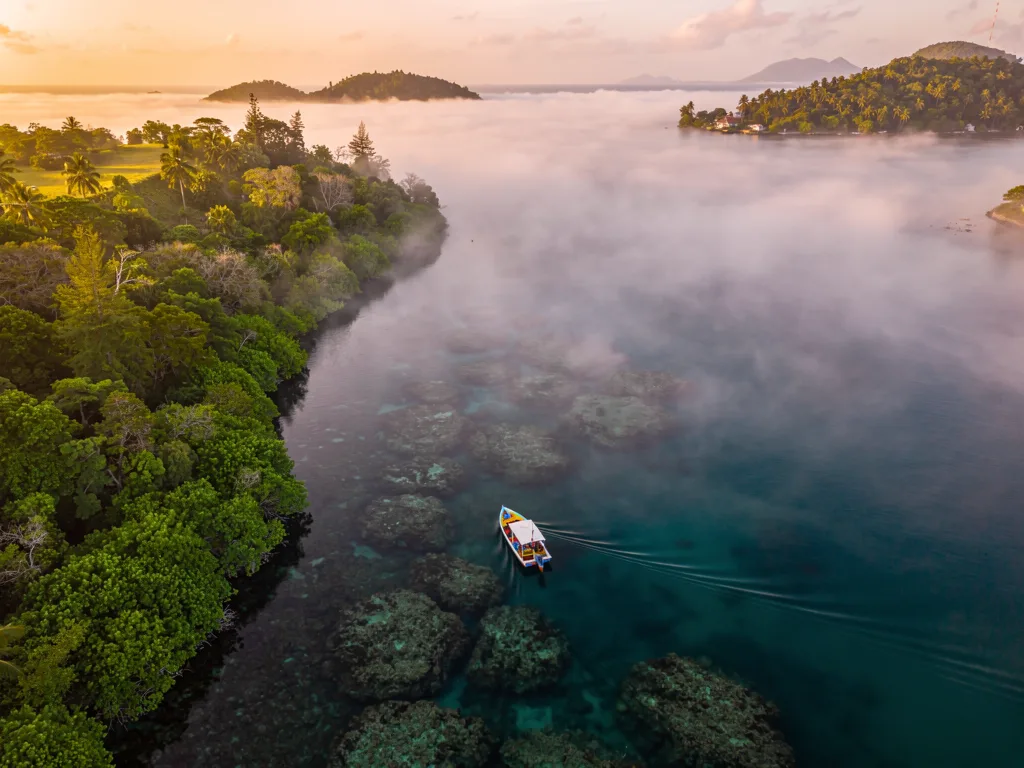
Imagine hooking a massive wahoo just minutes from shore, or watching a dorado explode out of the crystal-blue Caribbean on a perfect tropical morning. Fishing in Trinidad and Tobago delivers exactly this kind of heart-pounding experience — and it does so against a backdrop of rainforest-covered hills, turquoise reefs, and one of the most biodiverse marine environments in the entire Caribbean. Whether you're a seasoned offshore angler chasing billfish and tuna or a casual visitor casting a line from a sandy beach in Tobago, this twin-island nation is a genuinely outstanding fishing destination that remains off the radar for many international travelers.
This guide covers everything you need to know: fishing permits and regulations, the best spots, target species, guided tours, and practical travel tips for anglers flying in from Europe, North America, Asia, or beyond.
01Why Fish in Trinidad and Tobago?
Trinidad and Tobago sits at the southern edge of the Caribbean, just 11 km (7 miles) off the northeast coast of Venezuela. This unique geographic position means the islands benefit from nutrient-rich upwellings from the Orinoco River delta, which funnel into the surrounding waters and create exceptional conditions for pelagic fish. The result? An extraordinary variety of species, from world-class offshore gamefish to abundant inshore and reef dwellers.
Tobago, the smaller and quieter of the two islands, is particularly celebrated among anglers for its accessible blue water and relaxed atmosphere. Trinidad, the larger and more urban island, offers a different flavor — vibrant local fishing culture, lively fish markets, and deep-sea trips departing from ports like Chaguaramas.
Top reasons to fish Trinidad and Tobago:
02Fishing Licenses and Permits in Trinidad and Tobago
This is where things get a little complicated — and being well-informed before you arrive is genuinely important.
Tobago: Essentially No License Required for Recreational Anglers
The good news for most visitors heading to Tobago: recreational anglers do not need a rod license or fishing permit to fish around the island. This is confirmed by local sources and long-standing practice, making shore fishing and casual recreational angling essentially free and hassle-free.
However, there is one important exception: all fishing is strictly prohibited in the Marine Park at Bon Accord Lagoon / Buccoo Reef. This protected area around Tobago's southwest coast is completely off-limits for any type of fishing.
Trinidad: Check Before You Go
For Trinidad, the picture is less clear. Some sources indicate that visitors wishing to fish may need to obtain a fishing permit from the Ministry of Agriculture, Land and Fisheries, while others — particularly those referencing charter operations — suggest no license is required when fishing with a licensed charter operator.
Tip: The safest approach is to contact the Fisheries Division directly before your trip to confirm current requirements. Contact details:
- Ministry of Agriculture, Land and Fisheries — Fisheries Division
- Address: #35 Cipriani Boulevard, Newtown, Port of Spain
- Tel: +1 (868) 623-6028 / 623-8525
- Email: fishdiv@gov.tt
- Website: agriculture.gov.tt
The New Fisheries Management Bill
It's worth noting that Trinidad and Tobago's fisheries legislation is in a period of transition. The Fisheries Management Bill 2020 was introduced in Parliament to modernize and replace the original Fisheries Act of 1916 (Chapter 67:51). Once enacted, this legislation may introduce new licensing requirements, updated size limits, and stronger enforcement mechanisms. Check for updates before your visit, as the regulatory landscape may have evolved.
Tip: When booking a fishing charter, ask your operator directly whether any permits are included in the trip price. Many professional charter captains handle the paperwork for their guests as part of the service.
03Fishing Regulations: What Every Angler Must Know
Whether you're fishing from shore or offshore, these rules apply throughout Trinidad and Tobago's waters.
Minimum Size Limits
The following minimum size limits are in effect to protect fish stocks and ensure sustainable fishing:
| Species | Minimum Size |
|---|---|
| Kingfish (wahoo) | 30.5 cm / 12 inches |
| Spanish mackerel | 30.5 cm / 12 inches |
| Grouper | 30.5 cm / 12 inches |
| Codfish | 30.5 cm / 12 inches |
| Cola, redfish, salmon | 20 cm / 8 inches |
| Dorado (mahi-mahi) | 80 cm / 31.5 inches |
| Barracuda | 38 cm / 15 inches |
| Lobster | Min. carapace length 9 cm / 3.5 inches; min. tail weight 198 g / 7 oz |
Always measure your catch before keeping it, and release undersized fish carefully.
Prohibited Practices
Marine Protected Areas
Two key protected zones are strictly off-limits for all fishing activity:
1. Buccoo Reef / Bon Accord Lagoon Marine Park (Tobago): All fishing prohibited year-round
2. North-East Tobago Marine Protected Area: Covers nearly 60,000 hectares of water, extending approximately 10 km (6 miles) northwest of Tobago. No fishing or collection of marine life is permitted at any time.
These areas are actively patrolled, and violations can result in serious penalties.
Sea Turtle Protection
Trinidad and Tobago's waters are important nesting grounds for several sea turtle species. All sea turtles are fully protected by law. It is illegal to:
If you accidentally hook a turtle, release it immediately and carefully. Do not remove it from the water unless it requires assistance.
04Target Species: What You Can Catch
The waters around Trinidad and Tobago offer an impressive diversity of fish, from blue-water speedsters to hard-fighting reef dwellers.
Offshore Pelagic Species
Reef and Inshore Species
🎣 Fishing tours in Trinidad and Tobago — Book guided fishing tours with local experts.
05Best Fishing Spots in Trinidad and Tobago
Tobago
Tobago is the undisputed star for visiting sport anglers. The island sits close to deep water — you can reach blue-water depths within minutes of leaving the harbor — and the fishing pressure is relatively low by Caribbean standards.
Speyside and the Northeast
The village of Speyside on Tobago's northeast coast is one of the most exciting fishing areas in the entire Caribbean. This is where the North Atlantic and Caribbean currents converge, creating upwellings that concentrate baitfish and attract everything that eats them. The waters off Speyside hold excellent populations of wahoo, tuna, and dorado, and the scenery — with Little Tobago Island (home to nesting red-billed tropicbirds) visible in the background — is simply spectacular.
Charlotteville and Man O' War Bay
The fishing village of Charlotteville in Tobago's far northeast is one of the most picturesque spots imaginable. The bay is sheltered, the local fishermen are welcoming, and the surrounding waters offer excellent reef fishing alongside decent offshore opportunities. This is a great place to hire a local pirogue (traditional fishing boat) for an affordable inshore fishing adventure.
Buccoo and Crown Point (Tobago's Southwest)
While the reef at Buccoo is a no-go for fishing (it's a protected marine park), the waters just outside the protected zone — particularly around Buccoo Bay and toward Crown Point — offer productive fishing for jacks, mackerel, and reef species. Many of Tobago's charter operations are based near Crown Point, close to the main airport.
Store Bay and Pigeon Point
The waters between Store Bay and Pigeon Point see consistent fishing activity, particularly for smaller reef and inshore species. The famous Pigeon Point beach is one of Tobago's most beautiful, making a morning fishing trip followed by an afternoon on the beach an irresistible combination.
Trinidad
Trinidad's fishing scene is centered primarily on the northwest of the island, where the Chaguaramas Peninsula hosts most of the island's serious sport fishing operations.
Chaguaramas and the Bocas Islands
The Bocas del Dragón (Dragon's Mouth) — the string of islands and channels between Trinidad's northwest and Venezuela — creates some fascinating fishing terrain. Strong currents, rocky underwater structures, and deep channels concentrate fish, including large grouper, snapper, and the occasional tarpon. Offshore trips departing from Chaguaramas can reach productive wahoo and tuna grounds in under an hour.
The East and South Coasts
Trinidad's east coast, influenced by the Orinoco outflow, has a different character — more estuarine and productive for inshore species. Tarpon fishing in river mouths and mangrove systems is possible here, though access requires local knowledge.
06Best Time to Fish in Trinidad and Tobago
Trinidad and Tobago lies just 10–11 degrees north of the equator, giving it a relatively stable tropical climate year-round. However, there are distinct wet and dry seasons that affect fishing conditions.
Dry Season (January–May): Prime Time
The dry season from January through May is widely considered the best time for fishing, particularly offshore. Seas are calmer, visibility is excellent, and fish activity is at its peak. This is the optimal window for targeting wahoo, tuna, and dorado offshore.
Wet Season (June–December): Still Good, with Caveats
The wet season brings more rainfall and occasionally rougher seas, but fishing remains productive. Many species actually feed more aggressively during the pre-storm conditions.
Note for visitors from the Southern Hemisphere: If you're traveling from Australia, New Zealand, South Africa, or South America, Trinidad and Tobago's dry season (January–May) corresponds to your summer/autumn, making it a natural time to plan a northern hemisphere fishing adventure.
07Guided Fishing Tours and Charter Experiences
Trinidad and Tobago has a growing charter fishing industry, particularly on Tobago, with several professional operations offering everything from half-day reef fishing to full-day offshore expeditions targeting big pelagics.
What to Expect
Most charter operations offer:
Charter Prices
Based on available information from booking platforms, pricing in Trinidad and Tobago is reasonable by Caribbean standards:
| Trip Type | Approximate Cost |
|---|---|
| Shared/budget charter (per person) | from USD $85–$150 / EUR €80–€140 |
| Half-day private charter | USD $300–$500 / EUR €280–€460 |
| Full-day private offshore charter | USD $600–$1,000+ / EUR €560–€920+ |
| Full-day shared charter | USD $150–$250 pp / EUR €140–€230 pp |
*Note: Prices vary by operator and season. The above are approximate ranges from booking platforms as of 2026.*
Compared to charter fishing in Florida, the Bahamas, or the Canary Islands, Trinidad and Tobago offers excellent value for money, particularly for offshore big-game fishing.
Finding a Charter
The most reliable way for international visitors to book fishing charters is through reputable online booking platforms. FishingBooker lists verified charter operators in Trinidad and Tobago with real reviews, transparent pricing, and secure booking. GetMyBoat is another option.
When booking independently, ask your operator:
🚤 Charter fishing in Trinidad and Tobago — Find and book charter boats with experienced captains.
08Practical Travel Information for International Visitors
Visas and Entry Requirements
Trinidad and Tobago has a relatively open visa policy for most Western nationals:
Always verify entry requirements with the official Trinidad and Tobago Immigration Division or your nearest embassy before travel, as policies can change.
All visitors need a valid passport (at least 6 months validity beyond your travel dates), a return or onward ticket, and proof of accommodation.
Getting There
Trinidad's Piarco International Airport (POS) is the main international hub, with direct connections from:
Tobago's Arthur Napoleon Raymond Robinson International Airport (TAB) receives some direct international flights (mainly from the UK) and frequent inter-island flights from Trinidad (30-minute flight).
Inter-island travel: Caribbean Airlines operates frequent flights between Trinidad and Tobago. The ferry between Port of Spain and Scarborough is another option (roughly 2.5–4 hours, depending on the service).
Getting Around
Currency and Costs
The local currency is the Trinidad and Tobago Dollar (TTD). As of 2026:
Typical costs:
Trinidad and Tobago is notably affordable compared to many Caribbean islands. Tobago in particular offers excellent value, with fewer crowds and lower prices than destinations like Barbados or St. Lucia.
Language
English is the official language of Trinidad and Tobago, making it one of the most accessible Caribbean destinations for anglers from English-speaking countries. Local guides and charter captains communicate in English, and navigation apps and Google Maps work well throughout the islands.
Health and Safety
🏨 Accommodation near fishing spots in Trinidad and Tobago — Find hotels and lodges close to the best waters.
09Fishing Equipment and What to Bring
What Charter Operators Provide
Most professional charter operations in Trinidad and Tobago supply:
What to Bring Yourself
Even when tackle is provided, experienced anglers often prefer to bring their own:
If you plan to fish independently from shore or rent gear locally, bring your own reels and preferred terminal tackle — selection in local shops can be limited compared to the US or European markets.
🛒 Fishing equipment for Trinidad and Tobago — Find the right gear for your trip.
10Conservation and Responsible Fishing
Trinidad and Tobago's marine environment is extraordinarily rich, but it faces the pressures that affect coral reef ecosystems worldwide: overfishing, climate change, and habitat degradation. As a visiting angler, you have an important role to play.
Please follow these principles:
The fishingtnt.com conservation page provides further guidance on responsible fishing practices specific to Trinidad and Tobago.
11FAQ: Fishing in Trinidad and Tobago
Do I need a fishing license to fish in Tobago?
For recreational angling in Tobago, no rod license or fishing permit is currently required. However, fishing is strictly prohibited in the Buccoo Reef / Bon Accord Lagoon Marine Park and the North-East Tobago Marine Protected Area. Always confirm the latest requirements before your trip.
Do I need a permit to fish in Trinidad?
This is less clear. Some sources suggest visitors may need a permit from the Ministry of Agriculture, Land and Fisheries. We strongly recommend contacting the Fisheries Division directly at fishdiv@gov.tt or +1 (868) 623-6028 before your visit. Charter operators can also clarify whether permits are needed for their trips.
What is the best time of year to fish in Trinidad and Tobago?
The dry season (January to May) offers the best conditions, particularly for offshore fishing. Seas are calmer, visibility is better, and species like wahoo and dorado are highly active. Fishing is possible year-round, but the wet season (June–December) can bring rougher conditions on some days.
What species can I catch?
Offshore species include wahoo, yellowfin and blackfin tuna, dorado (mahi-mahi), blue marlin, white marlin, and sailfish. Reef and inshore species include grouper, snapper, barracuda, crevalle jack, tarpon, and Spanish mackerel.
How much does a fishing charter cost in Trinidad and Tobago?
Shared charters start from around USD $85–150 (EUR €80–140) per person. Full-day private offshore charters typically range from USD $600–1,000+ (EUR €560–920+). Trinidad and Tobago is generally more affordable than comparable Caribbean charter destinations.
Can I bring my own fishing equipment?
Yes. Most charter operators provide tackle, but you are welcome to bring your own rods, reels, and terminal tackle. Check airline policies for transporting fishing rods (they usually need to be in a hard case and may incur baggage fees). Tackle shops exist in Port of Spain and Scarborough, but selection may be limited.
Is spearfishing allowed in Trinidad and Tobago?
Spearfishing is prohibited around the Buccoo Reef area. Restrictions may also apply in other marine protected areas. Check with the Fisheries Division for current spearfishing rules before your trip.
Are there any visa requirements I should know about?
Citizens of the EU, US, UK, Canada, Australia, and New Zealand generally enjoy visa-free access for up to 90 days. Check current requirements with your nearest Trinidad and Tobago embassy, as policies may vary.
12Conclusion: Cast Your Line in the Caribbean's Hidden Gem
Trinidad and Tobago may not be the first name that comes to mind when international sport fishing is discussed, but that is precisely part of its appeal. These islands offer genuine offshore fishing excitement, outstanding biodiversity, an authentic Caribbean atmosphere, and real value for money — without the overcrowding and sky-high prices of more famous Caribbean fishing destinations.
Whether you're dreaming of a wahoo exploding out of the deep blue off Speyside, or simply want to cast a line from a spectacular beach while the sun sets over the Caribbean, Trinidad and Tobago delivers. Book your charter, pack your sunscreen, and get ready for an unforgettable fishing adventure in one of the region's most rewarding and underrated destinations.
13Sources & Further Links
*Disclaimer: The information in this article is provided for general guidance purposes only. Fishing regulations, permit requirements, fees, and protected area boundaries in Trinidad and Tobago are subject to change, particularly in light of the pending Fisheries Management Bill. Always verify current requirements with the Trinidad and Tobago Fisheries Division (fishdiv@gov.tt) and your charter operator before your visit. Neither FishingWorldGuide.com nor its authors accept responsibility for errors, omissions, or changes in regulations that may have occurred after publication. This article was last updated in 2026.*
Recommended tours
Fishing trips in Trinidad and Tobago
Curated tours & charters with price and click data from our partner dashboards.
 FishingBooker
Addiction Adventures
 FishingBooker
Big Game Lodge
FishingBookerCharters in Trinidad and Tobago
Pre-filtered charters on FishingBooker
Don't miss any fishing tips!
Get the best fishing destination recommendations weekly in your inbox.
No spam. Unsubscribe anytime.
Read more
Data incorrect?
Help us keep this article up to date — report outdated or incorrect information
More articles