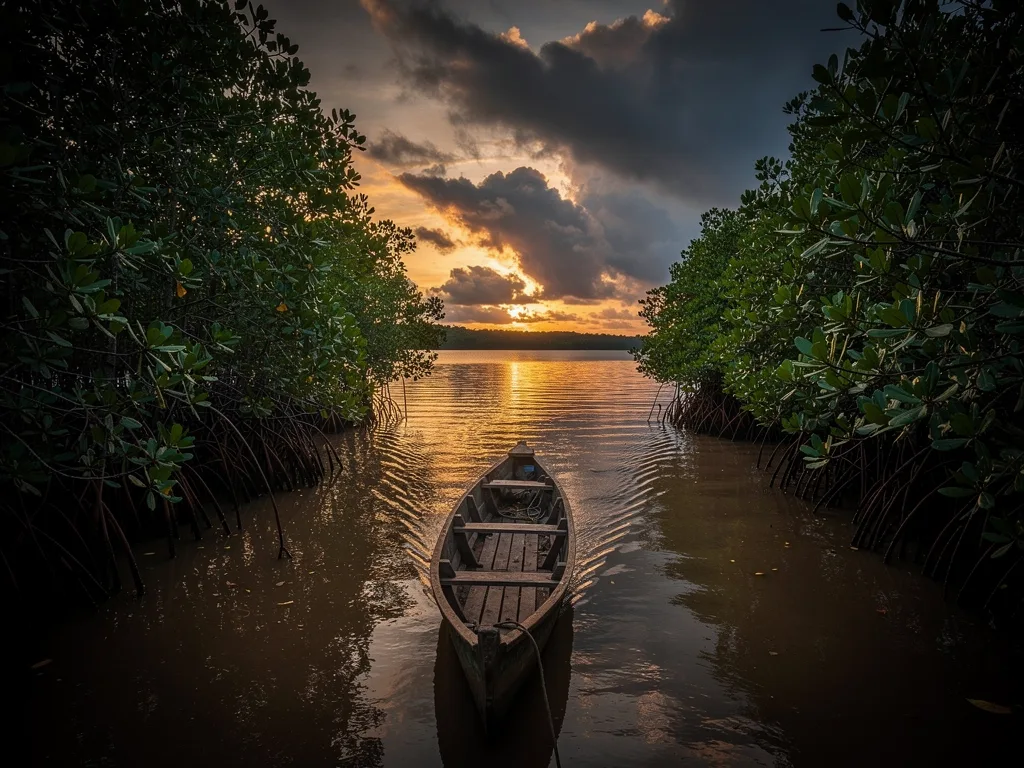
Imagine casting a topwater popper across mirror-calm water framed by submerged kapok trees while an explosive peacock bass (Toekoenari) erupts in a burst of gold, red, and turquoise. Or feeling your heavy-duty catfish rod bend double as a 100 kg (220 lb) Lau-Lau (Piraiba) powers toward the bottom of a remote jungle river. Welcome to fishing in Suriname — one of South America’s most exciting and still under-the-radar angling destinations.
This comprehensive guide covers everything an international angler needs to plan a successful trip in 2026: fishing license requirements (and when you don’t need one), the best fishing spots, target species and techniques, guided tours with current prices, travel practicalities, and official regulations. Whether you dream of peacock bass explosions on the Brokopondo Reservoir or battling giant Amazonian catfish in the Coppename River, Suriname delivers pristine rainforest rivers, massive man-made lakes, and coastal estuaries teeming with trophy fish.
Do you need a fishing license in Suriname? For most recreational rod-and-reel or handline fishing, the answer is no — a major advantage for visiting anglers. However, stricter controls are being introduced, and organized sport-fishing tours or multi-day expeditions often require documentation. Regulations can change, so always verify with the Ministry of Agriculture, Animal Husbandry and Fisheries (LVV) before travel.
01Do You Need a Fishing License in Suriname?
One of the biggest attractions for international visitors is the relatively relaxed licensing regime for recreational fishing. Under the Fish Stock Protection Act (Visstandbeschermingswet), fishing with a single rod or handline for personal, non-commercial use is generally exempt from needing a formal license in most inland waters.
This exemption makes Suriname particularly appealing compared to many other South American countries. You can often fish from shore or a rented boat without prior paperwork, provided you stay within personal-use limits and avoid protected nature reserves.
Sport Fishing License (“Sportvisserij”)
If you join an organized sport-fishing tour, plan intensive multi-day expeditions, or intend to target certain species more seriously, a Sportvisserij license is technically required. These annual licenses are issued by the Ministry of Agriculture, Animal Husbandry and Fisheries (LVV) and currently cost around SRD 100 (approximately €2.50–€3 / US$2.70–$3.30). While the fee itself is very low — roughly the cost of a coffee — the administrative process can be slow for foreigners.
As of 2025–2026, the LVV has increased audits and controls on both commercial and recreational permits. Recent updates emphasize sustainability, especially following discussions with the European Union regarding illegal fishing practices.
Important: Fishing is strictly prohibited in designated Nature Reserves (such as Brownsberg Nature Park or Galibi) without a separate permit from STINASU (the Foundation for Nature Conservation in Suriname) or the Forest Service (LBB). Always check boundaries with your guide.
Tip: Even if you don’t legally need a license for casual fishing, carrying a copy of your passport and travel insurance is recommended. Reputable operators will often handle any necessary documentation for you.
For the latest official information, consult the Ministry of LVV or the resources provided by WWF Guianas.
02Fishing Regulations and Protected Species
Suriname’s fishing rules focus on protecting spawning stocks and vulnerable habitats. The most important regulation concerns the Kwie-Kwie (armored catfish species). The closed season runs strictly from 1 April to 15 July each year. During this period, possession or sale of Kwie-Kwie carries a fine of SRD 100 per fish (roughly €2.50 / US$2.70).
Other key regulations include:
Border areas, particularly along the Corantijn (Corentyne) River, involve ongoing maritime and fishing disputes with neighboring Guyana. Always travel with a licensed local guide in these zones to avoid complications.
Regulations may change; the LVV regularly updates rules. The sources listed at the end of this article from WWF Guianas and official government sites provide the most current details.
03Best Fishing Spots in Suriname
The heart of any fishing trip to Suriname lies in its spectacular and varied waters. From vast inland reservoirs to remote jungle rivers and coastal wetlands, the country offers world-class opportunities for both freshwater and brackish-water fishing. Here are the top destinations that make anglers dream of Suriname’s pristine rainforest landscapes.
1. Brokopondo Reservoir (Stuwmeer van Blommestein)
Spanning approximately 135,000 hectares (334,000 acres) with thousands of submerged giant trees, the Brokopondo Reservoir is Suriname’s premier peacock bass fishery. The flooded rainforest creates incredible structure where Toekoenari (peacock bass) ambush prey.
Imagine drifting along in a small boat as the early morning mist rises from the water, surrounded by the calls of howler monkeys from the shoreline jungle. You cast a noisy popper or bucktail jig toward half-submerged trunks — and suddenly the surface explodes. Peacock bass in Brokopondo regularly exceed 3–5 kg (7–11 lb), with larger specimens possible.
Other species include aggressive piranha (excellent sport on light tackle), Kubi, and various cichlids. Many day tours depart from Paramaribo or nearby lodges, making this the most accessible world-class fishing experience in the country.
2. Coppename River
For anglers seeking true giants, the Coppename River is legendary. This blackwater river system winds through dense Amazonian rainforest and holds some of the largest freshwater fish on Earth.
The star attraction is the Lau-Lau (Piraiba catfish), which can exceed 150 kg (330 lb). Anglers fish deep holes with heavy sinkers and large chunks of bait (often whole fish heads). The fight israw power rather than acrobatics — prepare for a brutal battle in strong current.
You will also encounter Redtail catfish, Tiger catfish, Tarpon that have migrated upstream, and the fearsome Anjoemara (wolf fish) hiding among submerged roots and rapids. The scenery is unforgettable: towering jungle canopy, waterfalls, and pristine wilderness that feels like the end of the world.
3. Corantijn River and Wonotobo Falls
Located near the border with Guyana, the Corantijn River and its dramatic Wonotobo Falls offer one of Suriname’s most remote and rewarding fishing adventures. Multi-day expeditions here are bucket-list experiences.
Target species include monster Anjoemara, giant Tarpon, Tiger catfish, and various peacock bass relatives. The combination of powerful rapids, deep pools, and untouched rainforest creates a true wilderness fishing experience. Expect to travel by dugout canoe or small expedition boats and stay in basic jungle camps.
4. Suriname River Estuary and Braamspunt
Only a short drive from the capital Paramaribo, the estuary offers excellent brackish-water fishing. Species include various large catfish (Koemakoema), Snook, and seasonal runs of Tarpon. The mangrove-lined shores and tidal influence create a completely different fishing environment compared to the inland jungle rivers.
5. Bigi Pan MUMA (Multiple Use Management Area)
This coastal wetland and lagoon system is ideal for sight fishing for Snook and Tarpon on fly or light spinning tackle. The birdlife is spectacular, and the sunsets over the wetlands are breathtaking.
Each of these locations offers a distinctly different fishing experience — from explosive topwater action with peacock bass to brutal deep-water battles with giant catfish — all set against the dramatic backdrop of the Amazon rainforest.
Tip: Water levels drop significantly during the dry seasons, concentrating fish and improving success rates. The scenery becomes even more spectacular as rocky outcrops and rapids emerge.
04Target Species and Fishing Techniques
Suriname’s waters hold a fascinating variety of powerful, hard-fighting fish perfectly adapted to the jungle environment.
Toekoenari (Peacock Bass): These are the stars of Brokopondo. Use heavy spinning or baitcasting gear with 20–30 lb braid. Topwater poppers, walking baits, large spinnerbaits, and bucktail jigs produce explosive strikes. They are incredibly aggressive and will attack almost anything that disturbs the surface.
Lau-Lau (Piraiba Catfish): The largest freshwater fish in South America. Heavy conventional tackle (50–80 lb class) with large circle hooks and substantial weights is essential. Bottom fishing with large baitfish or fish heads in deep river holes is the standard method. Expect powerful, dogged fights that can last hours.
Anjoemara (Wolf Fish): Ambush predators with powerful jaws found around structure and in rapids. Steel leaders are mandatory. Surface lures, large spinnerbaits, or cut bait work well. Their vicious strikes and stubborn fights make them a favorite.
Tarpon: Found in both coastal estuaries and far up some river systems. Classic sight fishing with flies or live bait produces acrobatic jumps and powerful runs.
Other species: Redtail catfish, Tiger catfish, Snook, various piranha species, and numerous smaller cichlids provide action on lighter tackle.
Equipment recommendations: Bring heavy braid (30–65 lb test), strong leaders, a selection of large poppers and jigs for peacock bass, and sturdy conventional rods for big catfish. Many day tours to Brokopondo supply basic tackle, but serious anglers targeting giants should bring their own high-quality gear.
05Tours & Guided Experiences
While independent fishing is possible, most international visitors choose guided tours for safety, local knowledge, and access to remote areas. Suriname’s operators range from budget day trips to high-end multi-day wilderness expeditions.
Popular options include:
These tours typically include experienced local guides who know the best spots, handle permits where needed, and ensure safety in remote jungle environments. Many emphasize sustainable practices and catch-and-release for larger specimens.
Language note: While Dutch is the official language and Sranan Tongo the local lingua franca, the majority of professional fishing guides working with international clients speak good English. Translation apps can be helpful in smaller villages.
🎣 Fishing tours in Suriname — Book guided fishing tours with local experts.
06Charter Fishing in Suriname
For those seeking a more personalized experience, private charters provide flexibility and access to prime locations. Half-day and full-day charters on Brokopondo Reservoir typically cost €300–€550 for the boat (up to 4 anglers). Multi-day river expeditions with crew, camping equipment, and meals can exceed €2,000 per person.
Reputable operators include those partnered with international platforms. Always confirm that your captain is properly licensed and familiar with current regulations, especially in border areas.
🚤 Charter fishing in Suriname — Find and book charter boats with experienced captains.
07Costs of Fishing in Suriname
Fishing in Suriname represents excellent value compared to many other exotic destinations.
Additional costs include international flights to Paramaribo (Johan Adolf Pengel International Airport), internal transport, visas/entry fees, and personal equipment. Overall, a 10-day fishing-focused trip can be organized for €2,000–€4,500 per person including most expenses, making it competitive with similar trips in Brazil or Guyana.
08Practical Travel Information
Best Time to Visit
Suriname has two dry seasons that offer the best fishing conditions: mid-January to April and mid-August to early November. During these periods, lower water levels concentrate fish in pools, rapids, and accessible areas. The wet seasons bring higher water, more difficult access, and increased insect activity, though fishing can still be productive.
From a northern hemisphere perspective, the December–April dry season aligns well with winter escapes. Southern hemisphere anglers often prefer the August–November window.
Getting There and Entry Requirements
Most international visitors fly into Johan Adolf Pengel International Airport (PBM), about 50 km (31 miles) south of Paramaribo. Direct flights are available from Amsterdam, Miami, and several Caribbean and South American hubs.
Since 2022, many nationalities (including EU, US, UK, Canada, Japan, and Australia) no longer require a traditional visa but must purchase a Tourist Card / Entry Permit online before arrival. The fee is €50 / US$50. Always check the latest requirements on the official as rules can change.
Health precautions: Consult your doctor regarding vaccinations (yellow fever is recommended) and malaria prophylaxis for remote jungle areas. Bring insect repellent, as mosquitoes can be numerous.
Getting Around and Language
Paramaribo serves as the main hub. Domestic travel to fishing areas is usually arranged by tour operators via minibus, boat, or small aircraft for remote expeditions. Public transport is limited outside the capital.
Language: Official language is Dutch. English is widely understood in tourism and among fishing guides. Learning a few phrases in Sranan Tongo (“Mi lobi faya” – I like fishing) can earn you extra smiles from local people.
📱 Stay connected in Suriname — Get an eSIM for affordable mobile data while traveling.
If you plan to rent a vehicle for independent exploration near Paramaribo or Brokopondo, international driving permits are recommended alongside your home license.
🚗 Rent a car in Suriname — Compare prices from 500+ rental companies worldwide.
What to Pack
Many day tours supply rods and basic tackle, but serious anglers bring their favorites.
09FAQ – Fishing in Suriname
Do I need a fishing license to fish in Suriname?
For recreational fishing with a single rod or handline for personal use, a license is generally not required. However, organized sport fishing tours and more intensive activities may require a Sportvisserij license from the LVV. Always confirm current rules.
What is the best fishing in Suriname?
The Brokopondo Reservoir offers world-class peacock bass fishing, while the Coppename River and Corantijn River are famous for giant Lau-Lau catfish and Anjoemara. The choice depends on whether you prefer explosive surface action or battling true river monsters.
When is the best time to fish in Suriname?
The dry seasons from mid-January to April and mid-August to early December provide the best conditions as falling water levels concentrate the fish.
Can I keep the fish I catch?
Local culture often views fish as food, but responsible operators encourage catch-and-release for large trophy fish. The closed season for Kwie-Kwie (April 1 – July 15) must be strictly observed.
Is Suriname safe for fishing tourists?
With a reputable guide or established tour operator, fishing in Suriname is generally safe. As with any remote destination, follow basic jungle safety advice and stay informed about current conditions.
What is the biggest fish in Suriname?
The Lau-Lau (Piraiba catfish) can exceed 150 kg (330 lb) and represents the ultimate freshwater challenge in Surinamese rivers.
Do I need malaria tablets for jungle fishing trips?
Consult a travel doctor. Malaria prophylaxis is often recommended for extended stays in remote interior regions.
10Conclusion
Fishing in Suriname offers a rare combination of world-class angling, pristine Amazonian wilderness, and remarkably straightforward access for recreational anglers. From the explosive strikes of peacock bass under submerged forest giants in Brokopondo to the heart-stopping battles with giant Lau-Lau in dark jungle rivers, this emerging destination delivers experiences that will stay with you forever.
Whether you choose an easy day trip from Paramaribo or a full wilderness expedition deep into the interior, the fishing, scenery, and warm hospitality of the Surinamese people create memories of a lifetime. Start planning your adventure today — the jungle rivers and exploding peacock bass are waiting.
Book your guided experience with a reputable local operator, respect the regulations, practice catch-and-release where appropriate, and prepare to fall in love with one of South America’s best-kept fishing secrets.
11Sources & Further Links
Disclaimer: Regulations, prices, and conditions change frequently. The information in this article is based on data available in early 2026. Always verify the latest fishing license requirements, closed seasons, and travel regulations directly with official authorities such as the Ministry of LVV and the Suriname Tourism Board before your trip. Fishingworldguide.com is not responsible for any changes or inaccuracies. Practice responsible angling and respect local communities and environments.
Don't miss any fishing tips!
Get the best fishing destination recommendations weekly in your inbox.
No spam. Unsubscribe anytime.
Data incorrect?
Help us keep this article up to date — report outdated or incorrect information
More articles