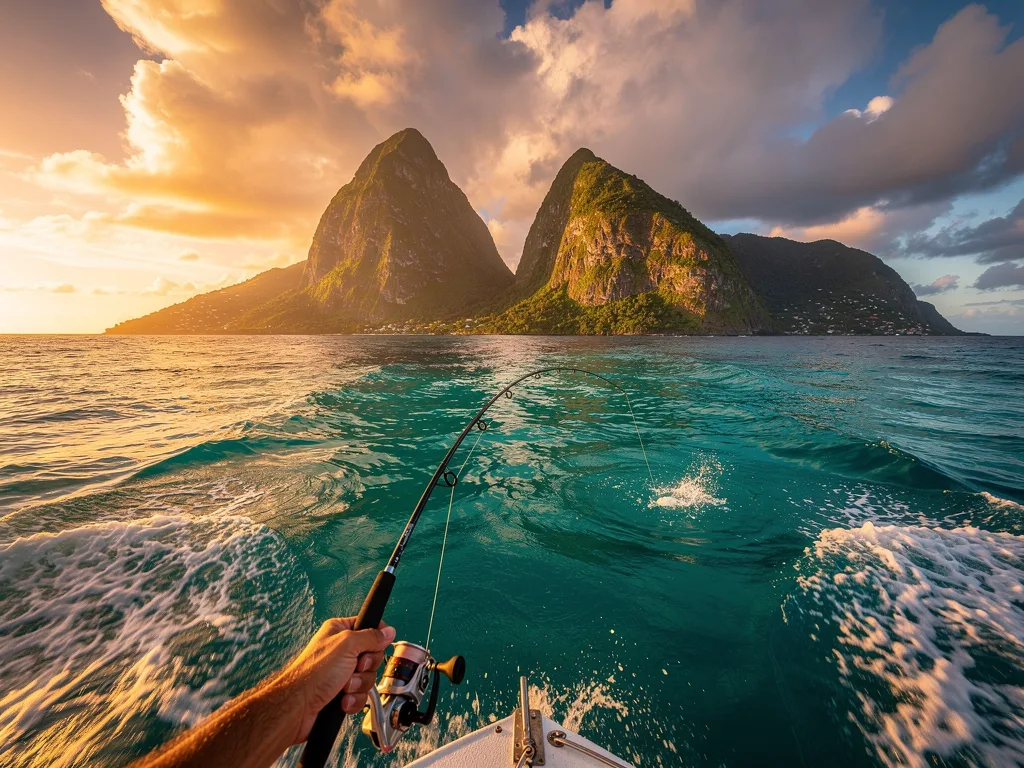
Imagine fighting a powerful mahi-mahi just a few kilometers offshore while volcanic peaks rise dramatically from the turquoise Caribbean behind you. That's fishing in St. Lucia — a sensory experience that combines world-class sport fishing with one of the most breathtaking island settings on the planet. Whether you're casting from a sun-drenched beach, trolling for billfish in deep blue water, or exploring the rich reef systems near the iconic Pitons, St. Lucia offers international anglers an unforgettable combination of tropical beauty and serious fishing action.
This complete guide covers everything you need to plan your 2026 fishing trip to St. Lucia: permits and regulations, the best fishing spots, guided charter options, target species, and all the practical travel information you'll need as an international visitor.
01Do You Need a Fishing License in St. Lucia?
One of the first questions international anglers ask is whether they need a permit to fish in St. Lucia. The answer is refreshingly simple — and largely good news for visitors.
Shore Fishing: No License Required
If you plan to fish from the beach, a pier, rocks, or any other shoreline position, you do not need a fishing license in St. Lucia. This is a significant advantage for casual anglers and travelers who want to wet a line during their holiday without navigating bureaucratic paperwork.
Boat Fishing: License Required (Usually Covered by Your Charter)
When fishing from a vessel, a fishing license issued by the St. Lucia Fisheries Division is required. However, for international visitors, there's an important practical note: visitors to the island are not issued recreational fishing licenses directly — instead, you are required to charter a registered fishing vessel. The good news is that legitimate charter operators include the vessel's fishing license as part of their service package. When you book a reputable charter, your license, equipment, bait, and often drinks and lunch are all included in the price.
Recreational fishing licenses are issued specifically to citizens or residents of Saint Lucia for private boat fishing. As a tourist, your route to legal boat fishing is always through a licensed charter operator.
Tip: Always confirm with your charter operator that all required licenses are covered before booking. Any reputable St. Lucia charter will have this sorted — but it's worth asking.
Spearfishing
Spearfishing is only legal for residents of Saint Lucia. International visitors are not permitted to spearfish, and use of a spear gun requires written permission. This regulation is strictly enforced, so international anglers should not attempt to bring or use spearfishing equipment.
02Fishing Regulations in St. Lucia
St. Lucia takes the conservation of its marine resources seriously. The Fisheries Act (Cap. 7.15) governs all fishing activity on the island, and penalties for non-compliance can reach EC $5,000 (approximately EUR 1,850 / USD 1,850). Here is what every visiting angler needs to know.
Prohibited Methods
Catch Limits
| Species / Category | Limit |
|---|---|
| Pelagic fish | Maximum 100 lbs (45 kg) per licensed period |
| Scale fish (vessel bag limit) | 20 lbs (9 kg) per person |
| Grouper | Minimum size: 3 lbs (1.4 kg) |
Seasonal Closures
St. Lucia enforces seasonal protection periods for key species. Always check the official St. Lucia Gazette for the most current dates, as these can be adjusted annually.
| Species | Closed Season (approximate) |
|---|---|
| Lobster | April 30 – September 1 (some sources indicate March 1 – August 1) |
| Turtle | February 28 – October 1 |
| Conch | Varies — check current Gazette |
| Sea Urchin | November 30 – September 1 (without written permission) |
Important: Lobster regulations are strictly enforced. It is prohibited to catch, possess, sell, or purchase any lobster that is moulting, undersized, or carrying eggs — at any time of year. Spearing or hooking lobster is always prohibited.
Catch-and-Release Policy
St. Lucia encourages a catch-and-release policy for visitors for most species. This conservation-minded approach helps maintain healthy fish populations and ensures that future generations — both locals and visiting anglers — can continue to enjoy world-class fishing around the island.
Export of Fish
Importing or exporting any fish caught in St. Lucia's fishery waters requires written permission from the Fisheries Division. Do not plan to take significant quantities of fish home without first obtaining the necessary documentation.
Marine Protected Areas
St. Lucia has established a network of marine reserves — areas completely closed to fishing. The most significant is the Soufrière Marine Management Area (SMMA), which includes several no-fishing reserve zones along the island's stunning southwest coast. Interestingly, the areas immediately adjacent to these reserves — such as those near the Anse Chastanet reserve — often produce some of the best catches, as fish populations are healthier and more abundant near protected zones. Always verify your location with your captain before fishing near Soufrière.
03The Best Fishing Spots in St. Lucia
St. Lucia punches well above its weight as a fishing destination. The island's geography — steep volcanic slopes dropping into deep Caribbean water — means that serious offshore fishing is available just minutes from the coast. Here's where to focus your time.
Offshore: The Deep Blue Pelagic Grounds
The waters around St. Lucia are genuinely world-class for offshore sport fishing. The island is situated where Atlantic swells meet the Caribbean Sea, creating rich feeding grounds for large pelagic species. Water depths of 600 meters (2,000 ft) or more are accessible within just a few kilometers of shore, meaning you don't need to travel far to find big fish.
What you can catch offshore:
The main offshore technique is trolling with rigged baits or lures at speeds of 7–12 knots. Your charter captain will know exactly where the temperature breaks and current lines are on any given day.
Inshore & Reef Fishing
St. Lucia's coral reefs and rocky outcrops offer excellent inshore fishing, particularly on the calmer western (Caribbean) coast. Reef species are abundant, colorful, and provide fantastic action on light tackle.
Target species inshore:
The waters around Marigot Bay, Rodney Bay, Gros Islet, and the dramatic reef systems near the Pitons in Soufrière are all excellent inshore fishing grounds.
Shore Fishing
For anglers who prefer to keep their feet on dry land, St. Lucia offers productive shore fishing — and remember, no license is needed for shore fishing. The Atlantic-facing east coast tends to have rougher water but can produce excellent surf fishing for snapper and jack. The calmer west coast beaches and rocky headlands around Castries, Rodney Bay, and Anse La Raye offer accessible spots for visitors.
Local anglers fish from the numerous fishing village jetties and sea walls around the island. Be respectful of working fishermen and their equipment — these are active commercial fishing communities.
🎣 Fishing tours in St. Lucia — Book guided fishing tours with local experts.
04Guided Fishing Tours & Charter Boats in St. Lucia
For most international visitors, booking a guided fishing charter is by far the easiest and most rewarding way to fish in St. Lucia. Your captain handles the licenses, knows the best grounds for the day's conditions, provides all tackle and bait, and brings local knowledge that no guidebook can replace.
Types of Fishing Charters
Full-Day Offshore Charters
Full-day trips typically run 7–8 hours and focus on offshore pelagic species including marlin, sailfish, mahi-mahi, wahoo, and tuna. You'll venture 15–30 km (9–18 miles) offshore to where the serious action happens.
Half-Day Offshore Charters
Perfect for those with limited time or first-time offshore anglers. You'll target pelagic species closer to shore, as well as wahoo and kingfish.
Inshore & Reef Fishing Charters
These shorter trips focus on reef species — snapper, grouper, barracuda, and jack — and are ideal for families and anglers who prefer calmer waters.
Fly Fishing
While not as widely promoted as offshore fishing, guided fly fishing for bonefish and permit is available in some of St. Lucia's shallower bays and flats. Ask specialist operators about availability.
Charter Operators & Where to Book
Major charter operators are based out of Rodney Bay Marina in the north, which is the island's main yachting hub, and Marigot Bay further south. The Moorings base at Rodney Bay also offers fishing equipment rental at approximately USD 20 per day.
Several full-service resorts, including Sandals properties, offer fishing excursions for guests, typically organized through local charter partnerships.
Tip: When comparing charters, check whether the price includes: tackle and bait, fishing license, fuel surcharge, refreshments, and fish cleaning. Most reputable operators include all of these.
🚤 Charter fishing in St. Lucia — Find and book charter boats with experienced captains.
05Best Time to Fish in St. Lucia
St. Lucia sits at approximately 14°N latitude, giving it a tropical climate with fishing available year-round. However, different seasons offer different opportunities.
Season Overview
| Season | Months | Conditions | Best For |
|---|---|---|---|
| Peak Offshore | June – October | Warm, calmer seas; hurricane risk July–Oct | Blue marlin, mahi-mahi, tuna |
| Winter/Dry Season | December – April | Trade winds, excellent visibility | White marlin, sailfish, wahoo, kingfish |
| Shoulder Season | May, November | Transitional, varied | All-round offshore & reef |
For Visitors from Different Hemispheres
Hurricane Season Note: The Caribbean hurricane season runs from June 1 to November 30, with peak risk in August–October. While St. Lucia sits south of the main hurricane track and is less frequently hit than islands further north, it's worth purchasing comprehensive travel insurance and monitoring weather forecasts if visiting during this period.
06Target Species Quick Reference
| Species | Best Season | Typical Size | Technique |
|---|---|---|---|
| Blue Marlin | June – October | 100–300 kg (220–660 lbs) | Trolling |
| White Marlin | December – April | 20–40 kg (44–88 lbs) | Trolling |
| Sailfish | Nov – April peak | 20–50 kg (44–110 lbs) | Trolling, live bait |
| Mahi-Mahi | Year-round | 5–20 kg (11–44 lbs) | Trolling, casting |
| Wahoo | November – April | 10–40 kg (22–88 lbs) | High-speed trolling |
| Yellowfin Tuna | Year-round | 20–80 kg (44–176 lbs) | Trolling, chunking |
| Barracuda | Year-round | 3–15 kg (6–33 lbs) | Casting, spinning |
| Red Snapper | Year-round | 1–5 kg (2–11 lbs) | Bottom fishing |
| Kingfish | Year-round | 5–25 kg (11–55 lbs) | Trolling, live bait |
07Practical Travel Information for International Visitors
Getting to St. Lucia
St. Lucia is served by two airports:
Direct flight connections are available from London (British Airways, Virgin Atlantic), New York (JetBlue, American Airlines), Toronto, Frankfurt, and various Caribbean hubs. Flying time is approximately 8–9 hours from the UK, 4–5 hours from New York, and 9–10 hours from Germany.
Visa Requirements
St. Lucia is a relatively open destination for international visitors:
| Nationality | Visa Requirement |
|---|---|
| EU citizens | No visa required (up to 6 weeks) |
| US citizens | No visa required (up to 6 weeks) |
| UK citizens | No visa required (up to 6 weeks) |
| Canadian citizens | No visa required |
| Japanese citizens | No visa required |
| Australian citizens | No visa required |
| Most Caribbean nationals | No visa required |
Most visitors need only a valid passport and a return ticket. Always check with the St. Lucia Immigration Department for current entry requirements, as these can change.
Currency & Costs
Typical fishing trip costs:
Language
The official language is English, making St. Lucia one of the most accessible Caribbean islands for English-speaking visitors from around the world. Antillean Creole (Kwéyòl) is also widely spoken among locals. As a visitor, you'll have no language barriers when dealing with charter operators, marina staff, or tourism services.
Where to Stay Near Fishing
The Rodney Bay / Gros Islet area in the north is the best base for offshore fishing, with direct access to the marina and numerous charter operators. Marigot Bay offers a more secluded, boutique atmosphere with its own fishing access. Soufrière in the southwest is perfect for those who want to combine fishing with exploring the dramatic Pitons landscape and the SMMA reef system.
🏨 Accommodation near fishing spots in St. Lucia — Find hotels and lodges close to the best waters.
08Equipment & Gear
Most international visitors will find that their charter provides all necessary equipment. However, if you plan to shore fish or want to bring your own gear, here's what to know.
What Charters Typically Provide
Shore Fishing Gear Recommendations
For shore fishing, medium-heavy spinning tackle in the 20–40 lb class is versatile enough for most of what you'll encounter from the beach or rocks. Bring:
Tip: Saltwater fishing is corrosive to equipment. Rinse all gear thoroughly with fresh water after each session, even in the tropics.
🛒 Fishing equipment for St. Lucia — Find the right gear for your trip.
09Frequently Asked Questions (FAQ)
Do I need a fishing license to fish in St. Lucia as a tourist?
For shore fishing, no license is required. For fishing from a boat, you must use a licensed charter operator — the vessel license is included in your charter fee. Visitors cannot obtain individual recreational fishing licenses; these are reserved for residents and citizens.
Can I bring my own fishing rod to St. Lucia?
Yes, you can bring personal fishing equipment to St. Lucia. Just remember that spearfishing equipment is not permitted for non-residents, and you should be familiar with the catch and equipment regulations before fishing.
Is catch-and-release practiced in St. Lucia?
Yes, St. Lucia actively encourages a catch-and-release policy for visitors for most species. Most offshore charter operators practice this for billfish (marlin, sailfish). You may retain some species for eating within the bag limits.
When is lobster season in St. Lucia?
Lobster fishing is closed from approximately April 30 to September 1 (some official sources indicate March 1 to August 1 — always check the current Gazette). During the closed season, it is illegal to fish for, possess, sell, or purchase lobster. Even during open season, undersized, moulting, or egg-carrying lobsters are protected.
Are there marine protected areas where fishing is banned?
Yes. St. Lucia has established marine reserves, most notably within the Soufrière Marine Management Area (SMMA). These are zero-fishing zones. Your charter captain will navigate around these areas, but if you're fishing independently, check the SMMA website (smmainc.com) for current boundaries.
What is the best month to catch blue marlin in St. Lucia?
Blue marlin fishing peaks between June and October, when warm tropical currents and abundant baitfish concentrate the big blues in waters close to St. Lucia. Fish over 200 kg (440 lbs) have been recorded in these waters.
Is St. Lucia safe for international tourists?
St. Lucia is generally considered a safe destination for tourists, particularly within resort areas, marinas, and on organized tours. Standard travel precautions apply — avoid isolated areas at night, secure your valuables, and follow your charter captain's guidance on the water. Check your government's current travel advisories before departure.
How do I get from Hewanorra Airport to Rodney Bay for fishing?
Hewanorra Airport is in the far south of the island; Rodney Bay is in the north, approximately 60 km (37 miles) away. Options include pre-arranged airport transfers, water taxis (a scenic option), or car hire. Journey time by road is about 1.5 hours. Many resorts and charter operators offer transfer arrangements.
10Conclusion: Why St. Lucia Should Be on Every Angler's Bucket List
Fishing in St. Lucia offers something genuinely rare: world-class offshore sport fishing in a setting of extraordinary natural beauty. Where else can you fight a 200 kg blue marlin with the dramatic silhouette of the Pitons on the horizon? The island's accessible regulations (no license needed for shore fishing, all-inclusive charter packages for boat fishing), the diversity of species from billfish to colorful reef fish, and the warmth of local fishing culture combine to make this one of the Caribbean's premier fishing destinations.
Whether you're a seasoned big-game angler chasing your first billfish, or a traveling family wanting to experience the joy of a tropical fishing trip, St. Lucia delivers. Book your charter early — particularly for peak season (June–October) — choose a base in Rodney Bay or Marigot Bay, and get ready for a fishing adventure you'll be talking about for years.
11Sources & Further Reading
*Disclaimer: The information in this article was researched and compiled in 2026 and is intended as a general guide for international anglers. Fishing regulations, seasonal closures, license fees, and permitted methods in Saint Lucia can change at any time. Always verify current rules with the Saint Lucia Fisheries Division, your charter operator, or the official Government of Saint Lucia website (govt.lc) before fishing. The authors and publishers of this guide accept no responsibility for any legal consequences arising from reliance on the information provided herein. Charter prices and travel costs are approximate and subject to change. FishingWorldGuide.com may earn a commission from affiliate links in this article.*
Recommended tours
Fishing trips in Saint Lucia
Curated tours & charters with price and click data from our partner dashboards.
 FishingBooker
Exodus Boat Charters - Exodus
 FishingBooker
Exodus Boat Charters - Exodus IV
 FishingBooker
Kieran's Yacht Services
Don't miss any fishing tips!
Get the best fishing destination recommendations weekly in your inbox.
No spam. Unsubscribe anytime.
Read more
Data incorrect?
Help us keep this article up to date — report outdated or incorrect information
More articles