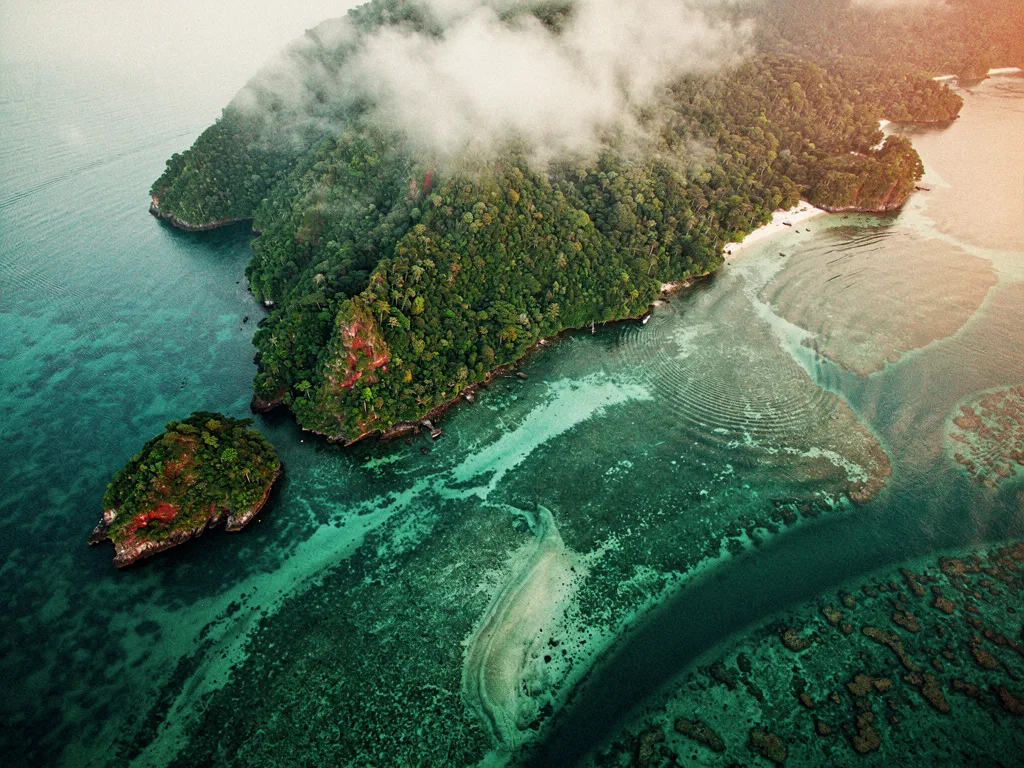
Panama is one of the world's great sport fishing destinations — and for good reason. Straddling the narrow isthmus between two oceans, this small Central American nation offers anglers something truly rare: the chance to fish the Pacific and the Caribbean within a single trip. Whether you're chasing massive Pacific sailfish and black marlin off the Hannibal Bank, casting for roosterfish along rugged rocky shores, or hunting snook and peacock bass in jungle-fringed rivers, fishing in Panama delivers experiences that few places on earth can match. And unlike many destinations, Panama keeps the entry barriers low — no personal fishing license required for tourists.
This guide covers everything you need to know: regulations, the best fishing spots, guided tour options, what species to target, when to go, and practical travel tips for international visitors.
01Panama Fishing Licenses and Permits: What You Need to Know
Here's the news every visiting angler wants to hear: tourists do not need a personal fishing license to fish in Panama. You can step off the plane, board a charter, and be fishing world-class waters the same day — with zero bureaucratic paperwork on your end.
That said, the rules aren't completely absent, and understanding them makes you a better-prepared and more responsible angler.
Do Tourists Need a Fishing License?
No personal fishing license is required for sport fishing tourists visiting Panama. This applies whether you're coming from Europe, North America, Asia, or anywhere else. Panama has deliberately kept its recreational fishing sector accessible to international visitors.
However, the boat you fish from must hold a valid permit. Maritime authorities do conduct checks on the water, and vessels can be pulled over to inspect permits and safety equipment. When you book a reputable charter operator, this is handled entirely on their side — it's one of the main reasons booking with a licensed charter company matters.
Shore Fishing and Private Vessels
If you plan to fish from shore or from a private vessel you've brought to Panama or rented independently (not through a charter), you may need to obtain a recreational fishing permit through Panama's official aquatic resources authority. According to the Autoridad de los Recursos Acuáticos de Panamá (ARAP) — the State's guiding body for fishing law compliance — recreational fishing permits for coastal/shore-based angling (permiso de pesca ribereña) are available through their official channels.
Tip: For most visiting anglers fishing with a charter operator, no personal license is needed. If you're planning to fish independently from shore or a private boat, contact ARAP (arap.gob.pa) before your trip to confirm current requirements.
Key Regulatory Authority
02Panama Fishing Regulations: The Rules That Matter
Panama has some of the most progressive and conservation-focused fishing regulations in Central America. Knowing these rules isn't just about staying legal — it's about being part of a fishing culture that has helped keep Panama's waters world-class.
Billfish: Catch and Release Only
This is Panama's most important regulation, and it's non-negotiable. By law, killing any billfish is strictly prohibited in Panama. Every billfish must be caught and released. This applies to:
Panama enforces this rule more strictly than any other Central American nation, and it's one of the primary reasons the country's billfish populations remain so healthy and abundant. Any reputable captain will brief you on this before you leave the dock.
Sea Turtles: Strictly Protected
Panama takes turtle conservation extremely seriously. It is completely illegal to fish for, bait, catch, or in any way endanger sea turtles — anywhere in Panamanian waters. Panama's coastlines are important nesting grounds for several sea turtle species, and violations carry heavy fines and serious legal consequences. If a turtle becomes accidentally entangled in your gear, alert your captain immediately and follow proper release procedures.
Shrimp and Lobster Seasons
Shrimp and lobster are regulated by seasonal closures to protect breeding populations:
Outside these windows, targeting shrimp and lobster is prohibited.
General Fish Species
Good news for most sport anglers: for the majority of fish species in Panama, there are no daily catch limits and no minimum size restrictions. Panama has not implemented bag limits for common sport fish such as dorado (mahi-mahi), wahoo, tuna, snapper, and roosterfish. Your captain will guide you on what's appropriate to keep versus release, and following the "keep-what-you-eat" ethic is strongly encouraged.
Long-Line Vessel Restrictions
Executive Decree 486 (signed December 28, 2010) prohibits long-line vessels over six tons from operating within Panamanian waters — a significant step in protecting pelagic fish populations from commercial overfishing.
Isla Coiba National Park
Fishing inside Isla Coiba National Park — a UNESCO World Heritage Site — comes with specific rules:
The park fee is usually arranged by your charter operator, but confirm this when booking.
Angler Responsibilities
Even when fishing with a charter, you as the angler remain responsible for:
03The Best Fishing Spots in Panama
Panama punches far above its weight class as a fishing destination. With Pacific Ocean on one side, the Caribbean Sea on the other, and one of the most biodiverse river systems in the hemisphere running through its interior, the variety of fishing experiences available here is extraordinary.
Pacific Side: World-Class Offshore Fishing
Gulf of Chiriquí and the Hannibal Bank
The Gulf of Chiriquí, anchored by destinations like Boca Chica and the Hannibal Bank, is considered one of the finest offshore fishing grounds on the entire Pacific coast of the Americas. The Hannibal Bank — an underwater seamount about 50 km (31 miles) offshore — acts as a massive fish aggregating structure. Cold, nutrient-rich upwellings from the deep collide here with warmer surface currents, creating conditions that draw enormous populations of bait fish and the predators that follow them.
This is where Panama's world records have been set. Anglers target:
Imagine your line screaming off the reel as a 300-pound black marlin launches itself into the tropical blue sky. That's the Hannibal Bank. It's the kind of fishing that makes you rearrange your entire travel schedule.
Isla Coiba
Coiba Island and its surrounding national park waters represent one of the most pristine marine environments in the Eastern Pacific. Because the island was a penal colony for most of the 20th century, its reefs and fish populations were largely left undisturbed — and it shows. The biodiversity here is staggering, and inshore species like cubera snapper, roosterfish, and jack crevalle thrive in waters so clear you can see them from the boat.
Remember: fishing here is catch-and-release only within the park boundaries, and the $50 USD permit applies. But the experience of fishing in these crystalline waters surrounded by one of the last great Pacific coral reef systems is worth every cent.
Tropic Star Lodge (Bahía Piña)
In the far southeastern corner of Panama, near the Colombian border, lies Bahía Piña — home to the legendary Tropic Star Lodge, one of the most famous sport fishing lodges in the world. This remote jungle-ringed bay holds more IGFA world records than any other location on the planet. The underwater topography here is extraordinary, with the deep Pacific trench coming exceptionally close to shore, allowing large pelagic species to be found in surprisingly accessible waters.
Tropic Star Lodge is a bucket-list destination — exclusive, remote, and extraordinary. Packages are premium but include everything: flights into the lodge's private airstrip, accommodation, guides, and gear.
Gulf of Panama
Close to Panama City, the Gulf of Panama offers remarkably accessible offshore fishing. Day trips from the capital can put you over serious game fish within a couple of hours. The Pacific Intertropical Convergence Zone creates fertile conditions for yellowfin tuna, dorado, and wahoo, and billfish are present year-round.
For travelers visiting Panama City on business or for a short stay, half-day and full-day charters from nearby marinas make it entirely possible to have a world-class fishing experience and be back in the city for dinner.
Caribbean Side: A Different World
The Caribbean coast offers a dramatically different fishing experience — calmer, lush, and intimate. The waters here are shallower, warmer, and rich with reef fish and inshore species.
Bocas del Toro Archipelago
The Bocas del Toro archipelago in northwestern Panama is a tropical paradise of turquoise lagoons, mangrove channels, and coral reefs. Tarpon fishing here can be sensational — these silver kings roll through the channels and river mouths in impressive numbers. Other species include:
The setting alone makes Bocas del Toro worth the trip. Fishing here feels like an adventure — small skiffs weaving through palm-fringed waterways, howler monkeys calling from the jungle banks.
San Blas Islands (Guna Yala)
The San Blas Islands, governed by the indigenous Guna people, offer some of the most spectacular and untouched Caribbean fishing environments in the region. The reefs here are largely pristine, and the snapper, grouper, and permit fishing can be excellent. Access is by small plane or boat from Panama City. Note that fishing in these waters is conducted with deep respect for the Guna community and their traditions — always use local Guna operators where possible.
Freshwater Fishing: Rivers and Lakes
Panama's interior rivers and reservoirs offer a completely different fishing experience.
Gatun Lake
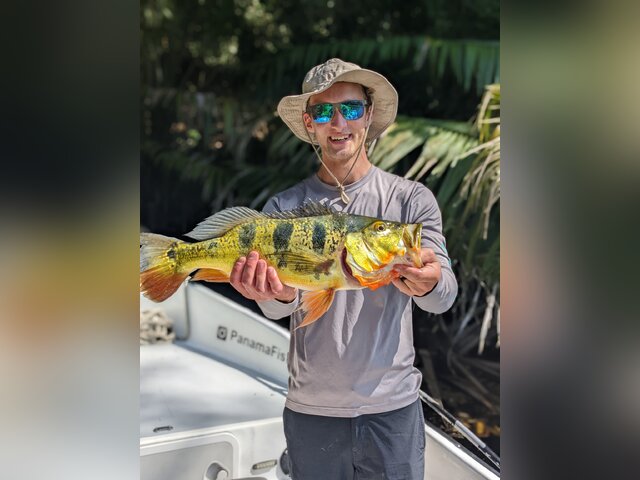
Gatun Lake, created by the construction of the Panama Canal, is one of the largest artificial lakes in the world — and one of Central America's premier peacock bass fisheries. The peacock bass (pavón) found here are aggressive, powerful, and will crush surface lures with abandon. Combine this with the surreal backdrop of enormous container ships gliding through the canal in the background, and you have one of the most unique fishing experiences imaginable.
Gatun Lake is easily accessible from Panama City and is a top choice for freshwater anglers or those looking for a half-day fishing alternative to offshore fishing.
Mountain Streams: Chiriquí Highlands
For fly fishing enthusiasts, the cool mountain streams of the Chiriquí Highlands near Boquete offer excellent freshwater trout fishing in a stunning cloud forest environment. Rainbow trout were introduced to these streams decades ago and now provide year-round fly fishing in a setting more reminiscent of Patagonia than Central America. The combination of highland scenery, cool temperatures, and challenging trout on a dry fly makes this a genuinely memorable experience.
🎣 Fishing tours in Panama — Book guided fishing tours with local experts.
04Guided Fishing Tours and Charter Options in Panama
Panama's sport fishing infrastructure is mature and well-developed, with options ranging from budget-friendly half-day reef fishing trips to multi-day luxury lodge packages at world-record fishing destinations.
Charter Fishing from Panama City
Panama City is the most accessible starting point for most international visitors. Several charter operators work out of marinas like Flamenco Marina on the Amador Causeway, offering:
Charter Fishing from Boca Chica and the Gulf of Chiriquí
Boca Chica, accessible from the town of David in Chiriquí Province, is the gateway to some of Panama's finest offshore fishing. Charter operations based here offer:
Tropic Star Lodge, Bahía Piña
The most exclusive option in Panama — and arguably one of the most exclusive sport fishing lodges in the world. All-inclusive packages at Tropic Star Lodge run approximately $5,000–$8,000 USD (€4,600–€7,350) per person per week, including private charter flights, accommodation, meals, a dedicated captain and mate, all tackle, and unlimited time on the water. Packages must be booked well in advance — this lodge regularly fills up months ahead.
Bocas del Toro Fishing Guides
Several local guides in the Bocas del Toro archipelago offer tarpon and snook fishing on small skiffs. These are typically more affordable options:
Gatun Lake Peacock Bass Fishing
Day trips to Gatun Lake from Panama City are a popular option and are widely available:
These trips are particularly well-suited for families or mixed groups where not everyone is a hardcore offshore angler.
🚤 Charter fishing in Panama — Find and book charter boats with experienced captains.
05Best Time to Fish in Panama
Panama sits just 8–9 degrees north of the equator, giving it a tropical climate with remarkably consistent fishing year-round. However, the seasons do affect conditions and target species.
Pacific Side: Seasonal Patterns
| Season | Months | Conditions | Top Species |
|---|---|---|---|
| Dry Season | Dec – April | Calm seas, excellent offshore visibility | Sailfish, Black Marlin, Tuna, Roosterfish |
| Green Season | May – Nov | Some rain, good inshore fishing, occasional rough days | Dorado, Wahoo, Snapper, Yellowfin Tuna |
The dry season (December through April) is generally considered the prime time for offshore fishing on the Pacific side. Seas are calmer, visibility is excellent, and sailfish in particular are present in enormous numbers — days with 20+ sailfish releases are not uncommon during peak months.
The "green season" (roughly May through November) brings more rain but also brings productive inshore fishing and can produce excellent dorado and wahoo numbers. Seas can be rougher during these months.
Caribbean Side
The Caribbean's weather patterns run roughly opposite to the Pacific. The drier period on the Caribbean coast runs from roughly February through April and August through September, while the rainy season peaks around November through January. Tarpon fishing in Bocas del Toro is productive year-round, with the best action typically occurring during seasonal migrations.
For Visitors from Different Hemispheres
06Practical Travel Information for International Anglers
Getting to Panama
Panama City's Tocumen International Airport (PTY) is the main international gateway and is well-connected to major hubs worldwide. Direct or one-stop flights are available from:
Flight times: approximately 3 hours from Miami, 8–10 hours from Madrid or London, 15–20+ hours from Tokyo or Sydney.
Visa Requirements
Panama has a relatively open visa policy. Requirements as of 2026:
| Nationality | Visa Required? |
|---|---|
| USA | No visa required (up to 180 days) |
| EU citizens | No visa required (up to 180 days) |
| UK | No visa required (up to 180 days) |
| Canada | No visa required (up to 180 days) |
| Japan | No visa required (up to 180 days) |
| Australia | No visa required (up to 180 days) |
| South Africa | Visa required — check Panama consulate |
| China | Visa required — check Panama consulate |
Tip: Always verify current visa requirements with Panama's immigration authority or your nearest Panamanian consulate before travel, as rules can change.
Currency and Costs
Panama uses the US Dollar (USD) as its official currency, alongside the Panamanian Balboa (PAB) at a 1:1 fixed rate. This makes budgeting extremely straightforward for American visitors, and international travelers simply need to calculate the EUR/USD or their home currency rate.
As a rough guide to daily costs:
Panama City itself is relatively affordable compared to European capitals but more expensive than many of its Central American neighbors.
Getting Around Panama
Language
Spanish is the official language of Panama. English is spoken in tourist areas, at marinas, and by most charter operators catering to international anglers. Outside of Panama City and major tourist spots, English becomes less common.
Tip: Download Google Translate with the Spanish offline pack before your trip. A few key phrases — "¿Habla inglés?" (Do you speak English?), "Buenos días" (Good morning), "¿Dónde está el muelle?" (Where is the dock?) — go a long way in building rapport with local fishermen and guides.
Health and Safety
🏨 Accommodation near fishing spots in Panama — Find hotels and lodges close to the best waters.
07Fishing Gear and Equipment in Panama
What to Bring
Most charter operators in Panama supply all necessary heavy tackle for offshore fishing — rods, reels, lures, and terminal tackle are typically included. However, there are some items worth bringing from home:
For offshore/saltwater fishing:
For fly fishing in Chiriquí streams:
For Gatun Lake peacock bass:
Buying Gear in Panama
Panama City has several sporting goods stores and fishing tackle shops. Macro and El Machetazo carry basic fishing supplies. For specialized gear, it's best to bring what you need from home or order online before your trip.
🛒 Fishing equipment for Panama — Find the right gear for your trip.
08Fishing Costs Summary
| Experience | Price (USD) | Price (EUR) | Notes |
|---|---|---|---|
| Half-day charter (Panama City) | $300–$500 | €275–€460 | Inshore/reef fishing, private boat |
| Full-day offshore charter (Panama City) | $800–$1,500 | €735–€1,380 | Billfish/tuna/dorado |
| Full-day Hannibal Bank charter | $1,200–$2,000 | €1,100–€1,840 | 4–6 anglers |
| Coiba National Park boat permit | $50/boat/week | €46/boat/week | Park entry required |
| Tropic Star Lodge (weekly package) | $5,000–$8,000/person | €4,600–€7,350/person | All-inclusive, world-record fishery |
| Gatun Lake peacock bass day trip | $150–$400 | €138–€368 | Half or full day options |
| Bocas del Toro tarpon/snook | $150–$500 | €138–€460 | Small skiff, half or full day |
| Chiriquí trout fly fishing guide | $150–$300 | €138–€276 | Half or full day |
| Personal fishing license | FREE | FREE | Not required for tourists |
09FAQ: Fishing in Panama
Do I need a fishing license to fish in Panama?
No. Tourists visiting Panama for sport fishing do not need a personal fishing license. The boat you fish from must have a valid permit, which reputable charter operators handle automatically. If you plan to fish from shore or a private vessel independently, contact ARAP (arap.gob.pa) to check permit requirements.
Can I keep the fish I catch in Panama?
For most common sport fish species (dorado, wahoo, tuna, snapper, roosterfish), there are no daily catch limits in Panama. Your captain will advise what's appropriate to keep. However, all billfish (marlin, sailfish, swordfish, spearfish) must be caught and released — keeping or killing a billfish is illegal.
Is Isla Coiba worth the extra permit cost?
Absolutely. Coiba is a UNESCO World Heritage Site with some of the most pristine marine ecosystems in the Eastern Pacific. The $50 USD boat permit is minimal given the extraordinary quality of the fishing and the environment. All fishing within the park is catch and release.
What is the best time of year to fish in Panama?
For offshore Pacific fishing (billfish, tuna, dorado), the dry season from December through April generally offers the calmest seas and best conditions. Sailfish are particularly abundant during this period. Fishing is available and productive year-round, however — Panama has no true "closed season" for most sport fish.
Is Panama safe for international travelers?
Panama City and the main tourist/fishing destinations (Chiriquí, Bocas del Toro, Coiba) are generally considered safe for tourists. Exercise normal precautions in urban areas. The Darién region near the Colombian border should be avoided due to ongoing security concerns. Always check your government's current travel advisory before departure.
What languages do charter operators speak in Panama?
Most established charter operators catering to international anglers speak English. Outside major fishing hubs, Spanish is primarily spoken. Booking with a reputable operator virtually guarantees English communication throughout your trip.
Can I fly fish in Panama?
Yes. The Chiriquí Highlands near Boquete offer excellent fly fishing for rainbow trout in cool mountain streams. Several local guides offer fly fishing packages. The peacock bass of Gatun Lake also respond extremely well to fly fishing — a large streamer stripped aggressively through the channels can produce explosive strikes.
What species can I NOT fish for in Panama?
You cannot kill or keep any billfish (marlin, sailfish, swordfish, spearfish) — these are catch and release only by law. Sea turtles are fully protected and must not be targeted or disturbed. Shrimp and lobster are only open during specific seasonal windows.
How do I get to Bahía Piña and Tropic Star Lodge?
Tropic Star Lodge operates its own charter flights from Panama City (Albrook Airport). The lodge handles all logistics as part of their all-inclusive packages. Independent access is extremely difficult — the lodge is the most practical way to reach and fish this remote area.
10Conclusion: Why Panama Should Be on Every Angler's List
Panama is, without exaggeration, one of the world's elite fishing destinations. Two oceans, accessible regulations, no personal fishing license requirement, year-round action, and a variety of experiences that ranges from jungle rivers to world-record offshore grounds — all packed into a country you can cross by car in a few hours.
Whether you're a first-time sport fishing visitor attracted by the accessible billfish action in the Gulf of Panama, a serious big-game angler chasing IGFA records at Bahía Piña, a fly fisher dreaming of cloud forest trout streams, or a freshwater enthusiast eyeing the peacock bass of Gatun Lake, Panama has a fishing experience tailored precisely to you.
Book with a reputable, licensed operator, respect the catch-and-release rules for billfish, give the turtles their space, and you'll leave Panama with a grip of outstanding memories — and very likely a burning desire to come back.
11Sources & Further Links
*Disclaimer: The information in this article is provided for general guidance only. Fishing regulations, permit requirements, fees, and seasonal closures in Panama may change. Always verify current regulations with the Autoridad de los Recursos Acuáticos de Panamá (ARAP) and the Autoridad Marítima de Panamá (AMP) before your trip. Prices shown are estimates based on available data and may vary. This article was last updated in 2026. Neither FishingWorldGuide.com nor its authors accept liability for any errors or outdated information.*
Recommended tours
Fishing trips in Panama
Curated tours & charters with price and click data from our partner dashboards.
 FishingBooker
Panama Fishing Trip
 FishingBooker
Reds Fishing Panamá
 FishingBooker
Gatun Sportfishing - #1 Charter
Don't miss any fishing tips!
Get the best fishing destination recommendations weekly in your inbox.
No spam. Unsubscribe anytime.
Read more
Data incorrect?
Help us keep this article up to date — report outdated or incorrect information
More articles