Buy License Online
Buy fishing license for Netherlands online
Official authority website
Imagine standing on the edge of an Amsterdam canal at dawn, casting a soft plastic lure beneath an ancient stone bridge while houseboats drift silently past. Or picture yourself on a windswept dike in Zeeland, watching a powerful sea bass explode on your surface lure against a backdrop of dramatic tidal currents. Whether you dream of urban predator fishing in bustling cities or battling cod 30 km out in the North Sea, the Netherlands offers one of Europe’s most varied and accessible fishing destinations.
Fishing in the Netherlands combines tranquil polder ditches lined with windmills, mighty rivers like the Waal and Maas, world-class sea bass action in the Delta region, and productive deep-sea charters. This comprehensive guide covers everything an international angler needs to know for a successful trip in 2026, including the all-important VISpas fishing license, where to fish, guided tours, charter options, costs in EUR and USD, regulations, and practical travel advice.
01Do You Need a Fishing License in the Netherlands?
Yes — in almost all inland waters you must possess a valid VISpas (Fishing Pass). This national permit is the cornerstone of Dutch recreational fishing and grants you legal access to more than 90 % of the country’s fishable waters.
The VISpas is not just a license; it effectively makes you a member of a local angling club affiliated with Sportvisserij Nederland. This system ensures that anglers contribute to conservation and habitat management. You can purchase and activate your VISpas instantly online at the official portal.
For sea fishing from the coastline and beaches of the North Sea, a fishing license is generally not required. However, all anglers aged 14 and older must register in the free RecFishing mobile app and report catches of certain species such as European seabass, bluefin tuna, and European eel.
Tip: Always carry your VISpas (or printed proof) and a valid ID when fishing. Fines for fishing without a permit start at €150 and can be significantly higher depending on the violation.
Types of Fishing Permits (VISpas Options)
The Netherlands offers several permit types designed for different needs, especially useful for international visitors:
- NachtVIStoestemming (night fishing permit): €10–€13 per year.
- Derde Hengeltoestemming (third rod permit): €25–€28 per year.
You can order your VISpas quickly at www.vispas.nl. After payment you receive immediate digital proof by email that is legally valid the same day. The physical plastic card arrives by post within a few weeks. Many local tackle shops (*hengelsportwinkels*) also sell permits.
For the most up-to-date prices and to purchase directly, visit the official sources below.
02Fishing Regulations and the Essential VISplanner App
Dutch fishing rules are detailed but well organised. Your most important tool is the VISplanner — a free web and mobile app that shows exactly where you may fish with your specific permit.
After entering your VISpas number, the map displays permitted waters in blue. It also highlights closed seasons, protected species, bait restrictions, and local club rules. Never fish without checking the VISplanner first.
Key Inland Regulations (2026)
Saltwater and Coastal Regulations
Since 2021, recreational sea anglers must register in the RecFishing app. This is free and mandatory for anyone 14 years and older fishing in coastal waters, the Wadden Sea, or the Dutch Exclusive Economic Zone.
Specific rules include:
Selling recreationally caught fish is strictly illegal. Regulations can change, so always verify the latest information on official government websites before your trip.
03Best Fishing Spots in the Netherlands – Where to Make Your Dreams Come True
The Netherlands may be small, but its fishing diversity is enormous. From peaceful urban canals to wild estuaries and the open North Sea, every angler can find their perfect water.
1. Amsterdam Canals – World-Class Urban Predator Fishing
Fishing in the heart of Amsterdam feels almost surreal. The famous canals are home to surprisingly large populations of pike, zander, and perch. Casting soft baits or dropshot rigs around bridge pillars, moored boats, and underwater structures can produce explosive strikes only metres from bustling cycle paths and cafés.
Many visitors describe “street fishing” in Amsterdam as one of the most memorable experiences in European angling. Early mornings or late evenings offer the best chance of avoiding crowds while targeting predators that have adapted perfectly to city life. A typical session might see you battling a 5–8 kg pike with iconic Dutch architecture as your backdrop.
2. The Polder Systems – Classic Dutch Landscape Fishing
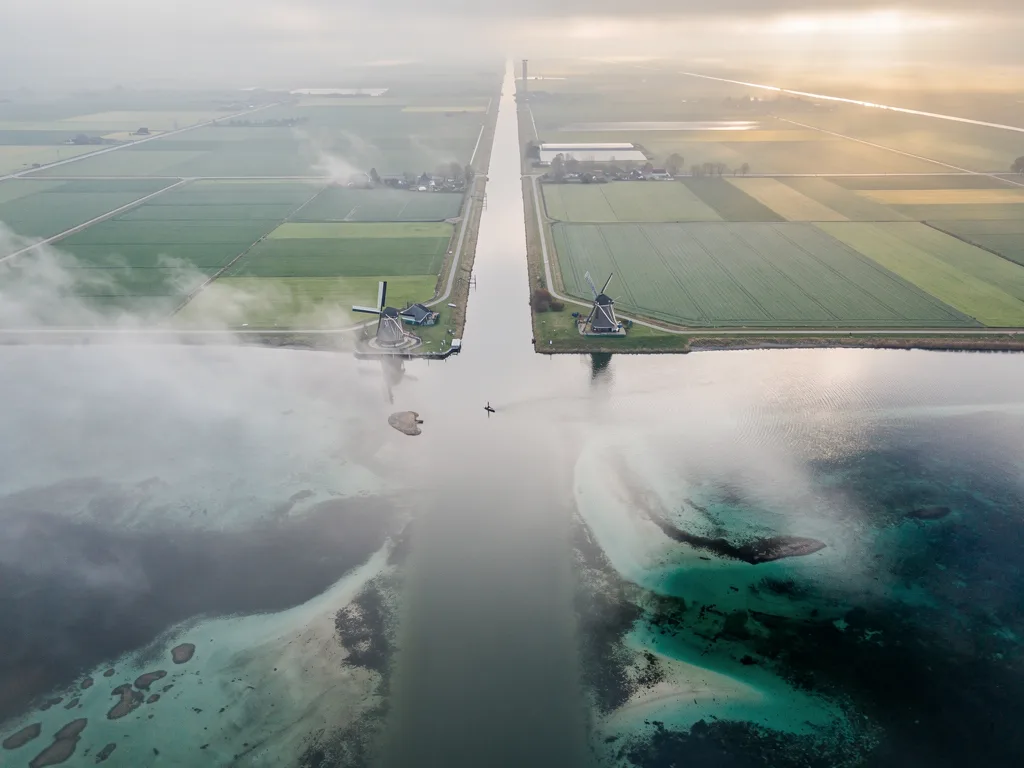
The endless network of narrow ditches and canals criss-crossing the flat green polders is a quintessential Dutch fishing experience. These waters teem with pike, roach, bream, and tench. The scenery — windmills, grazing cows, and colourful tulip fields in spring — makes every session feel like a painting.
Pike fishing with jerkbaits and soft lures in the narrow ditches is particularly effective. The confined space means fish cannot run far, resulting in spectacular acrobatic fights. In summer, float fishing or feeder tactics work wonders for big bream and roach. This is relaxed, scenic fishing at its best.
3. Major Rivers – Waal, Maas, and IJssel
These powerful rivers are legendary among European zander anglers. The combination of strong currents, deep holes, and rocky groynes (*kribben*) creates ideal habitat for trophy zander, perch, asp, barbel, and enormous bream.
Boat fishing is often the most productive method, allowing you to drift or anchor precisely over productive spots. Shore anglers can also enjoy excellent sport by fishing the groynes with vertical jigs or feeders. Expect hard-fighting fish in a dramatic, industrial-meets-natural landscape. Some zander here exceed 10 kg, and the rivers produce fish of a lifetime every season.
4. Zeeland Delta – Premier Sea Bass Destination
Zeeland is the undisputed capital of Dutch sea bass fishing. The complex tidal estuaries, deep channels, and rocky dikes offer world-class lure fishing for this prized species. Casting plugs, shads, and surface lures from the shore at dawn or dusk can result in heart-stopping takes as powerful bass ambush your lure in the strong currents.
Mackerel, flounder, and occasional cod are also available. Many international anglers fly into nearby Rotterdam or Antwerp specifically to target sea bass in Zeeland. The combination of wild nature, tidal energy, and the chance of a trophy fish makes this area unforgettable. Guided boat trips through the delta add another dimension, allowing access to otherwise unreachable honey holes.
5. Rotterdam Harbour and Europoort – Industrial Fishing at Its Best
Where the Rhine meets the North Sea lies one of Europe’s largest ports — and surprisingly excellent fishing. The mixing of fresh and salt water creates a rich ecosystem. Vertical jigging from boats produces monster zander, while shore anglers target sea bass, cod, and flounder.
Year-round fishing is possible here thanks to the deep harbours that never freeze. The contrast between huge container ships and fighting fish creates a unique and memorable experience. Many local charters operate from Rotterdam, offering both freshwater predator trips and saltwater adventures.
Tip: For the latest maps and exact locations, use the VISplanner app after purchasing your VISpas. Local tackle shops are also excellent sources of real-time information on hot bites.
04Tours & Guided Experiences
Hiring a local guide is one of the fastest ways to maximise your success, especially if you are visiting the Netherlands for the first time. Professional guides know the ever-changing conditions, exact hotspots, and most effective techniques.
Guided freshwater predator trips on rivers and polders typically cost €300–€500 per day for 1–2 anglers. This usually includes a fully equipped boat, all tackle, lures, and expert instruction. Many guides specialise in pike, zander, or a combination of both. Urban fishing tours in Amsterdam and Rotterdam are also popular and cost around €250–€400 for a half- or full-day experience.
Saltwater and deep-sea charters depart from ports such as Scheveningen, IJmuiden, and various Zeeland harbours. A shared boat spot for a 6–8 hour sea fishing trip usually costs €75–€125 per person (approx. $82–$136 USD). Private charters for sea bass in the Delta or wreck fishing in the North Sea range from €600–€950 for the boat (up to 4–6 anglers).
Many operators provide all necessary gear, so you don’t need to bring heavy equipment. English is widely spoken, removing any language barriers.
🎣 Fishing tours in Netherlands — Book guided fishing tours with local experts.
05Charter Fishing in the Netherlands
For those who prefer to head offshore, the Netherlands has a well-developed charter fleet. Deep-sea fishing targets cod, ling, pollack, and mackerel, while specialist boats also chase sea bass in the coastal zones.
Typical trips last 6–12 hours. Winter and early spring often produce the best cod fishing, while summer and autumn are ideal for mackerel and sea bass. Many captains use modern electronics to locate wrecks and productive tide rips.
Prices for private deep-sea charters start at approximately €750 for a full day. Shared trips are significantly cheaper and a great way to meet fellow international anglers. Booking well in advance is recommended during peak seasons (May–September).
🚤 Charter fishing in Netherlands — Find and book charter boats with experienced captains.
06Fish Species, Techniques and Seasonal Patterns
Freshwater Highlights
Saltwater Highlights
The best overall times to visit are late spring (late May–June) after the predator closed season and autumn (September–October) when fish are feeding heavily before winter. Summer suits coarse fishing and sea bass, while dedicated specimen pike anglers often prefer the cold months.
07Equipment and What to Bring
International visitors are strongly advised to bring their own tackle. Rental equipment is scarce compared to other European countries. Local tackle shops are excellent and well-stocked, so you can top up on lures, lead, or line if needed.
For predator fishing, a medium-heavy spinning rod (2.4–2.7 m, 15–40 g casting weight) paired with a 2500–4000 size reel and 0.18–0.25 mm braided line is versatile. Bring a good selection of soft baits, hard lures, and wire traces. For sea fishing, stronger gear capable of handling strong tides and bigger fish is necessary.
🛒 Fishing equipment for Netherlands — Find the right gear for your trip.
08Practical Travel Information for International Anglers
Getting There: Amsterdam Airport Schiphol (AMS) is the main international hub with direct flights from all continents. From there, excellent high-speed trains and motorways make every fishing region easily reachable within 1–3 hours. Rotterdam The Hague Airport and Eindhoven Airport also serve many European routes.
Visa Requirements: The Netherlands is part of the Schengen Area. Citizens of the EU/EEA, USA, UK, Canada, Australia, New Zealand, and Japan can stay up to 90 days visa-free. Check the latest requirements for your nationality on official Dutch government websites before travel. Longer stays may require a visa.
Language: Dutch people, particularly those working in tourism and the fishing sector, speak excellent English. You will rarely encounter language barriers. Translation apps can help with specific fishing terminology if needed.
Accommodation: Options range from city hotels in Amsterdam to cosy guesthouses near polders or harbourside apartments in Zeeland. Many anglers choose self-catering holiday homes close to the water.
Costs Overview (2026 estimates):
| Item | Price in EUR | Approx. in USD | Notes |
|-----------------------------|-------------------|------------------|------------------------------------|
| Annual VISpas | €35 – €45 | $38 – $49 | Most popular option |
| Day permit | €5 – €10 | $5.50 – $11 | Great for short trips |
| Guided freshwater day (2 pax) | €300 – €500 | $325 – $545 | Includes boat & tackle |
| Shared sea fishing trip | €75 – €125 pp | $82 – $136 | 6–8 hours |
| Private deep-sea charter | €750 – €950 | $815 – $1,035 | Full day for up to 6 anglers |
These prices are roughly comparable to a good restaurant meal for the permits and a mid-range hotel night for guided trips.
Getting Around: Renting a car gives you maximum flexibility to reach remote polders and fishing spots. Public transport is excellent but less convenient for carrying fishing gear. Bicycles are popular for short local trips.
📱 Stay connected in Netherlands — Get an eSIM for affordable mobile data while traveling.
🚗 Rent a car in Netherlands — Compare prices from 500+ rental companies worldwide.
09FAQ – Frequently Asked Questions about Fishing in the Netherlands
Do I need a fishing license for sea fishing in the Netherlands?
No, a VISpas is not required for shore-based North Sea fishing. However, registration in the free RecFishing app is mandatory for anglers aged 14 and older, and you must record catches of seabass and certain other species.
Can tourists buy a VISpas online?
Yes. You can order your VISpas instantly at vispas.nl from anywhere in the world. Digital proof is sent by email immediately and is legally valid.
What is the best time of year for sea bass fishing in Zeeland?
Late spring through autumn offers the best sport. The period from April to October is generally considered prime time, with peak action often in September and October.
Is it easy to find English-speaking fishing guides?
Yes. Almost all professional guides speak fluent English. Platforms like FishingBooker make it simple to find and book English-speaking captains and guides.
Are there any closed seasons I should know about?
Yes. The general closed season for pike, zander, and perch runs from 1 April until the last Saturday in May. Always check the VISplanner for water-specific rules.
Can I keep the fish I catch?
You may keep a limited number for personal consumption in most waters, but catch-and-release is the strongly preferred and often socially expected practice, especially for larger fish. Eels must always be released.
What is the minimum size for sea bass in the Netherlands?
The legal minimum length is 42 cm. There is also a seasonal catch-and-release period from February to March.
10Conclusion
Fishing in the Netherlands in 2026 offers an unbeatable mix of urban excitement, classic pastoral beauty, powerful river fishing, and superb saltwater sport. Whether you spend a morning stalking pike along Amsterdam’s canals, enjoy a full-day guided zander trip on the River Waal, or battle sea bass in the wild Zeeland Delta, you will create memories that last a lifetime.
The system is straightforward once you have your VISpas and know how to use the VISplanner. With English widely spoken, excellent infrastructure, and a wide range of guided tours and charters available, the Netherlands is an ideal destination for international anglers of all experience levels.
Start planning your Dutch fishing adventure today. Purchase your VISpas, book a charter or guided trip, and get ready to experience one of Europe’s best-kept angling secrets.
11Sources & Further Links
Disclaimer: This article is intended for informational purposes only and does not replace official legal advice. Fishing regulations, permit prices, and rules may change at any time. Always consult the latest official sources such as vispas.nl, visplanner.nl, and government.nl before planning your 2026 fishing trip to the Netherlands. The authors and FishingWorldGuide.com accept no liability for any errors or omissions.
Recommended tours
Don't miss any fishing tips!
Get the best fishing destination recommendations weekly in your inbox.
No spam. Unsubscribe anytime.
Data incorrect?
Help us keep this article up to date — report outdated or incorrect information
More articles